

The UK property market is on the cusp of its most significant transformation in decades. As 2026 unfolds, mandatory upfront building surveys under 2026 homebuying reforms are set to revolutionize how properties change hands across England and Wales. For the first time, sellers will be required to commission comprehensive property assessments before listing—shifting the financial burden of surveys while promising greater transparency, fewer failed transactions, and a more efficient market for everyone involved.
This seismic shift affects not just homebuyers and sellers, but particularly chartered surveyors who will see unprecedented demand for their services. Understanding these reforms isn't optional—it's essential for navigating the new property landscape successfully.

Key Takeaways
🔑 Sellers must now commission building surveys before listing, with property survey costs rising from an average of £38 to £380 per transaction[1].
🔑 Comprehensive standardized data packages will be mandatory at listing, including searches, property condition assessments, EPC ratings, and building safety information[1].
🔑 RICS has updated Home Survey Standards to accommodate the reforms, introducing greater clarity on survey levels and provisions for emerging technologies[2].
🔑 Digital property information packs linked to Unique Property Reference Numbers (UPRN) will create interoperable systems across conveyancing platforms and local authorities[1].
🔑 Surveyors face new opportunities and responsibilities, with potential regulatory schemes and mandatory professional qualifications on the horizon[1][2].
Understanding the Mandatory Upfront Building Surveys Under 2026 Homebuying Reforms
What's Changing in the UK Property Market?
The UK government's comprehensive homebuying and selling reform package represents the most ambitious overhaul of property transactions since the introduction of Home Information Packs (HIPs) in 2007. However, unlike HIPs—which were ultimately scrapped—these 2026 reforms have been designed with extensive industry consultation and phased implementation to ensure lasting success.
The core principle is simple: sellers must work with conveyancers and surveyors to carry out searches and property condition assessments before listing their property for sale[1]. This front-loads information gathering, allowing prospective buyers to make informed decisions earlier in the process.
The Financial Impact: Who Pays What?
The cost redistribution is substantial and represents one of the most significant changes:
| Cost Element | Previous System | 2026 Reform System | Change |
|---|---|---|---|
| Average survey cost (seller) | £38 | £380 | +£342 |
| Total fixed costs (seller) | ~£368 | ~£710 | +£342 |
| Buyer survey duplication | Common | Eliminated | Savings |
| Failed transaction costs | High (buyer bears) | Lower (shared risk) | Reduced waste |
This shift means sellers will invest approximately £710 upfront in fixed costs, but the government argues this creates "a more transparent, reliable, and efficient system overall"[1]. The elimination of duplicated surveys when multiple buyers compete for the same property should reduce overall market inefficiency.
What Information Must Be Provided Upfront?
The mandatory upfront building surveys under 2026 homebuying reforms require an extensive information package at the point of listing. This standardized dataset includes:
Core Property Data:
- ✅ Tenure information (freehold/leasehold)
- ✅ Council tax band
- ✅ Energy Performance Certificate (EPC) rating
- ✅ Property type and age
- ✅ Title information from Land Registry
- ✅ Seller identity verification
- ✅ Building safety data (particularly for multi-unit buildings)
Extended Search Information:
- 🔍 Local authority searches
- 🔍 Drainage and water searches
- 🔍 Environmental searches
- 🔍 Locality-specific risk assessments (mining, chalk, coastal erosion)
- 🔍 Flood risk data
Property-Specific Documentation:
- 📋 Property information from TA6 forms
- 📋 Property condition assessments tailored to age and type
- 📋 Service charges (for leasehold/managed properties)
- 📋 Planning consents and building regulation approvals
- 📋 Chain status information
- 📋 Accurate floor plans[1]
For buyers wondering what survey you need, the answer will increasingly be determined by the standardized assessment level appropriate to the property's characteristics.

How RICS Home Survey Standards Support the 2026 Reforms
Updated Standards for a New Era
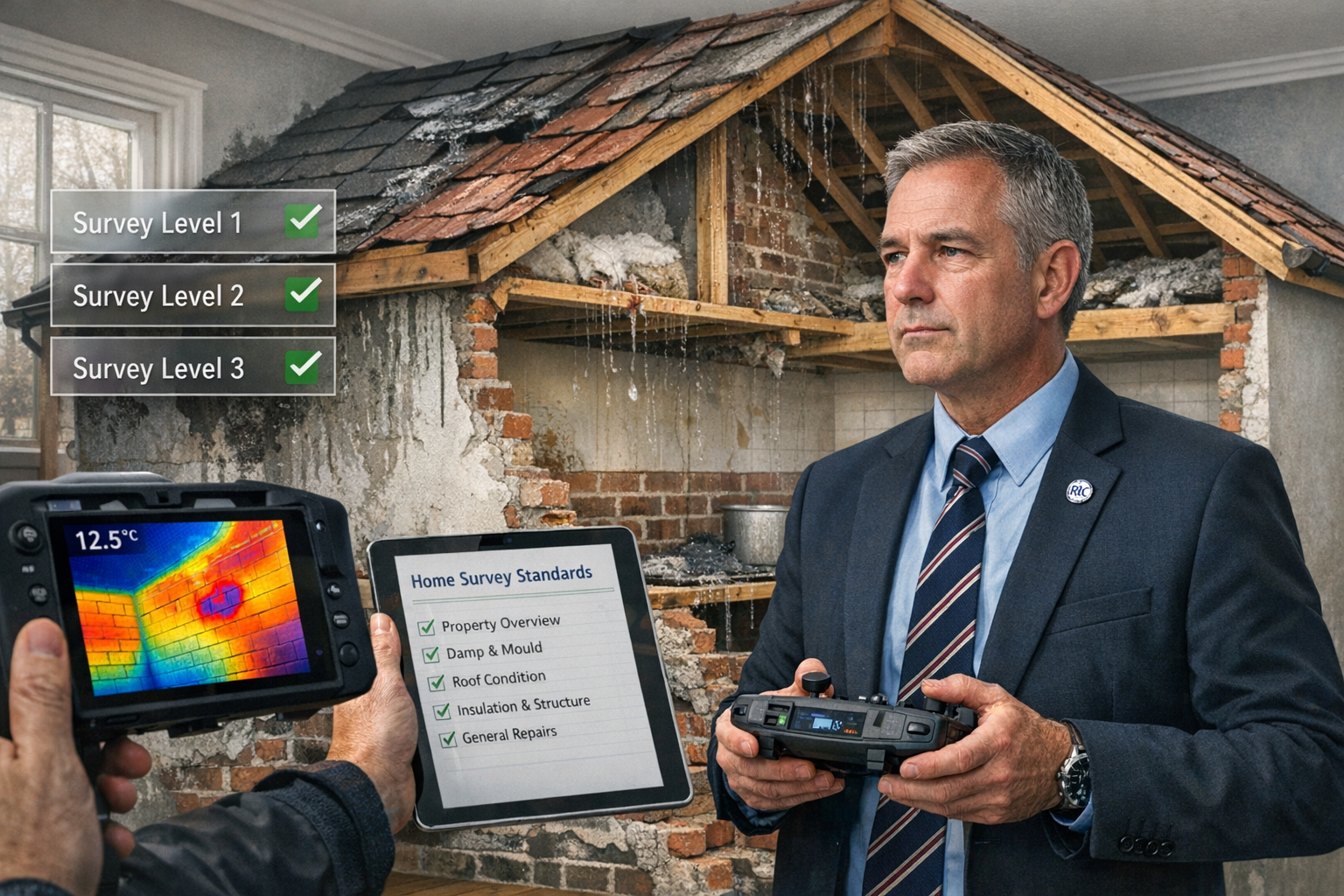
The Royal Institution of Chartered Surveyors (RICS) hasn't been idle while these reforms developed. Recognizing the changing landscape, RICS has implemented updated Home Survey Standards that align perfectly with mandatory upfront building surveys under 2026 homebuying reforms.
The new standards provide:
🎯 Greater Clarity on Survey Levels
The traditional three-tier system remains but with enhanced definitions:
- Level 1 (Condition Report): Basic visual inspection suitable for newer, conventional properties
- Level 2 (HomeBuyer Report): Mid-range assessment for properties in reasonable condition
- Level 3 (Building Survey): Comprehensive investigation for older, altered, or unusual properties
Understanding the difference between a HomeBuyer Report vs Building Survey becomes crucial when sellers commission the appropriate level for their property.
💰 Optional Valuation Across All Levels
Previously, valuations were standard in some survey types but not others. The updated standards now allow optional valuation services to be added to any survey level, providing flexibility for sellers who need property valuations for pricing decisions[2].
⚠️ Guidance for "Additional Risk" Dwellings
The new standards specifically address properties that present elevated survey challenges:
- Listed buildings
- Properties with thatched roofs
- Homes in conservation areas
- Buildings with known structural issues
- Properties requiring subsidence surveys
🤖 Provisions for Technology and AI Use
Perhaps most forward-thinking, RICS has incorporated guidance on emerging technologies including:
- Drone surveys for roof inspections
- Thermal imaging for energy efficiency assessment
- AI-assisted defect identification
- Digital reporting platforms
- 3D modeling and virtual property tours[2]
The Proposed Regulatory Scheme for Surveyors
RICS surveyed its members about creating a home survey regulatory scheme similar to existing valuer registration requirements. The results showed 46% of RICS members expressing support for such regulation[2].
The Standards and Regulation Board was expected to provide an update to members in Q1 2026 on this proposal, which could introduce:
- Mandatory registration for residential surveyors
- Continuing professional development (CPD) requirements specific to home surveys
- Quality assurance protocols
- Consumer protection mechanisms
- Disciplinary procedures for substandard work
For professionals seeking to work as chartered surveyors in London and beyond, these regulatory changes will define minimum standards and professional obligations.
"The introduction of mandatory upfront surveys represents both an opportunity and a responsibility for the surveying profession. We must ensure our standards, technology, and professional competence meet the demands of this new market structure." — RICS Building Surveying Standards Committee
What Surveyors Need to Know About Implementation
Preparing for Increased Demand
The mandatory nature of upfront surveys will create unprecedented demand for surveying services. Every property listing will require a professional assessment, potentially increasing the residential survey market by 300-400% in the initial implementation phase.
Capacity Planning Considerations:
📊 Workload Management
- Average residential survey takes 2-4 hours on-site plus reporting time
- With approximately 1 million+ annual property transactions in England and Wales
- Surveyors must prepare for sustained high-volume demand
📊 Technology Investment
- Digital reporting platforms for standardized output
- Mobile inspection apps for efficient on-site data capture
- Integration with digital property information pack systems
- API connectivity to conveyancing platforms[1]
📊 Specialist Skills Development
- Enhanced training for specific property types
- Understanding building safety regulations post-Grenfell
- Competence in emerging construction methods
- Expertise in energy efficiency assessment
Standardization and Quality Control
The reforms emphasize standardized, easy-to-digest data[1]. This means surveyors must adapt reporting to meet prescribed formats while maintaining professional judgment and thoroughness.
Key Standardization Requirements:
✔️ Consistent Terminology: Using industry-standard language that consumers understand
✔️ Structured Data Output: Information formatted for digital integration, not just PDF reports
✔️ Risk Rating Systems: Clear, comparable condition ratings across all properties
✔️ Visual Documentation: High-quality photographs, floor plans, and potentially 3D models
✔️ Defect Prioritization: Clear categorization of urgent vs. minor issues
For surveyors conducting specific defect reports, integrating these findings into the standardized upfront survey framework will be essential.
Professional Liability and Insurance Considerations
With surveys commissioned by sellers but relied upon by buyers, professional indemnity insurance requirements may evolve. Surveyors should consider:
- Duty of Care: Who is the client—seller, buyer, or both?
- Liability Duration: How long does liability extend after the survey?
- Third-Party Reliance: Can subsequent buyers rely on the original survey?
- Insurance Coverage Limits: Adequate coverage for increased claim frequency
The government's consultation process will likely address these liability questions, but surveyors should proactively engage with professional bodies and insurers to clarify their position.
What Buyers Need to Know About Mandatory Upfront Building Surveys
Access to Information Before Making Offers
For homebuyers, the mandatory upfront building surveys under 2026 homebuying reforms deliver a transformative benefit: comprehensive property information before committing financially or emotionally.
Buyer Advantages:
🏡 Informed Decision-Making
- Review professional survey findings before viewing
- Understand structural issues, maintenance requirements, and future costs
- Compare properties on a like-for-like basis with standardized data
- Avoid wasting time on unsuitable properties
🏡 Reduced Transaction Costs
- No need to commission duplicate surveys for multiple properties
- Lower risk of abortive legal and survey costs from failed purchases
- More accurate budgeting with upfront cost visibility
🏡 Negotiation Leverage
- Survey findings provide objective evidence for price negotiations
- Identified defects create transparent basis for reduction requests
- Sellers can't easily hide known issues
🏡 Faster Transactions
- Much of the due diligence completed before offer stage
- Reduced time between offer acceptance and exchange
- Lower risk of survey-related transaction failures
Understanding Survey Limitations
While upfront surveys provide valuable information, buyers should understand their scope and limitations:
⚠️ Surveys Are Time-Sensitive: A survey conducted six months before your purchase may not reflect current conditions, particularly for issues like damp, leaks, or progressive structural movement.
⚠️ Access Limitations Apply: Surveyors can only assess visible and accessible areas. Concealed defects behind fitted furniture, under floor coverings, or within wall cavities may remain undetected.
⚠️ Specialist Investigations May Be Recommended: The upfront survey might identify concerns requiring specialist roof surveys or structural engineer assessments.
⚠️ Lender Requirements Differ: Your mortgage lender may still require their own valuation survey, separate from the seller's upfront assessment.
When to Commission Additional Surveys
Despite the comprehensive upfront information, buyers may still need additional investigations:
Scenarios Requiring Supplementary Surveys:
- Significant Time Lag: If the seller's survey is more than 3-6 months old
- Identified Red Flags: When the upfront survey recommends further specialist investigation
- Unusual Properties: For non-standard construction, listed buildings, or properties with complex histories
- Lender Requirements: When mortgage providers mandate specific survey types
- Personal Peace of Mind: When buyers want independent verification
Buyers should consult with chartered surveyors to determine whether supplementary investigations are warranted based on the upfront survey findings.
Interpreting Survey Findings and Risk Ratings
The standardized format of mandatory upfront surveys will include clear risk ratings for identified issues. Understanding these categories helps buyers prioritize concerns:
| Risk Category | Typical Meaning | Buyer Action |
|---|---|---|
| Condition Rating 1 | No repair currently needed | Monitor during ownership |
| Condition Rating 2 | Repairs or replacement needed but not urgent | Budget for future work |
| Condition Rating 3 | Urgent defects requiring immediate attention | Seek quotes, negotiate price reduction |
| Further Investigation Required | Specialist assessment needed | Commission additional surveys before proceeding |
Digital Integration and the Future of Property Transactions
Unique Property Reference Numbers (UPRN) and Data Standardization
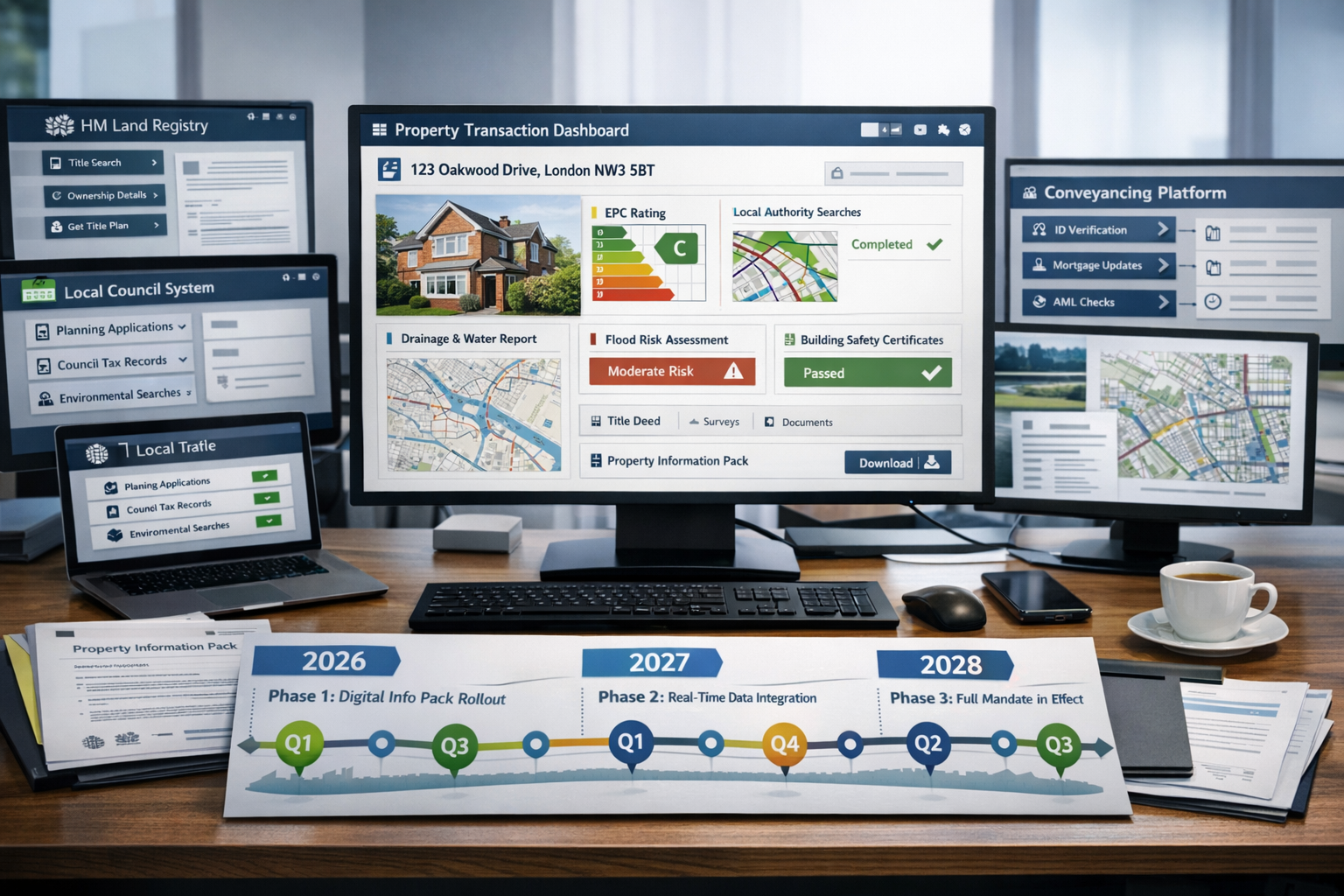
A cornerstone of the mandatory upfront building surveys under 2026 homebuying reforms is the Unique Property Reference Number (UPRN) system. This identifier links all property-related information in a standardized, machine-readable format[1].
UPRN Benefits:
🔗 Single Source of Truth: All property data linked to one permanent identifier
🔗 Interoperability: Seamless data exchange between surveyors, conveyancers, local authorities, and Land Registry
🔗 Historical Tracking: Complete property history accessible through one reference point
🔗 Reduced Errors: Elimination of address mismatches and data duplication
API Integration and Platform Connectivity
The reforms mandate that digital property information packs must be interoperable via APIs with:
- Conveyancing case management platforms
- Local authority planning and building control systems
- Energy efficiency and retrofit planning tools
- Planning application databases
- Mortgage lender systems[1]
This connectivity transforms property transactions from document-heavy processes to data-driven workflows, significantly reducing administrative burden and processing time.
Data Security and Privacy Protocols
Given the sensitive nature of property information—including personal seller data, financial details, and security-relevant property layouts—the government recognizes the need for robust security and data privacy standards[1].
Planned Security Measures:
🔒 Collaborative Industry Standards: Government working with technology providers, surveyors, and conveyancers to define security protocols
🔒 Provider Approval Criteria: Certification requirements for digital property pack platforms
🔒 Evolving Security Protocols: Regular updates to address emerging cyber threats
🔒 GDPR Compliance: Ensuring all data handling meets privacy regulations
🔒 Access Control: Appropriate restrictions on who can view sensitive information
For surveyors, this means selecting technology platforms that meet government-approved security standards and implementing appropriate data handling procedures within their practices.
Implementation Timeline and Phased Rollout
When Will the Reforms Take Effect?
The government has been clear that mandatory upfront building surveys under 2026 homebuying reforms will not happen immediately. Instead, a phased implementation approach allows industry stakeholders to prepare adequately[1].
Implementation Phases:
Phase 1: Consultation and Standards Development (2026)
- Stakeholder engagement to refine measures
- Establishment of clear standards for survey content and timelines
- Definition of fee caps to prevent price exploitation
- Coordination with tribunals and redress schemes
- Publication of guidance documents
Phase 2: Infrastructure Preparation (2026-2027)
- Development of digital property pack platforms
- UPRN integration with existing systems
- Training programs for surveyors and estate agents
- Consumer education initiatives
- Monitoring mechanism establishment
Phase 3: Pilot Programs (2027)
- Regional or sector-specific trial implementations
- Data collection on efficiency improvements and cost impacts
- Refinement based on real-world feedback
- Adjustment of standards and protocols
Phase 4: Full Rollout (2027-2028)
- Mandatory compliance for all property listings
- Enforcement infrastructure operational
- Ongoing monitoring and adjustment
Preparing for Transition
Both surveyors and buyers should use this transition period strategically:
For Surveyors:
- ✅ Invest in digital reporting capabilities now
- ✅ Develop standardized survey templates aligned with emerging requirements
- ✅ Build capacity through recruitment or partnership arrangements
- ✅ Engage with RICS and government consultations to shape final regulations
- ✅ Review and update professional indemnity insurance
For Buyers:
- ✅ Monitor implementation progress in your target market area
- ✅ Understand that early adoption areas may offer advantages
- ✅ Maintain flexibility to commission additional surveys during transition
- ✅ Work with conveyancers familiar with the new system
- ✅ Leverage early standardized data for better property comparison
Additional Reform Elements Affecting Surveyors and Buyers
Mandatory Professional Qualifications for Estate Agents
Subject to consultation outcomes, the government proposes to legislate for mandatory qualifications for estate agents when suitable legislative vehicles become available[1]. This professionalization of the sector complements the surveying reforms by ensuring all transaction participants meet minimum competency standards.
Implications:
- Higher overall transaction quality
- Better understanding of survey findings by listing agents
- Improved consumer protection
- More professional market conduct
Consumer Education and Market Oversight
The government plans to improve consumer education so the public understands estate agents' roles and knows where to turn if issues arise[1]. Additionally, collaboration with the Competition and Markets Authority ensures their new powers under the Digital Markets Consumers and Competition Act (2024) support high standards in the sector.
Focus Areas:
📚 Understanding survey types and their limitations
📚 Recognizing qualified vs. unqualified practitioners
📚 Knowing consumer rights and redress mechanisms
📚 Interpreting standardized property data
📚 Making informed decisions based on survey findings
Building Safety and Post-Grenfell Requirements
The reforms explicitly include building safety data in mandatory upfront information[1]. Following the Grenfell Tower tragedy, building safety has become a critical consideration, particularly for multi-unit residential buildings.
Surveyors must be competent in assessing:
- External wall system construction and fire safety
- Compartmentation and fire stopping
- Means of escape provisions
- Building safety certificates and EWS1 forms
- Remediation work status and costs
For buyers, understanding building safety implications is essential, as properties with unresolved safety issues may be unmortgageable or require significant remediation costs.
Regional Considerations Across England and Wales
While the reforms apply nationally, regional property market characteristics will influence implementation experiences:
London and Southeast England
High property values and transaction volumes in areas served by chartered surveyors in central London, west London, and south west London mean:
- Higher absolute survey costs but lower percentage of property value
- Greater surveyor capacity and competition
- More complex properties requiring Level 3 surveys
- Earlier adoption of digital platforms
Regional Markets
Areas covered by chartered surveyors in Surrey, Essex, Hertfordshire, and Buckinghamshire may experience:
- Survey costs representing higher percentage of property value
- Potential surveyor capacity constraints initially
- Mix of modern and period properties requiring varied survey approaches
- Gradual digital platform adoption
Understanding regional market dynamics helps both surveyors plan capacity and buyers set realistic expectations for the transition period.
Practical Scenarios: How the Reforms Work in Practice
Scenario 1: First-Time Buyer Purchasing a Modern Apartment
Emma is buying her first property—a 10-year-old apartment in a managed development.
Under the 2026 reforms:
- The seller commissioned a Level 1 Condition Report before listing (cost: £250)
- Emma reviews the survey, building safety certificate, service charge history, and lease terms before viewing
- The survey shows the property in good condition with no significant defects
- Emma makes an offer confident in the property's condition
- Her conveyancer accesses all searches and documentation via the digital property pack
- Transaction completes in 8 weeks instead of the previous 12-16 week average
Emma's savings: £300 (survey not needed) + £150 (reduced legal costs) + avoided risk of abortive costs
Scenario 2: Family Buying a Victorian House
The Patels are purchasing a 1890s Victorian terrace requiring modernization.
Under the 2026 reforms:
- Seller commissioned a Level 3 Building Survey before listing (cost: £800)
- Survey identifies damp issues, aging electrics, and roof repairs needed
- The Patels review findings and commission a specialist damp survey (£350)
- Armed with both surveys, they negotiate a £15,000 price reduction
- They budget accurately for renovation costs before completing
- No surprises emerge during ownership
The Patels' outcome: Informed purchase decision, successful negotiation, accurate budgeting
Scenario 3: Seller of a Property with Known Issues
David is selling a 1960s bungalow with previous subsidence that was underpinned in 2015.
Under the 2026 reforms:
- David commissions a Level 3 Building Survey disclosing the subsidence history (cost: £750)
- Survey confirms successful underpinning with no ongoing movement
- David prices the property realistically based on survey findings
- Buyers have confidence from transparent disclosure
- Property sells to informed buyers without renegotiation
- Transaction completes smoothly without survey-related delays
David's outcome: Upfront cost investment, but faster sale with no price renegotiation surprises
Conclusion
The mandatory upfront building surveys under 2026 homebuying reforms represent a fundamental transformation of the UK property market. By requiring sellers to commission comprehensive property assessments before listing, the government aims to create a more transparent, efficient, and reliable system that benefits all participants.
For surveyors, these reforms present both significant opportunities and new responsibilities. The surge in demand for residential surveys will create substantial business growth, but success will require investment in digital capabilities, standardized reporting, and enhanced professional standards. Engaging proactively with RICS updates, regulatory developments, and technology platforms positions surveyors to thrive in this new landscape.
For buyers, the reforms deliver unprecedented access to property information before making financial commitments. The ability to review professional surveys, searches, and standardized data before viewing properties transforms the homebuying experience from a leap of faith into an informed decision-making process. However, buyers must understand survey limitations and remain prepared to commission additional investigations when circumstances warrant.
The transition period offers a valuable window for preparation. Surveyors should build capacity, adopt digital tools, and refine processes. Buyers should educate themselves on survey interpretation and leverage early standardized data for better property comparison.
Next Steps
If you're a surveyor:
- Review the RICS Home Survey Standards and update your practices accordingly
- Invest in digital reporting platforms compatible with UPRN integration
- Participate in industry consultations to shape final implementation
- Build capacity through training, recruitment, or strategic partnerships
- Review professional indemnity insurance coverage
If you're a buyer:
- Familiarize yourself with different survey types and their appropriate applications
- Monitor implementation timelines in your target purchase area
- Work with conveyancers experienced in the new digital systems
- Budget for potential additional specialist surveys beyond upfront assessments
- Use standardized data to make more informed property comparisons
The 2026 homebuying reforms mark a new era for UK property transactions—one built on transparency, standardization, and digital efficiency. By understanding these changes and preparing accordingly, both surveyors and buyers can navigate the transition successfully and benefit from a fundamentally improved market structure.
References
[1] Home Buying And Selling Reform – https://www.gov.uk/government/consultations/home-buying-and-selling-reform/home-buying-and-selling-reform
[2] Home Survey Standards – https://www.rics.org/profession-standards/rics-standards-and-guidance/sector-standards/building-surveying-standards/home-surveys/home-survey-standards