

Scotland's property market is experiencing a remarkable transformation in 2026. With house prices outpacing national UK averages and renovation activity reaching unprecedented levels, understanding Party Wall Agreements in Scotland's 2026 Housing Surge: Surveyor Best Practices for Upward Price Trends has never been more critical. As homeowners rush to capitalize on rising property values through extensions and loft conversions, surveyors face unique challenges in navigating neighbour negotiations, compliance requirements, and timing considerations that can make or break a project's success.
The current housing surge presents both opportunities and complexities. Property owners seeking to maximize their investments must understand how party wall procedures interact with Scotland's distinct legal framework, while surveyors need refined strategies to manage the increased demand for their services[1].
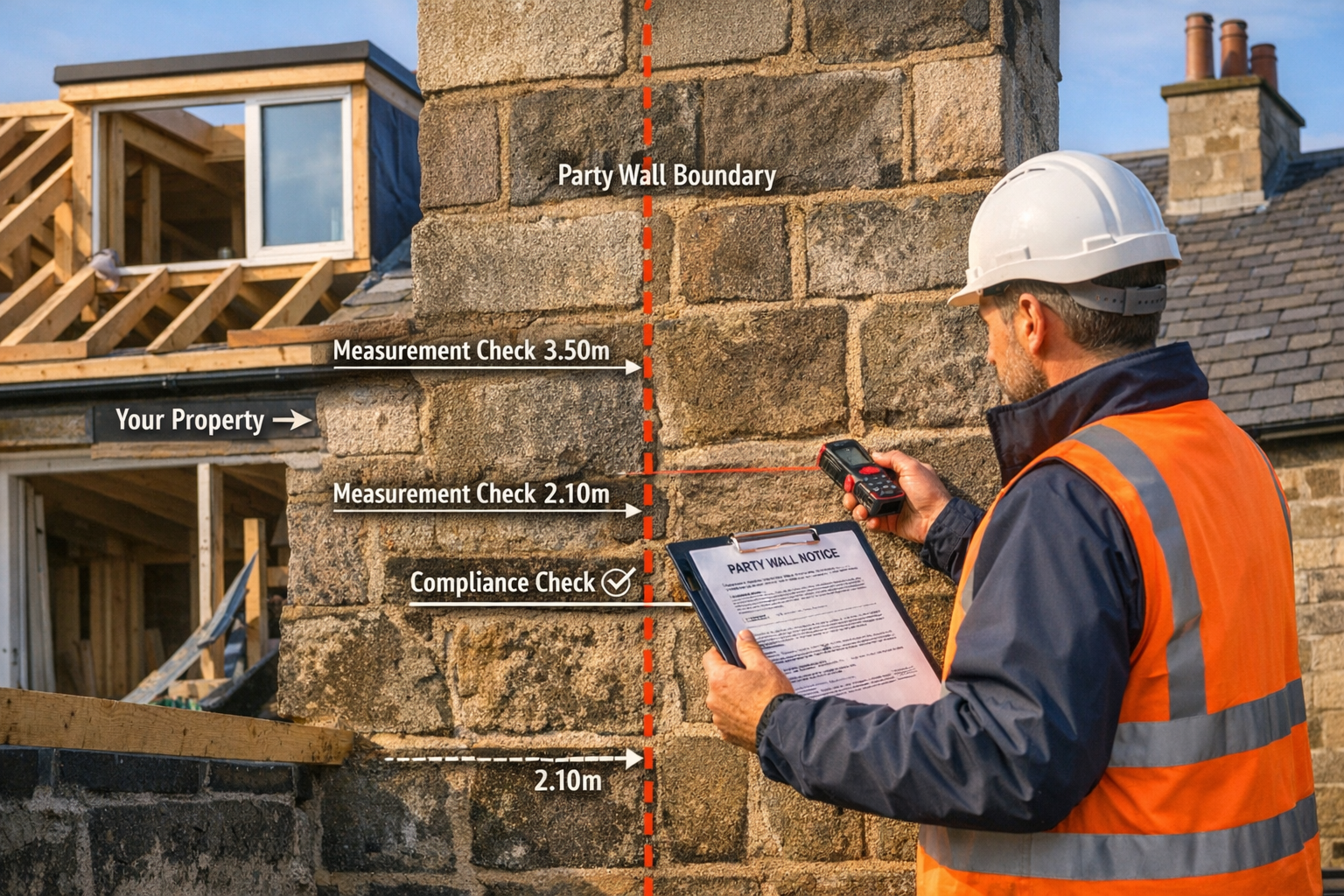
Key Takeaways
✅ Scotland's housing market strength in 2026 creates unprecedented demand for party wall surveying services, particularly for loft conversions and extensions that trigger notice requirements.
✅ Timing is everything: Proper party wall notice procedures must begin at least two months before construction starts, with strategic planning essential in a fast-moving market.
✅ Price trends impact negotiations: Rising property values strengthen the case for quality surveyor appointments and comprehensive party wall awards that protect both parties' interests.
✅ Professional surveyor expertise becomes invaluable when navigating complex neighbour relationships during high-stakes renovation projects in competitive markets.
✅ Understanding Scottish legal distinctions from England and Wales party wall legislation helps prevent costly delays and disputes.
Understanding Party Wall Frameworks in Scotland's Unique Legal Context
Scotland's approach to party wall matters differs significantly from the Party Wall Act 1996 that governs England and Wales. While Scottish law doesn't have identical statutory party wall legislation, common law principles and the Title Conditions (Scotland) Act 2003 provide the framework for shared boundary issues.
Key Legal Distinctions for Scottish Properties
Scottish property law operates under feudal-derived principles where boundary walls and structures are governed by:
- Common interest – automatic mutual rights and obligations regarding shared structures
- Common property – joint ownership arrangements requiring mutual consent
- Servitude rights – legal rights to use or access neighbouring property features
- Deed conditions – specific obligations written into property titles
These distinctions mean that while Scottish homeowners don't serve formal party wall notices under the 1996 Act, they still face legal obligations to neighbours when undertaking building work affecting shared structures. Understanding these nuances is crucial for surveyors working in Scotland's 2026 housing boom.
When Party Wall Considerations Apply in Scotland
Even without statutory party wall legislation, Scottish property owners must consider neighbour impacts when:
🏗️ Building on or near boundaries – Construction within 3 metres of neighbouring property
🔨 Altering shared walls – Any work affecting mutually-owned structures
🏠 Loft conversions – Extensions that may affect roof structures or boundaries
⚡ Foundation work – Excavations that could impact neighbouring properties
🪟 Structural modifications – Changes to load-bearing walls or shared elements
The absence of formal party wall legislation doesn't eliminate responsibility. Scottish homeowners must still obtain neighbour consent and potentially engage surveyors to document conditions and resolve disputes. For guidance on party wall surveyor costs, property owners should budget appropriately for professional services.
The Role of Building Warrants and Planning Permission
Scotland's building warrant system provides additional oversight that intersects with party wall considerations. Local authorities review proposed work for compliance with building regulations, but this doesn't replace the need for neighbour consultation on boundary matters.
Planning permission requirements in 2026 have evolved to accommodate the housing surge, with some local authorities streamlining approval for specific extension types. However, planning approval doesn't override common law obligations to neighbours regarding shared structures.
Party Wall Agreements in Scotland's 2026 Housing Surge: Surveyor Best Practices for Upward Price Trends and Market Dynamics
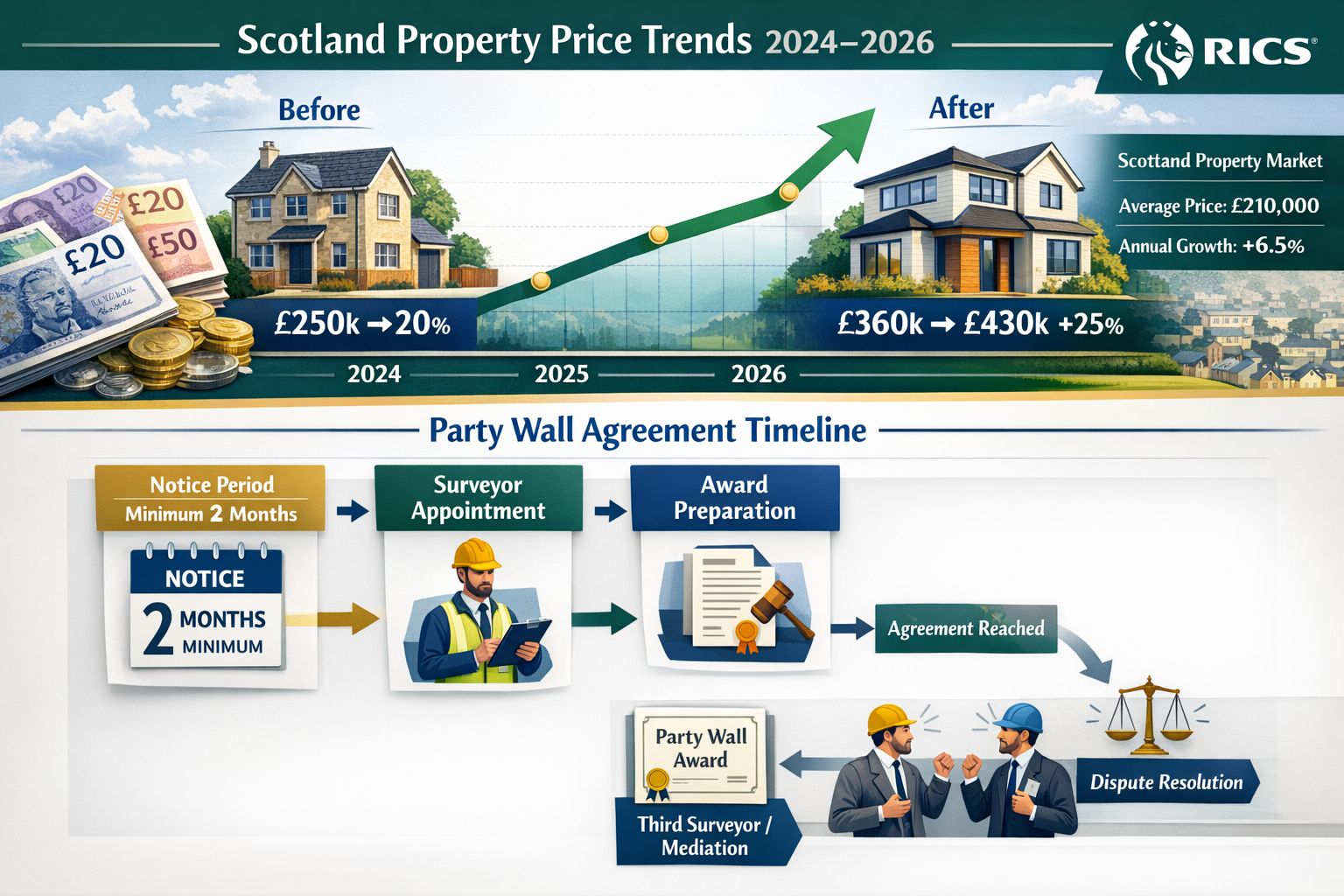
The 2026 housing market surge in Scotland creates a unique environment where property price appreciation intersects with increased renovation activity. According to industry reports, the UK housing market is experiencing remarkable recovery in 2026, with Scotland showing particular strength in urban centres like Edinburgh, Glasgow, and Aberdeen[1].
Price Trend Impact on Party Wall Decisions
Rising property values fundamentally change the calculus for both building owners and neighbours:
For Building Owners:
- Higher property values justify premium extension and conversion projects
- Increased equity enables financing for comprehensive renovations
- Competition for quality surveyors intensifies as demand surges
- Timeline pressures increase as owners rush to capitalize on market conditions
For Adjoining Owners:
- Greater financial stakes in protecting property values during neighbour's work
- Heightened concern about construction quality and potential damage
- Increased leverage in negotiations regarding access and protective measures
- More willingness to invest in independent surveyor representation
Market-Driven Surveyor Best Practices
Professional surveyors adapting to Scotland's 2026 housing surge should implement these strategic best practices:
| Best Practice | Implementation Strategy | Market Benefit |
|---|---|---|
| Early Engagement | Contact neighbours 3-4 months before planned work | Builds goodwill, allows schedule flexibility |
| Comprehensive Documentation | Detailed photographic and structural condition surveys | Protects all parties in appreciating market |
| Transparent Cost Estimates | Clear breakdowns of surveyor fees and potential awards | Manages expectations in high-value projects |
| Accelerated Timelines | Streamlined notice and response procedures | Captures market opportunities |
| Technology Integration | Digital surveys, 3D modelling, electronic documentation | Improves efficiency and accuracy |
Understanding what is a party wall dispute helps surveyors anticipate and prevent conflicts before they escalate.
Loft Conversion Surge and Party Wall Implications
The 2026 housing market has triggered an unprecedented surge in loft conversions, particularly in Scottish cities where ground-level expansion is limited[1]. These projects typically involve:
- Roof structure modifications affecting shared walls
- Dormer window installations near property boundaries
- Party wall exposure during construction phases
- Load redistribution impacting shared structural elements
Surveyors must adapt their practices to handle the volume of loft conversion inquiries while maintaining thorough documentation standards. The increased demand creates opportunities for specialists who understand both structural engineering principles and neighbour negotiation strategies.
Capitalizing on RICS-Reported Price Strength
The Royal Institution of Chartered Surveyors (RICS) data showing Scotland's market outperforming national averages provides context for surveyor recommendations. When property values rise 8-12% annually, as seen in some Scottish markets, the stakes for proper party wall procedures increase proportionally.
Strategic timing considerations include:
⏰ Notice Period Optimization – Begin party wall procedures during slower winter months for spring/summer construction
📈 Value Protection – Emphasize how proper procedures protect appreciated property values
🤝 Negotiation Leverage – Use market strength to justify quality materials and professional oversight
💰 Award Valuations – Ensure compensation calculations reflect current market values, not historical costs
For complex situations, consulting a party wall agreed surveyor can streamline the process and reduce conflict potential.
Surveyor Best Practices for Notice Timing, Awards, and Neighbour Negotiations

Effective party wall surveying in Scotland's 2026 market requires mastering three critical areas: notice timing, award preparation, and neighbour negotiations. Each element demands careful attention to both legal requirements and interpersonal dynamics.
Strategic Notice Timing in Fast-Moving Markets
While Scotland doesn't have statutory party wall notice requirements identical to England and Wales, best practice dictates formal written notification to neighbours well in advance of construction. In the current housing surge, optimal timing becomes even more critical.
Recommended Notice Timeline:
- Initial Informal Discussion (3-4 months before) – Casual conversation introducing project plans
- Formal Written Notice (2-3 months before) – Detailed description of proposed work, drawings, timeline
- Surveyor Appointment Period (6-8 weeks before) – Allow time for neighbour to appoint representation
- Award Preparation (4-6 weeks before) – Document conditions, agree procedures, establish protections
- Final Review Period (2-3 weeks before) – Address any outstanding concerns before construction
This extended timeline accommodates Scotland's common law framework while providing the structure that formal party wall legislation offers elsewhere. Understanding party wall act questions helps frame discussions even when the Act doesn't technically apply.
Preparing Comprehensive Party Wall Awards
A well-drafted party wall award serves as the roadmap for construction while protecting all parties' interests. In Scotland's appreciating property market, comprehensive awards become insurance policies against disputes that could derail valuable projects.
Essential Award Components:
📋 Detailed Work Description – Specific construction activities, methods, materials, and timeline
📸 Photographic Condition Survey – Comprehensive documentation of existing conditions in both properties
🛡️ Protective Measures – Required safeguards against damage, dust, noise, and structural impact
🔍 Inspection Provisions – Scheduled surveyor visits during critical construction phases
💵 Compensation Framework – Clear procedures for addressing any damage or diminution in value
⚖️ Dispute Resolution Process – Agreed mechanisms for handling disagreements during work
📅 Timeline Commitments – Realistic construction schedule with milestone dates
The award should reflect current market values when establishing compensation frameworks. In 2026's strong market, undervaluing potential impacts creates future conflict risks.
Mastering Neighbour Negotiations in High-Stakes Environments
Rising property values amplify emotions and stakes in neighbour discussions. Surveyors must blend technical expertise with diplomatic skills to navigate these sensitive conversations successfully.
Negotiation Best Practices:
✅ Lead with Empathy – Acknowledge neighbour concerns and validate their perspective on disruption
✅ Provide Comprehensive Information – Share detailed plans, timeline, and protective measures proactively
✅ Offer Tangible Reassurances – Concrete commitments on working hours, access, cleanliness, and communication
✅ Highlight Mutual Benefits – Explain how quality construction protects neighbourhood property values
✅ Maintain Professional Boundaries – Keep discussions focused on legitimate concerns, not personal conflicts
✅ Document Everything – Written records of all agreements, commitments, and decisions
When neighbours express concerns about boundary wall work, addressing these systematically prevents escalation.
Handling Disputes in Scotland's Legal Framework
Despite best efforts, some party wall situations escalate to formal disputes. Scotland's approach differs from the statutory dispute resolution under England's Party Wall Act, requiring alternative strategies.
Scottish Dispute Resolution Options:
- Mediation Services – Neutral third-party facilitators help parties reach voluntary agreements
- Expert Determination – Mutually-appointed surveyor makes binding decisions on technical matters
- Sheriff Court Actions – Formal legal proceedings for unresolved common interest or property rights issues
- Interdict Applications – Court orders preventing harmful construction activities
The absence of statutory party wall surveyors doesn't eliminate professional roles. Experienced surveyors often serve as expert witnesses or court-appointed assessors in Scottish property disputes.
Technology Integration for Modern Practice
2026's surveying best practices leverage digital tools that improve accuracy, efficiency, and client communication:
🖥️ 3D Laser Scanning – Precise structural documentation and condition recording
📱 Mobile Survey Apps – Real-time data collection, photo annotation, and report generation
☁️ Cloud Documentation – Secure sharing of plans, awards, and condition reports
🎥 Video Condition Surveys – Comprehensive visual records accessible to all parties
📊 Project Management Platforms – Timeline tracking, milestone notifications, and communication logs
These technologies become particularly valuable when managing multiple party wall projects simultaneously during market surges.
Professional Development and Market Specialization
Surveyors capitalizing on Scotland's 2026 housing surge should invest in continuous professional development focused on:
- Scottish property law and common interest principles
- Advanced structural assessment for loft conversions and extensions
- Negotiation and conflict resolution techniques
- Building regulation compliance and warrant procedures
- Market valuation methods for compensation calculations
Specializing in party wall matters during high-demand periods establishes professional reputation and referral networks that sustain practices beyond market cycles. Resources on party wall disputes provide valuable continuing education.
Compliance, Risk Management, and Future-Proofing Strategies
As Scotland's housing market continues its upward trajectory through 2026, surveyors must balance immediate project demands with long-term risk management. The current surge won't last indefinitely, making sustainable practice development essential.
Building Regulation Compliance in 2026
Scotland's building standards continue evolving, with recent amendments extending requirements for external wall systems and other safety considerations[2]. While these don't directly govern party wall agreements, they intersect with surveyor responsibilities.
Key Compliance Considerations:
- Building warrant applications must address neighbour impacts and boundary work
- Structural engineer involvement for significant party wall modifications
- Fire safety requirements for loft conversions affecting shared structures
- Energy efficiency standards that may require party wall insulation work
- Accessibility regulations for extensions and conversions
Surveyors should maintain current knowledge of legal requirements for party walls even as regulations evolve.
Insurance and Professional Indemnity
The high-value nature of 2026's property market makes professional indemnity insurance non-negotiable. Surveyors should ensure coverage adequately reflects:
- Increased property values and potential claim amounts
- Volume of work during surge periods
- Scope of services including awards, inspections, and dispute resolution
- Scottish legal framework distinctions from England and Wales practice
Future Market Considerations
While capitalizing on 2026's housing surge, prudent surveyors prepare for eventual market normalization. Strategies include:
📚 Building Diverse Expertise – Expand beyond party wall work to broader surveying services
🤝 Cultivating Client Relationships – Transform project clients into long-term referral sources
🌐 Geographic Expansion – Develop practice areas across multiple Scottish regions
💼 Service Diversification – Add complementary offerings like boundary surveys or structural assessments
🎓 Mentorship and Training – Develop junior surveyors to handle routine matters efficiently
Understanding broader market dynamics through resources on boundary disputes resolution provides context for sustainable practice development.
Conclusion
Party Wall Agreements in Scotland's 2026 Housing Surge: Surveyor Best Practices for Upward Price Trends represent a unique convergence of market opportunity and professional challenge. Scotland's property market strength, driven by RICS-reported price appreciation outpacing national averages, creates unprecedented demand for expert surveying services as homeowners pursue extensions, loft conversions, and renovations to capitalize on rising values.
Successful surveyors in this environment master three critical competencies:
- Technical Expertise – Understanding Scotland's distinct common law framework for shared boundaries, building regulations, and structural assessment requirements
- Strategic Timing – Implementing notice procedures and award preparation that accommodate fast-moving market conditions while protecting all parties
- Interpersonal Skills – Navigating neighbour negotiations with empathy and professionalism when financial stakes are elevated by property appreciation
The current housing surge won't last forever, but the professional relationships, reputation, and expertise developed during this period create lasting practice foundations. Surveyors who balance immediate demand with sustainable business development position themselves for long-term success regardless of market cycles.
Actionable Next Steps
For surveyors looking to capitalize on Scotland's 2026 housing surge:
✅ Update your knowledge of Scottish property law distinctions from England and Wales frameworks
✅ Invest in technology that improves documentation quality and client communication
✅ Develop template documents for notices, awards, and condition surveys adapted to Scottish context
✅ Build referral networks with architects, builders, and solicitors handling renovation projects
✅ Enhance negotiation skills through training focused on high-stakes neighbour discussions
✅ Monitor market trends to anticipate demand shifts and adjust capacity accordingly
For property owners planning extensions or conversions, engaging qualified surveyors early in the planning process prevents costly delays and neighbour conflicts. The investment in professional party wall services pays dividends through smoother projects, protected property values, and preserved neighbour relationships.
Scotland's 2026 housing surge presents remarkable opportunities for those prepared to navigate its complexities with expertise, professionalism, and strategic foresight. By implementing surveyor best practices tailored to upward price trends and market dynamics, professionals can deliver exceptional value while building sustainable, respected practices.
References
[1] Party Wall Surveying Surge In 2026 Loft Conversions Navigating High Demand Compliance During Housing Uptick – https://nottinghillsurveyors.com/blog/party-wall-surveying-surge-in-2026-loft-conversions-navigating-high-demand-compliance-during-housing-uptick
[2] Building Safety Consolidation 2025 Building Momentum Change 2026 – https://www.womblebonddickinson.com/uk/insights/articles-and-briefings/building-safety-consolidation-2025-building-momentum-change-2026
[3] Scottish Elections 2026 Our Priorities For Tackling The Housing Emergency – https://www.propertymark.co.uk/resource/scottish-elections-2026-our-priorities-for-tackling-the-housing-emergency.html