The rental property landscape is undergoing seismic shifts in 2026, and landlords planning extension projects face a complex web of compliance requirements. Party Wall Agreements Under Stricter 2026 Rental Regulations: Compliance for Landlord Extension Projects has become a critical concern as the Renters' Rights Act takes effect on May 1, 2026, fundamentally changing how buy-to-let investors approach property improvements[2]. With civil penalties reaching up to £40,000 for serious breaches, understanding the intersection between traditional party wall procedures and new rental regulations isn't just good practice—it's essential for protecting your investment and avoiding costly legal pitfalls.
For landlords in high-demand areas, the stakes have never been higher. Extension projects that once seemed straightforward now require careful navigation of both the Party Wall Act 1996 and emerging standards like Awaab's Law, which demands rigorous attention to property conditions and tenant welfare. This comprehensive guide explores how to ensure your party wall agreements withstand regulatory scrutiny while maintaining profitable rental operations.
Key Takeaways
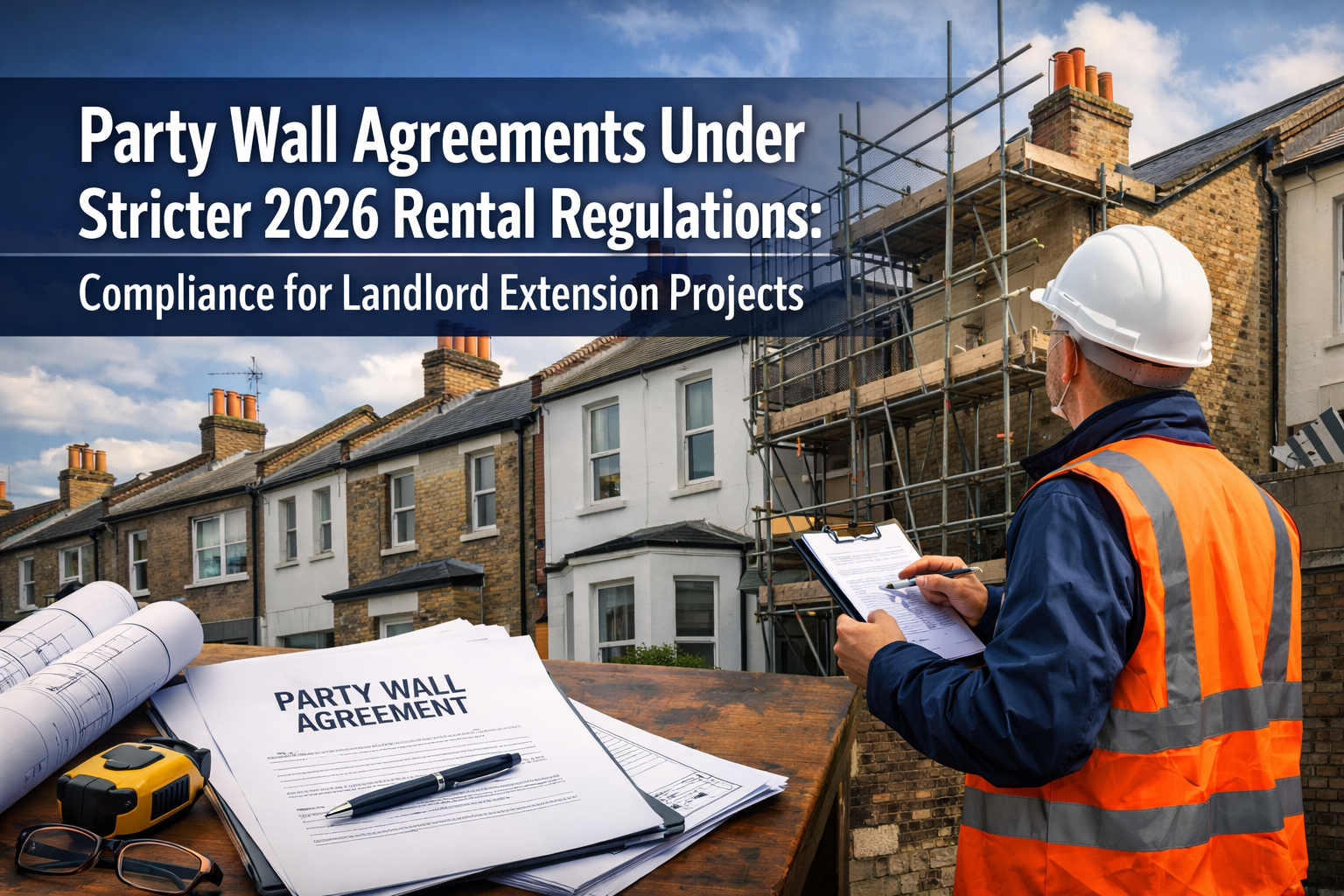
- Mandatory two-month notice periods for party wall works must align with new rental regulation timelines to avoid tenant disruption and compliance violations
- Schedule of condition documentation now serves dual purposes: protecting against party wall disputes and demonstrating Awaab's Law compliance for rental properties
- Civil penalties up to £40,000 apply from May 1, 2026, making proper party wall procedures critical for avoiding regulatory breaches during extension projects
- Rolling periodic tenancies under the Renters' Rights Act require landlords to coordinate extension works with tenant rights, creating new challenges for party wall timelines
- Professional surveyor appointments are essential for creating defensible party wall awards that satisfy both neighbor requirements and rental property standards
Understanding the 2026 Regulatory Landscape for Landlord Extensions
The Renters' Rights Act: Game-Changing Provisions
The Renters' Rights Act represents the most significant overhaul of rental legislation in decades. Taking effect May 1, 2026, this legislation converts all fixed-term assured shorthold tenancies to rolling periodic tenancies without end dates[2]. For landlords planning extension projects, this creates immediate complications.
Previously, landlords could time major building works around tenancy end dates, minimizing disruption and legal complexity. Now, with continuous tenancies, every extension project must be carefully coordinated with tenant rights and welfare obligations. The Act also introduces:
- 🚫 Rental bidding bans: Landlords must publish asking rent and cannot accept offers above this price[2]
- ⚖️ Enhanced enforcement: Civil penalties of up to £7,000 for standard breaches and £40,000 for serious offences[3]
- 📋 Stricter property standards: Implicit requirements for maintaining rental properties to higher specifications
Awaab's Law and Property Condition Standards
Awaab's Law, introduced following the tragic death of a two-year-old from prolonged exposure to mold, imposes strict timelines for addressing health hazards in rental properties. While primarily focused on repairs, the law's principles extend to any building work affecting tenant welfare.
When conducting extension projects, landlords must ensure:
- Pre-existing conditions are documented through comprehensive schedules of condition
- Works don't create new health hazards such as damp, inadequate ventilation, or structural defects
- Tenant communication is thorough regarding timelines, access requirements, and temporary disruptions
This regulatory framework makes professional party wall agreements more critical than ever, as they provide documented evidence of proper procedures and condition monitoring.
Party Wall Agreements Under Stricter 2026 Rental Regulations: Essential Compliance Steps
Mandatory Notice Periods and Documentation
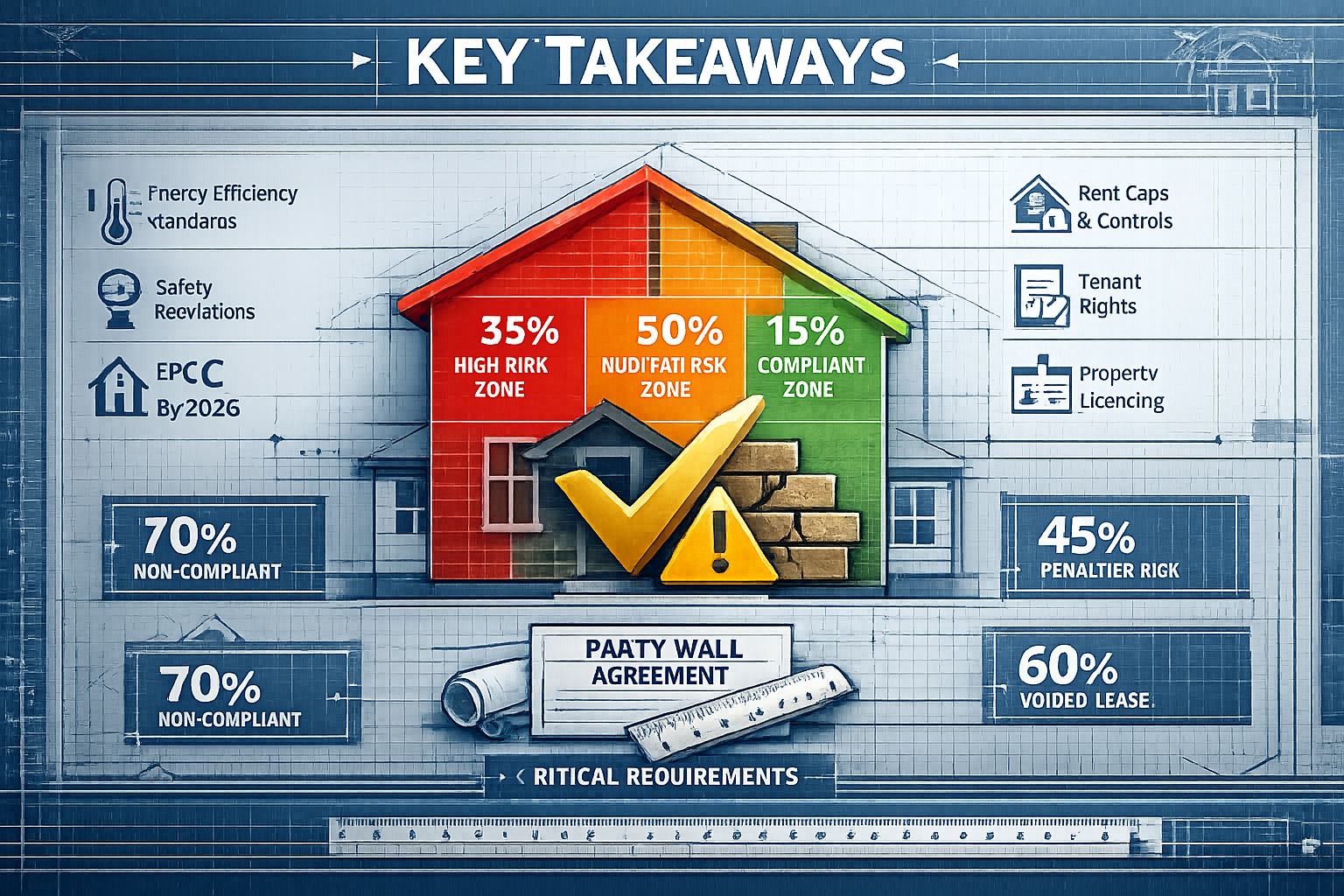
The Party Wall Act 1996 establishes clear notice requirements that landlords must follow, regardless of rental regulations[1]. However, in 2026, these timelines intersect with tenant rights in ways that demand careful planning:
Two-Month Notice Period: Required for building works affecting a party wall or boundary[1]. This notice must be served on adjoining owners and, in rental properties, should be coordinated with tenant communication protocols under the Renters' Rights Act.
One-Month Notice Period: Required for excavation within three meters (or six meters if going deeper) of a neighboring building, or constructing a new boundary wall[1]. Understanding the 3-metre rule is essential for proper compliance.
| Work Type | Notice Period | Key Documents Required |
|---|---|---|
| Party wall building works | 2 months | Party Wall Notice, Schedule of Condition, Building Plans |
| Excavation near boundary | 1 month | Excavation Notice, Structural Engineer Report |
| New boundary wall | 1 month | Line of Junction Notice, Construction Details |
| Loft conversion affecting party wall | 2 months | Party Wall Notice, Structural Calculations, Loft Conversion Plans |
The Critical Role of Schedule of Condition
A schedule of condition documents the state of adjoining properties before works commence, serving as essential evidence if disputes arise[1]. Under 2026 regulations, this document gains additional importance:
✅ Baseline for Awaab's Law compliance: Demonstrates pre-existing property conditions, protecting landlords from liability for issues present before extension works
✅ Tenant protection evidence: Shows due diligence in protecting rental property standards during construction
✅ Dispute prevention: Provides objective evidence if neighbors claim damage from extension works
Professional surveyors typically conduct schedule of condition inspections using:
- High-resolution photography of all relevant areas
- Detailed written descriptions of existing defects or conditions
- Measurements and structural assessments
- Video documentation for complex properties
This documentation must be shared with all parties and forms part of the formal party wall award.
Appointing Surveyors: Your Compliance Safety Net
When neighbors don't consent to proposed works, or when disputes arise, the Party Wall Act requires surveyor appointment. In 2026's stricter regulatory environment, choosing the right surveyor approach is crucial:
Agreed Surveyor: Both parties appoint a single surveyor to prepare the party wall award. This cost-effective option works well when relationships are amicable. Learn more about party wall agreed surveyors.
Separate Surveyors: Each party appoints their own surveyor, who then work together to produce the award. This approach provides stronger protection but increases costs.
Third Surveyor: Appointed to resolve disagreements between the two surveyors, ensuring the process continues even if disputes arise.
"Professional surveyor involvement isn't just about compliance—it's about creating defensible documentation that withstands scrutiny from neighbors, tenants, and regulatory authorities."
Navigating Extension Projects: Buy-to-Let Best Practices for 2026
Coordinating Construction with Tenant Rights
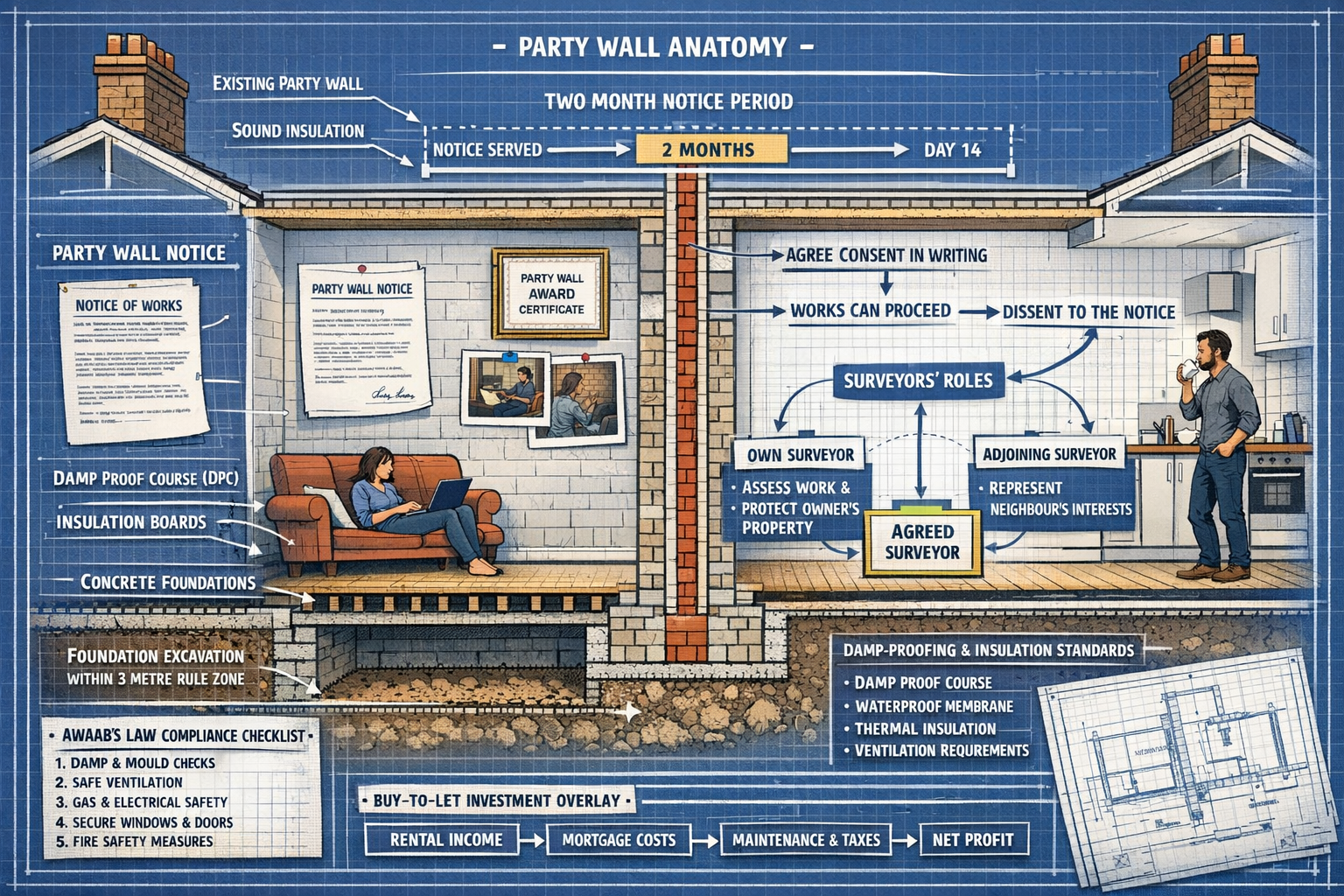
The shift to rolling periodic tenancies fundamentally changes how landlords approach extension projects. Party Wall Agreements Under Stricter 2026 Rental Regulations: Compliance for Landlord Extension Projects requires balancing multiple stakeholder interests:
Tenant Communication Protocol:
- Early notification (minimum 8-12 weeks before works): Inform tenants of planned extension, expected timeline, and potential disruptions
- Written documentation: Provide detailed information about noise, access requirements, and safety measures
- Rent adjustments: Consider temporary rent reductions if works significantly impact tenant enjoyment
- Alternative accommodation: For major works, explore temporary relocation options with clear terms
Neighbor Engagement Strategy:
- Pre-notice consultation: Discuss plans informally before serving formal party wall notices
- Visual presentations: Share architectural drawings and 3D renderings to address concerns proactively
- Construction management plan: Outline working hours, noise mitigation, and site security measures
- Regular updates: Maintain communication throughout the project to prevent disputes
Managing Excavation and Foundation Works
Extension projects frequently require excavation near party walls, triggering specific legal requirements. The three-meter rule demands particular attention:
Within 3 Meters of Neighbor's Foundation:
- Formal notice required if excavating deeper than neighbor's foundation
- Structural engineer assessment mandatory
- Underpinning may be necessary to protect adjoining property
- Schedule of condition must document existing foundation conditions
Between 3-6 Meters of Neighbor's Foundation:
- Notice required only if excavating to a depth that draws a 45-degree line intersecting neighbor's foundation
- Less stringent requirements but still demands professional assessment
- Documentation remains critical for regulatory compliance
Ensuring Structural Integrity and Insulation Standards
Modern extension projects must meet current building regulations, which in 2026 include enhanced energy efficiency requirements. When working on party walls, this creates specific challenges:
Insulation Considerations:
- Party wall insulation must not compromise structural integrity
- Thermal bridging must be addressed to prevent condensation and mold
- Acoustic insulation protects both properties from noise transmission
- Vapor barriers prevent moisture migration that could trigger Awaab's Law violations
Structural Protection Measures:
- Temporary support systems during construction
- Monitoring systems to detect settlement or movement
- Professional oversight throughout construction phases
- Final inspection and sign-off by structural engineers
Risk Management: Avoiding Disputes and Penalties
Common Pitfalls in Party Wall Compliance
Even experienced landlords make costly mistakes when navigating party wall procedures under 2026 regulations. Understanding these pitfalls helps ensure compliance:
❌ Starting work before agreement: Some landlords begin construction assuming neighbors won't object, only to face stop-work orders and potential party wall disputes
❌ Inadequate documentation: Poor quality schedules of condition leave landlords vulnerable to false damage claims
❌ Ignoring tenant welfare: Focusing solely on neighbor relations while neglecting tenant rights under the Renters' Rights Act
❌ Choosing unqualified surveyors: Attempting to save money with inexperienced professionals who produce inadequate awards
❌ Poor construction management: Allowing contractors to work outside agreed hours or create excessive disruption
Dispute Resolution Strategies
When conflicts arise despite best efforts, having clear resolution strategies protects your investment:
Early Intervention Approach:
- Immediate communication: Address concerns as soon as they're raised
- Documentation review: Ensure all party wall procedures were followed correctly
- Professional mediation: Engage surveyors to facilitate discussions
- Remediation offers: Propose solutions before disputes escalate
Formal Dispute Process:
- Understand what constitutes a party wall dispute legally
- Follow surveyor recommendations for resolution
- Maintain detailed records of all communications
- Consider legal advice for complex situations
Damage Claims Management:
If neighbors claim damage to property during extension works:
- Reference pre-work schedule of condition immediately
- Arrange independent assessment by third surveyor
- Document all construction monitoring records
- Engage insurance providers promptly if claims are valid
Financial Planning: Costs and Contingencies
Professional party wall compliance involves significant costs that landlords must factor into extension budgets:
Typical Cost Breakdown:
- Surveyor fees: £700-£1,500 for straightforward projects; £2,000-£5,000 for complex extensions[12]
- Schedule of condition: £300-£800 depending on property size
- Structural engineer reports: £500-£1,500
- Legal fees (if disputes arise): £1,000-£10,000+
- Contingency for remediation: 10-15% of total project cost
Understanding party wall surveyor costs helps with accurate budgeting and prevents mid-project financial surprises.
Insurance Considerations:
- Verify contractor insurance covers party wall works
- Ensure landlord insurance includes extension projects
- Consider professional indemnity insurance for major works
- Maintain separate contingency funds for unexpected issues
Strategic Planning: Party Wall Agreements Under Stricter 2026 Rental Regulations
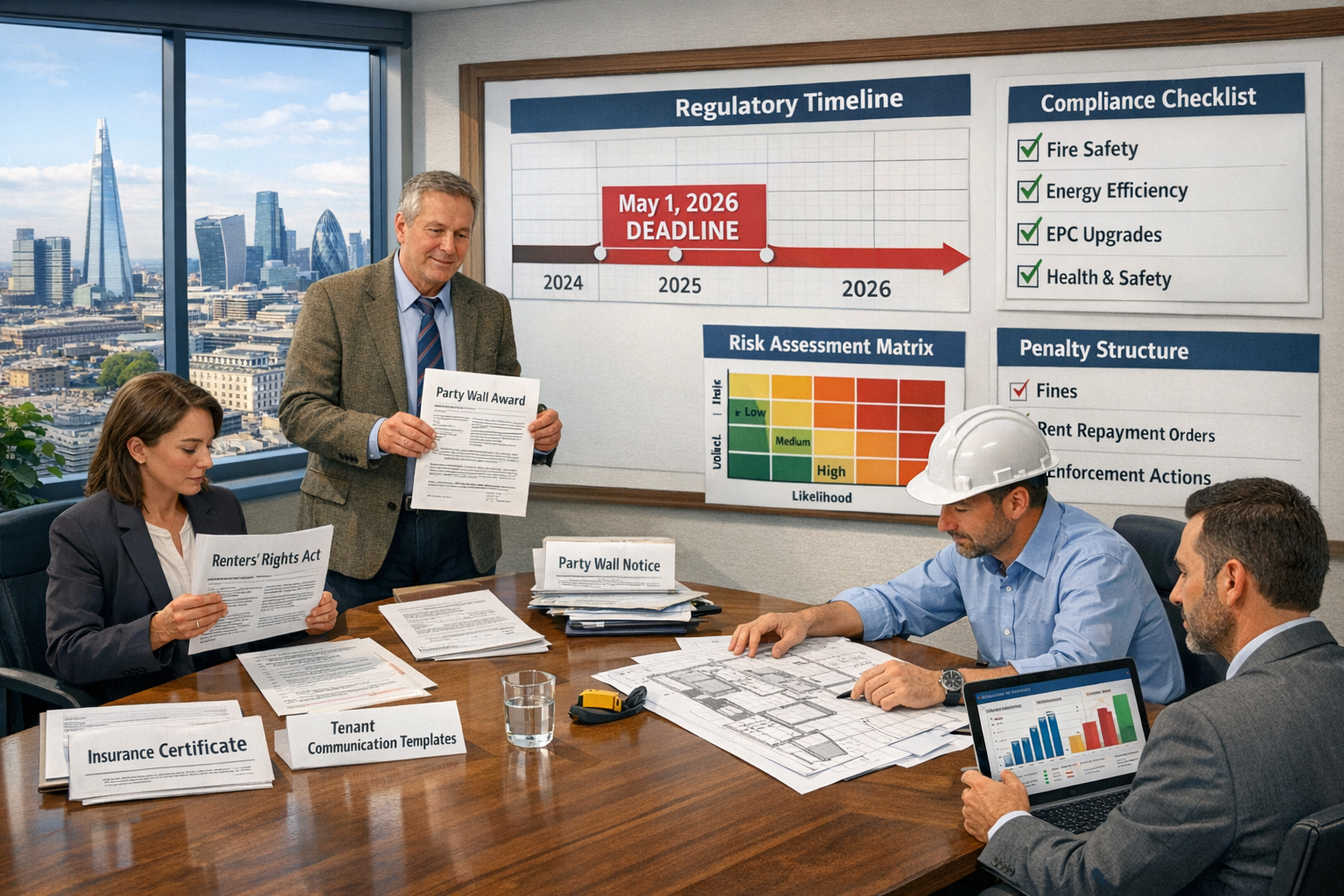
Timeline Development for Compliant Projects
Successful extension projects in 2026 require meticulous timeline planning that integrates party wall procedures with rental regulations:
Pre-Planning Phase (Months 1-2):
- Initial design and feasibility assessment
- Preliminary neighbor consultations
- Tenant notification of potential future works
- Budget development including compliance costs
Formal Notice Period (Months 3-4):
- Serve party wall notices (2 months for building works)
- Await neighbor responses and consent
- Appoint surveyors if necessary
- Complete schedule of condition inspections
Award and Preparation (Months 5-6):
- Finalize party wall award with all conditions
- Secure building regulations approval
- Confirm contractor availability and insurance
- Establish tenant accommodation arrangements
Construction Phase (Months 7-12):
- Implement construction management plan
- Maintain regular communication with all parties
- Monitor for any structural issues or disputes
- Document progress for regulatory compliance
Completion and Sign-Off (Month 13):
- Final inspections by building control
- Post-construction schedule of condition
- Formal closure of party wall matters
- Tenant reinstatement and final communications
Obtaining Proper Consent in the New Regulatory Environment
Party wall consent takes on new dimensions under 2026 regulations. Landlords must secure multiple layers of approval:
Neighbor Consent Requirements:
- Written acknowledgment of party wall notice
- Agreement to proposed works and timeline
- Acceptance of surveyor appointments if applicable
- Sign-off on schedule of condition findings
Tenant Consent Considerations:
While tenants don't have formal party wall rights, the Renters' Rights Act creates implicit requirements:
- Reasonable notice of major works
- Opportunity to raise welfare concerns
- Fair treatment regarding rent and access
- Protection from retaliatory eviction for raising issues
Local Authority Approvals:
- Planning permission for qualifying extensions
- Building regulations approval
- Party wall notice registration (where required)
- Compliance certificates for completion
Leveraging Professional Expertise
The complexity of Party Wall Agreements Under Stricter 2026 Rental Regulations: Compliance for Landlord Extension Projects makes professional support invaluable:
Chartered Surveyors: Provide comprehensive party wall services, from initial notices through final awards. Their expertise ensures documentation withstands regulatory scrutiny.
Structural Engineers: Essential for excavation projects and complex extensions, providing technical assessments that protect both properties.
Property Solicitors: Offer legal guidance on tenant rights, regulatory compliance, and dispute resolution strategies.
Specialist Contractors: Experienced in party wall works understand the sensitivities and procedures required for compliant construction.
Working with chartered surveyors in London and surrounding areas ensures access to professionals familiar with local requirements and high-demand rental markets.
Future-Proofing Your Rental Property Portfolio
Anticipating Further Regulatory Changes
The 2026 regulatory landscape represents just one phase of ongoing rental sector reform. Forward-thinking landlords should prepare for:
Potential Future Requirements:
- Enhanced energy performance standards (EPC ratings)
- Stricter property condition inspections
- Expanded tenant welfare obligations
- Digital documentation and reporting systems
Strategic Adaptation:
- Invest in high-quality extensions that exceed minimum standards
- Maintain comprehensive digital records of all works
- Build relationships with reliable professional advisors
- Stay informed about regulatory developments through industry bodies
Building Positive Stakeholder Relationships
Long-term success in rental property investment depends on maintaining good relationships with all parties:
Neighbor Relations:
- Regular communication beyond formal requirements
- Consideration of their concerns and preferences
- Fair handling of any issues that arise
- Building goodwill for future projects
Tenant Satisfaction:
- Transparent communication about property improvements
- Minimizing disruption during works
- Demonstrating commitment to property standards
- Responding promptly to concerns
Professional Networks:
- Developing trusted relationships with surveyors and contractors
- Participating in landlord associations and forums
- Sharing knowledge and best practices
- Accessing collective expertise for complex situations
Conclusion
Party Wall Agreements Under Stricter 2026 Rental Regulations: Compliance for Landlord Extension Projects demands a sophisticated, multi-faceted approach that balances legal requirements, neighbor relations, tenant welfare, and financial viability. The convergence of the Renters' Rights Act, Awaab's Law principles, and traditional party wall procedures creates unprecedented complexity for buy-to-let investors pursuing property improvements.
Success in this environment requires meticulous planning, professional expertise, and comprehensive documentation. The two-month notice periods for party wall works must be carefully integrated with tenant communication protocols. Schedule of condition inspections serve dual purposes—protecting against neighbor disputes while demonstrating Awaab's Law compliance. Professional surveyor appointments provide essential protection against the civil penalties of up to £40,000 that now apply for regulatory breaches.
Actionable Next Steps
For landlords planning extension projects in 2026:
-
Conduct early assessment: Evaluate your proposed extension against both party wall requirements and rental regulations before committing resources
-
Engage professionals immediately: Appoint experienced chartered surveyors and structural engineers at the planning stage, not after problems arise
-
Develop comprehensive timelines: Create detailed project schedules that account for notice periods, tenant rights, and construction phases
-
Invest in quality documentation: Ensure schedules of condition, party wall awards, and tenant communications are thorough and professionally prepared
-
Build contingency buffers: Allow extra time and budget for unexpected issues, disputes, or regulatory complications
-
Maintain open communication: Keep neighbors and tenants informed throughout the process, addressing concerns proactively
-
Review insurance coverage: Verify that all policies adequately cover party wall works and potential disputes
The rental property landscape has fundamentally changed, but opportunities remain for landlords who approach extension projects with proper diligence and professional support. By understanding and implementing compliant party wall procedures within the broader regulatory framework, you can protect your investment, maintain positive relationships, and successfully enhance your rental portfolio's value in high-demand areas.
For expert guidance on navigating party wall matters in the current regulatory environment, professional chartered surveyors provide the specialized knowledge and documentation needed to ensure your extension projects proceed smoothly and compliantly.
References
[1] Party Wall Agreement – https://hoa.org.uk/advice/guides-for-homeowners/i-am-improving/party-wall-agreement/
[2] Rules For Landlords 2026 – https://www.simplybusiness.co.uk/knowledge/landlord-regulation/rules-for-landlords-2026/
[3] Landlords 2026 – https://theindependentlandlord.com/landlords-2026/