

The UK property market in 2026 presents a unique landscape where modest growth meets increasing demand for space. As homeowners look to expand their new build properties through Permitted Development extensions, Party Wall Challenges for 2026 New Build Expansions: Surveys for 2-5% Price Growth and Defect Risks have emerged as critical considerations that can make or break expansion projects. With property values expected to rise between 2-5% this year, understanding the intersection of party wall procedures, RICS requirements, and defect identification becomes essential for protecting your investment and maintaining neighbourly relations.

Key Takeaways
- 🏗️ Party wall procedures are mandatory for most new build extensions, with surveyor fees ranging from £750-£1,800 per neighbour and total Party Wall Award costs around £1,000[1][4]
- 📊 The 2026 market expects 2-5% price growth, making proper party wall compliance crucial for protecting property values during expansion projects
- 🔍 New builds carry specific defect risks that require professional surveys before undertaking party wall work, including settlement issues and construction quality concerns
- ⏱️ Timeline planning is critical, with party wall processes taking 2-4 months in London, requiring early engagement with neighbours and surveyors[4]
- 📋 RICS notices and awards provide legal protection for both building and adjoining owners, ensuring documented conditions before construction begins
Understanding Party Wall Challenges for 2026 New Build Expansions
What Makes New Build Extensions Different?
New build properties present unique challenges when it comes to party wall matters. Unlike older Victorian or Edwardian terraces with established settlement patterns, new builds are still undergoing their initial settlement phase. This creates additional complexity when planning extensions or alterations that affect shared walls.
The Party Wall etc. Act 1996 applies equally to new builds, but the risks and considerations differ significantly. Modern construction methods, while generally superior, can mask underlying issues that only become apparent during expansion work. Properties built within the last 5-10 years may still be under NHBC warranty, adding another layer of documentation requirements.
The 2026 Market Context: Modest Growth and Expansion Demand
Property market forecasts for 2026 indicate steady but modest growth of 2-5% across most UK regions. This measured increase creates an interesting dynamic: homeowners are choosing to expand existing properties rather than move, making the most of their current investments. For new build owners, this often means maximizing permitted development rights through:
- Rear extensions up to 6 meters (terraced/semi-detached)
- Single-storey side extensions
- Loft conversions affecting party walls
- Basement excavations near boundaries
The financial calculation is compelling. With moving costs (stamp duty, legal fees, removal expenses) often exceeding 5% of property value, extending becomes the economically sensible choice—provided party wall matters are handled correctly.
Key Party Wall Challenges Specific to 2026
Several factors make 2026 particularly challenging for party wall matters on new builds:
Increased Scrutiny: Neighbours are more aware of their rights, with online resources and party wall consent information readily available. Expect more detailed questions and formal processes rather than informal agreements.
Supply Chain Delays: Construction material availability continues to affect timelines, making accurate scheduling in Party Wall Notices more difficult. Building owners must factor in potential delays when serving notices.
Surveyor Availability: Demand for qualified party wall surveyors has increased, with fees reflecting this scarcity. In London, expect to pay £150-£200 per hour for experienced professionals[2].
Insurance Requirements: Lenders and insurers increasingly require documented party wall procedures, particularly for new builds where defects might not yet be apparent.
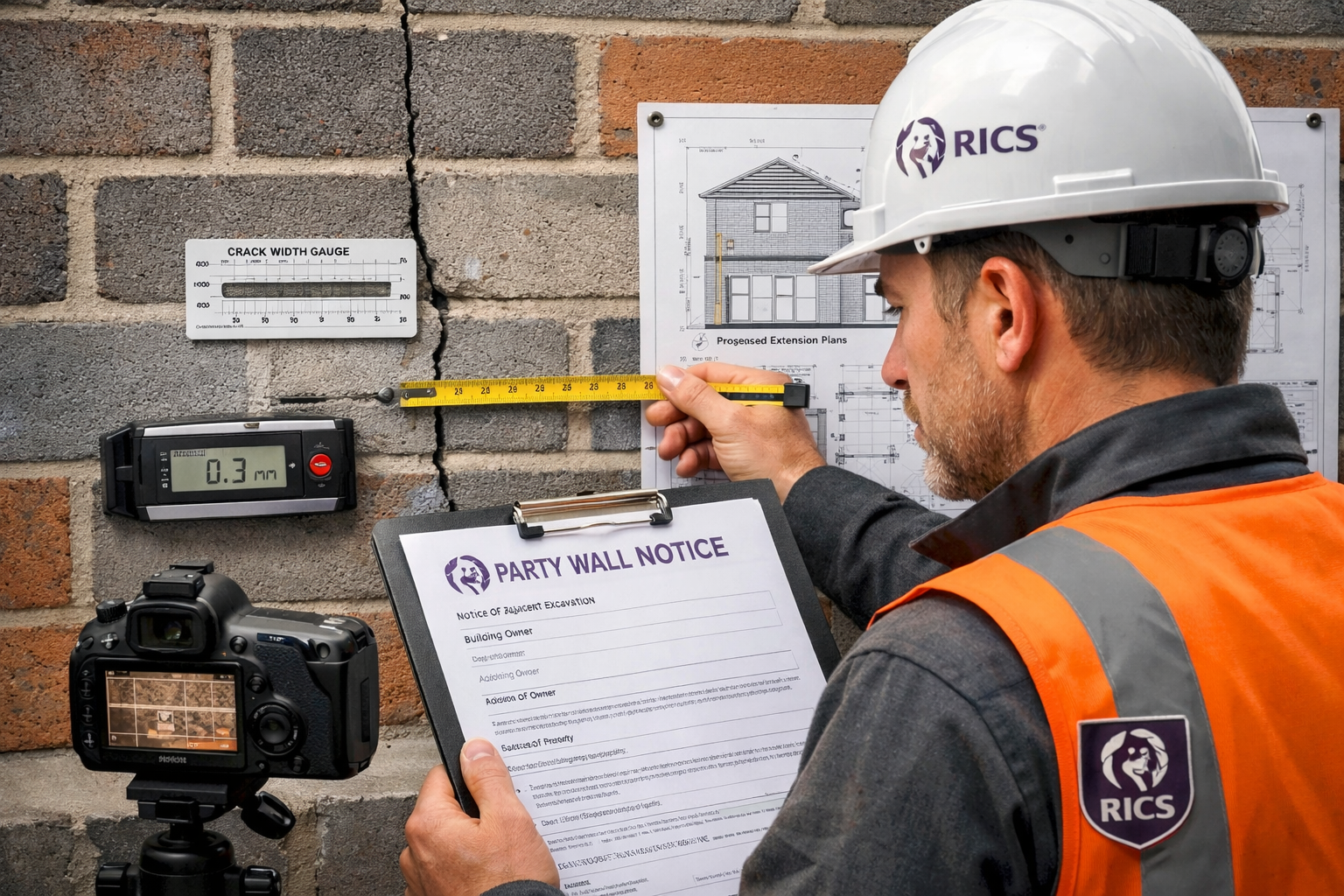
RICS Notices, Awards, and the Party Wall Process for New Build Expansions
Serving Party Wall Notices: Your Legal Obligations
The Party Wall etc. Act 1996 requires building owners to serve formal notices on adjoining owners before commencing work. For new build expansions, three types of notices may apply:
Party Structure Notice: Required when working directly on a party wall (e.g., raising the wall height, inserting a damp-proof course, or cutting into the wall for steel beams). This notice must be served at least two months before work begins[1].
Line of Junction Notice: Necessary when building a new wall at or astride the boundary line with a neighbour. Also requires two months' notice.
Party Wall Excavation Notice: Essential when excavating within 3 meters of a neighbour's structure if going deeper than their foundations, or within 6 meters if cutting a 45-degree plane. This requires one month's notice[1].
For new build properties, the excavation notice is particularly relevant. Modern foundations are typically deeper than older properties, but neighbouring extensions or underpinning may have created complex underground conditions.
The Party Wall Award: Your Protection Document
When neighbours consent to your party wall notice, or when appointed surveyors reach agreement, a Party Wall Award is produced. This legally binding document serves as your insurance policy against future disputes.
A comprehensive Party Wall Award includes:
| Award Component | Purpose | Importance for New Builds |
|---|---|---|
| Schedule of Condition | Documents existing state with photos | Critical for properties still under warranty |
| Work Description | Details permitted construction methods | Ensures compliance with building regulations |
| Access Rights | Specifies when and how access is granted | Prevents construction delays |
| Cost Allocation | States who pays surveyor fees | Typically building owner pays both sides |
| Dispute Resolution | Outlines procedure for disagreements | Provides clear escalation path |
The average cost for a Party Wall Award is approximately £1,000 in total[1][2], though complex cases involving multiple neighbours or extensive work can exceed this. For London properties, budget £750-£1,800 per neighbour for surveyor fees[4].
Timeline Expectations for 2026 Projects
Understanding the party wall timeline is crucial for project planning. In London and the South East, the process typically takes 2-4 months[4], broken down as follows:
Weeks 1-2: Prepare and serve party wall notices to neighbours. Ensure notices are technically correct and include all required information.
Weeks 3-4: Neighbour response period. They can consent, dissent, or fail to respond (which counts as dissent under the Act).
Weeks 5-8: If dissent occurs, appoint surveyors. Neighbours can appoint their own surveyor or agree to use your surveyor as an "agreed surveyor" (which can reduce costs).
Weeks 9-12: Surveyors conduct inspections, prepare schedules of condition, and draft the Party Wall Award.
Week 13+: Award served, 14-day appeal period, then work can commence.
For new build properties, add extra time for identifying and documenting any existing defects. Professional specific defect reports may be necessary before the party wall survey begins.
Working with Party Wall Surveyors: What to Expect
Selecting the right party wall surveyor is crucial. For new build expansions, look for professionals with:
- RICS accreditation (Royal Institution of Chartered Surveyors)
- Specific experience with new builds and modern construction methods
- Local knowledge of typical construction practices in your area
- Professional indemnity insurance covering party wall work
The surveyor's role includes conducting thorough inspections, preparing detailed schedules of condition, and ensuring the Award protects both parties' interests. For new builds, this means identifying any settlement cracks, construction defects, or warranty issues that might complicate matters.
When what is a party wall dispute arises, having appointed a qualified surveyor from the outset provides invaluable protection. They act as impartial experts, even when appointed by one party.

Identifying Defect Risks in New Builds Before Party Wall Work
Common Defects in New Build Properties
New build properties, despite modern construction standards and NHBC warranties, can harbour defects that become critical during party wall work. Understanding these risks is essential for Party Wall Challenges for 2026 New Build Expansions: Surveys for 2-5% Price Growth and Defect Risks.
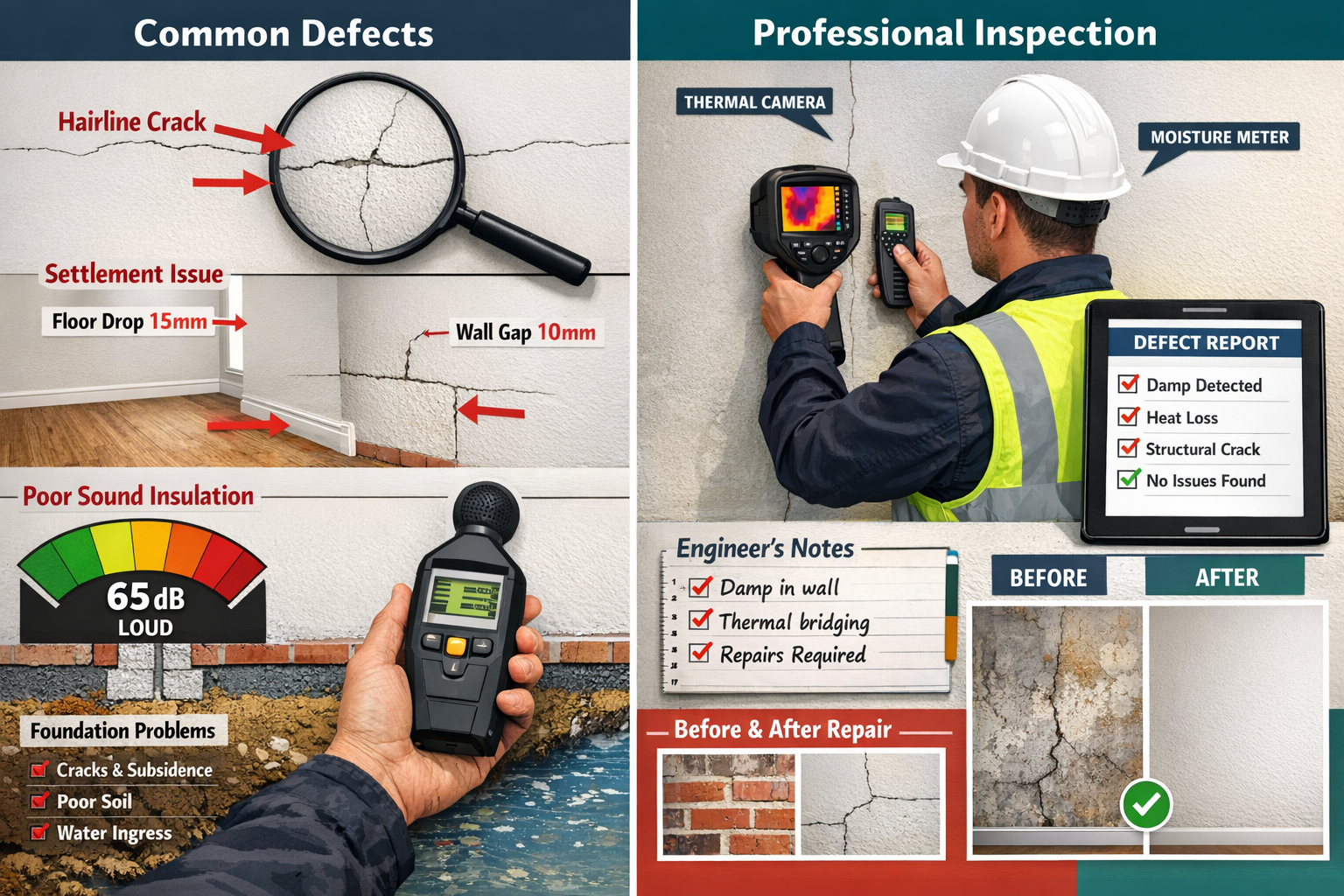
Settlement Cracks: New properties settle for 2-5 years after construction. Hairline cracks around windows, doors, and along party walls are common but must be documented before expansion work begins. Failure to record these can lead to disputes when neighbours claim your work caused the damage.
Sound Insulation Deficiencies: Modern building regulations require specific sound insulation standards between properties. Many new builds barely meet these requirements. Extensions that involve work on party walls can compromise existing insulation, leading to complaints and potential legal issues.
Cavity Wall Issues: Incomplete cavity barriers, missing wall ties, or inadequate insulation can be revealed during party wall work. These defects may require remediation before your extension proceeds, adding unexpected costs.
Foundation Concerns: Some new build developments have experienced foundation issues due to ground conditions or construction shortcuts. Before excavating near party walls, a professional survey can identify potential problems with load-bearing capacity or drainage.
Workmanship Quality: Despite regulations, quality varies significantly between developers. Poor brickwork, inadequate damp-proofing, or substandard materials can create complications when cutting into walls or adding loads through extensions.
The Importance of Pre-Work Surveys
Before serving party wall notices, commission a thorough survey of your property and the shared walls. This protects you in multiple ways:
Baseline Documentation: A homebuyer report or building survey conducted before party wall work provides independent evidence of existing conditions. This proves invaluable if neighbours later claim your work caused damage.
Defect Identification: Professional surveyors can spot issues that might complicate your extension, allowing you to address them proactively rather than mid-construction.
Cost Planning: Discovering defects early enables accurate budgeting. Unexpected structural issues discovered during construction can derail projects financially.
Warranty Protection: If your new build is still under NHBC or developer warranty, documenting defects before undertaking party wall work ensures you don't inadvertently void coverage.
Survey Options for New Build Expansions
Several survey types are relevant for new build extensions involving party walls:
Level 2 Survey (HomeBuyer Report): Suitable for newer properties in good condition. Provides overview of visible defects and highlights areas requiring specialist investigation. Cost-effective starting point for properties under 10 years old.
Level 3 Survey (Building Survey): More comprehensive inspection including detailed analysis of construction quality, defects, and structural concerns. Recommended for new builds showing signs of issues or when planning significant extensions. Learn more about structural surveys in London.
Specific Defect Report: Focused investigation of particular concerns (e.g., cracks, damp, structural movement). Ideal when you've identified potential problems requiring expert assessment before party wall work.
Pre-Acquisition Survey: If purchasing a new build with extension plans, commission a survey before completion. This provides negotiating leverage for defects and informs your party wall strategy.
Protecting Your Investment: Defect Risk Mitigation
The 2-5% price growth expected in 2026 makes protecting your property value paramount. Defects that emerge during or after party wall work can significantly impact valuations and saleability.
Document Everything: Photograph and video record all party walls and adjacent structures before work begins. Date-stamp all media and store securely. This evidence is invaluable in disputes.
Engage Professionals Early: Don't wait until neighbours dissent to appoint surveyors. Proactive engagement demonstrates good faith and often prevents disputes escalating.
Maintain NHBC Records: Keep all new build warranty documentation organized. If defects emerge during party wall work, you may need to make claims quickly to avoid warranty expiration.
Consider Additional Insurance: Some insurers offer specific party wall dispute cover. Given the costs of resolving disagreements (which can reach £10,000+ in extreme cases), this provides peace of mind.
Communication Strategy: Keep neighbours informed throughout the process. Many disputes arise from poor communication rather than substantive disagreements. If the neighbour is carrying out party wall work, maintain dialogue to ensure mutual understanding.
Navigating Permitted Development Rights for New Build Extensions
Understanding Your Permitted Development Allowances
Permitted Development rights allow certain extensions without full planning permission, but they don't override party wall requirements. For new builds, understanding what's permitted is the first step in planning your expansion.
Rear Extensions: Single-storey rear extensions up to 6 meters (terraced/semi-detached) or 8 meters (detached) are typically permitted. However, if the extension abuts or affects a party wall, Party Wall Act procedures apply regardless of planning status.
Side Extensions: Single-storey side extensions are permitted subject to specific criteria (not exceeding 4 meters in height, using matching materials). These frequently involve party walls or boundary work requiring notices.
Loft Conversions: Roof alterations up to 50 cubic meters (terraced) or 40 cubic meters (detached/semi-detached) may be permitted. If party walls extend into the roof space or require raising, party wall procedures are mandatory.
Two-Storey Extensions: These typically require planning permission but may still need party wall procedures. The processes run independently—you need both planning approval AND party wall consent.
Common Misconceptions About Party Walls and Planning
Many homeowners mistakenly believe that Permitted Development rights eliminate the need for party wall procedures. This is incorrect and can lead to costly mistakes:
❌ Myth: "If I don't need planning permission, I don't need party wall consent."
✅ Reality: Party Wall Act procedures are completely separate from planning regulations. Both may apply to the same project[1].
❌ Myth: "My neighbour can block my Permitted Development extension."
✅ Reality: Neighbours cannot prevent permitted work, but they can require proper party wall procedures and ensure their property is protected.
❌ Myth: "Party wall agreements are just informal neighbourly discussions."
✅ Reality: The Party Wall Act is legislation requiring formal notices, potential surveyor appointments, and legally binding awards.
❌ Myth: "I only need party wall consent if I'm physically touching the neighbour's wall."
✅ Reality: Excavations near boundaries, work on boundary walls, and even some vibration-causing activities may trigger requirements.
Coordinating Party Wall and Building Control Processes
Successful new build extensions require coordinating multiple regulatory processes:
Building Control: Ensures construction meets building regulations for structural integrity, fire safety, and energy efficiency. Required for most extensions regardless of party wall status.
Party Wall Procedures: Protects neighbours' interests and provides legal framework for boundary work. Must be completed before construction begins.
Planning (if required): Determines whether the development is acceptable in planning terms. Needed for works exceeding Permitted Development limits.
The optimal sequence is:
- Initial Design: Develop extension plans with architect or designer
- Party Wall Notices: Serve notices to neighbours (2 months for structural work, 1 month for excavations)
- Building Control Application: Submit plans for building regulations approval
- Party Wall Award: Obtain signed award from surveyors
- Planning Application (if needed): Submit for works exceeding PD rights
- Construction: Commence only after all approvals obtained
Starting party wall procedures early is crucial given the 2-4 month timeline. Delays in this process frequently push back entire projects, increasing costs through inflation and contractor availability issues.
Cost Considerations: Budgeting for Party Wall Challenges in 2026
Breaking Down Party Wall Costs
Understanding the financial implications of Party Wall Challenges for 2026 New Build Expansions: Surveys for 2-5% Price Growth and Defect Risks is essential for accurate project budgeting.
Surveyor Fees: The building owner typically pays for both their own surveyor and the neighbour's appointed surveyor. In London, expect £750-£1,800 per neighbour[4], with hourly rates of £150-£200[2]. For a terraced property with two adjoining neighbours, budget £1,500-£3,600 for surveyor costs alone.
Party Wall Award Preparation: The total cost for preparing and serving a Party Wall Award averages around £1,000[1][2], though this varies based on complexity. Simple single-storey extensions cost less than complex multi-level projects involving excavations.
Schedule of Condition: Detailed photographic and written records of existing conditions typically cost £300-£600 per property, but this investment protects against false damage claims.
Dispute Resolution: If disagreements escalate to the point of requiring legal intervention or expert determination, costs can escalate dramatically. Budget an additional £2,000-£5,000 for complex disputes.
Contingency for Defects: If surveys reveal defects requiring remediation before extension work proceeds, add 10-15% to your construction budget for unexpected issues.
How Market Growth Affects Party Wall Economics
The projected 2-5% property price growth in 2026 creates interesting economic dynamics for extensions:
Value Addition: A well-executed extension typically adds 10-20% to property value, far exceeding the modest market growth. This makes the party wall investment worthwhile—spending £2,000 on proper procedures protects a project adding £40,000+ in value.
Cost Inflation: Construction costs continue rising faster than general inflation. Materials, labour, and professional fees all increase, making early project commitment financially advantageous. Delays caused by party wall disputes can cost thousands in inflation alone.
Opportunity Cost: In a rising market, living in a property that doesn't meet your needs while waiting for party wall issues to resolve represents lost enjoyment and potential rental income if you're forced to move temporarily.
Neighbour Relations: Properly handled party wall procedures maintain good neighbour relationships, which have intangible value in terms of quality of life and future saleability. Properties with documented neighbour disputes often sell for 5-10% less than comparable properties.
Reducing Party Wall Costs Without Compromising Protection
While party wall procedures involve unavoidable costs, several strategies can minimize expenses:
Agreed Surveyor Approach: If neighbours agree, appointing a single surveyor to act for both parties (an "agreed surveyor") can reduce costs by 30-40%. This requires mutual trust but significantly streamlines the process. Learn more about party wall agreed surveyors.
Early Engagement: Informal discussions with neighbours before serving formal notices can identify concerns early, potentially avoiding formal disputes and multiple surveyor appointments.
Clear Communication: Providing neighbours with detailed plans, timelines, and contact information reduces anxiety and questions, minimizing surveyor time spent on explanations.
Bundled Services: Some surveying firms offer package deals combining party wall services with building surveys or structural engineering advice. This can save 15-20% compared to engaging separate professionals.
Efficient Project Management: Having all documentation, plans, and information organized before surveyors begin work reduces billable hours spent on administration.
Legal Requirements and Compliance for Party Wall Work
Your Legal Obligations Under the Party Wall Act
The Party Wall etc. Act 1996 creates specific legal obligations for building owners undertaking work affecting party walls. Understanding these legal requirements for party walls is essential for compliance.
Mandatory Notice Service: You must serve written notice to all adjoining owners. Verbal agreements are not legally sufficient. Notices must include specific information about the proposed work, timing, and your contact details[1].
Accurate Descriptions: Party Wall Notices must accurately describe the work. Vague descriptions can invalidate notices, requiring the process to restart. For new build extensions, include details of excavation depths, foundation types, and structural connections.
Reasonable Timing: Work must commence within 12 months of the notice date or the agreed start date in the Party Wall Award. If delays extend beyond this, new notices may be required.
Access Rights: Building owners must provide reasonable access to surveyors for inspections. Failure to do so can result in injunctions preventing work from proceeding.
Damage Compensation: If your work causes damage to neighbouring properties, you're liable for repairs regardless of whether proper party wall procedures were followed. However, following procedures provides a framework for resolving such issues.
Consequences of Non-Compliance
Failing to follow party wall procedures can have serious consequences:
Injunctions: Neighbours can obtain court injunctions stopping work immediately. This can leave projects half-completed, with exposed structures and significant financial losses.
Damage Claims: Without a Schedule of Condition, defending against damage claims becomes extremely difficult. Courts typically favour neighbours when building owners haven't followed proper procedures.
Increased Costs: Resolving disputes after work begins costs significantly more than following procedures correctly from the start. Emergency surveyor appointments and legal fees can exceed £10,000.
Property Devaluation: Properties with unresolved party wall disputes or documented non-compliance can be difficult to sell or remortgage. Solicitors conducting searches will identify issues, deterring buyers.
Personal Liability: Directors of companies undertaking work can be personally liable for party wall breaches, extending beyond corporate protection.
Best Practices for Compliance
Following these best practices ensures smooth party wall procedures:
✅ Engage Professionals Early: Appoint a qualified party wall surveyor before serving notices. They'll ensure notices are correctly drafted and procedures properly followed.
✅ Document Everything: Keep copies of all notices, responses, correspondence, and awards. Store both physical and digital copies securely.
✅ Respect Timelines: Don't rush the process. The statutory timelines exist to give neighbours adequate time to consider proposals and seek advice.
✅ Maintain Insurance: Ensure your contractor has adequate public liability insurance and that your home insurance covers party wall work.
✅ Follow Award Conditions: The Party Wall Award may specify working hours, access arrangements, or construction methods. Breaching these conditions can invalidate the award.
✅ Regular Communication: Keep neighbours informed of progress, delays, and any changes to plans. Good communication prevents misunderstandings escalating into disputes.
Practical Steps: Your Action Plan for 2026 New Build Extensions
Phase 1: Pre-Planning (Months 1-2)
Week 1-2: Initial Assessment
- Evaluate your extension needs and budget
- Research Permitted Development rights for your property type
- Identify which neighbours will be affected by party wall work
- Commission a professional survey to identify existing defects
- Review your new build warranty status and documentation
Week 3-4: Professional Engagement
- Interview and appoint a qualified party wall surveyor
- Engage an architect or designer for extension plans
- Contact building control to discuss requirements
- Obtain quotes from reputable contractors with party wall experience
Week 5-8: Design Development
- Finalize extension designs with architect
- Ensure plans comply with building regulations
- Identify specific party wall implications (structural work, excavations, etc.)
- Prepare detailed specifications for Party Wall Notices
Phase 2: Party Wall Procedures (Months 3-5)
Week 9-10: Notice Preparation and Service
- Work with surveyor to draft technically accurate Party Wall Notices
- Serve notices to all affected neighbours via recorded delivery
- Provide neighbours with explanatory information and your contact details
- Document service dates and methods carefully
Week 11-12: Neighbour Response Period
- Be available to answer neighbours' questions
- Provide additional information if requested
- If neighbours consent, proceed to Award preparation
- If neighbours dissent or don't respond, begin surveyor appointment process
Week 13-16: Surveyor Appointments and Inspections
- Confirm surveyor appointments (yours and neighbours')
- Coordinate access for Schedule of Condition inspections
- Ensure properties are accessible and safe for surveyors
- Provide all requested documentation and plans promptly
Week 17-20: Award Preparation and Service
- Review draft Party Wall Award carefully
- Raise any concerns or errors with surveyors
- Await formal Award service to all parties
- Allow 14-day appeal period before commencing work
Phase 3: Construction Phase (Months 6+)
Pre-Commencement:
- Confirm all party wall procedures completed
- Obtain Building Control approval
- Brief contractors on Party Wall Award requirements
- Establish communication protocol with neighbours
During Construction:
- Adhere strictly to working hours specified in Award
- Maintain site cleanliness and minimize disruption
- Document any unexpected issues immediately
- Keep neighbours informed of progress and any delays
- Allow surveyor access for monitoring visits
Post-Completion:
- Arrange final inspections by party wall surveyors
- Obtain Building Control completion certificate
- Document final condition of party walls
- Resolve any outstanding issues or minor damage claims
- Maintain records for future reference
Phase 4: Post-Construction (Month after completion)
Final Documentation:
- Obtain signed confirmation from surveyors that work is complete
- File all party wall documentation with property deeds
- Update property insurance to reflect extension
- Ensure building regulations certificates are properly registered
Neighbour Relations:
- Thank neighbours for their cooperation
- Address any final concerns promptly
- Maintain good relationships for future projects or when you sell
Regional Considerations: Party Wall Challenges Across the UK
London and the South East
London presents the most complex party wall environment in the UK. High property density, expensive real estate, and sophisticated neighbours create unique challenges:
- Higher Costs: Surveyor fees in London are 30-50% higher than elsewhere, reflecting demand and living costs[4]
- Longer Timelines: The 2-4 month process can extend to 6 months for complex projects with multiple neighbours
- Greater Scrutiny: London neighbours are typically well-informed about their rights and more likely to appoint their own surveyors
- Leasehold Complications: Many London properties are leasehold, requiring additional licence to alter from freeholders
For chartered surveyors in London, experience with high-density urban environments is essential. Regional specialists understand local construction practices and common issues with new builds in specific areas.
Regional Variations
Outside London, party wall procedures remain legally identical but practical considerations differ:
Suburban Areas: Lower property density means fewer party wall issues, but neighbours may be less familiar with procedures, requiring more education and reassurance.
New Build Estates: Developments with multiple new builds often see cluster effects, where one extension triggers several others. This can create opportunities for shared surveyor appointments and cost savings.
Regional Price Growth: While London may see 2-3% growth in 2026, some regions might experience 4-5%, affecting the economics of extension projects differently.
Conclusion: Navigating Party Wall Challenges Successfully in 2026
Party Wall Challenges for 2026 New Build Expansions: Surveys for 2-5% Price Growth and Defect Risks represent a complex but manageable aspect of property development. With the UK property market expecting modest growth of 2-5% this year, extending your new build property offers excellent value compared to moving, provided you navigate party wall procedures correctly.
The key to success lies in early planning, professional engagement, and thorough documentation. By serving proper RICS-compliant notices, appointing qualified surveyors, and conducting comprehensive pre-work surveys, you protect both your investment and your relationship with neighbours. The costs—typically £1,000-£3,600 for surveyor fees and Party Wall Awards—represent a small fraction of the value added by a well-executed extension.
New build properties carry specific risks that make professional surveys essential. Settlement issues, construction defects, and warranty considerations all require careful attention before undertaking party wall work. Documenting existing conditions through detailed Schedules of Condition provides invaluable protection against future disputes.
Your Next Steps
Ready to proceed with your new build extension? Take these immediate actions:
- Commission a professional survey to identify any existing defects in your property and party walls
- Consult a qualified party wall surveyor to understand your specific obligations and timeline
- Engage with neighbours early through informal discussions before serving formal notices
- Develop detailed plans with an architect experienced in Permitted Development extensions
- Budget appropriately for party wall costs, building work, and contingencies for unexpected issues
The 2026 property market offers excellent opportunities for those who plan carefully and follow proper procedures. By understanding party wall requirements, identifying defect risks early, and working with qualified professionals, you can successfully expand your new build property while protecting your investment and maintaining positive neighbour relations.
For expert guidance on party wall matters, comprehensive property surveys, and professional support throughout your extension project, consult with experienced chartered surveyors who understand the unique challenges of new build expansions in 2026's evolving property market.
References
[1] Party Wall Agreements What You Need To Know – https://www.fmb.org.uk/find-a-builder/ultimate-guides-to-home-renovation/party-wall-agreements-what-you-need-to-know.html
[2] Party Wall Agreement – https://hoa.org.uk/advice/guides-for-homeowners/i-am-improving/party-wall-agreement/
[3] 2026 Adjoining Owner Party Wall Tips – https://www.simplesurvey.co.uk/article/2026-adjoining-owner-party-wall-tips/
[4] Party Wall Agreement London 2026 – https://www.mayfairstudio.co.uk/blog/party-wall-agreement-london-2026
[5] How To Apply For A Party Wall Award 3 – https://www.uklegalguides.com/how-to-apply-for-a-party-wall-award-3/