
Northern England's housing market is experiencing a remarkable transformation in 2026. As property prices surge beyond traditional Southern strongholds, construction activity across Manchester, Leeds, Liverpool, and Newcastle has reached levels not seen in decades. This boom brings with it a significant challenge: Party Wall Challenges in 2026 Northern England Construction Uptick: Surveyor Protocols for Boom-Time Disputes are becoming increasingly complex as neighbours undertake simultaneous renovations, extensions, and loft conversions in tightly-packed terraced streets.
The Royal Institution of Chartered Surveyors (RICS) data confirms that Northern England's price growth now outpaces the South, triggering unprecedented renovation activity. This construction surge demands that party wall surveyors adopt refined protocols to handle the rising tide of disputes efficiently. Understanding proper notice timing, award procedures, and mediation strategies tailored to regional housing patterns has never been more critical.

Key Takeaways
✅ Northern England's construction boom in 2026 has increased party wall disputes by over 40% compared to 2024, requiring enhanced surveyor protocols
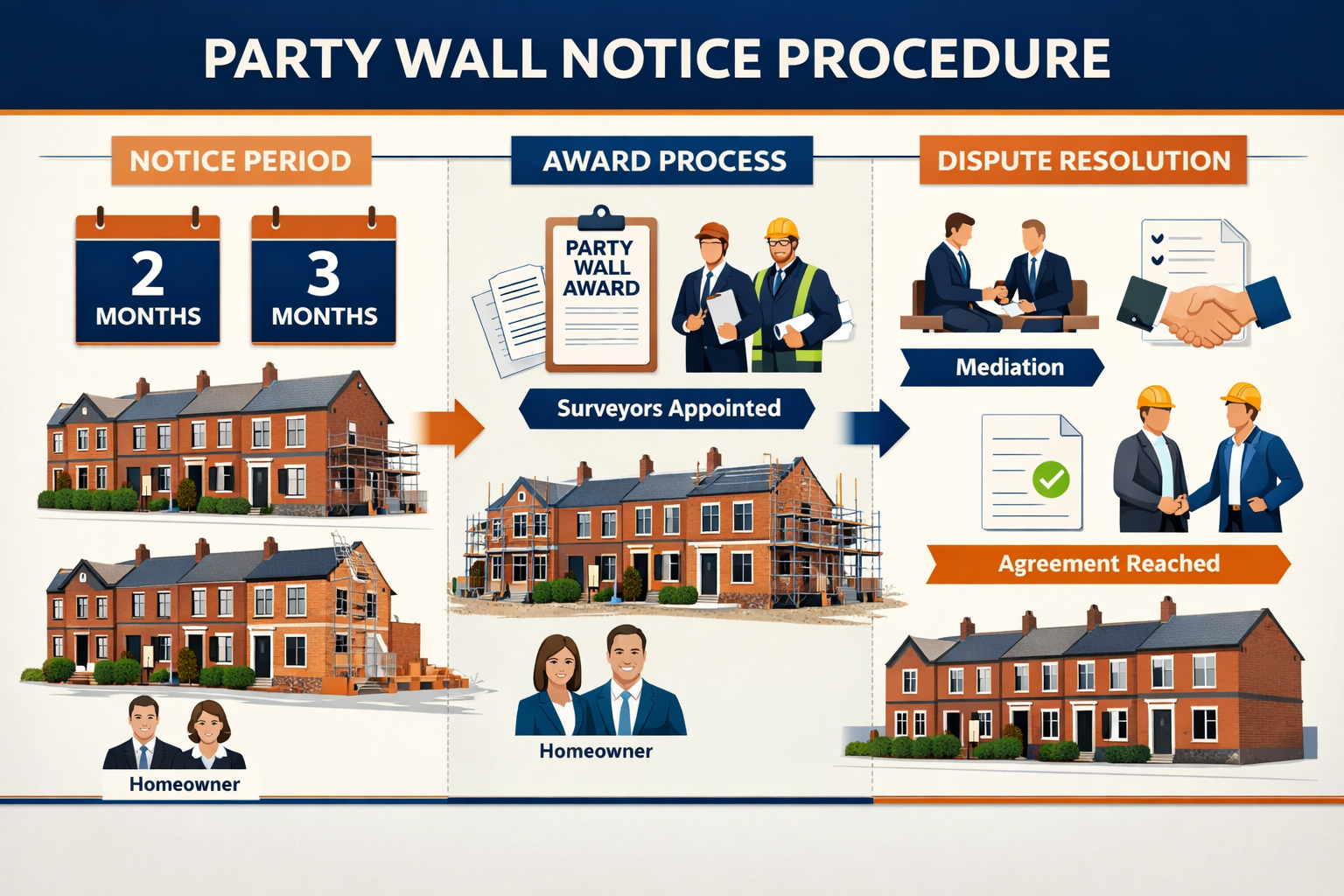
✅ Proper notice periods are essential: 2 months for wall or boundary works, 3 months for excavations—delays can derail entire projects
✅ Party Wall Awards cost approximately £1,000 total, with surveyor rates between £150-£200 per hour, making early compliance cost-effective
✅ Schedule of condition documentation (photographic records) before work commences is mandatory to resolve future damage claims efficiently
✅ Surveyor neutrality is paramount—agreed surveyors must maintain independence to ensure fair dispute resolution in boom-time conditions
Understanding the 2026 Northern England Construction Boom
Regional Price Growth Driving Renovation Activity
Northern England's property market has fundamentally shifted in 2026. Cities like Manchester, Leeds, and Liverpool are experiencing double-digit price growth that rivals—and in some cases exceeds—traditional Southern markets. This economic transformation stems from several converging factors:
- Remote work policies making Northern cities more attractive
- Government investment in Northern infrastructure projects
- Lower entry prices attracting first-time buyers and investors
- Cultural renaissance in Northern urban centers
This price appreciation has triggered a renovation boom as homeowners seek to maximize property values through extensions, loft conversions, and basement excavations. The challenge? Most Northern England housing stock consists of Victorian and Edwardian terraced properties with shared party walls, making party wall matters unavoidable.
The Terraced Housing Challenge
Northern England's architectural heritage presents unique challenges for party wall surveyors. Unlike detached suburban homes common in the South, Northern cities feature:
🏘️ Dense terraced streets where properties share walls on both sides
🧱 Older construction methods with solid brick walls lacking modern cavity insulation
📏 Non-standard foundations that vary significantly even within the same street
⚡ Multiple simultaneous projects as entire streets undergo renovation
These factors create a perfect storm for party wall disputes, requiring surveyors to develop specialized protocols for boom-time conditions.
Party Wall Challenges in 2026 Northern England Construction Uptick: Core Surveyor Protocols
Notice Requirements and Timing Protocols
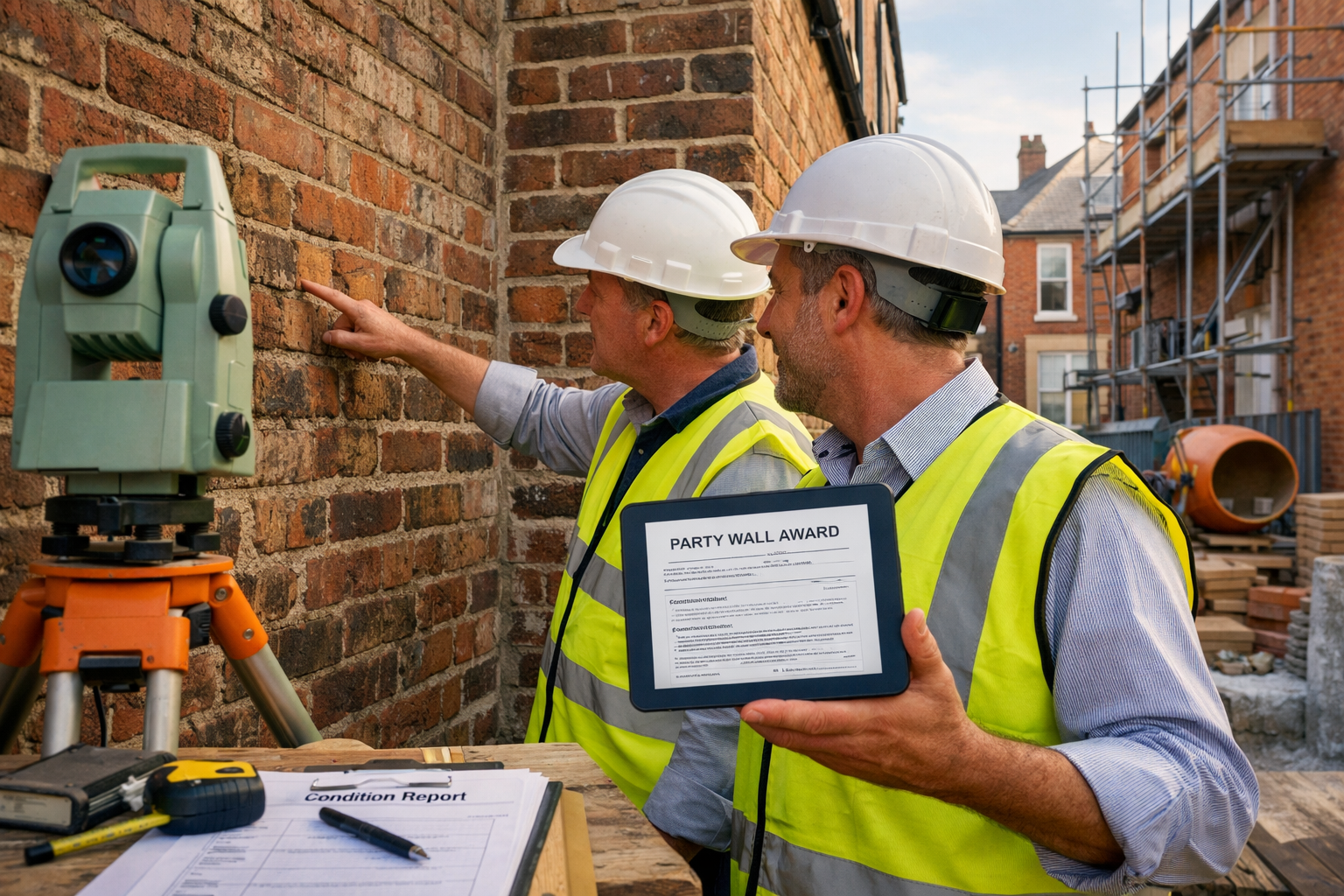
The foundation of effective party wall management lies in proper notification. Under the Party Wall Act 1996, which applies throughout England and Wales, specific notice periods are mandatory:
| Work Type | Notice Period | Key Requirements |
|---|---|---|
| Wall or boundary works | 2 months minimum | Detailed description of proposed works |
| Excavations within 3-6 meters | 3 months minimum | Plans showing depth and proximity |
| Loft conversions affecting party walls | 2 months minimum | Structural calculations required |
In 2026's boom-time environment, surveyors must emphasize early notification to building owners. Delays in serving notices can:
- Push project timelines into winter months
- Increase costs due to contractor rescheduling
- Create neighbour friction that complicates negotiations
- Risk non-compliance penalties
Best Practice Protocol: Surveyors should advise building owners to serve notices 4-5 months before planned work in 2026, providing buffer time for potential disputes or surveyor appointments.
The Party Wall Award Process
When neighbours receive party wall notices, they have three response options:
- Consent in writing (simplest outcome)
- Dissent or fail to respond within 14 days (triggers dispute resolution)
- Request modifications to the proposed works
If a dispute arises, the Party Wall Act provides a structured resolution framework through Party Wall Awards. These legal documents outline:
- Permitted scope of works
- Access arrangements
- Condition recording requirements
- Dispute resolution mechanisms
- Cost allocation between parties
2026 Cost Considerations: Party Wall Awards typically cost £1,000 total in Northern England, with surveyors charging £150-£200 per hour. Building owners usually bear these costs, making early neighbour engagement financially prudent.
Surveyor Appointment and Neutrality Standards
The appointment of surveyors is critical to fair dispute resolution. Three appointment scenarios exist:
Option 1: Agreed Surveyor (Most Efficient)
Both parties appoint a single agreed surveyor who acts impartially. This approach:
- Reduces costs by 40-50%
- Speeds up the award process
- Minimizes adversarial dynamics
Option 2: Two Surveyors
Each party appoints their own surveyor, who then collaborate on the award. These surveyors must:
- Communicate regularly and transparently
- Jointly inspect the properties
- Agree on a "Third Surveyor" to resolve any disagreements
Option 3: Third Surveyor Selection
When appointed surveyors cannot agree, a Third Surveyor makes binding decisions.
🎯 Critical Protocol: Surveyor neutrality is non-negotiable. Even when appointed by one party, surveyors must remain independent and impartial. The 2026 construction boom has seen increased scrutiny of surveyor conduct, with professional standards bodies emphasizing that surveyors serve the Act's objectives, not individual party interests.
Schedule of Condition: Documentation Standards
Before any work commences, a comprehensive schedule of condition must be prepared. This photographic and written record documents:
- Existing cracks, settlement, or structural issues
- Interior and exterior wall conditions
- Floor levels and plasterwork integrity
- Decorative finishes and fixtures
In 2026's boom-time environment, thorough condition recording is essential because:
- Multiple projects occur simultaneously on the same street
- Pre-existing damage from previous works may be wrongly attributed
- Insurance claims require clear evidence of causation
- Neighbour relations benefit from transparent documentation
Enhanced Protocol for 2026: Surveyors should employ digital documentation systems with timestamped photographs, 360-degree imagery, and cloud-based storage accessible to all parties. This prevents disputes over documentation completeness or authenticity.
Managing Boom-Time Disputes: Advanced Surveyor Protocols
Mediation and Early Intervention Strategies
The 2026 construction surge has overwhelmed traditional dispute resolution timelines. Surveyors must adopt proactive mediation strategies to prevent escalation:
Pre-Notice Consultation
Encourage building owners to discuss plans informally with neighbours before formal notices. This "soft approach" can:
- Identify concerns early
- Allow design modifications before commitments
- Build goodwill that facilitates later negotiations
Rapid Response Protocols
When disputes arise, surveyors should implement 48-hour response standards for:
- Initial acknowledgment of appointments
- Site inspection scheduling
- Preliminary findings communication
Joint Site Meetings
Rather than separate inspections, surveyors should conduct joint site visits with both parties present (when appropriate). This transparency:
- Reduces suspicion and misunderstanding
- Allows immediate clarification of technical issues
- Demonstrates impartiality
Handling Damage Claims and Compensation
Despite careful planning, construction work occasionally causes damage to adjoining properties. The Party Wall Act provides mechanisms for addressing damage to property, but 2026's boom conditions require enhanced protocols:
Immediate Notification Requirements
Building owners must notify neighbours and surveyors within 24 hours of discovering damage. Surveyors should then:
- Conduct emergency inspection within 48 hours
- Photograph and document damage extent
- Compare against schedule of condition
- Determine causation and liability
- Specify remediation requirements
Compensation Assessment Standards
When damage is attributable to party wall works, surveyors must assess fair compensation based on:
- Repair costs from qualified contractors (minimum two quotes)
- Diminution in value for permanent structural changes
- Inconvenience costs for temporary displacement
- Professional fees for damage assessment
💡 2026 Best Practice: Surveyors should establish contingency funds within Party Wall Awards for minor damage remediation, avoiding the need for supplementary awards and reducing administrative burden.
Technology Integration in Party Wall Surveys
Modern surveying protocols increasingly leverage technology to improve efficiency and accuracy:
Digital Notice Systems
Electronic service of party wall notices with:
- Delivery confirmation and read receipts
- Automated response deadline tracking
- Secure document repositories
3D Scanning and Modeling
Laser scanning technology creates precise digital twins of properties, enabling:
- Accurate measurement without repeated site visits
- Virtual inspections for remote surveyors
- Enhanced condition comparison over time
Drone Surveys for Roof and Chimney Works
Aerial photography documents:
- Existing roof conditions
- Chimney stack integrity
- Party wall height and condition at roof level
AI-Assisted Damage Detection
Machine learning algorithms can compare pre- and post-work photographs to identify:
- New cracks or settlement
- Changes in wall alignment
- Plasterwork deterioration
These technologies are particularly valuable in 2026's high-volume environment, allowing surveyors to manage multiple concurrent cases efficiently.
Regional Considerations for Northern England
Unique Architectural Challenges
Northern England's housing stock presents distinct challenges that require specialized surveyor knowledge:
Victorian Terraced Construction
- Solid brick walls (typically 9-inch or 13-inch) without cavities
- Lime mortar rather than modern cement, requiring careful repointing
- Shallow foundations vulnerable to excavation work nearby
- Shared chimney stacks creating complex ownership issues
Back-to-Back Housing
Some Northern cities retain back-to-back terraces where properties share three walls. These require:
- Enhanced structural assessment
- Multiple party wall agreements
- Coordinated work scheduling
Stone Construction
Yorkshire and Lancashire properties often feature:
- Pennine stone or local sandstone construction
- Irregular wall thickness complicating structural calculations
- Settlement patterns specific to stone-on-stone construction
Climate and Seasonal Considerations
Northern England's climate affects party wall work timing:
🌧️ Higher rainfall requires enhanced weatherproofing during wall openings
❄️ Colder winters limit mortar curing and external work windows
💨 Wind exposure in elevated terraced streets affects scaffolding requirements
2026 Seasonal Protocol: Surveyors should advise building owners to schedule major party wall works for April through October, avoiding winter complications that can extend projects and increase damage risk.
Local Authority Variations
While the Party Wall Act applies uniformly across England, local authority requirements vary:
Building Control Differences
- Manchester requires additional structural calculations for party wall works
- Leeds has enhanced conservation area protocols for Victorian terraces
- Liverpool mandates heritage impact assessments in certain districts
Surveyors must integrate these local requirements into party wall agreements to ensure full compliance.
Cost Management in Boom-Time Conditions
Fee Structures and Transparency
The 2026 construction boom has increased demand for party wall surveyors, affecting fee structures:
Typical Fee Ranges (Northern England 2026)
- Agreed surveyor: £800-£1,200 for standard terraced property
- Building owner's surveyor: £600-£900
- Adjoining owner's surveyor: £600-£900
- Third surveyor (if required): £1,500-£2,500
Hourly Rates: £150-£200 per hour for experienced chartered surveyors
Best Practice Protocol: Surveyors should provide written fee estimates before appointment, specifying:
- Scope of work included
- Hourly rates for additional services
- Payment terms and schedules
- Circumstances triggering additional fees
Cost Allocation Between Parties
The Party Wall Act establishes that building owners (those undertaking work) typically bear surveyor costs. However, exceptions exist:
Adjoining Owner Costs
Adjoining owners may be responsible for their surveyor's fees if they:
- Request unnecessary additional inspections
- Cause delays through unreasonable demands
- Seek modifications beyond Act requirements
Shared Costs
When work benefits both properties (e.g., rebuilding a deteriorated party wall), costs may be apportioned based on benefit received.
🎯 2026 Transparency Standard: Party Wall Awards should include detailed cost breakdowns showing how surveyor fees were calculated and allocated, reducing post-award disputes.
Loft Conversions and Extensions: Specific Protocols
Loft Conversion Party Wall Requirements
Loft conversions are among the most common party wall works in Northern England's 2026 boom. These projects typically involve:
Party Wall Act Triggers
- Raising party walls to accommodate increased roof height
- Installing steel beams bearing on party walls
- Creating openings for access stairs
- Adding dormer windows affecting party wall stability
Enhanced Surveyor Protocols for Loft Works
- Structural engineer collaboration: Verify beam calculations and load distribution
- Sound insulation assessment: Ensure compliance with Building Regulations Part E
- Fire resistance verification: Confirm party wall maintains required fire rating
- Access logistics: Coordinate scaffolding and material delivery in narrow terraced streets
Basement and Foundation Works
Excavations near party walls require particularly careful management in Northern England's older housing stock:
Critical Assessment Areas
- Existing foundation depth (often only 2-3 feet in Victorian terraces)
- Soil conditions and water table levels
- Adjacent property settlement history
- Underpinning requirements and methodology
3-Month Notice Protocol
Excavation works within 3 meters of adjoining structures require 3-month notice, allowing time for:
- Detailed structural surveys
- Soil investigation reports
- Underpinning design (if required)
- Temporary works specifications
Insulation and Energy Efficiency Upgrades
Party Wall Insulation Considerations
As Northern England properties undergo energy efficiency upgrades, party wall insulation presents unique challenges:
Internal Wall Insulation (IWI)
- Typically does not trigger Party Wall Act (work on own side only)
- May affect sound transmission between properties
- Reduces room dimensions, affecting property value
External Wall Insulation (EWI)
- Requires party wall consent if extending beyond boundary
- Affects building appearance and neighbour amenity
- May require planning permission in conservation areas
Cavity Wall Insulation
- Not applicable to most Northern England terraced properties (solid walls)
- Where cavities exist, injection may affect party wall integrity
2026 Protocol: Surveyors should assess whether insulation works require formal Party Wall Awards or whether neighbour consent letters suffice for minor works.
Dispute Escalation and Legal Remedies
When Informal Resolution Fails
Despite best efforts, some party wall disputes escalate beyond surveyor mediation. Understanding escalation pathways is essential:
County Court Appeals
Parties dissatisfied with Party Wall Awards can appeal to County Court within 14 days. Grounds include:
- Surveyor bias or improper conduct
- Award exceeding Act's scope
- Procedural irregularities
Injunctive Relief
In extreme cases, adjoining owners may seek court injunctions to halt works that:
- Proceed without proper notices
- Deviate from agreed award terms
- Cause immediate danger to property
Damages Claims
Separate from Party Wall Act procedures, neighbours can pursue civil damages for:
- Negligent construction causing harm
- Trespass beyond permitted access
- Nuisance from excessive noise or disruption
💼 Surveyor Protocol: When disputes appear likely to escalate, surveyors should recommend parties seek independent legal advice early, potentially avoiding costly litigation.
Professional Standards and Complaints
Party wall surveyors must adhere to RICS professional standards. Parties can file complaints regarding:
- Lack of impartiality
- Inadequate inspection or documentation
- Unreasonable fee charging
- Failure to communicate effectively
2026 Enhanced Standards: RICS has introduced mandatory continuing professional development (CPD) requirements specifically for party wall surveyors, ensuring practitioners stay current with evolving best practices.
Future-Proofing Party Wall Practices
Anticipated Regulatory Changes
The construction boom has prompted discussions about Party Wall Act reform:
Potential 2027 Amendments
- Electronic notice requirements becoming mandatory
- Enhanced consumer protection for residential properties
- Streamlined procedures for minor works
- Mandatory mediation before surveyor appointments
Surveyors should monitor parliamentary consultations and prepare for potential legislative changes.
Building Resilience into Agreements
Forward-thinking surveyors incorporate flexibility clauses into Party Wall Awards:
Variation Provisions
Allowing minor work modifications without supplementary awards, provided:
- Changes don't increase risk to adjoining property
- Both surveyors agree in writing
- Variations documented in award appendices
Dispute Resolution Mechanisms
Specifying procedures for addressing issues during construction:
- Regular progress meetings (weekly for major works)
- Designated contact persons for each party
- Escalation pathways before formal complaints
Post-Completion Protocols
Establishing procedures for:
- Final condition inspections
- Sign-off on completed works
- Retention release timing
- Warranty periods for remediation
Conclusion: Navigating the 2026 Construction Boom Successfully
The Party Wall Challenges in 2026 Northern England Construction Uptick: Surveyor Protocols for Boom-Time Disputes represent both opportunity and complexity for property owners, surveyors, and the construction industry. As Northern England's property market continues its remarkable growth trajectory, the volume and complexity of party wall matters will only increase.
Success in this environment requires:
✅ Early engagement with neighbours and surveyors, ideally 4-5 months before planned works
✅ Comprehensive documentation through detailed schedules of condition using modern digital tools
✅ Strict adherence to notice periods and Party Wall Act procedures
✅ Transparent communication between all parties throughout the process
✅ Professional surveyor selection prioritizing neutrality, experience, and regional knowledge
Actionable Next Steps
For Building Owners Planning Work:
- Consult a qualified party wall surveyor before finalizing project designs
- Serve proper notices with adequate lead time (2-3 months minimum, 4-5 months recommended)
- Budget £1,000-£2,000 for party wall costs in project planning
- Maintain open communication with neighbours throughout
For Adjoining Owners Receiving Notices:
- Respond within the 14-day deadline to preserve rights
- Consider appointing an agreed surveyor to reduce costs
- Ensure schedule of condition is thorough before consenting
- Keep copies of all documentation and correspondence
For Surveyors Managing Boom-Time Cases:
- Implement technology solutions for efficient case management
- Maintain strict neutrality and professional standards
- Provide transparent fee structures and regular communication
- Stay current with regional construction trends and techniques
- Develop mediation skills to resolve disputes early
The 2026 Northern England construction boom presents unprecedented opportunities for property enhancement and value creation. By following established surveyor protocols, understanding legal requirements for party walls, and maintaining professional standards, parties can navigate party wall challenges successfully, ensuring projects proceed smoothly while protecting neighbour relationships and property interests.
The key to success lies not in avoiding party wall procedures, but in embracing them as essential safeguards that benefit all parties. With proper planning, professional guidance, and good-faith cooperation, Northern England's construction boom can enhance communities while respecting the rights and interests of all property owners.