Landlords planning property extensions in 2026 face a perfect storm: the Renters' Rights Act 2025 abolishes fixed-term tenancies from May 1, 2026, creating rolling periodic agreements just as party wall disputes reach record highs[1][3]. With Section 21 'no-fault' evictions eliminated and tenants gaining unprecedented security, building owners must navigate complex party wall procedures while managing occupied properties under new ombudsman oversight. The stakes have never been higher for getting survey protocols right.
The intersection of the Party Wall Implications of Renters' Rights Act 2026: Survey Protocols for Extension Works in Periodic Tenancies creates unprecedented challenges for property owners. Under the new regime, all tenancies default to periodic arrangements, meaning landlords cannot simply wait for a fixed term to expire before commencing major works[2][4]. This fundamental shift demands a complete rethink of how party wall procedures integrate with tenant management strategies.
Key Takeaways
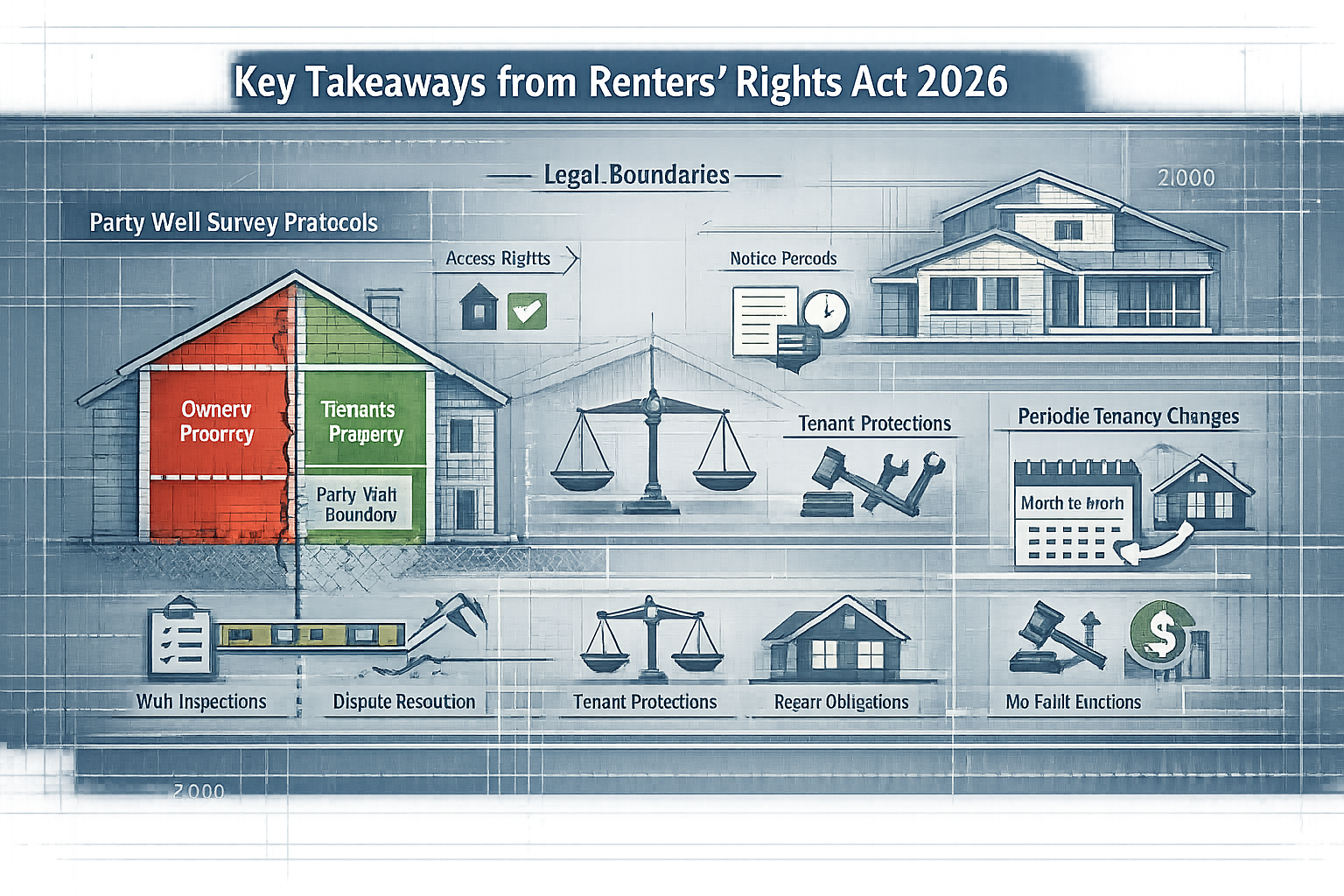
- 🏗️ All tenancies become periodic from May 1, 2026, requiring landlords to coordinate party wall works with occupied properties indefinitely
- 📋 Party Wall Act 1996 notice requirements remain unchanged, but tenant consultation becomes critical to avoid ombudsman complaints
- ⚖️ Section 8 grounds for possession now offer the only route for landlords needing vacant possession for major structural works
- 📊 RICS-compliant schedules of condition protect both landlords and adjoining owners from disputes during extension projects
- 🔍 Surveyor appointment protocols must account for extended timelines and tenant cooperation requirements under the new framework
Understanding the Renters' Rights Act 2026 Framework
The Renters' Rights Act 2025, effective May 1, 2026, fundamentally transforms residential tenancy law in England and Wales. The legislation abolishes assured shorthold tenancies (ASTs) entirely, replacing them with a single system of periodic tenancies[1][3]. This means every residential letting automatically becomes a rolling monthly or weekly agreement with no fixed end date.
Key Changes Affecting Property Development
The abolition of Section 21 evictions removes the landlord's ability to reclaim possession without proving specific grounds[2][4]. For landlords planning extensions or major structural works, this creates significant complications. Previously, a landlord could issue a Section 21 notice to regain vacant possession before commencing building work. Now, only Section 8 grounds apply, requiring landlords to demonstrate legitimate reasons for eviction.
Specifically, Ground 6 (landlord intends to refurbish or redevelop) becomes the primary route for landlords needing vacant possession for extension works[3]. However, this ground requires:
- Minimum 4 months' notice to tenants
- Evidence of planning permission and necessary consents
- Proof that works cannot be completed with the property occupied
- Demonstration of genuine intent to proceed with works
The new Private Rented Sector Ombudsman will oversee disputes, adding another layer of accountability for landlords[1][5]. Any party wall work that affects tenant enjoyment or causes nuisance could trigger ombudsman complaints, making proper procedures essential.
Impact on Building Work Timelines
Under periodic tenancies, landlords face extended planning horizons. Consider this comparison:
| Aspect | Pre-2026 (AST) | Post-2026 (Periodic) |
|---|---|---|
| Notice period | 2 months (Section 21) | 4 months minimum (Ground 6) |
| Possession certainty | High (no grounds needed) | Lower (must prove grounds) |
| Tenant challenge | Limited | Ombudsman review available |
| Planning flexibility | Can time works to tenancy end | Must coordinate with occupied property |
For party wall procedures, this means surveyors must factor in tenant cooperation as a critical variable. The traditional approach of serving party wall notices and proceeding with works assumes control over property access. With tenants holding stronger security of tenure, party wall consent becomes intertwined with tenant relationship management.
Party Wall Implications of Renters' Rights Act 2026: Core Survey Requirements
The Party Wall Act 1996 establishes mandatory procedures for building work affecting shared walls, boundaries, and structures within specified distances[6][7]. These requirements remain legally binding regardless of tenancy type, but the Party Wall Implications of Renters' Rights Act 2026: Survey Protocols for Extension Works in Periodic Tenancies demand enhanced procedural rigor.
Statutory Notice Requirements Under Periodic Tenancies
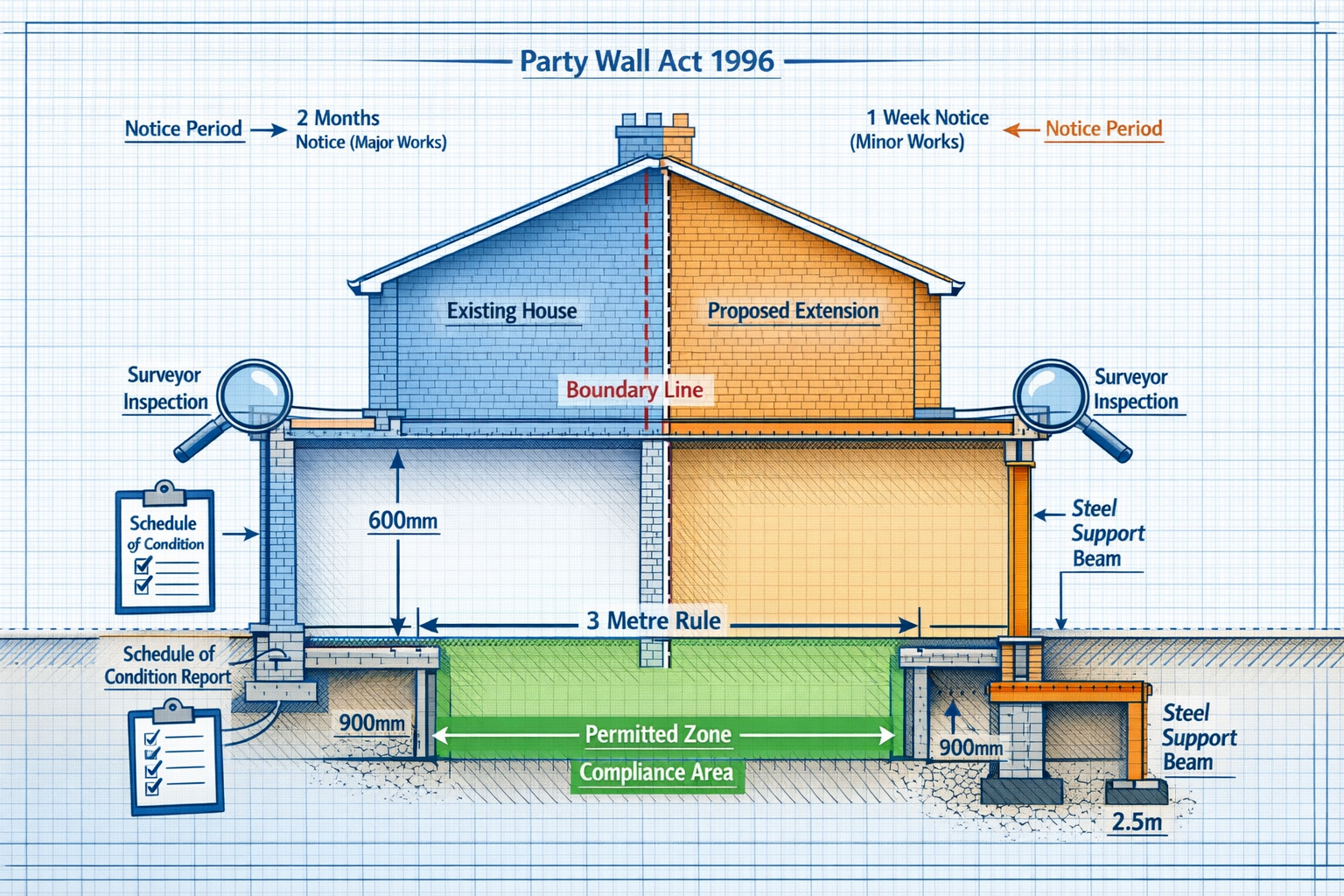
When planning an extension that affects a party wall, landlords must serve appropriate notices under the Party Wall Act 1996. The three main notice types are:
- Party Structure Notice (Section 3) – for work directly to the party wall
- Line of Junction Notice (Section 1) – for new walls on or astride the boundary
- 3-Metre Notice (Section 6) – for excavations within three metres of a neighbor's structure
The notice periods remain unchanged: typically two months for most works, or one month for line of junction notices[7]. However, under periodic tenancies, landlords must consider:
- Tenant notification obligations – while not legally required under the Party Wall Act, good practice demands informing tenants of impending works
- Access coordination – surveyors need tenant cooperation for pre-work inspections
- Disruption management – tenants cannot be forced to vacate during works unless Ground 6 possession is obtained
Understanding the party wall notice requirements becomes more complex when the building owner doesn't have unfettered access to their own property.
Appointing Surveyors in the New Landscape
When adjoining owners receive party wall notices, they have three options:
- Consent in writing to the proposed works
- Appoint their own surveyor to negotiate an award
- Agree to a single agreed surveyor to act impartially for both parties
Under the Party Wall Implications of Renters' Rights Act 2026: Survey Protocols for Extension Works in Periodic Tenancies, the surveyor appointment process must account for extended timelines. If adjoining owners dissent or fail to respond within 14 days, they are deemed to be in dispute, triggering the formal surveyor process[6].
The role of an agreed surveyor becomes particularly valuable in 2026 because:
- Cost efficiency – one surveyor instead of two reduces overall expenses
- Faster resolution – single decision-maker streamlines the award process
- Tenant considerations – experienced surveyors can factor tenant cooperation into schedules
For landlords with occupied properties, selecting a surveyor with expertise in both party wall matters and residential tenancy law proves essential.
Schedule of Condition: Essential Protection
A schedule of condition documents the existing state of both the building owner's and adjoining owner's properties before works commence[6]. This photographic and written record becomes critical evidence if party wall disputes arise regarding damage.
Under periodic tenancies, schedules of condition serve dual purposes:
- Party wall protection – establishes baseline condition for adjoining properties
- Tenant protection – documents property condition for deposit disputes
Professional schedule of condition reports should include:
- Detailed photographs of all relevant areas
- Written descriptions of existing defects
- Measurements and technical specifications
- Date-stamped evidence with surveyor certification
"A comprehensive schedule of condition is your insurance policy against spurious damage claims. In 2026, with tenants holding stronger rights and ombudsman oversight, documentation standards must be impeccable." – RICS Party Wall Guidance
The schedule should cover not only the party wall itself but also:
- Adjacent rooms and finishes
- Shared structures like chimneys and foundations
- External elevations and boundary features
- Services running through or near the party wall
For properties with shared chimneys, detailed documentation of existing condition prevents disputes over cracking or settlement during extension works.
Party Wall Implications of Renters' Rights Act 2026: Practical Protocols for Extension Works
Executing extension works under the Party Wall Implications of Renters' Rights Act 2026: Survey Protocols for Extension Works in Periodic Tenancies requires meticulous planning and stakeholder coordination. The following protocols represent best practice for landlords navigating this new landscape.
Pre-Work Planning and Tenant Communication
Before serving any party wall notices, landlords should:
Step 1: Assess Tenancy Status
- Review current tenancy agreements (all become periodic by May 1, 2026)
- Evaluate whether works can proceed with property occupied
- Consider Ground 6 possession proceedings if vacant possession essential
- Calculate realistic timelines including 4-month notice periods
Step 2: Engage Professional Team
- Appoint architect to design compliant extension
- Retain party wall surveyor with post-2026 experience
- Consult solicitor on tenancy law implications
- Consider specialist building surveyor services for complex projects
Step 3: Communicate with Tenants
- Provide informal notice of intended works (before formal party wall notices)
- Explain timeline, disruption levels, and access requirements
- Negotiate temporary rent reductions if appropriate
- Document all communications for ombudsman protection
Step 4: Serve Party Wall Notices
- Prepare compliant notices under Party Wall Act 1996
- Serve on all affected adjoining owners
- Maintain proof of service records
- Allow full statutory response periods
Managing the Survey and Award Process
Once party wall procedures commence, landlords must coordinate multiple parties:
Surveyor Coordination
The appointed surveyor(s) will:
- Inspect all affected properties – requiring access to both building owner's and adjoining owners' premises
- Prepare party wall award – documenting permitted works, timing, and protective measures
- Specify monitoring protocols – crack monitoring, vibration limits, noise restrictions
- Establish dispute resolution procedures – clear escalation paths if issues arise
Under periodic tenancies, surveyors need tenant cooperation for property access. Landlords should:
- Provide tenants with 24-48 hours' notice for surveyor inspections (as per tenancy agreement)
- Ensure surveyors carry professional identification
- Accompany surveyors during inspections when possible
- Document all access arrangements
Award Implementation
The party wall award becomes a legally binding document specifying:
- Permitted works scope – detailed description of extension plans
- Working hours – typically 8am-6pm weekdays, limited weekend work
- Protective measures – scaffolding, dust barriers, noise mitigation
- Monitoring schedule – regular inspections during construction phase
For landlords, the award must align with tenant rights under the Renters' Rights Act 2026. If the award specifies working hours or access requirements that conflict with tenant enjoyment, disputes may escalate to the ombudsman[1].
Construction Phase Protocols
During actual building works, robust protocols prevent disputes:
Weekly Coordination Meetings
- Site manager, party wall surveyor, and landlord representative
- Review progress against award conditions
- Address emerging issues promptly
- Document decisions and variations
Tenant Liaison
- Regular updates on work progress and upcoming disruptive phases
- Responsive complaint handling
- Temporary accommodation offers for particularly disruptive periods
- Rent adjustments if disruption exceeds anticipated levels
Monitoring and Documentation
- Weekly photographic records of work progress
- Crack monitoring reports (if specified in award)
- Noise and vibration readings
- Incident logs for any damage or complaints
The party wall agreement framework provides structure, but successful execution under periodic tenancies demands proactive relationship management with all stakeholders.
Post-Completion Procedures
After extension works complete, formal closure procedures include:
- Final Surveyor Inspection – comparing completed works against schedule of condition
- Damage Assessment – identifying any party wall damage requiring rectification
- Remedial Works – completing repairs to adjoining properties
- Formal Sign-Off – obtaining written confirmation from adjoining owners
For tenanted properties, landlords should also:
- Conduct final inspection with tenants present
- Address any tenant concerns about property condition
- Update property records and insurance documentation
- File all party wall documentation for future reference

Risk Mitigation Strategies for Landlords
The Party Wall Implications of Renters' Rights Act 2026: Survey Protocols for Extension Works in Periodic Tenancies create multiple risk vectors for property owners. Strategic mitigation requires addressing legal, financial, and operational challenges.
Legal Compliance Framework
Party Wall Act Compliance
Strict adherence to legal requirements for party walls remains non-negotiable. Failures can result in:
- Injunctions halting construction work
- Damage claims from adjoining owners
- Retrospective party wall awards with penalty costs
- Tenant complaints to the ombudsman
Renters' Rights Act Compliance
Under the new framework, landlords must:
- Maintain properties to Decent Homes Standard throughout works
- Respond to tenant complaints within specified timeframes
- Avoid retaliatory eviction attempts (heavily penalized post-2026)
- Comply with ombudsman decisions and recommendations[1][5]
Insurance Considerations
Appropriate insurance coverage should include:
- Party wall insurance – covering legal costs and damage claims
- Contractor's all-risks insurance – protecting against construction damage
- Landlord liability insurance – covering tenant injury or property damage claims
- Legal expenses insurance – funding defense against ombudsman complaints
Financial Planning and Contingencies
Extension projects under periodic tenancies carry elevated costs:
Budget Components
| Cost Category | Traditional Budget | 2026 Enhanced Budget |
|---|---|---|
| Party wall surveyor fees | £1,500-3,000 | £2,000-4,500 |
| Legal advice | £500-1,000 | £1,500-2,500 |
| Tenant accommodation | £0 | £3,000-8,000 |
| Rent reduction provisions | £0 | £2,000-5,000 |
| Extended timeline costs | Standard | +15-25% |
Contingency Planning
Prudent landlords should:
- Budget 20-30% contingency for dispute resolution and delays
- Establish escrow funds for potential damage claims
- Model cash flow assuming extended vacant periods if possession required
- Consider development finance options for extended timelines
Dispute Prevention and Resolution
Proactive Neighbor Relations
Before formal party wall procedures:
- Conduct informal consultations with adjoining owners
- Share preliminary plans and address concerns early
- Offer goodwill gestures (temporary parking arrangements, etc.)
- Build positive relationships that facilitate cooperation
Tenant Relationship Management
Maintaining positive tenant relations reduces ombudsman risk:
- Over-communicate about works timing and impact
- Offer flexibility on rent payments during disruptive periods
- Respond promptly to maintenance issues unrelated to building works
- Document all interactions for ombudsman protection
Escalation Protocols
If disputes arise, structured escalation prevents costly litigation:
- Direct negotiation – landlord and affected party discuss resolution
- Surveyor mediation – party wall surveyor facilitates compromise
- Third surveyor – if party wall surveyors disagree, third surveyor decides
- Ombudsman review – for tenant complaints about process or impact
- Legal proceedings – final resort for unresolved party wall disputes
Understanding the boundary dispute resolution process helps landlords navigate conflicts efficiently.
Sector-Specific Considerations
Different property types and landlord profiles face unique challenges under the Party Wall Implications of Renters' Rights Act 2026: Survey Protocols for Extension Works in Periodic Tenancies.
Build-to-Rent and Institutional Landlords
Large-scale landlords face amplified complexity:
- Portfolio-wide policy development – standardized procedures across multiple properties
- Tenant communication systems – scalable notification and consultation processes
- Professional management teams – dedicated staff for party wall coordination
- Enhanced compliance obligations – institutional investors demand rigorous governance[5]
Build-to-rent operators should establish:
- Central party wall management protocols
- Approved surveyor panels with framework agreements
- Tenant liaison officer roles for major works coordination
- Regular compliance audits and reporting systems
Small Landlords and Individual Investors
Individual landlords with one or two properties face different pressures:
- Resource constraints – limited budgets for professional advice
- Knowledge gaps – less familiarity with party wall procedures
- Personal relationships – direct tenant interactions create emotional complexity
- Financial exposure – single property represents larger proportion of wealth
Small landlords should:
- Join landlord associations for guidance and support
- Engage professionals early (false economy to skip surveyor fees)
- Maintain meticulous records of all communications
- Consider landlord insurance with legal expenses coverage
HMO and Multi-Unit Properties
Houses in multiple occupation present additional complications:
- Multiple tenancy agreements – coordinating with several households
- Shared spaces – managing disruption to communal areas
- Licensing requirements – ensuring works don't breach HMO standards
- Fire safety – maintaining compliance during construction phases
HMO landlords must ensure party wall works don't compromise:
- Fire escape routes and emergency exits
- Minimum room sizes and facility ratios
- Sound insulation between units
- Structural integrity of load-bearing walls
Technology and Innovation in Party Wall Surveys
Modern surveying technology enhances the Party Wall Implications of Renters' Rights Act 2026: Survey Protocols for Extension Works in Periodic Tenancies through improved documentation and monitoring.
Digital Documentation Systems
Contemporary party wall surveys leverage:
3D Laser Scanning
- Creates precise digital models of existing structures
- Documents pre-work condition with millimeter accuracy
- Enables virtual inspections reducing tenant disruption
- Provides irrefutable evidence in dispute scenarios
Photographic Evidence Management
- Timestamped digital photographs with GPS metadata
- Cloud-based storage with version control
- Automated comparison tools showing before/after conditions
- Secure sharing with all parties via client portals
Digital Award Preparation
- Electronic document signing and distribution
- Automated compliance checking against statutory requirements
- Template libraries ensuring consistency
- Integration with project management systems
Monitoring Technologies
During construction, advanced monitoring includes:
Crack Monitoring Systems
- Electronic sensors tracking movement in real-time
- Automated alerts if settlement exceeds thresholds
- Historical data analysis showing trends
- Remote access for all parties reducing site visits
Vibration and Noise Monitoring
- Continuous environmental monitoring
- Compliance verification against award conditions
- Objective data resolving tenant complaints
- Evidence for ombudsman proceedings if required
Structural Movement Monitoring
- Tilt sensors on party walls
- Strain gauges on critical structural elements
- GPS monitoring for larger projects
- Integration with building information modeling (BIM)
These technologies provide objective evidence protecting landlords from spurious claims while demonstrating commitment to proper procedures – valuable for ombudsman reviews[1].
Case Studies and Practical Examples
Examining real-world scenarios illustrates the Party Wall Implications of Renters' Rights Act 2026: Survey Protocols for Extension Works in Periodic Tenancies in practice.
Case Study 1: Victorian Terrace Extension
Scenario: Landlord owns mid-terrace Victorian property in London with single tenant on periodic tenancy (post-May 2026). Plans rear extension requiring party wall works affecting both neighbors.
Approach:
- Landlord engaged party wall surveyor 6 months before intended start date
- Informal tenant consultation explained works, offered 15% rent reduction during 3-month construction
- Party wall notices served on both neighbors; one consented, one appointed own surveyor
- Party wall award prepared specifying working hours, protective measures, and monitoring
- Comprehensive schedule of condition documented all three properties
- Works proceeded with weekly tenant updates and surveyor inspections
- Minor cracking in adjoining property identified and repaired per award terms
Outcome: Project completed on time and budget. No ombudsman complaints. Tenant renewed periodic tenancy after works completed. Total party wall costs: £3,800 (surveyor fees and minor remedial works).
Case Study 2: Loft Conversion Dispute
Scenario: Landlord attempted loft conversion affecting shared party wall without proper party wall procedures. Tenant complained to ombudsman about noise and disruption.
Problems:
- No party wall notice served on adjoining owner
- No schedule of condition prepared
- Works commenced without surveyor appointment
- Adjoining owner discovered damage to their property
- Tenant withheld rent citing breach of quiet enjoyment
Resolution:
- Works halted immediately upon ombudsman investigation
- Retrospective party wall procedures initiated
- Independent surveyor assessed damage (£12,000 repairs required)
- Landlord compensated tenant for disruption (£4,500)
- Ombudsman issued formal warning and required policy changes
- Total cost: £28,000 (vs. £4,000 if proper procedures followed initially)
Lesson: Attempting to bypass party wall procedures under the new tenancy framework creates catastrophic financial and reputational risks.
Case Study 3: Successful Agreed Surveyor Approach
Scenario: Semi-detached property requiring side extension. Landlord and adjoining owner agreed to appoint single agreed surveyor.
Benefits:
- Single surveyor fee (£2,200 vs. £4,000+ for separate surveyors)
- Faster award preparation (3 weeks vs. typical 6-8 weeks)
- Collaborative approach reduced neighbor tensions
- Surveyor coordinated tenant access efficiently
- Clear communication prevented misunderstandings
Outcome: Extension completed without disputes. Agreed surveyor approach saved approximately £2,500 and 5 weeks timeline.
Professional Resources and Support
Navigating the Party Wall Implications of Renters' Rights Act 2026: Survey Protocols for Extension Works in Periodic Tenancies requires access to expert guidance and professional networks.
Professional Bodies and Associations
Royal Institution of Chartered Surveyors (RICS)
- Publishes authoritative guidance on party wall procedures
- Maintains register of qualified party wall surveyors
- Offers dispute resolution services
- Provides continuing professional development on regulatory changes
Faculty of Party Wall Surveyors
- Specialist professional body for party wall practitioners
- Offers training and certification programs
- Maintains best practice standards
- Provides expert witness services for complex disputes
Pyramus & Thisbe Club
- Professional association for party wall surveyors
- Publishes technical guidance notes
- Facilitates knowledge sharing among practitioners
- Advocates for legislative improvements
Finding Qualified Professionals
When selecting party wall surveyors for post-2026 projects, verify:
✅ RICS or FPWS membership – ensures professional standards and insurance
✅ Experience with residential tenancies – understanding of landlord-tenant dynamics
✅ Local market knowledge – familiarity with regional construction practices
✅ Technology capabilities – digital documentation and monitoring systems
✅ Dispute resolution experience – track record of successful mediation
For comprehensive property assessment beyond party wall issues, consider engaging chartered surveyors in London with broad expertise across building surveys, structural assessments, and regulatory compliance.
Legal and Regulatory Resources
Government Resources
- Gov.uk party wall guidance (regularly updated)
- Renters' Rights Act 2025 implementation guidance
- Private Rented Sector Ombudsman information
- Planning portal for development requirements
Legal Support
Landlords should establish relationships with solicitors specializing in:
- Residential property law and tenancy disputes
- Party wall and boundary matters
- Construction law and building contracts
- Regulatory compliance and ombudsman proceedings
Industry Publications
- Landlord Today and Property118 for sector news
- RICS journals for technical updates
- Party Wall News for specialist developments
- Legal updates on tenancy law changes
Future Outlook and Emerging Trends
The Party Wall Implications of Renters' Rights Act 2026: Survey Protocols for Extension Works in Periodic Tenancies will continue evolving as the new tenancy framework matures.
Anticipated Regulatory Developments
Enhanced Guidance
Government and professional bodies are expected to publish:
- Specific guidance on party wall procedures under periodic tenancies
- Best practice protocols for tenant consultation during building works
- Ombudsman decision precedents establishing standards
- Template documents and communication materials
Potential Legislative Refinements
Early implementation experience may drive amendments addressing:
- Clarification of Ground 6 possession for major works
- Party wall notice requirements for tenanted properties
- Coordination between Party Wall Act and tenancy law
- Dispute resolution procedures and timelines
Market Adaptations
Professional Service Evolution
Expect emergence of:
- Integrated party wall and tenancy management services
- Technology platforms coordinating all stakeholders
- Insurance products specifically for post-2026 development risks
- Specialist consultancies advising on complex projects
Landlord Behavior Changes
Market participants will likely:
- Increase pre-acquisition due diligence on development potential
- Factor party wall complexity into investment decisions
- Prefer properties with cooperative neighbors
- Avoid complex projects in favor of simpler improvements
Tenant Expectations
As the new framework matures, tenants will:
- Become more aware of their rights during building works
- Expect higher standards of communication and compensation
- Utilize ombudsman services more frequently
- Demand professional management of disruption
Long-Term Industry Impact
The intersection of party wall law and strengthened tenancy rights represents a fundamental shift in UK property development dynamics. Successful landlords will distinguish themselves through:
🏆 Professional Excellence – engaging qualified surveyors and advisors consistently
🏆 Proactive Communication – building positive relationships with all stakeholders
🏆 Robust Documentation – maintaining comprehensive records protecting against disputes
🏆 Regulatory Compliance – staying current with evolving requirements and best practices
🏆 Risk Management – budgeting appropriately for extended timelines and contingencies
Conclusion
The Party Wall Implications of Renters' Rights Act 2026: Survey Protocols for Extension Works in Periodic Tenancies create a complex but navigable landscape for property owners pursuing development projects. The abolition of assured shorthold tenancies and elimination of Section 21 evictions fundamentally alter the context in which party wall procedures operate[1][2][3].
Landlords can no longer rely on regaining vacant possession through simple notice periods. Instead, successful extension projects require:
✅ Early professional engagement – appointing qualified party wall surveyors and legal advisors before commencing any works
✅ Comprehensive planning – factoring in extended timelines, tenant cooperation requirements, and enhanced compliance obligations
✅ Meticulous documentation – preparing detailed schedules of condition and maintaining records of all communications
✅ Proactive stakeholder management – building positive relationships with tenants, neighbors, and professional advisors
✅ Appropriate contingency planning – budgeting for potential disputes, delays, and ombudsman proceedings
The Party Wall Act 1996 requirements remain unchanged, but their implementation within the new tenancy framework demands heightened attention to procedural rigor and relationship management. Landlords who invest in proper party wall matters protocols and maintain professional standards will successfully navigate this new landscape while protecting their investments and avoiding costly disputes.
Actionable Next Steps
For landlords planning extension works in 2026 and beyond:
- Audit current tenancy arrangements – understand how existing agreements transition to periodic tenancies after May 1, 2026
- Engage qualified professionals – appoint RICS-registered party wall surveyors with post-2026 experience
- Review insurance coverage – ensure adequate protection for party wall disputes and tenant claims
- Develop communication protocols – establish systems for tenant and neighbor consultation
- Create compliance checklists – document procedures ensuring adherence to both Party Wall Act and Renters' Rights Act requirements
- Join professional networks – access ongoing guidance and support from landlord associations and industry bodies
- Monitor regulatory developments – stay informed about emerging guidance and ombudsman precedents
The intersection of party wall law and strengthened tenant rights represents a new era in UK property development. With proper planning, professional support, and commitment to best practices, landlords can successfully execute extension projects while maintaining positive relationships with all stakeholders and protecting their long-term investment interests.
References
[1] Alerts Realestate Impacts Of The Renters Rights Act – https://www.goodwinlaw.com/en/insights/publications/2026/01/alerts-realestate-impacts-of-the-renters-rights-act
[2] Renters Rights Act 2025 Unforeseen Dangers For Joint Tenants – https://www.russell-cooke.co.uk/news-and-insights/news/renters-rights-act-2025-unforeseen-dangers-for-joint-tenants
[3] The Renters Rights Act What S Changing What It Means For Landlords And How To Mitigate Risks – https://www.kennedyslaw.com/en/thought-leadership/article/2026/the-renters-rights-act-what-s-changing-what-it-means-for-landlords-and-how-to-mitigate-risks/
[4] Landlords 2026 – https://theindependentlandlord.com/landlords-2026/
[5] Renters Rights Act 2025 Key Implications Living Sector Lenders – https://natlawreview.com/article/renters-rights-act-2025-key-implications-living-sector-lenders
[6] Buying Property Party Wall Award – https://osborneslaw.com/blog/buying-property-party-wall-award/
[7] Party Wall Agreement – https://hoa.org.uk/advice/guides-for-homeowners/i-am-improving/party-wall-agreement/
[8] The Renters Rights Act And Its Impact On Single Family Rental – https://www.shoosmiths.com/perspectives/stories/articles/the-renters-rights-act-and-its-impact-on-single-family-rental