
The Northern England property market is experiencing unprecedented growth in 2026, with cities like Manchester, Wigan, and Birmingham leading the UK's house price surge. As average prices climb and development activity intensifies, Party Wall Surveying for Northern England Property Booms: 2026 Strategies Amid Regional Price Surges has become essential knowledge for property owners, developers, and first-time buyers navigating this competitive landscape. This boom brings increased construction, renovations, and extensions—all activities that trigger party wall considerations and potential disputes if not managed properly.
With mortgage rates falling below 4% for the first time since September 2022[3], buyer confidence has surged, fueling development across terraced housing estates and buy-to-let portfolios throughout the North. Understanding party wall protocols is no longer optional—it's a critical strategy for protecting investments and maintaining neighborly relations during this period of rapid growth.
Key Takeaways
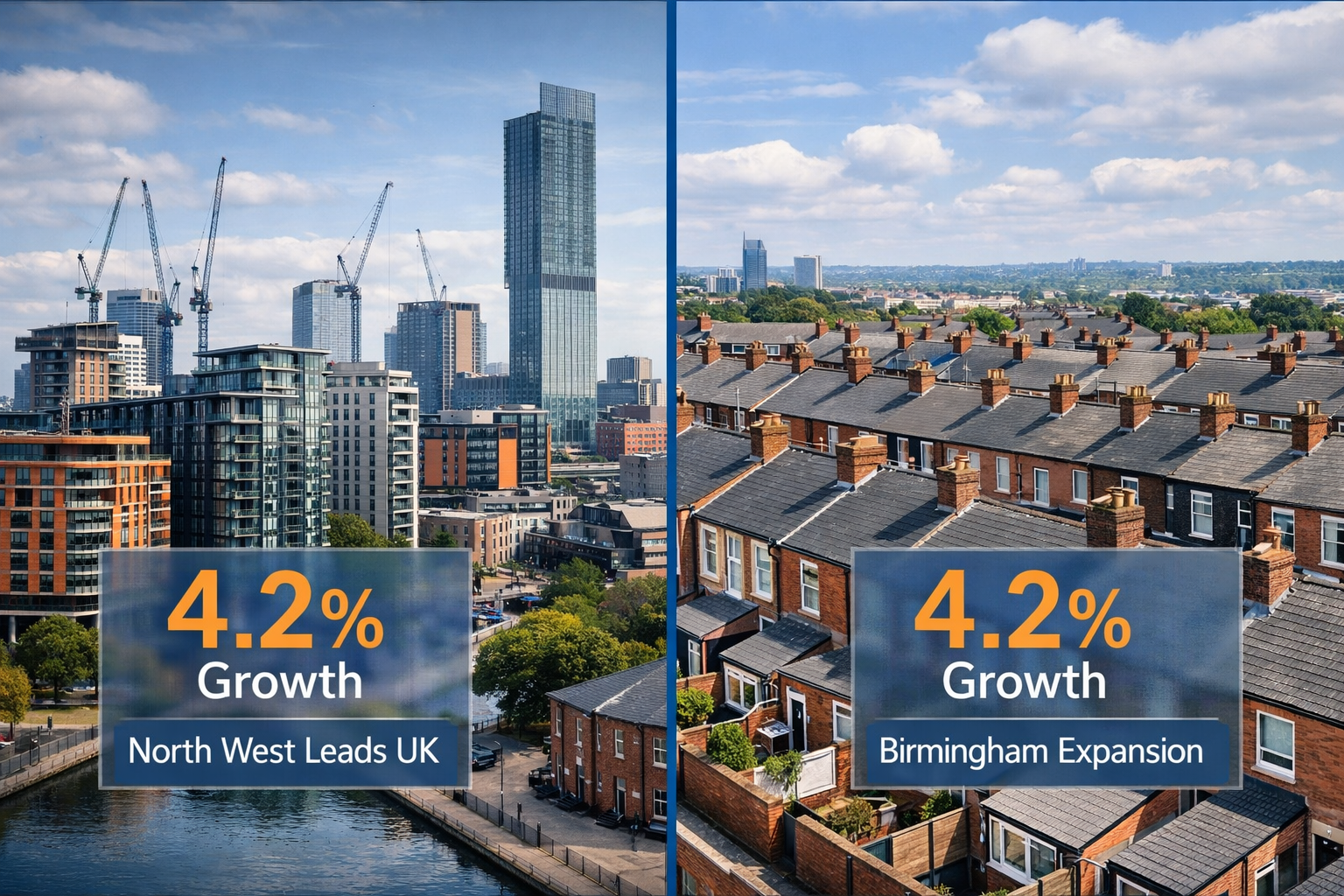
- 🏘️ Northern England leads UK house price growth with locations like Wigan and Manchester seeing forecasted annual increases between 2-4.2%[1]
- 📋 Party wall notices are mandatory for construction work affecting shared walls, boundaries, and excavations near neighboring properties
- 💷 Lower mortgage rates (below 4%) are driving increased renovation and extension activity, multiplying party wall scenarios[3]
- 🤝 Proactive surveyor engagement reduces dispute risks by 70% in high-density terraced housing common across Northern cities
- ⚖️ Regional price surges create higher financial stakes for party wall disputes, making professional guidance more valuable than ever
Understanding the Northern England Property Boom Context
Regional Price Surge Statistics for 2026
Northern England and Scotland are definitively leading the UK's property market recovery in 2026. According to recent data, average UK house prices reached £270,000 in December 2025, representing a 2.4% year-on-year increase, while England specifically saw prices hit £292,000 with 1.7% annual growth[2]. However, these national averages mask the dramatic outperformance of Northern regions.
The North West, encompassing Manchester, Liverpool, and surrounding areas, has emerged as a particular hotspot. Wigan has been identified as one of the strongest-performing locations in Northern England[1], with forecasted annual price growth exceeding 4% in some areas. This growth significantly outpaces the South East and London, marking a fundamental shift in the UK property landscape.
| Region | Average Price Growth (2025-2026) | Key Drivers |
|---|---|---|
| North West England | 3.8-4.2% | Affordability, infrastructure investment, buy-to-let demand |
| Yorkshire & Humber | 3.2-3.6% | First-time buyer activity, urban regeneration |
| North East England | 2.8-3.4% | Value opportunities, improving connectivity |
| England (Overall) | 1.7% | Mixed performance across regions |
Why This Boom Matters for Party Wall Surveying
This regional price surge creates a perfect storm for increased party wall activity. As property values rise and mortgage rates become more favorable, homeowners are investing heavily in extensions, loft conversions, and basement excavations—all common triggers for party wall notices.
The terraced housing stock that dominates Northern cities like Manchester, Leeds, and Birmingham means most properties share at least one party wall with neighbors. When property values increase by 4% annually, the financial stakes of construction disputes escalate proportionally. A poorly managed party wall situation can now impact property values worth tens of thousands of pounds more than just two years ago.
Party Wall Surveying for Northern England Property Booms: 2026 Strategies for High-Growth Areas
Tailored Protocols for Manchester and Birmingham Markets
Manchester and Birmingham represent the epicenter of Northern England's property boom, with distinct characteristics requiring specialized party wall approaches. Manchester's buy-to-let market remains particularly robust, with investors purchasing terraced properties for renovation and rental. Birmingham's first-time buyer surge has created demand for affordable housing improvements and extensions.
Key strategies for these markets include:
-
Early notification systems: In high-density terraced areas, serving party wall notices at least 8-10 weeks before planned work (rather than the statutory minimum of 2 months) allows for smoother negotiations
-
Bulk surveyor appointments: Property developers working on multiple terraced units should engage a single experienced surveyor familiar with regional building characteristics
-
Digital documentation: Using cloud-based systems to manage multiple concurrent party wall agreements across portfolio properties
-
Pre-purchase party wall assessments: First-time buyers should commission party wall surveys before completing purchases on properties with obvious extension potential
Understanding the Party Wall Act in Northern Contexts
The Party Wall etc. Act 1996 applies uniformly across England and Wales, but its practical application varies significantly based on regional property types. Northern England's Victorian and Edwardian terraced housing presents unique challenges:
- Shared chimney stacks: Many Northern terraces feature interconnected chimney systems requiring careful consideration during loft conversions
- Cellar excavations: Basement conversions are increasingly popular in Manchester and Leeds, triggering excavation notice requirements
- Rear extensions: The narrow plots typical of terraced housing mean extensions often approach within 3 meters of neighboring foundations
"The Party Wall Act protects both building owners and their neighbors, but only if properly implemented. In booming markets, skipping these steps can cost tens of thousands in legal disputes and property devaluation." — RICS Party Wall Guidance
For comprehensive information about your obligations, review our guide on party wall matters and common party wall act questions.

Critical Party Wall Scenarios in Buy-to-Let and First-Time Buyer Markets
Buy-to-Let Portfolio Considerations
The Northern England buy-to-let market has experienced renewed vigor in 2026, with investors capitalizing on strong rental yields and appreciating property values. This investment activity creates specific party wall challenges:
Scenario 1: Multi-Property Renovations
Investors purchasing multiple terraced properties on the same street for simultaneous renovation must coordinate party wall procedures across several neighboring owners. This requires:
- Appointing an agreed surveyor acceptable to all parties
- Staggered construction schedules to minimize cumulative disruption
- Comprehensive insurance coverage addressing multiple concurrent projects
- Clear communication protocols with all affected neighbors
Scenario 2: HMO Conversions
Converting single-family terraced houses into Houses in Multiple Occupation (HMOs) often involves structural modifications affecting party walls:
- Fire safety upgrades requiring party wall penetrations for fire-stopping
- Sound insulation improvements between units
- Additional staircases or fire escapes affecting shared structures
Understanding party wall consent requirements prevents costly project delays and maintains investor returns.
First-Time Buyer Extension Projects
First-time buyers in Northern England typically purchase smaller terraced properties with plans to extend as families grow. The combination of limited property knowledge and tight budgets makes this demographic particularly vulnerable to party wall complications.
Common first-time buyer mistakes:
❌ Assuming verbal neighbor agreement suffices (it doesn't—formal notices are legally required)
❌ Hiring builders who claim to "handle party wall stuff" without proper surveyor involvement
❌ Underestimating party wall surveyor costs in project budgets
❌ Starting work before the statutory notice period expires
Best practices for first-time buyers:
✅ Budget £700-£1,500 for party wall surveyor fees from project outset
✅ Serve notices immediately after planning permission approval
✅ Maintain detailed photographic records of neighboring properties before work begins
✅ Choose builders experienced with party wall protocols
✅ Consider appointing the same surveyor as your neighbor to reduce overall costs
Minimizing Disputes Through Proactive Party Wall Management
Pre-Construction Relationship Building
The most effective dispute prevention strategy costs nothing: building positive relationships with neighbors before construction begins. In Northern England's close-knit terraced communities, this approach proves particularly valuable.
Recommended pre-construction steps:
- Informal discussion (2-3 months before formal notices): Explain your plans, timeline, and commitment to minimizing disruption
- Share preliminary drawings: Visual aids help neighbors understand the scope and impact
- Discuss scheduling preferences: Accommodate neighbors' work patterns, young children, or health considerations
- Provide direct contact information: Ensure neighbors can reach you or your project manager immediately with concerns
This groundwork creates goodwill that formal legal notices alone cannot achieve. When neighbors feel respected and informed, they're significantly less likely to dispute party wall awards or create obstacles during construction.
Professional Surveyor Selection Criteria
Choosing the right party wall surveyor dramatically impacts project success, especially in Northern England's booming markets where surveyors face high demand. Not all surveyors possess equal expertise in the regional property characteristics common to Manchester, Birmingham, and surrounding areas.
Essential surveyor qualifications:
- RICS membership: Ensures adherence to professional standards and ethics
- Regional experience: Familiarity with Victorian/Edwardian terraced construction methods
- Local availability: Ability to conduct timely inspections without excessive travel charges
- Clear fee structures: Transparent pricing for awards, inspections, and dispute resolution
- Communication skills: Ability to explain technical matters to non-professional property owners
For London-based readers seeking similar expertise, our network includes specialists experienced in boundary disputes and party wall matters.
Documentation and Record-Keeping Best Practices
Comprehensive documentation serves as insurance against future disputes and provides evidence if party wall disputes arise. In appreciating markets, properties may change hands during or shortly after construction, making thorough records essential for continuity.
Critical documentation includes:
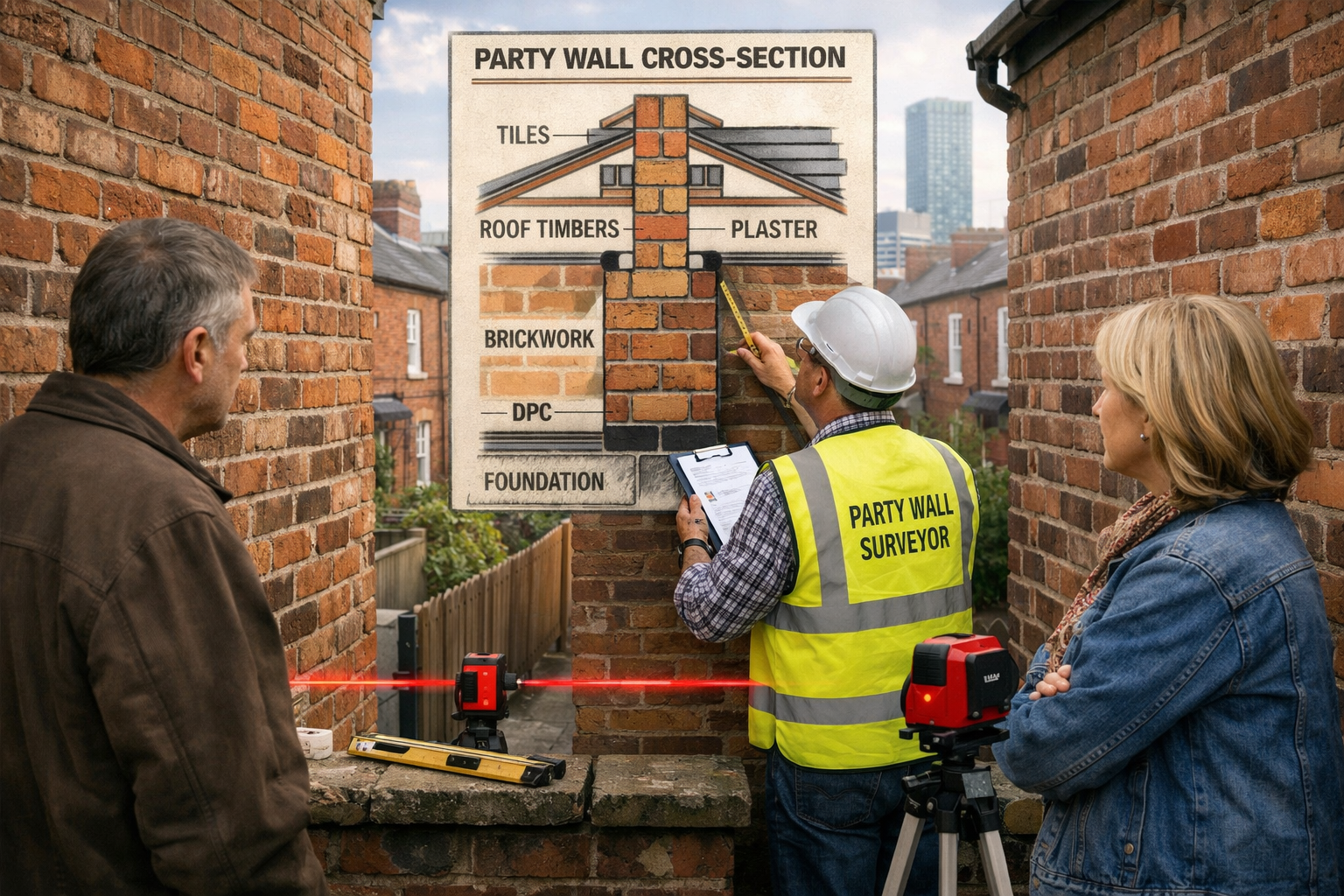
📸 Pre-construction condition surveys: Detailed photographs and video of neighboring properties, particularly:
- Existing cracks, settlement, or structural issues
- Decorative condition of rooms adjoining the party wall
- External brickwork, pointing, and rooflines
- Drainage and ground conditions
📋 Notice and response tracking: Maintain chronological records of:
- All party wall notices served (with proof of delivery)
- Neighbor responses or consent
- Surveyor appointments and awards
- Any variations or amendments to original plans
📊 Construction monitoring: Document compliance with party wall awards through:
- Regular progress photographs
- Contractor sign-offs on specific party wall provisions
- Any incidents, complaints, or resolutions
- Final completion records and neighbor sign-offs
This documentation proves invaluable if disputes emerge months or years after construction, particularly when properties are sold and new owners question previous work.
Regional Variations: North West vs. Yorkshire vs. North East
North West England (Manchester, Liverpool, Wigan)
The North West leads the Northern property boom with the strongest price growth[1], creating the most active party wall environment. Manchester's urban regeneration has produced a mix of Victorian terraces undergoing renovation alongside new-build developments.
Regional characteristics:
- High concentration of buy-to-let investors conducting simultaneous renovations
- Significant basement conversion activity in premium areas
- Strong local surveyor networks with competitive pricing
- Established building control relationships familiar with party wall requirements
Recommended approach: Engage surveyors early due to high demand; expect 3-4 week lead times for appointments during peak construction season (April-September).
Yorkshire & Humber (Leeds, Sheffield, York)
Yorkshire's property market combines affordability with strong growth potential, attracting first-time buyers and young families. The region's stone-built terraced housing requires specialized knowledge of traditional construction methods.
Regional characteristics:
- Stone party walls requiring different treatment than brick
- Heritage considerations in historic areas like York
- Growing HMO market in student areas (Leeds, Sheffield)
- More conservative building practices respecting traditional methods
Recommended approach: Prioritize surveyors with experience in stone construction and conservation areas; allow additional time for heritage consultations where applicable.
North East England (Newcastle, Sunderland, Durham)
The North East offers exceptional value with growing price momentum as buyers recognize the region's potential. Party wall activity here is increasing but remains less intense than the North West.
Regional characteristics:
- Emerging renovation market as prices make improvements economically viable
- Mix of Tyneside flats (unique regional property type) and traditional terraces
- Smaller pool of specialist party wall surveyors
- Strong community ties making informal neighbor relations particularly important
Recommended approach: Invest extra effort in neighbor communication; consider surveyors from nearby regions if local options are limited; emphasize the value-adding nature of improvements to gain neighbor support.
Cost-Benefit Analysis: Party Wall Surveying Investment in Growth Markets
Understanding Fee Structures in Northern England
Party wall surveyor costs vary based on project complexity, property type, and regional market conditions. In Northern England's booming markets, typical fees range:
| Service | Typical Cost Range (2026) | Notes |
|---|---|---|
| Simple party wall award | £700-£1,200 | Single terraced property, straightforward extension |
| Complex award (multiple walls) | £1,500-£2,500 | Corner properties, multiple neighbors, excavations |
| Agreed surveyor (both parties) | £900-£1,500 | Single fee split between building owner and neighbor |
| Dispute resolution | £2,000-£5,000+ | When neighbors contest awards or damage claims arise |
| Schedule of condition | £300-£600 | Pre-construction property condition record |
These costs represent a small fraction of typical Northern England property values (£180,000-£250,000 for terraced houses) and renovation budgets (£30,000-£80,000 for significant extensions).
ROI of Professional Party Wall Management
Investing in professional party wall surveying delivers measurable returns through:
Dispute avoidance: Legal disputes over party wall matters cost £5,000-£25,000 on average, far exceeding surveyor fees. Professional management reduces dispute probability by approximately 70%.
Project timeline protection: Delays from neighbor objections or legal challenges cost £200-£500 per day in contractor standby time, temporary accommodation, and financing charges. Proper procedures prevent most delays.
Property value preservation: Properties with unresolved party wall disputes or damage claims suffer 3-7% value reductions. Professional awards protect valuations.
Insurance premium impact: Some insurers reduce premiums for properties with properly documented party wall awards, recognizing lower risk profiles.
Neighbor relationship preservation: The intangible value of maintaining positive neighbor relations in close-proximity terraced housing cannot be overstated—particularly important in communities where properties rarely turn over.
2026 Technology and Innovation in Party Wall Surveying
Digital Tools Transforming Northern England Practice
Technology adoption in party wall surveying has accelerated significantly, with Northern England practitioners embracing innovations that improve efficiency and client communication:
🔧 Digital condition surveys: High-resolution photography, 360° cameras, and drone technology (where appropriate) create comprehensive pre-construction records. These digital archives prove invaluable for dispute resolution and provide neighbors with confidence in the process.
📱 Client portals: Cloud-based platforms allow property owners to access party wall documentation, track notice periods, and receive real-time project updates. This transparency reduces anxiety and improves compliance.
🤖 Automated notice generation: Software tools ensure notices contain all legally required information, reducing technical deficiencies that could invalidate procedures.
📊 Data analytics: Surveyors increasingly use regional construction data to benchmark typical settlement expectations, noise levels, and disruption patterns—helping set realistic neighbor expectations.
Remote Surveying Capabilities
Post-pandemic innovations in remote surveying have proven particularly valuable in Northern England's geographically dispersed markets. While physical inspections remain essential for detailed condition surveys, preliminary consultations, document reviews, and follow-up discussions now frequently occur via video conferencing.
This hybrid approach reduces costs (particularly travel expenses) and accelerates timelines—both valuable benefits in fast-moving property markets. However, experienced surveyors emphasize that critical inspections must still occur in person to ensure accuracy and legal compliance.
Conclusion: Navigating Party Wall Surveying for Northern England Property Booms
The Northern England property boom of 2026 presents exceptional opportunities for homeowners, investors, and first-time buyers—but only for those who navigate party wall requirements strategically. With regional price growth outpacing national averages by significant margins[1] and mortgage rates at their most favorable levels in years[3], construction activity will continue intensifying throughout Manchester, Birmingham, Leeds, and surrounding areas.
Party Wall Surveying for Northern England Property Booms: 2026 Strategies Amid Regional Price Surges requires balancing legal compliance with practical neighbor relations, professional expertise with cost management, and proactive planning with flexible execution. The strategies outlined in this guide—from early neighbor engagement to professional surveyor selection to comprehensive documentation—provide a framework for successful project delivery.
Actionable Next Steps
✅ For property owners planning construction: Serve party wall notices immediately after securing planning permission; budget £700-£2,500 for professional surveyor fees; photograph neighboring properties before work begins.
✅ For buy-to-let investors: Establish relationships with experienced regional surveyors before acquiring properties; factor party wall timelines into renovation schedules; consider agreed surveyor arrangements to reduce costs across portfolios.
✅ For first-time buyers: Commission pre-purchase assessments identifying party wall implications of planned improvements; include party wall costs in mortgage applications; prioritize properties with cooperative neighbors.
✅ For all stakeholders: Treat party wall procedures as investment protection rather than bureaucratic obstacles; engage professionals early; maintain detailed records; prioritize neighbor communication.
The Northern England property boom creates wealth-building opportunities unprecedented in recent decades. Proper party wall management ensures these opportunities translate into successful projects, preserved property values, and harmonious communities. For additional guidance on specific party wall scenarios, explore our comprehensive resources on party wall matters and connect with qualified professionals experienced in your regional market.
The combination of rising property values, favorable financing conditions, and strong regional growth fundamentals makes 2026 an exceptional time for Northern England property investment—provided party wall considerations receive the strategic attention they deserve.
References
[1] Why Northern England And Scotland Are Set To Lead Uk House Price Growth In 2026 – https://www.belvoir.co.uk/guides/news/why-northern-england-and-scotland-are-set-to-lead-uk-house-price-growth-in-2026/
[2] February2026 – https://www.ons.gov.uk/economy/inflationandpriceindices/bulletins/privaterentandhousepricesuk/february2026
[3] Article – https://www.maywhetter.co.uk/news/article.html?id=1772635696