

Fewer than one in three homeowners fully understand their legal obligations under the Party Wall etc. Act 1996 before starting structural work — and in converted terraces and flats, where walls can be little more than a single brick thick, that knowledge gap carries serious consequences [1]. Party wall surveying in converted terraces and flats: managing historic alterations and 'paper-thin' separation is one of the most technically demanding areas of residential surveying practice in the UK, precisely because these buildings carry decades — sometimes centuries — of undocumented change.
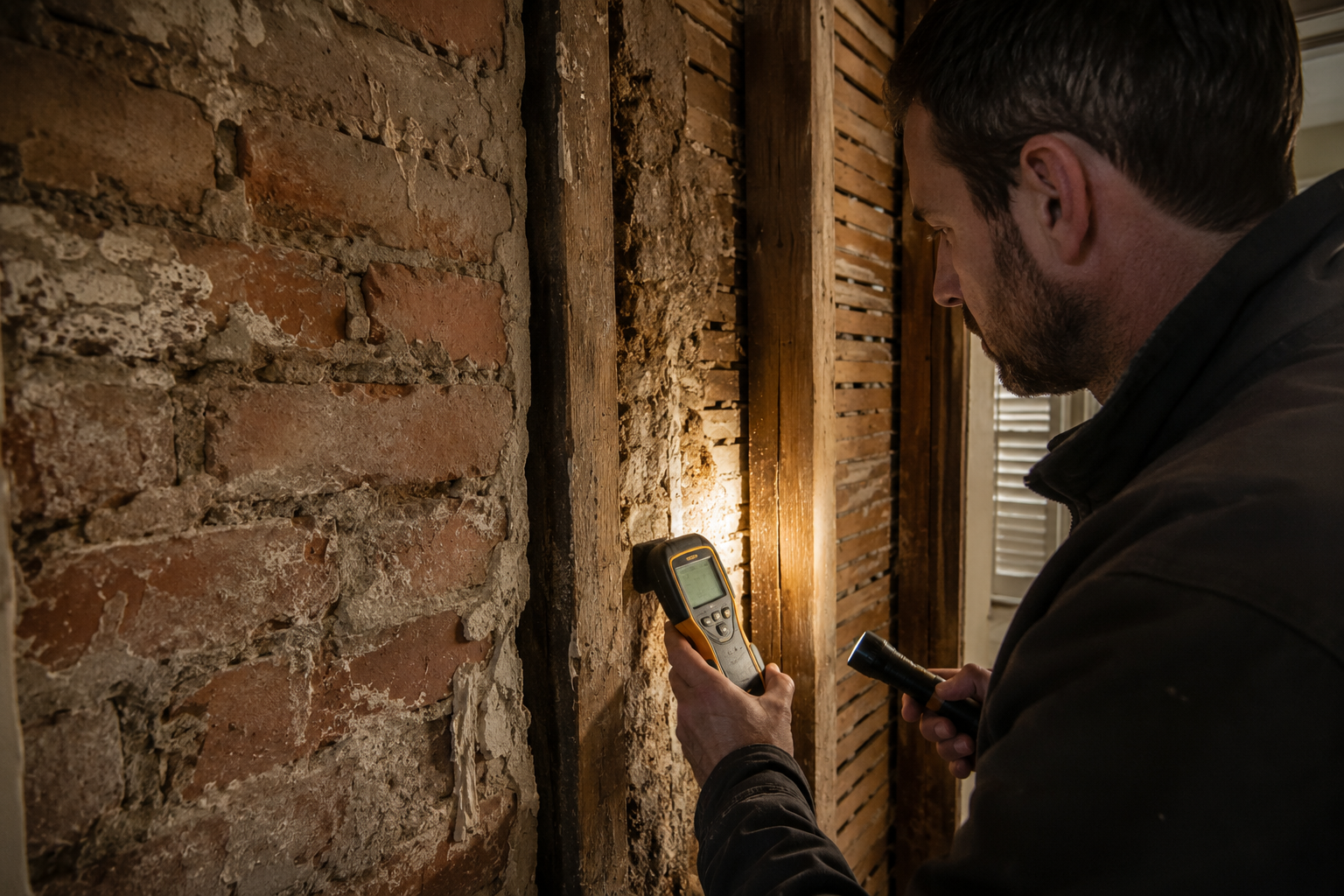
Key Takeaways
- Converted terraces and flats present unique party wall challenges because original structures were never designed to separate multiple households.
- Historic alterations — removed chimney breasts, blocked openings, loft splits — can compromise structural integrity and complicate legal compliance.
- Leasehold flat owners face a dual approval process: freeholder consent and Party Wall Act compliance must both be satisfied before works begin.
- A thorough schedule of condition is essential before any notifiable works proceed, protecting both building owner and adjoining owner.
- Selecting a surveyor with direct experience in converted and historic properties is not optional — it is the single most important decision in the process.
Why Converted Properties Create Distinct Party Wall Challenges
A purpose-built semi-detached house and a Victorian terrace converted into four flats may both fall under the Party Wall etc. Act 1996, but the practical reality of surveying them could not be more different. In the converted terrace or flat, the surveyor is not just assessing a wall — they are unravelling a physical history.
The original building was designed as one. Floors, walls, and ceilings that now legally separate two households were once internal elements of a single structure. They were built to carry loads, not to provide acoustic separation or fire compartmentation between neighbours. When a Victorian terrace is split into flats, those original timber joists become party structures. The thin lath-and-plaster ceiling of the ground-floor flat is simultaneously the floor of the flat above.
Common structural characteristics of converted terraces that complicate party wall assessments include:
- Single-brick party walls with no cavity, offering minimal sound or thermal separation
- Timber intermediate floors acting as party structures between vertically stacked flats
- Removed chimney breasts on one side of a party wall, leaving the remaining stack unsupported
- Blocked or infilled door openings that have altered load paths without formal documentation
- Loft conversions that have introduced new structural elements into shared roof spaces
Each of these features demands careful interpretation before any new works can be safely assessed. For a broader overview of how the Act applies across different property types, the Party Wall Act resource hub provides useful foundational guidance.
Understanding the Legal Framework for Historic Alterations
The Party Wall etc. Act 1996 was not written with the complexities of converted Victorian stock specifically in mind. Applying it to properties where historic alterations have blurred the boundaries between structure and partition requires both legal knowledge and building pathology expertise.
What Counts as a Party Structure in a Converted Flat
In leasehold flats, the Act applies when proposed works affect party structures — which include not only vertical walls but also floors and ceilings that separate different flats [2]. The critical distinction is between a party wall (shared between two owners) and an internal demising wall (owned by one leaseholder but forming the boundary of another's demise). Getting this wrong at the notice stage can invalidate the entire process.
Understanding what constitutes a party wall dispute is a necessary first step before any notice is served.
The Dual Approval Problem in Leasehold Conversions
Leasehold flat owners face a complication that freehold terrace owners do not: they must obtain both freeholder consent under the terms of their lease and comply with the Party Wall etc. Act 1996 before starting alterations [2]. These are entirely separate processes. Freeholder consent addresses contractual obligations in the lease. The Party Wall Act addresses statutory rights and protections between adjoining owners.
Failing to separate these two processes is a common and costly mistake. A leaseholder who obtains freeholder consent but skips the party wall notice has not satisfied their legal obligations. Conversely, serving a party wall notice does not substitute for lease consent. Both must run in parallel.
"The dual process adds genuine complexity to renovation projects in converted properties — and it is a complexity that catches even experienced property owners off guard." [2]
For a full explanation of the notice requirements, see the detailed guide on serving a party wall notice.
When Historic Works Were Never Notified
One of the most common scenarios encountered in party wall surveying in converted terraces and flats involves discovering that previous alterations — sometimes carried out decades ago — were never notified under the Act or its predecessor legislation. A surveyor arriving to assess a proposed loft conversion may find that the chimney breast on the party wall was removed by a previous owner without any formal award, leaving the remaining flank stack in a precarious condition.
This creates a difficult position. The current building owner is not legally liable for a previous owner's failure to notify, but they may inherit the structural consequences. The surveyor's role is to document existing conditions thoroughly before any new works begin, protecting all parties from future disputes about pre-existing damage.
Practical Surveying Challenges: Thin Walls, Loft Splits, and Fire Safety
The physical reality of party wall surveying in converted terraces and flats — managing historic alterations and 'paper-thin' separation — is that surveyors regularly encounter conditions that no building regulation document anticipated.
Assessing 'Paper-Thin' Party Structures
Single-skin brick party walls in Victorian terraces can be as little as 102mm thick — roughly the width of a standard brick. In converted flats, the intermediate floor between units may consist of nothing more than 50mm timber joists, floorboards above, and a thin plaster ceiling below. These structures offer:
| Structure Type | Typical Thickness | Acoustic Performance | Fire Resistance |
|---|---|---|---|
| Single-brick party wall | 102mm | Poor | Limited |
| Timber intermediate floor (Victorian) | 150-200mm | Poor | Limited |
| Modern party wall (cavity) | 250-300mm | Moderate-Good | 60-90 min |
| Concrete floor slab | 150mm+ | Good | 60-120 min |
When a building owner proposes to cut into, build off, or alter any of these structures, the surveyor must assess not just the immediate impact but the cumulative effect on a structure that may already be compromised by previous alterations.
Loft Conversions and Shared Roof Spaces
Loft conversions in terraced properties are among the most frequently notified works under the Party Wall Act. When a terrace has already been converted into flats, the question of who owns the roof space — and therefore who is the relevant adjoining owner — can become genuinely complex. The party wall considerations for loft conversions deserve careful attention in these scenarios.
Structural steel beams inserted into party walls to support new floor levels, dormer additions that alter the load on shared gable walls, and new staircases that penetrate intermediate floors all trigger notification requirements. In a converted terrace, these works may affect multiple adjoining owners simultaneously — the flat below, the flat above, and the neighbouring terrace unit horizontally.
Fire Safety and Compartmentation
Converted flats often have significant fire safety deficiencies because the original building was not designed for multi-occupancy [3]. Fire compartmentation — the physical separation of units to prevent the spread of fire — depends on the integrity of the very structures that party wall surveyors are assessing.
Key fire safety concerns in converted terraces and flats include:
- Missing or incomplete fire breaks in roof voids running continuously across multiple terrace units
- Inadequate fire doors at flat entrances and communal areas
- Compromised compartmentation caused by poorly executed previous alterations
- Smoke detection gaps in converted loft spaces
When a party wall surveyor identifies these conditions during a schedule of condition inspection, they have a professional obligation to flag them, even if they fall outside the strict scope of the party wall award. Pre-1992 conversions are particularly likely to present lender and survey concerns due to outdated standards [3].
Sound Insulation: The Neighbour's Primary Fear
In the context of party wall surveying in converted terraces and flats, managing historic alterations and 'paper-thin' separation often means managing a neighbour's very reasonable fear: that proposed works will make an already poor acoustic situation worse.
Original Victorian buildings were not designed to separate households, and sound insulation between flats is consistently one of the most common concerns raised in surveys of converted properties [3]. When an adjoining owner dissents to a party wall notice, noise transmission is frequently the underlying anxiety — even if the formal dispute centres on structural risk.
A skilled surveyor addresses this directly. The party wall insulation considerations that can be incorporated into an award provide a practical mechanism for improving acoustic performance as part of the notified works, turning a potential dispute into a collaborative improvement.
The Schedule of Condition: The Surveyor's Most Important Tool
Before any notifiable works begin on a converted terrace or flat, a thorough party wall schedule of condition is the single most valuable protective document available to both parties.
In a converted property, this document must go beyond a simple photographic record of visible finishes. It should capture:
- Existing crack patterns in walls, ceilings, and around door frames
- Pre-existing damp or staining that could later be attributed to works
- Condition of shared chimney stacks and any evidence of previous removal or alteration
- Floor level differentials that may indicate previous settlement
- State of fire compartmentation at the time of inspection
Without this baseline record, any damage claim after works are completed becomes a dispute about what existed before. With it, the surveyor has an objective reference point that protects the building owner from inflated claims and ensures the adjoining owner receives fair compensation for genuine damage.
Navigating Listed Buildings and Historic Terraces
A significant proportion of converted terraces in London and other historic UK cities are either listed or located within conservation areas. This adds a further layer of complexity to party wall surveying.
Internal alterations to listed buildings require consent if they affect the building's special architectural or historic interest [4]. This includes changes to plan form, removal or alteration of historic joinery, fireplaces, panelling, and decorative plasterwork [4]. Removing a spine wall to create open-plan living — a common aspiration in converted terraces — is frequently refused in Grade II listed properties because plan form is considered evidence of the building's original social and constructional logic [4].
The party wall surveyor must therefore work in close coordination with the listed building consent process. A party wall award that permits works which simultaneously require listed building consent (and have not yet received it) creates a legal conflict that can halt a project entirely.
For those working in London and the surrounding region, the guide to boundary disputes and party wall surveyors in London covers the intersection of these regulatory frameworks in detail.
Choosing the Right Surveyor for Converted Properties
The complexity of party wall surveying in converted terraces and flats — managing historic alterations and 'paper-thin' separation — means that surveyor selection is genuinely consequential. Not all party wall surveyors have direct experience with converted Victorian stock, leasehold structures, or listed building constraints.
Key questions to ask a prospective party wall surveyor:
- Have you previously handled party wall matters in converted terraces or leasehold flats?
- Can you demonstrate familiarity with the dual approval process for leasehold properties?
- How do you approach historic alterations that were never formally notified?
- What is your process for identifying fire safety or structural concerns during a schedule of condition?
- Do you have experience working alongside listed building applications?
Selecting a surveyor with verified experience in complex conversions is not a luxury — it is the most effective risk management tool available [1]. The party wall agreement process and the resulting party wall award are only as robust as the surveyor who prepares them.
Understanding Costs
Party wall surveyor costs in converted properties tend to be higher than for straightforward new-build or semi-detached scenarios, reflecting the additional complexity of historic structures, multiple adjoining owners, and the need for detailed schedules of condition. A transparent breakdown of party wall surveyor costs helps building owners budget realistically and avoid the false economy of appointing the cheapest available option.
In high-value projects, adjoining owners increasingly request security for expenses under Section 12 of the Party Wall etc. Act 1996, ensuring funds are available to cover potential damages [1]. This is particularly relevant in converted terraces where works may affect multiple flats simultaneously.
Conclusion
Party wall surveying in converted terraces and flats demands a level of technical and legal rigour that goes well beyond standard residential practice. The combination of thin historic structures, undocumented previous alterations, leasehold complexity, fire safety deficiencies, and — in many cases — listed building constraints creates a risk environment that only experienced, specialist surveyors can navigate effectively.
Actionable next steps for building owners and leaseholders in 2026:
- Identify all adjoining owners early — in a converted terrace, this may include horizontal neighbours, the flat above, and the flat below.
- Obtain a copy of your lease and review it for alteration consent requirements before serving any party wall notice.
- Commission a detailed schedule of condition before any notifiable works begin, regardless of how minor the proposed works appear.
- Appoint a surveyor with demonstrable experience in converted and historic properties — ask for specific examples.
- If the property is listed or in a conservation area, initiate the listed building consent process in parallel with the party wall procedure.
- Budget for the realistic cost of party wall surveying in complex converted properties, including the possibility of security for expenses requests.
The paper-thin walls of a converted Victorian terrace carry more than sound and vibration — they carry legal obligations, shared history, and the legitimate interests of neighbours who deserve proper protection. Getting the party wall process right from the outset is the most effective way to protect all of those interests.
References
[1] Party Wall Surveying For Basement Conversions Navigating Deeper Excavations In Stabilising Southern Markets – https://www.canterburysurveyors.com/blog/party-wall-surveying-for-basement-conversions-navigating-deeper-excavations-in-stabilising-southern-markets/?utm_source=openai
[2] Party Wall Act For Leasehold Flats Apartments London Guide 2025 – https://www.surveyofpartywall.co.uk/party-wall-act-for-leasehold-flats-apartments-london-guide-2025/?utm_source=openai
[3] Survey Converted Flat Selling – https://getpine.co.uk/guides/survey-converted-flat-selling?utm_source=openai
[4] Listed Building Consent Internal Alterations – https://www.vestigelondon.com/guides/listed-building-consent-internal-alterations?utm_source=openai





