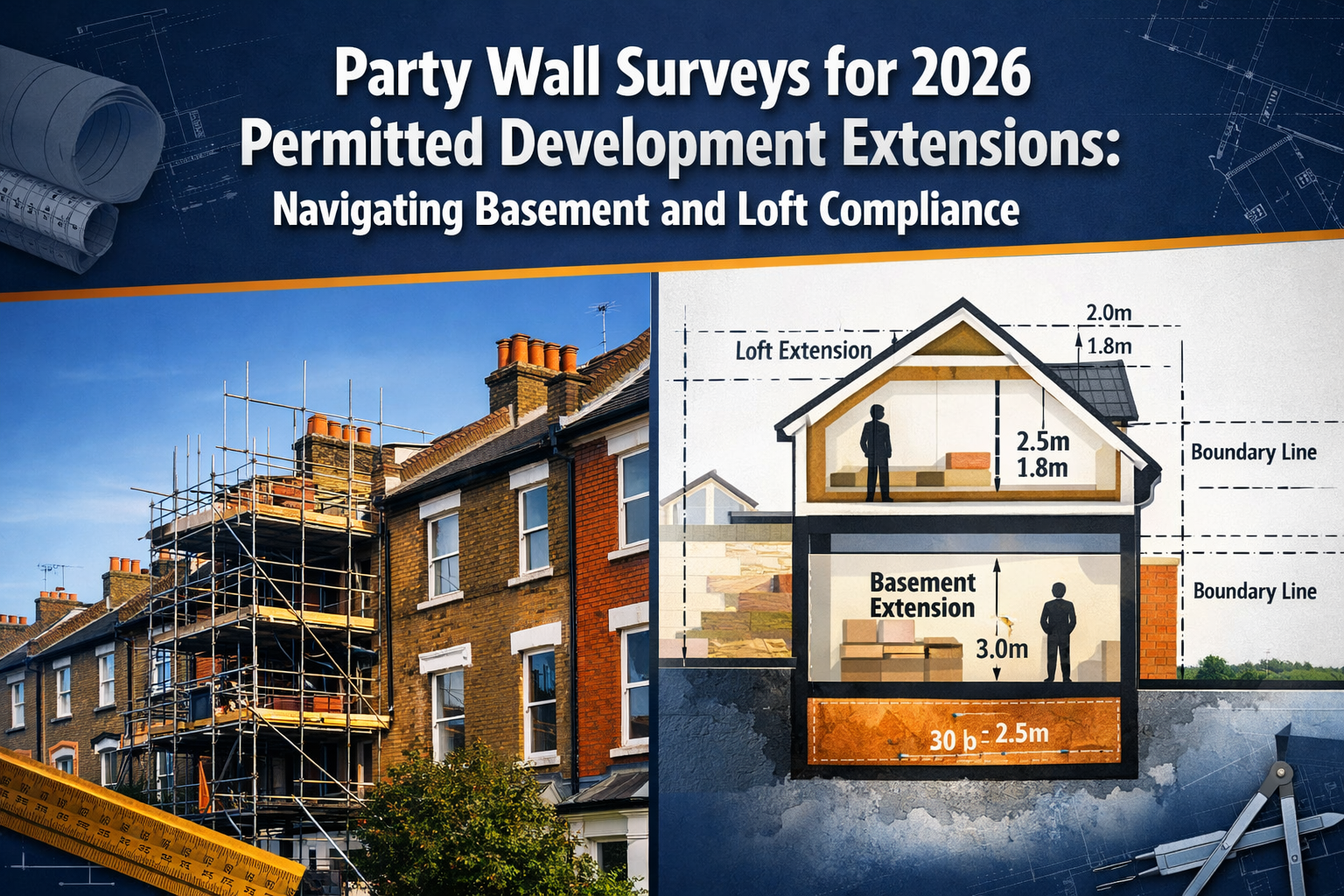

As the UK property market experiences renewed confidence in 2026, homeowners are increasingly turning to permitted development extensions to maximize their living space without the delays and costs of full planning permission. However, many property owners overlook a critical legal requirement that can derail even the most straightforward loft or basement project: Party Wall Surveys for 2026 Permitted Development Extensions: Navigating Basement and Loft Compliance. Understanding these obligations is essential for anyone planning home improvements this year, as failing to comply with the Party Wall etc. Act 1996 can result in costly disputes, legal injunctions, and significant project delays during this recovery-driven construction boom.
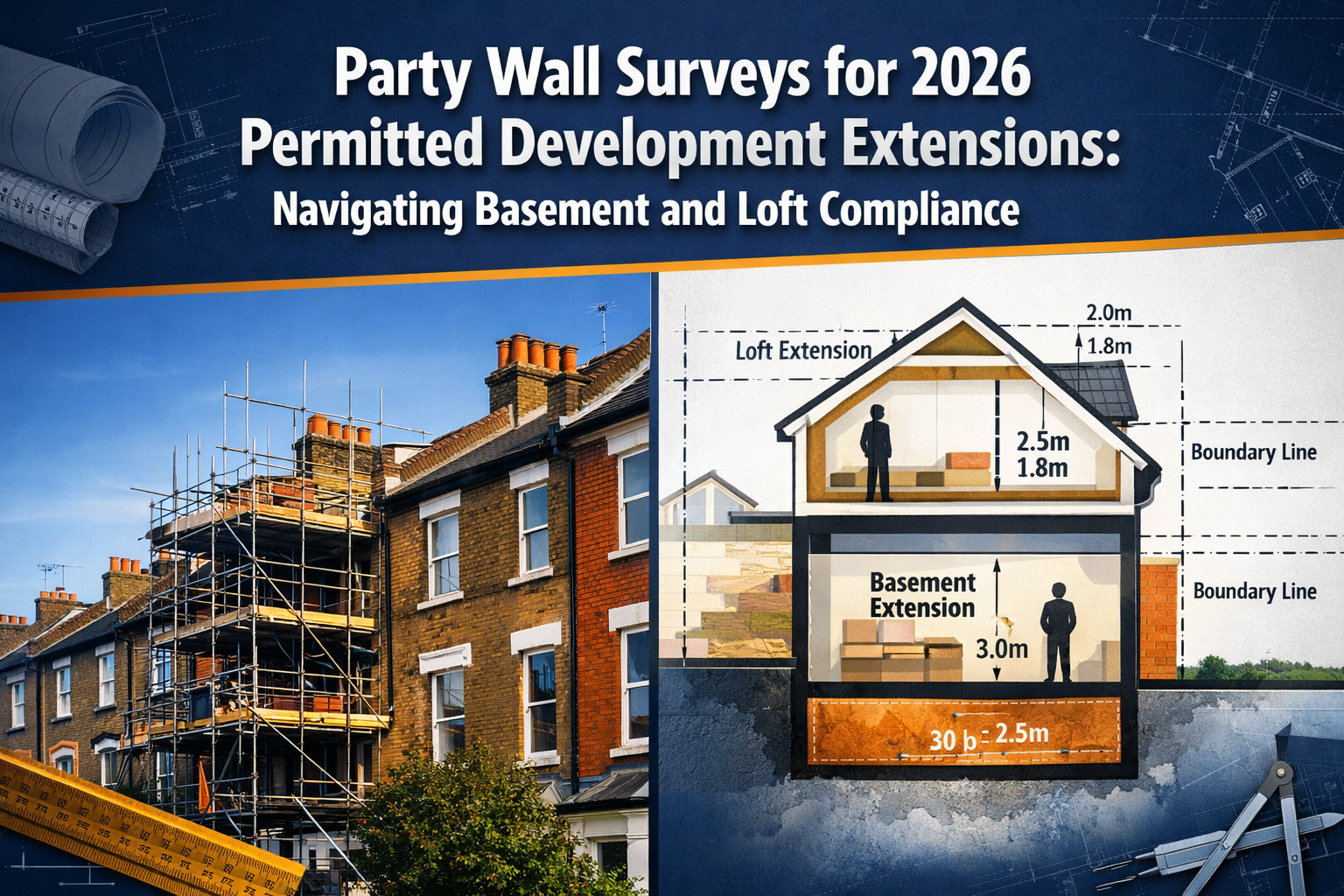
The relationship between permitted development rights and party wall legislation often confuses homeowners. While permitted development eliminates planning permission requirements for certain extensions, it does not exempt property owners from party wall obligations. This guide explores the essential requirements for Party Wall Surveys for 2026 Permitted Development Extensions: Navigating Basement and Loft Compliance, helping homeowners understand their legal responsibilities and avoid common pitfalls.
Key Takeaways
- ✅ Party wall notices remain mandatory even for permitted development projects affecting shared walls or boundaries, with at least 2 months' notice required before construction begins
- 🏗️ Basement excavations within 3-6 meters of neighboring properties trigger Section 6 party wall protection requirements, regardless of permitted development status
- 🏠 Loft conversions affecting party walls require formal party wall agreements and potential surveyor appointments, even when planning permission isn't needed
- 📋 Party wall awards provide limited coverage only for works under Sections 1, 2, and 6 of the Act, not comprehensive authorization for all construction activities
- ⏰ Early compliance prevents delays in 2026's competitive construction market, where contractor availability and material costs favor well-planned projects
Understanding Party Wall Requirements for Permitted Development Projects
The surge in permitted development extensions during 2026 reflects growing homeowner confidence in the property market recovery. However, this enthusiasm must be tempered with proper legal compliance, particularly regarding party wall consent requirements that apply regardless of planning status.
What Is the Party Wall etc. Act 1996?
The Party Wall etc. Act 1996 provides a framework for preventing and resolving disputes between neighbors when building work affects shared walls, boundaries, or nearby structures. This legislation applies throughout England and Wales and operates independently of planning permission requirements.[1]
The Act covers three main types of work:
- Section 1: Building a new wall on or at the boundary line between properties
- Section 2: Work to existing party walls or party structures
- Section 6: Excavation within specified distances of neighboring buildings
Why Permitted Development Doesn't Exempt Party Wall Obligations
Many homeowners mistakenly believe that permitted development rights provide blanket authorization for construction work. In reality, permitted development only addresses planning considerations—it does not override separate legal frameworks like party wall legislation.[1]
Even when your loft conversion or basement extension qualifies as permitted development, you must still:
- Serve proper party wall notices to affected neighbors
- Allow time for the statutory response period
- Appoint surveyors if disputes arise
- Follow the party wall award specifications
Important Note: Failing to serve party wall notices can result in your neighbor obtaining a legal injunction to stop your work, regardless of your permitted development rights.
Common Misconceptions About Party Wall Compliance
Several dangerous misconceptions persist about Party Wall Surveys for 2026 Permitted Development Extensions: Navigating Basement and Loft Compliance:
Myth 1: "My neighbor gave verbal permission, so I don't need formal notices"
- Reality: Party wall procedures require written notices served in specific formats, regardless of neighbor relationships
Myth 2: "Small loft conversions don't affect party walls"
- Reality: Even minor work involving shared chimneys or roof structures may require party wall notices
Myth 3: "Party wall awards cover all my construction activities"
- Reality: Awards only authorize specific works under Sections 1, 2, and 6—not general building activities[3]
Myth 4: "I can start work immediately after serving notice"
- Reality: You must wait at least 2 months after serving notice before commencing work[1]
Party Wall Surveys for Loft Conversions Under 2026 Permitted Development
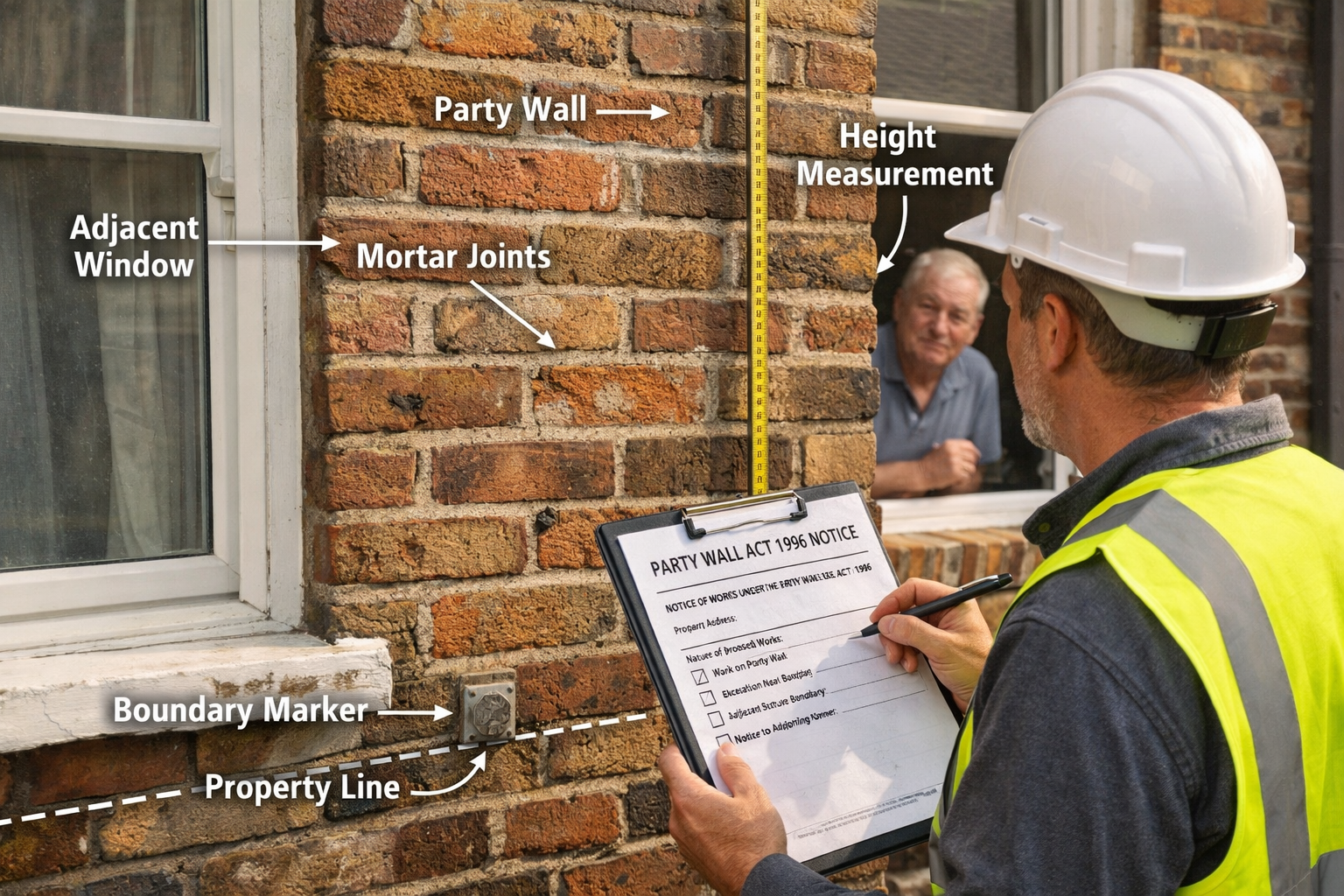
Loft conversions represent one of the most popular permitted development projects in 2026, offering substantial value increases without extensive planning processes. However, these projects frequently trigger party wall requirements that homeowners must navigate carefully.
When Loft Conversions Require Party Wall Notices
Loft conversions typically involve party walls in several scenarios:
Terraced and Semi-Detached Properties
- Work affecting shared roof structures between properties
- Modifications to party walls extending into the loft space
- Installation of steel beams bearing on party walls
- Changes to shared chimney stacks
Detached Properties
- Excavations for foundation work within 3-6 meters of neighbors
- New walls built on boundary lines for extensions
Permitted Development Loft Conversion Limits (2026)
| Aspect | Permitted Development Allowance |
|---|---|
| Height increase | Up to 50cm for terraced/semi-detached |
| Cubic capacity | 40m³ for terraced, 50m³ for detached/semi-detached |
| Roof alterations | No verandas, balconies, or raised platforms |
| Materials | Similar appearance to existing house |
| Side-facing windows | Obscure glazing required |
Even when your loft conversion falls within these permitted development parameters, party wall obligations remain if the work affects shared structures.[2]
The Party Wall Notice Process for Loft Work
Step 1: Determine Notice Requirements
Assess whether your loft conversion involves:
- Work directly to a party wall (Section 2 notice required)
- Building on the boundary line (Section 1 notice required)
- Excavations near neighbors (Section 6 notice required)
Step 2: Prepare and Serve Notices
Party wall notices must include:
- Detailed description of proposed works
- Plans and drawings showing the scope
- Proposed start date (at least 2 months away)
- Your contact information
Serve notices to all affected neighbors—this may include properties on both sides and behind your property.
Step 3: Await Response (14 Days)
Neighbors have 14 days to respond with:
- Consent: Work can proceed after the notice period expires
- Dissent: A party wall surveyor must be appointed
- No response: Treated as dissent after 14 days
Step 4: Surveyor Appointment (If Required)
When dissent occurs, three options exist:
- Both parties appoint the same agreed surveyor
- Each party appoints their own surveyor
- You appoint a surveyor for both parties (if neighbor doesn't respond)
Step 5: Schedule of Condition
Before work begins, surveyors prepare a schedule of condition documenting the existing state of neighboring properties. This protects both parties by establishing baseline conditions.
Step 6: Party Wall Award
Surveyors issue a party wall award specifying:
- Authorized works under the Act
- Working hours and access arrangements
- Procedures for resolving disputes during construction
Specific Loft Conversion Party Wall Considerations
Roof Structure Modifications
When converting a loft in a terraced or semi-detached property, the roof structure often extends across the party wall. Installing dormer windows, roof lights, or structural steel beams may require cutting into or loading the party wall, triggering Section 2 requirements.
Chimney Stack Alterations
Many Victorian and Edwardian properties feature shared chimney stacks serving both properties. Removing, modifying, or insulating around these chimneys requires party wall consent, even for permitted development loft conversions.
Sound Insulation and Fire Protection
While building regulations require adequate sound insulation and fire protection between properties, party wall awards may specify additional protections to prevent damage or disturbance to neighbors during installation.
Basement Extensions and Party Wall Excavation Requirements
Basement extensions have become increasingly popular in 2026 as homeowners seek to maximize property value in high-density urban areas. These projects present unique party wall challenges, particularly regarding excavation notices and structural protection for neighboring properties.
Section 6 Excavation Notice Requirements
Section 6 of the Party Wall Act addresses excavations near neighboring buildings—a critical consideration for basement extensions. This section requires notices when:
3-Meter Rule
You must serve notice when excavating within 3 meters of a neighboring building if your excavation will go deeper than the neighbor's foundations.[3]
6-Meter Rule
You must serve notice when excavating within 6 meters of a neighboring building if your excavation involves deep piled foundations or goes deeper than a line drawn at 45 degrees from the bottom of the neighbor's foundations.[3]
These requirements apply regardless of whether your basement extension qualifies as permitted development.
Understanding Excavation Distances and Depths
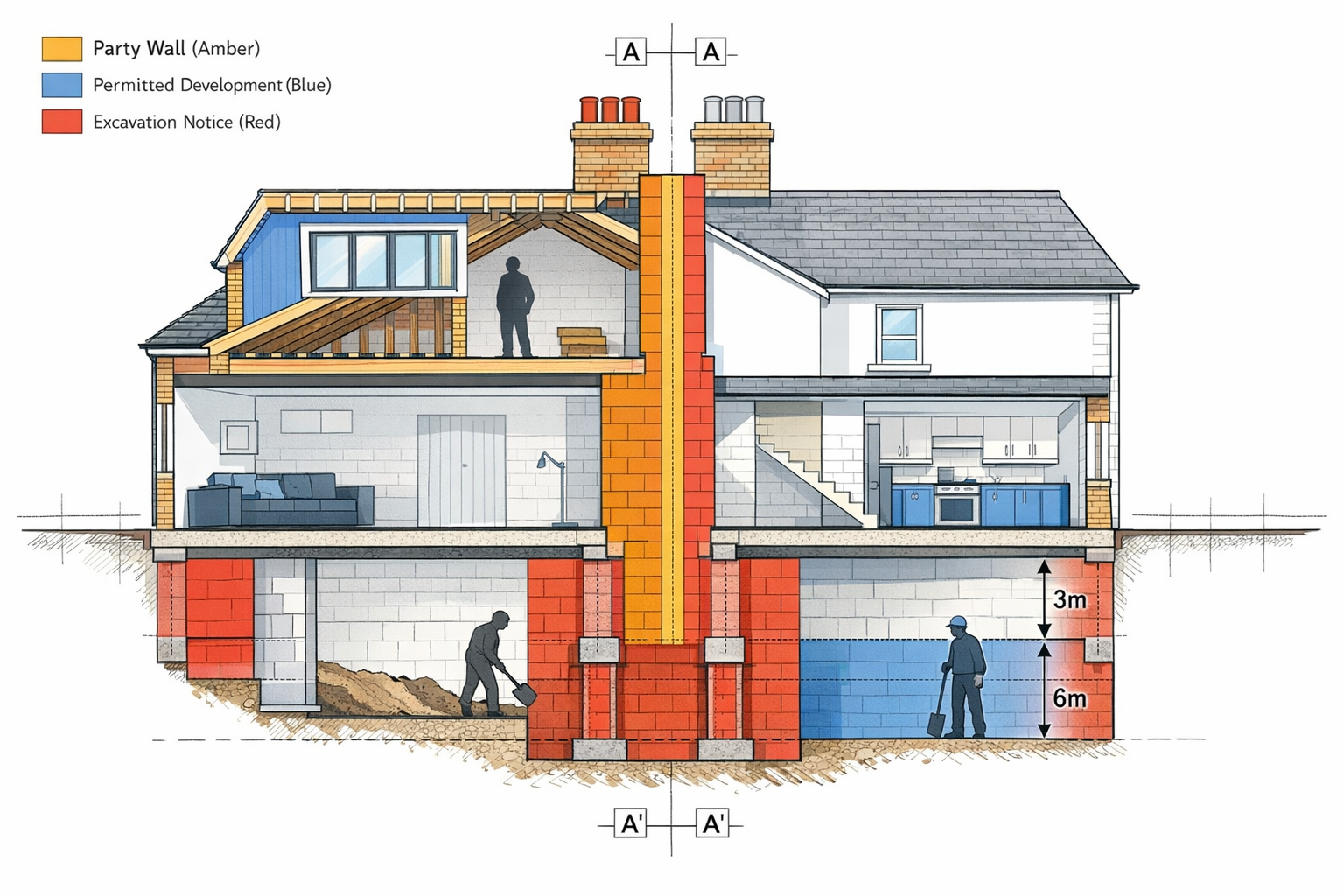
Calculating excavation notice requirements involves several technical considerations:
Measuring Distances
- Distances are measured horizontally from the nearest point of excavation to the nearest point of the neighboring building
- Measurements extend from external walls, not property boundaries
- Underground structures (existing basements, foundations) count as part of the building
Determining Foundation Depths
Before excavating, you must establish the depth of your neighbor's foundations through:
- Historical building records and plans
- Trial pit investigations
- Professional surveyor assessments
- Building control records
Excavation Depth Calculations
The 45-degree rule for the 6-meter zone means:
- If your neighbor's foundations are 1 meter deep, you can excavate up to 1 meter deep within 6 meters without triggering Section 6
- Deeper excavations require excavation notices and potential underpinning agreements
Basement Excavation Notice Timeline
The timeline for basement excavation notices differs from other party wall notices:
| Notice Type | Minimum Notice Period | Response Time |
|---|---|---|
| Section 1 & 2 (walls) | 2 months | 14 days |
| Section 6 (excavation) | 1 month | 14 days |
Despite the shorter notice period, basement projects typically require longer planning phases due to structural engineering requirements and coordination with structural engineers.
Underpinning and Structural Protection Measures
When basement excavations affect neighboring properties, party wall awards often require protective measures:
Underpinning Adjacent Foundations
If your excavation undermines a neighbor's foundations, you may be required to underpin their building at your expense. This involves:
- Excavating beneath existing foundations in sections
- Installing new, deeper foundation support
- Monitoring for settlement during and after work
Temporary Support Structures
During excavation, temporary supports may be necessary:
- Sheet piling to prevent soil movement
- Propping systems for adjacent walls
- Monitoring equipment to detect any movement
Waterproofing Considerations
Basement excavations can affect groundwater drainage, potentially causing dampness in neighboring properties. Party wall awards may specify:
- Waterproofing membrane installation
- Drainage system modifications
- Ongoing monitoring requirements
Combining Loft and Basement Extensions
Many 2026 homeowners pursue both loft and basement extensions simultaneously to maximize permitted development allowances. This approach requires coordinated party wall compliance:
Multiple Notice Types
Combined projects typically require:
- Section 2 notices for loft work affecting party walls
- Section 6 notices for basement excavations
- Potentially Section 1 notices if building on boundaries
Coordinated Surveyor Appointments
Using the same chartered surveyors for both loft and basement party wall matters streamlines the process and ensures consistent documentation.
Sequencing Considerations
The party wall award should address construction sequencing to minimize disruption and structural risks:
- Basement excavation typically proceeds first to avoid loading party walls before underpinning
- Loft work follows after structural stability is confirmed
- Continuous monitoring throughout both phases
Navigating Party Wall Disputes and Compliance Issues
Even with careful planning, Party Wall Surveys for 2026 Permitted Development Extensions: Navigating Basement and Loft Compliance can encounter challenges. Understanding dispute resolution mechanisms and compliance strategies helps homeowners protect their projects and neighbor relationships.
Common Party Wall Disputes in Permitted Development Projects
Timing and Notice Disputes
- Neighbors claiming insufficient notice periods
- Disagreements about proposed start dates
- Conflicts over working hours and access
Scope of Works Disputes
- Neighbors objecting to specific construction methods
- Disagreements about structural protection measures
- Concerns about noise, dust, and disruption levels
Damage Claims
- Allegations of construction damage to neighboring properties
- Disputes about pre-existing conditions versus new damage
- Disagreements about repair standards and costs
Access and Logistics Disputes
- Conflicts about scaffolding placement
- Disagreements about material storage on neighboring property
- Access requirements for surveyor inspections
The Role of Party Wall Surveyors
Professional party wall surveyors serve as impartial experts who:
Prepare Party Wall Awards
Surveyors draft legally binding awards that specify:
- Authorized works under the Act
- Protection measures for neighboring properties
- Access arrangements and working hours
- Dispute resolution procedures
Conduct Inspections
Throughout construction, surveyors:
- Monitor compliance with the party wall award
- Inspect for damage to neighboring properties
- Verify that protective measures are properly implemented
- Document any deviations from agreed procedures
Resolve Disputes
When conflicts arise, surveyors:
- Mediate between parties to find practical solutions
- Issue supplementary awards if work scope changes
- Determine responsibility for any damage
- Specify repair requirements and timelines
Cost Considerations for Party Wall Compliance
Understanding the financial implications of Party Wall Surveys for 2026 Permitted Development Extensions: Navigating Basement and Loft Compliance helps with project budgeting:
Surveyor Fees
- Agreed surveyor: £700-£1,500 for straightforward cases
- Two surveyors: £1,500-£3,000+ depending on complexity
- Complex projects (combined loft/basement): £3,000-£5,000+
Additional Costs
- Schedule of condition reports: £300-£800 per property
- Structural monitoring equipment: £500-£2,000
- Underpinning work (if required): £10,000-£50,000+
- Damage repairs (if they occur): Variable
Who Pays?
- The building owner (person doing the work) pays all party wall surveyor fees, including the neighbor's surveyor
- This applies even if the neighbor dissents unreasonably
- Costs are typically recoverable if disputes escalate to legal proceedings and you prevail
Best Practices for Smooth Party Wall Compliance
1. Start Early
Begin party wall procedures at least 3-4 months before your planned construction start date, allowing time for:
- Notice preparation and service
- Response periods
- Surveyor appointments
- Schedule of condition preparation
- Award finalization
2. Communicate Proactively
Before serving formal notices:
- Discuss your plans informally with neighbors
- Share preliminary drawings and timelines
- Address concerns early to prevent formal disputes
- Maintain open communication throughout the project
3. Choose Experienced Professionals
Work with specialists who understand Party Wall Surveys for 2026 Permitted Development Extensions: Navigating Basement and Loft Compliance:
- Chartered surveyors with party wall expertise
- Contractors familiar with party wall award requirements
- Architects who integrate party wall considerations into designs
4. Document Everything
Maintain comprehensive records:
- Photographs of neighboring properties before work begins
- Copies of all notices served and responses received
- Meeting notes and correspondence with neighbors
- Inspection reports and monitoring data
- Contractor compliance documentation
5. Follow the Award Specifications
Strictly adhere to party wall award requirements:
- Respect specified working hours
- Implement all protective measures
- Provide required access for inspections
- Report any issues or deviations immediately
When to Seek Legal Advice
Consider consulting a solicitor specializing in party wall legislation when:
- Neighbors threaten or obtain injunctions against your work
- Significant disputes arise that surveyors cannot resolve
- You face substantial damage claims
- Neighbors refuse to appoint surveyors or engage in the process
- Your project involves particularly complex party wall issues
Early legal intervention often prevents costly delays and litigation down the line.
2026 Market Context and Strategic Considerations
The current property market recovery creates unique opportunities and challenges for homeowners pursuing permitted development extensions with party wall requirements.
Market Drivers for Permitted Development Extensions in 2026
Rising Property Values
As property values recover in 2026, homeowners increasingly view extensions as cost-effective alternatives to moving, particularly when:
- Stamp duty costs make moving expensive
- Desirable neighborhoods have limited housing stock
- Extension costs remain lower than price differentials for larger properties
Contractor Availability
The construction industry in 2026 shows improved capacity compared to recent years, but demand remains high. Homeowners who complete party wall procedures efficiently gain competitive advantages in securing quality contractors.
Material Cost Stabilization
After years of volatility, building material costs have stabilized in 2026, making project budgeting more predictable. However, delays from party wall disputes can expose projects to future price increases.
Strategic Timing for Party Wall Compliance
Optimal Project Timeline
For 2026 permitted development extensions:
- Months 1-2: Design development and permitted development assessment
- Month 2: Serve party wall notices (2-month notice period begins)
- Months 2-3: Surveyor appointments and schedule of condition (if needed)
- Month 4: Party wall award finalized; contractor selection
- Month 5+: Construction commences
This timeline ensures compliance while maintaining project momentum during favorable market conditions.
Seasonal Considerations
Party wall compliance timelines interact with seasonal construction factors:
- Spring/Summer: Peak construction season with maximum contractor availability
- Autumn: Good weather continues; less competition for contractors
- Winter: Reduced demand may offer cost savings, but weather delays more likely
Serving party wall notices in winter (January-February) positions projects for spring construction starts.
Protecting Your Investment
Party Wall Surveys for 2026 Permitted Development Extensions: Navigating Basement and Loft Compliance represents more than regulatory compliance—it's investment protection:
Avoiding Project Delays
Proper party wall compliance prevents:
- Injunctions that halt construction
- Contractor demobilization costs
- Rescheduling fees and material storage charges
- Lost opportunities in rising markets
Maintaining Neighbor Relations
Professional party wall procedures preserve neighborhood harmony, important for:
- Future property sales (disputes must be disclosed)
- Ongoing quality of life
- Potential future projects requiring neighbor cooperation
- Community reputation
Ensuring Structural Integrity
Party wall awards require protective measures that:
- Prevent damage to neighboring properties
- Ensure your extension's structural soundness
- Provide documentation for future buyers
- Protect against liability claims
Conclusion
Party Wall Surveys for 2026 Permitted Development Extensions: Navigating Basement and Loft Compliance represents a critical but often misunderstood aspect of home improvement projects. As the property market continues its recovery in 2026, homeowners pursuing permitted development loft conversions and basement extensions must recognize that planning exemptions do not eliminate party wall obligations under the Party Wall etc. Act 1996.
The key principles to remember include:
🔑 Mandatory compliance: Party wall notices remain legally required for permitted development projects affecting shared walls, boundaries, or nearby structures, with minimum notice periods of 1-2 months before construction begins.
🔑 Specific requirements: Loft conversions affecting party walls trigger Section 2 requirements, while basement excavations within 3-6 meters of neighbors invoke Section 6 excavation notices with distinct technical considerations.
🔑 Professional support: Engaging experienced chartered surveyors and understanding the legal requirements for party walls streamlines compliance and prevents costly disputes.
🔑 Strategic timing: Starting party wall procedures 3-4 months before planned construction protects project timelines and capitalizes on favorable market conditions in 2026's recovery-driven construction environment.
Next Steps for Homeowners
If you're planning a permitted development loft conversion or basement extension in 2026:
-
Assess party wall requirements early in your design process, identifying all potentially affected neighbors and applicable Act sections
-
Engage qualified professionals including party wall surveyors, structural engineers, and contractors experienced with party wall compliance
-
Serve notices promptly allowing adequate time for response periods, surveyor appointments, and award preparation before your desired construction start date
-
Document thoroughly maintaining comprehensive records of all notices, communications, inspections, and compliance measures
-
Communicate proactively with neighbors, addressing concerns early and maintaining positive relationships throughout the project
-
Budget appropriately for party wall surveyor fees, protective measures, and potential contingencies
-
Stay informed about any party wall act questions or concerns that arise during your project
By understanding and properly navigating Party Wall Surveys for 2026 Permitted Development Extensions: Navigating Basement and Loft Compliance, homeowners can confidently pursue valuable home improvements while protecting their investments, maintaining neighbor relationships, and complying with legal obligations. The combination of permitted development rights and proper party wall procedures creates an efficient pathway for adding space and value to properties during this opportune moment in the UK property market.
Don't let party wall compliance become an afterthought that derails your project—make it a cornerstone of your planning process from day one. With proper preparation and professional guidance, your 2026 permitted development extension can proceed smoothly, delivering the additional space and property value you envision without unnecessary delays or disputes.
References
[1] Party Walls Building Works – https://www.gov.uk/party-walls-building-works
[2] Permitted Development Guide – https://hoa.org.uk/advice/guides-for-homeowners/i-am-improving/permitted-development-guide/
[3] The Party Wall Act Common Misunderstandings – https://www.peterbarry.co.uk/blog/the-party-wall-act-common-misunderstandings/