
As East Anglia's property sector continues to underperform in 2026, developers face mounting challenges that demand smarter risk management strategies. Party Wall Surveys for East Anglia's Lagging Recovery: RICS Strategies to Mitigate Developer Risks in Slow-Moving Markets has emerged as a critical framework for navigating the region's constrained development landscape. With transaction volumes declining and affordability pressures intensifying, understanding how proper party wall protocols can prevent costly disputes has never been more essential.
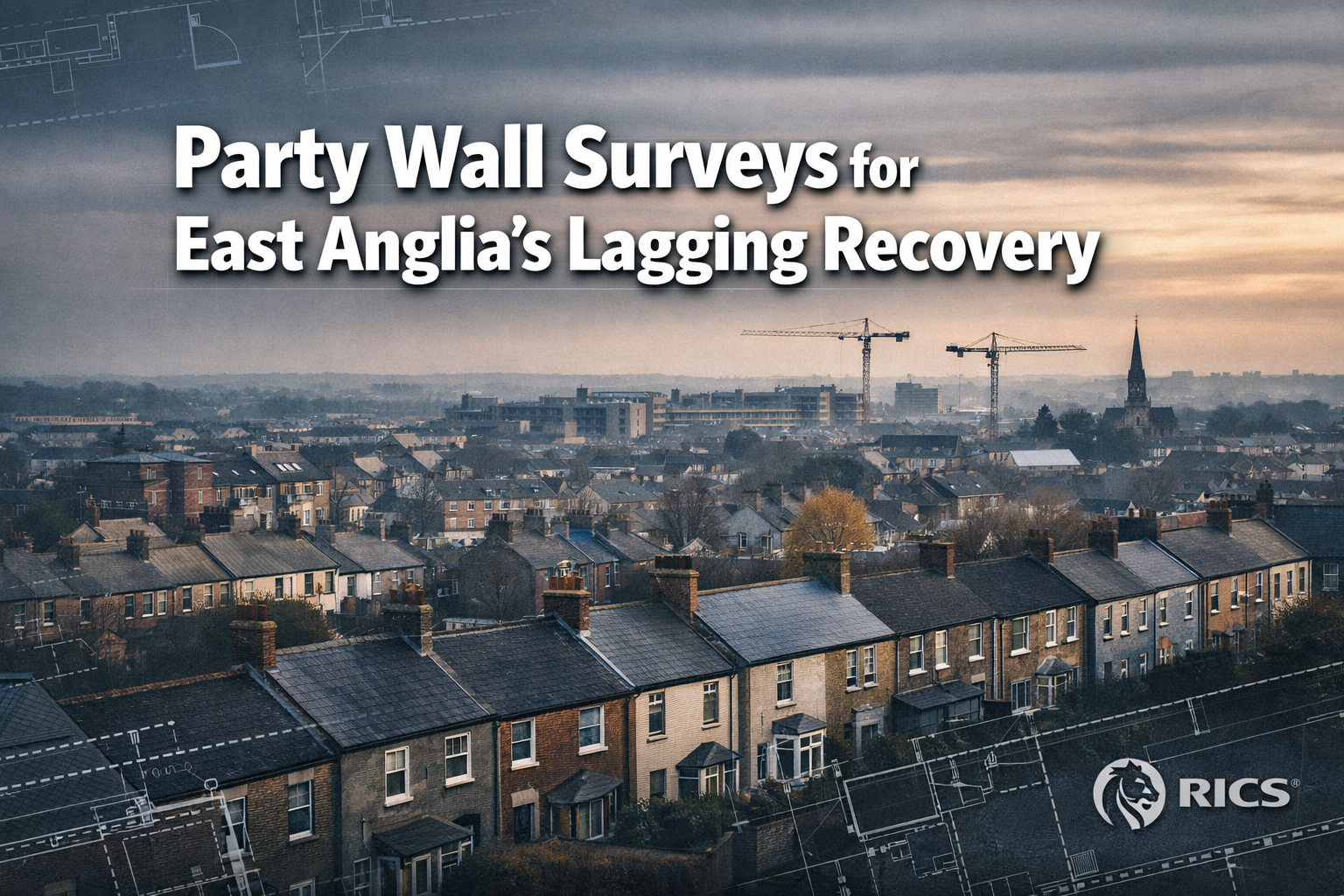
The latest RICS data reveals that East Anglia—comprising Norfolk, Suffolk, Cambridgeshire, and Essex—has joined southern regions in experiencing significant market slowdown. For developers operating in these low-momentum areas, party wall surveys represent both a legal requirement and a strategic tool for protecting investments when market conditions are unfavorable.
Key Takeaways
- 🏘️ East Anglia's property market lags behind national averages, with transaction volumes down and affordability constraints limiting development momentum in 2026
- 📋 RICS-compliant party wall procedures serve as essential risk mitigation tools for developers navigating slow-moving markets where disputes can prove financially devastating
- ⚖️ Proper party wall notices and surveys prevent costly legal challenges and project delays that cash-strapped developers in constrained markets cannot afford
- 🔍 Tailored surveyor checklists address region-specific challenges including Victorian terraced housing stock and semi-detached properties common throughout East Anglia
- 💼 Strategic party wall management protects developer margins when profit buffers are thin and market recovery timelines remain uncertain
Understanding East Anglia's Market Challenges in 2026
Regional Economic Headwinds
East Anglia's property sector faces a perfect storm of challenges in 2026. The region has historically lagged behind more prosperous areas like the South East, and current market conditions have amplified these disparities. Transaction volumes have declined sharply across Norfolk, Suffolk, Cambridgeshire, and Essex, creating a cautious environment where developers must carefully assess every risk factor.
Affordability pressures dominate the landscape. First-time buyers struggle with deposit requirements while existing homeowners face mortgage rate uncertainties. This demand-side weakness translates directly into slower sales for new developments, extending project timelines and straining developer cash flows.
The agricultural economy that traditionally underpinned East Anglia's prosperity has evolved, but the region hasn't fully transitioned to higher-value sectors. Employment growth remains modest compared to urban centers, limiting the pool of potential property buyers with strong purchasing power.
RICS Market Data Insights
According to RICS member surveys, East Anglia consistently reports negative sentiment indicators across multiple metrics. New buyer enquiries have contracted, agreed sales have fallen, and price expectations remain subdued. These trends create a challenging backdrop for property development where margins are compressed and contingency planning becomes paramount.
The construction sector itself faces headwinds. Material costs remain elevated despite some moderation from peak levels, while skilled labor shortages persist. These operational challenges compound the demand-side weaknesses, creating a pincer effect on development viability.
For developers undertaking projects involving party wall matters, the stakes are particularly high. Any dispute or delay can transform a marginally profitable project into a loss-making venture when market absorption rates are slow.
Development Constraints and Opportunities
Despite these challenges, development continues throughout East Anglia, driven by long-term housing need and strategic infrastructure investments. The Cambridge sub-region maintains relative strength due to its knowledge economy, while Norwich and Ipswich pursue regeneration initiatives.
However, much of the region's housing stock comprises terraced and semi-detached properties where party wall considerations are unavoidable. Victorian and Edwardian terraces in urban centers, post-war semi-detached estates in suburban areas, and newer developments with shared boundaries all require careful party wall management.
Understanding how Party Wall Surveys for East Anglia's Lagging Recovery: RICS Strategies to Mitigate Developer Risks in Slow-Moving Markets applies to these property types provides developers with a competitive advantage in navigating regulatory requirements while protecting project timelines.
RICS Party Wall Protocols: Essential Risk Mitigation Tools
The Party Wall Act Framework
The Party Wall etc. Act 1996 establishes the legal framework governing work on party walls, boundary walls, and excavations near neighboring properties [1]. While this legislation applies across England and Wales, its practical implementation in slow-moving markets like East Anglia requires particular attention to risk management.
The Act covers three main categories of work:
- Building on or near party walls between properties
- Excavating near neighboring buildings where foundations may be affected
- Work to existing party structures including repairs, alterations, or demolitions
For developers, compliance begins with serving proper party wall notices to affected neighbors. This notification requirement isn't merely procedural—it establishes the legal foundation for the entire project's relationship with adjoining owners.
RICS Professional Standards
RICS provides comprehensive guidance for party wall surveyors through its professional standards and training programs [6]. These standards ensure that surveyors maintain impartiality, technical competence, and ethical conduct when appointed under the Act.
RICS-accredited surveyors must follow established protocols for:
- Condition surveys documenting pre-existing property states
- Award preparation detailing permitted works and protective measures
- Dispute resolution when neighbors disagree about proposed works
- Damage assessment if issues arise during construction
In East Anglia's constrained market, engaging RICS-qualified professionals provides developers with credibility and protection. When margins are tight and market conditions uncertain, the cost of proper party wall procedures represents essential insurance against far more expensive disputes [2].
Strategic Advantages in Slow Markets
Party Wall Surveys for East Anglia's Lagging Recovery: RICS Strategies to Mitigate Developer Risks in Slow-Moving Markets recognizes that proper procedures deliver multiple strategic benefits beyond legal compliance:
Project Timeline Protection: Disputes can halt construction for months. In a slow market where holding costs accumulate daily, maintaining project momentum is critical. Proper party wall procedures minimize dispute risks and provide clear frameworks for resolving issues quickly when they arise.
Neighbor Relations Management: In areas where properties sell slowly, maintaining positive relationships with adjoining owners becomes more important. Future buyers may know or meet these neighbors during viewings. A contentious construction history can undermine sales efforts.
Financial Risk Containment: Party wall disputes can generate substantial legal costs and compensation claims. When profit margins are already compressed by market conditions, these unbudgeted expenses can eliminate project viability entirely.
Professional Reputation: Developers who consistently follow proper procedures build reputations that facilitate future projects. In tight-knit regional markets like East Anglia, professional standing matters significantly.
The Survey Process Explained
A comprehensive party wall survey follows a structured methodology [3]:
- Initial Consultation: The surveyor reviews proposed works and identifies party wall implications
- Notice Service: Proper notices are prepared and served to adjoining owners with adequate timeframes
- Neighbor Response: Adjoining owners either consent or dissent (or fail to respond, triggering deemed dissent)
- Surveyor Appointment: If consent isn't given, surveyors are appointed—either an Agreed Surveyor or separate surveyors for each party
- Condition Survey: Detailed documentation of existing conditions in affected properties
- Award Preparation: A party wall award is drafted specifying permitted works, timing, and protective measures
- Construction Monitoring: Surveyors may conduct inspections during works to ensure compliance
- Post-Completion Assessment: Final inspections verify that no actionable damage occurred
This process provides structure and certainty in an otherwise uncertain market environment. Developers gain clear parameters for their work while neighbors receive professional oversight and protection.
Developer Risk Mitigation Strategies for East Anglia
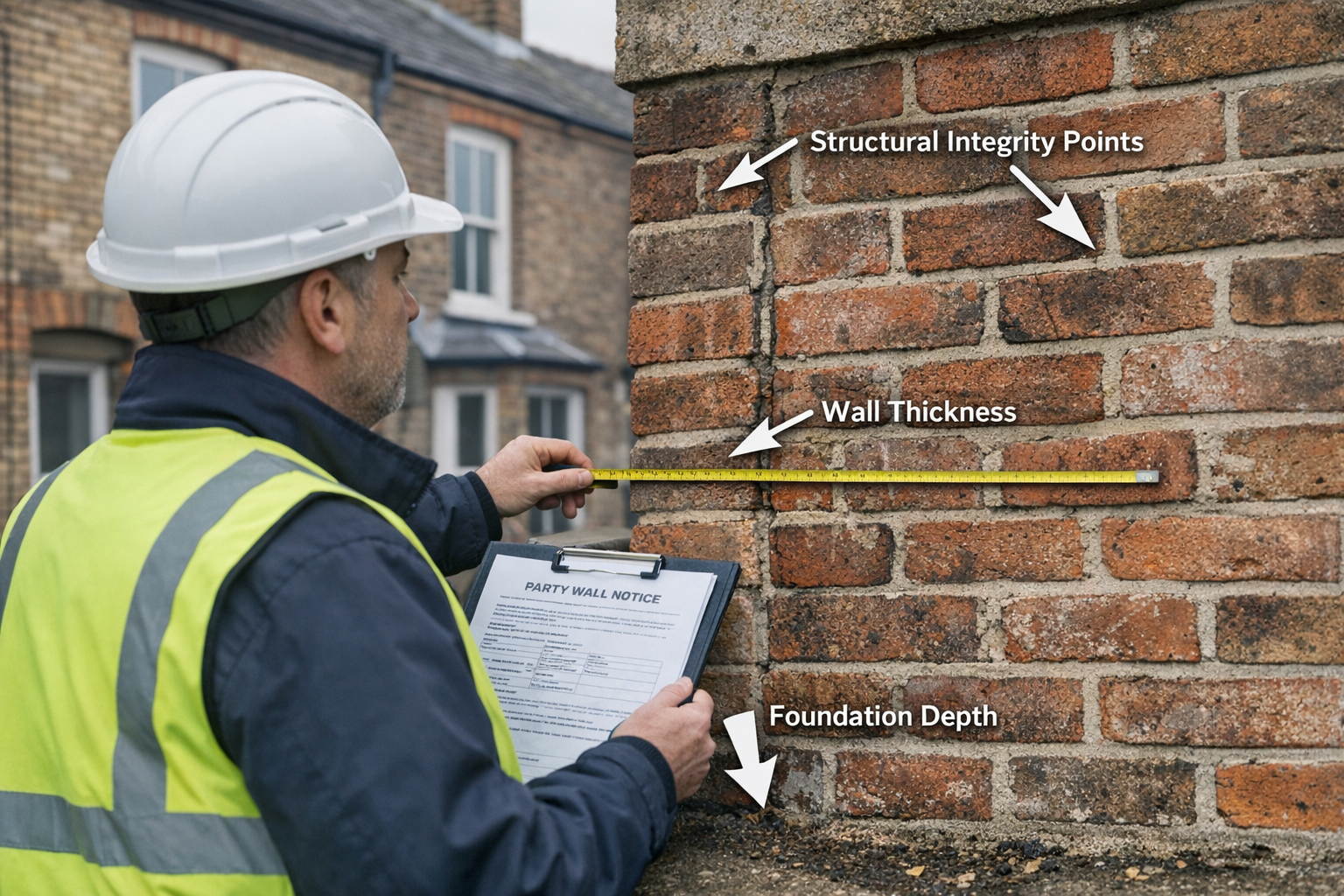
Pre-Acquisition Due Diligence
Smart developers integrate party wall considerations into their site acquisition process. Before purchasing a development site in East Anglia's challenging market, conducting preliminary party wall assessments can reveal potential complications that might affect project viability.
Key due diligence questions include:
- What party wall works will the proposed development require?
- What is the condition of existing party structures?
- Are neighboring properties owner-occupied or tenanted (affecting notification complexity)?
- Do neighbors have history of property disputes or difficult relationships?
- Are there unusual structural issues that might complicate party wall procedures?
This upfront analysis allows developers to factor party wall costs and risks into acquisition pricing. In a slow market where every percentage point of margin matters, accurate cost estimation prevents nasty surprises during construction.
Sites with complex party wall situations may warrant price adjustments or additional contingency reserves. Alternatively, developers might negotiate longer due diligence periods to complete preliminary party wall consultations before committing to purchase.
Budgeting and Cost Control
Party wall procedures involve several cost categories that developers must budget appropriately:
| Cost Category | Typical Range | Risk Factors |
|---|---|---|
| Initial surveyor fees | £800-£2,500 | Complexity of works, number of neighbors |
| Condition surveys | £500-£1,500 per property | Property size, access issues |
| Award preparation | £1,000-£3,000 | Dispute complexity, negotiation requirements |
| Monitoring visits | £300-£600 per visit | Project duration, frequency requirements |
| Dispute resolution | £2,000-£10,000+ | Severity of disagreement, legal involvement |
For a typical East Anglia terrace conversion or extension project, developers should budget £3,000-£8,000 for straightforward party wall procedures [13]. Complex projects with multiple neighbors or contentious issues may require significantly higher provisions.
In slow markets, these costs represent essential risk management investments rather than optional expenses. The cost of proper procedures pales compared to potential dispute costs, project delays, or legal challenges.
Timing and Project Sequencing
Strategic timing of party wall procedures can significantly impact project success in East Anglia's lagging market:
Early Engagement: Begin party wall processes during planning permission stages rather than waiting until construction is imminent. The Act requires minimum notice periods (typically two months for most works), but earlier engagement allows time to address concerns and build neighbor relationships.
Market Timing Considerations: In slow markets, construction timing becomes more flexible. Developers might adjust start dates to accommodate neighbor concerns or seasonal preferences, building goodwill that facilitates smoother procedures.
Phasing Strategies: For larger developments, phasing construction to minimize simultaneous party wall impacts on any single neighbor can reduce resistance and dispute risks.
Completion Alignment: Understanding party wall procedure timelines helps developers avoid situations where construction crews are ready to start but legal permissions remain incomplete—a costly scenario in any market but particularly damaging when margins are tight.
Neighbor Communication Best Practices
Effective communication transforms party wall procedures from adversarial processes into collaborative problem-solving:
Transparency: Provide neighbors with clear, jargon-free explanations of proposed works, expected timelines, and potential impacts. Uncertainty breeds anxiety and resistance.
Accessibility: Ensure neighbors can easily reach project representatives with questions or concerns. Responsive communication prevents small issues from escalating into formal disputes.
Consideration: Accommodate reasonable neighbor requests regarding work timing, access arrangements, or protective measures. Flexibility costs little but generates substantial goodwill.
Documentation: Maintain written records of all neighbor communications. This documentation protects developers if disputes arise while demonstrating professional conduct.
Professional Representation: Engage RICS-qualified surveyors who understand both technical requirements and interpersonal dynamics. Skilled professionals can navigate sensitive situations that might overwhelm less experienced practitioners [4].
Checklist for East Anglia Developers
Party Wall Surveys for East Anglia's Lagging Recovery: RICS Strategies to Mitigate Developer Risks in Slow-Moving Markets provides this comprehensive checklist:
Planning Phase:
- ✅ Identify all party wall implications during design development
- ✅ Budget adequate funds for party wall procedures and contingencies
- ✅ Engage RICS-qualified party wall surveyor for preliminary consultation
- ✅ Research neighboring property ownership and occupancy patterns
- ✅ Review local precedents for similar party wall situations
Notice Phase:
- ✅ Prepare technically accurate party wall notices describing proposed works
- ✅ Serve notices with appropriate lead times (minimum two months for most works)
- ✅ Provide supplementary information to help neighbors understand proposals
- ✅ Document service of notices with proof of delivery
- ✅ Track response deadlines and follow up proactively
Survey Phase:
- ✅ Arrange convenient times for condition surveys with neighbors
- ✅ Conduct thorough photographic and written documentation
- ✅ Address neighbor questions and concerns during survey visits
- ✅ Prepare comprehensive condition schedules for all affected properties
- ✅ Store documentation securely for future reference
Award Phase:
- ✅ Draft clear, comprehensive party wall awards specifying all work parameters
- ✅ Include reasonable protective measures and working hour restrictions
- ✅ Specify dispute resolution mechanisms if issues arise during construction
- ✅ Ensure all parties understand award terms before construction begins
- ✅ Maintain copies of executed awards accessible to construction teams
Construction Phase:
- ✅ Brief contractors on party wall obligations and restrictions
- ✅ Implement protective measures specified in awards
- ✅ Conduct monitoring visits at appropriate intervals
- ✅ Address any neighbor concerns promptly and professionally
- ✅ Document compliance with award terms throughout construction
Completion Phase:
- ✅ Conduct final condition surveys comparing post-construction state to baseline
- ✅ Address any actionable damage promptly and professionally
- ✅ Obtain neighbor sign-offs confirming satisfactory completion
- ✅ Archive all party wall documentation for future reference
- ✅ Apply lessons learned to future projects
Regional Considerations for East Anglia
East Anglia's specific characteristics require tailored approaches to party wall management:
Victorian Terraces: Norwich, Ipswich, and Cambridge contain extensive Victorian terraced housing with solid brick party walls. These structures often require careful assessment for party wall insulation upgrades or structural modifications. The age and construction methods of these properties mean condition surveys must be particularly thorough to distinguish pre-existing issues from construction-related damage.
Semi-Detached Estates: Post-war suburban development created extensive semi-detached housing throughout the region. These properties typically feature cavity wall construction with different party wall characteristics than older terraces. Developers must understand these construction differences when planning works and assessing risks.
Rural Conversions: East Anglia's agricultural heritage means many development opportunities involve barn conversions or rural property modifications. These projects may involve party wall excavation notices when new foundations are installed near existing structures. Rural properties may also involve access challenges for condition surveys.
Coastal Properties: Norfolk and Suffolk's coastal areas present unique challenges including exposure to marine environments, potential subsidence issues, and seasonal occupancy patterns that affect neighbor notification and survey scheduling.
Market Town Regeneration: Towns like Bury St Edmunds, King's Lynn, and Colchester pursue regeneration initiatives often involving historic properties with complex party wall situations. Developers working in these contexts must balance heritage considerations with party wall requirements.
Insurance and Liability Management
Proper party wall procedures integrate with broader risk management strategies:
Professional Indemnity Insurance: Ensure party wall surveyors carry adequate professional indemnity coverage. This protection benefits developers if surveyor errors contribute to disputes or claims.
Contractor Requirements: Specify party wall compliance obligations in contractor agreements. Ensure contractors carry appropriate insurance and understand their responsibilities under party wall awards.
Developer Liability: Understand that ultimate responsibility for party wall compliance rests with the building owner (developer). Even when contractors or surveyors are engaged, developers remain accountable for outcomes.
Claims Management: Establish clear procedures for handling neighbor claims of damage or nuisance. Prompt, professional responses minimize escalation risks and demonstrate good faith.
In East Anglia's challenging market, these insurance and liability considerations provide essential protection for developer assets and reputations.
Conclusion
Party Wall Surveys for East Anglia's Lagging Recovery: RICS Strategies to Mitigate Developer Risks in Slow-Moving Markets represents more than regulatory compliance—it embodies a strategic approach to development in challenging market conditions. As East Anglia continues navigating economic headwinds in 2026, developers who master party wall procedures gain significant competitive advantages.
The region's market dynamics demand careful risk management at every project stage. Compressed margins, extended sales timelines, and cautious buyer sentiment leave little room for costly disputes or construction delays. Proper party wall procedures, guided by RICS standards and implemented by qualified professionals, provide the structure and certainty developers need to protect project viability.
The comprehensive checklists, budgeting frameworks, and strategic considerations outlined in this article equip developers with practical tools for navigating East Anglia's property landscape. From pre-acquisition due diligence through post-completion documentation, systematic party wall management minimizes risks while maintaining positive neighbor relationships that facilitate future projects.
Actionable Next Steps
For developers operating in East Anglia's slow-moving market, consider these immediate actions:
-
Audit Current Practices: Review existing party wall procedures against RICS standards and the comprehensive checklist provided. Identify gaps or areas for improvement.
-
Engage RICS Professionals: Establish relationships with qualified party wall surveyors who understand regional market conditions and can provide strategic guidance beyond basic compliance.
-
Integrate Party Wall Planning: Incorporate party wall considerations into project feasibility analysis and acquisition due diligence rather than treating them as afterthoughts.
-
Budget Appropriately: Allocate realistic budgets for party wall procedures including contingency reserves for unexpected complications.
-
Document Everything: Implement systematic documentation practices for all party wall communications, surveys, and procedures to protect against future disputes.
-
Learn from Experience: Conduct post-project reviews analyzing party wall procedures' effectiveness and identifying lessons for future developments.
-
Stay Informed: Monitor RICS guidance updates, regional market trends, and legal developments affecting party wall practices.
The path to successful development in East Anglia's challenging 2026 market requires diligence, professionalism, and strategic thinking. Party wall procedures, properly understood and implemented, provide essential foundations for project success. Developers who embrace these practices position themselves to weather current market difficulties while building reputations that will serve them well when recovery eventually arrives.
For projects involving legal requirements for party walls or complex situations requiring party wall consent, professional guidance remains invaluable. The investment in proper procedures today prevents far costlier problems tomorrow—a principle that applies with particular force in slow-moving markets where every project must succeed.
References
[1] Party Walls – https://www.murrins.co.uk/services/party-walls/
[2] Rics Party Wall Survey – https://fourthwallbc.com/commercial-services/rics-party-wall-survey/
[3] Party Wall Surveyors – https://www.peterbarry.co.uk/party-wall-surveyors/
[4] Party Walls – https://www.ricsfirms.com/residential/legal-issues/party-walls/?search=true&location=Essex&service=66
[6] Party Walls The Fundamentals – https://www.rics.org/training-events/online-training/on-demand/party-walls-the-fundamentals
[13] Party Wall Surveyor Cost – https://kingstonsurveyors.com/party-wall-matters/party-wall-surveyor-cost/