

The North West and North of England are experiencing an unprecedented housing boom in 2026, transforming quiet residential streets into bustling construction zones overnight. As property developers race to capitalize on the region's strongest upward trends in decades, party wall surveyors face mounting pressure to manage increasingly complex agreements between neighboring properties. This surge in development activity brings both opportunities and challenges for homeowners, developers, and construction professionals navigating the intricacies of party wall agreements in these high-growth regions.
The Northern housing market is experiencing an unprecedented surge in 2026, with Northern Ireland, Scotland, and North West England leading the UK's regional performance.[1] Industry forecasts predict construction output growth of 2.6% for the year, marking a return to expansion after periods of stagnation.[2] This explosive growth means more shared walls, more construction projects, and significantly more party wall disputes requiring professional resolution.
Key Takeaways
✅ Northern England's housing boom has created unprecedented demand for party wall surveys, with the North West showing the strongest growth rates in the UK
✅ Developer activity acceleration requires updated protocols for managing higher dispute volumes and complex multi-unit developments
✅ Early engagement with party wall surveyors and proactive communication can prevent costly delays in fast-moving construction projects
✅ Professional party wall agreements protect both building owners and adjoining owners while ensuring compliance with legal requirements
✅ Regional expertise matters significantly when navigating party wall procedures in Northern England's diverse housing stock
Understanding Party Wall Surveys in Northern England's Housing Boom: Managing Agreements When Developer Activity Accelerates in High-Growth Regions
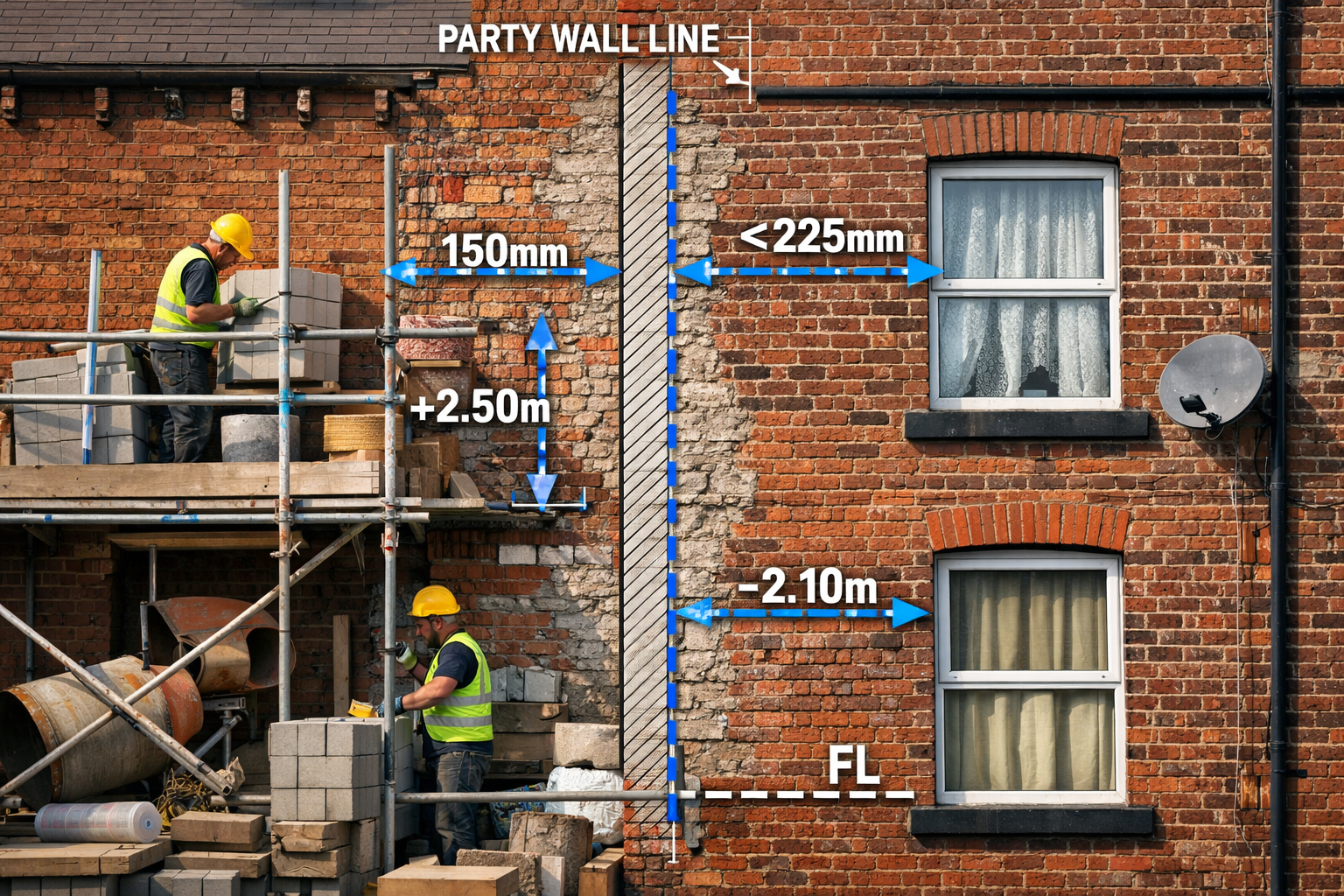
The Northern Housing Boom: Scale and Impact
The housing market transformation across Northern England represents more than just rising property prices. Manchester, Liverpool, Leeds, and Newcastle have become hotspots for residential development, with terraced housing conversions, new-build developments, and urban regeneration projects creating a perfect storm for party wall activity.
Key statistics defining the boom:
- Construction output growth of 2.6% in 2026[2]
- North West England leading regional performance metrics[1]
- Increased density developments in urban centers
- Rising demand for housing stock conversions
- Accelerated timeline expectations from developers
This rapid expansion creates unique challenges for party wall matters that require specialized knowledge of both the Party Wall etc. Act 1996 and regional construction practices.
What Makes Northern England Different?
Northern England's housing stock presents distinct characteristics that affect party wall survey requirements:
🏘️ Victorian and Edwardian Terraces: Extensive rows of terraced housing with shared walls throughout entire streets
🏗️ Industrial Heritage Buildings: Converted warehouses and mills requiring careful structural consideration
🏢 High-Density Urban Development: Compact city center developments with multiple adjoining properties
🏠 Mixed-Use Properties: Commercial ground floors with residential above, complicating ownership structures
The Party Wall Act Framework
Understanding the Party Wall Act remains essential even as development accelerates. The legislation covers three main types of work:
- New walls on boundary lines between properties
- Work to existing party walls or party structures
- Excavation within specified distances of neighboring buildings
When developers work within three meters of an adjoining property and dig deeper than its foundations, specific notification requirements apply under the Party Wall Act 3 metre rule.
Managing Increased Dispute Volumes: Updated Protocols for High-Growth Regions

The Challenge of Scale
As development activity accelerates, party wall surveyors in Northern England face unprecedented caseload increases. A single street of terraced houses undergoing renovation can generate dozens of party wall notices simultaneously, each requiring individual attention and proper documentation.
Common dispute triggers in boom conditions:
- Rushed timelines from developers eager to capitalize on market conditions
- Communication breakdowns when multiple projects proceed simultaneously
- Inadequate preliminary surveys due to time pressures
- Neighbor fatigue from constant construction activity
- Complex ownership structures in converted properties
Proactive Agreement Management Strategies
Successful party wall surveyors have adapted their approaches to handle increased volumes while maintaining quality standards:
1. Early Engagement Protocols
Begin party wall procedures earlier in the development planning process, ideally 3-4 months before anticipated construction start dates rather than the statutory minimum notice periods.
2. Batch Processing Systems
For large-scale developments affecting multiple properties:
- Group similar notices by property type
- Standardize documentation where appropriate
- Create template responses for common scenarios
- Maintain individual attention to unique circumstances
3. Digital Communication Platforms
Modern party wall management requires:
- Secure document sharing systems
- Digital signature capabilities for faster agreement processing
- Project tracking software to monitor multiple cases simultaneously
- Automated reminder systems for statutory deadlines
4. Agreed Surveyor Appointments
Using party wall agreed surveyors can streamline the process significantly. When both building owner and adjoining owner appoint the same surveyor, decision-making becomes more efficient while maintaining impartiality.
Handling Complex Multi-Unit Projects
Northern England's boom includes substantial multi-unit residential developments that create unique party wall challenges:
| Project Type | Party Wall Complexity | Key Considerations |
|---|---|---|
| Terraced House Conversion | High | Multiple adjoining owners, shared structures |
| New-Build Apartment Block | Very High | Excavation affecting multiple properties |
| Mixed-Use Development | Extreme | Commercial/residential interfaces, varied ownership |
| Warehouse Conversion | High | Historic structures, unknown foundation depths |
The Importance of Schedule of Condition Reports
Party wall schedule of condition reports become absolutely critical in high-activity regions. These detailed photographic and written records:
✓ Document pre-construction property conditions
✓ Provide evidence for damage claims
✓ Protect building owners from false accusations
✓ Enable fair resolution of genuine damage issues
✓ Reduce insurance disputes
In Northern England's boom conditions, every adjoining property should receive a comprehensive schedule of condition before work commences.
Addressing Common Party Wall Questions
Property owners in high-growth regions frequently have party wall act questions about their rights and obligations. Clear communication about the following topics prevents misunderstandings:
Who pays for party wall surveys? The building owner (the person undertaking the work) typically bears all reasonable costs, including the adjoining owner's surveyor fees.
Can work proceed without agreement? No. Proceeding without proper party wall procedures can result in injunctions, costly delays, and legal liability.
How long does the process take? Statutory notice periods are 2 months for most work, but practical timelines in busy markets may extend to 3-4 months.
What if neighbors refuse to engage? The building owner can appoint a surveyor on their behalf after 14 days of non-response.
Best Practices for Developers and Homeowners in Accelerated Markets

For Property Developers
Developers operating in Northern England's boom markets should implement these strategies:
Strategic Planning
📋 Integrate party wall timelines into project planning from day one
📋 Budget appropriately for party wall costs (typically £700-£1,500 per adjoining property)
📋 Hire experienced local surveyors familiar with regional building types
📋 Maintain transparent communication with all affected parties
Risk Mitigation
Developers can minimize party wall risks by:
- Conducting preliminary structural assessments before purchasing development sites
- Engaging surveyors during due diligence phases
- Building contingency time into construction schedules
- Establishing good neighbor relations before formal notices
Quality Documentation
Comprehensive documentation protects developers from future claims:
- Detailed photographic records
- Professional survey reports
- Signed party wall awards
- Correspondence logs
- Completion certificates
For Homeowners and Adjoining Owners
Residents in high-growth areas should understand their rights and responsibilities:
When You Receive a Party Wall Notice
- Don't ignore it – statutory deadlines apply
- Read it carefully – understand what work is proposed
- Consider appointing your own surveyor – you're entitled to independent representation
- Respond within 14 days – silence may be treated as dissent
- Request a schedule of condition – document your property's current state
Understanding Your Rights
Adjoining owners have the right to:
✓ Appoint their own surveyor at the building owner's expense
✓ Request reasonable modifications to proposed work
✓ Receive compensation for demonstrable damage
✓ Access to their property for inspection purposes
✓ Receive copies of all party wall documentation
What to Do About Disputes
When party wall disputes arise, professional resolution is essential. Common dispute scenarios include:
- Disagreement over proposed work scope
- Concerns about structural safety
- Disputes over damage responsibility
- Access issues during construction
- Timing and noise complaints
Professional party wall surveyors act as impartial mediators, creating party wall awards that legally bind both parties and provide clear frameworks for proceeding with construction work.
Regional Considerations for Northern England
Different areas within Northern England present unique party wall considerations:
Manchester and Greater Manchester: High concentration of Victorian terraces, rapid urban regeneration, mixed commercial-residential zones
Liverpool and Merseyside: Historic dock conversions, terraced housing stock, waterfront developments
Leeds and West Yorkshire: Mill conversions, suburban expansion, student accommodation developments
Newcastle and the North East: Georgian terraces, riverside developments, industrial heritage conversions
Understanding these regional nuances helps surveyors provide more effective guidance and prevents common pitfalls specific to each area's building stock.
Technology and Innovation in Party Wall Management
Modern party wall surveyors leverage technology to handle increased caseloads:
Digital Survey Tools: Laser measuring devices, digital photography, 3D scanning for complex structures
Cloud-Based Systems: Secure document storage, real-time updates, multi-party access
Communication Platforms: Video consultations, digital signatures, automated notifications
Data Analytics: Tracking dispute patterns, identifying risk factors, optimizing processes
These innovations enable surveyors to maintain high standards while managing the volume demands of boom conditions.
Cost Considerations in High-Growth Markets
Understanding party wall costs helps all parties budget appropriately:
| Service | Typical Cost Range | Notes |
|---|---|---|
| Party Wall Notice Preparation | £150-£300 | Per notice |
| Building Owner's Surveyor | £800-£1,200 | Per case |
| Adjoining Owner's Surveyor | £700-£1,000 | Paid by building owner |
| Schedule of Condition | £300-£600 | Per property |
| Party Wall Award | Included | In surveyor fees |
| Dispute Resolution | £1,500-£3,000+ | If complications arise |
In high-growth regions, costs may increase due to demand, but competitive markets also create opportunities for efficient service delivery.
The Role of Professional Surveyors
Qualified party wall surveyors provide essential services that protect all parties:
🔍 Technical Expertise: Understanding structural implications of proposed work
⚖️ Impartial Mediation: Balancing the interests of building and adjoining owners
📄 Legal Compliance: Ensuring adherence to Party Wall Act requirements
🛡️ Risk Management: Identifying potential problems before they occur
🤝 Dispute Resolution: Finding practical solutions to disagreements
When selecting a surveyor for projects in Northern England's boom regions, prioritize those with:
- Local market knowledge
- Experience with regional building types
- Proven track record in high-volume environments
- Professional indemnity insurance
- Membership in relevant professional bodies
Conclusion
Party Wall Surveys in Northern England's Housing Boom require adaptive strategies and professional expertise to manage agreements effectively when developer activity accelerates in high-growth regions. The unprecedented construction surge across the North West and North of England in 2026 has created both opportunities and challenges for property owners, developers, and construction professionals.
Key success factors for navigating this dynamic environment include:
✨ Early engagement with party wall procedures, beginning months before construction
✨ Professional surveyor selection with regional expertise and capacity for high-volume work
✨ Comprehensive documentation including detailed schedules of condition
✨ Proactive communication between all parties to prevent misunderstandings
✨ Realistic timeline planning that accounts for statutory requirements and practical realities
The housing boom presents tremendous opportunities for property development and value creation, but success depends on properly managing the party wall process. Whether you're a developer planning a major project, a homeowner undertaking renovations, or an adjoining owner receiving a party wall notice, professional guidance ensures compliance, protects your interests, and facilitates smooth project completion.
Next Steps
For Building Owners and Developers:
- Consult with experienced party wall surveyors during project planning phases
- Integrate party wall timelines into construction schedules
- Budget appropriately for all party wall costs
- Establish good relationships with neighboring property owners
For Adjoining Owners:
- Respond promptly to party wall notices
- Consider appointing your own surveyor for independent representation
- Request comprehensive schedules of condition
- Understand your rights and the process
For All Parties:
- Prioritize clear, professional communication
- Maintain detailed records of all correspondence
- Seek professional advice when questions arise
- Focus on collaborative solutions rather than confrontation
The Northern England housing boom shows no signs of slowing, making professional party wall survey services more important than ever. By following best practices, engaging qualified professionals, and maintaining open communication, all parties can benefit from the region's growth while protecting their property interests and maintaining good neighbor relations.
References
[1] Northern Housing Boom – https://nottinghillsurveyors.com/blog/tag/northern-housing-boom
[2] Party Wall Surveys Amid 2026 Construction Boom Handling Disputes In High Demand Uk Housing Markets – https://nottinghillsurveyors.com/blog/party-wall-surveys-amid-2026-construction-boom-handling-disputes-in-high-demand-uk-housing-markets