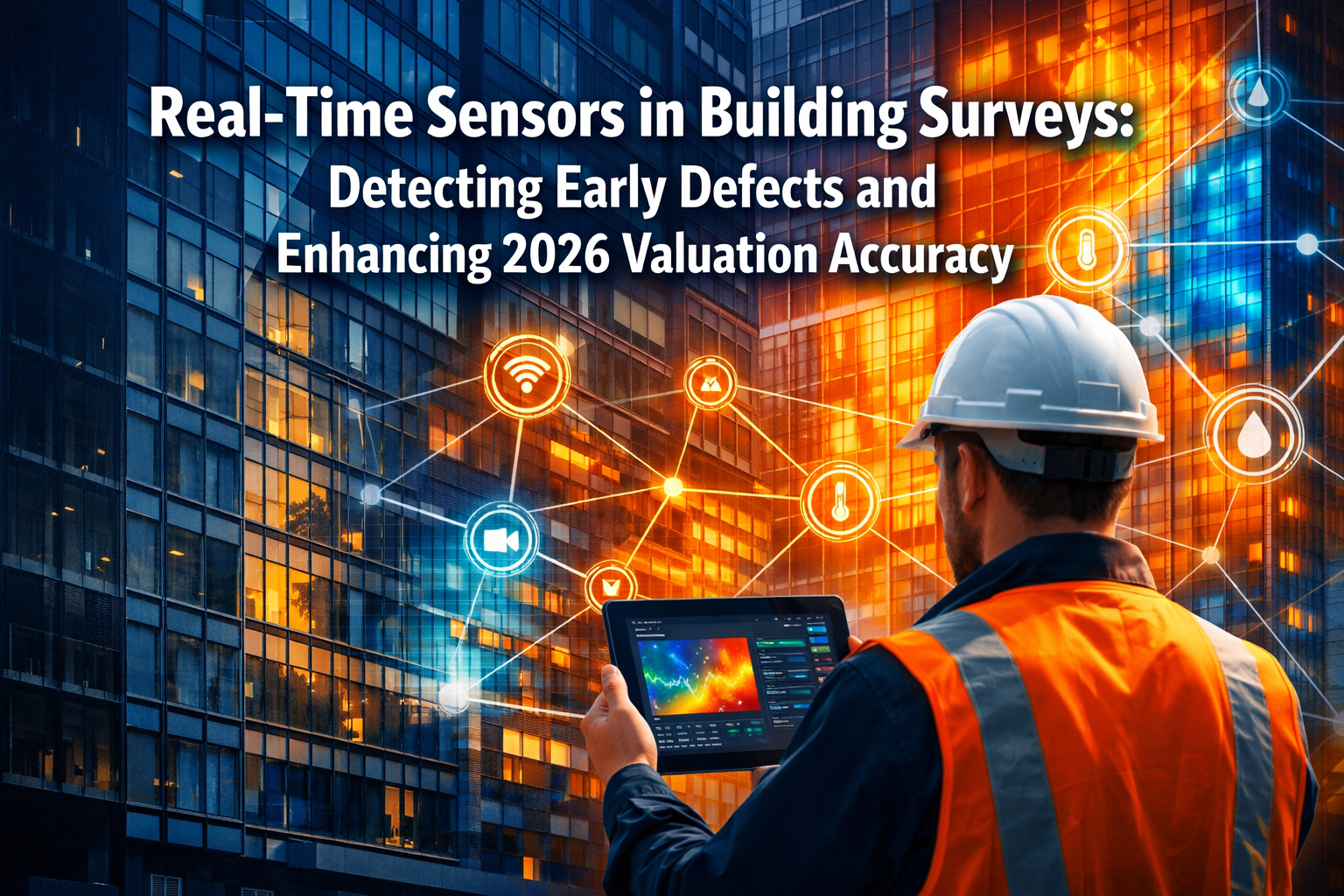

Hidden moisture damage costs UK property owners an estimated £400 million annually, with most defects remaining undetected until they've caused significant structural deterioration. As the property sector enters 2026, real-time sensor technology is revolutionizing how building surveys identify problems before they escalate—transforming valuation accuracy and risk assessment in ways traditional inspection methods never could.
Real-Time Sensors in Building Surveys: Detecting Early Defects and Enhancing 2026 Valuation Accuracy represents a fundamental shift from periodic visual inspections to continuous monitoring systems that track humidity, air quality, structural movement, and environmental conditions 24/7. This technology is particularly crucial for high-rise buildings and retrofit properties, where latent defects often hide behind finishes and within complex building systems.
Key Takeaways
✅ Real-time sensors detect defects months or years before visible symptoms appear, reducing repair costs by up to 60% through early intervention
✅ Continuous monitoring provides objective data that enhances property valuation accuracy, particularly for RICS registered valuers conducting complex assessments
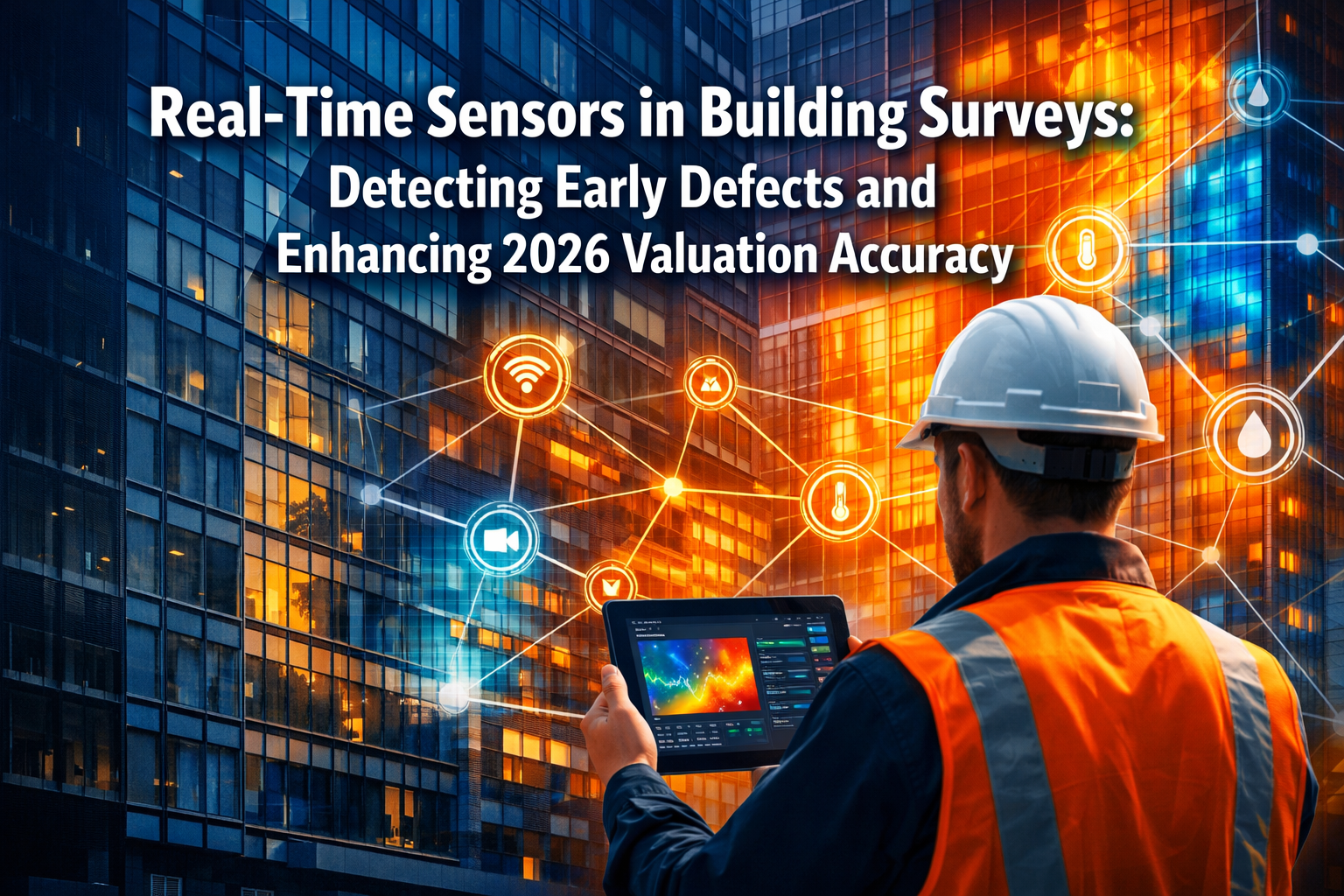
✅ Multi-sensor systems track humidity, air quality, structural movement, and temperature, creating comprehensive building health profiles
✅ High-rise and retrofit properties benefit most from sensor technology due to accessibility challenges and hidden defect risks
✅ Integration with digital twins and AI platforms enables predictive maintenance and reduces insurance claims by identifying problems before they escalate
Understanding Real-Time Sensor Technology in Building Surveys
Traditional building surveys rely on visual inspection, manual testing, and experience-based assessment. While skilled surveyors can identify many issues, they face inherent limitations: they can only inspect what's visible, accessible, and present at the moment of inspection. Latent defects—problems developing behind walls, beneath floors, or within building systems—often remain undetected until they cause visible damage.
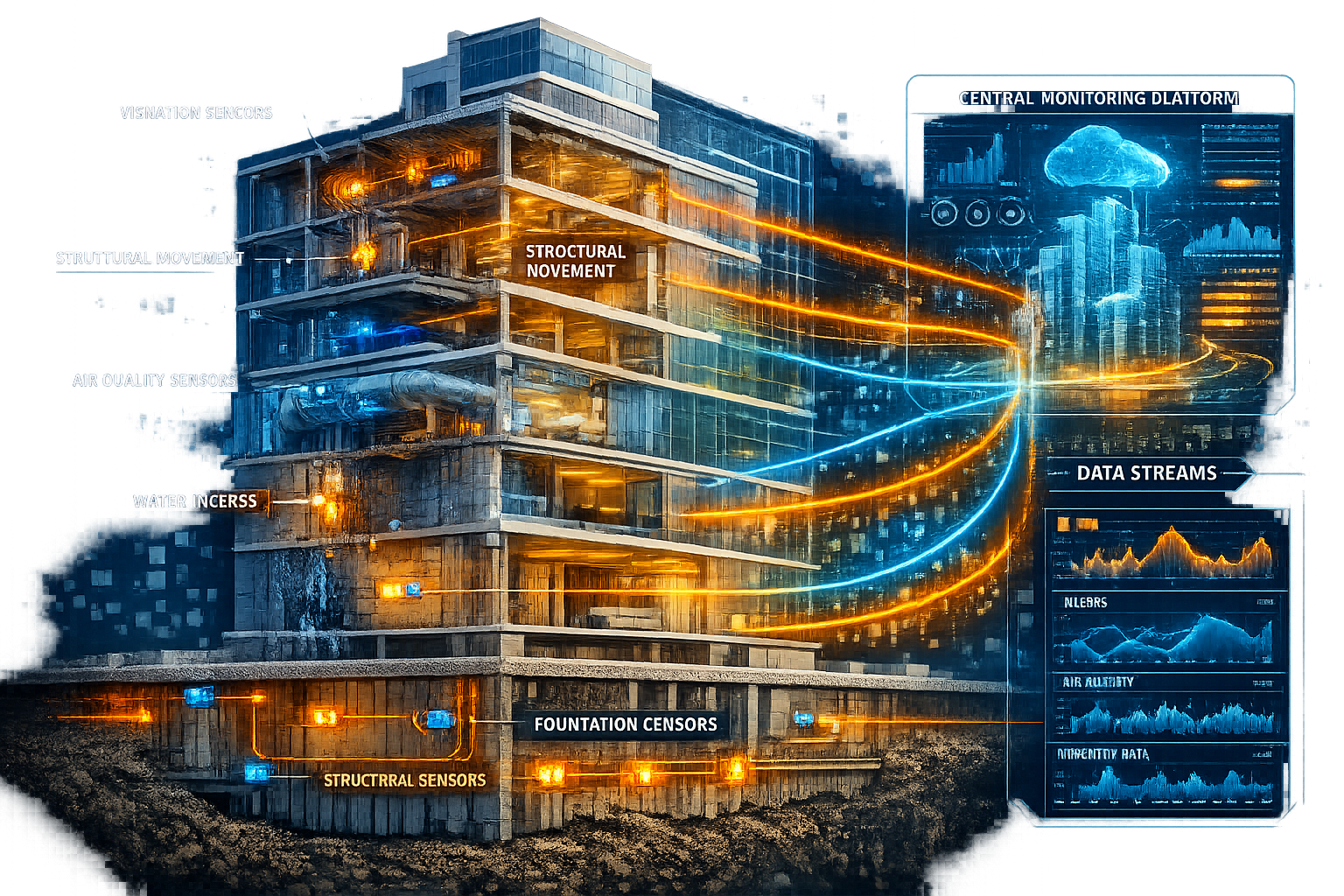
Real-time sensor technology addresses these limitations by providing continuous monitoring of critical building parameters. These systems consist of:
Core Sensor Types for Defect Detection
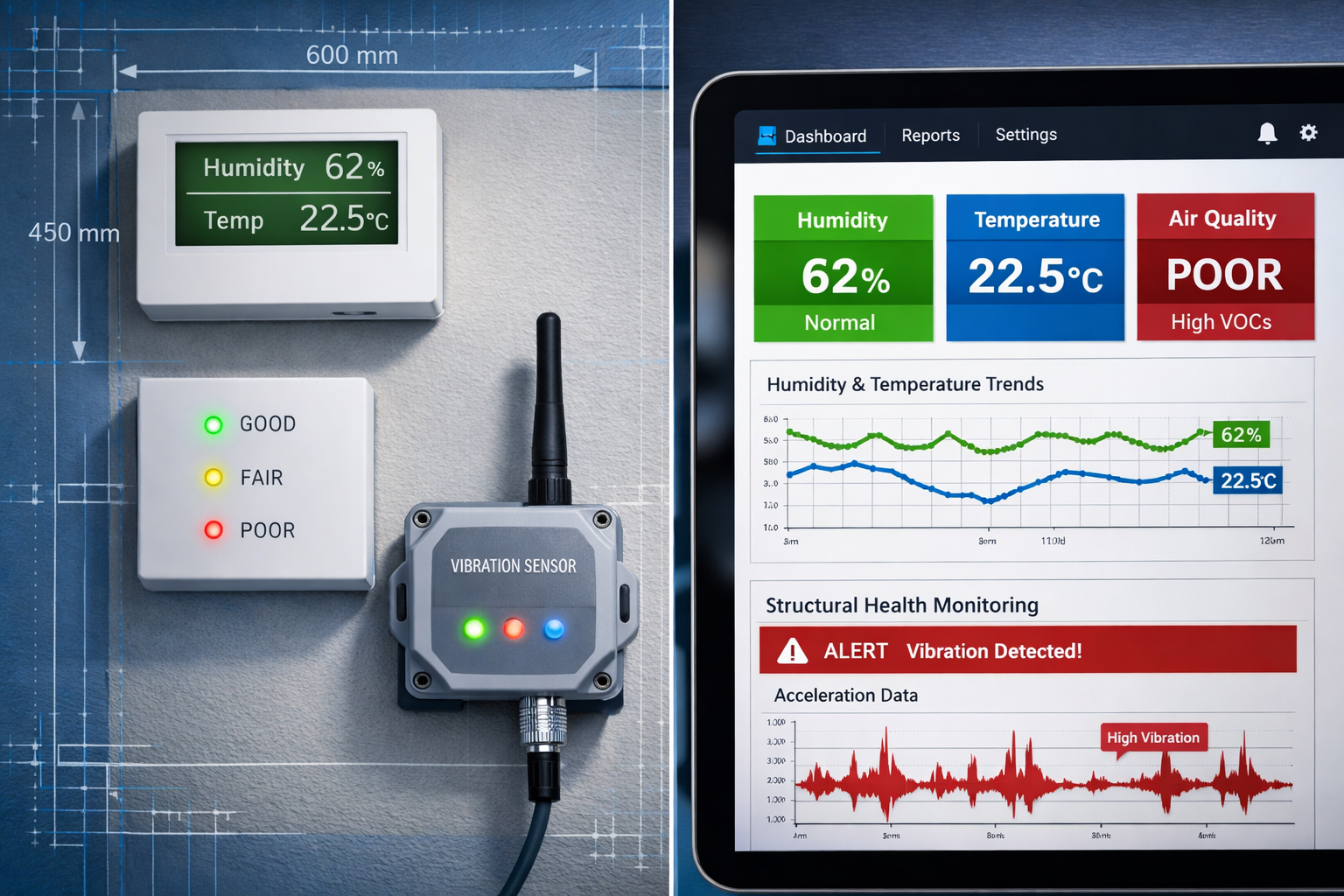
Humidity and Moisture Sensors 💧
These devices detect moisture levels within building materials, identifying water ingress, condensation issues, and damp problems before visible mold or staining appears. Placed strategically in walls, floors, and roof spaces, they provide early warning of leaks, rising damp, or condensation problems that could compromise structural integrity.
Air Quality Monitors 🌬️
Indoor air quality sensors measure particulate matter, volatile organic compounds (VOCs), carbon dioxide levels, and other pollutants. Beyond health implications, poor air quality often indicates ventilation failures, hidden mold growth, or material degradation—all factors that impact property valuation.
Structural Health Monitoring Systems 🏗️
Accelerometers, tilt sensors, and strain gauges detect minute structural movements, vibrations, and deformations. These systems are essential for high-rise buildings, where settlement, wind loading, or foundation issues may develop gradually. Advanced 3D laser scanning (LiDAR) technology now enables detection of structural changes and deformations with millimeter precision[3].
Temperature Sensors 🌡️
Thermal monitoring identifies insulation failures, thermal bridging, heating system inefficiencies, and unusual temperature patterns that may indicate hidden defects or energy performance issues affecting property value.
Integration Platforms 📊
Modern sensor networks connect to cloud-based platforms that aggregate data, apply AI-powered analytics, and generate alerts when readings exceed normal parameters. Over 60% of major construction firms now use digital twin technology to simulate and monitor building performance in real-time[2], creating interactive 3D models that continuously collect and analyze data.
When conducting a specific defect report, surveyors can now supplement traditional inspection methods with sensor data that reveals problems invisible to the naked eye.
How Real-Time Sensors Detect Early Defects in High-Rise Buildings
High-rise properties present unique surveying challenges. Access to external facades, roof areas, and upper floors often requires expensive scaffolding or rope access. Internal building systems span multiple floors, making comprehensive inspection time-consuming and costly. These factors make high-rise buildings ideal candidates for sensor-based monitoring.
Water Ingress Detection in Tall Buildings
Water penetration represents one of the most common and costly defects in high-rise construction. Traditional surveys might identify visible water damage, but by that point, significant deterioration has often occurred. Real-time moisture sensors placed at vulnerable points—window perimeters, facade joints, roof transitions, and bathroom areas—detect moisture accumulation immediately.
For example, sensors installed during construction or retrofit can identify failed waterproofing membranes, compromised expansion joints, or inadequate drainage before water reaches interior finishes. This early detection prevents the cascade of problems that follow: mold growth, concrete spalling, reinforcement corrosion, and interior damage.
Structural Movement Monitoring
High-rise buildings naturally move in response to wind loading, thermal expansion, and settlement. However, excessive or unexpected movement may indicate foundation problems, structural defects, or deteriorating connections. Structural health monitoring systems establish baseline movement patterns and alert surveyors to deviations.
These systems proved particularly valuable during the post-Grenfell era, where building safety concerns intensified scrutiny of high-rise construction. Continuous monitoring provides objective evidence of structural performance, supporting building survey assessments and informing remediation decisions.
HVAC and Indoor Environment Quality
High-rise buildings depend on complex mechanical ventilation systems. Sensor networks monitoring air quality, temperature distribution, and humidity levels throughout the building identify HVAC system failures, inadequate ventilation, or indoor environment problems that affect habitability and property value.
Poor air quality might indicate mold growth in concealed spaces, inadequate fresh air supply, or filtration system failures. Temperature variations between floors may reveal insulation defects or heating system imbalances. These issues directly impact property valuation, as they affect both occupant comfort and ongoing operational costs.
Multi-sensor drone systems with autonomous adjustment capabilities now enable surveyors to inspect external facades and roof areas without physical access[1]. Combined with internal sensor networks, this creates comprehensive building health monitoring impossible with traditional methods alone.
Sensor Applications in Retrofit Properties: Reducing Latent Defect Risks
Retrofit properties—whether historic buildings undergoing renovation or older structures being upgraded—present distinct challenges. Hidden defects often lurk behind existing finishes, within original construction materials, or at interfaces between old and new work. Real-Time Sensors in Building Surveys: Detecting Early Defects and Enhancing 2026 Valuation Accuracy becomes particularly valuable in these complex scenarios.
Moisture Management in Heritage Buildings
Historic buildings typically feature solid walls, lime mortars, and traditional materials that "breathe" differently than modern construction. Inappropriate repairs or upgrades can trap moisture, causing deterioration. Wireless moisture sensors installed during retrofit work monitor moisture levels in walls, timbers, and masonry, ensuring that new interventions don't create unintended problems.
For surveyors conducting dilapidation surveys or assessing retrofit projects, sensor data provides objective evidence of building performance over time. This information proves invaluable when determining whether defects result from pre-existing conditions, poor workmanship, or inadequate design.
Thermal Performance Verification
Energy efficiency improvements form a major component of many retrofit projects. However, actual thermal performance often falls short of design specifications due to installation defects, thermal bridging, or air leakage. Thermal sensors and air quality monitors verify that insulation upgrades, window replacements, and ventilation systems perform as intended.
This verification matters significantly for property valuation. Energy Performance Certificates (EPCs) influence property values, but actual performance may differ from predicted ratings. Sensor-verified thermal performance provides accurate data that supports realistic valuation assessments.
Subsidence and Foundation Monitoring
Older properties often experience foundation movement, whether from clay soil shrinkage, nearby construction, or deteriorating foundations. Traditional subsidence surveys provide snapshot assessments, but continuous monitoring reveals movement patterns over time.
Tilt sensors and crack monitors track foundation movement, distinguishing between historic settlement (now stable) and ongoing problems requiring intervention. This distinction dramatically affects property valuation and insurance risk assessment. AI systems now instantly classify terrain and flag anomalies from raw field data, reducing manual processing time and enabling faster response to developing issues[1].
Interface Defects Between Old and New Construction
Retrofit projects create interfaces between existing and new construction—potential weak points where defects often develop. Different materials expand and contract at different rates, creating stress points. Moisture behavior changes at material boundaries. Structural loads transfer in complex ways.
Sensor networks monitoring these critical interfaces detect problems early. Humidity sensors identify moisture accumulation at material transitions. Structural sensors detect unexpected movement or stress. Temperature monitoring reveals thermal bridging or insulation failures.
For surveyors preparing schedule of condition reports before retrofit work begins, baseline sensor data establishes pre-existing conditions. Post-retrofit monitoring then verifies that new work hasn't created problems, protecting both property owners and contractors from disputes.
Enhancing 2026 Valuation Accuracy Through Sensor Data
Property valuation combines art and science. Valuers consider location, comparable sales, property condition, market trends, and numerous other factors. However, uncertainty about hidden defects introduces risk that affects valuation confidence and accuracy. Real-time sensor data reduces this uncertainty.
Objective Evidence of Building Condition
Traditional surveys provide expert opinion based on visual inspection. Sensor data adds objective, measurable evidence of building performance. When RICS registered valuers conduct Red Book valuations, sensor data supports their assessments with hard numbers:
- Moisture levels documented over months or years, not just inspection day
- Structural movement patterns showing stability or concerning trends
- Air quality metrics indicating ventilation adequacy and absence of hidden mold
- Thermal performance data verifying energy efficiency claims
This evidence-based approach enhances valuation confidence, particularly for complex properties where traditional inspection methods face limitations.
Risk Reduction for Lenders and Insurers
Mortgage lenders and insurance companies care deeply about hidden defect risks. Properties with unknown problems represent financial risk. Sensor-monitored buildings provide ongoing risk assessment that benefits all stakeholders.
Buildings with established sensor networks demonstrating good performance may command valuation premiums. Conversely, sensor data revealing developing problems enables early intervention before they affect property value significantly. For insurance reinstatement valuations, sensor data helps accurately assess replacement costs and risk factors.
Predictive Maintenance and Value Preservation
Real-time monitoring enables predictive maintenance—addressing problems before they cause damage. This approach preserves property value more effectively than reactive repairs after defects become severe.
Cloud-based collaboration platforms now provide instant file sharing, 3D visualization, and real-time revision syncing[1], enabling surveyors, valuers, engineers, and property managers to coordinate responses to sensor alerts. This integrated approach minimizes defect impact on property value.
Market Differentiation in 2026
As sensor technology becomes more prevalent, properties with comprehensive monitoring systems may gain market advantages. Buyers and tenants increasingly value smart building features, environmental quality, and evidence of proactive maintenance. Properties demonstrating superior performance through sensor data may achieve higher valuations than comparable properties without such verification.
For commercial property valuations, sensor data provides evidence of operational efficiency, tenant comfort, and maintenance standards that directly affect investment value and rental income potential.
Integration with Advanced Surveying Technologies
Real-time sensors don't operate in isolation. Their full potential emerges when integrated with other advanced surveying technologies transforming the industry in 2026.
Digital Twins and Building Information Modeling (BIM)
Digital twins—virtual replicas of physical buildings—combine sensor data with BIM models to create dynamic, data-rich representations of building performance. These systems enable:
- Visualization of sensor data overlaid on 3D building models
- Simulation of how changes might affect building performance
- Predictive analytics identifying potential problems before they occur
- Historical tracking of building condition over time
For surveyors conducting structural assessments, digital twins provide context that enhances understanding of sensor readings and their implications for property condition and value.
Augmented Reality (AR) Survey Applications
AR applications enable surveyors to view sensor data overlaid on physical building elements during site inspections. Pointing a tablet or AR glasses at a wall might display real-time moisture readings, historical trends, and alerts—information invisible to the naked eye but crucial for accurate assessment.
AR applications now enable real-time measurement and annotation of building plans against actual construction[5], supporting identification of deviations from design specifications that might indicate defects or quality issues.
Drone-Based External Monitoring
While internal sensors monitor building interiors, drone technology provides external monitoring capabilities. Thermal imaging drones identify insulation defects, water ingress, and facade problems. Combined with internal sensor networks, this creates comprehensive building health monitoring.
For properties requiring roof surveys or drone roof inspections, integration of aerial thermal imaging with internal moisture sensors provides complete water ingress risk assessment.
AI-Powered Anomaly Detection
The volume of data generated by sensor networks exceeds human capacity to monitor continuously. Artificial intelligence addresses this challenge by:
- Analyzing patterns across thousands of sensor readings
- Identifying anomalies that might indicate developing problems
- Prioritizing alerts based on severity and urgency
- Learning normal patterns for specific buildings and flagging deviations
AI systems now instantly classify data and flag anomalies from raw field information[1], enabling faster response to potential defects and more efficient surveyor workflows.
Practical Implementation Considerations
While the benefits of Real-Time Sensors in Building Surveys: Detecting Early Defects and Enhancing 2026 Valuation Accuracy are clear, practical implementation requires careful planning.
Sensor Selection and Placement Strategy
Effective monitoring requires appropriate sensor selection and strategic placement. Key considerations include:
Critical Zones 🎯
Focus sensor placement on areas most vulnerable to defects: building envelopes, below-grade spaces, roof interfaces, bathrooms, mechanical rooms, and structural elements under high stress.
Accessibility for Maintenance 🔧
Sensors require periodic calibration and battery replacement. Place sensors where maintenance access is feasible without excessive disruption.
Wireless vs. Wired Systems 📡
Wireless sensors offer installation flexibility but require battery management. Wired systems provide continuous power but involve more complex installation. The choice depends on building type, retrofit feasibility, and monitoring requirements.
Data Security and Privacy 🔒
Building sensor data may reveal occupancy patterns, usage information, and operational details. Ensure data collection complies with privacy regulations and implements appropriate cybersecurity measures.
Cost-Benefit Analysis
Sensor system costs vary widely based on building size, sensor density, and system sophistication. However, the investment typically pays for itself through:
- Reduced repair costs from early defect detection
- Lower insurance premiums for monitored buildings
- Enhanced property values from verified performance
- Avoided emergency repairs through predictive maintenance
- Improved tenant satisfaction and retention in commercial properties
For high-value properties or buildings with significant defect risks, the business case for sensor monitoring is compelling. When considering valuation factors, the presence of comprehensive monitoring systems increasingly influences property assessments.
Professional Interpretation Requirements
Sensor data doesn't replace professional expertise—it enhances it. Surveyors must understand:
- Normal vs. abnormal readings for specific building types and conditions
- Seasonal variations in moisture, temperature, and building movement
- Calibration requirements and potential sensor drift
- Context interpretation considering building history and local conditions
Professional bodies like RICS are developing guidance on incorporating sensor data into survey reports and valuations, ensuring consistent, reliable interpretation across the industry.
Future Developments and Industry Trends
The sensor technology revolution in building surveys continues to accelerate. Several trends will shape developments beyond 2026:
Standardization and Regulation
As sensor monitoring becomes more common, industry standards will emerge governing sensor specifications, installation practices, data formats, and reporting requirements. Building regulations may eventually mandate sensor monitoring for certain building types or conditions.
Integration with Smart City Infrastructure
Building sensor networks may eventually connect to broader smart city systems, sharing data on environmental conditions, energy usage, and infrastructure performance. This integration could provide additional context for property valuations and defect assessment.
Miniaturization and Cost Reduction
Sensor technology continues to become smaller, cheaper, and more capable. This trend will make comprehensive monitoring economically feasible for a broader range of properties, not just high-value or high-risk buildings.
Enhanced Predictive Capabilities
As AI systems analyze more building performance data over longer periods, predictive capabilities will improve. Systems may eventually forecast specific defect probabilities years in advance, enabling truly proactive maintenance strategies that maximize property value preservation.
Survey firms are adapting to these technological changes while balancing innovation with practical implementation[7]. The construction technology sector continues to drive hiring demand for professionals who understand both traditional surveying methods and emerging digital tools[8].
Conclusion
Real-Time Sensors in Building Surveys: Detecting Early Defects and Enhancing 2026 Valuation Accuracy represents more than technological innovation—it fundamentally changes how the property industry understands, assesses, and values buildings. By detecting problems months or years before visible symptoms appear, sensor technology reduces repair costs, enhances valuation confidence, and provides objective evidence of building performance that benefits property owners, surveyors, valuers, lenders, and insurers alike.
For high-rise buildings, where access challenges and complex systems make traditional inspection difficult, sensor monitoring provides continuous oversight impossible through periodic surveys alone. For retrofit properties, where hidden defects and interface problems pose significant risks, sensors verify performance and detect problems early.
The integration of sensor data with digital twins, AI analytics, drone surveys, and augmented reality creates comprehensive building intelligence that transforms how surveyors work and how properties are valued. As these technologies mature and costs decline, sensor-monitored buildings will become the norm rather than the exception.
Next Steps for Property Professionals
For Property Owners: Consider implementing sensor monitoring, particularly for high-value properties, buildings with known defect risks, or properties undergoing major retrofit work. The investment typically pays for itself through early defect detection and enhanced property value.
For Surveyors: Develop expertise in sensor technology interpretation and integration with traditional survey methods. Understanding how to leverage sensor data enhances service offerings and provides competitive advantages.
For Valuers: Incorporate sensor data into valuation assessments where available. Buildings with comprehensive monitoring and verified performance may justify valuation premiums compared to properties without such documentation.
For Developers and Investors: Specify sensor systems in new construction and major renovations. The relatively modest additional cost provides significant long-term benefits through enhanced asset management and valuation support.
The future of building surveys lies in combining human expertise with technological capability. Real-time sensors don't replace skilled surveyors—they provide tools that enable surveyors to see what was previously invisible, detect problems before they escalate, and support valuations with objective, data-driven evidence. As the property industry continues embracing these technologies throughout 2026 and beyond, the benefits will become increasingly clear: fewer surprises, better decisions, and more accurate property valuations based on true building performance rather than assumptions about hidden conditions.
References
[1] Future Land Surveying 2026 – https://haller-blanchard.com/future-land-surveying-2026/
[2] Top 7 Construction Tech Trends Shaping 2026 – https://swifttechco.com/blog/construction/top-7-construction-tech-trends-shaping-2026
[3] The Future Of Engineering Surveying Technology Tools And Trend – https://2survey.com.au/the-future-of-engineering-surveying-technology-tools-and-trend/
[4] The Future Of Land Surveying Technology And Upcoming Trends In 2026 – https://metricop.com/blogs/land-surveying/the-future-of-land-surveying-technology-and-upcoming-trends-in-2026
[5] Technology For Early Property Insight In 2026 Building Surveys Reducing Delays In Complex Valuations – https://nottinghillsurveyors.com/blog/technology-for-early-property-insight-in-2026-building-surveys-reducing-delays-in-complex-valuations
[6] Smart Building Technology 2026 Predictions – https://facilityexecutive.com/smart-building-technology-2026-predictions/
[7] 2026 Surveying Trends How Survey Firms Are Adapting Without Overcommitting – https://munsonedsurvey.com/blogs/news/2026-surveying-trends-how-survey-firms-are-adapting-without-overcommitting
[8] Top Emerging Construction Technologies That Will Drive Hiring Demand In 2026 – https://thebirmgroup.com/top-emerging-construction-technologies-that-will-drive-hiring-demand-in-2026/