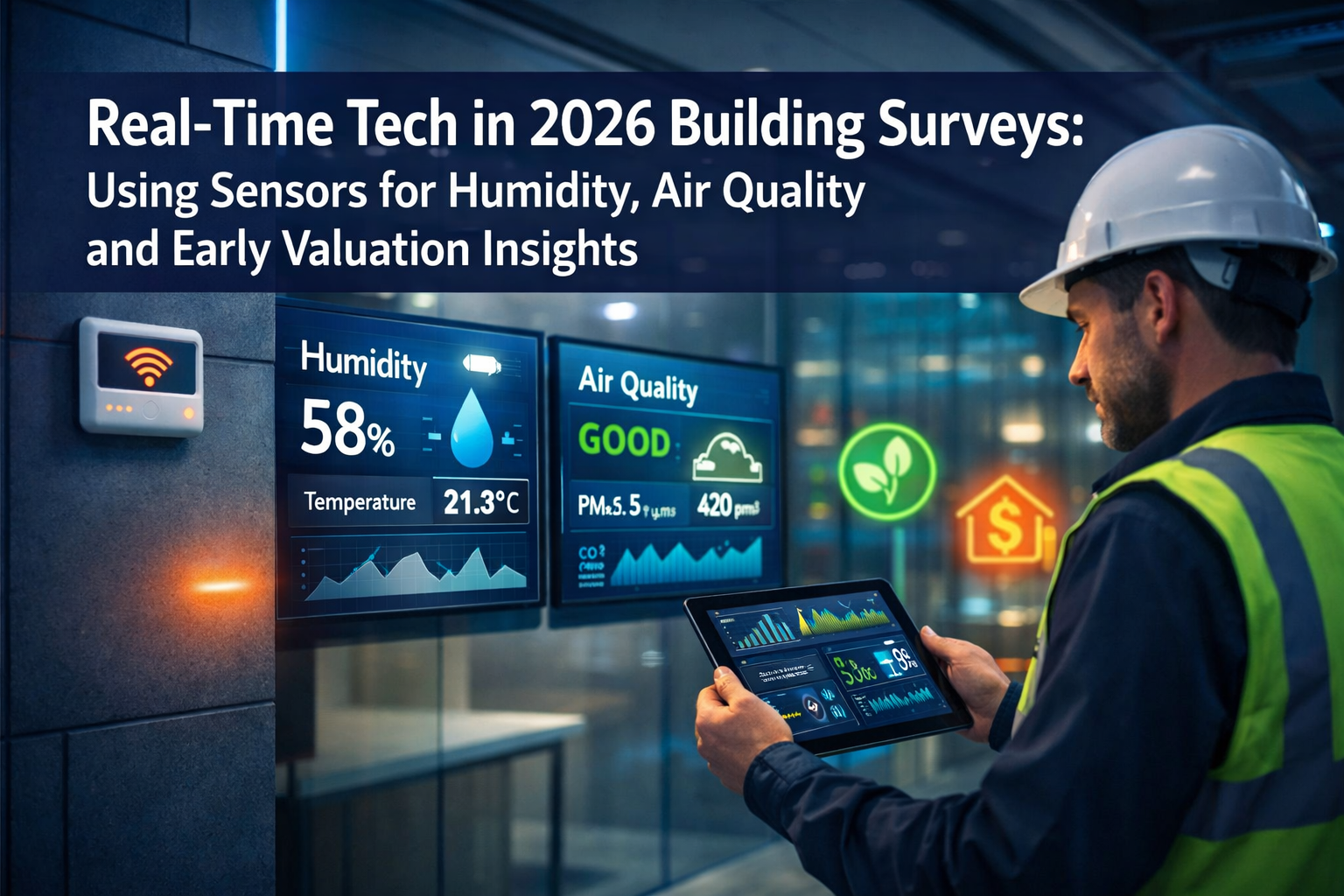

Around 60% of commercial building automation systems now integrate IoT-enabled sensors for real-time monitoring and automated control as of early 2026.[2] This dramatic shift represents more than technological advancement—it fundamentally transforms how building surveys are conducted, how properties are valued, and how quickly critical defects can be identified. Real-Time Tech in 2026 Building Surveys: Using Sensors for Humidity, Air Quality and Early Valuation Insights has moved from experimental concept to practical necessity, enabling chartered surveyors to detect issues that traditional visual inspections might miss entirely.
The integration of environmental sensors into building assessments addresses a critical challenge: providing comprehensive property intelligence before valuation delays occur. Modern sensor networks track humidity levels, air quality parameters, temperature fluctuations, and environmental conditions continuously—delivering data that informs both immediate survey findings and long-term property performance projections.
Key Takeaways
- IoT sensor deployments are projected to reach 4.12 billion by 2030, reflecting widespread adoption in commercial building monitoring and survey applications[2]
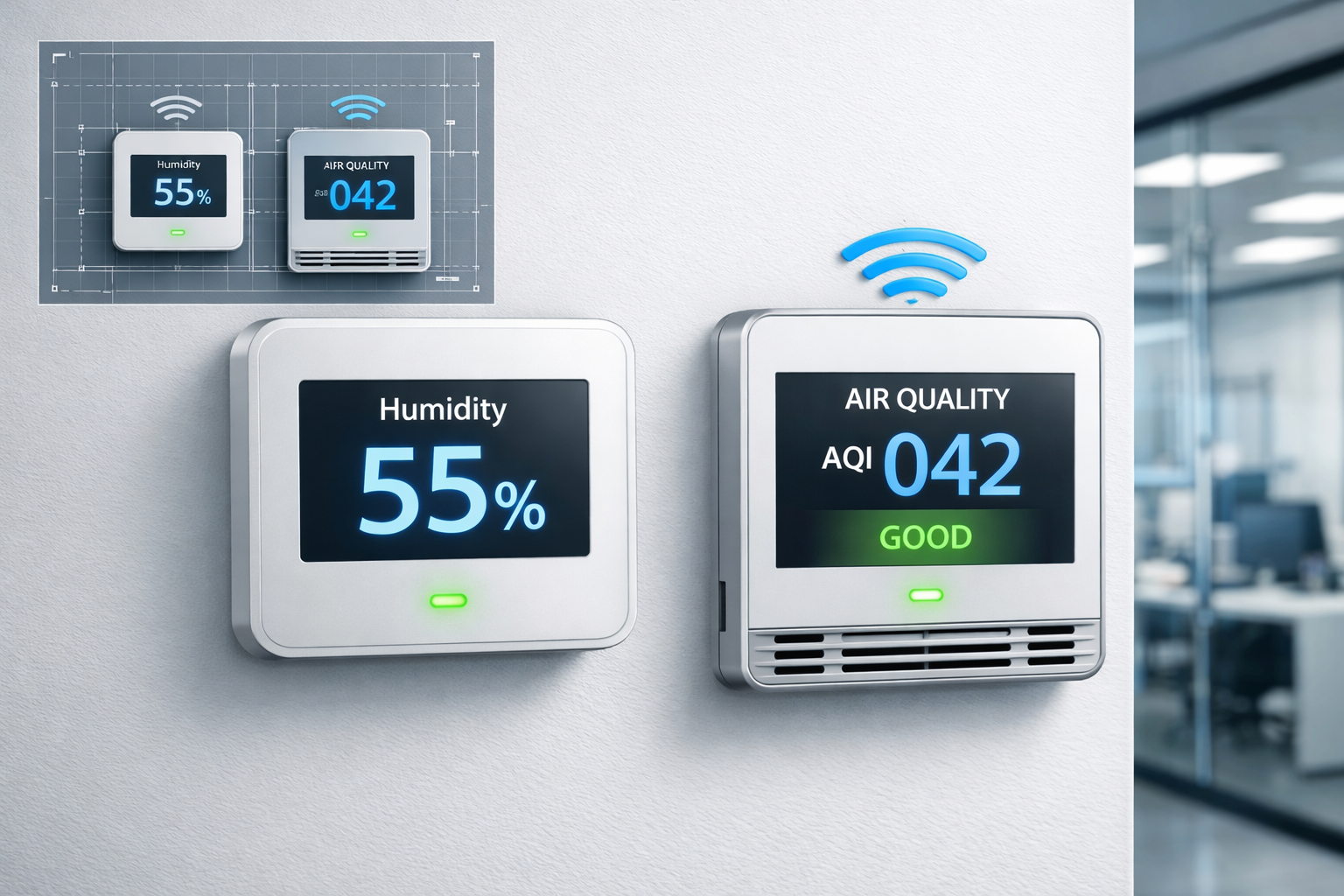
- Modern air quality sensors now track PM2.5, PM10, VOCs, humidity, temperature, and ozone—providing comprehensive environmental assessment beyond traditional CO₂ monitoring[1]
- Real-time monitoring enables proactive defect detection rather than reactive responses, reducing survey delays and improving valuation accuracy[5]
- Software-centric platforms aggregate multi-sensor data into unified dashboards with AI-based analytics and automated reporting tools[3]
- 90% of people spend more time indoors than outdoors, making indoor air quality monitoring a critical factor in property valuations and tenant health assessments[7]
Understanding Real-Time Tech in 2026 Building Surveys: The Sensor Revolution
The building survey landscape has undergone radical transformation. Where surveyors once relied exclusively on visual inspection, moisture meters, and thermal imaging cameras, today's chartered surveyors deploy sophisticated sensor networks that provide continuous environmental monitoring.
What Makes 2026 the Tipping Point for Sensor Technology
Several converging factors have made 2026 the breakthrough year for sensor-based building surveys:
🔧 Technology Maturity: IoT sensor technology and predictive analytics powered by AI and machine learning are no longer experimental but practical and scalable for commercial building applications.[5]
📊 Data Integration: Software platforms now aggregate data from multiple sensor types into single real-time dashboards, eliminating the fragmentation that plagued earlier systems.[3]
💰 Cost Accessibility: Sensor hardware costs have decreased significantly while capability has increased, making comprehensive monitoring economically viable for standard commercial building surveys.
📱 Connectivity Infrastructure: Widespread 5G deployment and improved wireless protocols enable reliable, low-latency sensor communication even in complex building environments.
The Core Environmental Parameters Modern Sensors Monitor
Today's building survey sensors extend far beyond simple temperature readings:
| Parameter | What It Measures | Why It Matters for Valuations |
|---|---|---|
| Humidity | Relative humidity percentage | Indicates potential mold risk, condensation issues, and HVAC performance |
| PM2.5/PM10 | Particulate matter concentration | Affects tenant health, air filtration system effectiveness, compliance |
| VOCs | Volatile organic compound levels | Identifies off-gassing from materials, poor ventilation, chemical contamination |
| CO₂ | Carbon dioxide concentration | Indicates ventilation adequacy and occupancy patterns |
| Temperature | Ambient temperature variations | Reveals HVAC efficiency, insulation performance, thermal bridging |
| Ozone | Ground-level ozone presence | Affects indoor air quality, particularly near urban traffic |
This comprehensive monitoring provides building surveyors with environmental data that directly impacts property valuations and helps identify defects before they become visible structural problems.
How Real-Time Sensors Transform Building Survey Methodology
Traditional building surveys follow a sequential process: visual inspection, followed by targeted testing, followed by report compilation. Real-time sensor technology fundamentally disrupts this linear approach by providing continuous environmental intelligence that runs parallel to—and informs—the physical inspection process.
The GeoConnect Advantage: Spatial Intelligence Meets Environmental Data
Modern sensor deployments utilize GeoConnect technology to map environmental conditions spatially across building zones. This geographic information system (GIS) integration allows surveyors to:
✅ Visualize environmental gradients across different floors and rooms
✅ Identify microclimates that indicate insulation failures or HVAC imbalances
✅ Correlate environmental data with structural features and building systems
✅ Generate heat maps showing humidity concentration, air quality variations, and temperature differentials
When conducting commercial property surveys, this spatial intelligence reveals patterns that spot inspections cannot detect. For example, a gradual humidity increase in a specific zone might indicate a slow roof leak that hasn't yet produced visible water staining.
Proactive Defect Detection: From Reactive to Predictive
The shift from reactive to proactive building management represents one of the most significant advantages of real-time sensor deployment.[5] Traditional surveys identify existing defects; sensor networks identify emerging defects before they manifest visibly.
Example Scenario: A commercial property scheduled for valuation has sensors monitoring humidity levels across multiple floors. Three weeks before the physical survey, sensors detect a 15% humidity increase in a second-floor corner office. The surveyor arrives with this intelligence, focuses investigation on that specific area, and discovers early-stage water ingress from a deteriorating window seal—an issue that would have been missed during standard visual inspection but could significantly impact valuation.
This proactive approach reduces delays in complex valuations by enabling surveyors to:
- Pre-identify investigation priorities before arriving on-site
- Allocate appropriate time and resources to problem areas
- Reduce follow-up visits by addressing concerns comprehensively during initial survey
- Provide data-supported valuation adjustments rather than estimates
Multi-Parameter Monitoring: Beyond Traditional HVAC Controls
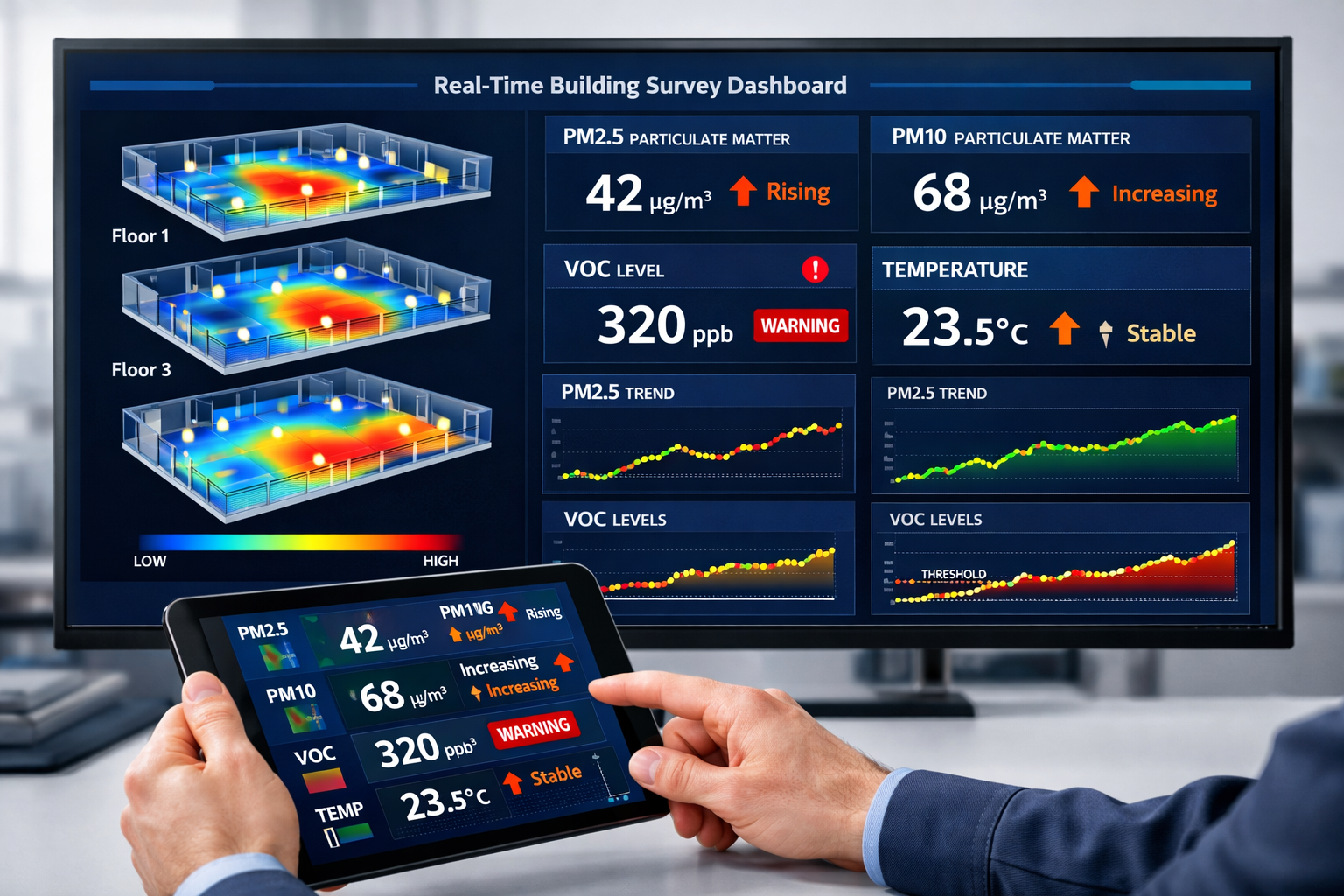
Modern IoT sensors in commercial buildings now track occupancy, temperature, humidity, air quality, water leaks, equipment vibration, and even integrate external data such as weather patterns and utility rates.[2] This comprehensive monitoring provides surveyors with contextual intelligence that enhances valuation accuracy.
For homebuyer reports and building surveys, this multi-parameter approach reveals:
🏢 Building Performance Metrics: How efficiently does the property maintain environmental standards under varying occupancy and weather conditions?
⚡ Energy Efficiency Indicators: What are the actual operational costs based on real-time system performance rather than theoretical calculations?
🔧 Maintenance Requirements: Which systems show performance degradation that will require near-term capital expenditure?
👥 Occupant Comfort Levels: Does the building consistently maintain conditions within acceptable ranges for tenant satisfaction?
Real-Time Tech in 2026 Building Surveys: Practical Implementation and Valuation Impact
The theoretical advantages of sensor technology only matter when they translate into practical survey improvements and accurate valuation insights. In 2026, the implementation frameworks have matured sufficiently to deliver measurable benefits.
Software-Centric Platforms: Turning Data Into Actionable Insights
The industry has shifted from hardware-focused to software-driven approaches, with platforms combining data from multiple sensors into single real-time dashboards featuring AI-based analytics and automated reporting tools.[3] These platforms enable environmental and facilities teams to:
- Monitor pollutant concentrations across multiple locations simultaneously
- Visually identify concentration spikes through graphs and spatial maps
- Respond to air-quality events in real time rather than after tenant complaints
- Generate automated compliance reports for regulatory requirements
For surveyors conducting dilapidation surveys or schedule of condition reports, these platforms provide baseline environmental data that can be referenced throughout lease terms to identify deterioration patterns.
Data Governance: Quality Over Quantity
Building operators in 2026 are focusing on data quality, standardization, and clear governance frameworks rather than sensor proliferation.[4] This shift addresses a critical challenge from earlier implementations: sensor networks that generate overwhelming noise rather than actionable insights.
Effective data governance for building surveys includes:
📋 Standardized Calibration Protocols: Ensuring sensors maintain accuracy through regular calibration schedules and validation against reference instruments
🎯 Threshold Definition: Establishing clear parameters for what constitutes normal variation versus concerning trends
📊 Data Retention Policies: Determining appropriate historical data storage for trend analysis without overwhelming storage systems
🔐 Access Controls: Defining who can view, interpret, and act on sensor data to maintain data integrity
When chartered surveyors in London integrate sensor data into valuation reports, these governance frameworks ensure the data meets professional standards for reliability and accuracy.
Occupancy-Driven Systems: Correlating Use Patterns With Environmental Performance
Smart buildings now correlate real-time occupancy data with HVAC and lighting automation, enabling zone-level comfort adjustments and reducing operational waste.[4] This occupancy intelligence provides valuable context for building surveys by revealing:
- Actual space utilization versus designed capacity
- Peak demand periods that stress building systems
- Underutilized areas that may indicate functional obsolescence
- Ventilation adequacy relative to actual occupancy patterns
For commercial valuation surveys, this data helps assess whether a property's systems are appropriately sized for current use patterns and whether modifications would enhance value.
Predictive Maintenance: Reducing Reactive Repairs and Downtime
Real-time sensor networks enable early detection of equipment faults and system failures through continuous health tracking, reducing unexpected maintenance events and improving overall building operational efficiency metrics.[4] This predictive capability directly impacts property valuations by:
💵 Reducing Capital Expenditure Uncertainty: Providing data-driven forecasts for system replacement timing rather than age-based estimates
⏱️ Minimizing Operational Disruption: Identifying issues during early stages when repairs can be scheduled conveniently rather than emergency interventions
📈 Extending Asset Lifespan: Enabling optimized maintenance schedules that maximize system longevity
🛡️ Improving Risk Assessment: Quantifying system reliability for insurance and investment analysis
When conducting insurance reinstatement valuations, sensor data provides evidence-based assessment of system conditions rather than assumptions based solely on installation dates.
Integration With Traditional Survey Practices
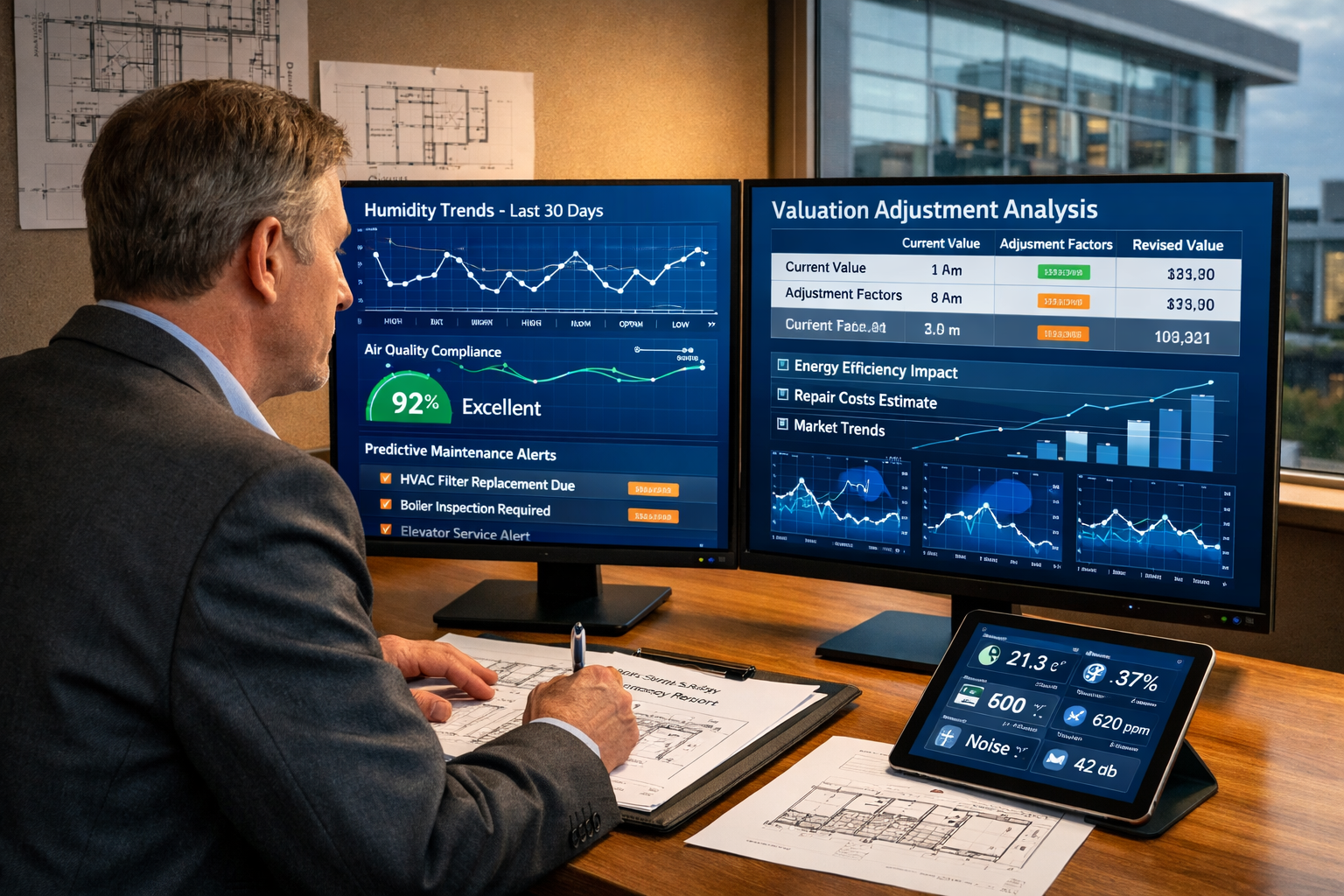
Real-time sensor technology doesn't replace traditional survey methods—it enhances them. The most effective approach in 2026 combines:
Visual Inspection + Sensor Validation
Physical inspection identifies visible defects and structural concerns, while sensor data validates and quantifies environmental conditions. For example, a surveyor might observe condensation staining on a window frame during visual inspection, then reference humidity sensor data to determine whether this is an isolated incident or persistent condition requiring remediation.
Thermal Imaging + Continuous Temperature Monitoring
Thermal imaging cameras provide snapshot temperature differentials during survey visits, while installed temperature sensors reveal patterns over time. This combination distinguishes between temporary conditions (such as recent heating system use) and chronic issues (such as inadequate insulation).
Moisture Meter Testing + Long-Term Humidity Tracking
Handheld moisture meters measure material moisture content at specific points during surveys, while humidity sensors track ambient conditions continuously. Together, they provide comprehensive moisture risk assessment that informs subsidence surveys and structural evaluations.
Valuation Factors: How Sensor Data Influences Property Values
The integration of real-time environmental data into property valuations represents a significant evolution in how valuation factors are assessed and weighted.
Quantifiable Environmental Performance
Sensor data transforms subjective assessments into quantifiable metrics:
- Air Quality Score: Averaged PM2.5, VOC, and CO₂ readings compared to WHO guidelines
- Humidity Stability Index: Variance in relative humidity across seasons
- Thermal Comfort Consistency: Percentage of time temperature remains within optimal ranges
- Ventilation Effectiveness: Air exchange rates based on CO₂ decay measurements
These metrics enable direct comparison between properties and provide objective criteria for valuation adjustments.
Risk Mitigation Documentation
For probate valuations and matrimonial valuations, sensor data provides documented evidence of property conditions that reduces dispute potential. Historical environmental data demonstrates:
- Absence of chronic moisture problems that could indicate hidden defects
- Consistent HVAC performance supporting system valuation estimates
- Compliance with health and safety standards for air quality
Operational Cost Transparency
Real-time monitoring of building systems provides actual operational performance data rather than theoretical calculations. This transparency affects valuations by:
📉 Reducing Buyer Uncertainty: Providing documented evidence of actual utility costs and system efficiency
🎯 Enabling Accurate Investment Analysis: Supporting cash flow projections with real performance data rather than industry averages
⚙️ Identifying Optimization Opportunities: Highlighting inefficiencies that could be addressed to enhance property value
Implementation Considerations for Property Owners and Surveyors
Successfully implementing real-time sensor technology in building surveys requires careful planning and coordination.
For Property Owners Preparing for Survey
✓ Install Sensors Early: Deploy environmental sensors at least 30 days before scheduled surveys to establish baseline data
✓ Ensure Proper Placement: Position sensors according to manufacturer guidelines and building layout to capture representative conditions
✓ Maintain Calibration: Follow calibration schedules to ensure data accuracy and reliability
✓ Grant Surveyor Access: Provide surveyors with dashboard access and historical data exports to maximize assessment value
For Surveyors Integrating Sensor Data
✓ Verify Data Quality: Confirm sensor calibration status and data collection methodology before incorporating findings into reports
✓ Contextualize Readings: Interpret sensor data within the context of building type, use patterns, and seasonal variations
✓ Maintain Professional Standards: Ensure sensor data integration complies with RICS guidelines and professional standards
✓ Communicate Limitations: Clearly explain what sensor data reveals and what it doesn't replace in traditional survey methodology
The Future Trajectory: Beyond 2026
With IoT sensor deployments projected to reach 4.12 billion by 2030,[2] the integration of real-time environmental monitoring into building surveys will only accelerate. Emerging developments include:
🤖 AI-Powered Anomaly Detection: Machine learning algorithms that automatically identify unusual patterns requiring surveyor attention
🔗 Blockchain-Verified Data: Immutable environmental records that provide tamper-proof documentation for valuations and legal proceedings
🌐 Building Passport Systems: Comprehensive digital records that follow properties through ownership changes, accumulating environmental performance history
📱 Augmented Reality Integration: Overlay of real-time sensor data onto physical spaces during survey inspections via AR headsets
Conclusion
Real-Time Tech in 2026 Building Surveys: Using Sensors for Humidity, Air Quality and Early Valuation Insights represents a fundamental evolution in property assessment methodology. The convergence of mature IoT technology, sophisticated data platforms, and practical implementation frameworks has transformed sensor monitoring from experimental novelty to essential survey component.
The benefits are measurable and significant: proactive defect detection that reduces valuation delays, comprehensive environmental data that enhances accuracy, and quantifiable performance metrics that support evidence-based property assessments. With 60% of commercial building automation systems now integrating IoT sensors,[2] and 90% of people spending more time indoors than outdoors,[7] the importance of real-time environmental monitoring will only increase.
Actionable Next Steps
For Property Owners:
- Consult with chartered surveyors about sensor deployment options before scheduled valuations
- Install baseline environmental monitoring systems in commercial properties to establish performance documentation
- Review existing building automation systems for sensor integration opportunities
For Property Buyers:
- Request historical sensor data during due diligence for properties with existing monitoring systems
- Consider sensor deployment as part of post-purchase building assessment
- Factor environmental performance data into investment analysis and valuation negotiations
For Building Professionals:
- Develop expertise in sensor data interpretation and integration with traditional survey methods
- Establish relationships with technology providers offering building monitoring platforms
- Update reporting templates to incorporate real-time environmental data effectively
The integration of sensor technology into building surveys isn't about replacing professional judgment—it's about enhancing it with continuous, quantifiable environmental intelligence that reveals what visual inspection alone cannot detect. As we progress through 2026 and beyond, properties with comprehensive environmental monitoring will increasingly command premium valuations, while those without face growing scrutiny about hidden defects and operational performance.
The question for property stakeholders is no longer whether to adopt real-time sensor technology, but how quickly to implement it before market expectations make it mandatory rather than advantageous.
References
[1] How 2026 Wireless Sensors Are Transforming Energy Iaq And Facility Monitoring – https://www.swiftsensors.com/how-2026-wireless-sensors-are-transforming-energy-iaq-and-facility-monitoring/
[2] Emerging Trends In Smart Building Systems Data Driven Solutions For Driving Efficiencies – https://albireoenergy.com/2026/03/10/emerging-trends-in-smart-building-systems-data-driven-solutions-for-driving-efficiencies/
[3] How Air Quality Software Is Transforming Environmental Tech – https://oizom.com/how-air-quality-software-is-transforming-environmental-tech/
[4] Smart Tech Trends 2026 – https://www.captivate.com/blog/realestate/smart-tech-trends-2026/
[5] Why 2026 Is The Tipping Point For Real Time Environmental Monitoring – https://eco-rentalsolutions.com/2026/03/16/why-2026-is-the-tipping-point-for-real-time-environmental-monitoring/
[7] Top Indoor Air Quality Monitoring Systems 2026 – https://www.iaqtongdy.com/blog/top-indoor-air-quality-monitoring-systems-2026/