
The UK property market in 2026 reveals a striking geographic divide that demands urgent attention from building surveyors and property professionals. While Scotland and Northern Ireland experience robust price growth and market confidence, London and the South East face significant market lag, creating unprecedented challenges for condition assessment practices. Understanding Regional Divergence in Building Survey Standards: Tailoring Condition Assessments for Scotland's Price Leadership vs. Southern Market Lag has become essential for chartered surveyors who must adapt their reporting approaches to reflect vastly different regional market psychologies and buyer expectations.
This divergence means that identical structural defects discovered during building surveys require fundamentally different presentation strategies depending on location. A surveyor examining a property in Edinburgh operates within a confident, growth-oriented market where buyers demonstrate resilience to minor defects. Meanwhile, their counterpart conducting surveys in South West London faces cautious buyers who scrutinize every detail within a stagnant market environment.
Key Takeaways
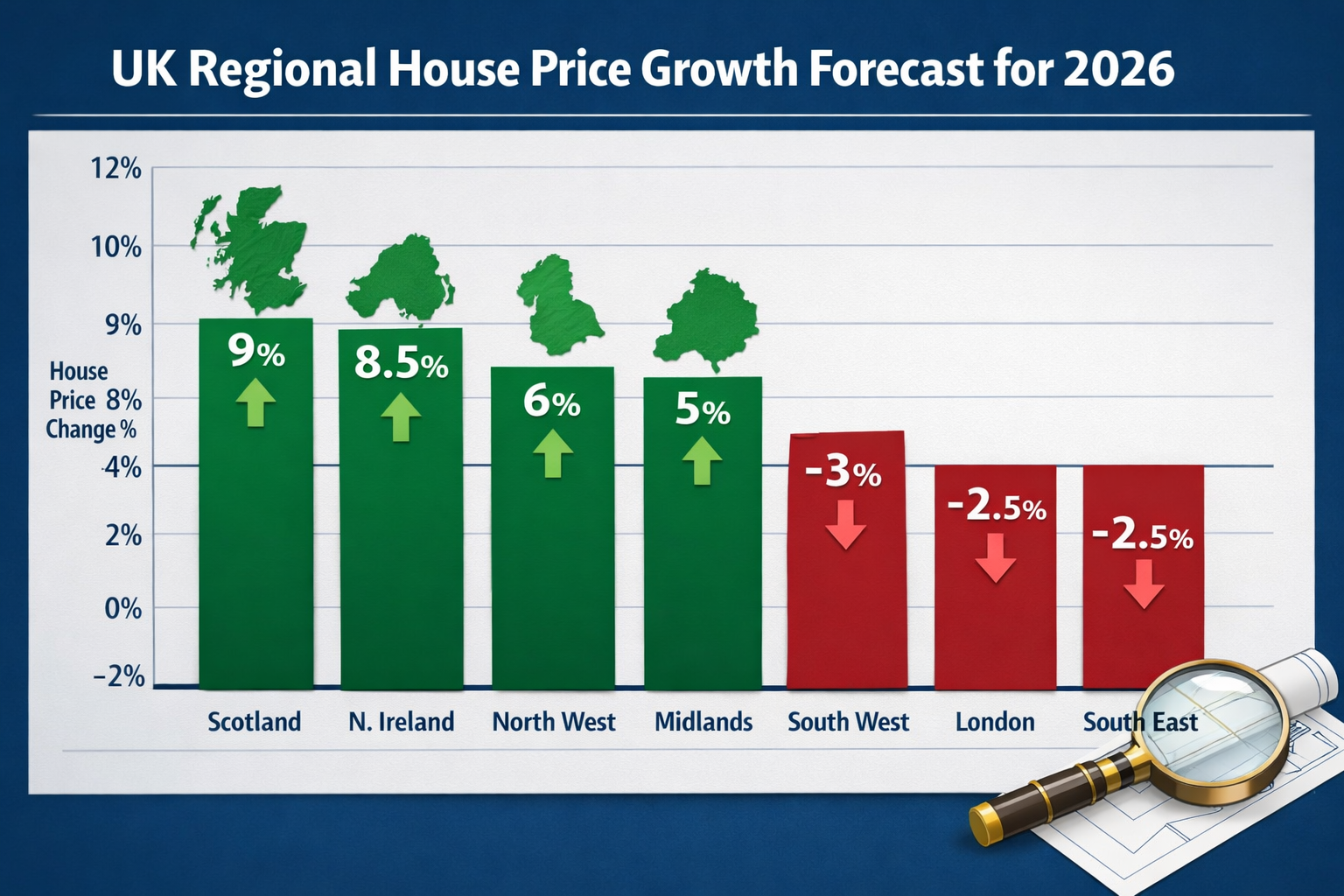
✅ Scotland and Northern Ireland lead UK price growth in 2026 with 8-10% annual increases, while London and South East regions experience 2-3% growth or stagnation, creating distinct market confidence levels.
✅ Building survey narratives must adapt regionally – Scottish surveys can emphasize property potential and manageable remediation, while Southern surveys require more conservative risk mitigation language.
✅ Defect prioritization differs by market psychology – confident markets tolerate deferred maintenance discussions, while lagging markets demand immediate action plans for identical issues.
✅ Professional surveyors must understand regional buyer behavior to provide contextually appropriate condition assessments that serve client interests without compromising RICS standards.
✅ Standardized survey templates fail in divergent markets – bespoke regional approaches to reporting structure, language, and defect categorization deliver superior client value.
Understanding Regional Market Performance Differences in 2026
The UK property landscape has transformed dramatically, with regional divergence in building survey standards becoming critical as market performance varies significantly across geographic boundaries. Scotland's property market demonstrates remarkable resilience and growth, driven by factors including relative affordability compared to Southern England, strong local economic performance, and increased demand from both domestic buyers and those relocating from higher-cost regions.
Scotland's Price Leadership Position
Scottish property markets have consistently outperformed UK averages throughout 2025-2026, with cities like Edinburgh, Glasgow, and Aberdeen showing sustained price appreciation. This growth creates a positive feedback loop where buyer confidence remains high, mortgage approvals increase, and properties move quickly through the transaction process. For building surveyors operating in these markets, this environment means:
- Buyers demonstrate greater tolerance for properties requiring cosmetic improvements
- Negotiation leverage shifts toward sellers, reducing post-survey price reductions
- Survey reports can emphasize long-term value and manageable maintenance schedules
- Defects that would derail Southern transactions become negotiation points rather than deal-breakers
The confidence in Scottish markets allows chartered surveyors to present condition assessments with balanced perspectives that acknowledge defects while contextualizing them within the property's overall value proposition.
Southern Market Lag and Buyer Caution
In stark contrast, London and South East regions face multiple headwinds including affordability constraints, economic uncertainty, and shifting work patterns that reduce demand for expensive urban properties. South West London surveyors and their colleagues across Southern England encounter fundamentally different market conditions:
- Extended transaction times as buyers conduct extensive due diligence
- Heightened sensitivity to any defects or maintenance issues
- Aggressive price negotiations following survey findings
- Increased survey abandonment rates when significant issues emerge
This cautious environment requires surveyors to adopt more conservative reporting approaches, with detailed risk assessments and comprehensive remediation cost estimates becoming standard expectations rather than optional enhancements.
| Market Indicator | Scotland/Northern Ireland | London/South East |
|---|---|---|
| Annual Price Growth (2026) | 8-10% | 2-3% |
| Average Days on Market | 35-45 days | 75-95 days |
| Post-Survey Renegotiation Rate | 25-30% | 55-65% |
| Buyer Confidence Index | High | Low-Moderate |
| Survey-Related Transaction Failures | 8-12% | 18-25% |
Regional Divergence in Building Survey Standards: Adapting Condition Assessment Methodologies
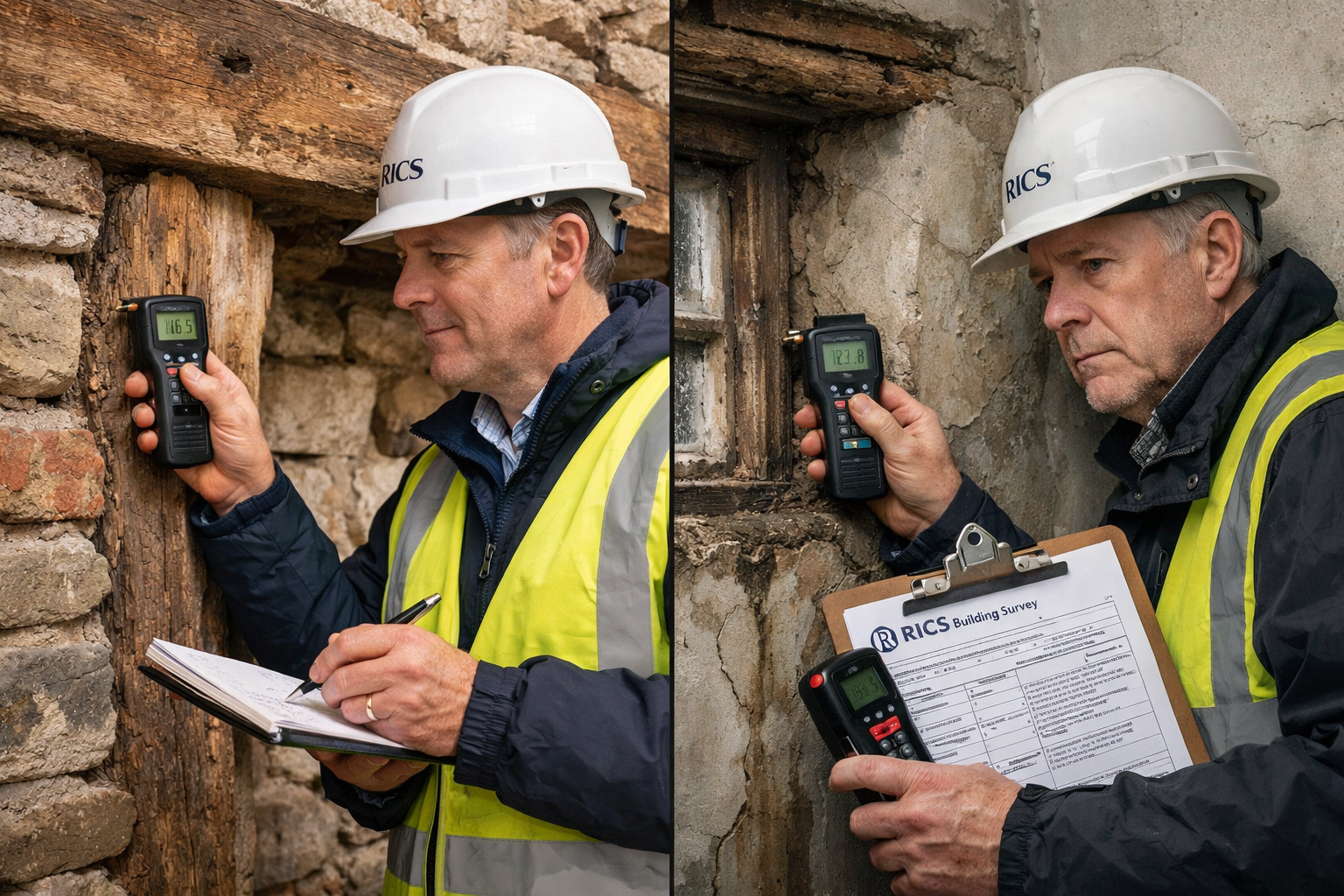
The practical implications of regional divergence in building survey standards extend beyond market statistics into the fundamental methodology of condition assessments. Professional surveyors must calibrate their inspection priorities, defect categorization, and reporting language to align with regional market realities while maintaining RICS professional standards.
Defect Prioritization in Confident vs. Cautious Markets
When conducting structural surveys, the same physical defect—such as minor roof tile slippage or evidence of historic settlement—requires different emphasis depending on regional context:
Scottish Market Approach (Price Leadership Context):
- Present defects within a risk-proportionate framework
- Emphasize the distinction between urgent repairs and routine maintenance
- Provide cost estimates with ranges that reflect "adequate" vs. "optimal" solutions
- Include contextual statements about typical property conditions in the area
- Highlight positive features that offset minor deficiencies
Southern Market Approach (Market Lag Context):
- Adopt a precautionary principle for all identified defects
- Provide detailed remediation specifications even for minor issues
- Include worst-case scenario cost estimates to prevent post-completion disputes
- Recommend specialist investigations more frequently
- Minimize subjective positive commentary that might appear to downplay concerns
This divergence doesn't suggest compromising professional integrity—rather, it reflects appropriate calibration to client needs within different market environments. A West London surveyor serves clients best by acknowledging that buyers in stagnant markets face greater financial risk and require more comprehensive risk mitigation information.
Language and Tone Calibration
The narrative sections of building survey reports require careful linguistic calibration based on regional market psychology:
Scottish Market Language Example: "The property exhibits typical characteristics of Victorian construction in this area, with minor pointing repairs required to the rear elevation. These works, estimated at £2,500-£3,500, represent routine maintenance rather than structural concerns and should be addressed within the next 12-18 months."
Southern Market Language Example: "Mortar deterioration observed at the rear elevation requires attention to prevent water ingress and potential frost damage to masonry. We recommend obtaining specialist masonry contractor quotes before completion. Based on similar projects, budget £3,500-£5,000 for comprehensive repointing works to be completed within 6 months of purchase."
Both statements address identical defects with professional accuracy, but the tone, urgency indicators, and cost presentation differ to match regional buyer expectations and risk tolerances.
Inspection Depth and Additional Investigations
Market confidence levels influence the threshold for recommending specialist investigations. In Scotland's robust market, surveyors can apply proportionate investigation recommendations, suggesting further inspections only when genuine uncertainty exists about structural adequacy or safety. Commercial building surveys in confident markets focus resources on material defects rather than exhaustive investigation of every minor anomaly.
Conversely, Southern market surveyors face pressure to recommend specialist investigations more liberally, as buyers in uncertain markets demand comprehensive due diligence. This creates a challenging balance—over-recommending investigations appears defensive and erodes client trust, while under-recommending exposes surveyors to potential liability in litigious market environments.
Best Practice Recommendations:
- 🏴 Scottish surveyors: Maintain confidence-appropriate investigation thresholds while documenting decision rationale
- 🏴 Southern surveyors: Recommend investigations when material uncertainty exists, but provide context about likelihood of significant issues
- 📋 Both regions: Document the reasoning behind investigation recommendations to demonstrate professional judgment
Tailoring Survey Report Structure for Regional Market Needs
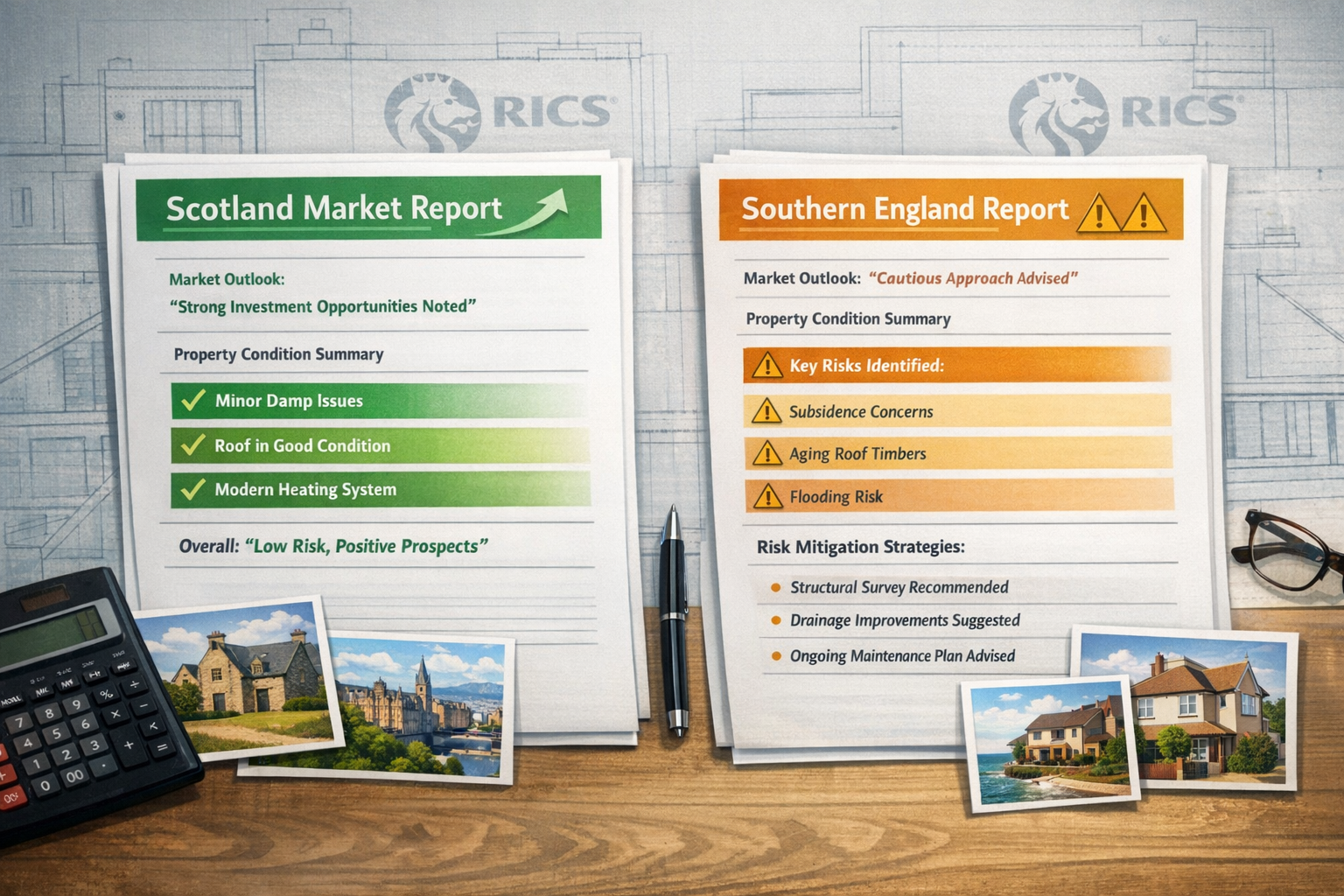
Beyond content and language, the structural organization of building survey reports benefits from regional customization that reflects different stakeholder priorities and transaction dynamics.
Executive Summary Emphasis
Scottish market reports can lead with balanced executive summaries that present both positive attributes and defects within an integrated assessment. The summary might emphasize the property's overall suitability for purchase while noting specific areas requiring attention.
Southern market reports increasingly require defect-forward executive summaries that immediately address buyer concerns and provide clear action items. Chartered surveyors in North West London report that buyers in cautious markets often read only the executive summary and conclusion sections, making these components critical for setting appropriate expectations.
Cost Estimation Approaches
Scotland (Confident Market):
- Provide cost ranges with "essential" vs. "recommended" distinctions
- Include timeframes that allow for phased improvements
- Present costs in context of property value and market norms
- Emphasize that estimates reflect current market conditions
Southern England (Cautious Market):
- Provide conservative upper-range estimates
- Break down costs into immediate vs. short-term categories
- Include contingency allowances (typically 15-20%)
- Reference recent comparable projects for credibility
- Consider including vendor-specific recommendations
Maintenance Planning Sections
Forward-looking maintenance planning sections serve different purposes regionally. In Scotland's growth markets, these sections help buyers understand long-term ownership costs and plan improvements that enhance value. Surveyors can present maintenance as opportunity for value enhancement rather than burden.
In Southern markets experiencing stagnation, maintenance planning sections function more as risk mitigation documentation, helping buyers understand the full financial commitment required and providing evidence of due diligence should issues emerge post-purchase.
Visual Documentation Standards
Photographic evidence requirements have intensified across all regions, but Southern market reports increasingly require more extensive visual documentation:
- Minimum standard: 40-60 photographs covering key elements
- Southern market expectation: 80-120 photographs with detailed defect close-ups
- Scottish market approach: Balanced coverage emphasizing both condition concerns and positive features
Drone roof surveys have become particularly valuable in Southern markets where buyers demand comprehensive roof condition evidence without the cost of full scaffolding access during initial assessments.
Professional Standards and Regional Adaptation
A critical question emerges: does regional divergence in building survey standards compromise professional consistency or represent appropriate market responsiveness? The Royal Institution of Chartered Surveyors (RICS) maintains that professional standards require surveyors to serve client interests within their specific circumstances, which inherently includes market context [4].
RICS Standards and Regional Flexibility
RICS guidance emphasizes that building surveys must be:
- Proportionate to the property type and transaction context
- Client-focused in addressing specific concerns and requirements
- Professionally objective in identifying and reporting defects
- Risk-appropriate in recommendations and advice
These principles allow—indeed require—regional calibration. A surveyor who applies identical reporting approaches in Edinburgh and East London fails to serve either client group optimally, as market contexts demand different emphasis and detail levels.
Liability Considerations
Professional indemnity insurers increasingly recognize regional market differences when assessing surveyor practices. Key liability protection strategies include:
✅ Document regional market conditions in file notes and report context sections
✅ Maintain consistent defect identification while varying presentation emphasis
✅ Provide clear reasoning for investigation recommendations or decisions not to recommend
✅ Use market-appropriate language without compromising technical accuracy
✅ Keep detailed inspection records regardless of report detail level
Training and Regional Expertise
Surveying firms operating across multiple UK regions benefit from developing regional specialization within their teams. A surveyor primarily working in Scotland's confident markets may struggle to calibrate appropriately when occasionally conducting surveys in Southern England, and vice versa.
Progressive firms implement:
- Regional market briefings updated quarterly
- Peer review processes that include regional market expertise
- Client feedback analysis by region to identify reporting effectiveness
- Template libraries with regional variations while maintaining core standards
Emerging Trends in Regional Survey Practice
The divergence between Scotland's price leadership and Southern market lag shows no signs of converging in 2026, suggesting these regional adaptations will become increasingly sophisticated rather than temporary adjustments.
Technology Integration Varies by Region
Scottish surveyors increasingly adopt efficiency-focused technologies that accelerate report production and reduce costs in fast-moving markets. Digital inspection tools, automated report generation for standard elements, and streamlined client communication platforms support rapid turnaround expectations.
Southern market surveyors invest more heavily in detail-enhancement technologies including thermal imaging, moisture mapping systems, and comprehensive defect documentation platforms. These tools support the exhaustive due diligence expectations of cautious buyers and provide robust evidence trails for potential disputes.
Buyer Demographics Influence Regional Approaches
Scotland's growth attracts younger first-time buyers and relocating professionals who often demonstrate greater risk tolerance and focus on long-term value. Survey reports can emphasize improvement potential and market trajectory.
Southern markets increasingly serve downsizing buyers and investors who demand comprehensive risk assessment and detailed financial projections. These sophisticated clients expect survey reports that integrate condition assessment with financial analysis and market positioning.
Commercial Property Divergence
The regional divergence extends beyond residential surveys into commercial property assessments. Scottish commercial markets demonstrate stronger tenant demand and investment appetite, allowing surveyors to present condition assessments within growth-oriented frameworks.
Southern commercial property surveys increasingly require detailed obsolescence assessments, alternative use analysis, and comprehensive risk profiling as investors face uncertain demand and rental growth prospects.
Practical Implementation for Surveying Practices
For surveying firms and individual practitioners, implementing regionally-tailored approaches requires systematic process development rather than ad-hoc adjustments.
Developing Regional Report Templates
Create base templates that maintain RICS compliance and professional standards, then develop regional overlays that adjust:
- Executive summary structure and emphasis
- Cost estimation presentation formats
- Maintenance planning timeframes and language
- Investigation recommendation thresholds
- Positive feature integration approaches
Client Communication Protocols
Initial client consultations should explicitly address regional market context:
Scottish Market Client Briefing:
"Given the strong market conditions in this area, I'll provide a balanced assessment that identifies all defects while contextualizing them within typical property conditions and market expectations. The report will help you make an informed decision while understanding which issues require immediate attention versus routine maintenance."
Southern Market Client Briefing:
"Given current market conditions, I'll provide comprehensive detail on all identified issues, including conservative cost estimates and clear recommendations for further investigations where appropriate. This thorough approach protects your interests and provides strong negotiating evidence if needed."
Quality Assurance Across Regions
Implement regional peer review processes where reports undergo review by surveyors with specific expertise in the relevant market. This catches inappropriate language, emphasis, or recommendations that don't align with regional norms while maintaining technical accuracy.
Continuing Professional Development
Surveyors benefit from CPD programs addressing:
- Regional market analysis and trend interpretation
- Buyer psychology in different market conditions
- Communication strategies for varying client risk tolerances
- Legal and liability considerations in divergent markets
- Technology applications for regional practice optimization
Conclusion
The Regional Divergence in Building Survey Standards: Tailoring Condition Assessments for Scotland's Price Leadership vs. Southern Market Lag represents one of the most significant challenges and opportunities for UK property professionals in 2026. Scotland's robust price growth and market confidence create fundamentally different conditions from the cautious, stagnant markets across London and the South East, demanding sophisticated regional adaptation in survey practices.
Professional surveyors must recognize that identical technical competence in defect identification becomes truly valuable only when paired with appropriate regional calibration in presentation, emphasis, and client guidance. A structural crack means the same thing structurally whether discovered in Edinburgh or Ealing, but its impact on transaction dynamics, buyer psychology, and appropriate surveyor response differs dramatically.
Actionable Next Steps
For Individual Surveyors:
- 📊 Research current market performance data for your operating regions quarterly
- 📝 Review recent reports to assess whether language and emphasis align with current market conditions
- 🤝 Seek feedback from estate agents and solicitors about report effectiveness in different markets
- 📚 Develop regional expertise through focused CPD and market immersion
- 🔄 Implement systematic report review processes that include regional appropriateness checks
For Surveying Firms:
- 🗺️ Map your practice areas and identify distinct regional market characteristics
- 📋 Develop regional report templates and style guides while maintaining RICS compliance
- 👥 Assign regional specialization within teams to build deep market knowledge
- 💻 Invest in technology appropriate to regional practice demands
- 📈 Track regional performance metrics including client satisfaction and transaction completion rates
For Property Buyers:
- 🔍 Ensure your surveyor demonstrates knowledge of local market conditions
- 💬 Discuss how regional factors influence survey approach during initial consultations
- ⚖️ Request explanation of how defects compare to typical properties in the area
- 📊 Ask for market-contextualized cost estimates and maintenance planning
- 🎯 Clarify your risk tolerance to help surveyors calibrate report emphasis appropriately
The divergence between Scotland's price leadership and Southern market lag will likely persist throughout 2026 and beyond, making regional expertise an increasingly valuable differentiator for surveying professionals. Those who master the art of maintaining technical excellence while adapting presentation and emphasis to regional market psychology will deliver superior client value and build stronger professional reputations.
Understanding that Regional Divergence in Building Survey Standards isn't about compromising professional integrity but rather about applying professional judgment within specific market contexts represents the evolution of surveying practice for a geographically diverse property market. The surveyors who thrive will be those who recognize that serving client interests requires both technical competence and market intelligence, delivered through regionally-appropriate communication that maintains unwavering professional standards.
References
[1] New 2026 Alta Nsps Survey Standards What Developers And Counsel Should Know – https://hallrender.com/2026/02/23/new-2026-alta-nsps-survey-standards-what-developers-and-counsel-should-know/
[2] Alta Nsps Land Title Surveys 2026 Standards – https://cretelligent.com/alta-nsps-land-title-surveys-2026-standards/
[3] Five Key Updates 2026 Altansps Land Title Survey Standards – https://westwoodps.com/recent-blog-posts/five-key-updates-2026-altansps-land-title-survey-standards
[4] Latest – https://www.gov.scot/policies/building-standards/latest/
[5] Pages – https://www.gov.scot/publications/building-standards-performance-framework-verifiers-1-april-2026/pages/7/
[6] Rics Scotland Manifesto 2026 Surveying Scotland – https://www.rics.org/news-insights/rics-scotland-manifesto-2026-surveying-scotland
[7] Effective February 23 2026 Changes In The Minimum Standard Detail Requirements For Alta Nsps Land Title Surveys – https://www.lewisrice.com/publications/effective-february-23-2026-changes-in-the-minimum-standard-detail-requirements-for-alta-nsps-land-title-surveys