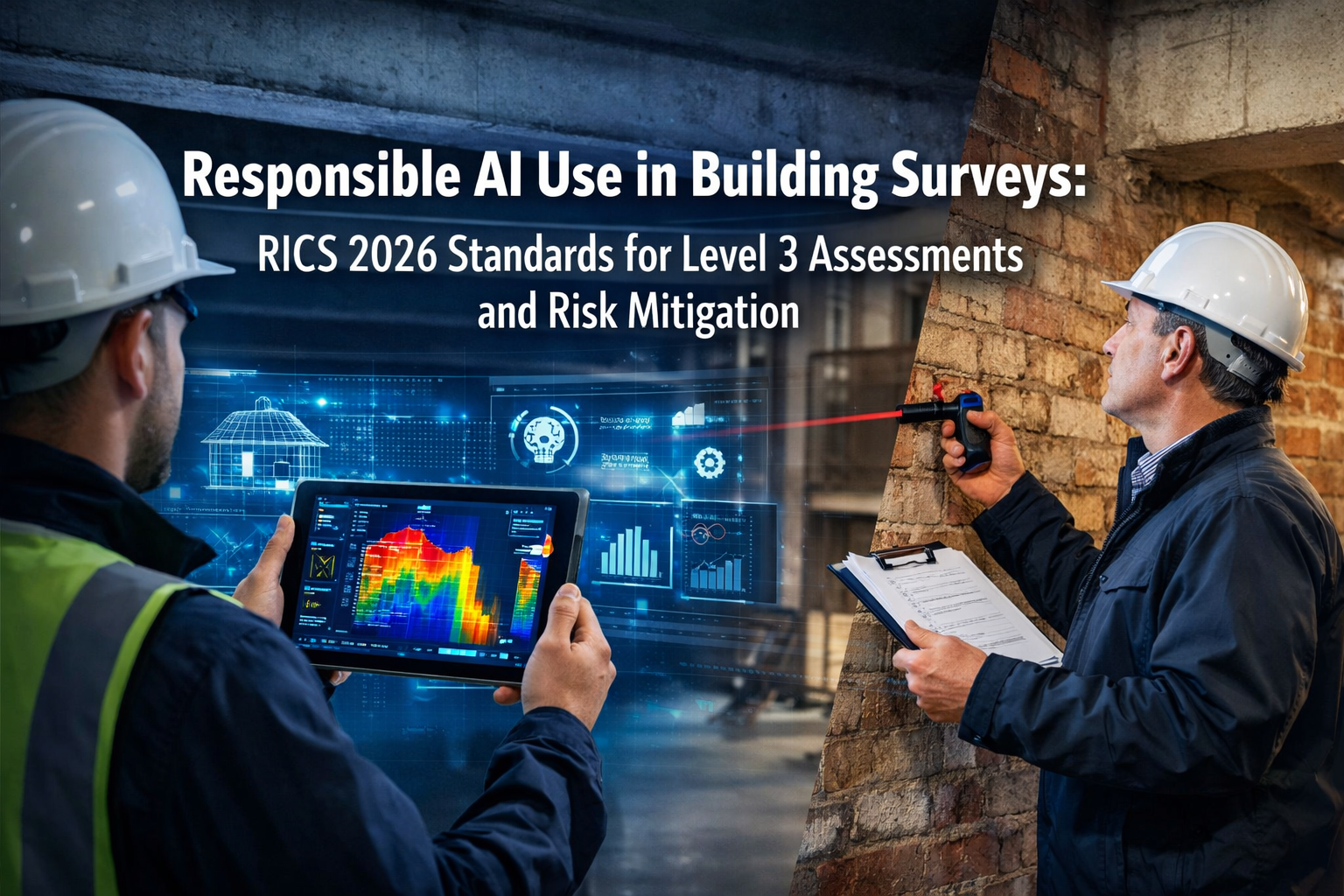

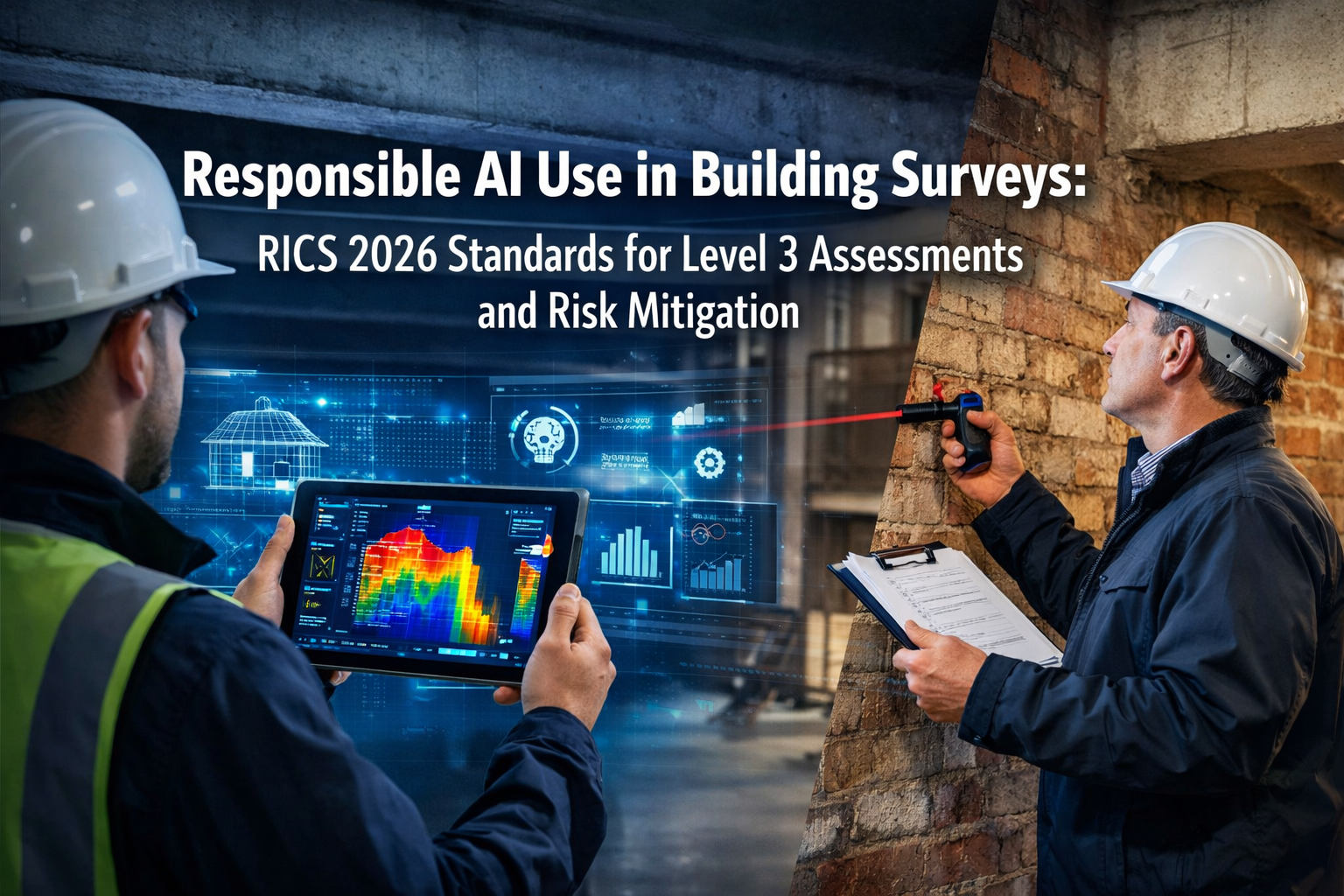
The surveying profession stands at a pivotal moment. As artificial intelligence transforms how building defects are detected and assessed, a critical question emerges: How can surveyors harness AI's power without compromising professional judgment? The answer arrived on March 9, 2026, when the Royal Institution of Chartered Surveyors (RICS) implemented the world's first mandatory professional standard for responsible AI use in surveying practice[4]. This groundbreaking framework ensures that technology enhances—rather than replaces—the expertise that clients depend on during critical building surveys.
The new standard on Responsible AI Use in Building Surveys: RICS 2026 Standards for Level 3 Assessments and Risk Mitigation establishes clear requirements for all RICS members and regulated firms. This comprehensive approach addresses everything from initial system assessments to client disclosure, creating a robust framework that protects both professionals and property owners.
Key Takeaways
- ⚖️ Mandatory Compliance: All RICS members and firms must follow the new AI standard effective March 9, 2026, making it the first global professional standard of its kind[4]
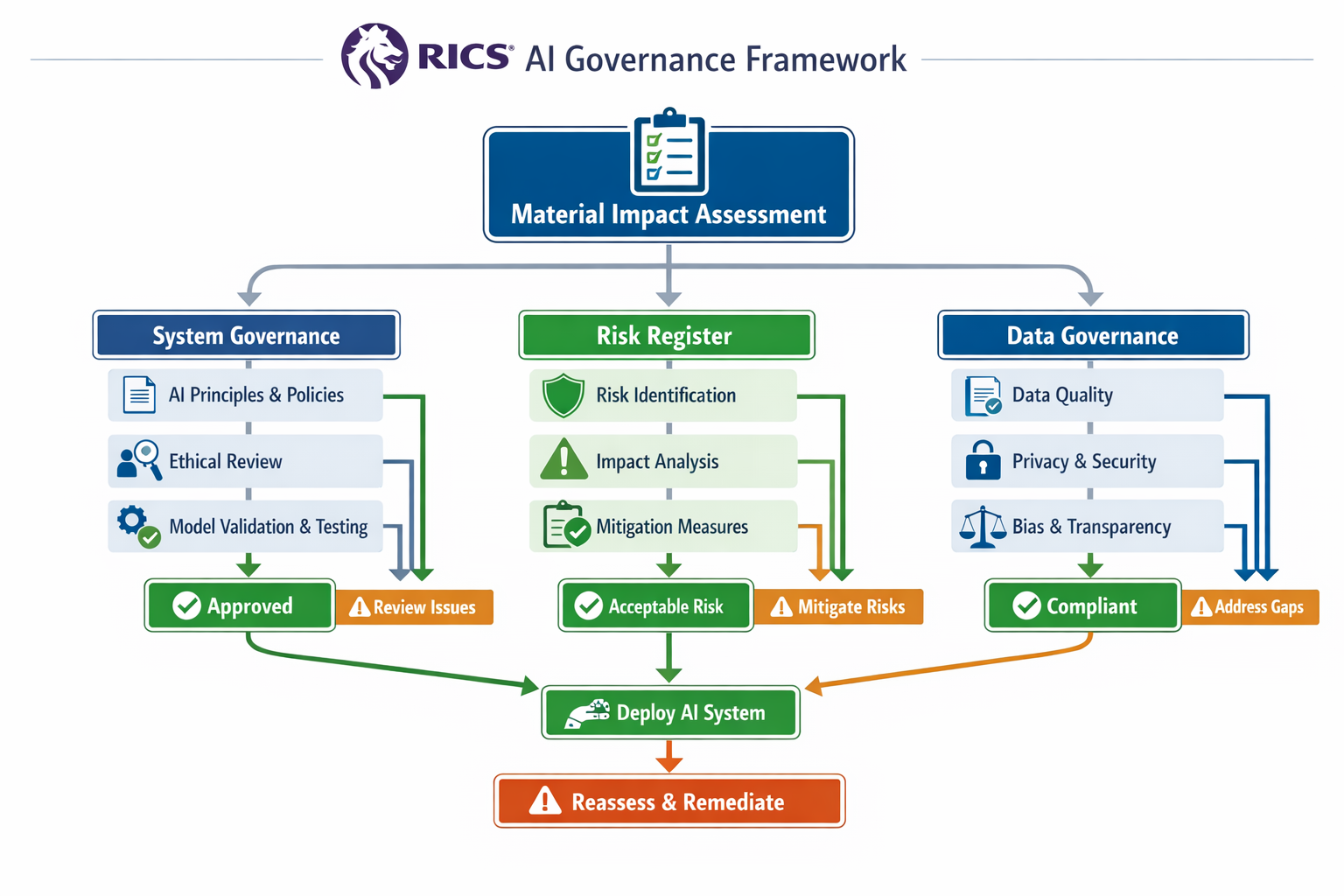
- 📋 Material Impact Assessment: Firms must determine and document in writing whether AI use materially impacts service delivery before implementation[1][2]
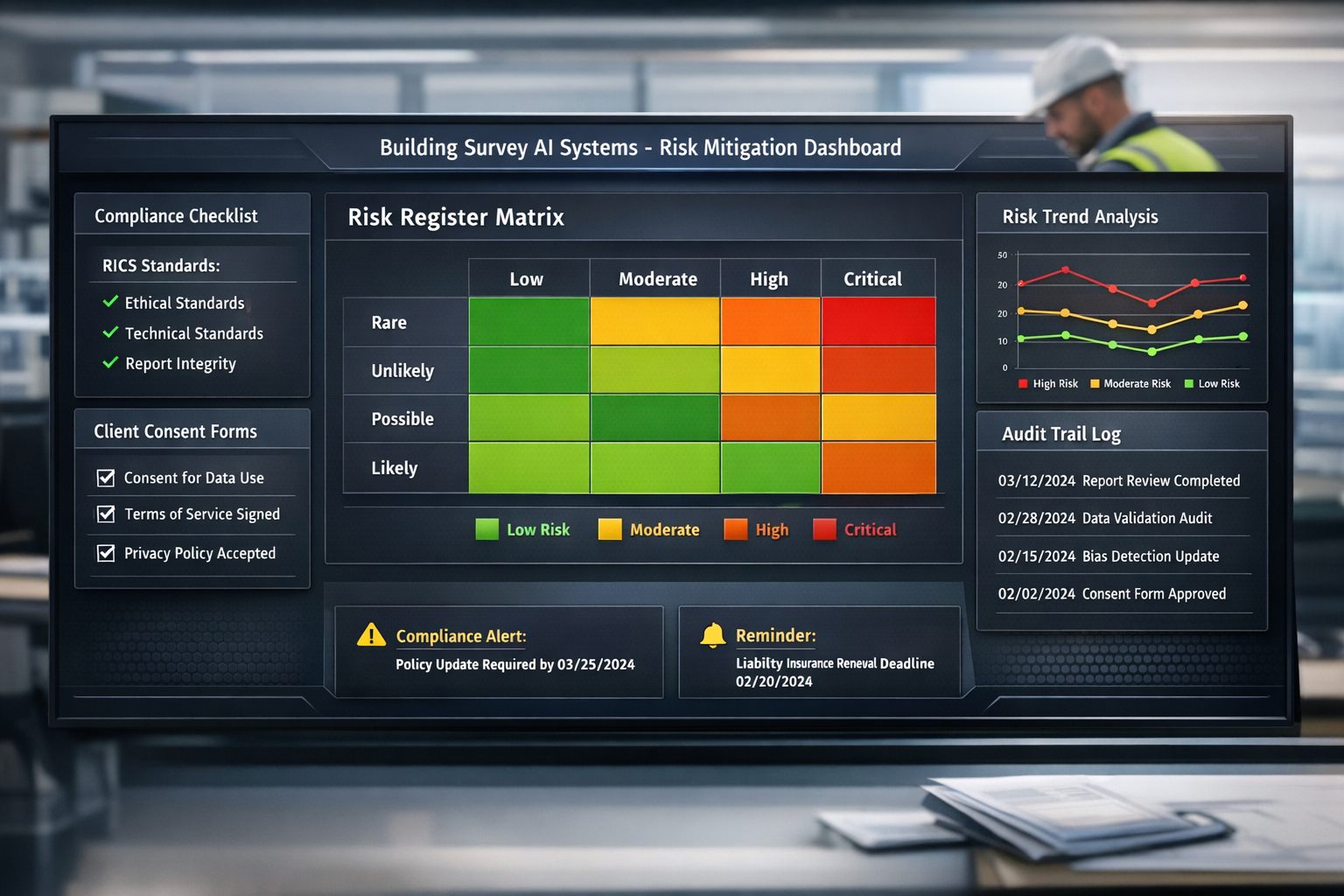
- 🛡️ Risk Register Requirement: Organizations using AI systems must maintain written risk registers addressing bias, erroneous outputs, and mitigation strategies[1][2]
- 📢 Client Transparency: Advance written disclosure to clients about AI use is mandatory, including details in terms of engagement[2]
- 🔒 Data Governance: Express written consent from stakeholders is required before uploading any data to AI systems[2]
Understanding the RICS 2026 AI Standards Framework
The RICS professional standard represents a paradigm shift in how surveying firms approach technology adoption. Rather than allowing unregulated AI implementation, the framework establishes clear governance structures that preserve professional accountability while enabling innovation.
Scope and Application Across Surveying Services
The standard applies comprehensively across multiple surveying disciplines, including valuation, construction monitoring, infrastructure projects, and land services[5]. For building surveyors conducting Level 3 assessments—the most detailed survey type—the implications are particularly significant.
When performing comprehensive commercial building surveys, AI tools can analyze structural defects, identify moisture patterns, and assess building pathology with unprecedented speed. However, the RICS standard ensures these capabilities complement rather than substitute professional expertise.
The Material Impact Determination
At the heart of the framework lies a crucial concept: material impact. Members and firms must determine whether AI use will materially affect service delivery—and this determination must be recorded in writing with documented reasoning[1][2].
But what constitutes "material impact"? The standard provides flexibility, recognizing that impact varies by context. Using AI to schedule appointments likely has minimal material impact. Conversely, employing AI algorithms to assess structural stability in a subsidence survey clearly meets the threshold.
"The Regulatory Tribunal makes final determinations on disputed cases, providing clarity when questions arise about material impact classifications."[3]
This approach balances professional judgment with regulatory oversight, ensuring consistency across the profession while respecting individual circumstances.
Implementing Responsible AI Use in Building Surveys: RICS 2026 Standards for Level 3 Assessments
Level 3 building surveys—also known as full structural surveys—demand meticulous attention to detail. These comprehensive assessments evaluate every accessible aspect of a property, from foundations to roof structure. Integrating AI into this process requires careful planning and robust governance.
System Governance Assessment Requirements
Before deploying any AI system with material impact, RICS-regulated firms must conduct and record written assessments[2]. This evaluation must address three critical questions:
- Is AI the most appropriate tool for the specific surveying task?
- What is the nature of the surveying services being provided?
- What alternative tools or methods are available?
For example, when conducting drone roof surveys, AI-powered image analysis can identify deterioration patterns across large roof areas. The system governance assessment would document why this approach surpasses traditional binocular inspection, while acknowledging situations where human assessment remains superior—such as evaluating complex heritage roofing materials.
Creating and Maintaining Risk Registers
The standard mandates that firms using AI systems with material impact create and maintain written risk registers[1][2]. These documents must identify overarching risks including:
- Inherent bias in AI systems 🔍
- Erroneous outputs and false positives ⚠️
- Data privacy and security concerns 🔒
- Professional liability implications ⚖️
- Client misunderstanding of AI limitations 💬
Each identified risk requires corresponding mitigation and management plans. For building surveys, this might include:
Risk: AI crack detection algorithm overestimates structural movement severity
Mitigation: Surveyor verification of all AI-flagged defects; cross-reference with manual measurements; client education about AI's role as diagnostic aid rather than definitive assessment
Risk: Training data bias toward modern construction methods
Mitigation: Enhanced manual inspection protocols for period properties; supplementary research for historic building techniques; clear documentation of AI system limitations in heritage contexts
Developing Responsible AI Use Policies
Risk registers inform the development of written policies for responsible AI use[1][2]. These policies establish organizational standards that guide day-to-day operations.
Effective policies address:
- Selection criteria for AI tools and vendors
- Training requirements for staff using AI systems
- Quality assurance processes to verify AI outputs
- Client communication protocols regarding AI use
- Data handling procedures complying with privacy regulations
- Continuous monitoring and system performance evaluation
When conducting RICS valuations, these policies ensure consistency across the firm while maintaining the flexibility needed for diverse property types and client requirements.
Practical Applications: AI in Level 3 Building Assessments
The true value of Responsible AI Use in Building Surveys: RICS 2026 Standards for Level 3 Assessments and Risk Mitigation emerges when theory meets practice. Modern AI tools offer remarkable capabilities for enhancing survey accuracy and efficiency.
Defect Detection and Classification
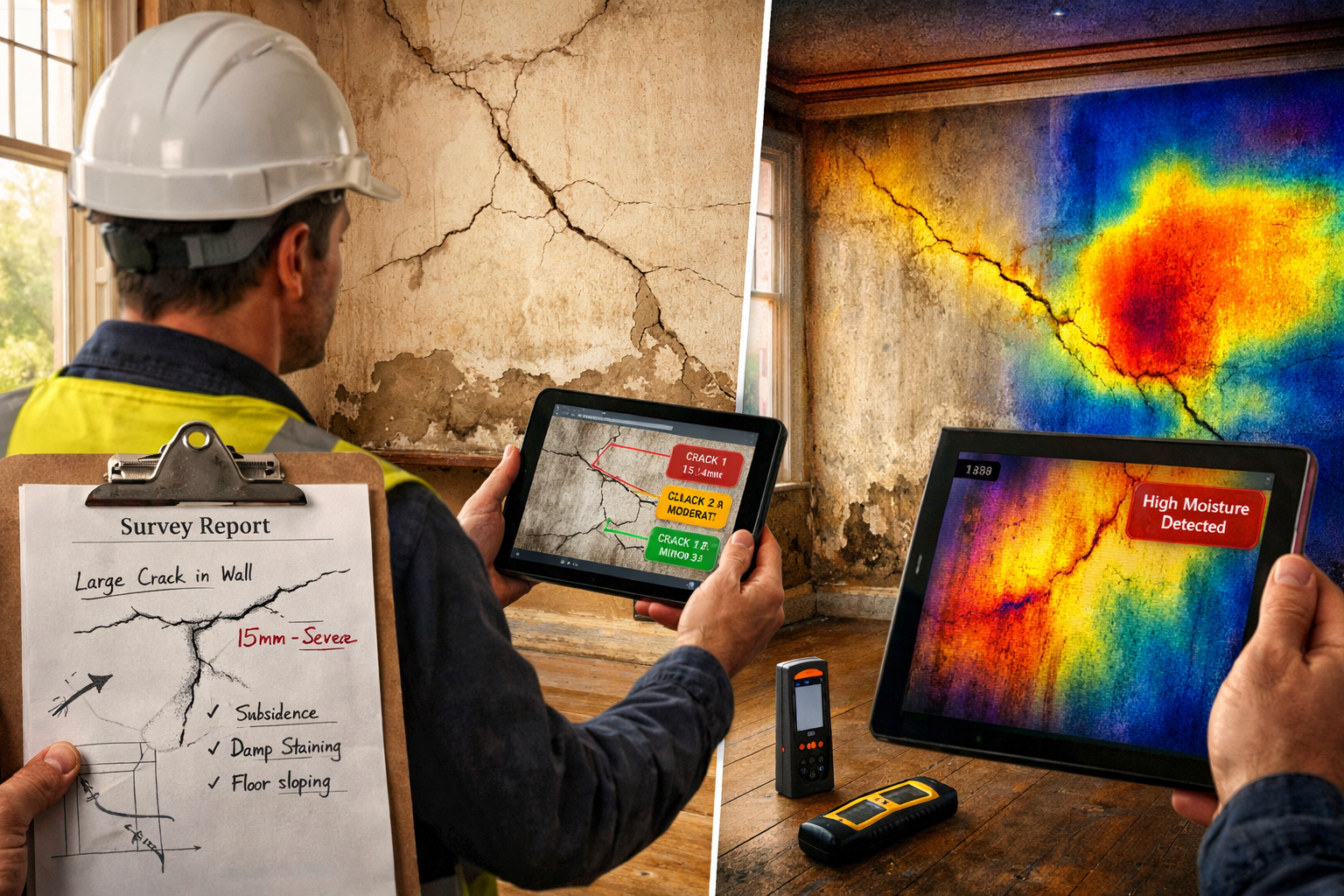
AI-powered image recognition can identify building defects with impressive accuracy. During a Level 3 assessment, surveyors photograph structural elements, and AI algorithms analyze these images to detect:
- Crack patterns indicating structural movement
- Moisture ingress and dampness signatures
- Timber decay and insect infestation
- Pointing deterioration in masonry
- Roof covering defects and weathering
However, the RICS standard ensures surveyors verify these findings. AI might flag a crack pattern as subsidence-related, but the experienced surveyor considers soil conditions, local geology, drainage patterns, and building history before reaching conclusions.
Thermal Imaging Analysis
AI enhances thermal imaging interpretation by automatically identifying temperature anomalies that indicate:
- Missing or inadequate insulation
- Air leakage pathways
- Hidden moisture problems
- Heating system inefficiencies
- Thermal bridging issues
When preparing schedule of condition reports, this technology provides objective evidence of building performance that complements visual inspection findings.
Predictive Maintenance Modeling
Advanced AI systems analyze building defects alongside maintenance history, environmental conditions, and material degradation patterns to predict future maintenance requirements. This capability proves particularly valuable for commercial dilapidation surveys, where accurate deterioration forecasting impacts lease negotiations and repair cost estimates.
Record-Keeping Obligations
For each AI application, firms must record in writing[2]:
- The identifiable AI application being used
- Potential risks and benefits relative to specific tasks
- Alternative approaches considered
- Rationale for selecting the AI solution
This documentation creates an audit trail demonstrating compliance with professional standards while supporting continuous improvement in AI deployment strategies.
Data Governance and Client Communication Requirements
The RICS standard places significant emphasis on data handling and transparency—recognizing that building surveys often involve sensitive property information and client confidentiality concerns.
Express Written Consent for Data Upload
When uploading data to AI systems, firms must obtain express written consent in advance from affected stakeholders[2]. This requirement protects property owners whose building information might be processed by AI algorithms.
Consider a scenario: A surveyor photographs structural defects during a Level 3 assessment and wants to use an AI platform for analysis. Before uploading these images, the firm must:
- Inform the client about the AI system and its purpose
- Explain what data will be uploaded and how it will be processed
- Disclose data security measures and storage locations
- Obtain documented consent before proceeding
Additionally, firms must take reasonable steps to ensure uploading doesn't pose unacceptable risk[2]—evaluating data security, privacy protection, and potential misuse scenarios.
Advance Client Disclosure
Transparency forms a cornerstone of responsible AI use. Firms must communicate clearly to clients in writing and in advance when and for what purpose AI will be used in delivering surveying services[2].
This disclosure should be:
- Timely: Provided before commencing work
- Specific: Identifying particular AI applications and their purposes
- Comprehensible: Written in plain language avoiding technical jargon
- Complete: Covering benefits, limitations, and potential risks
Terms of Engagement Documentation
Contractual documents, service agreements, and client relationship documentation must detail in writing when AI is being used[2]. This enables clients to:
- Understand AI's role in their instruction
- Make informed decisions about service delivery
- Challenge outcomes if necessary
- Verify compliance with their own organizational policies
For RICS registered valuers working with institutional clients, these documentation requirements align with broader corporate governance frameworks and audit requirements.
Due Diligence and Procurement Processes
The standard mandates comprehensive AI procurement and due diligence processes[2]. Before adopting any AI system with material impact, firms must conduct thorough evaluations addressing technical, ethical, and operational considerations.
Vendor Assessment Criteria
When evaluating AI vendors and systems, surveyors should investigate:
Technical Capabilities
- Algorithm accuracy and validation methodology
- Training data quality and representativeness
- System limitations and known failure modes
- Integration with existing workflows and software
Transparency and Explainability
- How the AI system reaches conclusions
- Ability to audit decision-making processes
- Documentation quality and technical support
- Update and maintenance protocols
Data Governance
- Data storage locations and jurisdictions
- Security measures and encryption standards
- Privacy protection and GDPR compliance
- Data retention and deletion policies
Professional Liability Considerations
- Insurance coverage for AI-assisted work
- Vendor liability and indemnification terms
- Error handling and correction procedures
- Professional standards compliance
Information Disclosure to Clients
Firms must provide written information on request regarding[2]:
- The type of AI system used
- Basic ways of working and operational principles
- System limitations and appropriate use cases
- Due diligence processes conducted during procurement
- Risk identification and management approaches
- Decisions about output reliability and verification methods
This transparency enables clients to assess whether AI-assisted surveys meet their requirements and risk tolerance levels.
Professional Judgment and Human Oversight
While AI offers powerful analytical capabilities, the RICS standard emphasizes that technology must augment—not replace—professional expertise. Building surveyors remain ultimately responsible for all conclusions and recommendations, regardless of AI involvement.
The Irreplaceable Human Element
Certain aspects of Level 3 building surveys inherently require human judgment:
- Contextual understanding: Appreciating local building traditions, historical construction methods, and regional material characteristics
- Holistic assessment: Synthesizing multiple defects into coherent narratives about building condition and performance
- Client communication: Explaining findings in accessible language and advising on priorities
- Ethical considerations: Balancing competing interests and maintaining professional independence
When conducting dilapidation surveys, surveyors must interpret lease terms, assess reasonableness of repair standards, and consider commercial realities—tasks requiring nuanced judgment that current AI cannot replicate.
Verification Protocols
Every AI-generated output requires professional verification. Surveyors should establish systematic review processes:
- Initial AI Analysis: System processes data and generates preliminary findings
- Professional Review: Surveyor examines AI outputs for plausibility and consistency
- Field Verification: Physical inspection confirms or refutes AI-identified issues
- Contextual Integration: Findings incorporated into comprehensive assessment
- Client Reporting: Clear communication of AI's role and human verification
This layered approach leverages AI efficiency while maintaining professional accountability.
Compliance and Enforcement Mechanisms
The RICS standard carries real consequences. As a mandatory professional standard, non-compliance can result in disciplinary action, including potential removal from the RICS register.
Regulatory Oversight
All RICS members and RICS-regulated firms must comply with the professional standard and applicable jurisdiction legislation[1]. The Regulatory Tribunal provides oversight, making final determinations on disputed cases[3].
This enforcement mechanism ensures the standard has practical impact rather than serving as mere guidance. Firms cannot simply ignore requirements—they must demonstrate active compliance through documented policies, procedures, and practices.
Continuous Professional Development
Implementing responsible AI use requires ongoing learning. Surveyors should pursue professional development covering:
- AI fundamentals and surveying applications
- Data governance and privacy regulations
- Risk management frameworks
- Ethical considerations in AI deployment
- Emerging technologies and best practices
Many chartered surveyors are incorporating AI competency development into their CPD programs, recognizing that technological proficiency increasingly defines professional excellence.
Future Implications and Industry Evolution
The RICS 2026 standard establishes a foundation for responsible AI adoption, but the technology continues evolving rapidly. Surveyors must remain adaptable while maintaining core professional principles.
Emerging Technologies
Future developments likely to impact building surveys include:
- Autonomous inspection drones with AI-guided navigation and real-time defect analysis
- Augmented reality overlays displaying AI-generated building information during site visits
- Predictive analytics forecasting building deterioration with increasing accuracy
- Natural language processing generating survey reports from structured data inputs
- Machine learning models trained on firm-specific building stock and defect patterns
Each advancement will require careful evaluation against RICS standards, ensuring innovation serves professional excellence rather than compromising it.
Industry Collaboration
Responsible AI implementation benefits from collective learning. Industry initiatives might include:
- Shared databases of AI system performance and reliability
- Collaborative development of AI validation protocols
- Professional forums for discussing ethical challenges
- Research partnerships between RICS, universities, and technology providers
- Standardized training programs for AI-competent surveyors
This collaborative approach accelerates beneficial innovation while managing risks through collective wisdom.
Conclusion
Responsible AI Use in Building Surveys: RICS 2026 Standards for Level 3 Assessments and Risk Mitigation represents a watershed moment for the surveying profession. By establishing clear governance frameworks, the RICS has created pathways for technological innovation that preserve professional accountability and client protection.
The standard's emphasis on material impact assessment, risk management, data governance, and client transparency ensures AI enhances rather than undermines surveying practice. For building surveyors conducting Level 3 assessments, these requirements provide structured approaches to integrating powerful analytical tools while maintaining the professional judgment that clients depend upon.
Actionable Next Steps
For Surveying Firms:
- ✅ Conduct comprehensive reviews of current AI use to identify material impact applications
- ✅ Develop written risk registers addressing identified AI-related risks
- ✅ Create or update responsible AI use policies aligned with RICS requirements
- ✅ Implement client communication protocols ensuring advance written disclosure
- ✅ Establish data governance procedures including consent management
- ✅ Review and update terms of engagement to document AI use
- ✅ Develop staff training programs on responsible AI implementation
For Individual Surveyors:
- 📚 Familiarize yourself with the complete RICS AI standard requirements
- 📚 Assess your current AI tool usage against material impact criteria
- 📚 Document decision-making processes when using AI systems
- 📚 Develop verification protocols for AI-generated outputs
- 📚 Pursue CPD opportunities focused on AI competency development
- 📚 Engage with professional networks discussing AI implementation experiences
The future of building surveys will undoubtedly involve increasingly sophisticated AI tools. The RICS 2026 standard ensures this future is built on foundations of professional responsibility, client protection, and technological wisdom. By embracing these principles, surveyors can harness AI's transformative potential while upholding the professional standards that define excellence in surveying practice.
References
[1] Ai Responsible Use Standard – https://ww3.rics.org/uk/en/journals/construction-journal/ai-responsible-use-standard.html
[2] Responsible Use Of Artificial Intelligence In Surveying Practice September 2025 – https://www.rics.org/content/dam/ricsglobal/documents/standards/Responsible-use-of-artificial-intelligence-in-surveying-practice_September-2025.pdf
[3] Responsible Use Of Ai – https://www.rics.org/profession-standards/rics-standards-and-guidance/conduct-competence/responsible-use-of-ai
[4] Rics First Ever Standard On Responsible Ai Use Now In Effect – https://www.rics.org/news-insights/rics-first-ever-standard-on-responsible-ai-use-now-in-effect
[5] Rics Ai Standards For Surveyors – https://goreport.com/rics-ai-standards-for-surveyors/