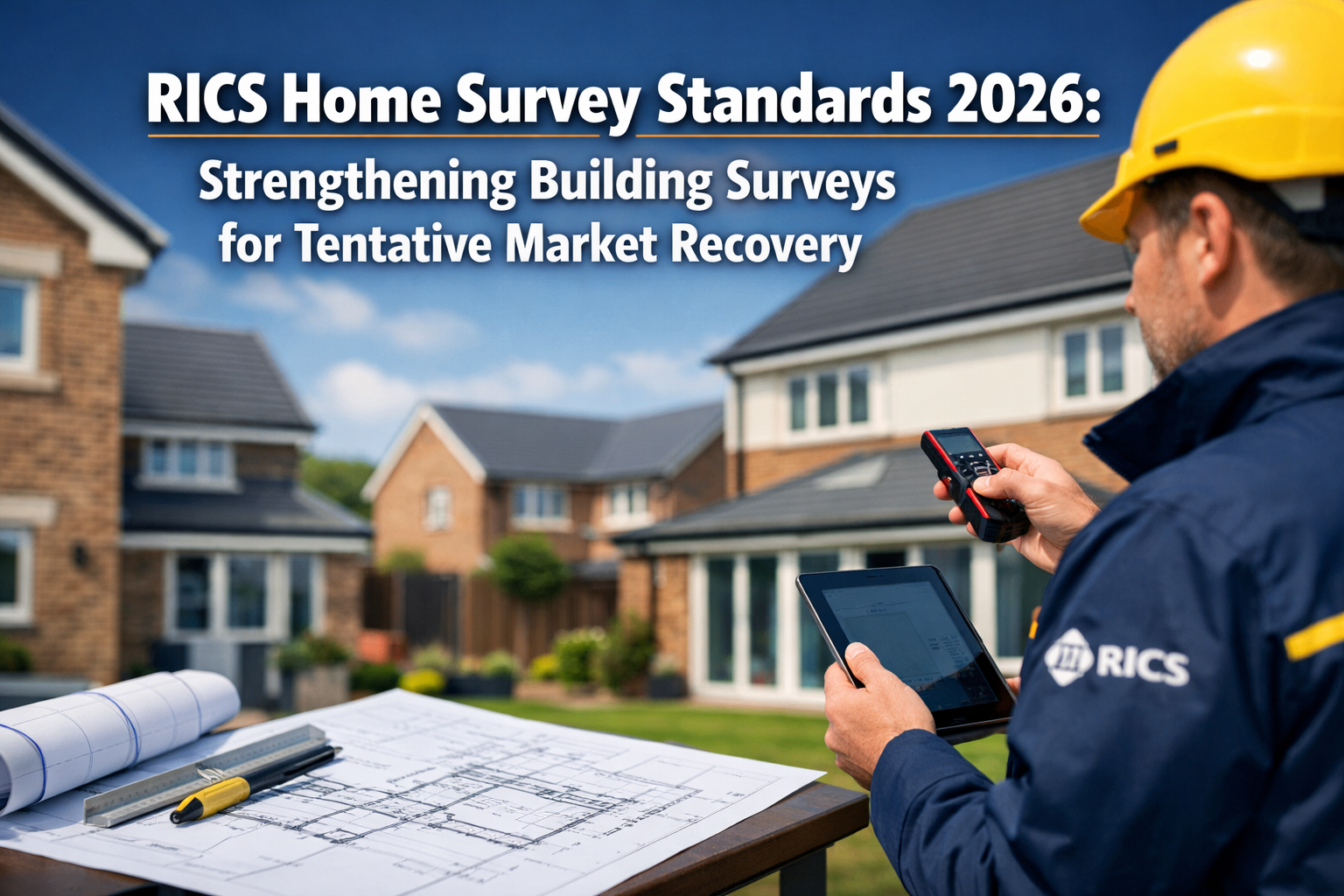
The UK residential property market stands at a critical juncture in 2026. After years of uncertainty, buyer confidence is showing tentative signs of improvement, with enquiry balances shifting from negative territory toward positive growth. Against this backdrop of cautious optimism, the Royal Institution of Chartered Surveyors (RICS) is undertaking a comprehensive review of its Home Survey Standards—a revision that could not come at a more crucial time. The RICS Home Survey Standards 2026: Strengthening Building Surveys for Tentative Market Recovery initiative represents more than just regulatory updates; it embodies a fundamental commitment to ensuring that property surveys meet evolving market demands while maintaining the highest professional standards.
As the property market shows signs of recovery, the quality and reliability of building surveys become paramount. Homebuyers navigating this improving yet still uncertain market need assurance that their investment decisions are based on thorough, accurate, and professionally conducted assessments. The updated standards aim to provide exactly that foundation of trust and competence.
Key Takeaways
- 📊 Unprecedented Industry Engagement: Over 1,000 comments received during consultation, with particularly strong participation from SMEs, demonstrating the standard's critical importance to the profession
- 🎯 Clarity and Simplification: The primary feedback theme emphasizes the need for clearer, more concise requirements distinguishing mandatory "musts" from recommended "shoulds"
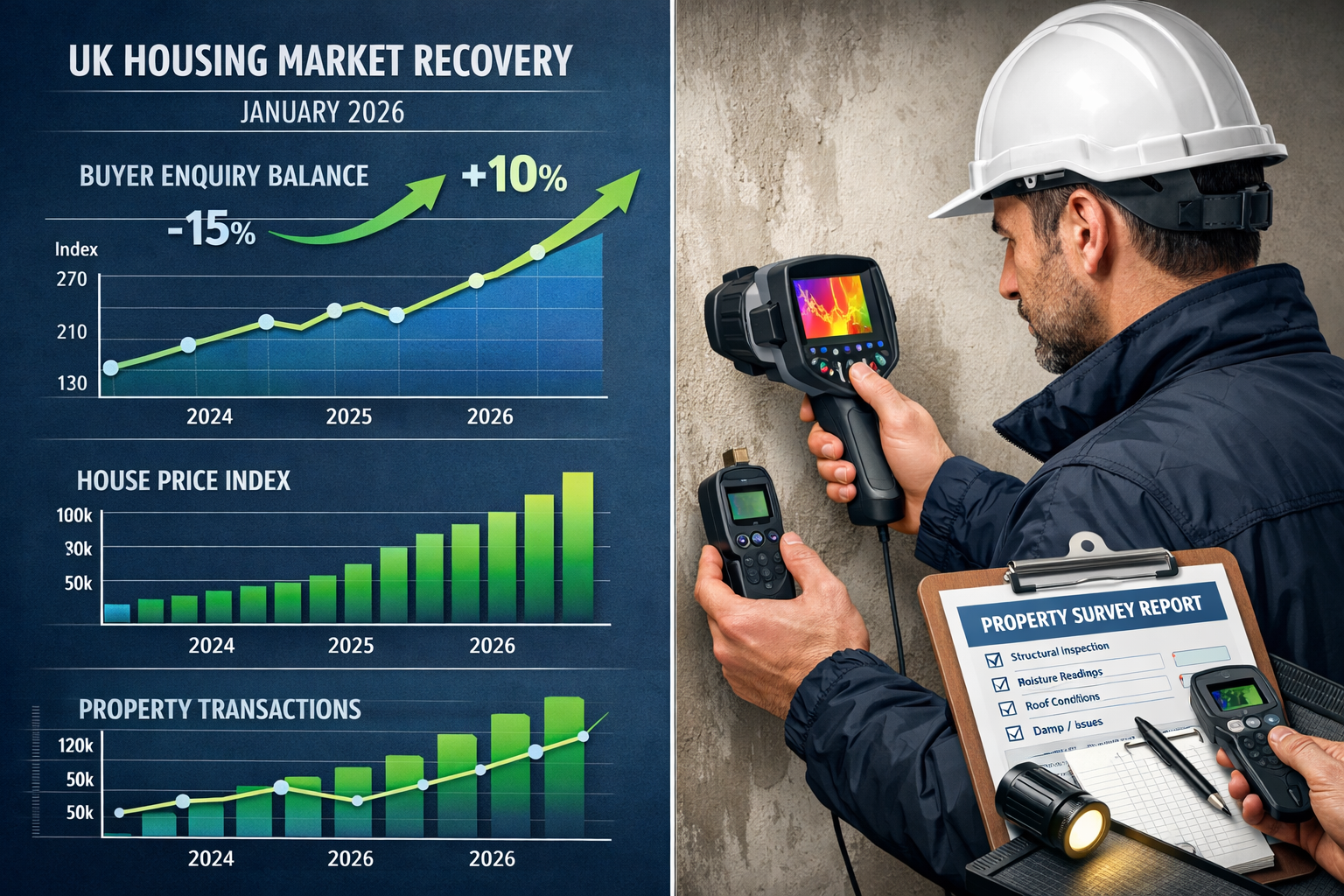
- 🏘️ Market Recovery Alignment: Updates coincide with tentative UK residential market recovery, with buyer enquiry balances improving from -15% toward positive territory
- 🌱 ESG Integration: New standards incorporate practical frameworks for environmental, social, and governance factors in property assessments
- ⏱️ Transparent Timeline: RICS committed to providing progress updates by end of March 2026, with multiple review phases involving expert panels before final regulatory approval
Understanding the RICS Home Survey Standards Framework
The RICS Home Survey Standards serve as the cornerstone of professional residential property surveying in the United Kingdom. These standards establish the minimum requirements and best practices that chartered surveyors in London and throughout the UK must follow when conducting property assessments.
What Are RICS Home Survey Standards?
RICS Home Survey Standards define the professional framework for conducting residential property surveys across the UK. These standards ensure that surveyors deliver consistent, high-quality assessments that homebuyers, sellers, and lenders can trust. The standards cover everything from the scope of inspection to reporting requirements, professional conduct, and ongoing competence[5].
The current review of these standards represents the second edition, building upon lessons learned from the first iteration and incorporating feedback from thousands of industry professionals. The core purpose remains unchanged: to establish best practice and high-quality standards in residential property surveys, ensuring excellence in surveyor services while meeting changing consumer needs[1].
Types of Surveys Covered Under RICS Standards
The RICS framework encompasses several distinct survey types, each designed for specific property scenarios:
| Survey Type | Scope | Best Suited For |
|---|---|---|
| RICS Level 1 (Condition Report) | Basic visual inspection | Newer properties in good condition |
| RICS Level 2 (HomeBuyer Report) | More detailed inspection | Standard properties in reasonable condition |
| RICS Level 3 (Building Survey) | Comprehensive assessment | Older properties, unusual construction, or significant alterations |
| Specialist Surveys | Targeted investigations | Specific defects or concerns |
For properties requiring more comprehensive assessment, a structural survey in London provides the most thorough examination, particularly valuable in the current market where buyers need maximum confidence in their purchase decisions.
Why Standards Matter in 2026's Recovering Market
The significance of robust survey standards becomes particularly acute during periods of market transition. As the UK residential market shows tentative recovery signs in 2026, with buyer enquiry balances improving from deeply negative positions, the quality of property assessments directly impacts market confidence[1].
Key market dynamics driving standards importance:
- 🏠 Increased Transaction Activity: As buyer confidence returns, transaction volumes rise, placing greater demands on surveying capacity
- 💰 Price Sensitivity: Buyers in a recovering market scrutinize value more carefully, requiring detailed, reliable survey information
- 🔍 Risk Mitigation: After market downturns, both buyers and lenders demand more thorough property assessments
- 🌍 Sustainability Focus: Growing emphasis on environmental performance requires surveyors to assess properties through new lenses
The RICS Home Survey Standards 2026: Strengthening Building Surveys for Tentative Market Recovery initiative directly addresses these market realities by ensuring surveyors have clear, practical guidance for delivering high-quality assessments.
The 2026 Review Process: Unprecedented Industry Engagement
The revision of the RICS Home Survey Standards has generated remarkable industry participation, reflecting the standards' critical importance to surveying professionals and the property market ecosystem.
Over 1,000 Comments: What the Industry Is Saying
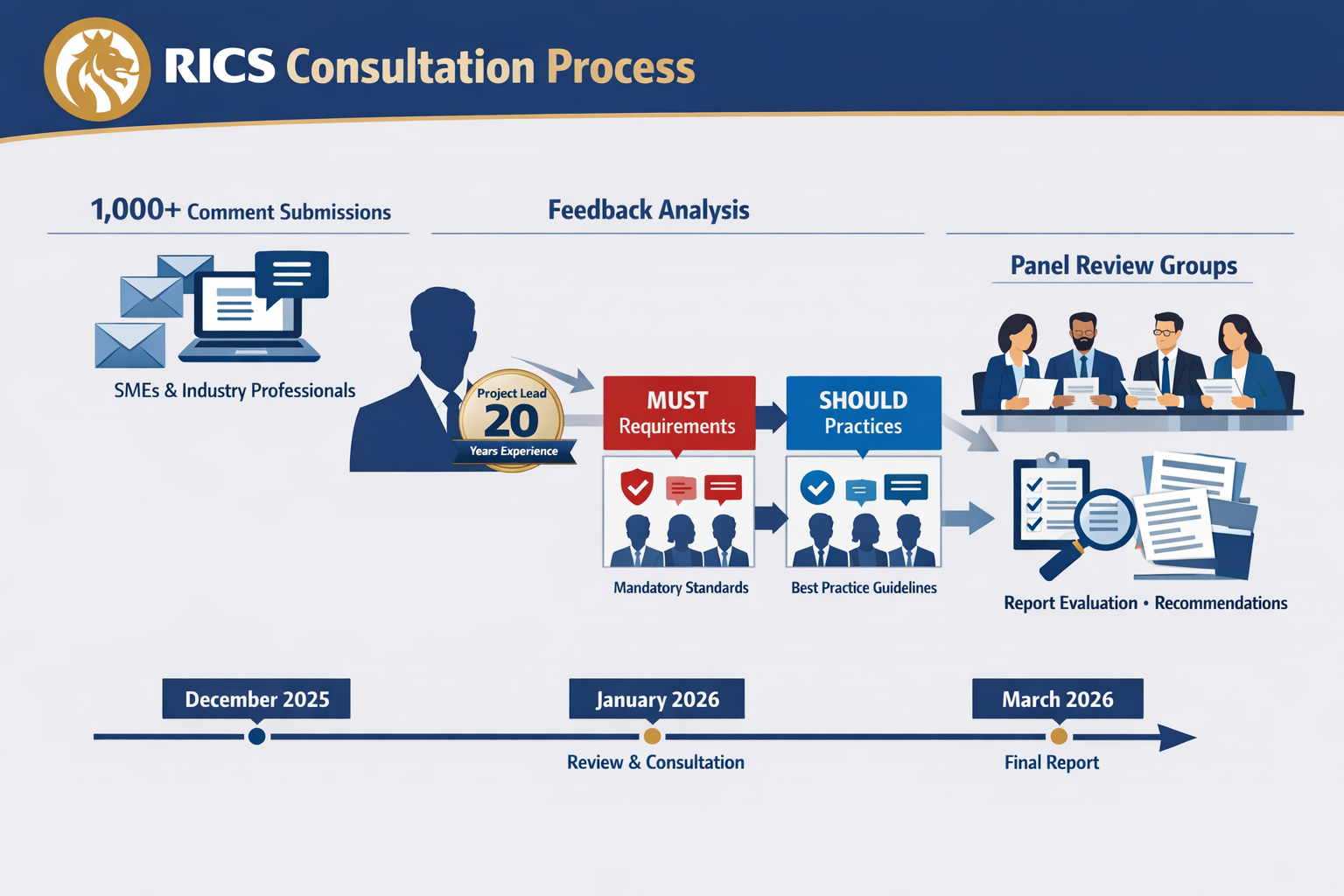
The consultation phase for the updated standards received over 1,000 comments from industry members—an extraordinary level of engagement that underscores the standards' significance[1]. This feedback came from diverse stakeholders across the surveying profession, with particularly strong participation from small and medium-sized enterprises (SMEs).
The volume and depth of responses demonstrate several important realities:
Primary themes emerging from consultation feedback:
-
Clarity Requirements: Respondents consistently emphasized the need for the updated standard to be clearer and more concise, indicating previous drafts were overly complex[1]
-
Practical Application: Surveyors sought guidance that translates directly into daily practice without creating unnecessary administrative burden
-
Competitive Concerns: Practitioners expressed the need to maintain competitiveness while adhering to professional standards
-
Technology Integration: Many comments addressed how emerging technologies should be incorporated into survey practices
-
ESG Considerations: Growing recognition that environmental, social, and governance factors must be integrated into property assessments
The consultation process reflects RICS's commitment to member-led standard development, ensuring the final framework serves both professional excellence and practical application needs.
Leadership and Expert Oversight
Recognizing the complexity and importance of the standards review, RICS appointed a dedicated project lead with 20 years of experience as a Chartered Surveyor and a background running an RICS-regulated practice. This appointment, made in December 2025, brought critical practical expertise to guide the standard through its review phase[1].
The leadership approach emphasizes:
- Practitioner Perspective: Drawing on real-world experience managing a surveying practice
- Regulatory Understanding: Deep knowledge of compliance requirements and practical implementation challenges
- Member Focus: Commitment to developing standards that serve the profession's needs
Beyond individual leadership, the review process involves multiple review stages including:
✅ Member-led professional panel groups comprising experts and practitioners
✅ Specialist boards providing technical oversight
✅ Regulatory approval processes ensuring standards meet governance requirements
✅ Transparency mechanisms including a Basis for Conclusions document explaining how feedback was addressed[1]
Line-by-Line Analysis: Going Beyond Surface Feedback
The review methodology demonstrates RICS's commitment to thorough, thoughtful standard development. Rather than superficial responses to consultation comments, the review team is conducting meticulous examination of all 1,000+ comments, with each comment analyzed for underlying concerns and broader implications[1].
This rigorous approach involves:
Deep Analysis Process:
- 🔍 Identifying patterns and themes across multiple comments
- 📊 Assessing the practical implications of suggested changes
- ⚖️ Balancing competing interests and perspectives
- 🎯 Distinguishing between fundamental concerns and minor technical points
- 📝 Documenting rationale for decisions in the Basis for Conclusions
This analytical depth ensures the final standards reflect genuine industry needs rather than simply incorporating every suggestion. The process recognizes that effective standards require careful judgment about which feedback addresses core issues versus peripheral concerns.
For surveyors conducting specific defect reports, the clarity resulting from this thorough review process will provide better guidance on scope, methodology, and reporting requirements.
Key Updates in RICS Home Survey Standards 2026: Strengthening Building Surveys for Tentative Market Recovery
The revised standards incorporate several significant updates designed to enhance survey quality, clarify requirements, and align professional practice with evolving market needs.
Mandatory vs. Recommended: Clarifying Requirements
One of the most critical focuses of the 2026 revision involves establishing clear distinctions between mandatory requirements ('musts') and recommended practices ('shoulds')[1]. This clarification addresses concerns that surveyors need to maintain competitiveness while following professional standards.
The distinction matters because:
Mandatory Requirements ('Musts'):
- Represent minimum professional standards that all RICS members must follow
- Form the basis for regulatory compliance and disciplinary processes
- Ensure consistent baseline quality across all surveys
- Protect consumer interests through non-negotiable standards
Recommended Practices ('Shoulds'):
- Represent best practices that enhance survey quality
- Provide flexibility for surveyors to apply professional judgment
- Allow differentiation based on property characteristics and client needs
- Enable competitive positioning while maintaining professional standards
This framework allows surveyors to understand precisely which elements are non-negotiable versus where they can exercise professional discretion. For practitioners offering building surveyor services, this clarity reduces compliance uncertainty while preserving room for professional expertise.
ESG Integration: Environmental, Social, and Governance Factors
The updated standards include a clear, practical framework for how environmental, social and governance (ESG) factors should be reflected in property assessments[1]. This represents a significant evolution in survey practice, acknowledging that property value and condition must be evaluated through sustainability lenses.
ESG Integration Components:
🌱 Environmental Factors:
- Energy efficiency and thermal performance
- Carbon footprint considerations
- Renewable energy installations
- Flood risk and climate resilience
- Materials sustainability and embodied carbon
👥 Social Factors:
- Accessibility and universal design
- Community integration and local amenities
- Health and wellbeing considerations
- Safety and security features
⚖️ Governance Factors:
- Building regulation compliance
- Planning permission adherence
- Lease terms and management quality
- Legal and regulatory risks
This ESG framework doesn't just reflect environmental consciousness—it responds to concrete market realities. Buyers in 2026 increasingly prioritize sustainability, lenders consider climate risks in lending decisions, and regulatory requirements around energy efficiency continue to tighten.
When conducting a roof survey in London, for example, surveyors now assess not just structural condition but also solar panel suitability, insulation performance, and climate resilience—factors directly relevant to property value and long-term viability.
Technology and Innovation in Survey Practice
While specific technological requirements continue to evolve, the 2026 standards acknowledge the growing role of technology in survey practice. The RICS Member App launched in February 2026 exemplifies this technological evolution, designed to enhance member value and transform how members interact with RICS[1].
Technology considerations in updated standards:
📱 Digital Tools:
- Thermal imaging cameras for identifying heat loss and moisture issues
- Laser measuring devices for accurate dimensional surveys
- Moisture meters and electronic detection equipment
- Digital photography and documentation systems
🚁 Advanced Inspection Methods:
- Drone technology for drone roof surveys in London and other hard-to-access areas
- 3D scanning and modeling capabilities
- Remote sensing technologies
💻 Reporting and Communication:
- Digital report formats with enhanced visualization
- Interactive elements allowing clients to explore findings
- Cloud-based platforms for secure document sharing
- Mobile-optimized delivery for on-the-go access
The standards balance encouraging innovation with ensuring technology enhances rather than replaces professional judgment. A surveyor using advanced equipment must still apply expertise in interpreting findings and providing meaningful advice.
Competence and Continuing Professional Development
The 2026 standards emphasize ongoing competence requirements, recognizing that professional expertise requires continuous development. This focus becomes particularly important as survey practice evolves to incorporate new technologies, assessment criteria, and market conditions.
Competence framework elements:
✅ Technical knowledge of construction, materials, and building pathology
✅ Understanding of legal and regulatory requirements
✅ Assessment skills including inspection techniques and defect diagnosis
✅ Communication abilities for clear, accessible reporting
✅ Professional ethics and client care standards
✅ Emerging areas including ESG factors and sustainability assessment
For surveyors determining what survey you need for a particular property, these competence requirements ensure they can provide informed guidance matching survey type to property characteristics and client needs.
Market Context: Tentative Recovery and Survey Demand
The timing of the RICS Home Survey Standards 2026: Strengthening Building Surveys for Tentative Market Recovery initiative aligns with significant shifts in the UK residential property market.
UK Residential Market Indicators for 2026
According to the RICS UK Residential Market Survey for January 2026, the residential property market is showing tentative signs it may be turning a corner[1]. After extended periods of uncertainty and declining activity, several indicators suggest improving conditions:
Key Market Metrics:
📈 Buyer Enquiry Balances:
- Shifting from deeply negative positions (approximately -15%) toward positive territory
- Indicates growing buyer confidence and market engagement
- Reflects improving economic conditions and stabilizing interest rate expectations
🏘️ Transaction Activity:
- Gradual increase in completed sales
- Shorter time-to-sale periods in many markets
- Growing inventory of available properties
💷 Price Dynamics:
- Stabilization after previous declines in many regions
- Selective price growth in high-demand areas
- Continued price sensitivity among buyers
🔮 Forward-Looking Sentiment:
- Improved expectations for future market conditions
- Growing optimism among estate agents and surveyors
- Cautious but positive outlook from lenders
This market context creates specific demands for survey services. As transaction volumes increase, buyers need reliable property assessments to make confident purchase decisions. The quality and consistency of surveys directly impacts market liquidity and buyer confidence.
How Updated Standards Support Market Recovery
The RICS Home Survey Standards 2026: Strengthening Building Surveys for Tentative Market Recovery initiative supports market recovery through several mechanisms:
1. Enhanced Buyer Confidence
Clear, comprehensive survey standards give buyers confidence that property assessments meet rigorous professional requirements. In a recovering market where buyers may be cautious after previous downturns, this assurance proves particularly valuable.
2. Lender Trust
Mortgage lenders rely on survey quality when making lending decisions. Robust standards ensure lenders can trust survey findings, facilitating smoother mortgage approval processes and supporting transaction completion.
3. Professional Consistency
Standardized approaches ensure buyers receive comparable quality regardless of which surveyor they engage. This consistency reduces market friction and supports efficient property transactions.
4. Value Transparency
Detailed survey requirements help ensure property defects and conditions are properly identified and reported, reducing post-purchase disputes and supporting realistic pricing.
5. Future-Proofing Assessments
ESG integration ensures surveys address factors increasingly important to property value, including energy efficiency and climate resilience—considerations that will only grow more significant as the market evolves.
For buyers considering properties requiring snagging reports in London, particularly new-build developments, updated standards provide clearer frameworks for identifying construction defects and ensuring quality delivery.
Regional Variations and Local Market Dynamics
While RICS standards apply UK-wide, their implementation occurs within diverse regional markets experiencing varying recovery trajectories. The 2026 market shows significant regional variation:
Regional Market Characteristics:
🌆 London and South East:
- Higher price points creating greater survey scrutiny
- Complex property types requiring specialized expertise
- Strong demand for comprehensive Level 3 surveys
- Particular focus on ESG factors and future value protection
🏘️ Regional Cities:
- Growing buyer activity in urban regeneration areas
- Mixed property stock requiring varied survey approaches
- Increasing focus on value for money
- Growing demand for energy efficiency assessments
🌳 Rural and Suburban Markets:
- Diverse property types including period properties and conversions
- Specific challenges around septic systems, private water supplies, and boundary issues
- Importance of land and outbuilding assessments
- Focus on property condition given often older housing stock
The updated standards provide flexible frameworks that accommodate these regional variations while maintaining consistent professional quality. Whether conducting surveys in Central London or chartered surveyor services in Surrey, practitioners apply the same rigorous standards adapted to local property characteristics.
Practical Implications for Surveyors and Property Professionals
The updated standards create concrete implications for surveying practice, requiring adjustments to processes, documentation, and professional development.
Changes to Survey Methodology and Reporting
The 2026 standards revision will likely impact how surveyors conduct inspections and prepare reports:
Inspection Process Updates:
🔍 Systematic Approach:
- Clearer guidance on inspection sequences and coverage requirements
- Specific protocols for documenting limitations and inaccessible areas
- Enhanced requirements for photographic documentation
- Integration of technology-assisted inspection methods
📊 ESG Assessment Integration:
- Protocols for evaluating energy efficiency and environmental performance
- Frameworks for assessing climate resilience and sustainability features
- Guidance on reporting renewable energy installations and potential
- Consideration of social factors including accessibility and community context
⚠️ Risk Communication:
- Enhanced clarity on describing defect severity and urgency
- Improved frameworks for explaining repair cost implications
- Better guidance on distinguishing observations from recommendations
- Clearer protocols for advising when specialist investigations are needed
Reporting Enhancements:
The standards emphasize clear, accessible communication that non-technical clients can understand while maintaining professional rigor. Reports should:
✅ Use plain language explanations alongside technical terminology
✅ Provide visual aids including photographs, diagrams, and illustrations
✅ Clearly distinguish between different severity levels of defects
✅ Offer practical guidance on next steps and recommended actions
✅ Include ESG considerations in accessible formats
For surveyors preparing valuation reports in London, these reporting enhancements ensure clients receive information they can readily understand and act upon.
Professional Development and Training Requirements
The updated standards create specific professional development needs for practicing surveyors:
Priority Training Areas:
📚 ESG and Sustainability:
- Understanding environmental assessment methodologies
- Energy efficiency evaluation techniques
- Climate risk assessment frameworks
- Renewable energy technology knowledge
🔧 Technology Competence:
- Thermal imaging interpretation
- Drone operation and aerial photography analysis
- Digital measurement tools and 3D scanning
- Report software and digital delivery platforms
📖 Regulatory Updates:
- Building regulation changes affecting property assessment
- Planning policy evolution
- Energy performance requirements
- Safety standards including fire safety post-Grenfell
🗣️ Communication Skills:
- Plain language reporting techniques
- Client consultation and expectation management
- Explaining technical findings to non-technical audiences
- Digital communication and remote client engagement
RICS's commitment to member support, exemplified by the February 2026 launch of the RICS Member App, provides platforms for accessing training resources, guidance updates, and professional development opportunities[1].
Impact on Survey Costs and Service Delivery
The enhanced requirements in the 2026 standards may influence survey pricing and delivery timelines:
Cost Considerations:
The integration of ESG assessments, enhanced technology use, and more comprehensive reporting may increase survey costs. However, these increases reflect genuine value additions:
💰 Value Justification:
- More comprehensive property assessment reducing post-purchase surprises
- ESG evaluations informing long-term value and running costs
- Technology-enhanced inspections accessing previously difficult areas
- Clearer reporting reducing need for follow-up clarifications
⏱️ Delivery Timelines:
- More thorough inspections may require additional on-site time
- Enhanced reporting requirements may extend report preparation periods
- Technology integration may actually accelerate some aspects through efficiency gains
- Digital delivery platforms can speed report distribution
Service Differentiation:
The clearer distinction between mandatory and recommended practices allows surveyors to offer tiered service levels:
- Standard Service: Meeting all mandatory requirements with core recommended practices
- Enhanced Service: Incorporating additional recommended practices and advanced technologies
- Premium Service: Comprehensive assessment with cutting-edge technology and detailed ESG analysis
This tiering allows clients to select service levels matching their needs and budgets while ensuring all options meet professional standards.
Implementation Timeline and Next Steps
RICS has committed to a transparent, phased approach to finalizing and implementing the updated standards.
March 2026 Progress Update
RICS committed to sharing an update on progress and next steps by the end of March 2026[1]. This update will provide:
📅 Timeline Clarification:
- Revised publication date for the final standard
- Implementation timeline and transition periods
- Training and support resource availability
📋 Content Preview:
- Key changes from consultation draft to final version
- How major consultation themes were addressed
- Outstanding issues requiring further consideration
🤝 Engagement Opportunities:
- Additional consultation or feedback mechanisms if needed
- Preview sessions for members to understand changes
- Q&A forums addressing implementation questions
Future Review Phases and Approval Process
Following the current analysis phase, the standard will undergo multiple review phases before final approval[1]:
Review Stage Sequence:
1️⃣ Professional Panel Review:
- Member-led groups comprising experts and practitioners
- Technical assessment of proposed standard elements
- Practical application testing and feedback
2️⃣ Board Review:
- Specialist boards providing governance oversight
- Alignment with broader RICS strategic objectives
- Regulatory compliance verification
3️⃣ Regulatory Approval:
- Final approval processes ensuring standards meet governance requirements
- Legal review of mandatory requirements
- Publication preparation
4️⃣ Basis for Conclusions:
- Comprehensive document summarizing consultation responses
- Explanation of how concerns were addressed
- Rationale for key decisions and changes[1]
This multi-stage process ensures the final standards reflect thorough consideration of industry input while maintaining professional rigor and regulatory compliance.
Preparing for Implementation
Surveyors and firms can take proactive steps to prepare for the updated standards:
Preparation Checklist:
✅ Review Current Practices:
- Audit existing survey methodologies against known proposed changes
- Identify gaps between current practice and likely new requirements
- Assess technology capabilities and potential upgrade needs
✅ Professional Development:
- Pursue training in ESG assessment methodologies
- Develop competence in emerging technologies
- Enhance communication and reporting skills
✅ Process Documentation:
- Document current survey processes and quality control procedures
- Prepare templates and checklists aligned with new requirements
- Develop systems for tracking compliance with mandatory elements
✅ Client Communication:
- Prepare to explain standard changes and their benefits to clients
- Develop materials illustrating enhanced value from updated approaches
- Update marketing materials reflecting commitment to latest standards
✅ Resource Planning:
- Assess staffing needs for enhanced survey requirements
- Budget for technology investments and training
- Plan timeline adjustments for more comprehensive assessments
For firms offering commercial property surveyor services in London alongside residential work, many of these preparation steps apply across service lines, creating efficiency opportunities.
The Broader Context: RICS Standards Evolution
The Home Survey Standards update fits within RICS's broader commitment to evolving professional standards across all practice areas.
Integration with Other RICS Standards
The RICS Home Survey Standards 2026: Strengthening Building Surveys for Tentative Market Recovery initiative connects with numerous other RICS standards and guidance:
Related Standards Framework:
🏗️ Building Surveying Standards:
- Standards for schedule of condition reports used in lease contexts
- Guidance on dilapidation surveys in London and commercial contexts
- Protocols for specialist investigations and defect analysis
💷 Valuation Standards:
- Red Book valuation requirements for RICS valuations
- Integration between survey findings and valuation advice
- ESG considerations in property valuation
🏘️ Residential Property Standards:
- Standards for probate valuations in London
- Requirements for matrimonial valuations
- Guidance on lease extension and enfranchisement valuations
This integrated standards framework ensures consistency across RICS professional guidance, with updates in one area informing developments in related practice areas.
International Perspective and Best Practices
While RICS Home Survey Standards specifically address UK residential property surveys, RICS operates globally, and the organization draws on international best practices in developing standards.
Global Influences:
🌍 International Standards:
- Alignment with International Valuation Standards (IVS)
- Incorporation of global ESG frameworks
- Technology adoption lessons from international markets
🇺🇸 Comparative Approaches:
- Examination of standards like ALTA/NSPS Land Title Survey Standards in the US[2][3]
- Analysis of inspection protocols from other jurisdictions
- Technology integration approaches from advanced markets
🇪🇺 European Practices:
- Energy performance assessment methodologies
- Sustainability certification frameworks
- Consumer protection standards
This international perspective enriches UK standards development while ensuring approaches remain appropriate for the UK market context and regulatory environment.
Member Support and Resources
RICS provides extensive support to help members understand and implement updated standards:
Support Mechanisms:
📱 RICS Member App:
- Launched February 2026 to enhance member value[1]
- Access to standards, guidance, and updates
- Professional development resources and tracking
- Community forums and expert advice
📚 Guidance Documents:
- Practice notes explaining standard application
- Case studies illustrating compliant approaches
- Templates and checklists supporting implementation
🎓 Training Programs:
- CPD courses on standard requirements
- Technology training for enhanced survey methods
- ESG assessment workshops
- Communication and reporting skills development
💬 Helplines and Support:
- Technical helplines for standards queries
- Practice support for implementation questions
- Regulatory guidance on compliance requirements
These resources ensure members can successfully transition to updated standards while maintaining service quality and professional confidence.
Challenges and Opportunities
The standards update creates both challenges and opportunities for the surveying profession and property market participants.
Balancing Rigor with Practicality
One of the central tensions in standards development involves balancing professional rigor with practical application:
The Challenge:
Standards must be sufficiently rigorous to ensure quality and protect consumers, yet practical enough for efficient implementation across diverse practice contexts. The consultation feedback emphasizing the need for clearer and more concise requirements[1] reflects this tension.
The Opportunity:
Well-crafted standards that successfully balance these considerations create competitive advantages:
✨ For Surveyors:
- Clear requirements reduce compliance uncertainty
- Practical guidance enables efficient, confident practice
- Distinction between mandatory and recommended elements allows service differentiation
✨ For Clients:
- Assurance of minimum quality standards
- Ability to select enhanced services when desired
- Clearer understanding of what surveys include
✨ For the Market:
- Enhanced transaction efficiency through reliable assessments
- Reduced post-purchase disputes from inadequate surveys
- Improved market confidence supporting activity levels
Technology Integration and Traditional Expertise
The integration of technology into survey practice presents both opportunities and challenges:
Opportunities:
🚀 Enhanced Capabilities:
- Access to previously difficult areas through drone technology
- More accurate measurements through laser and 3D scanning
- Better defect identification through thermal imaging
- Improved client communication through digital reporting
Challenges:
⚠️ Implementation Barriers:
- Technology investment costs for smaller practices
- Training requirements for new equipment and techniques
- Ensuring technology enhances rather than replaces professional judgment
- Maintaining personal inspection primacy over remote assessment
The standards must encourage beneficial technology adoption while ensuring core professional skills remain central to survey practice. A drone roof survey in London provides valuable supplementary information, but doesn't replace the surveyor's expertise in interpreting findings and advising clients.
ESG Integration: From Compliance to Value Creation
The incorporation of ESG factors represents a paradigm shift in property assessment:
The Transformation:
Environmental, social, and governance considerations move from peripheral concerns to central assessment elements. This transformation creates:
Opportunities:
🌱 Enhanced Value Proposition:
- Surveys provide forward-looking insights beyond current condition
- ESG assessments inform long-term ownership costs and value
- Sustainability evaluations align with buyer priorities
- Climate resilience considerations protect investment value
Challenges:
📊 Competence Development:
- Surveyors must develop expertise in environmental assessment
- Understanding energy systems and renewable technologies
- Evaluating climate risks and adaptation measures
- Communicating ESG findings in accessible ways
Market Impact:
The ESG integration in the RICS Home Survey Standards 2026: Strengthening Building Surveys for Tentative Market Recovery initiative positions surveys as strategic decision-making tools rather than merely technical compliance exercises. This elevation enhances the profession's value proposition and market relevance.
Case Studies: Standards in Practice

Examining how updated standards apply to specific property scenarios illustrates their practical implications.
Case Study 1: Victorian Terraced House in London
Property Profile:
- Three-bedroom Victorian terraced house in South London
- Built circa 1890, typical construction for the period
- Previous extensions and alterations
- Buyer seeking Level 3 Building Survey
Standards Application:
Under the updated 2026 standards, the surveyor would:
🏠 Comprehensive Structural Assessment:
- Detailed examination of original construction and later modifications
- Assessment of foundation movement and settlement patterns
- Evaluation of roof condition and rainwater disposal
- Investigation of damp issues common in period properties
🌱 ESG Integration:
- Energy efficiency evaluation including single-glazed windows and solid wall construction
- Assessment of improvement potential (insulation, glazing, heating system upgrades)
- Carbon footprint considerations and reduction opportunities
- Period property conservation versus sustainability balance
📋 Enhanced Reporting:
- Clear prioritization of defects by urgency and significance
- Cost implications for major repair items
- Guidance on phased improvement approach
- ESG improvement roadmap with estimated costs and benefits
This comprehensive approach, guided by updated standards, provides the buyer with thorough information for purchase decision-making and future planning. For similar properties requiring detailed assessment, a structural survey in London delivers this level of comprehensive evaluation.
Case Study 2: New-Build Apartment Development
Property Profile:
- Two-bedroom apartment in new development
- Recently completed construction
- Buyer seeking assurance of build quality
- Level 2 HomeBuyer Report requested
Standards Application:
The 2026 standards guide the surveyor to:
🔍 New-Build Specific Assessment:
- Evaluation of construction quality and workmanship
- Identification of snagging items requiring developer rectification
- Assessment of building services and installations
- Review of warranty coverage and developer obligations
🌍 ESG Considerations:
- Verification of energy performance certificate accuracy
- Assessment of sustainable design features
- Evaluation of building management and governance arrangements
- Social factors including accessibility and community facilities
📝 Clear Reporting:
- Distinction between minor snagging and significant defects
- Guidance on developer rectification processes
- Assessment of long-term maintenance considerations
- Service charge and building management evaluation
For new-build properties, specialized snagging reports in London complement standard surveys by providing detailed construction quality assessment.
Case Study 3: Rural Cottage with Land
Property Profile:
- Detached cottage in rural setting
- Mixed construction periods and materials
- Outbuildings and approximately one acre of land
- Septic tank drainage and private water supply
- Level 3 Building Survey required
Standards Application:
Updated standards ensure comprehensive coverage of:
🏡 Complex Property Assessment:
- Main dwelling structural condition across different construction periods
- Outbuilding condition and potential uses
- Land boundaries, drainage, and access rights
- Utility systems including septic tank and water supply
🌳 Environmental Considerations:
- Flood risk assessment given rural location
- Septic system environmental compliance
- Renewable energy potential (solar, ground source heat)
- Biodiversity and ecological considerations
⚖️ Governance Factors:
- Planning permission history for alterations
- Building regulation compliance verification
- Rights of way and access arrangements
- Restrictive covenants and legal considerations
This comprehensive approach ensures buyers understand the full scope of rural property ownership, including unique challenges and opportunities that differ significantly from urban properties.
Looking Ahead: The Future of Residential Surveys
The RICS Home Survey Standards 2026: Strengthening Building Surveys for Tentative Market Recovery initiative represents not just current best practice but a foundation for future evolution.
Emerging Trends Shaping Survey Practice
Several trends will continue influencing how residential surveys develop:
Technology Evolution:
🤖 Artificial Intelligence:
- AI-assisted defect identification from photographs
- Predictive analytics for maintenance forecasting
- Automated report generation with human oversight
- Pattern recognition across large datasets
📊 Data Integration:
- Integration with property databases and historical records
- Climate risk data incorporation
- Energy performance modeling
- Market value analytics
Regulatory Developments:
📜 Evolving Requirements:
- Strengthening energy efficiency standards
- Enhanced fire safety requirements post-Grenfell
- Building safety regulations for higher-risk buildings
- Climate adaptation and resilience mandates
Market Dynamics:
🏘️ Changing Buyer Priorities:
- Increased focus on running costs and sustainability
- Greater emphasis on home office and flexible space
- Community and location factors gaining prominence
- Health and wellbeing considerations
Continuous Improvement and Review Cycles
RICS's commitment to regular standards review ensures ongoing relevance:
Review Framework:
The organization maintains systematic processes for:
🔄 Periodic Review:
- Regular assessment cycles for all standards
- Monitoring of market changes and emerging issues
- Technology advancement tracking
- Regulatory environment scanning
💬 Ongoing Consultation:
- Continuous engagement with members and stakeholders
- Feedback mechanisms for practical implementation experiences
- Advisory groups providing specialist expertise
- International collaboration and best practice sharing
📈 Evidence-Based Development:
- Research into survey quality and outcomes
- Analysis of consumer complaints and issues
- Market impact assessment
- Professional competence evaluation
This continuous improvement approach ensures standards evolve with market needs rather than becoming outdated between major revisions.
Professional Identity and Value Proposition
The updated standards reinforce the surveying profession's essential role in property transactions:
Value Proposition Enhancement:
✨ Trusted Advisors:
- Independent, professional assessment
- Technical expertise translating complex issues
- Client-focused communication
- Ethical practice and professional standards
🎯 Market Facilitators:
- Enabling informed purchase decisions
- Supporting efficient transactions
- Reducing post-purchase disputes
- Enhancing market confidence
🌍 Sustainability Champions:
- Guiding property improvement for environmental performance
- Identifying climate risks and resilience measures
- Supporting net-zero transition
- Balancing heritage conservation with sustainability
As the property market continues its tentative recovery in 2026, these professional contributions become increasingly valuable, positioning surveyors as essential partners in property transactions and ownership.
Conclusion
The RICS Home Survey Standards 2026: Strengthening Building Surveys for Tentative Market Recovery initiative represents a pivotal moment for the surveying profession and the UK residential property market. With over 1,000 consultation comments reflecting unprecedented industry engagement, the updated standards demonstrate RICS's commitment to member-led, evidence-based professional development.
As the UK property market shows tentative recovery signs—with buyer enquiry balances improving from deeply negative positions toward positive territory—the timing of these standards updates proves particularly significant. Enhanced survey quality, clearer requirements, and integrated ESG considerations directly support market recovery by building buyer confidence, ensuring lender trust, and providing the reliable property assessments essential for efficient transactions.
The key improvements emerging from the review process address fundamental industry needs:
✅ Clarity and Conciseness: Distinguishing mandatory requirements from recommended practices
✅ ESG Integration: Practical frameworks for environmental, social, and governance assessment
✅ Technology Enablement: Supporting beneficial technology adoption while maintaining professional judgment primacy
✅ Enhanced Communication: Ensuring reports are accessible to non-technical clients while maintaining professional rigor
✅ Competence Focus: Emphasizing ongoing professional development for evolving practice requirements
Actionable Next Steps
For Surveyors:
- Stay Informed: Monitor RICS communications for the March 2026 progress update and subsequent implementation guidance
- Assess Readiness: Audit current practices against known proposed changes and identify preparation needs
- Invest in Development: Pursue training in ESG assessment, technology applications, and enhanced communication
- Engage with RICS: Participate in implementation forums, utilize the RICS Member App, and seek guidance on specific questions
- Update Processes: Begin adapting survey methodologies, reporting templates, and quality control procedures
For Property Buyers:
- Understand Survey Options: Learn about different survey levels and select appropriate types for specific properties using resources like what survey do you need
- Engage Qualified Professionals: Select RICS-qualified surveyors committed to professional standards
- Ask Questions: Discuss survey scope, ESG considerations, and specific property concerns with your surveyor
- Act on Findings: Use survey information to inform purchase decisions, negotiate prices, and plan property improvements
- Consider Long-Term Value: Evaluate properties through ESG lenses considering running costs, sustainability, and climate resilience
For Industry Stakeholders:
- Support Standards Implementation: Lenders, estate agents, and legal professionals should understand and support updated standards
- Communicate Value: Help clients appreciate the importance of quality surveys in property transactions
- Collaborate Effectively: Work with surveyors to ensure smooth transaction processes
- Provide Feedback: Share practical experiences with standards implementation to inform future refinements
The RICS Home Survey Standards 2026: Strengthening Building Surveys for Tentative Market Recovery initiative positions the surveying profession to meet evolving market needs while maintaining the highest professional standards. As the UK property market navigates its tentative recovery, these enhanced standards provide the foundation for confident transactions, informed decisions, and sustainable property ownership.
The journey from consultation through implementation demonstrates RICS's commitment to transparent, member-led professional development. With clear timelines, rigorous review processes, and comprehensive support mechanisms, the organization ensures surveyors can successfully transition to updated standards while continuing to deliver exceptional service to clients and support efficient property markets.
As we move through 2026, the surveying profession stands ready to meet market recovery challenges with enhanced capabilities, clearer guidance, and renewed commitment to professional excellence. The updated standards represent not just regulatory requirements but a shared vision for surveying's essential role in property transactions and the built environment's sustainable future.
References
[1] Home Survey Standard 2nd Edition A Progress Update – https://www.rics.org/news-insights/home-survey-standard-2nd-edition-a-progress-update
[2] Alta Nsps Land Title Surveys 2026 Standards – https://cretelligent.com/alta-nsps-land-title-surveys-2026-standards/
[3] Five Key Updates 2026 Altansps Land Title Survey Standards – https://westwoodps.com/recent-blog-posts/five-key-updates-2026-altansps-land-title-survey-standards
[4] Rics Publishes Progress Update On Home Survey Standard Review – https://www.lexisnexis.co.uk/legal/news/rics-publishes-progress-update-on-home-survey-standard-review
[5] Home Survey Standards – https://www.rics.org/profession-standards/rics-standards-and-guidance/sector-standards/building-surveying-standards/home-surveys/home-survey-standards
[6] Rics Monitor Why 2026 Is A Market Of Specific Opportunities – https://www.commercialsearch.com/news/rics-monitor-why-2026-is-a-market-of-specific-opportunities/
[7] 2026 Alta Nsps Land Title Survey Updates What Surveyors And Clients Must Know Before The February Deadline – https://nottinghillsurveyors.com/blog/2026-alta-nsps-land-title-survey-updates-what-surveyors-and-clients-must-know-before-the-february-deadline
[8] Latest News – https://www.rics.org/news-insights/latest-news