
Semi Detached Party Wall: The Complete Guide for UK Homeowners in 2025
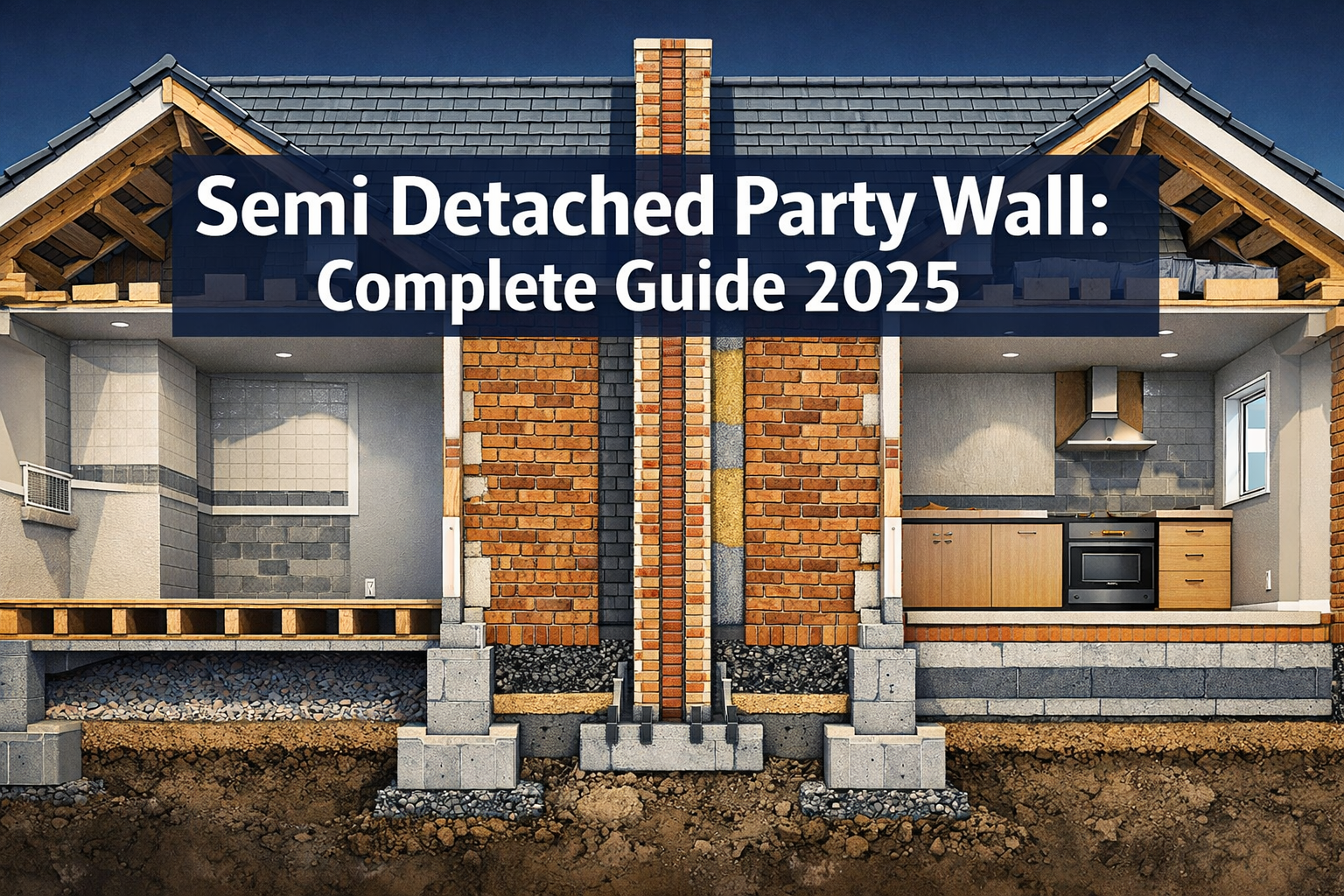
Imagine discovering that the wall you share with your neighbor isn’t just a simple divider—it’s a complex legal and structural entity that could significantly impact your next home improvement project. The semi detached party wall represents one of the most misunderstood yet crucial elements of property ownership in the UK, affecting millions of homeowners who live in semi-detached properties. Whether you’re planning a loft conversion, considering an extension, or simply want to understand your rights and responsibilities, navigating the complexities of party walls requires expert knowledge and careful attention to legal requirements.
Key Takeaways
- 🏠 A semi detached party wall is a shared structural wall that extends from foundation to roof, separating two independent properties and requiring special legal consideration for any building work
- 📋 The Party Wall Act 1996 mandates that homeowners serve formal notices at least two months before starting work that affects the shared wall in England and Wales
- 🔨 Common projects requiring party wall agreements include loft conversions, extensions, underpinning, and inserting damp proof courses
- 🤝 Both property owners share equal rights over the entire party wall structure, meaning neither can make unilateral decisions about alterations or demolition
- 💰 Professional party wall surveyors are essential for ensuring compliance, preventing disputes, and protecting your investment during building projects
What Is a Semi Detached Party Wall?
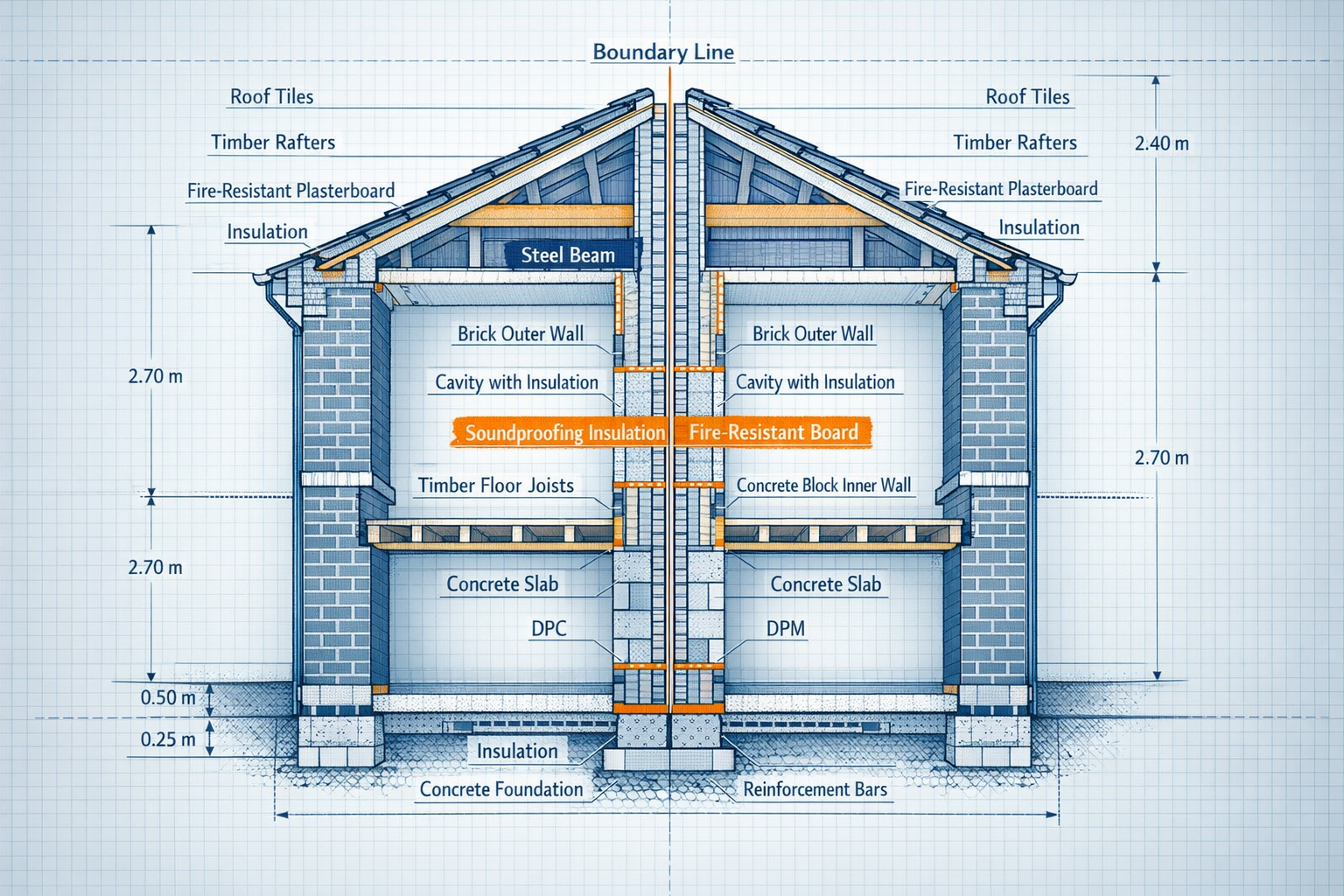
A semi detached party wall is the defining structural feature that separates two independent dwelling units built as a pair. Unlike detached houses that stand alone or terraced properties that share walls on both sides, semi-detached homes share exactly one common wall with their neighboring property. This shared wall, known as the party wall, extends the full length of the building from the foundation through to the roof structure.
Structural Characteristics
The construction of a semi detached party wall differs significantly from standard interior walls. These walls are built to much higher specifications to serve multiple critical functions:
Key structural features include:
- Full-height construction extending from below ground level to the roof apex
- Enhanced thickness typically 225mm or greater for improved sound insulation
- Fire-resistant materials providing at least 60 minutes of fire protection
- Acoustic insulation to maintain privacy between households
- Load-bearing capacity supporting roof structures and upper floors
- Weather-resistant construction where the wall extends beyond the building envelope
The party wall sits astride the boundary line that divides the two properties, with ownership shared equally between both homeowners. This shared ownership creates unique legal obligations and rights that don’t exist with other types of walls.
Types of Party Walls in Semi Detached Properties
Under the Party Wall Act 1996, party walls are classified into specific categories. For semi-detached houses, the most common classification is Type A, which describes a wall that:
✅ Sits directly on the boundary between two properties
✅ Forms part of a building structure
✅ Is owned by different property owners on each side
✅ Separates buildings or parts of buildings
Understanding this classification is essential because it determines which legal procedures apply when planning building work. Professional party wall surveyors can help identify the exact type of party wall structure in your property and advise on the appropriate legal framework.
Understanding the Party Wall Act 1996 for Semi Detached Properties
The Party Wall Act 1996 provides the legal framework governing work on shared walls in England and Wales. This legislation was introduced to prevent disputes between neighbors and establish clear procedures for building work that might affect party structures. For semi-detached homeowners, understanding this Act is not optional—it’s a legal requirement that carries significant consequences if ignored.
When Does the Act Apply?
The Party Wall Act applies to semi detached properties in three specific scenarios:
- Building work directly on the party wall – This includes cutting into the wall, removing chimney breasts, inserting damp proof courses, or raising the wall height
- Building a new wall on or astride the boundary line – Relevant when constructing extensions that connect to the existing party wall
- Excavation within specified distances – Digging foundations within 3 meters (if deeper than the neighbor’s foundations) or within 6 meters (if excavating below a 45-degree angle from the neighbor’s foundation base)
“The Party Wall Act exists to protect both building owners and their neighbors, ensuring that necessary work can proceed while safeguarding everyone’s property rights and interests.”
Geographic Limitations
It’s crucial to note that the Party Wall Act 1996 only applies in England and Wales. Property owners in Scotland and Northern Ireland operate under different legal frameworks based on common law principles. If you’re undertaking work on a semi detached property in these regions, you’ll need to consult with local chartered surveyors familiar with the applicable regulations in your area.
The Notice Period Requirement
One of the most important aspects of the Party Wall Act is the mandatory notice period. Homeowners planning work that affects a semi detached party wall must serve formal written notice to their neighbors:
| Type of Work | Minimum Notice Period |
|---|---|
| Work on existing party structures | 2 months before starting |
| New building on/at boundary line | 1 month before starting |
| Excavation near neighbor’s property | 1 month before starting |
Failing to serve proper notice can result in legal injunctions stopping your work, financial penalties, and strained neighbor relations. The notice must be in writing and include specific details about the proposed work, its extent, and the anticipated start date.
Common Building Projects Requiring Party Wall Agreements
Understanding which home improvement projects trigger party wall requirements is essential for semi-detached homeowners. Many common renovations and extensions will require you to follow the Party Wall Act procedures and obtain proper agreements before work begins.
Loft Conversions
Loft conversions are among the most popular home improvements in semi-detached properties, but they frequently involve work that affects the party wall. When converting your loft space, you may need to:
- Cut into the party wall to install steel beams for structural support
- Raise the height of the party wall to accommodate increased headroom
- Insert new joists or structural members into the shared wall
- Remove or modify chimney stacks that form part of the party structure
Each of these activities requires serving a party wall notice and obtaining agreement from your neighbor. Professional advice from party wall specialists can help ensure your loft conversion proceeds smoothly without legal complications.
Extensions and Additional Stories
Building an extension on a semi-detached property almost always involves party wall considerations, particularly when:
🔨 The extension abuts the party wall – Even if you’re not cutting into the wall itself, building against it requires notice
🔨 New foundations are excavated – Digging within 3-6 meters of your neighbor’s foundations triggers the Act
🔨 The extension height affects the party wall – Raising walls or adding stories requires agreement
🔨 Structural connections are made – Attaching new structures to the existing party wall needs consent
Underpinning and Foundation Work
Underpinning involves strengthening the foundations of your property, often necessary when:
- Subsidence or settlement has occurred
- You’re adding significant weight through extensions
- Existing foundations are inadequate for modern standards
- Ground conditions have changed over time
Because underpinning typically involves excavation close to the boundary and potentially beneath the party wall itself, it represents one of the most complex party wall scenarios. A detailed party wall excavation notice must be served, and the work should only proceed under the supervision of qualified professionals.
Damp Proofing and Remedial Work
Inserting a damp proof course (DPC) into a semi detached party wall requires cutting into the masonry to install a moisture barrier. This invasive work clearly falls under the Party Wall Act because it involves:
- Cutting into the party wall structure
- Temporarily weakening the wall during installation
- Potential vibration and disturbance to the neighboring property
- Risk of damage if not executed properly
Similarly, other remedial works such as repointing, removing rendering, or repairing structural cracks in the party wall all require proper notification and agreement.
Internal Alterations Affecting the Party Wall
Not all party wall work is external or structural. Internal renovations can also trigger requirements:
- Removing chimney breasts – Taking out a chimney breast from the party wall requires careful structural consideration and neighbor consent
- Installing soundproofing – While adding party wall insulation is beneficial, fixing battens or frames to the party wall technically requires notice
- Creating new openings – Cutting doorways or hatches through the party wall (though rare in semi-detached properties) absolutely requires formal procedures
The Party Wall Agreement Process: Step-by-Step
Navigating the party wall process can seem daunting, but understanding the clear steps involved makes it manageable. The procedure is designed to be fair to both the building owner (you) and the adjoining owner (your neighbor), with built-in protections for both parties.
Step 1: Determine If the Act Applies
Before serving any notices, confirm that your planned work actually falls under the Party Wall Act. Consult with professional surveyors who can review your plans and advise on legal requirements. This initial consultation can save significant time and expense by clarifying your obligations from the outset.
Step 2: Prepare and Serve the Party Wall Notice
The notice must be in writing and include specific information:
📝 Your details as the building owner
📝 Description of the proposed work with sufficient detail
📝 Planned start date for the work
📝 Drawings or plans showing the extent of work
📝 Statement of the relevant section of the Act being invoked
The notice must be served at least two months before work begins (one month for excavation or new walls). You can deliver it personally, send it by recorded delivery, or have your surveyor serve it on your behalf.
Step 3: Await Your Neighbor’s Response
Once served with a party wall notice, your neighbor has three options:
Option 1: Consent ✅
Your neighbor agrees to the work in writing within 14 days. This is the simplest outcome, though it’s still advisable to have a written record of the consent and potentially a schedule of condition prepared.
Option 2: Dissent ❌
Your neighbor objects or fails to respond within 14 days. This triggers the formal dispute resolution process, requiring the appointment of party wall surveyors.
Option 3: Request Modifications 🔄
Your neighbor may consent with conditions or request changes to the proposed work. Negotiations can occur, but any agreement should be documented formally.
Step 4: Appoint Party Wall Surveyors
If your neighbor dissents (or doesn’t respond), the Act requires the appointment of surveyors to create a Party Wall Award. There are three appointment options:
| Appointment Type | Description | Advantages |
|---|---|---|
| Agreed Surveyor | Single surveyor acting for both parties | Cost-effective, faster process |
| Two Surveyors | Each party appoints their own surveyor | Independent representation for each side |
| Third Surveyor | Appointed by the two party-appointed surveyors | Resolves disputes between surveyors |
An agreed surveyor can be an excellent choice when relations with your neighbor are amicable, as it reduces costs while maintaining impartiality.
Step 5: Pre-Work Condition Survey
Before any work begins, the appointed surveyor(s) will conduct a thorough condition survey of both properties. This documentation is crucial because it:
- Establishes the pre-existing condition of both properties
- Provides photographic and written evidence
- Creates a baseline for assessing any potential damage
- Protects both parties from false claims
- Enables accurate assessment of any damage that may occur
The condition survey should be comprehensive, covering all areas that might be affected by vibration, excavation, or structural work.
Step 6: The Party Wall Award
The surveyor(s) will prepare a formal Party Wall Award, which is a legally binding document that sets out:
🔷 The work that can be carried out
🔷 When and how the work will be executed
🔷 Access rights for inspections
🔷 Working hours and restrictions
🔷 Protection measures required
🔷 How costs will be allocated
The party wall award must be served on both parties and becomes enforceable once issued. Both property owners have the right to appeal to the County Court within 14 days if they disagree with the award.
Step 7: Execute the Work
Once the award is in place, work can proceed according to its terms. Throughout construction:
- Comply with all conditions in the award
- Allow access for surveyor inspections
- Keep your neighbor informed of progress
- Take precautions to minimize disturbance
- Document the work with photographs
Step 8: Post-Work Inspection and Settlement
After completion, the surveyor will conduct a final inspection to assess whether any damage to property has occurred. If damage is identified, the award will specify how it should be remedied and who bears the cost (typically the building owner).
Rights and Responsibilities of Semi Detached Property Owners
Understanding your rights and obligations regarding the semi detached party wall is fundamental to maintaining good neighbor relations and protecting your property investment. The shared nature of this structure creates a unique legal situation where both parties have simultaneous rights and restrictions.
Shared Ownership Principles
Both property owners have equal rights over the entire party wall structure, not just “their half.” This means:
- Neither owner can unilaterally demolish or significantly alter the wall
- Both parties must consent to major changes
- Each owner has the right to use the wall for support
- Maintenance responsibilities are shared
- The wall cannot be removed without mutual agreement
This shared ownership principle is often misunderstood, with homeowners assuming they have complete control over their side of the wall. In reality, the party wall is a jointly owned structure requiring cooperation and legal compliance for any significant work.
The Building Owner’s Responsibilities
When you initiate work that affects the semi detached party wall, you become the “building owner” under the Act, which carries specific obligations:
✅ Serve proper notice in the required timeframe
✅ Pay for the party wall process including surveyor fees (even your neighbor’s surveyor in most cases)
✅ Ensure work complies with the party wall award
✅ Compensate for any damage caused by your building work
✅ Provide access for inspections when reasonably required
✅ Execute work carefully to minimize impact on the adjoining property
The Adjoining Owner’s Rights
As the neighbor (adjoining owner), you have important protections:
🛡️ Right to be notified of proposed work affecting the party wall
🛡️ Right to appoint a surveyor at the building owner’s expense
🛡️ Right to refuse consent and trigger the formal award process
🛡️ Right to compensation for any damage caused
🛡️ Right to access for inspections during and after work
🛡️ Right to appeal against an unfair party wall award
Importantly, you cannot unreasonably prevent necessary work from proceeding. The Party Wall Act is designed to facilitate essential building work while protecting adjoining owners from damage and disruption.
Maintenance and Repair Obligations
Both owners share responsibility for maintaining the party wall in good condition. This includes:
- Routine maintenance – Keeping the wall weatherproof and structurally sound
- Emergency repairs – Addressing urgent issues like water penetration or structural damage
- Shared costs – Typically split equally unless one owner’s actions caused the damage
- Access for repairs – Both parties must allow reasonable access for necessary maintenance
When maintenance issues arise, communication is key. Many party wall disputes stem from poor communication about shared maintenance responsibilities rather than genuine disagreements about the work itself.
Soundproofing and Privacy in Semi Detached Party Walls
One of the most common concerns for semi-detached homeowners is sound transmission through the party wall. While these walls are built to higher standards than interior partitions, they are not completely soundproof, and noise transfer can significantly impact quality of life.
Building Regulations for Sound Insulation
Modern semi-detached properties built after 2003 must comply with Approved Document E of the Building Regulations, which sets minimum standards for sound insulation between dwellings. These requirements specify:
- Airborne sound insulation – Minimum 45 dB reduction for walls between habitable rooms
- Impact sound insulation – Protection against footfall and vibration
- Pre-completion testing – Verification that sound insulation meets standards
- Robust construction details – Approved wall constructions that meet requirements without testing
Older properties may not meet these modern standards, as building regulations have evolved significantly over the decades. If you live in a period semi-detached house, your party wall may provide less sound insulation than contemporary equivalents.
Improving Soundproofing in Existing Party Walls
Fortunately, several effective methods can enhance sound insulation in semi detached party walls:
1. Independent Stud Walls
Installing a new stud wall with a gap from the existing party wall creates a decoupled system that dramatically reduces sound transmission. The cavity is filled with acoustic insulation, and the new wall is finished with acoustic plasterboard.
2. Acoustic Plasterboard Systems
Adding layers of high-density acoustic plasterboard directly to the existing wall can improve sound insulation by 3-6 dB. Multiple layers with resilient bars provide better performance.
3. Mass-Loaded Vinyl (MLV)
This dense, flexible material can be installed between the existing wall and new plasterboard to block sound transmission without taking up excessive space.
4. Acoustic Insulation Materials
Modern materials like mineral wool, acoustic foam, or specialized sound insulation batts absorb sound energy and reduce transmission when properly installed in cavities.
Complementary Soundproofing Measures
Beyond structural improvements to the party wall itself, consider these additional strategies:
🔇 Heavy curtains and soft furnishings – Absorb sound within rooms
🔇 Carpets and underlay – Reduce impact sound transmission through floors
🔇 Strategic furniture placement – Position bookcases and wardrobes against the party wall
🔇 Seal gaps and cracks – Air gaps allow sound transmission; seal with acoustic sealant
🔇 Address flanking transmission – Sound can travel through floors and ceilings; treat these paths too
Remember that any work involving fixing to or cutting into the party wall may require party wall procedures, even if the intention is to improve soundproofing. Consult with boundary dispute and party wall surveyors before undertaking significant soundproofing work.
Structural Considerations and Building Control
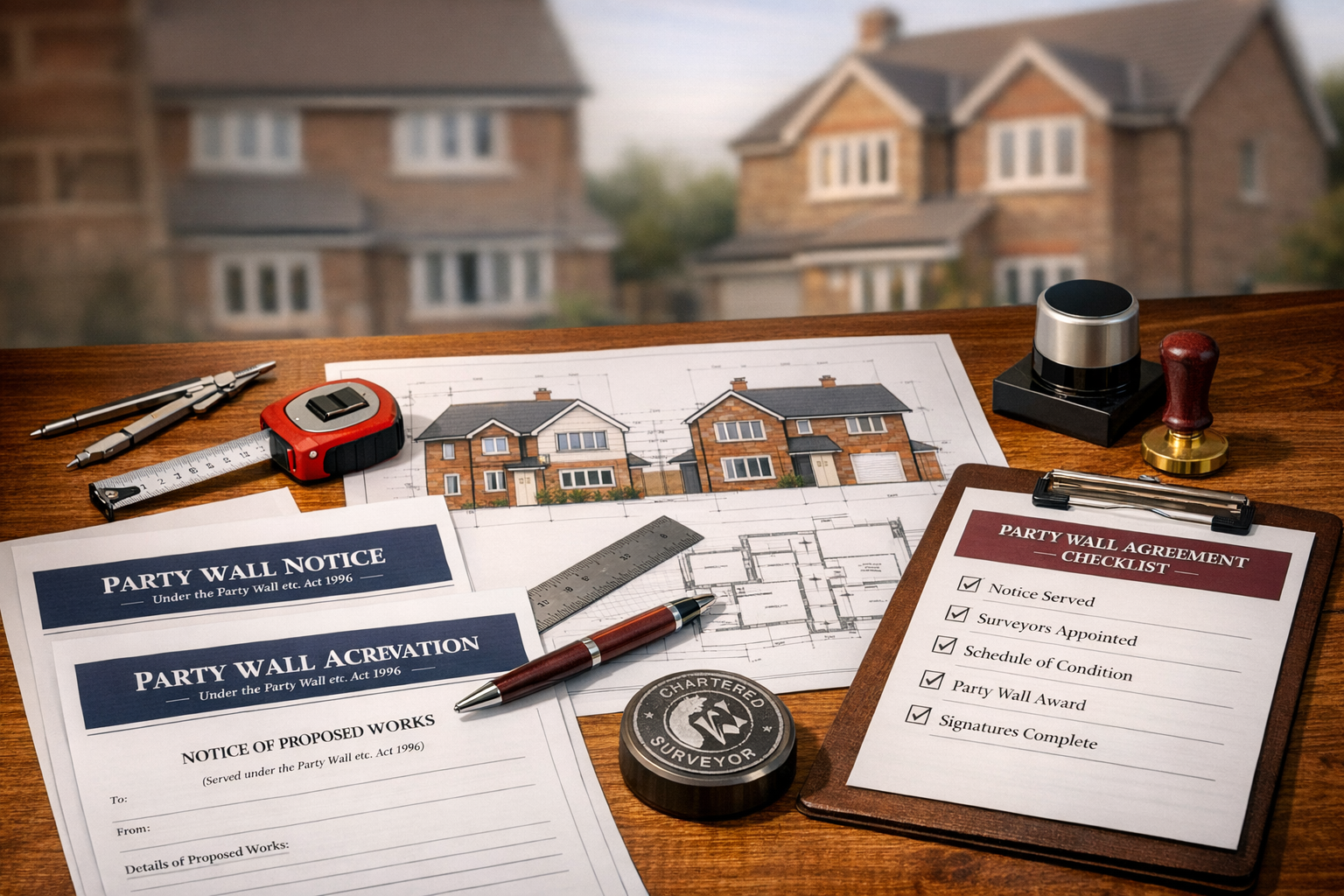
The structural integrity of a semi-detached house depends critically on the party wall, which often serves as a primary load-bearing element supporting roof structures, upper floors, and sometimes chimney stacks. Understanding the structural role of this wall is essential for safe and compliant building work.
Load-Bearing Functions
In most semi-detached properties, the party wall performs multiple structural functions:
- Vertical load support – Carrying the weight of upper floors and roof structures
- Lateral stability – Providing resistance against wind loads and lateral forces
- Fire compartmentation – Creating a fire-resistant barrier between dwellings
- Foundation support – Transferring loads to the ground through shared foundations
Any work that affects these functions requires careful structural assessment and often the involvement of a structural engineer in addition to party wall surveyors.
Building Regulations vs. Party Wall Act
It’s crucial to understand that Building Regulations Approval and Party Wall Act compliance are separate legal requirements:
| Aspect | Party Wall Act | Building Regulations |
|---|---|---|
| Purpose | Protect neighbor’s rights | Ensure safe, compliant construction |
| Approval Body | Party wall surveyors | Building Control or Approved Inspector |
| Focus | Neighbor relations and damage prevention | Structural safety, fire safety, energy efficiency |
| Penalties | Injunctions, damages | Prosecution, removal orders |
| Required When | Work affects party structures | Most building work |
You need both approvals for most projects affecting semi detached party walls. The party wall process addresses your neighbor’s interests, while Building Regulations ensure the work is structurally sound and safe.
When to Involve a Structural Engineer
Certain projects affecting the semi detached party wall absolutely require structural engineering input:
🏗️ Removing chimney breasts – Requires structural support for remaining breast above
🏗️ Cutting large openings – Installing RSJs or lintels needs structural calculations
🏗️ Underpinning work – Foundation strengthening requires detailed engineering design
🏗️ Raising wall heights – Adding stories or loft conversions affects load distribution
🏗️ Major alterations – Significant changes to the wall’s structural role
A structural engineer will provide calculations and drawings that demonstrate the work won’t compromise the wall’s integrity or safety. These documents are typically required for both Building Regulations approval and the party wall award process.
Inspection and Certification
Throughout your project, expect inspections from:
- Building Control Officer – Verifies compliance with Building Regulations at key stages
- Party Wall Surveyor – Monitors work to ensure compliance with the party wall award
- Structural Engineer – May inspect critical structural elements during construction
Proper inspection and certification protect you legally and ensure the work is completed to appropriate standards. Keep all certificates and documentation, as these will be needed for future property sales and may affect your property valuation.
Costs and Financial Considerations
Understanding the financial implications of party wall procedures is essential for budgeting your building project. Many homeowners are surprised to discover they must pay for their neighbor’s surveyor as well as their own, but this is a fundamental principle of the Party Wall Act.
Party Wall Surveyor Fees
Professional surveyor fees vary depending on the complexity of the work and the property location:
| Type of Work | Typical Fee Range |
|---|---|
| Simple notice (consent obtained) | £150 – £300 |
| Loft conversion with award | £700 – £1,500 per surveyor |
| Extension with excavation | £1,000 – £2,500 per surveyor |
| Complex underpinning | £2,000 – £5,000+ per surveyor |
| Agreed surveyor (single appointment) | £800 – £2,000 |
Remember, if your neighbor appoints their own surveyor, you pay both surveyors’ fees as the building owner. This can double the surveying costs, but it’s a legal requirement designed to ensure your neighbor isn’t financially penalized for protecting their interests.
Who Pays for What?
The cost allocation under the Party Wall Act follows clear principles:
Building Owner Pays:
- Both surveyors’ fees (yours and your neighbor’s)
- Cost of the party wall award preparation
- Schedule of condition surveys
- Any damage caused by the building work
- Remedial work required due to your construction
Shared Costs (Usually Split Equally):
- Work that benefits both properties
- Repairs to the party wall that were needed anyway
- Upgrading the wall for mutual benefit
Adjoining Owner Pays:
- Costs for additional work they request beyond what’s necessary
- Upgrades they want that go beyond making good
Potential Additional Costs
Beyond surveyor fees, budget for:
💷 Structural engineer fees – £500 – £2,000 for calculations and drawings
💷 Building control fees – £300 – £1,000 depending on project scope
💷 Damage remediation – Variable, but potentially significant if issues arise
💷 Legal fees – If disputes escalate beyond the surveyor process
💷 Insurance excess – If claims are made against your building insurance
Cost-Saving Strategies
While you cannot avoid party wall requirements, you can minimize costs:
✅ Communicate early – Discuss plans with neighbors before formal notices
✅ Use an agreed surveyor – Single surveyor is more cost-effective than two
✅ Prepare thoroughly – Complete plans and clear scope reduce surveyor time
✅ Choose experienced professionals – Efficient surveyors complete work faster
✅ Avoid disputes – Neighbor disputes dramatically increase costs
Attempting to avoid the party wall process entirely is false economy. Non-compliance can result in injunctions stopping your work, legal costs, and damaged neighbor relations that far exceed the cost of proper procedures.
Preventing and Resolving Party Wall Disputes
Despite the clear legal framework provided by the Party Wall Act, disputes between semi-detached neighbors remain common. Most conflicts arise from poor communication, misunderstandings about rights, or concerns about damage rather than fundamental disagreements about the work itself.
Common Causes of Party Wall Disputes
Understanding typical dispute triggers helps you avoid them:
⚠️ Inadequate notice – Late or incomplete party wall notices frustrate neighbors
⚠️ Poor communication – Failing to explain the work and its implications
⚠️ Excessive noise and disruption – Work outside agreed hours or without consideration
⚠️ Visible damage – Cracks, vibration damage, or aesthetic impacts
⚠️ Access issues – Contractors blocking driveways or causing inconvenience
⚠️ Dust and debris – Inadequate site management affecting neighboring property
⚠️ Mistrust – Previous conflicts or poor neighbor relations
Prevention Strategies
The best dispute is one that never happens. Proactive measures include:
1. Early Communication
Discuss your plans informally with your neighbor before serving formal notices. Explain what you’re planning, why it’s necessary, and how you’ll minimize disruption. This courtesy can prevent defensive reactions to official notices.
2. Professional Representation
Engage experienced party wall surveyors early in the process. Their expertise and impartial advice can reassure nervous neighbors and ensure proper procedures are followed.
3. Comprehensive Documentation
Provide detailed plans, drawings, and schedules showing exactly what work will occur and when. Uncertainty breeds anxiety; clear information provides reassurance.
4. Considerate Contractors
Choose builders with experience working on semi-detached properties who understand the importance of minimizing disruption to neighbors. Brief them on the party wall agreement terms and expectations for considerate working.
5. Regular Updates
Keep your neighbor informed throughout the project. Weekly updates about progress and upcoming noisy work demonstrate respect and prevent surprises.
Resolving Disputes When They Arise
If conflicts develop despite your best efforts:
Step 1: Direct Discussion
Attempt to resolve issues through calm, respectful conversation. Many disputes stem from misunderstandings that can be cleared up through dialogue.
Step 2: Surveyor Mediation
Your party wall surveyor can mediate between you and your neighbor, explaining technical aspects and finding acceptable compromises.
Step 3: Third Surveyor
If the two party-appointed surveyors cannot agree, the third surveyor makes binding decisions on disputed matters.
Step 4: Appeal to County Court
Either party can appeal a party wall award to the County Court within 14 days of it being served. This is expensive and time-consuming but provides a legal remedy for genuinely unfair awards.
Step 5: Professional Dispute Resolution
Consider formal mediation or arbitration before resorting to litigation. These processes are faster and less expensive than court proceedings.
When Damage Occurs
If your building work causes damage to your neighbor’s property:
- Acknowledge it promptly – Don’t deny obvious damage
- Document thoroughly – Photographs and written descriptions
- Obtain repair quotes – From reputable contractors
- Execute repairs quickly – Minimize inconvenience to your neighbor
- Follow the award – Comply with remediation procedures specified
The pre-work condition survey protects both parties by establishing what damage is genuinely new versus pre-existing. This documentation is invaluable when assessing liability.
Regional Considerations Across the UK
While the Party Wall Act 1996 provides a consistent framework for England and Wales, semi-detached homeowners in other parts of the UK face different legal landscapes. Understanding regional variations is essential for compliance and effective planning.
England and Wales: Party Wall Act 1996
The Act applies uniformly across England and Wales, providing clear procedures and protections. Whether you’re in Central London, Surrey, Hertfordshire, or Essex, the same legal requirements apply to work on semi detached party walls.
Regional surveyor expertise varies, however, with London party wall surveyors typically having more experience due to the high density of semi-detached properties and frequent building work in the capital.
Scotland: Common Law Approach
Scotland does not have party wall legislation equivalent to the 1996 Act. Instead, common law principles and the Title Conditions (Scotland) Act 2003 govern shared walls. Key differences include:
- No formal notice requirements (though courtesy notices are advisable)
- Greater emphasis on property deeds and title conditions
- Different dispute resolution mechanisms
- Potentially different cost allocation principles
Scottish homeowners should consult solicitors and surveyors familiar with Scottish property law when planning work on semi detached party walls.
Northern Ireland: Common Law Framework
Like Scotland, Northern Ireland operates under common law rather than the Party Wall Act. The Access to Neighbouring Land (Northern Ireland) Order 1999 provides some relevant provisions, but the framework differs significantly from England and Wales.
Northern Irish property owners should:
- Review title deeds for specific provisions about shared walls
- Obtain legal advice before commencing work
- Consider voluntary agreements with neighbors
- Understand that dispute resolution may require court proceedings
Urban vs. Rural Considerations
The practical application of party wall procedures varies between urban and rural settings:
Urban Areas (e.g., Battersea, Fulham, Islington):
- More surveyors available with extensive party wall experience
- Higher property values increase stakes for damage claims
- Neighbors often more familiar with party wall procedures
- Greater likelihood of simultaneous building work on adjacent properties
Rural and Suburban Areas (e.g., Buckinghamshire, Oxfordshire):
- Fewer specialist party wall surveyors available
- Neighbors may be less familiar with the Act
- Longer distances for surveyors may increase costs
- More space may reduce impact of building work
Frequently Asked Questions About Semi Detached Party Walls
Can I soundproof my side of the party wall without involving my neighbor?
Generally, no. Any work that involves fixing battens, frames, or materials to the party wall technically requires a party wall notice, even if you’re only working on “your side.” However, if you’re adding free-standing furniture or soft furnishings that don’t attach to the wall, no notice is needed. For significant soundproofing involving structural attachments, consult a party wall surveyor about the proper procedures.
What happens if my neighbor refuses to engage with the party wall process?
If your neighbor fails to respond to a party wall notice within 14 days, they are deemed to have dissented, which triggers the formal dispute resolution process. You can then appoint a surveyor on their behalf (they can later replace this surveyor with their own choice). The process continues regardless of their engagement, ensuring your legitimate building work isn’t blocked by neighbor inaction.
Do I need a party wall agreement for minor repairs?
Minor repairs and maintenance that don’t involve cutting into the wall, removing structural elements, or increasing loads typically don’t require formal party wall procedures. Examples include:
- Repointing external brickwork
- Painting or decorating
- Minor plaster repairs
- Replacing like-for-like materials
However, if you’re unsure whether work qualifies as “minor,” err on the side of caution and seek professional advice.
How long does the party wall process take?
The timeline varies depending on neighbor cooperation and work complexity:
- Best case (neighbor consents): 2-3 months from initial notice to starting work
- Standard case (award required): 3-4 months including surveyor appointment and award preparation
- Complex case (disputes or appeals): 6+ months potentially
Plan ahead and start the party wall process early to avoid delays to your building project.
Can my neighbor stop my building work entirely?
No. The Party Wall Act is designed to facilitate necessary building work while protecting neighbors. Your neighbor cannot unreasonably prevent legitimate work from proceeding. However, they can:
- Ensure proper procedures are followed
- Require protective measures
- Demand fair compensation for damage
- Influence timing and working methods through the award
What if the party wall is in poor condition?
If the party wall needs repair, responsibility is typically shared equally between both property owners. However, if one owner’s actions or neglect caused the deterioration, they may bear greater responsibility. The party wall surveyor can assess the condition and apportion costs fairly. Sometimes, necessary repairs can be incorporated into your building project, with costs allocated according to benefit received.
Does buildings insurance cover party wall issues?
Standard buildings insurance typically covers accidental damage you cause to your neighbor’s property during building work. However, it usually doesn’t cover:
- Party wall surveyor fees
- Deliberate or negligent damage
- Betterment (improving beyond the original condition)
- Legal costs of disputes
Check your policy carefully and consider additional coverage for major projects affecting semi detached party walls.
Conclusion: Navigating Semi Detached Party Walls Successfully
The semi detached party wall represents far more than a simple structural divider between properties—it’s a complex legal and physical entity requiring careful consideration, professional expertise, and respectful neighbor relations. Understanding your rights and obligations under the Party Wall Act 1996 is essential for any homeowner planning building work that affects this shared structure.
Key principles to remember:
🏡 Shared ownership means both parties have equal rights over the entire wall structure
📋 Legal compliance through proper notices and agreements is mandatory, not optional
🤝 Professional guidance from experienced surveyors protects both you and your neighbor
💰 Financial planning must include surveyor fees, potential damage costs, and contingencies
🔨 Quality workmanship and considerate contractors minimize disruption and damage risk
Your Next Steps
If you’re planning work on a semi-detached property:
1. Assess Your Project
Determine whether your planned work affects the party wall or involves excavation near the boundary. Review the Party Wall Act questions to understand requirements.
2. Engage Professional Surveyors Early
Contact experienced chartered surveyors at least three months before your intended start date. Early engagement allows time for proper procedures without delaying your project.
3. Communicate with Your Neighbor
Discuss your plans informally before serving formal notices. Good communication prevents many disputes and creates a cooperative atmosphere.
4. Prepare Comprehensive Documentation
Work with architects and engineers to create detailed plans showing exactly what work will be done and how it affects the party wall.
5. Budget Appropriately
Include party wall costs in your project budget from the outset. Unexpected surveyor fees and damage remediation can derail projects if not planned for.
6. Follow the Process Diligently
Comply with all notice periods, award terms, and legal requirements. Shortcuts create problems that are expensive and time-consuming to resolve.
7. Maintain Records
Keep all party wall documentation, awards, condition surveys, and correspondence. These documents are valuable for future property sales and any subsequent work.
The semi detached party wall is a unique feature of property ownership that requires knowledge, respect, and proper professional management. By understanding the legal framework, engaging qualified surveyors, and maintaining good neighbor relations, you can successfully navigate building projects while protecting your investment and preserving community harmony.
For expert guidance on party wall matters, building surveys, and property valuations, contact Kingston Surveyors for professional advice tailored to your specific circumstances and location.