

The surveying profession stands at a pivotal crossroads in 2026. With sweeping regulatory reforms, unprecedented demand for building surveys, and a critical skills shortage threatening capacity, the Surveyor Talent Pipeline for 2026 Reforms: RICS Pathways and CPD for Building Survey Demand has never been more essential to address. The Royal Institution of Chartered Surveyors (RICS) has responded with transformative changes to qualification pathways and continuing professional development (CPD) requirements, fundamentally reshaping how firms attract, develop, and retain surveying talent.
As housing delivery accelerates, retrofit programmes expand, and digital transformation reshapes the built environment, surveying practices face a dual challenge: meeting soaring client demand while simultaneously building the workforce capacity required for sustained growth. The January 2026 launch of RICS's revised CPD framework, alongside new qualification pathways in data analytics and residential retrofit, represents a strategic response to these pressures—but success depends on how effectively firms integrate these reforms into their talent development strategies.

Key Takeaways
- 🎓 New RICS pathways launched in 2026 include Data, Analytics and Intelligence chartered route and Residential Retrofit Surveying associate membership, addressing emerging market demands
- 📱 Revised CPD framework emphasizes quality over quantity with mandatory topics (ethics, sustainability, AI, data/technology) and real-time logging through the new RICS Member App launched February 2026
- 📊 Critical skills gap threatens capacity as experienced professionals retire while insufficient young talent enters the profession, creating pipeline bottlenecks amid surging survey demand
- 🏗️ Enhanced digital competencies now mandatory reflecting rapid sectoral transformation toward data-driven decision-making and advanced technology adoption across building surveys
- ✅ Firms must proactively invest in talent development through structured graduate programmes, CPD planning, and qualification support to capitalize on 2026 growth opportunities
Understanding the 2026 RICS Reforms and Their Impact on Surveyor Talent Pipeline
The Surveyor Talent Pipeline for 2026 Reforms: RICS Pathways and CPD for Building Survey Demand begins with understanding the fundamental changes RICS has implemented to modernize professional qualification and development. These reforms directly address the profession's capacity challenges while preparing members for technological transformation.
The Revised CPD Framework: Quality Over Box-Ticking
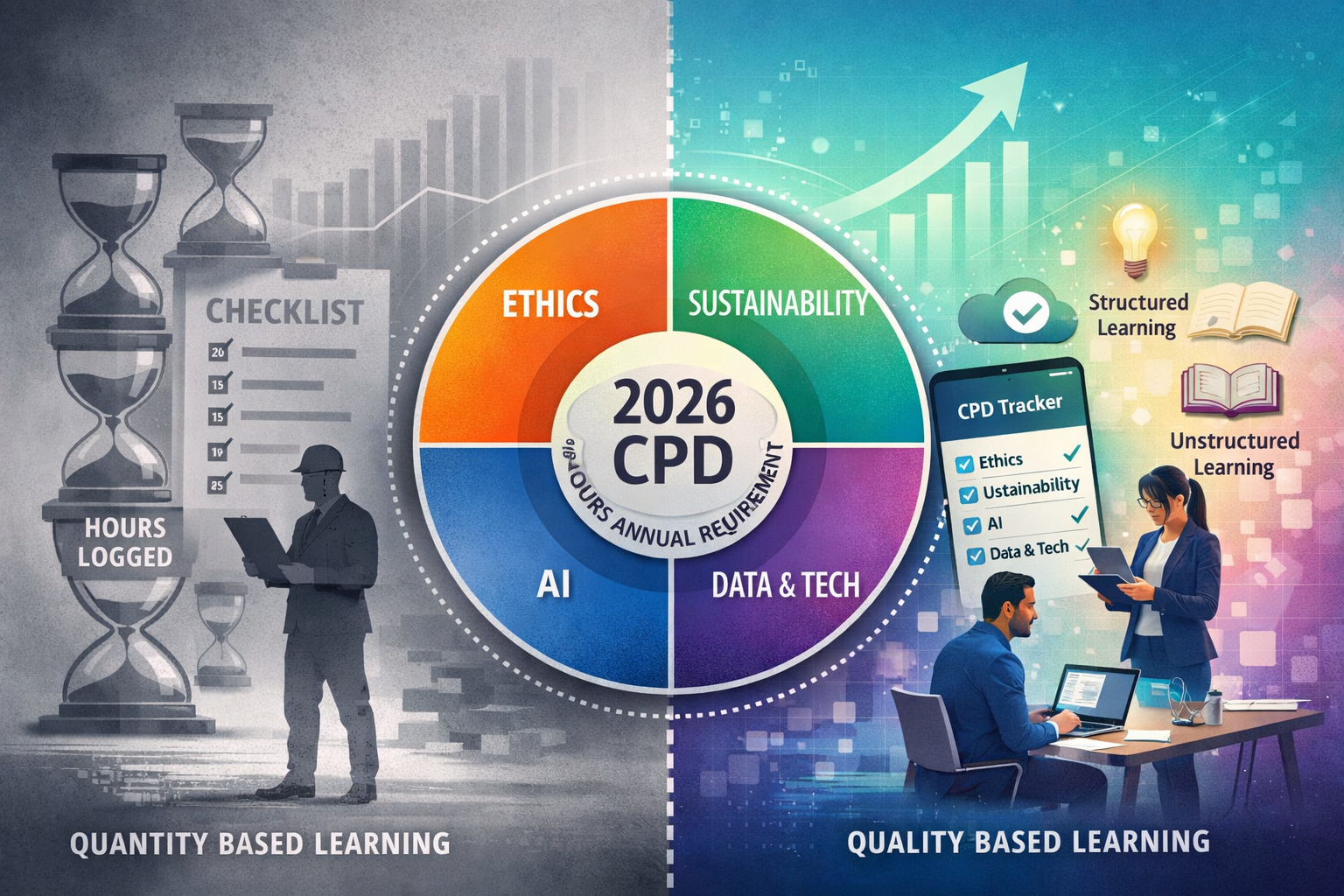
In January 2026, RICS launched a revised CPD framework that fundamentally shifts the profession's approach to continuing education [1]. While the annual requirement remains 20 hours (with 10 hours structured learning), the framework now emphasizes genuine professional development over administrative compliance.
Key changes include:
- Mandatory topic coverage across a three-year cycle: ethics, sustainability, artificial intelligence, and data and technology [1]
- Enhanced quality assurance with RICS auditing a higher proportion of member CPD records, focusing on relevance and impact rather than simple hour completion [1]
- Greater flexibility for substantial learning, allowing members completing master's degrees or similar programmes to carry forward up to 10 CPD hours into the following year [1]
- Real-time logging capability through the new RICS Member App launched in February 2026, addressing member feedback about delayed recording and improving planning tools [1]
This shift reflects recognition that the profession's traditional "tick-box" approach failed to ensure members maintained cutting-edge competencies in rapidly evolving areas like digital surveying, sustainability assessment, and data analytics.
New Qualification Pathways Addressing Market Gaps
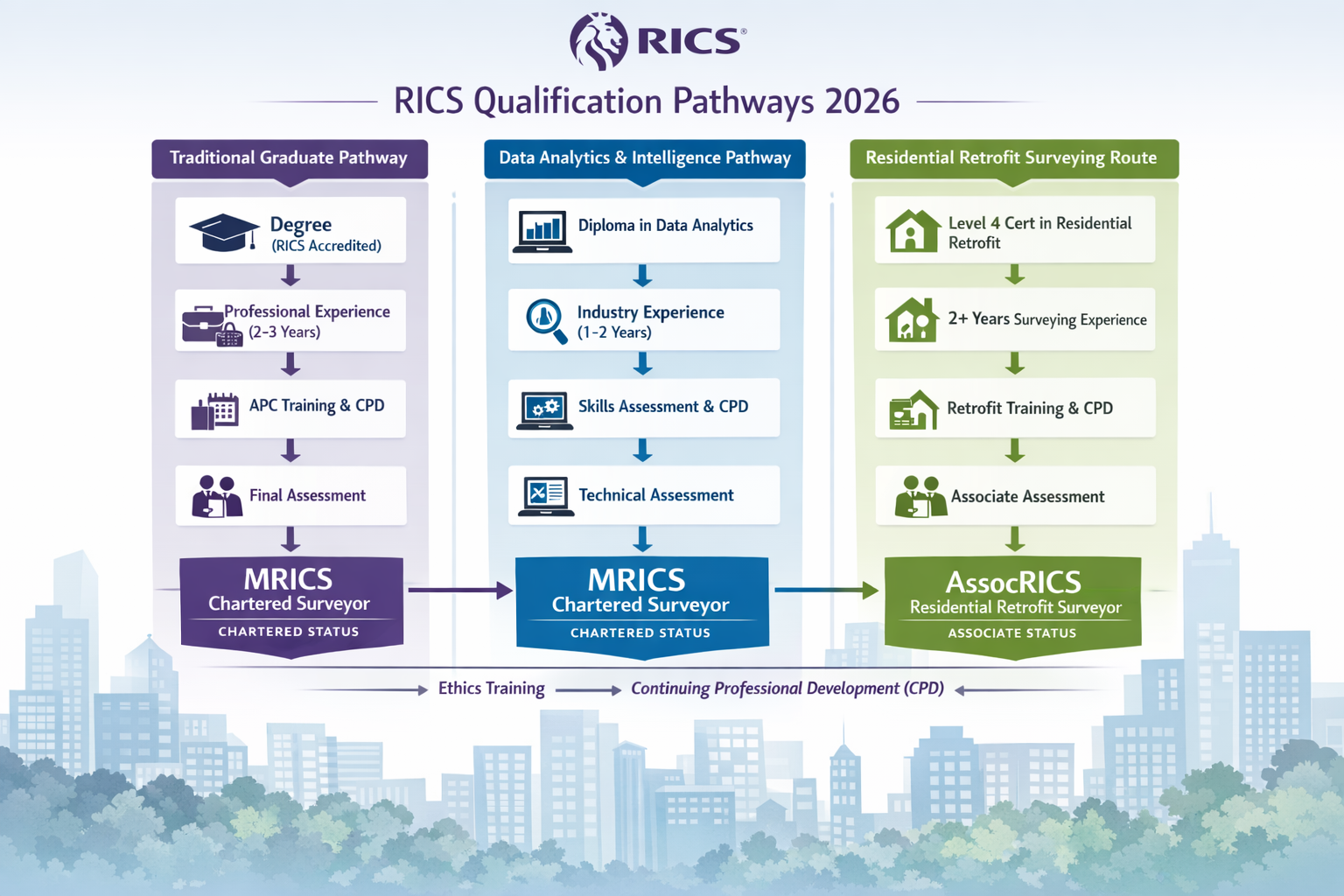
RICS has introduced two significant new routes to professional membership in 2026, directly responding to identified skills shortages:
Data, Analytics and Intelligence Pathway
Launching in phases beginning 2026, this new chartered surveyor route targets the growing demand for advanced digital expertise across the built and natural environments [2]. The pilot programme recognizes that modern surveying increasingly relies on:
- Advanced data interpretation and visualization
- Predictive analytics for property valuation and risk assessment
- Geographic Information Systems (GIS) integration
- Building Information Modeling (BIM) data management
- Artificial intelligence applications in survey analysis
This pathway creates a formal qualification route for professionals who might previously have struggled to fit their data-focused expertise within traditional building surveying or valuation pathways. For building surveyor services, this means access to specialists who can enhance traditional survey outputs with sophisticated data analysis.
Residential Retrofit Surveying Pathway
Established as a new RICS associate membership route with specialized credentials, this pathway supports the exploding demand for retrofit project expertise [3]. With government targets driving unprecedented investment in building energy efficiency, this qualification ensures professionals possess:
- Energy performance assessment capabilities
- Retrofit technology knowledge (insulation, heat pumps, ventilation)
- Understanding of building physics and moisture risk
- Familiarity with retrofit standards and funding schemes
- Skills in pre- and post-retrofit condition surveying
The pathway addresses a critical gap: traditional building surveyors often lacked specialized retrofit training, while energy assessors lacked comprehensive structural knowledge. This integrated approach builds capacity precisely where market demand is surging.
Why These Reforms Matter for Surveying Practices
For surveying firms, these reforms create both opportunities and obligations. Practices that proactively align their talent development strategies with the new pathways and CPD requirements will gain competitive advantages through:
- Enhanced service capabilities in high-growth areas like retrofit and data analytics
- Improved recruitment appeal to graduates seeking clear, modern career pathways
- Stronger client confidence through demonstrable commitment to professional development
- Future-proofed workforce equipped for technological transformation
Conversely, firms that treat these reforms as administrative burdens risk falling behind competitors in capability development and talent attraction.
Building Survey Demand Drivers Creating Talent Pipeline Urgency
Understanding the Surveyor Talent Pipeline for 2026 Reforms: RICS Pathways and CPD for Building Survey Demand requires examining why survey volumes are surging precisely as workforce capacity constraints intensify. Multiple converging factors are driving unprecedented demand across residential and commercial sectors.
Housing Market Recovery and Transaction Volumes
Following several years of market uncertainty, 2026 has brought renewed confidence to property transactions. This recovery directly translates to increased demand for homebuyer surveys, building surveys, and specialist inspections. Chartered surveyors across Central London and surrounding regions report scheduling pressures as transaction volumes climb.
The market recovery particularly impacts Level 3 Building Surveys (formerly Full Structural Surveys), as buyers increasingly recognize the value of comprehensive professional assessments in an aging housing stock with hidden maintenance issues.
Retrofit Programme Expansion
Government commitments to achieving net-zero carbon targets have accelerated retrofit programme funding and regulatory requirements. The Scotland Manifesto 2026, for example, explicitly emphasizes "accelerating retrofit programmes" as a policy priority [6]. This creates sustained demand for:
- Pre-retrofit condition surveys identifying structural constraints
- Energy performance assessments and improvement recommendations
- Post-retrofit verification surveys ensuring quality installation
- Ongoing monitoring surveys tracking performance over time
This represents an entirely new survey category that didn't exist at scale five years ago, requiring specialized knowledge that traditional building surveying training didn't always provide—hence the new Residential Retrofit Surveying pathway.
Regulatory Compliance and Building Safety
Post-Grenfell building safety reforms continue generating survey demand as property owners seek compliance with evolving standards. This includes fire safety assessments, cladding surveys, and structural integrity evaluations across residential and commercial portfolios.
Additionally, regulations around energy performance, accessibility, and environmental standards create ongoing survey requirements beyond traditional transaction-driven work.
Commercial Property Repositioning
The commercial property sector faces fundamental repositioning as hybrid working patterns persist. This drives demand for:
- Commercial building surveys assessing conversion potential
- Dilapidation surveys managing lease transitions
- Condition assessments supporting repositioning strategies
- Sustainability surveys evaluating retrofit opportunities
The Critical Skills Gap Threatening Capacity
While demand surges, the profession faces a critical talent shortage characterized by two interconnected issues [4]:
- Insufficient young professionals entering surveying due to limited awareness of career opportunities and unclear qualification pathways
- Rapidly aging membership demographics with experienced professionals retiring and taking embedded expertise with them
RICS represents approximately 140,000 professionals globally [4], but membership growth has stagnated in key European markets, and the age profile skews heavily toward senior practitioners. This creates a dangerous capacity constraint precisely when market demand peaks.
The 2026 reforms directly address this crisis by:
- Creating clearer graduate qualification pathways that communicate career progression more effectively to potential entrants [5]
- Establishing specialized routes (retrofit, data analytics) that appeal to graduates with diverse skill sets
- Enhancing CPD platforms with improved digital tools that support continuous capability development [5]
- Demonstrating that chartered surveyor status improves career prospects, income, and professional credibility [4]
For individual practices, this means talent competition will intensify. Firms offering structured development programmes aligned with the new pathways will attract and retain the best candidates, while those relying on ad-hoc training approaches will struggle to build capacity.
Strategic Approaches to Strengthening the Surveyor Talent Pipeline for 2026 Reforms
Addressing the Surveyor Talent Pipeline for 2026 Reforms: RICS Pathways and CPD for Building Survey Demand requires proactive, strategic responses from surveying practices. Firms that view talent development as a competitive differentiator rather than a compliance obligation will emerge stronger from this transformative period.
Implementing Structured Graduate Development Programmes
The foundation of pipeline development lies in structured graduate recruitment and development programmes aligned with RICS's Assessment of Professional Competence (APC) requirements. Effective programmes include:
Clear Competency Frameworks
Map graduate development against specific competencies required for the chosen pathway (building surveying, valuation, data analytics, or retrofit). This provides transparency for recruits and ensures systematic skill acquisition.
Dedicated Mentorship and Supervision
Assign experienced chartered surveyors as formal supervisors who provide regular feedback, review case studies, and guide professional development. The supervisor relationship directly impacts APC success rates.
Diverse Experience Exposure
Rotate graduates through different survey types, client sectors, and project scales. For example, exposure to both residential surveys and commercial dilapidation work builds versatility and broader competency.
Formal Learning Integration
Combine practical experience with structured learning through:
- Internal technical training sessions
- External CPD courses aligned with mandatory topics
- Professional qualification study support
- Attendance at industry conferences and seminars
APC Preparation Support
Provide dedicated preparation time, mock assessments, and feedback on written submissions and interview technique as candidates approach their final APC assessment.
Leveraging the New RICS Member App and CPD Framework
The February 2026 launch of the RICS Member App provides powerful tools for systematic CPD management [1]. Progressive firms are using the app to:
- Plan annual CPD programmes that align with both mandatory topics and practice-specific capability needs
- Log learning in real-time immediately after training events, eliminating the administrative burden of retrospective recording
- Track team development to identify skill gaps and ensure balanced competency distribution across the practice
- Demonstrate commitment to professional standards during client pitches and quality audits
Practices should establish CPD planning as a formal annual process, integrated with performance reviews and business planning. This ensures development activities directly support strategic objectives rather than occurring as reactive, disconnected events.
Addressing Mandatory CPD Topics Strategically
The 2026 framework requires coverage of ethics, sustainability, AI, and data/technology over each three-year cycle [1]. Rather than treating these as compliance obligations, leading firms are integrating them into capability development:
Ethics Training
Beyond basic professional conduct, ethics training should address:
- Conflicts of interest in complex survey scenarios
- Professional judgment in ambiguous situations
- Client communication and expectation management
- Boundary disputes and party wall matters requiring impartial assessment
Sustainability Competency
With retrofit demand surging, sustainability CPD should build practical skills:
- Energy performance assessment methodology
- Retrofit technology options and constraints
- Building physics fundamentals (thermal bridging, moisture risk, ventilation)
- Sustainability standards and certification schemes (Passivhaus, BREEAM, etc.)
Artificial Intelligence Applications
AI is rapidly transforming surveying practice through:
- Automated defect identification from drone imagery
- Predictive maintenance algorithms
- Natural language processing for report generation
- Machine learning for valuation modeling
CPD should explore both opportunities and limitations, ensuring members can critically evaluate AI tools rather than blindly adopting them.
Data and Technology Skills
Modern surveying increasingly requires:
- Digital survey tools (laser scanning, thermal imaging, moisture meters)
- Data management and analysis capabilities
- BIM integration and information extraction
- Geographic Information Systems (GIS) for spatial analysis
- Digital reporting platforms and client portals
Exploring New Pathway Opportunities
Practices should assess whether the Data, Analytics and Intelligence or Residential Retrofit Surveying pathways offer strategic advantages. Considerations include:
- Market positioning: Does specialization in retrofit or data analytics differentiate the practice in competitive markets?
- Client demand: Are clients increasingly requesting these specialized services?
- Team capabilities: Do existing staff members have relevant skills that formal qualification would recognize and enhance?
- Growth opportunities: Do these pathways open new revenue streams or client sectors?
For practices serving regions with significant retrofit activity—such as chartered surveyors in Surrey or Hampshire where older housing stock predominates—the retrofit pathway offers compelling strategic value.
Building University Partnerships and Apprenticeship Routes
To address the fundamental pipeline challenge of insufficient entrants, progressive firms are:
- Partnering with university surveying programmes to offer placements, guest lectures, and project collaborations
- Establishing apprenticeship schemes that combine work experience with formal qualification study
- Participating in careers events to raise awareness of surveying as a rewarding profession
- Offering summer internships that provide early exposure and create recruitment pipelines
These initiatives require investment but generate long-term returns through improved talent access and enhanced employer brand.
Retention Through Career Development
Building the pipeline isn't solely about recruitment—retention of qualified professionals is equally critical. Firms should:
- Provide clear progression pathways beyond initial chartership, including specialization opportunities and leadership development
- Offer competitive compensation that reflects market rates for qualified surveyors
- Create positive workplace culture that values work-life balance and professional autonomy
- Invest in continuing education beyond minimum CPD requirements, supporting advanced qualifications and specializations
- Recognize and reward professional achievement through formal acknowledgment and career advancement
Regional Considerations and Market-Specific Talent Strategies
The Surveyor Talent Pipeline for 2026 Reforms: RICS Pathways and CPD for Building Survey Demand manifests differently across geographic markets, requiring tailored approaches.
London and Metropolitan Markets
High-density urban markets like Central London, West London, and North London face intense competition for qualified surveyors. Practices in these markets must offer:
- Premium compensation packages reflecting higher living costs
- Specialized expertise opportunities in niche areas like heritage buildings or high-value residential
- Exposure to complex, high-profile projects that enhance professional development
- Flexible working arrangements that mitigate commuting challenges
Suburban and Commuter Belt Markets
Areas like Hertfordshire, Buckinghamshire, and Surrey offer different value propositions:
- Better work-life balance with shorter commutes and less urban intensity
- Diverse project mix spanning residential, commercial, and rural properties
- Community connection with longer-term client relationships
- Lower cost of living relative to central urban locations
Emerging Specialization Markets
Certain locations present opportunities for specialized expertise:
- Heritage and conservation in historic towns
- Coastal and flood risk in vulnerable areas
- Retrofit and energy efficiency in regions with older housing stock
- Commercial repositioning in secondary retail and office markets
Practices should align talent development strategies with their specific geographic market characteristics and opportunities.
Technology Integration and Digital Competency Development
The 2026 reforms explicitly recognize that digital transformation is reshaping surveying practice. The mandatory CPD topics of AI and data/technology reflect this reality [1]. Firms must systematically build digital competencies across their teams.
Essential Digital Skills for Modern Surveyors
Contemporary building surveyors require proficiency in:
- Digital survey tools: Thermal imaging cameras, moisture meters, laser distance measurers, and digital levels
- Drone technology: For roof surveys, large property inspections, and site analysis
- 3D laser scanning: Creating detailed spatial records and measurements
- Report software: Professional reporting platforms with photo integration and templating
- Client portals: Digital delivery systems for reports and ongoing communication
- Mobile inspection apps: Field data capture that integrates with office systems
Data Analysis and Interpretation
The new Data, Analytics and Intelligence pathway [2] reflects growing importance of:
- Comparative market analysis using large datasets
- Trend identification in defect patterns, pricing, or market behavior
- Risk modeling for insurance, investment, or lending decisions
- Performance benchmarking comparing properties against sector norms
Even traditional building surveyors benefit from enhanced data literacy, enabling more sophisticated client advice.
Cybersecurity and Data Protection
As surveying becomes increasingly digital, practices must ensure teams understand:
- Data protection regulations (GDPR compliance)
- Cybersecurity best practices protecting sensitive client information
- Secure communication channels for confidential reports
- Backup and disaster recovery procedures
These topics should feature in regular CPD programmes, not just IT department responsibilities.
Measuring Success: KPIs for Talent Pipeline Development
Practices serious about addressing the Surveyor Talent Pipeline for 2026 Reforms: RICS Pathways and CPD for Building Survey Demand should establish measurable indicators of progress:
Recruitment Metrics
- Graduate applications per vacancy (indicating employer brand strength)
- Offer acceptance rates (reflecting competitive positioning)
- Time to fill vacancies (measuring recruitment efficiency)
- Diversity of applicant pool (ensuring broad talent access)
Development Metrics
- APC first-time pass rates (indicating quality of training and support)
- Average time to chartership (measuring development programme effectiveness)
- CPD completion rates (tracking engagement with professional development)
- Internal promotion rates (demonstrating career progression opportunities)
Retention Metrics
- Staff turnover rates (particularly among qualified professionals)
- Average tenure (indicating workplace satisfaction)
- Exit interview feedback (identifying improvement opportunities)
- Employee satisfaction scores (measuring engagement and culture)
Capability Metrics
- Proportion of team with specialized qualifications (retrofit, data analytics)
- Service offering breadth (enabled by team capabilities)
- Client feedback on technical expertise (measuring perceived competency)
- Peer recognition and awards (indicating professional standing)
Regular review of these metrics enables data-driven refinement of talent strategies and early identification of emerging issues.
Conclusion: Building Resilient Surveying Practices Through Strategic Talent Investment
The Surveyor Talent Pipeline for 2026 Reforms: RICS Pathways and CPD for Building Survey Demand represents both a significant challenge and a transformative opportunity for surveying practices. The convergence of surging market demand, critical skills shortages, and fundamental regulatory reform creates an inflection point that will separate leading firms from those that struggle to maintain capacity and competitiveness.
The RICS reforms—including the revised CPD framework emphasizing quality over quantity, the new Data, Analytics and Intelligence pathway, the Residential Retrofit Surveying route, and the enhanced RICS Member App—provide the structural foundation for building robust talent pipelines. However, these frameworks only deliver value when practices actively integrate them into strategic workforce development programmes.
Actionable Next Steps for Surveying Practices
Firms seeking to capitalize on 2026's growth opportunities while building sustainable talent pipelines should:
- Conduct a talent audit assessing current team capabilities against market demand and identifying critical skill gaps
- Develop a formal graduate recruitment programme with clear competency frameworks, mentorship structures, and APC support
- Implement systematic CPD planning using the new RICS Member App to ensure coverage of mandatory topics while building strategic capabilities
- Evaluate new pathway opportunities to determine whether Data, Analytics and Intelligence or Residential Retrofit Surveying specializations align with market positioning
- Invest in digital competency development ensuring teams possess the technology skills required for modern practice
- Build university and apprenticeship partnerships to strengthen long-term talent pipelines
- Establish retention initiatives including clear career progression, competitive compensation, and positive workplace culture
- Measure and monitor progress through defined KPIs that track recruitment, development, retention, and capability outcomes
The surveying profession stands at a pivotal moment. Practices that recognize talent development as a strategic imperative—not merely a compliance obligation—will emerge from 2026's reforms with enhanced capabilities, stronger teams, and competitive advantages in growing markets. Those that treat these reforms as administrative burdens risk falling behind in both capacity and competency.
The opportunity is clear: invest strategically in the Surveyor Talent Pipeline for 2026 Reforms: RICS Pathways and CPD for Building Survey Demand today to build the resilient, capable practice that tomorrow's market demands.
References
[1] Revised Cpd Framework Effective 2026 New App – https://www.rics.org/news-insights/revised-cpd-framework-effective-2026-new-app
[2] Rics Calls For Expressions Of Interest In New Data Analytics And Intelligence Pathway – https://www.rics.org/news-insights/rics-calls-for-expressions-of-interest-in-new-data-analytics-and-intelligence-pathway
[3] Adapting Building Surveys For 2026 Retrofit Projects Rics Guidance Post Quality In Retrofit Summit – https://nottinghillsurveyors.com/blog/adapting-building-surveys-for-2026-retrofit-projects-rics-guidance-post-quality-in-retrofit-summit
[4] Navigating The Future Of Surveying – https://www.gim-international.com/content/article/navigating-the-future-of-surveying
[5] Surveying In 2026 Reform Recovery And Renewed Demand – https://www.lrg.co.uk/news-and-insights/surveying-in-2026-reform-recovery-and-renewed-demand/
[6] Uk Influence And Advocacy Update January 2026 – https://www.rics.org/news-insights/uk-influence-and-advocacy-update-january-2026