The surveying sector stands at a pivotal crossroads in 2026. As government reforms promise to transform the homebuying process and market volumes surge, the industry faces an urgent question: Where will the talent come from? With proposals to make property condition assessments a standard upfront requirement, Surveyor Talent Strategies for Homebuying Reform Volumes: Building Pipelines for 2026 Uplift have become mission-critical for firms preparing to meet unprecedented demand.
The convergence of regulatory reform and market recovery creates both opportunity and challenge. Lenders forecast significant volume increases, inventory levels are rising, and transaction activity shows strong momentum [1]. Yet the sector's ability to capitalize on this uplift depends entirely on having qualified surveyors ready to deliver. This article explores the comprehensive talent strategies—from RICS graduate pathways to digital CPD tools and innovative recruitment approaches—that will determine which firms thrive in this transformed landscape.

Key Takeaways
- Government homebuying reforms could mandate upfront surveys, fundamentally shifting demand timing and requiring immediate talent capacity expansion [1]
- RICS is developing clearer qualification pathways and enhanced digital CPD platforms to accelerate professional development and support existing surveyors [1]
- 2026 market volumes are projected to increase 4.3%, with lenders reporting strong forecasts that will strain existing surveyor capacity [1][2]
- Next-generation talent attraction requires strategic recruitment, university partnerships, and modernized career messaging to build sustainable pipelines
- Firms must act now on training, technology adoption, and workforce planning to avoid bottlenecks when reforms take effect
Understanding the 2026 Homebuying Reform Landscape
The Scope of Proposed Changes
The UK government's consultation on homebuying process reforms represents potentially the most significant shift in property transactions in decades. At the heart of these proposals lies a transformative concept: making property condition assessments a standard upfront requirement rather than an optional step occurring late in the buying process [1].
This change would fundamentally alter when and how surveys are conducted. Instead of buyers commissioning surveys after making offers—often weeks into the transaction—sellers would need to provide comprehensive property assessments before listing. The implications for surveyor demand are profound:
- 📈 Immediate volume surge as all properties entering the market require assessments
- ⏰ Compressed timelines with surveys needed at listing rather than post-offer
- 🔄 Operational restructuring as firms adapt workflows to seller-side commissioning
- 📊 Standardization pressures requiring consistent assessment methodologies
For those seeking guidance on what survey you need, the reformed landscape may simplify decision-making but will dramatically increase overall survey volumes.
Market Volume Projections Driving Demand
Beyond regulatory changes, fundamental market dynamics point toward sustained volume growth. Zillow projects 4.26 million existing-home sales in 2026, representing a 4.3% increase year-over-year [2]. In the UK, lenders across the sector forecast similar upward trajectories, with many reporting expectations for "significant volume uplift" and "a strong start to the year" [1].
| Market Indicator | 2025 Baseline | 2026 Projection | Impact on Surveyor Demand |
|---|---|---|---|
| Transaction Volume | Baseline | +4.3% increase | High – direct correlation |
| Property Inventory | Baseline | +5% year-over-year | Medium – more listings to assess |
| Monthly Mortgage Payments | Baseline | -7.7% (more affordable) | High – affordability drives activity |
| Institutional Investment | Strong | Continued bullish outlook | Medium – quality survey emphasis |
These converging factors create what industry analysts describe as a "perfect storm" of demand. Institutional and professional landlords remain particularly active, with these informed investors "continuing to invest and understanding the value of proper surveys" [1]. This sophisticated buyer segment won't accept rushed or inadequate assessments, raising quality expectations even as volumes increase.
Timeline Uncertainty and Preparation Imperatives
While the exact implementation timeline for homebuying reforms remains under consultation, the surveying sector cannot afford to wait for certainty. Surveyor retraining and readiness is critical, with industry bodies emphasizing that "the sector needs to ensure surveyors are prepared to meet new demands from potential reform implementation" [1].
"The sector explicitly focused on attracting new surveyors to facilitate increased activity levels" – Industry analysis on 2026 preparation [1]
This preparation imperative creates immediate action items for firms of all sizes. Whether reforms arrive in late 2026 or early 2027, the underlying market volume growth is already materializing. Firms that delay talent pipeline development risk being overwhelmed when both factors converge.
Surveyor Talent Strategies for Homebuying Reform Volumes: RICS Qualification Pathways
Streamlined Graduate Entry Routes
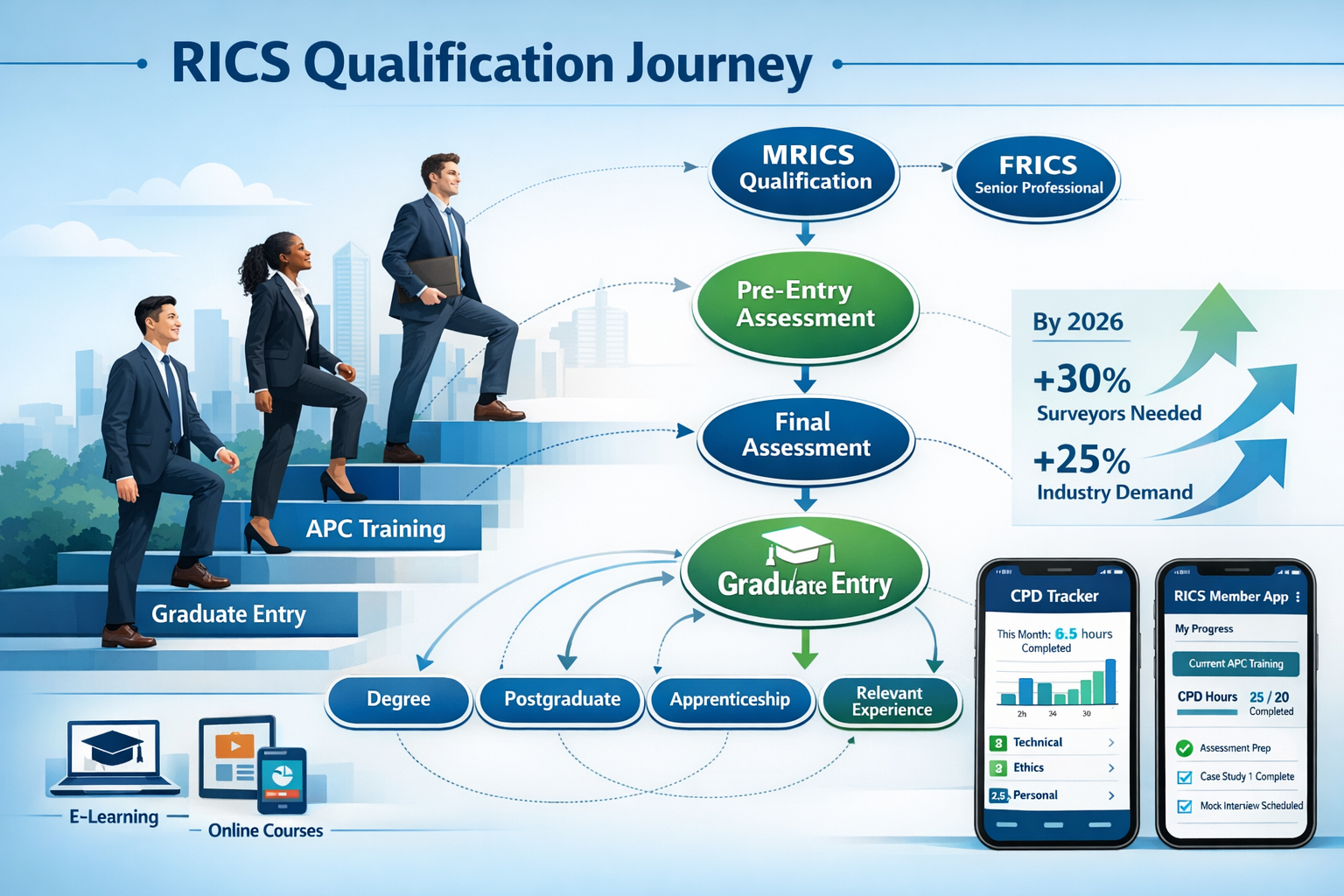
The Royal Institution of Chartered Surveyors (RICS) recognizes that traditional qualification pathways may not produce surveyors quickly enough to meet 2026 demands. In response, RICS is developing clearer qualification pathways for graduates specifically designed to accelerate entry into the profession [1].
These enhanced pathways focus on several key improvements:
Structured Assessment Periods 🎓
- More predictable timelines from graduation to chartered status
- Clearer milestone markers throughout the qualification journey
- Reduced ambiguity about requirements and expectations
- Standardized competency frameworks across specializations
University Partnership Programs 🤝
- Stronger connections between academic institutions and practicing firms
- Integrated work placements during degree programs
- Industry-relevant curriculum development
- Direct recruitment pipelines from accredited programs
Accelerated Routes for Career Changers 🔄
- Recognition of transferable skills from related professions
- Condensed assessment periods for experienced professionals
- Targeted training modules addressing specific knowledge gaps
- Fast-track options for those with construction or property backgrounds
For firms seeking to expand capacity, these pathways offer multiple entry points. The traditional route through building surveyor services training remains valuable, but new options allow firms to cultivate talent from diverse backgrounds more efficiently.
Digital CPD Platforms and Continuous Development
Existing surveyors represent the sector's most immediate capacity resource, but only if they can efficiently maintain and expand their competencies. Enhanced CPD platforms for existing professionals are being developed with "improved digital tools and a new RICS member app to support continuous professional development" [1].
These digital innovations transform how surveyors maintain their professional edge:
Mobile-First Learning 📱
- Access training modules during site visits or between appointments
- Microlearning formats fitting into busy schedules
- Push notifications for relevant new content
- Progress tracking across all devices
Personalized Development Paths 🎯
- AI-driven recommendations based on practice areas
- Gap analysis identifying skills needed for reform readiness
- Customized learning journeys aligned with career goals
- Integration with firm-specific training requirements
Community Learning Networks 👥
- Peer-to-peer knowledge sharing platforms
- Discussion forums for complex assessment scenarios
- Mentorship matching between experienced and developing surveyors
- Regional networking opportunities
The practical impact extends beyond compliance. Surveyors who efficiently maintain CPD through digital platforms free time for billable work—critical when volumes surge. Firms should evaluate whether their teams are maximizing these tools or still relying on time-intensive traditional CPD methods.
Specialization vs. Generalization Strategies
As reform potentially standardizes certain assessment types, firms face a strategic choice: develop specialized experts or cultivate versatile generalists. Each approach offers distinct advantages for managing volume uplift.
Specialization Advantages:
- ✅ Higher efficiency in specific assessment types
- ✅ Premium pricing for expert opinions
- ✅ Reduced training time for narrow competency sets
- ✅ Clear differentiation in competitive markets
Generalization Advantages:
- ✅ Flexibility to deploy surveyors across varied work
- ✅ Better capacity utilization during demand fluctuations
- ✅ Comprehensive service offerings attracting diverse clients
- ✅ Resilience against market segment downturns
Many successful firms adopt a hybrid model: core generalists handling standard homebuyer reports and building surveys, supported by specialists for complex properties or specific issues. This structure allows efficient scaling while maintaining quality for challenging assessments.

Building Sustainable Talent Pipelines Through Strategic Recruitment
Modernizing the Surveying Career Narrative
The surveying profession faces an image challenge. Many graduates view surveying as traditional or unglamorous compared to technology or finance careers. Next generation talent attraction is essential, requiring the sector to fundamentally reframe how it presents surveying careers [1].
Modern Career Messaging Should Emphasize:
🚀 Technology Integration
- Drone surveys and 3D scanning revolutionizing site assessments
- AI-assisted defect identification and reporting
- Digital collaboration tools connecting teams and clients
- Data analytics driving property insights
💰 Financial Opportunity
- Competitive starting salaries with clear progression
- Strong demand creating job security
- Partnership tracks in established firms
- Entrepreneurial opportunities for independent practice
🌍 Social Impact
- Protecting homebuyers from poor property decisions
- Ensuring building safety and structural integrity
- Contributing to sustainable property development
- Preserving historic buildings through expert assessment
📈 Career Progression
- Clear pathway to chartered status and professional recognition
- Diverse specialization options across property types
- International opportunities through RICS global recognition
- Transition options into related fields (valuation, project management, development)
Firms that successfully attract young talent often showcase technology adoption prominently. Featuring drone surveys, thermal imaging, and digital reporting tools in recruitment materials signals a forward-thinking practice that appeals to tech-savvy graduates.
University Partnerships and Apprenticeship Programs
Rather than competing for limited qualified surveyors, leading firms are building their own talent pipelines through strategic educational partnerships.
Effective Partnership Models Include:
Sponsored Degree Programs 🎓
- Financial support for students pursuing surveying qualifications
- Guaranteed employment upon graduation with sponsoring firm
- Summer internships providing real-world experience
- Thesis projects addressing actual firm challenges
Apprenticeship Schemes 🔧
- Earn-while-you-learn models attracting non-traditional candidates
- Structured rotation through different surveying specializations
- Mentorship from chartered surveyors
- Progressive responsibility aligned with developing competence
Guest Lecture Series 👨🏫
- Firm partners teaching specialized modules
- Real case studies supplementing academic theory
- Early relationship building with promising students
- Brand visibility within academic programs
These partnerships create predictable talent flows—critical when planning for volume increases. A firm with three apprentices annually and partnerships with two universities can project talent acquisition five years forward, enabling confident capacity commitments to clients.
For firms operating across multiple regions, partnerships with institutions near practice areas ensure local market knowledge. A chartered surveyor in Surrey benefits from understanding regional property characteristics that university partnerships can help cultivate.
Retention Strategies in a Competitive Market
Attracting talent means little if surveyors leave within two years. As demand intensifies, retention becomes as critical as recruitment, requiring firms to address why surveyors leave and what keeps them engaged.
Key Retention Factors:
Professional Development Investment 📚
- Funded training beyond minimum CPD requirements
- Conference attendance and networking opportunities
- Support for additional qualifications or specializations
- Clear progression pathways with defined milestones
Work-Life Balance ⚖️
- Flexible scheduling accommodating personal commitments
- Remote work options for report writing and administration
- Reasonable travel expectations with territory planning
- Adequate support staff preventing surveyor burnout on administrative tasks
Technology and Tools 💻
- Modern equipment reducing physical strain and improving efficiency
- Quality software for reporting and client communication
- Investment in innovation showing commitment to excellence
- Input opportunities on technology decisions
Recognition and Compensation 💷
- Market-competitive salaries reviewed regularly
- Performance bonuses tied to quality and productivity
- Public recognition of excellent work
- Partnership opportunities for high performers
Retention particularly matters for mid-career surveyors—those with 5-10 years experience who are most productive yet most attractive to competitors. These professionals often leave due to limited advancement opportunities or feeling undervalued rather than purely for compensation.
Operational Readiness: Technology and Process Optimization
Digital Transformation Enabling Capacity Scaling
Technology adoption directly impacts how many surveys a given number of surveyors can complete. Digital transformation isn't merely about modernization—it's a capacity multiplier essential for meeting volume uplift without proportional headcount increases.
High-Impact Technology Investments:
Mobile Reporting Platforms 📱
- On-site report drafting reducing office time
- Photo integration directly into report templates
- Voice-to-text for efficient note capture
- Real-time client updates on inspection progress
Automated Scheduling Systems 📅
- AI-optimized route planning minimizing travel time
- Client self-scheduling reducing administrative burden
- Capacity visibility preventing over-commitment
- Integration with CRM and billing systems
Template Libraries and Clause Banks 📝
- Standardized language for common conditions
- Quick insertion of relevant regulatory references
- Consistency across surveyors improving quality
- Faster report completion without sacrificing thoroughness
Drone and Thermal Imaging 🚁
- Roof inspections without scaffolding or ladders
- Comprehensive visual documentation
- Thermal surveys identifying hidden issues
- Dramatic time savings on large or complex properties
Firms offering specialized services like drone roof surveys often find technology adoption attracts both clients and tech-interested surveyors, creating virtuous cycles of innovation and talent attraction.
Quality Assurance at Scale
Volume increases create quality risks. Rushed surveys, inconsistent reporting, and missed defects damage reputations and create liability exposure. Robust quality assurance systems become non-negotiable when scaling operations.
Effective QA Approaches:
✅ Peer Review Protocols
- Random sampling of completed reports for review
- Focused review of reports from newer surveyors
- Standardized review checklists ensuring consistency
- Constructive feedback loops for continuous improvement
✅ Competency-Based Assignment
- Matching surveyor experience to property complexity
- Graduated responsibility as skills develop
- Senior oversight on challenging assessments
- Clear escalation paths when issues exceed competence
✅ Client Feedback Integration
- Systematic collection of client satisfaction data
- Rapid response to concerns or complaints
- Trend analysis identifying training needs
- Recognition of consistently excellent performance
✅ Continuing Education Requirements
- Mandatory training on common defect types
- Updates on regulatory changes and standards
- Refreshers on report writing and communication
- Case studies of quality issues and lessons learned
For firms handling specialized work like structural surveys, quality assurance must address the heightened stakes of comprehensive assessments where missed structural issues could have serious consequences.
Geographic Expansion and Network Models
Meeting national reform implementation may require presence in markets where firms currently lack coverage. Strategic geographic expansion—whether through physical offices, surveyor networks, or partnership models—enables firms to capture reform-driven opportunities across broader territories.
Expansion Models:
Regional Hub Strategy 🏢
- Offices in major population centers
- Surveyors covering surrounding territories
- Local market expertise and relationships
- Economies of scale in administration and management
Distributed Surveyor Networks 🌐
- Independent surveyors operating under firm's brand
- Centralized administration and quality oversight
- Broad geographic coverage without fixed office costs
- Flexibility to scale up or down by region
Strategic Partnerships 🤝
- Referral relationships with firms in other regions
- Co-branding arrangements for national clients
- Shared technology platforms and standards
- Mutual capacity support during demand spikes
Firms with established presence across regions like West London, Central London, and South West London are well-positioned to handle volume increases, but even regional specialists can expand strategically through network models.
Surveyor Talent Strategies for Homebuying Reform Volumes: Implementation Roadmap
Immediate Actions (Q2-Q3 2026)
Firms cannot wait for reform confirmation to begin preparation. Immediate actions position organizations to respond rapidly when changes materialize while providing value even if timelines extend.
Priority Actions:
-
Audit Current Capacity 📊
- Calculate current surveyor productivity (surveys per week/month)
- Identify bottlenecks limiting throughput
- Assess technology gaps constraining efficiency
- Evaluate quality metrics and improvement opportunities
-
Initiate Recruitment Pipelines 👥
- Contact universities about partnership opportunities
- Launch apprenticeship program planning
- Update recruitment materials with modern messaging
- Engage recruitment specialists familiar with surveying sector
-
Invest in Digital Infrastructure 💻
- Implement or upgrade mobile reporting platforms
- Deploy scheduling and capacity management systems
- Establish template libraries and standardized workflows
- Train all surveyors on new tools and processes
-
Enhance CPD Programs 📚
- Subscribe to RICS digital learning platforms
- Schedule internal training on reform implications
- Create knowledge-sharing forums within the firm
- Identify external courses addressing skill gaps
-
Develop Client Communication 📢
- Prepare messaging about potential reform impacts
- Create educational content on upfront survey benefits
- Establish processes for handling seller-commissioned work
- Build relationships with estate agents and conveyancers
Medium-Term Development (Q4 2026-Q2 2027)
As initial preparations mature and reform timelines clarify, medium-term development focuses on building sustainable capacity and operational excellence.
Development Priorities:
Talent Pipeline Maturation 🌱
- First cohort of apprentices or sponsored students progressing
- University partnerships producing candidate referrals
- Retention programs showing measurable impact
- Career progression framework attracting mid-career talent
Process Optimization ⚙️
- Technology adoption showing measurable efficiency gains
- Quality assurance systems preventing defects
- Geographic coverage meeting anticipated demand patterns
- Administrative efficiency freeing surveyor time for inspections
Market Positioning 🎯
- Brand recognition as reform-ready provider
- Service offerings aligned with upfront assessment requirements
- Pricing strategies reflecting value and market conditions
- Client testimonials and case studies demonstrating quality
Regulatory Engagement 📋
- Active participation in industry consultations
- Understanding of final reform requirements
- Compliance systems ready for implementation
- Staff training on new regulatory obligations
Long-Term Sustainability (2027+)
Beyond immediate reform response, long-term sustainability requires embedding talent development and operational excellence into organizational culture.
Sustainability Elements:
🔄 Continuous Improvement Culture
- Regular technology assessments and upgrades
- Ongoing process refinement based on data
- Innovation encouraged and rewarded
- Learning from mistakes without blame
👨🎓 Perpetual Talent Development
- Annual recruitment of trainees and apprentices
- Structured mentorship programs
- Clear partnership tracks retaining top performers
- Alumni networks maintaining relationships with former staff
📈 Strategic Flexibility
- Capacity to scale up or down with market conditions
- Diverse service offerings reducing dependence on single revenue streams
- Geographic diversification managing regional variations
- Financial reserves supporting investment in opportunities
🤝 Industry Leadership
- Thought leadership on surveying best practices
- Contribution to professional body initiatives
- Collaboration with peers on sector challenges
- Advocacy for policies supporting quality surveying

Conclusion
The convergence of homebuying reform proposals and surging market volumes creates an unprecedented inflection point for the surveying sector in 2026. Surveyor Talent Strategies for Homebuying Reform Volumes: Building Pipelines for 2026 Uplift aren't optional considerations—they're existential imperatives determining which firms thrive and which struggle under the weight of demand they cannot meet.
The evidence is clear: government consultations exploring mandatory upfront assessments, lender forecasts predicting significant volume increases, and market fundamentals showing sustained transaction growth all point toward dramatically elevated surveyor demand [1][2]. Yet the sector's capacity to meet this demand remains uncertain, with talent pipelines requiring months or years to produce qualified professionals.
Successful firms will distinguish themselves through:
✅ Proactive talent development leveraging RICS qualification pathways and digital CPD tools
✅ Strategic recruitment attracting next-generation surveyors through modernized career messaging
✅ Technology adoption multiplying capacity without proportional headcount increases
✅ Quality maintenance ensuring standards don't slip as volumes rise
✅ Operational flexibility enabling rapid scaling when reforms materialize
The window for preparation is narrowing. Firms that delay talent investment until reforms are confirmed will find themselves months behind competitors who acted decisively. Those who build pipelines now—through university partnerships, apprenticeship programs, enhanced training, and strategic recruitment—will be positioned to capture market share as demand surges.
Your Next Steps:
- Assess your current capacity and identify gaps that would prevent handling 20-30% volume increases
- Contact RICS about qualification pathway resources and digital CPD platforms
- Initiate one recruitment pipeline (university partnership, apprenticeship, or targeted hiring)
- Invest in one technology that multiplies surveyor productivity
- Engage with industry discussions on reform implementation to stay informed
The 2026 uplift represents both challenge and opportunity. Firms that view talent development as strategic investment rather than operational cost will emerge as industry leaders, while those treating it as discretionary spending risk being overwhelmed by demand they cannot serve. The choice—and the time to make it—is now.
For expert guidance on building your surveying capacity and preparing for market changes, explore our comprehensive expert surveyor advice resources or connect with chartered surveyors across London and surrounding regions who understand the challenges and opportunities ahead.
References
[1] Surveying In 2026 Reform Recovery And Renewed Demand – https://www.lrg.co.uk/news-and-insights/surveying-in-2026-reform-recovery-and-renewed-demand/
[2] Agents See A More Balanced Housing Market Taking Shape In 2026 – https://www.zillow.com/news/agents-see-a-more-balanced-housing-market-taking-shape-in-2026/