
Town Planning Surveyor: Your Complete Guide to This Essential Property Development Role
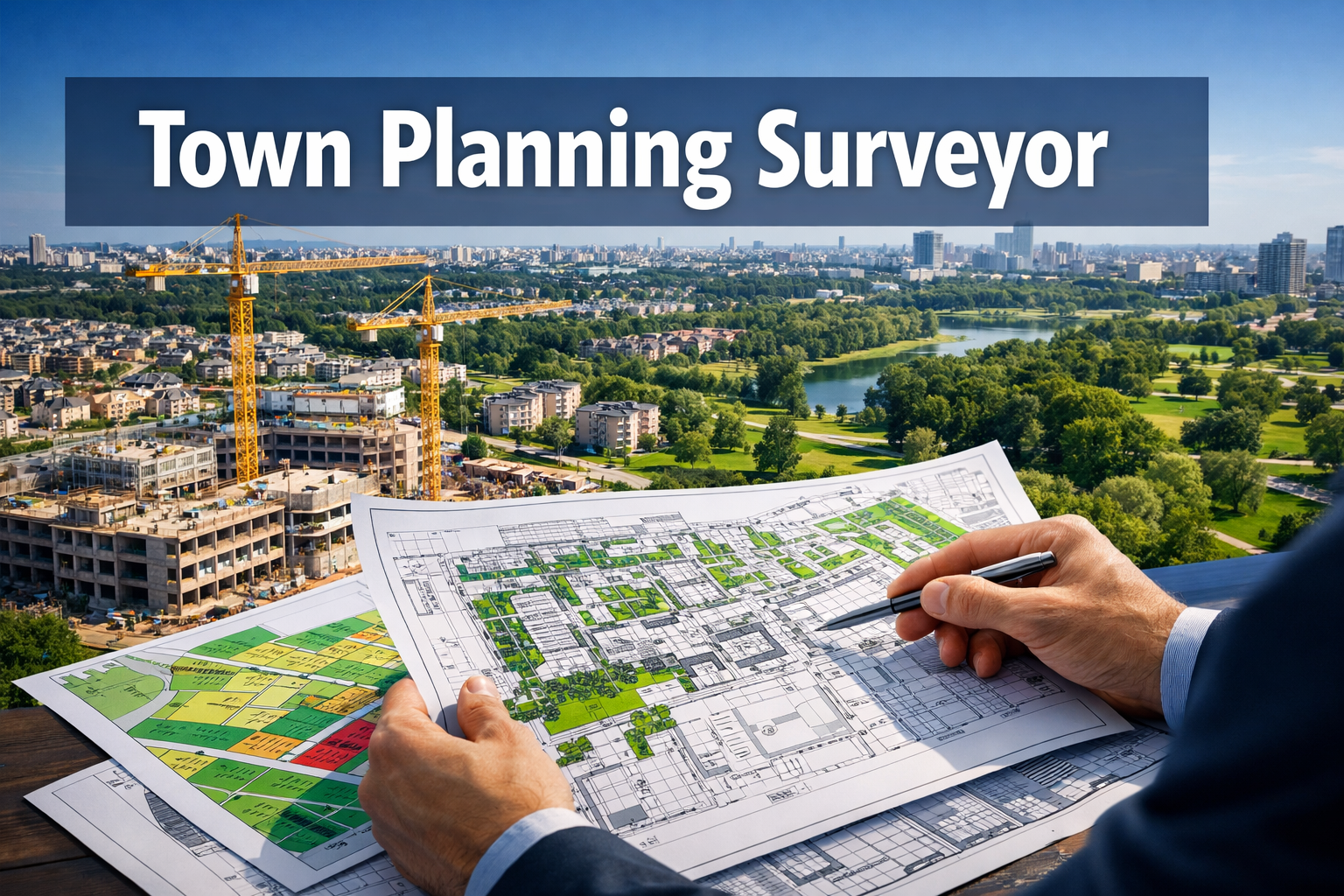
Imagine standing at the intersection of urban development, environmental protection, and property law—that’s exactly where a town planning surveyor operates every single day. In 2026, as cities expand and sustainable development becomes paramount, these specialized professionals have never been more crucial to shaping the built environment we all inhabit. A town planning surveyor combines technical surveying expertise with comprehensive knowledge of planning regulations to guide property developments from initial concept through to final approval.
Whether you’re considering a career in this dynamic field, need to hire a planning professional for your development project, or simply want to understand what these experts do, this comprehensive guide will illuminate everything you need to know about town planning surveyors and their vital role in modern property development.
Key Takeaways
- Town planning surveyors are specialized professionals who combine surveying expertise with planning law knowledge to facilitate property development and ensure regulatory compliance
- These professionals typically require a relevant degree, RICS accreditation, and extensive knowledge of local and national planning policies
- Town planning surveyors work across residential, commercial, and infrastructure projects, conducting site assessments, preparing planning applications, and liaising with local authorities
- Career prospects remain strong in 2026, with median salaries ranging from £35,000 for graduates to £65,000+ for chartered professionals
- Hiring a qualified town planning surveyor can significantly increase planning approval success rates and prevent costly development delays
What Is a Town Planning Surveyor?
A town planning surveyor is a qualified professional who specializes in the intersection of land surveying and urban planning. Unlike general chartered surveyors who focus primarily on property valuation or building condition, town planning surveyors possess specialized expertise in planning legislation, land use policies, and development regulations.
These professionals serve as crucial intermediaries between property developers, local planning authorities, and communities. Their work ensures that proposed developments comply with zoning regulations, environmental standards, and local development frameworks while maximizing the potential of land parcels.
Core Responsibilities
Town planning surveyors undertake a diverse range of responsibilities:
📋 Planning Application Preparation – Compiling comprehensive documentation including site plans, environmental impact assessments, and design statements to support planning applications
🔍 Site Assessment and Analysis – Conducting detailed surveys to evaluate land suitability, identify constraints, and assess development potential
📊 Policy Interpretation – Analyzing local development plans, national planning policy frameworks, and regional strategies to advise clients on compliance requirements
🤝 Stakeholder Liaison – Communicating with planning officers, council members, community groups, and other stakeholders throughout the planning process
⚖️ Planning Appeals – Representing clients in planning appeals and providing expert testimony when applications are refused
The Difference Between Town Planning Surveyors and Other Property Professionals
Understanding how town planning surveyors differ from related professionals helps clarify when their specific expertise is required.
| Professional Type | Primary Focus | When to Engage |
|---|---|---|
| Town Planning Surveyor | Planning permissions, land use, development feasibility | Pre-development planning, change of use applications, development strategy |
| Building Surveyor | Structural condition, construction defects, building regulations | Property condition assessments, renovation projects |
| Valuation Surveyor | Property market value, investment appraisal | Property valuations, mortgage purposes, tax assessments |
| Quantity Surveyor | Construction costs, contract administration | Cost estimation, tender processes, project budgeting |
| Party Wall Surveyor | Boundary disputes, party wall matters | Boundary issues, adjacent property concerns |
While there’s some overlap—particularly with general practice surveyors—town planning surveyors possess specialized knowledge that’s essential for navigating the complex planning system.
Qualifications and Training Required
Becoming a town planning surveyor requires substantial education and professional development. The pathway typically involves:
Educational Requirements
Undergraduate Degree 🎓
Most town planning surveyors hold a bachelor’s degree in one of these disciplines:
- Town and Country Planning
- Urban Planning and Development
- Surveying (with planning specialization)
- Geography with Planning
- Environmental Planning
These degrees must be accredited by the Royal Institution of Chartered Surveyors (RICS) or the Royal Town Planning Institute (RTPI) to provide a direct pathway to professional qualification.
Postgraduate Qualifications 📚
Many professionals enhance their credentials through:
- Master’s degrees in Urban Planning or Spatial Planning
- Postgraduate diplomas in Town Planning
- Specialist certifications in areas like environmental impact assessment or heritage conservation
Professional Accreditation
RICS Chartered Status
The gold standard for surveying professionals, RICS chartership requires:
- An accredited degree or equivalent qualification
- Minimum 24 months of structured training and experience
- Completion of the Assessment of Professional Competence (APC)
- Passing a final assessment interview
RTPI Membership
For those focusing specifically on planning:
- Completion of an RTPI-accredited degree
- Two years of practical experience in planning
- Completion of the Assessment of Professional Competence
- Commitment to continuing professional development (CPD)
Essential Skills and Knowledge
Beyond formal qualifications, successful town planning surveyors develop:
✅ Technical Proficiency – Competence in CAD software, GIS mapping systems, and planning databases
✅ Legal Knowledge – Comprehensive understanding of planning law, environmental legislation, and property rights
✅ Analytical Thinking – Ability to assess complex sites and identify opportunities and constraints
✅ Communication Skills – Excellent written and verbal communication for reports, presentations, and negotiations
✅ Project Management – Coordinating multiple stakeholders and managing timelines effectively
What Does a Town Planning Surveyor Actually Do?
The day-to-day work of a town planning surveyor varies considerably depending on their employer and specialization, but certain activities remain consistent across the profession.
Site Assessment and Feasibility Studies
Before any development proceeds, town planning surveyors conduct thorough site assessments to determine:
- Development Potential – Maximum permissible building size, height, and density based on local planning policies
- Physical Constraints – Topography, flood risk, contamination, access limitations, and ecological considerations
- Planning History – Previous applications, permissions, and enforcement actions affecting the site
- Policy Compliance – Alignment with local development plans, neighborhood plans, and national policy frameworks
These assessments inform feasibility studies that help developers understand whether a project is viable before committing significant resources.
Planning Application Preparation
Perhaps the most visible aspect of their work, town planning surveyors prepare comprehensive planning applications including:
📄 Application Forms and Fees – Ensuring correct submission procedures and payment
📐 Site Plans and Drawings – Accurate scaled drawings showing proposed development in context
📝 Design and Access Statements – Explaining design rationale and demonstrating compliance with planning policies
🌳 Supporting Documents – Environmental statements, transport assessments, heritage statements, and other technical reports
The quality of application preparation directly impacts approval likelihood. Experienced town planning surveyors understand what planning officers need to see and how to present proposals persuasively.
Negotiation and Liaison
Town planning surveyors spend considerable time in dialogue with:
Local Planning Authorities – Discussing proposals informally before submission, responding to officer concerns, and negotiating conditions
Statutory Consultees – Coordinating with highways authorities, environmental agencies, heritage bodies, and utility providers
Community Stakeholders – Addressing neighbor concerns and engaging with community groups when required
Development Teams – Working alongside architects, engineers, and commercial property surveyors to refine proposals
Planning Appeals and Enforcement
When applications are refused or enforcement action is threatened, town planning surveyors:
- Prepare appeal statements and supporting evidence
- Coordinate expert witnesses
- Represent clients at planning inquiries and hearings
- Negotiate with enforcement officers to resolve compliance issues
“The most successful town planning surveyors aren’t just technically competent—they’re skilled negotiators who understand the political and community context of planning decisions.” – Senior Planning Consultant, 2026
Types of Projects Town Planning Surveyors Work On
The versatility of town planning surveyors means they engage with an impressive variety of projects:
Residential Development
From single dwelling extensions to major housing estates, residential work includes:
- New build housing developments
- Residential conversions and change of use
- Extensions and alterations
- Garden developments and infill sites
- Affordable housing schemes
Commercial and Retail
Business-focused projects require understanding of economic viability and market demand:
- Office developments and business parks
- Retail units and shopping centers
- Hotels and hospitality venues
- Mixed-use developments combining residential and commercial elements
For complex commercial projects, town planning surveyors often collaborate with specialists in commercial property surveying.
Infrastructure and Public Sector
Large-scale infrastructure projects demand sophisticated planning expertise:
- Transport infrastructure (roads, rail, cycling facilities)
- Educational facilities (schools, colleges, universities)
- Healthcare facilities (hospitals, clinics, care homes)
- Renewable energy installations (solar farms, wind turbines)
- Telecommunications infrastructure
Specialist Applications
Niche areas requiring particular expertise include:
- Heritage and Conservation – Working with listed buildings and conservation areas
- Agricultural and Rural – Farm diversification, rural conversions, agricultural buildings
- Environmental – Ecological mitigation, contaminated land remediation
- Minerals and Waste – Extraction operations, waste management facilities
Career Progression and Salary Expectations in 2026
The town planning surveying profession offers clear career progression with corresponding financial rewards.
Career Pathway
Graduate/Assistant Town Planning Surveyor (0-2 years)
- Starting role supporting senior colleagues
- Learning planning systems and building experience
- Working toward professional qualifications
- Typical Salary: £25,000 – £35,000
Town Planning Surveyor (2-5 years)
- Chartered status achieved
- Managing own caseload of applications
- Developing specialist knowledge
- Typical Salary: £35,000 – £50,000
Senior Town Planning Surveyor (5-10 years)
- Leading complex projects
- Mentoring junior staff
- Business development responsibilities
- Typical Salary: £50,000 – £65,000
Principal/Associate (10+ years)
- Strategic leadership role
- Client relationship management
- Departmental oversight
- Typical Salary: £65,000 – £85,000+
Director/Partner
- Equity stake in consultancy
- Business strategy and growth
- High-profile project leadership
- Typical Salary: £85,000 – £150,000+
Employment Sectors
Town planning surveyors work across various sectors:
🏢 Private Consultancies – The largest employer, offering diverse project exposure and progression opportunities
🏛️ Local Authorities – Planning departments employ surveyors as planning officers and development management specialists
🏗️ Development Companies – In-house roles with housebuilders, commercial developers, and infrastructure companies
🎓 Academia and Research – Universities and research institutions employ planning experts for teaching and policy research
💼 Self-Employment – Experienced professionals often establish independent consultancies
How to Choose the Right Town Planning Surveyor
Whether you’re a property developer, homeowner, or business owner, selecting the right town planning surveyor significantly impacts project success.
Essential Criteria
1. Relevant Qualifications ✓
Look for RICS or RTPI chartered status—these demonstrate professional competence and adherence to ethical standards.
2. Local Knowledge 🗺️
Planning policies vary significantly between local authorities. A surveyor with experience in your specific area understands local planning officers, committee preferences, and policy nuances. For example, if your project is in Kingston or Richmond, seek professionals familiar with those boroughs.
3. Project-Specific Experience 🏗️
Ensure your surveyor has handled similar projects. Residential extension expertise doesn’t automatically translate to commercial development competence.
4. Track Record 📊
Request information about approval rates, typical timelines, and client references. Successful professionals willingly share this information.
5. Communication Style 💬
Planning processes can be lengthy and complex. Choose someone who communicates clearly, responds promptly, and keeps you informed throughout.
Questions to Ask Prospective Surveyors
- What’s your success rate with planning applications in this local authority?
- How many similar projects have you completed in the past year?
- What’s your approach to pre-application discussions with planning officers?
- What are your fee structures and what services are included?
- Who will be my primary contact throughout the process?
- What’s your realistic timeline for this type of application?
The Planning Process: What to Expect
Understanding the planning process helps set realistic expectations when working with a town planning surveyor.
Stage 1: Initial Consultation and Feasibility (1-2 weeks)
Your surveyor will:
- Review site details and your development aspirations
- Conduct preliminary planning policy research
- Identify obvious constraints or opportunities
- Provide initial feasibility assessment
- Outline likely costs and timelines
Stage 2: Detailed Assessment (2-4 weeks)
Comprehensive analysis including:
- Site visit and photographic survey
- Planning history search
- Constraints mapping (conservation areas, tree preservation orders, etc.)
- Policy analysis against local and national frameworks
- Identification of required supporting documents
Stage 3: Pre-Application Engagement (4-8 weeks)
Many successful applications benefit from pre-application discussions:
- Preparation of preliminary proposals
- Submission to local planning authority
- Meeting with planning officers
- Refinement of proposals based on feedback
This stage is optional but highly recommended for complex or sensitive projects.
Stage 4: Application Preparation (3-6 weeks)
Your surveyor coordinates:
- Commissioning of technical reports (ecology, transport, heritage, etc.)
- Preparation of planning drawings
- Drafting of planning statement and supporting documents
- Completion of application forms
- Submission to local planning authority
Stage 5: Determination Period (8-13 weeks)
Standard applications: 8 weeks
Major applications: 13 weeks
During this period, your surveyor:
- Monitors application progress
- Responds to officer queries and requests for additional information
- Negotiates amendments if concerns arise
- Coordinates with consultees
- Addresses neighbor objections
Stage 6: Decision and Beyond
If Approved ✅
- Review conditions and discharge requirements
- Advise on condition compliance
- Monitor implementation timelines
If Refused ❌
- Analyze refusal reasons
- Advise on appeal prospects
- Prepare appeal or revised application
- Represent client through appeal process
Common Challenges and How Town Planning Surveyors Overcome Them
Even experienced professionals encounter obstacles in the planning system. Understanding common challenges demonstrates the value skilled surveyors provide.
Challenge 1: Changing Planning Policies
Planning frameworks evolve continuously. In 2026, increased emphasis on sustainability, biodiversity net gain, and climate resilience has transformed assessment criteria.
Solution: Professional surveyors maintain current knowledge through CPD, subscribe to planning law updates, and participate in professional networks sharing best practice.
Challenge 2: Neighbor Objections
Local opposition can derail even policy-compliant proposals.
Solution: Proactive community engagement, careful design to minimize impacts, and clear communication addressing concerns demonstrate consideration and often neutralize opposition.
Challenge 3: Resource-Constrained Planning Departments
Many local authorities face staffing shortages, leading to delayed decisions and inconsistent advice.
Solution: Experienced surveyors build relationships with planning officers, submit high-quality applications requiring minimal clarification, and manage client expectations regarding timelines.
Challenge 4: Complex Site Constraints
Flood risk, contamination, access limitations, and ecological sensitivities can complicate development.
Solution: Early identification through thorough site assessment allows constraints to inform design from the outset rather than derailing applications later. Coordination with specialist consultants provides robust technical solutions.
Challenge 5: Viability and Policy Compliance
Balancing policy requirements (affordable housing, sustainability standards, public realm contributions) with development viability challenges many projects.
Solution: Transparent viability assessments, creative design solutions, and negotiation skills help achieve acceptable compromises between policy aspirations and economic reality.
The Future of Town Planning Surveying
The profession continues evolving in response to technological advancement, environmental imperatives, and societal change.
Emerging Trends in 2026
🌱 Sustainability Focus
Climate change mitigation and adaptation now dominate planning considerations. Town planning surveyors increasingly require expertise in:
- Carbon reduction strategies
- Biodiversity net gain calculations
- Sustainable drainage systems
- Renewable energy integration
💻 Digital Transformation
Technology is revolutionizing planning practice:
- AI-assisted policy analysis and compliance checking
- Virtual reality presentations for community consultation
- Digital twins for impact visualization
- Automated planning application systems
🏘️ Placemaking and Design Quality
Beyond regulatory compliance, emphasis on creating high-quality, livable environments requires:
- Design coding expertise
- Understanding of social infrastructure needs
- Community engagement skills
- Holistic place-based thinking
🔄 Circular Economy Principles
Resource efficiency and waste reduction influence development approaches:
- Adaptive reuse and conversion expertise
- Material lifecycle assessment
- Retrofit and regeneration specialization
Skills for Future Success
Town planning surveyors positioning themselves for long-term success should develop:
- Environmental expertise – Deep understanding of ecology, climate science, and sustainable development
- Data literacy – Ability to analyze spatial data, demographic trends, and environmental metrics
- Collaborative skills – Working across disciplines and with diverse stakeholders
- Commercial acumen – Understanding development economics and investment drivers
- Technological proficiency – Embracing digital tools and innovative presentation methods
Working With Other Property Professionals
Town planning surveyors rarely work in isolation. Successful projects require coordination with various specialists.
Complementary Professionals
Architects and Designers
Create detailed designs that town planning surveyors help navigate through the planning system.
Valuation Surveyors
Provide property valuations informing development viability and investment decisions.
Building Surveyors
Assess structural condition and building regulation compliance for conversion and renovation projects.
Party Wall Surveyors
Handle party wall matters when development affects adjoining properties.
Legal Advisors
Draft planning agreements, review conditions, and handle property transactions.
Environmental Consultants
Conduct ecological surveys, contamination assessments, and environmental impact studies.
This collaborative approach ensures all aspects of development—from initial concept through construction to occupation—receive appropriate specialist attention.
Regional Considerations for Town Planning in London and the South East
Planning requirements vary significantly across different local authorities. For those working in London and surrounding areas, understanding regional nuances is essential.
London-Specific Considerations
The capital operates under unique planning frameworks:
London Plan Compliance
All developments must align with the Mayor’s London Plan alongside local borough policies, adding complexity to policy analysis.
Affordable Housing Requirements
London boroughs typically require 35-50% affordable housing in residential schemes, significantly impacting viability.
Tall Buildings
Height restrictions and viewpoint assessments from protected vistas add layers of scrutiny to taller developments.
Transport and Connectivity
Public Transport Accessibility Levels (PTAL) heavily influence density permissions and parking requirements.
Whether working in Central London, West London, or outer boroughs like Bromley or Enfield, local policy variations demand area-specific expertise.
Home Counties Planning
Surrounding counties present different challenges:
Green Belt Protection
Surrey, Hertfordshire, and Buckinghamshire contain extensive Green Belt, where development faces stringent restrictions.
Conservation and Heritage
Historic market towns throughout the region require sensitive approaches to heritage assets.
Rural Character
Maintaining village character and preventing coalescence between settlements influences development patterns.
Infrastructure Capacity
School places, healthcare facilities, and transport infrastructure often constrain development in growing communities.
Conclusion: The Indispensable Role of Town Planning Surveyors
Town planning surveyors occupy a unique and vital position in the property development ecosystem. Their specialized expertise in planning law, policy interpretation, and development feasibility transforms aspirational concepts into approved, deliverable projects. In an era of increasing regulatory complexity, environmental scrutiny, and community engagement expectations, their role has never been more critical.
For property developers, engaging a qualified town planning surveyor early in the development process significantly increases success probability while reducing costly delays and revisions. For those considering this rewarding career, the combination of technical expertise, problem-solving, and tangible impact on the built environment offers lasting professional satisfaction.
As we progress through 2026 and beyond, town planning surveyors will continue shaping sustainable, livable communities that balance development needs with environmental protection and social value. Their work literally builds the future we’ll all inhabit.
Next Steps
If you’re planning a development project:
- Engage a qualified town planning surveyor during initial feasibility stages
- Request consultations from professionals with relevant local experience
- Visit Kingston Surveyors to explore comprehensive surveying services
- Prepare a clear brief outlining your development aspirations and constraints
If you’re considering a career as a town planning surveyor:
- Research RICS or RTPI accredited degree programs
- Seek work experience with planning consultancies or local authorities
- Join student membership of professional bodies
- Stay informed about planning policy developments through professional resources
If you need immediate planning advice:
- Compile all relevant site information and previous planning history
- Clarify your development objectives and timeline
- Contact experienced professionals in your area
- Consider pre-application advice to test proposal viability
The planning system can seem daunting, but with the right town planning surveyor guiding your project, navigating toward successful approval becomes a manageable, structured process. Their expertise transforms regulatory complexity into development opportunity, ensuring your project achieves its full potential while contributing positively to the built environment.