The rental market in 2026 presents a complex picture that challenges traditional valuation approaches. While tenant demand shows signs of recovery and many landlords exit the market, Valuation Adjustments for 2026 Rental Growth: Surveyor Insights on Tenant Demand and Supply Constraints have become essential for accurate property assessments. Professional surveyors now face the task of balancing declining rental rates against elevated absolute pricing levels and unprecedented vacancy rates that reached record highs of 7.3% in January 2026[1].
This evolving landscape requires sophisticated techniques for rental yield forecasts, particularly as the market transitions from the post-pandemic surge to a new equilibrium. Understanding these dynamics is crucial for property investors, landlords, and professionals seeking accurate valuations in today's recovering lettings market.
Key Takeaways
📊 Year-over-year rent growth declined -1.4% in early 2026, marking six consecutive months of declines, yet rents remain 25% higher than pre-pandemic levels[1][5]
🏢 National vacancy rates hit record 7.3% in January 2026, the highest since 2017, with projections showing elevated levels above 7% continuing through most of the year[1]
💰 Strategic valuation adjustments must account for regional disparities, with high-supply markets facing further challenges while markets with stronger job growth show stability
⏱️ Median list-to-lease time extended to 41 days, indicating slower tenant absorption and requiring adjustments to void period assumptions in valuations[1]
✅ Payment performance improved to 83.7% on-time payments in February 2026, up 135 basis points from September 2025's low, suggesting gradual market stabilization[3]
Understanding Current Rental Market Dynamics and Tenant Demand Patterns
The Paradox of Declining Growth and Elevated Pricing
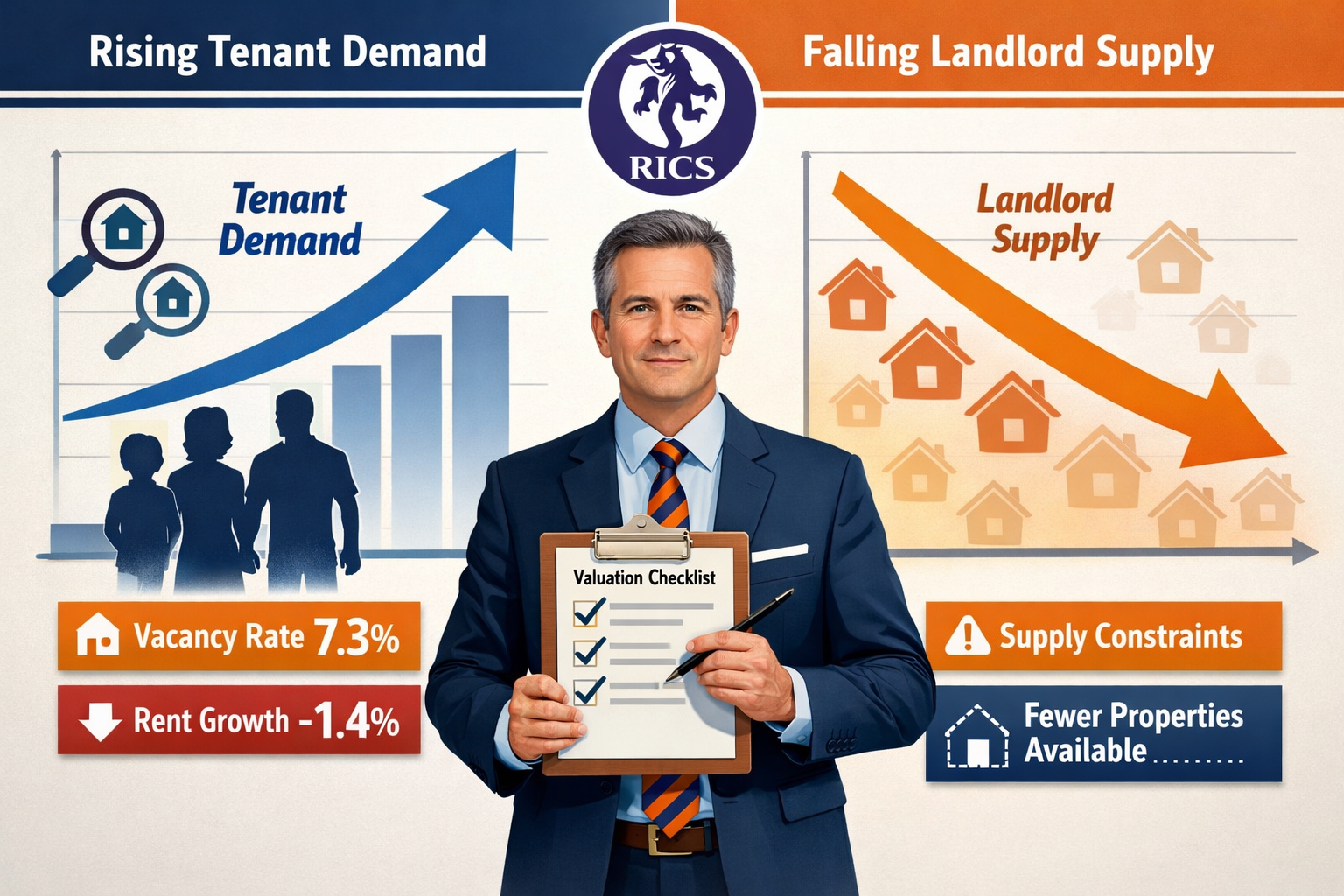
The rental market in 2026 presents what appears to be contradictory signals. Effective rent growth declined 0.8% for the full year according to Moody's Analytics CRE data[5], yet the national median rent of $1,353 in January 2026 sits only $9 below the pre-pandemic growth trajectory[1]. This seeming paradox requires careful interpretation when conducting property valuations.
The key insight: Rents remain approximately 25% higher than 2019 levels[5], meaning the market has essentially normalized the extraordinary gains from 2021-2022 rather than experiencing a true correction. For surveyors, this distinction is critical when establishing comparable evidence and making adjustments for rental growth assumptions.
"The post-2021/2022 rent surge has been nearly fully reversed, yet absolute pricing remains substantially elevated compared to historical norms."
Vacancy Rates and Supply Constraints
The record 7.3% national vacancy rate represents the highest reading since 2017[1], fundamentally altering the supply-demand equation that underpins rental valuations. This elevated vacancy is projected to remain above 7% through most of 2026, driven by:
- Continued new supply deliveries exceeding demand recovery in many markets
- Geographic concentration of new construction in already oversupplied areas
- Slower tenant absorption as evidenced by the 41-day median list-to-lease time[1]
When preparing valuation reports, surveyors must adjust void period assumptions accordingly. Traditional assumptions of 2-4 weeks between tenancies may no longer reflect market reality in high-vacancy areas.
Regional Disparities in Tenant Demand
The national averages mask significant regional variations that demand localized valuation approaches. High-supply markets like Austin face continued pressure, while markets with fewer new deliveries and stronger job growth demonstrate better stability[1].
| Market Type | Vacancy Trend | Rent Growth Outlook | Valuation Adjustment |
|---|---|---|---|
| High-Supply Markets | ⬆️ Increasing | ⬇️ Negative/Flat | Downward adjustment 5-10% |
| Balanced Markets | ➡️ Stable | ➡️ Modest positive | Minimal adjustment ±2% |
| Supply-Constrained | ⬇️ Decreasing | ⬆️ Positive growth | Upward adjustment 3-7% |
This regional variation necessitates that surveyors price to local market conditions rather than relying on national averages[1], a principle that aligns with RICS guidance on comparable evidence selection.
Concession Strategies and Effective Rent Analysis
Approximately 35% or more of properties are offering concessions[1], introducing complexity into rental valuation analysis. Surveyors must distinguish between:
- Headline rent (advertised monthly rate)
- Effective rent (actual revenue after concessions)
- Net effective rent (accounting for void periods)
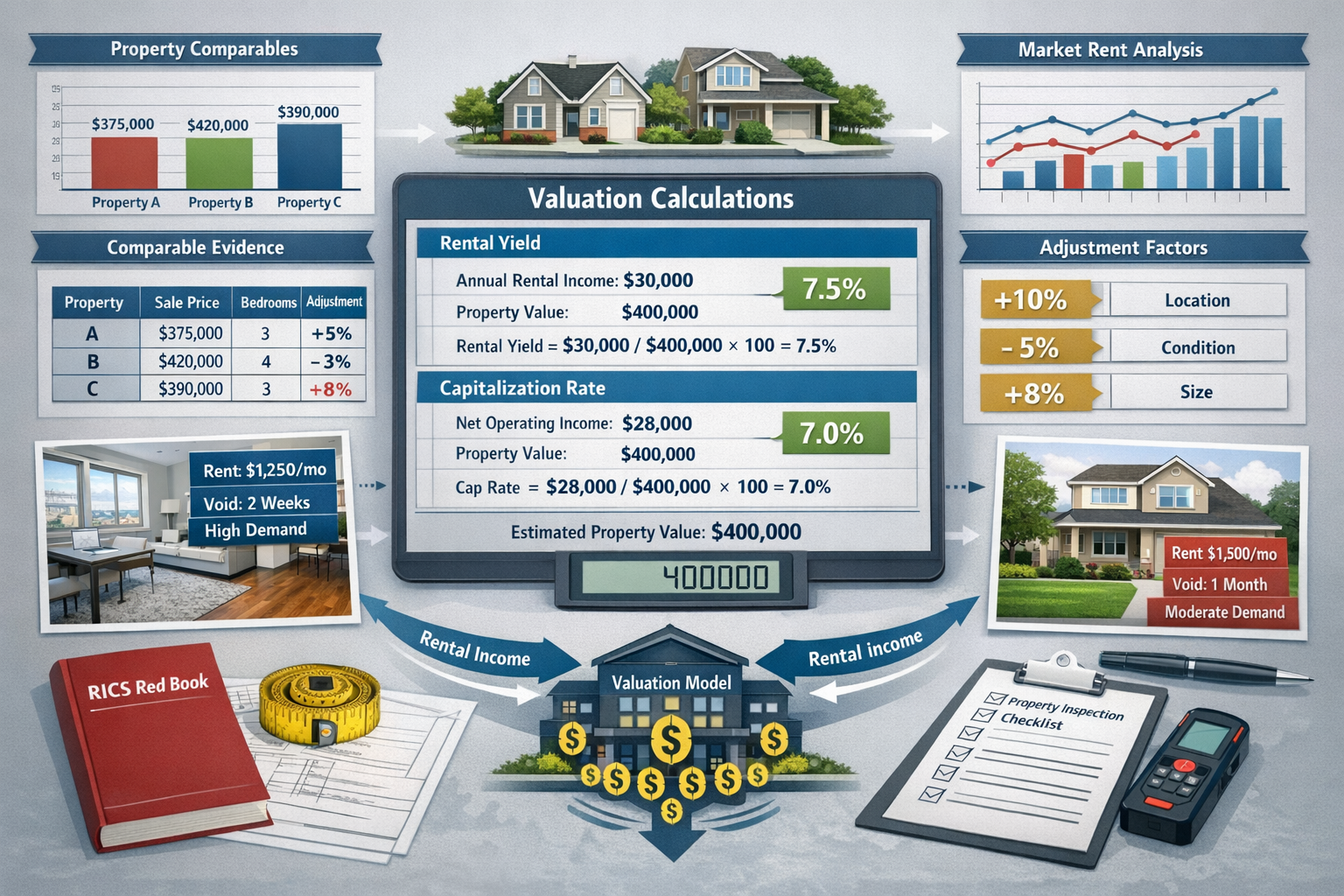
When conducting Red Book valuations, the effective rent provides the most accurate basis for income capitalization approaches. A property advertising at £1,500 per month with two months free on a 12-month lease has an effective rent of only £1,250 per month.
Surveyor Techniques for Valuation Adjustments for 2026 Rental Growth
Income Capitalization Approach Modifications
The traditional income approach requires significant modifications in the current market environment. Surveyors must adjust several key inputs:
1. Rental Income Assumptions
Rather than projecting historical growth rates forward, surveyors should:
- Analyze trailing 6-month rental trends to capture recent deceleration
- Apply market-specific growth rates based on local supply pipelines
- Incorporate concession costs into effective rental income calculations
- Adjust for extended void periods reflecting the 41-day list-to-lease median[1]
2. Capitalization Rate Adjustments
Cap rates must reflect increased market risk and uncertainty. Appropriate adjustments include:
- Adding 25-50 basis points for markets with elevated vacancy rates above 8%
- Reducing rates by 15-25 basis points for supply-constrained markets with strong fundamentals
- Incorporating tenant credit risk based on payment performance data (currently 83.7% on-time payments)[3]
3. Stabilized Occupancy Revisions
Traditional assumptions of 95% stabilized occupancy may be overly optimistic. Current market conditions suggest:
- 90-92% stabilized occupancy for high-supply markets
- 93-95% stabilized occupancy for balanced markets
- 95-97% stabilized occupancy for supply-constrained locations
Comparable Evidence Analysis and Adjustments
Selecting appropriate comparables requires heightened scrutiny in 2026's volatile market. Key considerations for valuation factors include:
Time Adjustments
Given the -1.4% year-over-year rent decline[1], comparables older than 6 months require careful time adjustments:
- Recent comparables (0-3 months): Minimal adjustment
- Moderately dated (3-6 months): +0.5% to +1.0% adjustment
- Older comparables (6-12 months): +1.5% to +2.5% adjustment
These adjustments reflect the ongoing market deceleration and should be applied cautiously based on local market velocity.
Concession Adjustments
When comparables include concessions, surveyors must normalize to effective rent:
Effective Monthly Rent = (Headline Rent × Months Paid) ÷ Total Lease Months
For example, a comparable at £1,600/month with 1 month free on a 12-month lease yields an effective rent of £1,467/month, requiring a -8.3% adjustment when comparing to non-concessionary properties.
Location and Amenity Adjustments
With 35%+ of properties offering concessions[1], quality differentiation has intensified. Properties with superior amenities command premiums:
- Modern appliances and finishes: +3% to +5%
- In-unit laundry: +2% to +4%
- Parking included: +5% to +8%
- Premium locations near transit: +7% to +12%
Rental Yield Forecasting Methodologies
Accurate yield forecasting requires integrating multiple data streams and market indicators:
Short-Term Forecasts (6-12 months)
For near-term projections, surveyors should employ a weighted average approach:
- Historical trend analysis (30% weight): Examine trailing 12-month performance
- Current market indicators (40% weight): Vacancy rates, list-to-lease times, concession prevalence
- Supply pipeline analysis (30% weight): Scheduled deliveries and absorption rates
Given current conditions showing -1.4% year-over-year growth[1] and elevated vacancy, conservative short-term forecasts of -0.5% to +1.0% appear appropriate for most markets.
Medium-Term Forecasts (1-3 years)
Medium-term projections should account for supply normalization and demand recovery:
- Markets with high current vacancy (>8%): Expect gradual recovery with +1.5% to +2.5% annual growth as supply moderates
- Balanced markets (5-7% vacancy): Project +2.5% to +3.5% annual growth aligned with wage inflation
- Supply-constrained markets (<5% vacancy): Forecast +3.5% to +5.0% annual growth with strong fundamentals
These projections assume gradual economic stability and employment growth, factors that professional chartered surveyors must continuously monitor and adjust.
Risk-Adjusted Valuation Frameworks
The elevated uncertainty in 2026's rental market necessitates risk-adjusted valuation approaches:
Scenario Analysis
Rather than single-point estimates, surveyors should present multiple scenarios:
- Base case (50% probability): Moderate recovery with gradual rent growth normalization
- Downside case (25% probability): Extended vacancy elevation with continued rent pressure
- Upside case (25% probability): Faster-than-expected supply absorption and demand recovery
This approach provides stakeholders with a range of values reflecting market uncertainty, typically spanning 8-15% from downside to upside scenarios.
Sensitivity Analysis
Key variables warranting sensitivity testing include:
- Vacancy rate changes: Each 1% vacancy increase typically reduces NOI by 1.5-2%
- Rental growth assumptions: Each 1% change in annual growth affects value by 8-12% over a 10-year hold
- Exit cap rate: Each 25 basis point change affects terminal value by approximately 5%
Strategic Considerations for Property Investors and Landlords
Landlord Exit Trends and Market Implications
RICS reports indicate rising landlord exits from the rental market, driven by:
- Regulatory pressures and compliance costs
- Tax treatment changes affecting buy-to-let returns
- Attractive exit pricing despite recent moderation
- Aging landlord demographics and succession planning
This trend creates supply constraints in certain segments, particularly in the traditional buy-to-let sector serving individual tenants. For surveyors conducting probate valuations or matrimonial valuations, understanding these exit dynamics is essential for accurate market positioning.
Tenant Payment Performance and Credit Risk
The improvement in on-time rental payments to 83.7% in February 2026[3], up from 82.8% in January and 135 basis points above September 2025's low, signals gradual stabilization in tenant credit quality. However, this still represents approximately 16% of tenants experiencing payment difficulties.
Valuation adjustments for credit risk should consider:
- Geographic concentration of payment issues
- Property type and price point correlation with payment performance
- Collection policies and enforcement capabilities of management
- Bad debt reserves of 2-3% for properties serving credit-challenged tenants
Optimal Pricing Strategies for Landlords
With 35%+ of properties offering concessions[1], landlords and their surveyors must develop strategic pricing approaches:
Market Positioning Analysis
Rather than automatic concessions, successful operators:
- Benchmark against local competition within a 1-mile radius
- Analyze absorption rates at different price points
- Calculate concession break-even points considering holding costs
- Test pricing elasticity with small adjustments before major reductions
Value-Add Opportunities
In a competitive market, differentiation through improvements can justify premium pricing:
- Minor cosmetic updates: 3-5% rent premium
- Energy efficiency improvements: 2-4% premium plus reduced void periods
- Smart home technology: 4-6% premium for tech-savvy demographics
- Flexible lease terms: Faster absorption offsetting modest rate concessions
These value-add strategies align with professional guidance from RICS registered valuers on maximizing rental income potential.
Portfolio Optimization and Diversification
For investors holding multiple properties, portfolio-level optimization becomes critical:
Geographic Diversification
Given wide regional disparities, portfolios should balance:
- Core holdings (60-70%): Stable markets with moderate growth and lower volatility
- Growth allocations (20-30%): Supply-constrained markets with above-average appreciation potential
- Opportunistic positions (10-20%): Distressed or transitioning markets offering value-add opportunities
Property Type Diversification
Different rental segments demonstrate varying resilience:
- Single-family rentals: Often show stronger tenant retention and payment performance
- Multifamily apartments: Benefit from economies of scale in management
- Student housing: Demonstrates counter-cyclical characteristics
- Senior housing: Growing demographic demand provides long-term support
Professional Valuation Timing and Frequency
The volatile 2026 market environment necessitates more frequent valuation updates:
- Annual valuations: Minimum for all investment properties
- Semi-annual reviews: Recommended for portfolios exceeding £5 million
- Quarterly monitoring: Advisable for properties in high-volatility markets
Professional valuation services provide the documentation necessary for:
- Refinancing decisions based on current market values
- Portfolio rebalancing and disposition strategies
- Tax planning including capital gains tax valuations
- Insurance coverage through reinstatement cost valuations
Regulatory Compliance and Reporting Requirements
Landlords must ensure valuations meet regulatory standards:
RICS Red Book Compliance
Professional valuations for lending, financial reporting, or litigation should adhere to RICS standards, ensuring:
- Independence and objectivity of the valuer
- Appropriate methodology selection and application
- Market evidence documentation supporting conclusions
- Assumptions and special assumptions clearly stated
Tax Reporting Valuations
Specific valuation types serve distinct tax purposes:
- ATED valuations for Annual Tax on Enveloped Dwellings
- Stamp Duty Land Tax assessments for acquisitions
- Inheritance tax valuations for estate planning
- Capital gains baseline valuations for future disposal calculations
Conclusion
Valuation Adjustments for 2026 Rental Growth: Surveyor Insights on Tenant Demand and Supply Constraints reflect a rental market in transition. While year-over-year rent growth stands at -1.4%[1] and vacancy rates reached record 7.3% levels[1], rents remain 25% above pre-pandemic levels[5], creating a complex valuation environment that demands sophisticated analytical approaches.
Professional surveyors must navigate this landscape by:
✅ Adjusting traditional methodologies to account for elevated vacancy, extended lease-up periods, and widespread concession offerings
✅ Applying regional analysis rather than relying on national averages, recognizing that market conditions vary dramatically by location
✅ Incorporating risk-adjusted frameworks including scenario analysis and sensitivity testing to reflect market uncertainty
✅ Monitoring leading indicators such as payment performance (currently 83.7% on-time)[3], supply pipelines, and employment trends
For property investors and landlords, the improving payment performance and gradual market stabilization suggest opportunities in the recovering lettings market. However, success requires strategic positioning, accurate valuations, and professional guidance from qualified surveyors who understand both current conditions and forward-looking trends.
Actionable Next Steps
For Property Owners:
- Commission a professional property valuation to establish current market value
- Review rental pricing against local comparables, adjusting for effective rent after concessions
- Assess portfolio diversification and consider rebalancing based on regional performance disparities
For Investors:
- Identify supply-constrained markets with strong job growth for acquisition opportunities
- Conduct due diligence on payment performance trends in target markets
- Engage chartered surveyors for comprehensive market analysis before significant capital deployment
For Professional Advisors:
- Update valuation models to reflect current vacancy rates and lease-up timelines
- Enhance comparable analysis protocols to account for concession normalization
- Develop client communication materials explaining the paradox of declining growth amid elevated absolute pricing
The rental market of 2026 presents both challenges and opportunities. Those who adapt their valuation approaches to reflect current realities—rising tenant demand amid supply constraints, landlord exits creating market gaps, and regional performance disparities—will be best positioned to make informed decisions in this evolving landscape.
References
[1] Navigating Rental Landscape Feb 2026 – https://www.apartmentlist.com/rental-management/navigating-rental-landscape-feb-2026
[2] Market Updates February 2026 – https://www.wolfnest.com/blog/market-updates-february-2026
[3] Independent Landlord Rental Performance Report February 2026 – https://www.chandan.com/post/independent-landlord-rental-performance-report-february-2026
[4] Tony Alexander Survey Report February 2026 – https://www.crockers.co.nz/knowledge-hub/tony-alexander-investor-insights/tony-alexander-survey-report-february-2026/
[5] U S Multifamily Market Snapshot February 2026 – https://arbor.com/blog/u-s-multifamily-market-snapshot-february-2026/
[6] Watch – https://www.youtube.com/watch?v=yNoI77MymcE
[7] 2026 Valuation Advisory North American Market Survey – https://www.nmrk.com/insights/market-report/2026-valuation-advisory-north-american-market-survey
[8] Driving Property Management Growth With Short Term Rental Trends – https://www.keydatadashboard.com/blog/driving-property-management-growth-with-short-term-rental-trends