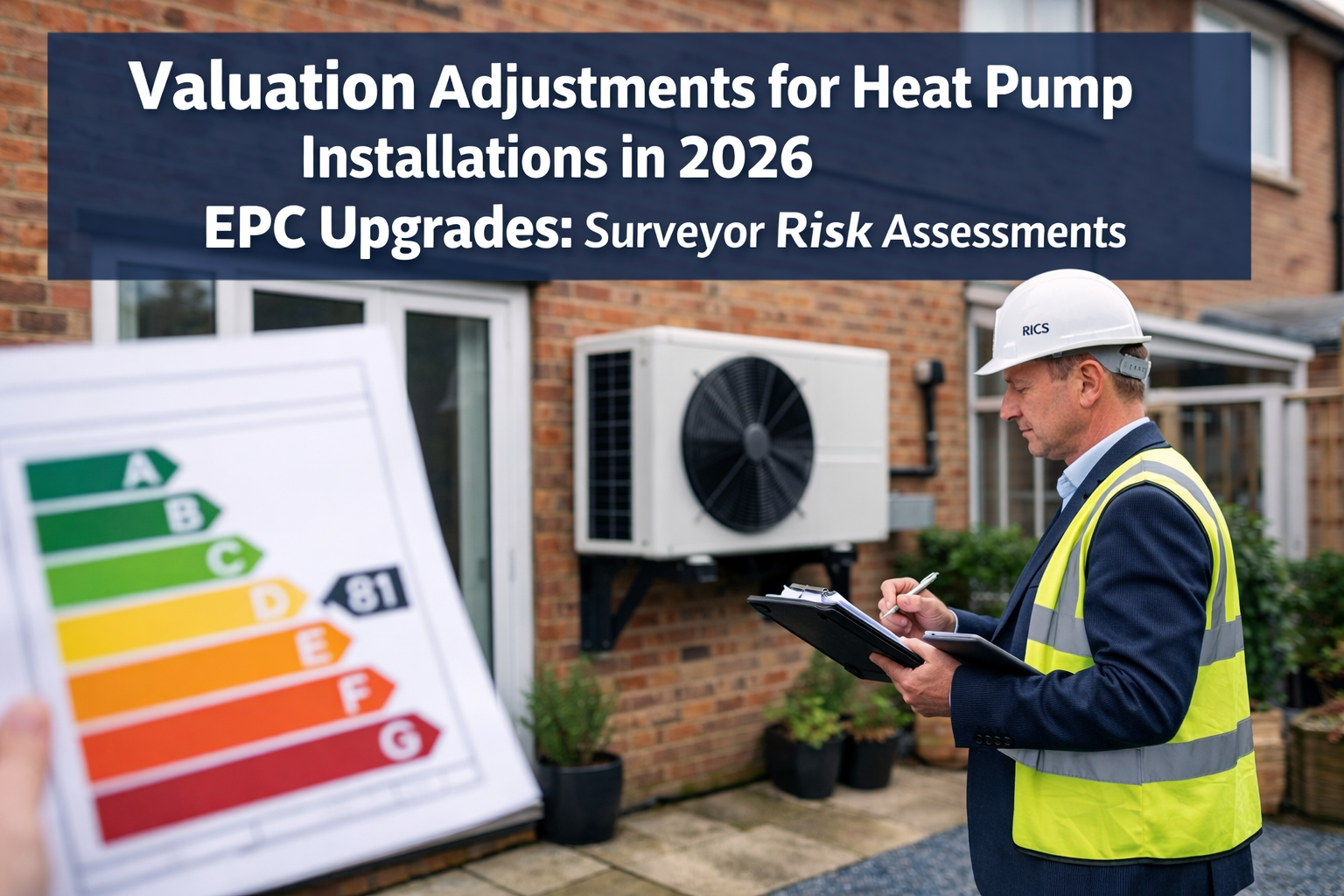

Net Zero targets have accelerated heat pump retrofits across the UK property market, but the reality on the ground tells a more complex story. While government incentives push homeowners toward low-carbon heating, surveyors are increasingly called to resolve valuation disputes triggered by noise complaints, installation defects, and efficiency shortfalls. In 2026, understanding how RICS-accredited professionals assess post-installation property impacts has become essential for homeowners, landlords, and lenders alike.
The intersection of environmental policy and property valuation has created new challenges for chartered surveyors evaluating Valuation Adjustments for Heat Pump Installations in 2026 EPC Upgrades: Surveyor Risk Assessments. With the new Home Energy Model rolling out this year and stricter EPC requirements on the horizon, the methodology for appraising heat pump installations demands rigorous technical assessment combined with market evidence.
Key Takeaways
- 🏠 Heat pump installations can create valuation adjustments ranging from -2% to +5% depending on installation quality, noise compliance, and efficiency performance
- 📊 The new Home Energy Model in 2026 assesses heat pumps more accurately using real-world hourly temperature data rather than generic assumptions[1]
- ⚖️ RICS surveyors now employ specific risk assessment frameworks that evaluate technical compliance, neighbor impact, and long-term maintenance obligations
- 💰 Valuation disputes increasingly center on noise levels and installation defects rather than energy efficiency benefits alone
- 📋 Proper documentation including warranties, planning permissions, and MCS certification significantly influences surveyor assessments and final valuations
Understanding Heat Pump Valuation Context in 2026
The landscape for Valuation Adjustments for Heat Pump Installations in 2026 EPC Upgrades: Surveyor Risk Assessments has fundamentally shifted. Air-source heat pumps (ASHPs) are now confirmed as eligible energy-saving improvements under new EPC funding schemes, often paired with solar panels to maximize energy efficiency gains[2].
The New Home Energy Model Impact
The introduction of the Home Energy Model represents a paradigm shift in how heat pump installations are evaluated. Unlike previous assessment methods that relied on standardized assumptions, the 2026 model evaluates real-world factors including:
- Hourly temperature variations throughout the year
- Specific heating needs per property type
- Actual system performance data
- Regional climate differences
- Building fabric efficiency
This granular approach means surveyors can no longer rely on generic valuation adjustments. Each heat pump installation requires individualized assessment based on measurable performance metrics[1].
Market Context and Property Values
The property market has responded cautiously to heat pump installations. While energy efficiency improvements theoretically increase property values, real-world evidence shows considerable variation. Properties with poorly installed or excessively noisy systems have experienced valuation reductions, while well-executed installations in appropriate properties command premiums.
According to recent market analysis, the value proposition of heat pumps is increasingly measured as long-term infrastructure investment rather than short-term appliance upgrades. This perspective emphasizes reduced energy consumption, lower maintenance requirements, and enhanced home comfort over extended periods[3].
RICS Surveyor Risk Assessment Framework for Heat Pump Installations
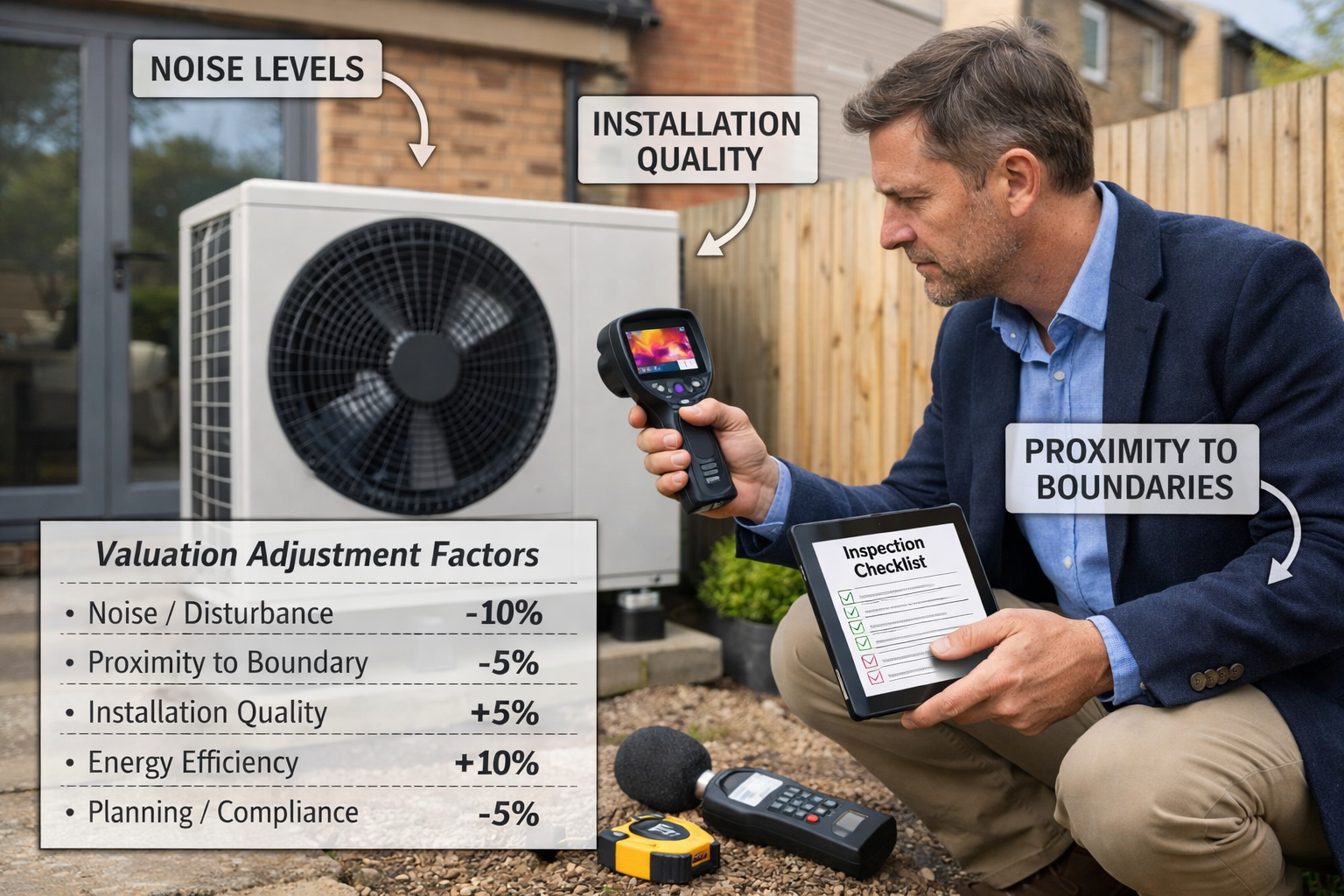
Professional surveyors conducting Valuation Adjustments for Heat Pump Installations in 2026 EPC Upgrades: Surveyor Risk Assessments employ comprehensive frameworks that evaluate multiple risk dimensions. These assessments protect both buyers and lenders from overvaluing properties with problematic installations.
Technical Compliance Assessment
Installation Quality Standards
Surveyors examine whether heat pump installations meet current Building Regulations and manufacturer specifications. Key inspection points include:
- MCS Certification: Microgeneration Certification Scheme approval confirms installer competence
- Electrical Safety: Proper wiring, circuit protection, and earth bonding
- Refrigerant Handling: Correct charging and leak prevention measures
- Structural Integration: Appropriate mounting, vibration isolation, and weatherproofing
- System Sizing: Accurate heat loss calculations matching pump capacity
Properties lacking proper certification or displaying installation defects typically receive negative valuation adjustments ranging from 1-3% depending on severity.
Noise and Neighbor Impact Evaluation
Noise complaints represent the single largest source of heat pump-related valuation disputes. RICS surveyors now routinely assess:
| Noise Factor | Assessment Criteria | Valuation Impact |
|---|---|---|
| Sound Pressure Level | Measured in dBA at boundary | High noise: -2% to -5% |
| Operating Hours | Night-time operation frequency | Continuous night operation: -1% to -3% |
| Proximity to Boundaries | Distance to neighboring properties | <1 meter: significant negative impact |
| Acoustic Barriers | Presence of noise mitigation | Proper barriers: neutral to positive |
| Complaint History | Documented neighbor disputes | Active disputes: -3% to -7% |
Professional chartered surveyors across London and surrounding areas increasingly recommend acoustic surveys as part of comprehensive property assessments when heat pumps are present.
Energy Performance Verification
The 2026 EPC regulations require more rigorous verification of actual energy performance. Surveyors assess:
- Seasonal Performance Factor (SPF): Real-world efficiency measurements
- Heat Distribution System: Compatibility with underfloor heating or radiators
- Control Systems: Smart thermostats and zoning capabilities
- Backup Heating: Presence and integration of supplementary systems
- Historical Energy Bills: Evidence of actual consumption reductions
Properties demonstrating verified energy savings of 30% or more compared to previous heating systems may receive valuation premiums of 2-5%, particularly in areas with strong environmental awareness[4].
Planning and Legal Compliance
Surveyors verify that heat pump installations comply with:
- Permitted Development Rights: Ensuring installations meet exemption criteria
- Planning Permission: Where required for listed buildings or conservation areas
- Building Control Approval: Completion certificates for notifiable work
- Party Wall Considerations: Neighbor agreements where relevant
- Covenant Compliance: Adherence to property deed restrictions
Missing documentation creates valuation uncertainty and may result in conservative adjustments or mortgage lending restrictions. Professional RICS valuation services routinely verify these compliance elements.
Practical Valuation Adjustment Methodology
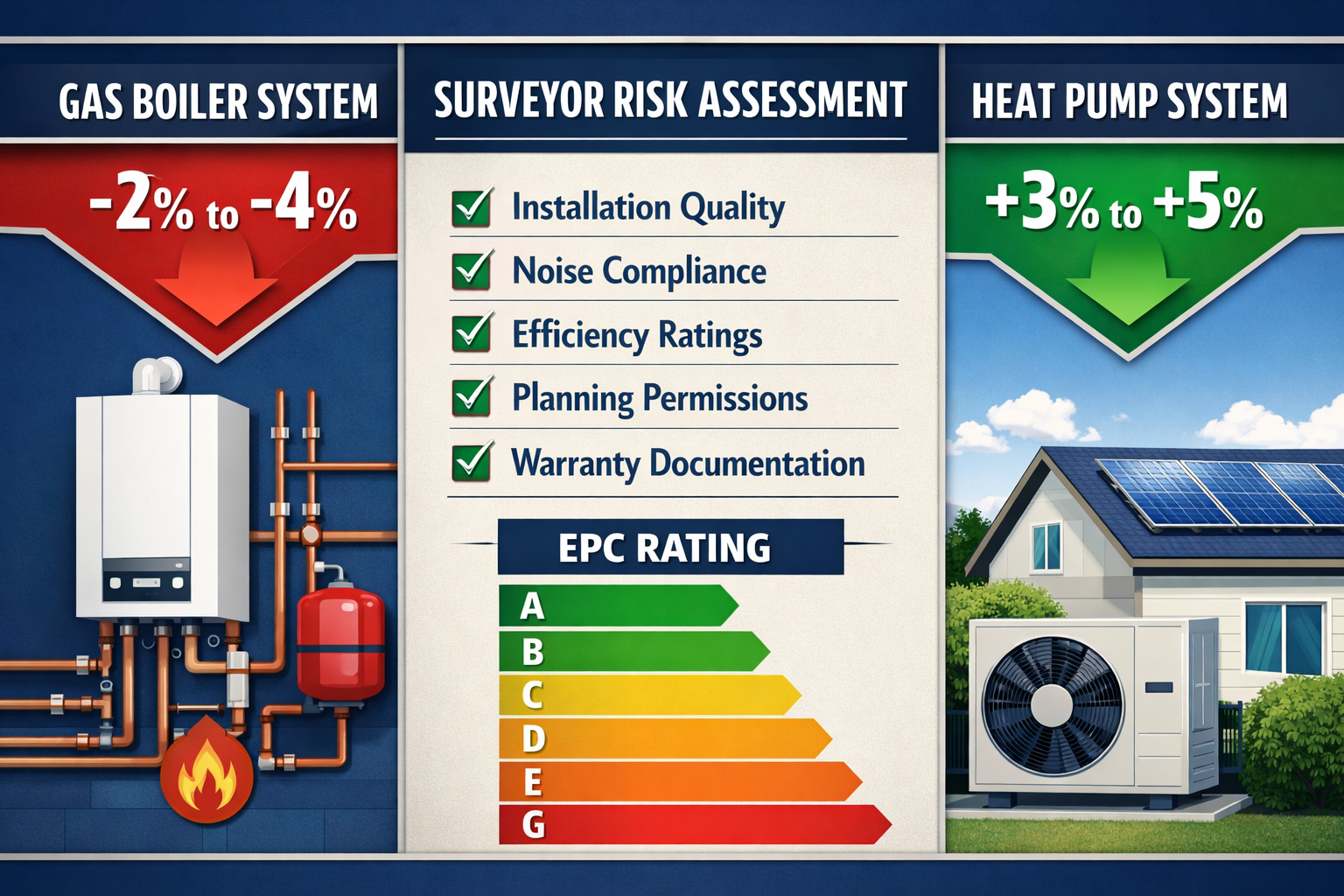
When conducting Valuation Adjustments for Heat Pump Installations in 2026 EPC Upgrades: Surveyor Risk Assessments, RICS professionals follow systematic approaches that balance technical assessment with market evidence.
Comparative Market Analysis Approach
Surveyors analyze recent sales of comparable properties both with and without heat pump installations. This methodology requires:
Matched Pair Analysis
Identifying properties with similar characteristics except for heating systems provides the most reliable valuation evidence. Surveyors consider:
- Property type, age, and size
- Location and neighborhood characteristics
- Overall condition and specification
- Sale timing and market conditions
- Presence of other energy efficiency measures
In practice, finding perfect matched pairs proves challenging, requiring surveyors to apply professional judgment when adjusting for differences.
Cost-Based Adjustment Method
This approach considers the installation cost relative to property value and expected lifespan. Key calculations include:
- Installation Cost: Typical ASHP installations range £7,000-£14,000
- Grant Deductions: Boiler Upgrade Scheme provides £7,500 toward costs[2]
- Net Investment: Actual homeowner expenditure after grants
- Depreciation: Expected system lifespan of 15-20 years
- Value Contribution: Proportion of cost reflected in property value
Generally, heat pump installations contribute 50-80% of net cost to property value when properly installed and documented. Poorly executed installations may contribute nothing or create negative value.
Income Capitalization for Rental Properties
For landlords facing upcoming EPC requirements, heat pump installations represent compliance investments. The 2030 roadmap indicates that private rental properties will need minimum EPC ratings of C, with potential progression to B ratings[7].
Surveyors assess rental property valuations by considering:
- Rental Premium: Energy-efficient properties commanding higher rents
- Tenant Demand: Preference for lower energy bills
- Compliance Value: Avoiding future enforcement and penalties
- Operating Cost Savings: Reduced maintenance versus gas boilers
- Financing Implications: Access to green mortgages and favorable lending terms
Properties meeting future EPC requirements through heat pump installations may receive valuation premiums of 3-8% in the rental sector, reflecting both compliance value and enhanced marketability.
Risk-Adjusted Valuation Framework
Professional surveyors apply risk adjustments based on identified issues:
Low Risk Installations (Premium: +2% to +5%)
- MCS certified installation
- Noise levels <42dBA at boundaries
- Verified SPF >3.0
- Complete documentation
- No neighbor complaints
- Appropriate property type
Medium Risk Installations (Neutral: -1% to +1%)
- Basic compliance met
- Minor documentation gaps
- Noise levels 42-48dBA
- Adequate but not optimal performance
- Older installation requiring monitoring
High Risk Installations (Penalty: -2% to -7%)
- Non-certified installation
- Active noise complaints
- Noise levels >48dBA
- Poor performance verification
- Missing critical documentation
- Structural concerns
Experienced RICS registered valuers apply these frameworks while considering local market conditions and buyer preferences.
Regional Variations and Market Acceptance
The impact of Valuation Adjustments for Heat Pump Installations in 2026 EPC Upgrades: Surveyor Risk Assessments varies significantly by region and property type.
Urban vs. Rural Considerations
Urban Properties: Terraced houses and semi-detached properties in dense urban areas face greater challenges with heat pump installations due to:
- Limited external space for unit placement
- Closer proximity to neighbors increasing noise impact
- Stricter planning controls in conservation areas
- Higher baseline property values reducing percentage impact
Rural Properties: Detached homes with larger plots typically experience more positive valuation impacts:
- Greater separation from neighbors minimizing noise concerns
- Absence of mains gas making heat pumps more competitive
- Stronger environmental values among rural buyers
- Lower installation complexity with more space
Property Type Suitability
Surveyors assess whether properties are fundamentally suitable for heat pump installations:
| Property Type | Suitability | Typical Valuation Impact |
|---|---|---|
| Modern detached (post-2000) | Excellent | +3% to +5% |
| Well-insulated semi-detached | Good | +1% to +3% |
| Mid-terrace with solid walls | Poor to Fair | -1% to +1% |
| Period properties (pre-1920) | Challenging | -2% to +2% |
| Flats and apartments | Very Limited | Often negative |
Properties with poor thermal efficiency require extensive fabric improvements before heat pumps deliver value, creating compound investment requirements that surveyors factor into valuations.
Documentation Requirements for Optimal Valuations
Comprehensive documentation significantly influences surveyor assessments. Property owners seeking favorable Valuation Adjustments for Heat Pump Installations in 2026 EPC Upgrades: Surveyor Risk Assessments should maintain:
Essential Documentation Package
✅ Installation Certificates
- MCS certificate with installer details
- Building Control completion certificate
- Electrical installation certificate (Part P)
- Commissioning records and system settings
✅ Performance Evidence
- EPC certificates (before and after installation)
- Smart meter data showing consumption patterns
- Annual maintenance records
- Seasonal Performance Factor measurements
✅ Compliance Documentation
- Planning permission (if required)
- Permitted development compliance statement
- Noise assessment report (if conducted)
- Neighbor notification records
✅ Warranty and Support
- Manufacturer warranty documentation (typically 5-10 years)
- Installer workmanship warranty
- Insurance-backed guarantees
- Service contract details
✅ Financial Records
- Installation invoices and payment records
- Grant funding confirmation (Boiler Upgrade Scheme)
- Energy bill comparisons
- Maintenance cost history
Properties with complete documentation packages consistently achieve higher valuations than those with missing or incomplete records. Professional surveyors conducting valuation reports specifically request these documents during assessment processes.
Mortgage Lending and Valuation Implications
Lenders have developed specific policies regarding heat pump installations that influence surveyor assessments:
Lending Criteria Considerations
Positive Factors:
- Improved EPC ratings (C or above)
- Access to green mortgage products with preferential rates
- Reduced default risk from lower energy costs
- Enhanced property marketability
Negative Factors:
- Incomplete installations affecting property saleability
- Active disputes with neighbors
- Non-standard installations requiring specialist assessment
- Properties over-improved relative to local market
Mortgage valuations for retrospective property assessments increasingly incorporate heat pump considerations, particularly when refinancing after energy efficiency upgrades.
Lender-Specific Requirements
Some mortgage providers now require:
- Confirmation of MCS certification
- Evidence of Building Control approval
- Verification of system functionality
- Assessment of remaining warranty periods
- Consideration of system age and expected lifespan
Properties failing to meet these requirements may face reduced loan-to-value ratios or outright lending refusal, creating significant valuation implications.
Future-Proofing and Long-Term Value Considerations
The long-term perspective on Valuation Adjustments for Heat Pump Installations in 2026 EPC Upgrades: Surveyor Risk Assessments extends beyond immediate market conditions.
Regulatory Trajectory
Government policy increasingly favors low-carbon heating:
- 2030 Target: All new heating systems in existing homes to be low-carbon where feasible
- EPC Progression: Rental properties moving toward Band B requirements[7]
- Gas Boiler Phase-Out: New gas boiler sales banned from 2035
- Grid Decarbonization: Electricity becoming cleaner, improving heat pump economics
Properties with existing compliant heat pump installations avoid future retrofit costs and disruption, creating forward-looking value propositions that surveyors increasingly recognize.
Technological Advancement
Heat pump technology continues improving:
- Higher efficiency ratings (SPF 4.0+ becoming standard)
- Quieter operation (sub-40dBA models available)
- Better performance in cold weather
- Enhanced smart controls and integration
- Improved aesthetics and compact designs
Older installations may face technological obsolescence, while recent installations benefit from current best practices and performance standards.
Market Evolution
Buyer preferences are shifting:
- Younger buyers prioritize energy efficiency and environmental impact
- Rising energy costs increase value of low-consumption properties
- Climate awareness driving premium for sustainable features
- Rental market increasingly demanding efficient properties
Surveyors conducting comprehensive valuation assessments must balance current market evidence with emerging trends when advising on heat pump value impacts.
Common Valuation Pitfalls and How to Avoid Them
Installation Quality Issues
Problem: Undersized systems failing to meet heating demands
Surveyor Assessment: Significant negative adjustment due to functional inadequacy
Prevention: Proper heat loss calculations and system sizing by MCS-certified installers
Noise Complaints and Disputes
Problem: Excessive noise levels affecting neighbors
Surveyor Assessment: Valuation penalties of 3-7% with active disputes
Prevention: Pre-installation acoustic assessment, appropriate unit placement, and neighbor consultation
Documentation Gaps
Problem: Missing certificates or compliance records
Surveyor Assessment: Conservative valuation approach due to uncertainty
Prevention: Maintain comprehensive documentation from installation through ongoing maintenance
Over-Specification for Property Type
Problem: High-end heat pump systems in properties where buyers won't pay premium
Surveyor Assessment: Limited value recovery on installation costs
Prevention: Match system specification to property type and local market expectations
Professional Surveyor Selection for Heat Pump Assessments
When requiring Valuation Adjustments for Heat Pump Installations in 2026 EPC Upgrades: Surveyor Risk Assessments, selecting appropriately qualified professionals is essential.
Required Qualifications and Experience
Look for surveyors with:
- RICS Accreditation: Registered valuers with current practicing certificates
- Energy Efficiency Expertise: Specific training in low-carbon heating assessment
- Local Market Knowledge: Understanding of regional property markets and buyer preferences
- Technical Competence: Ability to assess installation quality and performance
- Recent Experience: Current knowledge of 2026 EPC changes and Home Energy Model
Professional firms offering comprehensive surveying services across multiple regions typically maintain up-to-date expertise in emerging valuation considerations.
Scope of Assessment
Comprehensive heat pump valuation assessments should include:
- Physical Inspection: Detailed examination of installation quality and condition
- Documentation Review: Verification of all certificates and compliance records
- Performance Analysis: Assessment of actual efficiency and energy savings
- Noise Evaluation: Measurement or estimation of sound levels
- Market Comparison: Analysis of comparable property sales
- Risk Assessment: Identification of potential issues affecting value
- Written Report: Detailed findings with clear valuation conclusions
Conclusion
Valuation Adjustments for Heat Pump Installations in 2026 EPC Upgrades: Surveyor Risk Assessments represent a critical intersection of environmental policy, building technology, and property valuation practice. As the UK progresses toward Net Zero targets, heat pump installations have become increasingly common, but their impact on property values remains highly variable and dependent on multiple factors.
RICS-accredited surveyors now employ sophisticated assessment frameworks that evaluate technical compliance, noise impact, energy performance, and market acceptance. The introduction of the Home Energy Model in 2026 has enhanced assessment accuracy by incorporating real-world performance data rather than generic assumptions[1].
Key Action Steps for Property Owners
🔧 Before Installation:
- Conduct thorough property suitability assessment
- Engage MCS-certified installers only
- Obtain necessary planning permissions and approvals
- Consider acoustic impact and neighbor consultation
📋 During Installation:
- Ensure all work meets Building Regulations
- Obtain completion certificates and warranties
- Document the installation process thoroughly
- Verify system commissioning and performance testing
📊 After Installation:
- Maintain comprehensive documentation package
- Monitor and record energy performance
- Keep maintenance records current
- Update EPC certificates to reflect improvements
For Buyers and Investors
When purchasing properties with heat pump installations:
- Commission independent surveyor assessment from qualified RICS professionals
- Verify all documentation and compliance certificates
- Assess noise levels and neighbor relationships
- Review actual energy performance data
- Consider long-term maintenance obligations
- Evaluate system age and remaining warranty periods
Looking Forward
The valuation landscape for heat pump installations will continue evolving as technology improves, regulations tighten, and market acceptance grows. Properties with well-executed, properly documented heat pump installations increasingly command premiums, particularly as 2030 EPC requirements approach[7].
Surveyors conducting valuations must balance current market evidence with forward-looking regulatory requirements and buyer preferences. Professional assessment of Valuation Adjustments for Heat Pump Installations in 2026 EPC Upgrades: Surveyor Risk Assessments requires technical expertise, market knowledge, and rigorous methodology to protect all parties in property transactions.
For property owners, investors, and lenders, engaging qualified surveyors with specific expertise in energy efficiency assessments has become essential for accurate property valuation in the evolving low-carbon property market.
References
[1] Epc Ratings How Are They Changing In 2026 And What Does That Mean For Home Heating – https://ecostrad.com/blog/epc-ratings-how-are-they-changing-in-2026-and-what-does-that-mean-for-home-heating/
[2] New Epc Regulations – https://blog.goodlord.co/new-epc-regulations
[3] Heat Pump Upgrades In 2026 What Connecticut Homeowners Need To Know Before Investing – https://www.packtimco.com/blog/heat-pump-upgrades-in-2026-what-connecticut-homeowners-need-to-know-before-investing
[4] Hvac Retrofit Guide Best Practices For Property Owner – https://www.budgetheating.com/hvac-retrofit-guide-best-practices-for-property-owner/
[5] New Epc Rules – https://theindependentlandlord.com/new-epc-rules/
[6] Prs Homes Energy Performance Impact Assessment – https://assets.publishing.service.gov.uk/media/6980df5b3915f71236580138/prs-homes-energy-performance-impact-assessment.pdf
[7] 2030 Epc Roadmap For Landlords – https://www.crownluxuryhomes.com/2030-epc-roadmap-for-landlords/