
The Renters' Rights Act received Royal Assent on October 27, 2025, and fundamentally transformed England's rental landscape when it took effect on May 1, 2026. This legislative shift affects 11 million private renters and 2.3 million landlords, creating unprecedented challenges for property valuers who must now recalibrate their methodologies to reflect a market where traditional rent review clauses have been abolished and annual rent increases face strict limitations[1]. For chartered surveyors conducting Valuation Adjustments for New Rent Review Processes: RICS Strategies Post-Renters' Rights Act 2026 Market Data, understanding how to model stabilized rental yields under these new constraints has become essential to delivering accurate, defensible valuations.
The transition from contractual rent reviews to the mandatory Section 13 procedure represents more than a procedural change—it fundamentally alters the risk-return profile of buy-to-let (BTL) investments. With rental income growth now capped at one annual increase following a 12-month prohibition period, and tenants empowered to challenge proposed increases through tribunal processes, valuers must integrate these regulatory constraints into their market value assessments while maintaining compliance with RICS Red Book standards.
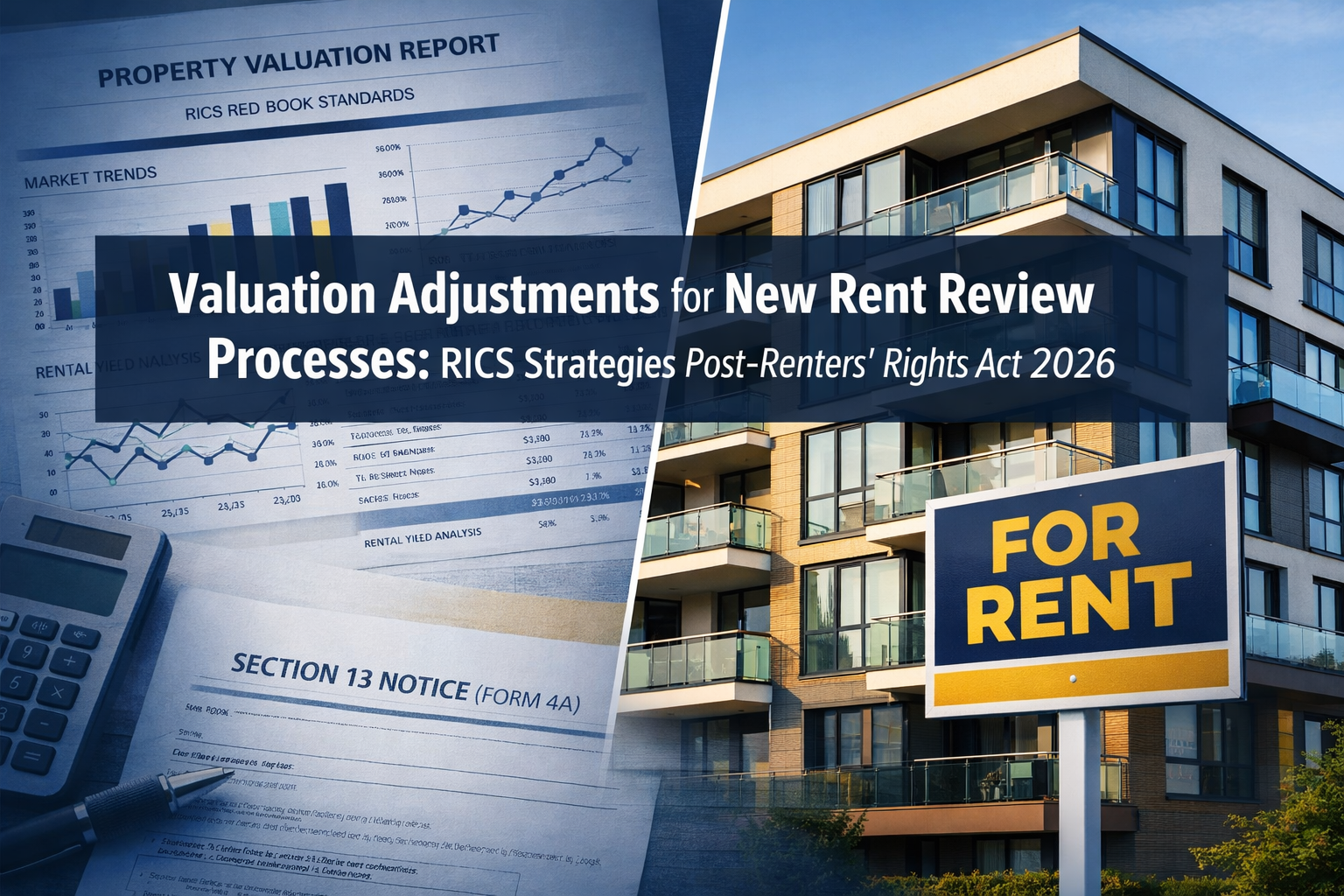
Key Takeaways
- All contractual rent review clauses were abolished on May 1, 2026, requiring landlords to use the Section 13 procedure (Form 4A) for all rent increases, with only one increase permitted per 12-month period[2]
- RICS maintains that vacant possession assumptions remain reasonable for valuation purposes based on available Section 8 possession grounds, though valuers must exercise case-by-case professional judgment[1]
- March 2026 RICS market data reveals house price net balances at -15%, indicating softening conditions that directly impact valuation methodologies during this transitional period[3]
- Rental yield modeling must now account for stabilized income streams that reflect annual increase limitations and potential tribunal challenges to proposed rent adjustments
- Enhanced due diligence requirements including Decent Homes Standards compliance and deposit protection obligations create additional cost factors affecting investment property valuations[1]
Understanding the Renters' Rights Act 2026 Impact on Valuation Adjustments for New Rent Review Processes
The legislative framework introduced by the Renters' Rights Act fundamentally restructures the landlord-tenant relationship in ways that directly impact property valuation methodologies. The abolition of fixed-term Assured Shorthold Tenancies (ASTs) in favor of periodic monthly rolling tenancies eliminates the certainty previously provided by contractual rent review clauses embedded in lease agreements[1].
The End of Contractual Rent Reviews
Prior to May 1, 2026, landlords could incorporate rent review clauses into tenancy agreements that allowed for predetermined increases—often tied to inflation indices or specified percentage uplifts at regular intervals. These contractual mechanisms provided predictable income growth trajectories that valuers could model with reasonable confidence when assessing investment property values.
The new regulatory environment eliminates this predictability entirely. All rent increases using review clauses must have taken effect before May 1, 2026; any clauses that would trigger increases after this date are void[2]. This creates a clear demarcation point for valuation purposes, requiring different approaches for properties valued before versus after implementation.
For RICS registered valuers in London and throughout England, this means recalibrating rental growth assumptions to reflect:
- 12-month prohibition periods following tenancy commencement during which no rent increases are permitted[1]
- Annual limitation of one increase per year thereafter, regardless of market conditions
- Market value constraints requiring increases to reflect prevailing rental rates rather than contractual formulas
- Tribunal challenge risk where tenants can contest proposed increases they believe exceed market value
Section 13 Procedure Requirements
The Section 13 procedure using Form 4A becomes the exclusive mechanism for implementing rent increases under the new regime. This process introduces several friction points that impact valuation assumptions:
Notice Requirements: Landlords must provide formal notice using the prescribed form, with increases taking effect no sooner than the notice period allows. This administrative requirement introduces timing delays compared to automatic contractual increases.
Market Value Justification: Unlike contractual reviews that applied predetermined formulas, Section 13 increases must reflect actual market rental values. This subjects proposed increases to objective scrutiny and potential challenge.
Tribunal Oversight: Tenants can refer proposed increases to the First-tier Tribunal (Property Chamber), which can determine appropriate market rent levels. This introduces uncertainty regarding whether proposed increases will be sustained.
These procedural constraints require valuers to apply risk adjustments to projected rental income streams that account for potential delays, challenges, and tribunal determinations that may reduce anticipated increases.
RICS Strategies for Valuation Adjustments for New Rent Review Processes Using February-March 2026 Market Data
RICS guidance emphasizes that valuers must reflect actual market conditions rather than theoretical regulatory impacts when conducting Valuation Adjustments for New Rent Review Processes: RICS Strategies Post-Renters' Rights Act 2026 Market Data[1]. This requires careful analysis of comparable evidence obtained both before and after the Act's implementation to identify observable market reactions.
Analyzing February-March 2026 Market Indicators
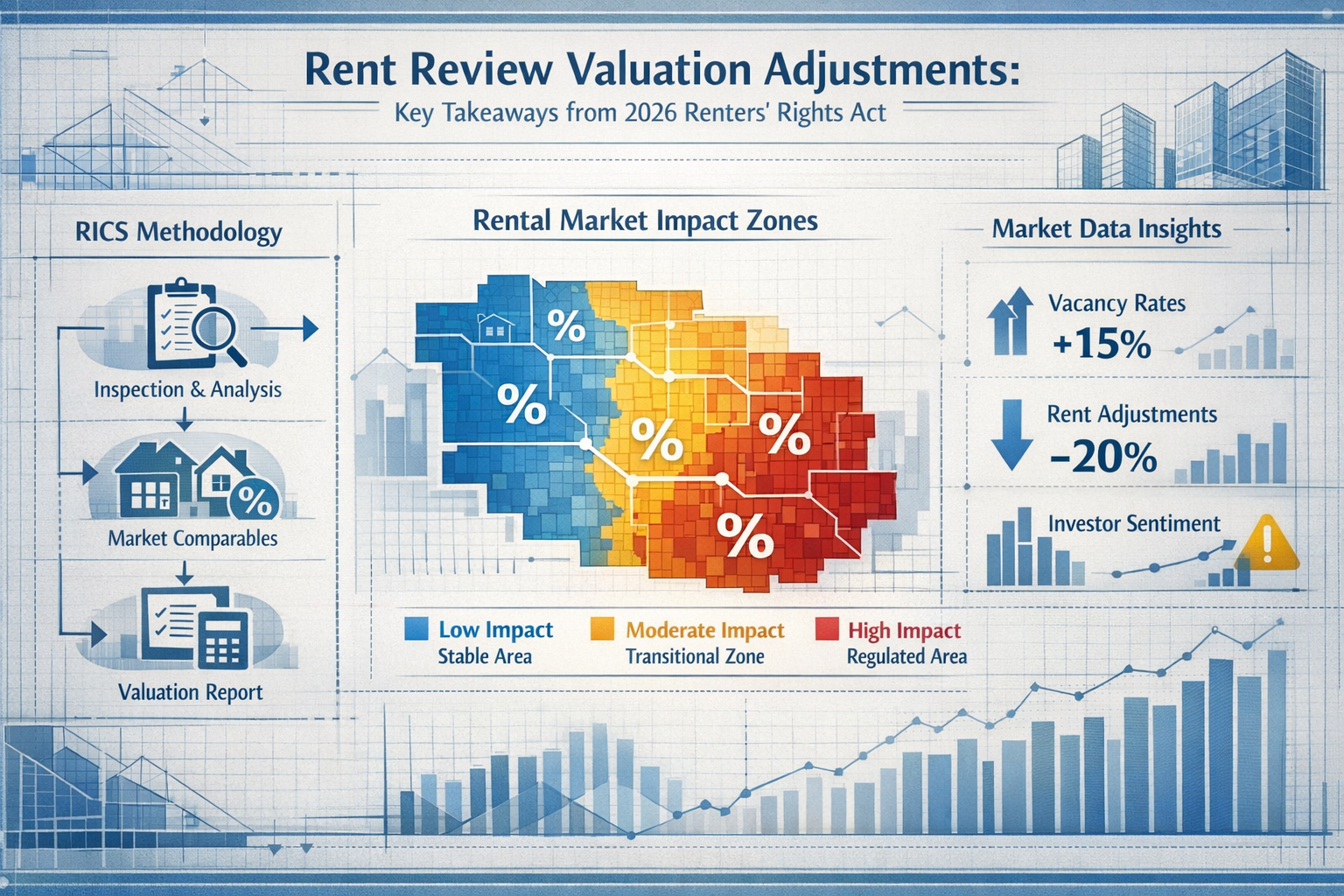
The March 2026 RICS Residential Market Survey provides critical benchmark data for understanding how the market has responded to the new regulatory environment. The survey reveals house price net balances at -15%, indicating softening market conditions with declining new buyer interest[3]. This data point carries significant implications for BTL valuations.
For investment properties specifically, valuers must consider whether this price softening reflects:
- Investor repositioning as landlords reassess portfolio strategies under new constraints
- Yield compression as rental growth limitations reduce income potential relative to capital values
- Risk premium adjustments as market participants price in regulatory uncertainty
The February 2026 market conditions established important precedent for methodological adjustments addressing data limitations and market volatility during transitional periods[5]. These approaches remain relevant as the market continues adapting to the new regulatory framework throughout 2026.
Comparable Evidence Analysis Framework
When conducting Red Book valuations in London and elsewhere, surveyors must now implement enhanced comparable evidence analysis that distinguishes between:
Pre-Implementation Comparables (before May 1, 2026):
- May reflect expectations of contractual rent review income streams
- Pricing likely incorporated assumptions about fixed-term tenancy security
- Section 21 possession rights factored into investment risk assessments
Post-Implementation Comparables (after May 1, 2026):
- Reflect actual market pricing under new regulatory constraints
- Incorporate observable investor responses to rental growth limitations
- Account for Section 21 abolition and reliance on Section 8 grounds
Valuers must apply appropriate adjustments when using pre-implementation comparables for current valuations, accounting for the changed regulatory environment. This requires professional judgment regarding:
- Rental growth rate adjustments: Reducing projected growth rates to reflect annual increase limitations and tribunal challenge risk
- Yield adjustments: Applying yield expansion to reflect increased regulatory risk and reduced income certainty
- Void period adjustments: Accounting for potentially extended possession timelines without Section 21 availability
Stabilized Rental Yield Modeling
The concept of stabilized rental yields becomes particularly important under the new regime. Rather than modeling aggressive rental growth trajectories based on contractual reviews, valuers must adopt more conservative approaches that reflect:
Annual Growth Constraints: Modeling rental income increases at sustainable rates that account for the single annual increase limitation and market value requirements. This typically involves:
- Analyzing local market rental growth trends over 3-5 year periods
- Applying conservative growth assumptions (often at or below inflation) rather than optimistic projections
- Incorporating probability-weighted scenarios for tribunal challenges to proposed increases
Void Period Assumptions: With tenants able to terminate on two months' notice and landlords unable to use Section 21 evictions, void period assumptions may require adjustment. However, RICS guidance suggests that Section 8 possession grounds remain sufficient to support reasonable vacant possession assumptions in most cases[1].
Operating Cost Considerations: The Act introduces enhanced compliance requirements including Decent Homes Standards and deposit protection obligations. These create additional operating costs that must be factored into net income calculations when deriving capitalization rates.
Practical Implementation of Valuation Adjustments for New Rent Review Processes: RICS Strategies Post-Renters' Rights Act 2026 Market Data
Implementing these valuation adjustments requires systematic approaches that balance regulatory compliance, market reality, and professional judgment. Chartered surveyors must develop robust methodologies that can withstand scrutiny from clients, lenders, and tribunals.
Case-by-Case Professional Judgment
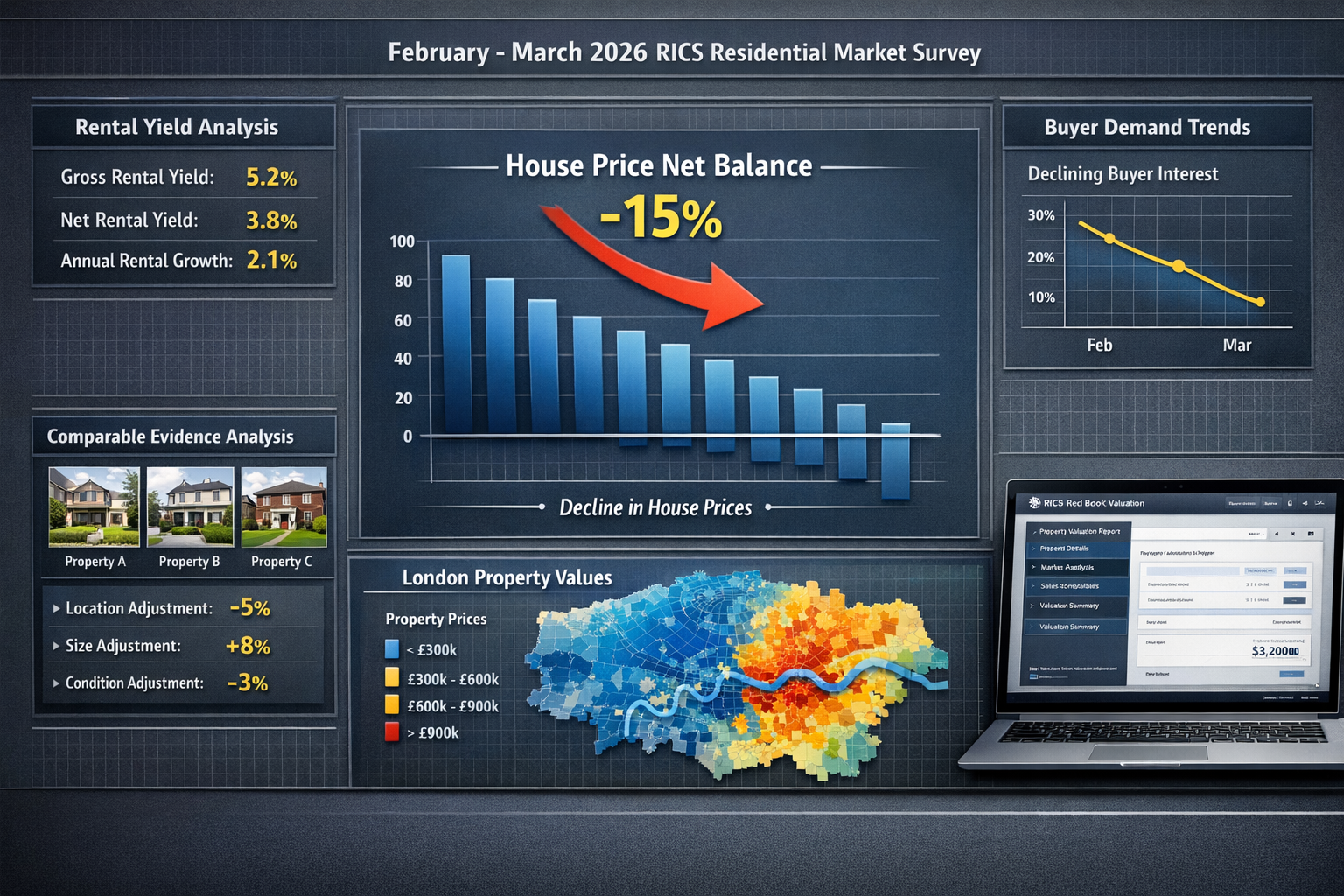
RICS emphasizes that valuers must exercise professional judgment on a case-by-case basis when determining appropriate assumptions[1]. This reflects recognition that the Act's impact varies significantly across different property types, locations, and tenant profiles.
Property-Specific Factors requiring individualized assessment include:
- Location dynamics: Prime central London properties may experience different market impacts than regional BTL investments
- Property condition: Properties meeting or exceeding Decent Homes Standards face lower compliance costs than those requiring upgrades
- Tenant profile: Properties with established, stable tenancies may warrant different assumptions than those with high turnover
- Landlord sophistication: Professional landlords with robust management systems may achieve better outcomes under the new regime than amateur landlords
When conducting valuation reports in London, surveyors should document the specific factors considered in reaching their assumptions, providing clear rationale for any adjustments applied.
Vacant Possession Assumption Considerations
The abolition of Section 21 'no-fault' evictions raises questions about whether vacant possession assumptions remain appropriate for valuation purposes. RICS currently maintains that this assumption remains reasonable based on the availability of Section 8 grounds for possession[1].
Section 8 grounds that support possession include:
✅ Mandatory grounds (possession must be granted):
- Ground 7A: Persistent rent arrears
- Ground 8: Serious rent arrears (two months or more)
- Ground 7B: Repeated breaches of tenancy obligations
✅ Discretionary grounds (tribunal may grant possession):
- Ground 10: Rent arrears
- Ground 12: Breach of tenancy obligations
- Ground 13: Deterioration of property condition
- Ground 14: Nuisance or illegal use
However, valuers must recognize that Section 8 proceedings typically require:
- Longer timelines than Section 21 procedures previously allowed
- Evidence gathering to substantiate grounds for possession
- Tribunal proceedings with associated costs and uncertainty
- Tenant defenses that may delay or prevent possession
For certain property types or circumstances, these factors may warrant adjustments to vacant possession assumptions or the application of risk premiums to reflect extended possession timelines.
Lender Valuation Considerations
The Act substantially affects lenders involved in the private rented sector and residential investment financing[1]. BTL mortgage valuations must now address:
Security Assessment: Lenders require assurance that property values provide adequate security for lending. With rental income streams subject to greater uncertainty, loan-to-value ratios may require adjustment.
Stress Testing: Valuations for lending purposes should incorporate stress testing scenarios that model:
- Extended void periods due to possession delays
- Rental growth rates below inflation
- Compliance cost increases
- Tenant tribunal challenges to rent increases
Portfolio Considerations: For landlords with multiple properties, lenders may require portfolio-level analysis assessing aggregate exposure to regulatory risks.
Surveyors conducting RICS valuation cost assessments for lending purposes should clarify with instructing parties whether standard or enhanced reporting is required to address these considerations.
Comparable Evidence Interrogation
RICS guidance emphasizes the importance of appropriately interrogating comparable evidence obtained before and after Act implementation[1]. This requires:
Transaction Date Analysis: Clearly identifying when comparable transactions occurred relative to the May 1, 2026 implementation date and adjusting for regulatory changes if necessary.
Motivation Assessment: Understanding whether comparable transactions reflect:
- Portfolio exits by landlords exiting the sector
- Opportunistic acquisitions by investors confident in the new regime
- Forced sales due to compliance cost pressures
- Normal market transactions reflecting equilibrium pricing
Terms Verification: Confirming whether comparable properties were sold with tenancies in place or with vacant possession, and adjusting accordingly.
Market Segment Identification: Distinguishing between different investor segments (institutional, professional, amateur) that may have different risk tolerances and return requirements.
Integration with Other Valuation Factors
The regulatory adjustments required by the Renters' Rights Act must be integrated with other valuation factors that influence property values:
Physical Condition: Properties requiring significant repairs to meet Decent Homes Standards face dual impacts—both compliance costs and potential possession grounds if standards aren't met.
Lease Terms: For leasehold properties, the interaction between lease provisions and the new tenancy regime may create complexity requiring specialist analysis, potentially involving lease extension valuation expertise.
Tax Considerations: Changes to rental income predictability may affect tax planning strategies, with implications for capital gains tax valuations and estate planning.
Insurance Requirements: Enhanced tenant rights may affect insurance requirements and costs, particularly for landlord liability coverage.
Documentation and Reporting Standards
Valuations conducted under the new regime require enhanced documentation to demonstrate compliance with RICS standards and support the assumptions adopted:
📋 Essential Documentation Elements:
- Regulatory Context Statement: Explicitly acknowledging the Renters' Rights Act and its implementation date
- Assumption Justification: Clear explanation of why vacant possession or other assumptions remain appropriate
- Comparable Evidence Analysis: Detailed analysis of pre- and post-implementation comparables with adjustments applied
- Risk Factor Discussion: Identification of key risks affecting value including rental growth limitations, possession timeline extensions, and compliance costs
- Market Data Integration: Reference to relevant RICS survey data and other market indicators supporting the valuation approach
- Limitations and Caveats: Clear statement of any limitations affecting the valuation or areas requiring ongoing monitoring
This documentation provides essential support if valuations are challenged or require explanation to lenders, tribunals, or other parties.
Ongoing Market Monitoring and Methodology Refinement
The Valuation Adjustments for New Rent Review Processes: RICS Strategies Post-Renters' Rights Act 2026 Market Data represent a developing area where market responses continue to emerge throughout 2026 and beyond. Valuers must maintain ongoing awareness of market developments and refine methodologies as additional data becomes available.
Key Indicators to Monitor
Surveyors should track several key indicators that signal how the market is adapting:
Transaction Volume Trends: Changes in BTL transaction volumes indicate investor confidence levels and may signal yield adjustments as properties reprice.
Rental Growth Rates: Actual rental growth achieved through Section 13 procedures provides empirical data for modeling future income streams.
Tribunal Outcomes: First-tier Tribunal decisions on contested rent increases establish precedents for market rent determinations and success rates for landlord applications.
Portfolio Repositioning: Evidence of landlords exiting the sector or consolidating holdings provides insight into investor sentiment and may affect supply-demand dynamics.
Lender Policy Changes: Adjustments to BTL lending criteria, loan-to-value ratios, or interest rate premiums reflect lender risk assessments of the sector.
Professional Development Requirements
The regulatory changes require valuers to maintain current knowledge through:
- RICS CPD activities focused on residential letting regulation and valuation implications
- Market intelligence gathering through professional networks and industry publications
- Legal updates tracking tribunal decisions and regulatory guidance
- Software and tool updates ensuring valuation models incorporate current assumptions
Firms conducting chartered surveyor services in London and elsewhere should implement regular training programs ensuring all valuers understand the regulatory framework and approved methodologies.
Collaboration with Legal and Lettings Professionals
Effective valuation under the new regime often requires cross-disciplinary collaboration:
Legal Advisors: Provide guidance on possession grounds, tribunal procedures, and regulatory compliance requirements affecting property values.
Lettings Agents: Offer market intelligence on actual rental growth achieved, tenant challenges to increases, and void period trends.
Property Managers: Share data on compliance costs, maintenance requirements, and operational challenges affecting net income.
Mortgage Brokers: Provide insight into lender requirements and financing availability for BTL investments.
This collaborative approach ensures valuations reflect comprehensive understanding of both regulatory requirements and practical market realities.
Conclusion
The Renters' Rights Act 2026 has fundamentally transformed the valuation landscape for residential investment properties in England. The abolition of contractual rent review clauses and implementation of the Section 13 procedure with its annual increase limitations require chartered surveyors to adopt new approaches when conducting Valuation Adjustments for New Rent Review Processes: RICS Strategies Post-Renters' Rights Act 2026 Market Data.
Key takeaways for professional practice include:
🎯 Embrace stabilized rental yield modeling that reflects annual increase limitations and market value constraints rather than optimistic contractual growth projections
🎯 Apply rigorous comparable evidence analysis distinguishing between pre- and post-implementation transactions and making appropriate adjustments
🎯 Exercise case-by-case professional judgment rather than applying blanket assumptions, with careful consideration of property-specific factors
🎯 Maintain vacant possession assumptions where Section 8 grounds provide reasonable possession prospects, while acknowledging potential timeline extensions
🎯 Integrate February-March 2026 RICS market data showing softening conditions into valuation methodologies and risk assessments
🎯 Enhance documentation standards to support assumptions and demonstrate compliance with RICS Red Book requirements
🎯 Monitor ongoing market developments and refine methodologies as additional evidence emerges throughout 2026 and beyond
For landlords, investors, and lenders, these valuation adjustments carry significant implications for portfolio strategies, acquisition decisions, and financing arrangements. Working with experienced RICS registered valuers who understand the regulatory framework and have developed robust methodologies for addressing its implications becomes essential.
The transition period following the Act's implementation will continue revealing how the market adapts to these fundamental changes. Valuers who maintain current knowledge, apply rigorous analytical frameworks, and exercise sound professional judgment will provide the most reliable guidance for navigating this transformed landscape.
Next Steps: Property owners seeking valuations for investment properties should engage chartered surveyors with demonstrated expertise in post-Renters' Rights Act methodologies. Ensure your valuer explicitly addresses regulatory impacts, provides clear documentation of assumptions, and incorporates current market data into their analysis. For complex portfolios or lending transactions, consider commissioning enhanced reporting that includes sensitivity analysis and stress testing under various regulatory scenarios.
References
[1] Consideration Of Implications Of Renters Rights Act On Valuation – https://www.rics.org/news-insights/consideration-of-implications-of-renters-rights-act-on-valuation
[2] Rent Increase Landlords – https://theindependentlandlord.com/rent-increase-landlords/
[3] Valuation Adjustments For March 2026 Rics Survey Navigating Softer House Prices And Middle East Conflict Impacts – https://nottinghillsurveyors.com/blog/valuation-adjustments-for-march-2026-rics-survey-navigating-softer-house-prices-and-middle-east-conflict-impacts
[4] Valuation Standards – https://www.rics.org/profession-standards/rics-standards-and-guidance/sector-standards/valuation-standards
[5] Valuation Challenges In Uncertain Markets Using Rics February 2026 Data To Adjust Valuations Amid Geopolitical Volatility And Interest Rate Concerns – https://nottinghillsurveyors.com/blog/valuation-challenges-in-uncertain-markets-using-rics-february-2026-data-to-adjust-valuations-amid-geopolitical-volatility-and-interest-rate-concerns