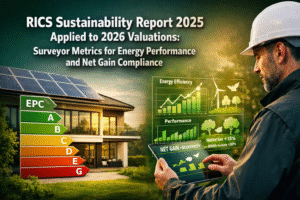

As property markets across the United Kingdom navigate an uneven recovery in 2026, Scotland and Northern Ireland are emerging as unexpected growth leaders. While traditional powerhouse regions in the South East face continued challenges, these northern markets are experiencing a notable price surge that demands specialized valuation approaches. For RICS-qualified surveyors, understanding the Valuation Strategies for Scotland and Northern Ireland's 2026 Price Surge: RICS Surveyor Protocols has become essential to delivering accurate, compliant assessments in these rapidly evolving markets.
The divergence between regional performance creates both opportunities and complexities for property professionals. This comprehensive guide examines the specific protocols, regulatory updates, and strategic adjustments required for effective property valuation in Scotland and Northern Ireland's high-demand markets throughout 2026 and beyond.
Key Takeaways
- 🏴 Regional Outperformance: Scotland and Northern Ireland are projected to exceed the national house price growth rate of approximately 3% for 2026-2027, creating unique valuation challenges
- 📊 ESG Integration Mandatory: New RICS standards effective April 30, 2026, require all commercial property valuations to assess environmental, social, and governance factors as significant components
- 👷 Skills Shortage Impact: Scotland requires at least 10,000 additional construction-related jobs by 2028, directly constraining surveying capacity and affecting valuation timelines
- 🏗️ Modern Construction Emphasis: Preference for modern methods of construction in social housing affects valuation protocols for newly constructed properties
- 💼 Buy-to-Let Protocols: Updated institutional landlord investment protocols are reshaping commercial valuation strategies in growth markets
Understanding the 2026 Regional Price Divergence
Why Scotland and Northern Ireland Are Outperforming
The property market landscape across the United Kingdom has shifted dramatically in 2026. While national house price growth hovers around 3% for 2026-2027, Scotland and Northern Ireland are demonstrating stronger performance metrics that distinguish them from struggling southern markets.[1]
Several fundamental factors drive this regional divergence:
Affordability Advantage: Compared to London and the South East, properties in Scotland and Northern Ireland offer substantially better value propositions. This affordability gap has widened as southern markets face continued pressure from economic headwinds, making northern regions increasingly attractive to both domestic buyers and investors.
Economic Resilience: Both regions have demonstrated stronger employment stability in key sectors, supporting housing demand. The diversification of local economies away from financial services dependency has provided greater insulation from broader market volatility.
Infrastructure Investment: Significant public and private infrastructure projects across both regions have enhanced connectivity and livability, driving demand in previously overlooked areas. Transport improvements, digital infrastructure upgrades, and urban regeneration initiatives have collectively boosted property values.
Buy-to-Let Opportunities: Institutional investors are increasingly targeting Scotland and Northern Ireland for buy-to-let portfolio expansion, recognizing favorable rental yields and growth potential.[4]
Market Segmentation Considerations
For surveyors conducting valuations in these growth markets, understanding market segmentation is critical. The price surge is not uniform across all property types or locations:
| Property Segment | Growth Driver | Valuation Priority |
|---|---|---|
| Urban Apartments | Young professional demand | Rental yield analysis |
| Suburban Family Homes | Affordability migration | School catchment comparables |
| Rural Properties | Remote work flexibility | Connectivity infrastructure |
| Commercial Properties | Business relocation | ESG compliance assessment |
| New Build Developments | Modern construction methods | Sustainability certifications |
This segmentation requires surveyors to adopt differentiated valuation approaches rather than applying blanket regional adjustments.
RICS Surveyor Protocols for Scotland and Northern Ireland's 2026 Price Surge
Updated ESG Valuation Requirements
The most significant protocol change affecting Valuation Strategies for Scotland and Northern Ireland's 2026 Price Surge is the mandatory integration of ESG factors into commercial property assessments. Effective April 30, 2026, RICS members and firms must evaluate environmental, social, and governance considerations as significant valuation components.[2]
This updated global standard transforms how surveyors approach property assessment:
Environmental Factors to Assess:
- Energy Performance Certificate (EPC) ratings and improvement potential
- Carbon footprint and embodied carbon calculations
- Renewable energy installations and capacity
- Water efficiency systems and sustainable drainage
- Green building certifications (BREEAM, LEED equivalents)
Social Considerations:
- Community impact and local employment contribution
- Accessibility compliance for diverse populations
- Health and wellbeing features (air quality, natural light)
- Affordable housing provision in mixed developments
Governance Elements:
- Building safety compliance and certification
- Transparent ownership structures
- Regulatory compliance history
- Stakeholder engagement processes
For commercial valuations in Scotland and Northern Ireland, these ESG assessments directly impact market value calculations. Properties with strong sustainability credentials command premium valuations, while those requiring significant retrofitting face valuation discounts reflecting future capital expenditure requirements.
Retrofit and Decarbonisation Valuation Adjustments
RICS Scotland's 2026 manifesto emphasizes establishing oversight for retrofit initiatives and measuring embodied carbon in line with the RICS Whole Life Carbon Assessment Standard.[3] This policy direction creates specific valuation protocol requirements:
Retrofit Potential Analysis: Surveyors must assess and quantify the cost and feasibility of bringing properties to modern energy efficiency standards. This includes:
- Insulation upgrade requirements and costs
- Heating system replacement timelines
- Window and door replacement needs
- Renewable energy integration potential
Whole Life Carbon Assessment: For new developments and major refurbishments, valuations should incorporate whole life carbon calculations, considering:
- Embodied carbon in construction materials
- Operational carbon over expected building lifespan
- End-of-life disposal and recycling considerations
- Carbon offset requirements and costs
These assessments require specialized knowledge beyond traditional structural survey capabilities, necessitating collaboration with sustainability consultants for complex commercial properties.
Addressing the Skills Shortage in Valuation Delivery
Scotland's construction sector requires at least 10,000 additional jobs by 2028 according to Skills Development Scotland estimates, creating a significant constraint on surveying and valuation services.[3] This shortage directly impacts Valuation Strategies for Scotland and Northern Ireland's 2026 Price Surge in several ways:
Extended Turnaround Times: Limited surveyor availability means longer waiting periods for valuation reports, particularly during peak market periods. Surveyors must manage client expectations and prioritize assignments strategically.
Quality Assurance Pressures: With high demand and limited capacity, maintaining rigorous quality standards requires disciplined workflow management and appropriate delegation to qualified assistants.
Technology Integration: To maximize efficiency, surveyors are increasingly adopting digital tools:
- Drone technology for roof surveys and exterior inspections
- 3D scanning for accurate dimensional measurements
- Digital reporting platforms for faster client delivery
- AI-assisted comparable property analysis
Collaborative Networks: Establishing relationships with qualified colleagues enables workload sharing during peak periods while maintaining service quality through trusted referrals.
Implementing Valuation Strategies for Scotland and Northern Ireland's 2026 Price Surge
Comparable Property Selection in Growth Markets
In rapidly appreciating markets, selecting appropriate comparable properties becomes more challenging yet more critical. Traditional valuation approaches relying on historical sales data may undervalue properties in areas experiencing accelerated growth.
Best Practice Protocols:
- Temporal Weighting: Prioritize recent comparables (within 3 months) over older sales data, applying time adjustments for market movement
- Growth Trajectory Analysis: Identify whether specific locations are experiencing sustained growth or temporary spikes
- Development Pipeline Assessment: Consider planned infrastructure and development projects that may affect future values
- Cross-Border Comparisons: For border regions, evaluate comparable properties in adjacent areas to identify price differentials and convergence trends
Adjustment Factors for Scotland-Specific Considerations:
- Scottish property law differences (feudal system abolition impacts)
- Home Report requirements and their effect on transaction speeds
- Land and Buildings Transaction Tax (LBTT) thresholds
- Local authority planning policy variations
Northern Ireland-Specific Factors:
- Stamp Duty Land Tax rates and thresholds
- Planning system differences from rest of UK
- Cross-border economic influences with Republic of Ireland
- Historical valuation suppression and recovery patterns
Modern Methods of Construction Valuation
RICS advocates for presumption favoring modern methods of construction (MMC) for social housing in Scotland, affecting valuation protocols for newly constructed properties.[3] Surveyors must develop expertise in assessing these non-traditional construction methods:
MMC Categories Requiring Specialized Valuation:
- Modular/volumetric construction
- Panelized systems
- Hybrid construction combining traditional and modern methods
- 3D-printed construction elements
- Timber frame and cross-laminated timber (CLT) systems
Valuation Considerations:
- Longevity and Durability: Assess warranty provisions and expected lifespan compared to traditional construction
- Maintenance Requirements: Evaluate long-term maintenance costs and specialist contractor availability
- Mortgage Acceptability: Consider lender attitudes toward MMC, which affect marketability
- Insurance Implications: Review insurance availability and premium costs for non-traditional construction
- Resale Potential: Assess market acceptance and comparable sales evidence for MMC properties
For chartered surveyors working in Scotland and Northern Ireland's growth markets, staying current with MMC developments is essential for accurate valuation delivery.
Buy-to-Let Investment Valuation Protocols
Institutional landlord investment in Scotland and Northern Ireland's rental markets is accelerating in 2026, requiring updated building survey and valuation protocols.[4] These institutional investors demand more rigorous assessment processes than traditional individual landlords:
Enhanced Due Diligence Requirements:
- Comprehensive building pathology assessments
- Detailed rental yield projections based on local market data
- Tenant demand analysis by property type and location
- Regulatory compliance verification (HMO licensing, safety standards)
- Portfolio diversification impact analysis
Investment-Grade Valuation Components:
📊 Yield Analysis: Calculate gross and net rental yields using current market rents, accounting for:
- Void periods and tenant turnover costs
- Management fees and maintenance reserves
- Property tax and insurance costs
- Regulatory compliance expenditure
💰 Capital Growth Projections: Provide evidence-based capital appreciation forecasts considering:
- Historical price trends and volatility
- Infrastructure development pipeline
- Employment growth projections
- Supply and demand dynamics
🏗️ Capex Planning: Identify anticipated capital expenditure over typical investment hold periods (10-15 years):
- Major component replacement schedules
- Energy efficiency upgrade requirements
- Regulatory compliance improvements
- Market positioning enhancements
For institutional investors, these comprehensive assessments justify premium fees while establishing surveyors as strategic advisors rather than simply report providers.
Regional Hotspot Identification and Analysis
Within Scotland and Northern Ireland, specific locations are experiencing disproportionate price growth. Identifying these regional hotspots enables surveyors to provide more nuanced valuation advice:
Scotland Growth Leaders:
- Edinburgh and Lothians: Sustained demand from financial services and tourism sectors
- Glasgow and Clyde: Urban regeneration and cultural investment driving appreciation
- Aberdeen and Aberdeenshire: Energy sector diversification supporting market recovery
- Highlands and Islands: Remote work migration creating demand in previously stable markets
Northern Ireland Growth Areas:
- Greater Belfast: Economic growth and regeneration projects
- Causeway Coast: Tourism investment and lifestyle migration
- Derry-Londonderry: Cross-border economic integration
- Commuter Corridors: Areas with improved connectivity to employment centers
Surveyors should develop micro-market expertise in their operating regions, tracking planning applications, infrastructure investments, and demographic shifts that signal emerging hotspots before they appear in lagging sales data.
Practical Implementation: Case Studies and Applications
Case Study 1: Commercial Property ESG Valuation in Edinburgh
Property: Mixed-use development with retail ground floor and office space above, Edinburgh city center
Valuation Challenge: Assessing market value incorporating new ESG requirements effective April 30, 2026
Protocol Application:
- Baseline Assessment: Current EPC rating of D, requiring improvement for regulatory compliance
- Retrofit Cost Analysis: £180,000 estimated to achieve EPC B rating through insulation, heating system upgrade, and LED lighting installation
- Rental Impact Assessment: Premium rents (8-12% above comparable D-rated properties) achievable with B rating
- Investment Yield Adjustment: ESG-compliant properties attracting institutional investors at compressed yields (25 basis points)
- Future-Proofing Value: Avoided obsolescence risk worth approximately 5% of capital value
Valuation Conclusion: Despite £180,000 retrofit cost, ESG-compliant scenario delivered £220,000 higher market value through rental premium and yield compression, demonstrating positive net impact of sustainability investment.
Case Study 2: New Build MMC Housing Development in Belfast
Property: 45-unit residential development using modular construction, suburban Belfast location
Valuation Challenge: Limited comparable evidence for MMC properties in local market
Protocol Application:
- Construction Quality Assessment: Factory-controlled environment delivering superior build quality versus traditional site construction
- Warranty Analysis: 10-year structural warranty from established MMC provider enhancing mortgage acceptability
- Comparable Adjustment: Applied 3% premium over traditional construction comparables based on energy efficiency (EPC A rating) and reduced maintenance requirements
- Market Acceptance Testing: Surveyed local estate agents and mortgage lenders confirming growing acceptance of MMC
- Sustainability Premium: Carbon savings documentation supporting higher valuations for environmentally conscious buyers
Valuation Conclusion: MMC construction justified valuation at upper end of comparable range, with sustainability credentials providing additional value support in growth market.
Case Study 3: Buy-to-Let Portfolio Acquisition in Scottish Central Belt
Property: 12-property portfolio across Glasgow and Edinburgh, mixed apartment types
Valuation Challenge: Institutional investor requiring investment-grade valuation for acquisition decision
Protocol Application:
- Individual Property Assessments: Detailed building surveys identifying maintenance requirements and capital expenditure needs
- Portfolio Yield Analysis: Aggregated gross yield of 6.2%, net yield of 4.8% after management and maintenance costs
- Market Positioning: Properties positioned in mid-market rental segment with strong tenant demand
- Regulatory Compliance Audit: All properties meeting current safety and licensing requirements
- Growth Projection: 5-year capital appreciation forecast of 18-22% based on regional outperformance trends
Valuation Conclusion: Portfolio valued at £3.2 million with recommendation for acquisition, subject to £85,000 deferred maintenance addressing within 24 months.
Technology and Tools for Enhanced Valuation Accuracy
Digital Platforms and Data Analytics
Modern valuation practice increasingly relies on technology platforms that enhance accuracy and efficiency:
Comparable Sales Databases: Subscription services providing comprehensive transaction data with advanced filtering capabilities enable more precise comparable selection in fast-moving markets.
Automated Valuation Models (AVMs): While not replacing professional judgment, AVMs provide useful benchmarking and initial value ranges, particularly for standard property types in established markets.
Geographic Information Systems (GIS): Mapping tools that overlay multiple data layers (planning applications, infrastructure projects, demographic trends) help identify emerging value drivers.
Digital Inspection Tools: Tablet-based inspection software with integrated photography, annotation, and measurement capabilities streamlines on-site data collection and reduces transcription errors.
Remote Valuation Capabilities
While physical inspections remain essential for most valuations, hybrid approaches combining limited site visits with remote assessment tools are gaining acceptance:
Desktop Valuations: For specific purposes (refinancing of known properties, portfolio monitoring), desktop valuations using available data and previous inspection reports provide cost-effective updates.
Video-Assisted Inspections: Client-guided video walkthroughs supplement surveyor expertise for preliminary assessments or follow-up inspections.
Drone Surveys: Aerial photography and thermal imaging provide comprehensive roof condition assessments and external envelope inspections without scaffolding or access equipment.
These technologies enable surveyors to manage higher workloads during periods of constrained capacity while maintaining quality standards.
Regulatory Compliance and Professional Standards
RICS Red Book Compliance
All valuations for Scotland and Northern Ireland's 2026 price surge must comply with the RICS Valuation – Global Standards (Red Book), which provides the framework for professional valuation practice.Red Book valuation requirements include:
Mandatory Components:
- Terms of engagement clearly defining scope and purpose
- Basis of value selection appropriate to valuation purpose
- Assumptions and special assumptions explicitly stated
- Comparable evidence supporting valuation conclusions
- Compliance with IVS (International Valuation Standards)
Scotland-Specific Considerations:
- Compliance with Scottish property law and conveyancing practices
- Home Report integration where applicable
- Scottish planning system understanding
- LBTT implications for transaction values
Northern Ireland Adaptations:
- Northern Ireland property law differences
- Local planning policy framework
- Cross-border economic influences
- Historical market context understanding
Professional Indemnity and Risk Management
Operating in rapidly appreciating markets increases professional liability exposure. Robust risk management protocols protect both surveyors and clients:
Risk Mitigation Strategies:
- 📋 Comprehensive engagement letters defining scope limitations
- 🔍 Enhanced comparable evidence documentation
- 📊 Market conditions commentary explaining volatility and uncertainty
- 🤝 Client communication managing expectations in fast-moving markets
- 💼 Adequate professional indemnity insurance coverage for regional practice
Documentation Standards: Maintain detailed working papers supporting all valuation conclusions, including:
- Comparable property selection rationale
- Adjustment calculations and supporting evidence
- Market research and analysis
- Photographs and inspection notes
- Client communications and instructions
Future Outlook: Sustaining Valuation Excellence Through 2027
Emerging Trends Affecting Valuation Protocols
Several developing trends will shape Valuation Strategies for Scotland and Northern Ireland's 2026 Price Surge as markets evolve into 2027:
Climate Resilience Assessment: Increasing focus on flood risk, coastal erosion, and extreme weather resilience will require surveyors to integrate climate vulnerability assessments into valuation protocols.
Digital Infrastructure Valuation: High-speed broadband availability and mobile connectivity are becoming significant value drivers, particularly in rural and suburban markets where remote work continues supporting demand.
Community Wealth Building: Scotland's emphasis on community ownership and local economic development may create alternative valuation scenarios for properties subject to community purchase rights.
Cross-Border Economic Integration: Northern Ireland's unique position with access to both UK and EU markets creates distinctive economic dynamics affecting property values in border regions.
Continuing Professional Development Priorities
To maintain competence in evolving markets, surveyors should prioritize CPD in:
- Sustainability and ESG Assessment: Understanding whole life carbon calculations, retrofit technologies, and green building certifications
- Modern Construction Methods: Familiarity with emerging construction technologies and their valuation implications
- Data Analytics and Technology: Proficiency with digital tools and platforms enhancing valuation accuracy
- Regional Market Intelligence: Deep knowledge of local economic drivers, planning policies, and demographic trends
- Investment Analysis: Sophisticated yield and cash flow modeling for institutional investor clients
Conclusion
The Valuation Strategies for Scotland and Northern Ireland's 2026 Price Surge: RICS Surveyor Protocols represent a comprehensive framework for professional practice in these dynamic growth markets. As regional divergence continues reshaping the UK property landscape, surveyors operating in Scotland and Northern Ireland must adapt their approaches to deliver accurate, compliant, and valuable assessments.
The integration of mandatory ESG considerations effective April 30, 2026, transforms commercial property valuation from a purely transactional exercise into a strategic sustainability assessment. Combined with skills shortages, modern construction methods, and institutional investment protocols, these changes demand enhanced expertise and sophisticated analytical capabilities.
Actionable Next Steps for Surveyors
✅ Update Valuation Templates: Incorporate ESG assessment sections and whole life carbon considerations into standard valuation report formats
✅ Develop Regional Expertise: Build comprehensive knowledge of local market dynamics, planning policies, and infrastructure developments in operating areas
✅ Invest in Technology: Adopt digital inspection tools, comparable databases, and analytical platforms that enhance efficiency and accuracy
✅ Establish Professional Networks: Create referral relationships and collaborative partnerships to manage capacity constraints during peak demand periods
✅ Pursue Targeted CPD: Focus continuing professional development on sustainability assessment, MMC valuation, and investment analysis
✅ Review Professional Indemnity: Ensure insurance coverage adequately reflects regional practice scope and market volatility risks
For property professionals, investors, and stakeholders navigating Scotland and Northern Ireland's 2026 price surge, partnering with RICS-qualified surveyors who implement these updated protocols ensures valuations that are accurate, compliant, and strategically valuable. The regional outperformance creating today's opportunities demands nothing less than excellence in professional practice.
References
[1] Valuing Properties In Scotland And Northern Irelands 2026 Growth Leaders Surveyor Tactics Beyond The South East Slump – https://nottinghillsurveyors.com/blog/valuing-properties-in-scotland-and-northern-irelands-2026-growth-leaders-surveyor-tactics-beyond-the-south-east-slump
[2] Rics Publishes Updated Global Standard Esg Sustainability Commercial Property Valuation – https://www.rics.org/news-insights/rics-publishes-updated-global-standard-esg-sustainability-commercial-property-valuation
[3] Rics Scotland Manifesto 2026 Surveying Scotland – https://www.rics.org/news-insights/rics-scotland-manifesto-2026-surveying-scotland
[4] Surveying The 2026 Buy To Let Boom Building Survey Protocols For Institutional Landlord Investments – https://nottinghillsurveyors.com/blog/surveying-the-2026-buy-to-let-boom-building-survey-protocols-for-institutional-landlord-investments