

Scotland's housing market has emerged as a standout performer in 2026, defying broader UK trends with remarkable resilience and growth. While much of southern England continues to struggle with stagnant prices and cautious buyer sentiment, Scottish surveyors are reporting the strongest price increases in nearly a year—a dramatic shift that demands sophisticated valuation strategies and precise RICS-compliant techniques.
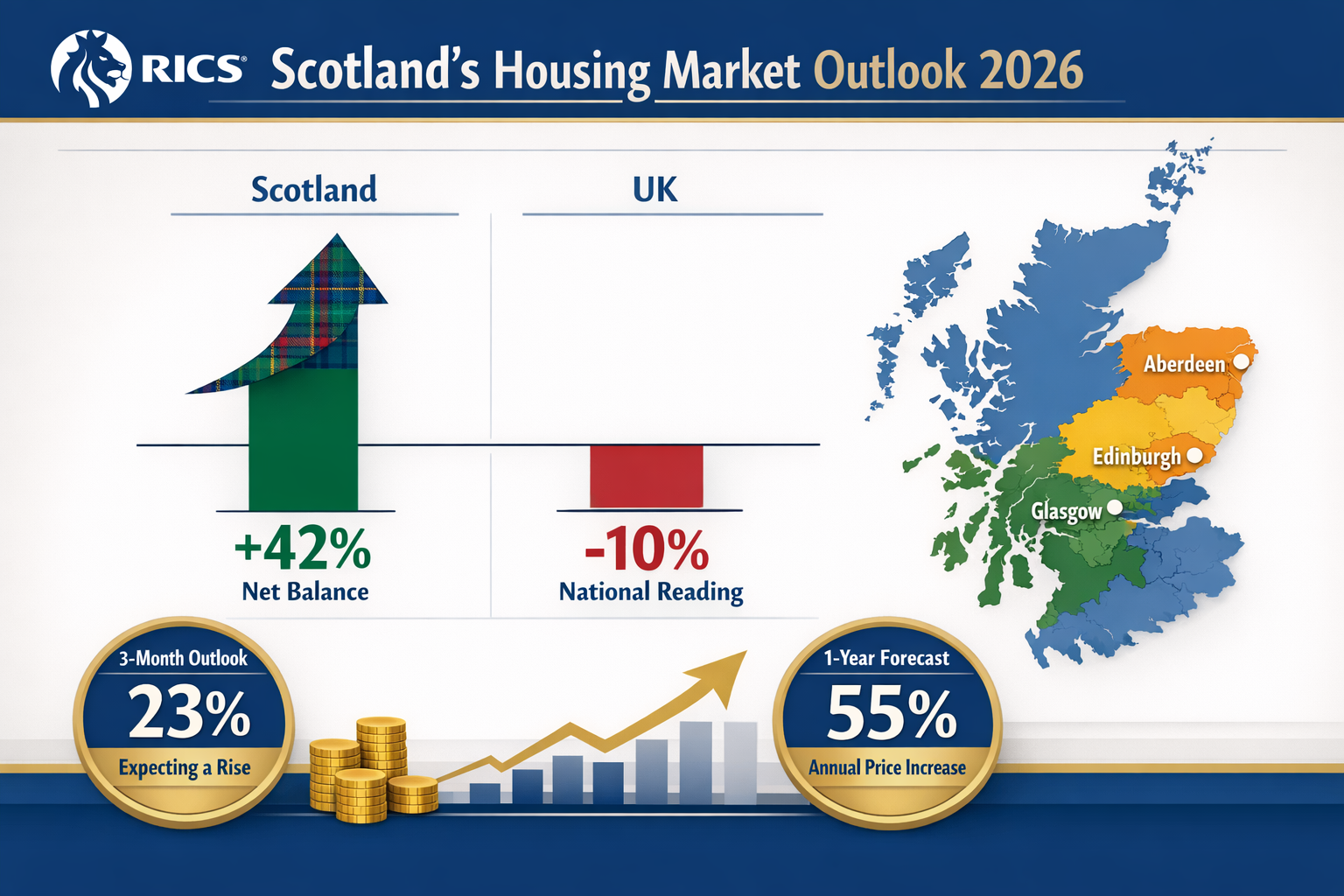
The data tells a compelling story: a 42% net balance of Scottish surveyors reported house prices rising over the past three months, representing the most robust reading since early 2025[1]. This performance stands in stark contrast to the UK-wide house price balance of -10% recorded in January 2026[1]. For valuation professionals, property investors, and market participants, understanding the Valuation Strategies for Scotland's 2026 Housing Outperformance: RICS Techniques Amid Regional Price Surge has become essential to capturing the 3-5% gains now available in select Scottish markets.
This comprehensive guide examines the market dynamics driving Scotland's outperformance, explores proven RICS valuation methodologies tailored to regional price surges, and provides actionable strategies for surveyors navigating this unique market environment.
Key Takeaways
- 📈 Scotland's housing market shows 42% net balance of rising prices—the strongest performance in nearly a year and significantly outpacing the UK's -10% national reading[1]
- 🏘️ 55% of surveyors anticipate higher prices over the coming year, with 23% expecting increases within three months, signaling sustained momentum[1]
- 💰 Rental inflation has moderated to 2.6% annually (£1,021 average monthly rent), down from a peak of 11.7% in August 2023, creating more balanced market conditions[3]
- 🔍 RICS Red Book valuation techniques provide the professional framework necessary to accurately assess properties amid regional divergences and capture 3-5% valuation gains
- 📊 Buyer enquiries rose by a net balance of 21% while sales instructions increased 27%, indicating strengthening market fundamentals that support higher valuations[1]
Understanding Scotland's 2026 Housing Market Outperformance
The Data Behind Scotland's Surge
Scotland's housing market has defied expectations throughout early 2026, establishing itself as one of the UK's strongest regional performers. The 42% net balance of surveyors reporting price increases represents a remarkable turnaround from the uncertainty that characterized late 2025[1]. This metric—calculated by subtracting the percentage of surveyors reporting price decreases from those reporting increases—provides a clear indication of market direction and momentum.
The forward-looking indicators are equally impressive. 23% of respondents expect prices to rise over the next three months, while a substantial 55% anticipate higher prices over the coming year[1]. These projections reflect growing confidence among property professionals who have direct visibility into market conditions, buyer behavior, and transaction volumes.
Regional Divergences Within the UK Market
Scotland's performance stands in sharp contrast to broader UK trends. While the national house price balance reached -10% in January 2026—the strongest position since mid-2025 but still negative—Scotland has surged well into positive territory[1]. This regional divergence creates both opportunities and challenges for valuation professionals.
Northern Ireland and parts of northern England have similarly outperformed, while southern England continues to experience price stagnation or modest declines[1]. These geographic variations reflect fundamental differences in affordability, local economic conditions, employment prospects, and buyer demographics. Understanding these valuation factors becomes crucial when applying RICS methodologies across different markets.
Affordability Advantage Driving Demand
Scotland's competitive affordability compared with pricier UK regions continues to support buyer activity even in a cautious economic environment[1]. The average property price in Scotland remains significantly below London and the South East, making homeownership more accessible to first-time buyers and providing better value for relocating professionals.
This affordability advantage has attracted increased buyer interest, evidenced by the net balance of 21% of Scottish surveyors reporting rising buyer enquiries in January 2026[1]. Simultaneously, a 27% net balance indicated increased instructions to sell—a meaningful uplift compared to late 2025[1]. This dual increase in both demand and supply suggests a healthier, more balanced market than many other UK regions.
Valuation Strategies for Scotland's 2026 Housing Outperformance: RICS Methodologies
RICS Red Book Standards for Scottish Properties
The Royal Institution of Chartered Surveyors (RICS) Red Book provides the professional framework that ensures consistency, transparency, and accuracy in property valuations. When applying Valuation Strategies for Scotland's 2026 Housing Outperformance: RICS Techniques Amid Regional Price Surge, adherence to these standards becomes paramount.
The Red Book valuation methodology requires surveyors to consider five fundamental approaches:
- Comparative Method – Analyzing recent sales of similar properties in the same location
- Investment Method – Calculating value based on rental income and yield expectations
- Residual Method – Determining development site values by subtracting costs from end values
- Profits Method – Assessing specialized properties based on trading potential
- Cost Method – Evaluating replacement cost less depreciation for unique properties
For most residential properties in Scotland's 2026 market, the comparative method remains the primary valuation approach. However, the current market dynamics require careful calibration of comparable evidence to account for rapid price movements and regional variations.
Adjusting Comparables for Market Momentum
In a market experiencing the momentum seen in Scotland during early 2026, traditional comparable analysis requires sophisticated adjustments. Properties that sold three to six months ago may no longer accurately reflect current market values when prices are rising at the pace indicated by the 42% net balance of surveyors reporting increases[1].
Time adjustments become critical. Surveyors must apply appropriate uplift factors to older comparable sales to reflect current market conditions. A property that sold for £250,000 six months ago in a market experiencing 3-4% quarterly growth may now support a valuation of £257,500-£260,000 for an identical property, assuming all other factors remain constant.
Location micro-adjustments also require heightened attention. Scotland's outperformance is not uniform across all areas. Edinburgh, Glasgow, and Aberdeen each demonstrate distinct market characteristics, while smaller towns and rural areas may experience different trajectories. Our best London property valuation guide principles apply equally to Scottish markets—understanding hyper-local conditions is essential.
Capturing the 3-5% Valuation Gain Opportunity
The current market conditions present opportunities for surveyors to identify properties positioned to capture 3-5% gains over the coming months. This requires a strategic approach that goes beyond simple comparable analysis:
Supply-demand analysis at the micro-market level helps identify areas where limited inventory meets strong buyer interest. Property supply rose 6% annually in early 2026 across the UK market[5], but this varies significantly by location. Areas with constrained supply and rising enquiries offer the strongest valuation upside.
Forward-looking indicators should inform current valuations. The 34% net balance of Scottish respondents anticipating higher sales volumes over the next three months[1] suggests transaction activity will increase, typically supporting price stability or growth.
Quality and condition premiums have expanded in the current market. Properties requiring minimal work command significant premiums over those needing renovation, as buyers increasingly value move-in readiness. Accurate assessment of property condition and its impact on value becomes crucial.
RICS Techniques for Navigating Regional Price Surge Dynamics
Rental Market Integration in Valuation Analysis
Scotland's rental market provides valuable context for capital value assessments. Average monthly rent in Scotland reached £1,021 in January 2026, representing a 2.6% annual increase (£25)—the lowest annual rise for more than four years[3]. This moderation from the record-high annual rise of 11.7% in August 2023[3] signals a normalizing market.
For investment property valuations, this rental data informs yield calculations and income projections. The slowing rental growth suggests landlords may face compressed yields, which could impact capital values for buy-to-let properties. However, the stabilization also indicates a more sustainable market less prone to sharp corrections.
Rental yield analysis should compare gross and net yields against historical averages and competing investment opportunities. A property generating £1,021 monthly rent (£12,252 annually) with a purchase price of £200,000 produces a gross yield of 6.1%—attractive compared to many alternative investments but requiring careful assessment of costs, void periods, and maintenance requirements.
Regulatory Considerations: Energy Performance Requirements
New Energy Performance of Buildings regulations take effect 31 October 2026, introducing a heat retention rating and reducing EPC validity to five years[2]. These regulatory changes have immediate valuation implications that forward-thinking surveyors must incorporate into their assessments.
Properties with poor energy performance face potential value discounts as buyers anticipate future improvement costs. Conversely, properties with strong EPC ratings (A or B) may command premiums, particularly as energy costs remain elevated and environmental awareness increases among purchasers.
Retrofit potential becomes a valuation consideration. Properties that can cost-effectively achieve higher EPC ratings through insulation, window upgrades, or heating system improvements may warrant higher valuations than those requiring extensive and expensive interventions. This assessment requires technical knowledge beyond traditional surveying expertise.
Transaction Volume Forecasting and Market Timing
Understanding transaction volume trends helps surveyors advise clients on optimal timing for sales, purchases, or refinancing. The 34% net balance of Scottish respondents anticipating higher sales volumes over the next three months[1] suggests increasing market liquidity.
Higher transaction volumes typically support price stability or growth by:
- ✅ Providing more comparable evidence for valuations
- ✅ Reducing time on market for well-priced properties
- ✅ Increasing buyer competition for desirable properties
- ✅ Improving mortgage lender confidence and availability
Conversely, declining volumes can create uncertainty and downward price pressure. The current Scottish market trajectory suggests a favorable environment for both buyers and sellers through mid-2026, though conditions should be monitored continuously.
Advanced RICS Valuation Strategies for Scotland's 2026 Market
Specialized Valuation Scenarios
Beyond standard residential valuations, Scotland's market dynamics create demand for specialized valuation services that require tailored RICS approaches:
Shared ownership properties present unique valuation challenges, requiring assessment of both the owned equity portion and the rental obligation on the retained share. Our expertise in shared ownership valuation demonstrates how these hybrid tenure arrangements require careful analysis of lease terms, staircasing provisions, and market conditions for both sales and rentals.
Matrimonial valuations for divorce proceedings demand particular sensitivity to market timing. In a rising market like Scotland's 2026 environment, the valuation date can significantly impact settlement values. Matrimonial valuation requires strict adherence to RICS standards while recognizing the legal and emotional context of family property divisions.
High-value properties subject to ATED (Annual Tax on Enveloped Dwellings) require specialist ATED valuation expertise to ensure accurate tax assessments and compliance with HMRC requirements. Scotland's luxury property market has shown particular resilience in 2026, making accurate valuation of these assets increasingly important.
Risk Assessment and Market Volatility Considerations
While Scotland's market shows strong current performance, prudent valuation strategies incorporate risk assessment and potential volatility scenarios. The Valuation Strategies for Scotland's 2026 Housing Outperformance: RICS Techniques Amid Regional Price Surge must balance optimism with professional caution.
Economic sensitivity analysis should consider how Scottish property values might respond to:
- 📉 Interest rate changes affecting mortgage affordability
- 📉 Employment market shifts impacting buyer confidence
- 📉 UK-wide economic conditions creating spillover effects
- 📉 Political or regulatory changes affecting property taxation or ownership
Market correction potential warrants consideration. Markets experiencing rapid price growth sometimes undergo corrections as affordability constraints emerge or economic conditions shift. While current indicators remain positive, valuations should reflect sustainable long-term value rather than short-term momentum alone.
Professional Development and Market Intelligence
Staying current with market developments requires ongoing professional development and intelligence gathering. RICS members should actively engage with:
- 🎓 Continuing Professional Development (CPD) focused on Scottish market dynamics
- 🎓 Regional market reports from RICS, Registers of Scotland, and industry analysts
- 🎓 Networking with local surveyors to share market intelligence and comparable evidence
- 🎓 Technology platforms providing real-time market data and transaction information
The pace of market change in 2026 demands more frequent updating of market knowledge than static or declining markets require. Surveyors who maintain current intelligence can provide more accurate valuations and better client advice.
Implementing Valuation Strategies for Scotland's 2026 Housing Outperformance
Practical Workflow for RICS-Compliant Valuations
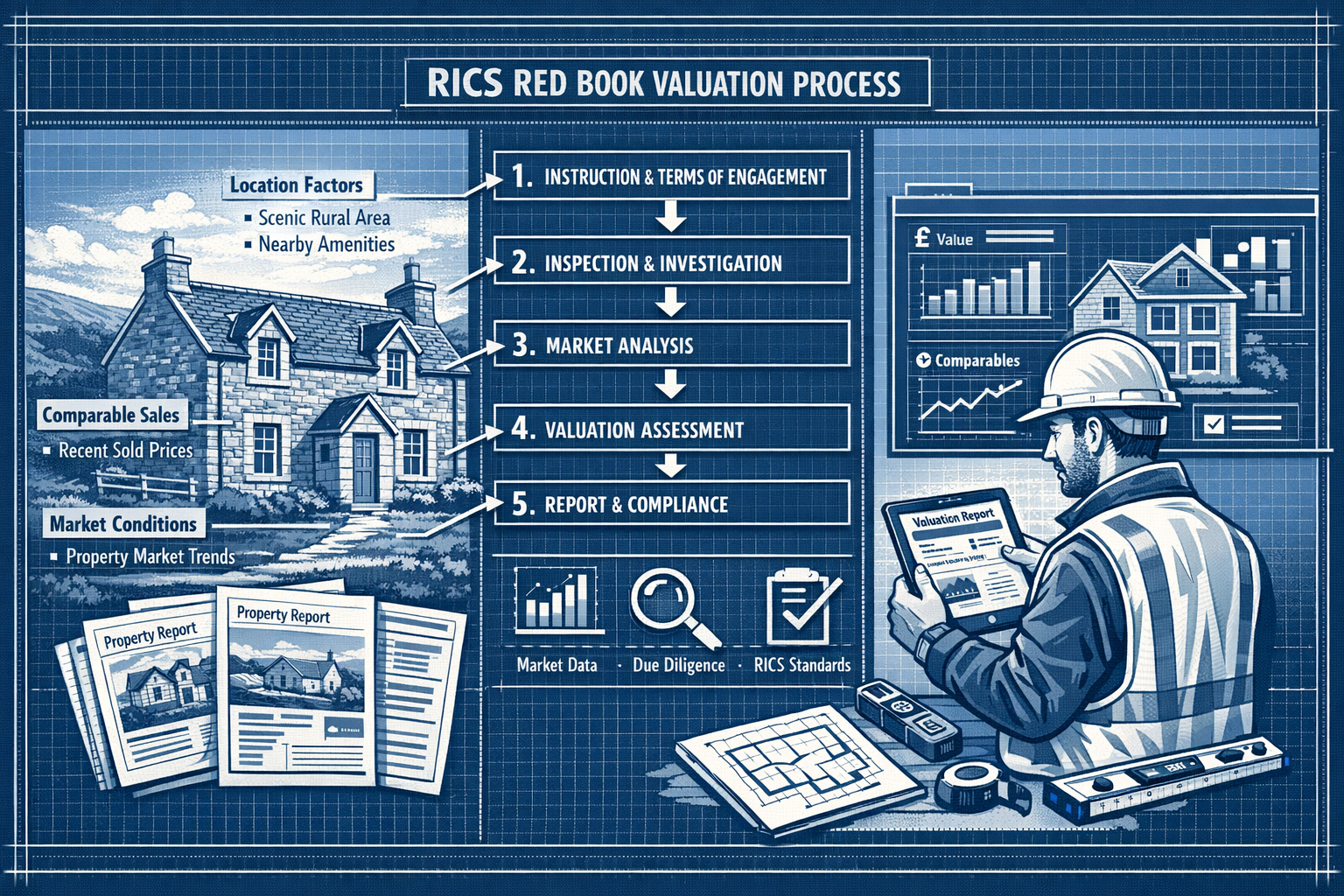
Implementing effective Valuation Strategies for Scotland's 2026 Housing Outperformance: RICS Techniques Amid Regional Price Surge requires a systematic workflow that ensures consistency and compliance:
Step 1: Instructions and Terms of Engagement 📋
Clearly define the valuation purpose, basis of value, inspection extent, and reporting format. RICS standards require written terms of engagement before commencing valuation work.
Step 2: Property Inspection and Data Gathering 🏠
Conduct thorough inspection noting location, accommodation, condition, improvements, and any factors affecting value. Gather relevant documentation including title deeds, planning permissions, and energy performance certificates.
Step 3: Market Research and Comparable Analysis 📊
Identify recent sales of comparable properties, adjusting for differences in location, size, condition, and timing. In Scotland's current market, prioritize recent transactions (within 3-6 months) and apply appropriate time adjustments for older comparables.
Step 4: Valuation Calculation and Reconciliation 💷
Apply appropriate RICS methodology (typically comparative method for residential properties), reconcile different value indications, and arrive at a final opinion of value supported by evidence and reasoning.
Step 5: Reporting and Professional Presentation 📝
Prepare a comprehensive report meeting RICS Red Book requirements, clearly stating assumptions, limitations, and the reasoning supporting the valuation conclusion.
Quality Assurance and Peer Review
In a dynamic market environment, quality assurance processes become particularly important. Professional practices should implement:
- ✔️ Peer review protocols for valuations exceeding certain thresholds
- ✔️ Comparable evidence databases maintained and updated regularly
- ✔️ Market adjustment matrices calibrated to current conditions
- ✔️ Client feedback mechanisms to assess valuation accuracy over time
These quality controls help ensure consistency across different surveyors and provide confidence to clients, lenders, and other stakeholders relying on valuation opinions.
Technology Integration in Modern Valuation Practice
Modern valuation practice increasingly incorporates technology to enhance accuracy, efficiency, and client service:
Automated Valuation Models (AVMs) provide useful initial estimates and sense-checks but cannot replace professional judgment, particularly in markets experiencing rapid change like Scotland's 2026 environment. AVMs should inform rather than determine professional valuations.
Geographic Information Systems (GIS) help visualize market trends, identify comparable properties, and analyze location factors affecting value. Mapping tools can reveal micro-market patterns not apparent from traditional analysis.
Digital inspection tools including drone photography, 3D scanning, and digital measurement applications improve inspection efficiency and documentation quality while providing clients with enhanced visual information.
Market Outlook and Future Considerations
Sustainability of Scotland's Outperformance
The critical question for valuation professionals is whether Scotland's current outperformance represents a sustainable trend or a temporary divergence from broader UK patterns. Several factors suggest the strength may persist through 2026:
Affordability advantages remain structural rather than cyclical. Scotland's lower absolute prices compared to southern England create ongoing appeal for relocating buyers and first-time purchasers[1].
Economic fundamentals in Scotland's major cities remain relatively robust, with employment markets showing resilience and major employers maintaining presence in Edinburgh, Glasgow, and Aberdeen.
Supply constraints continue in desirable locations, with planning restrictions and development challenges limiting new construction in popular areas. This structural supply-demand imbalance supports price stability.
However, risks include potential UK-wide economic challenges, interest rate volatility, and the possibility that Scotland's outperformance attracts increased supply that eventually moderates price growth.
Preparing for Regulatory Evolution
The October 2026 implementation of new Energy Performance of Buildings regulations[2] represents just one example of the evolving regulatory landscape affecting property values. Forward-thinking valuation strategies should anticipate:
- 🔮 Tightening energy efficiency requirements potentially creating value divergence between efficient and inefficient properties
- 🔮 Planning policy changes affecting development potential and permitted uses
- 🔮 Taxation adjustments impacting investment returns and buyer behavior
- 🔮 Lending criteria evolution as mortgage providers respond to market conditions and regulatory requirements
Staying ahead of regulatory changes allows surveyors to provide proactive advice to clients and incorporate emerging requirements into current valuations.
Building Resilient Valuation Practices
The market volatility and regional divergences characterizing 2026 underscore the importance of building resilient valuation practices capable of adapting to changing conditions:
Diversified expertise across residential, commercial, and specialized valuation types provides stability when individual market segments experience challenges.
Strong professional networks enable access to market intelligence, comparable evidence, and specialist knowledge when required.
Continuous learning through CPD, market research, and professional engagement ensures skills and knowledge remain current.
Technology adoption balanced with professional judgment creates efficiency without sacrificing accuracy or client service quality.
Conclusion

Scotland's housing market has emerged as a clear outperformer in 2026, with the 42% net balance of surveyors reporting price increases representing the strongest reading in nearly a year[1]. This regional divergence from the broader UK market creates both opportunities and complexities for valuation professionals applying RICS-compliant methodologies.
The Valuation Strategies for Scotland's 2026 Housing Outperformance: RICS Techniques Amid Regional Price Surge outlined in this guide provide a comprehensive framework for accurately assessing properties in this dynamic environment. By combining rigorous RICS Red Book standards with sophisticated market analysis, time-adjusted comparables, and forward-looking indicators, surveyors can confidently identify the 3-5% valuation gains available in select Scottish markets.
Key success factors include maintaining current market intelligence, applying appropriate adjustments for market momentum, integrating rental market data, anticipating regulatory changes, and implementing robust quality assurance processes. The moderation of rental inflation to 2.6% annually[3] alongside capital value growth suggests a more balanced and sustainable market than the overheated conditions of 2023.
Actionable Next Steps
For valuation professionals seeking to capitalize on Scotland's market strength:
- Update comparable evidence databases with recent Scottish transactions, prioritizing sales from the past 3-6 months
- Calibrate time adjustment factors to reflect the pace of price growth indicated by RICS survey data
- Assess energy performance implications for properties ahead of October 2026 regulatory changes
- Develop micro-market expertise in specific Scottish locations showing strongest performance
- Implement quality assurance protocols ensuring consistency across valuations in volatile market conditions
- Engage with continuing professional development focused on regional market dynamics and emerging valuation techniques
The forward-looking indicators remain encouraging, with 55% of surveyors anticipating higher prices over the coming year[1] and 34% expecting increased sales volumes[1]. This combination of price growth and transaction activity creates a favorable environment for professional valuation services.
By applying the RICS techniques and strategic approaches detailed in this guide, surveyors can provide accurate, defensible valuations that serve client needs while maintaining the professional standards that underpin market confidence. Scotland's 2026 housing outperformance represents not just a market phenomenon but an opportunity for valuation professionals to demonstrate expertise, add value, and build lasting client relationships in a dynamic market environment.
For specialized valuation needs or professional surveying services, consider consulting with RICS-qualified professionals who maintain current market knowledge and apply rigorous methodologies to every assignment.
References
[1] Scottish Housing Market 2026 Rics Survey – https://www.simpsonmarwick.com/journal/scottish-housing-market-2026-rics-survey
[2] Looking Ahead For Real Estate Scotland February 2026 – https://www.shoosmiths.com/perspectives/stories/articles/looking-ahead-for-real-estate-scotland-february-2026
[3] February2026 – https://www.ons.gov.uk/economy/inflationandpriceindices/bulletins/privaterentandhousepricesuk/february2026
[4] remax-scotland.homes – https://www.remax-scotland.homes/estate-agents/bonnyrigg/blog/sell-your-house-in-2026-edinburgh-midlothian-borders-market-update/57415
[5] House Prices – https://moneyweek.com/investments/house-prices/house-prices