
The buy-to-let market in 2026 stands at a critical crossroads. While individual landlords face mounting tax pressures and regulatory challenges, institutional investors are quietly building massive portfolios—transforming the rental landscape with unprecedented capital and professional management. This shift demands a fundamental rethinking of how properties are valued, assessed, and acquired.
Valuing Buy-to-Let Properties in 2026's Institutional Landlord Surge: Due Diligence Checklists has become essential knowledge for anyone serious about rental property investment. With mortgage rates unlikely to fall below 6% and cap rates compressing across commercial real estate[1][4], the margin for error has never been smaller. Professional investors are winning by focusing on yield-impacting defects and securing RICS-compliant reports that satisfy institutional financing requirements.
Key Takeaways
- 💰 Target cash-on-cash returns of 8-12% are increasingly difficult to achieve at current interest rates, making thorough due diligence critical for identifying truly profitable opportunities
- 🏢 Institutional investors are reshaping the market with over 64,000 build-to-rent homes under construction and 139,000 more in planning stages[6]
- 📊 Property type matters significantly: HMOs offer the strongest monthly returns but require complex financing, while two-bedroom properties attract stable professional tenants
- 🔍 RICS-compliant valuations have become non-negotiable for securing institutional financing and protecting investment capital
- 📍 Geographic selection drives profitability: Sun Belt and Midwest markets offer better price-to-rent ratios than coastal cities facing higher entry costs[3]
Understanding the 2026 Institutional Landlord Landscape

The rental property market has undergone a dramatic transformation. Institutional landlords—including real estate investment trusts (REITs), private equity firms, and dedicated build-to-rent operators—now control substantial portions of the single-family and multifamily rental markets.
The Scale of Institutional Investment
More than 64,000 build-to-rent homes are currently under construction, with deliveries extending through late 2027. An additional 139,000 units remain in planning and pre-development stages[6]. This represents billions in institutional capital flowing into rental housing.
Why institutions are dominating:
- Access to low-cost capital unavailable to individual investors
- Professional property management at scale
- Advanced data analytics for market selection
- Ability to weather market downturns with deep reserves
- Streamlined acquisition processes with dedicated teams
For individual investors and smaller operators, competing requires adopting institutional-grade due diligence practices. Working with RICS registered valuers ensures your property assessments meet the standards institutional lenders demand.
Market Fundamentals Driving 2026 Valuations
Several key factors are shaping property valuations this year:
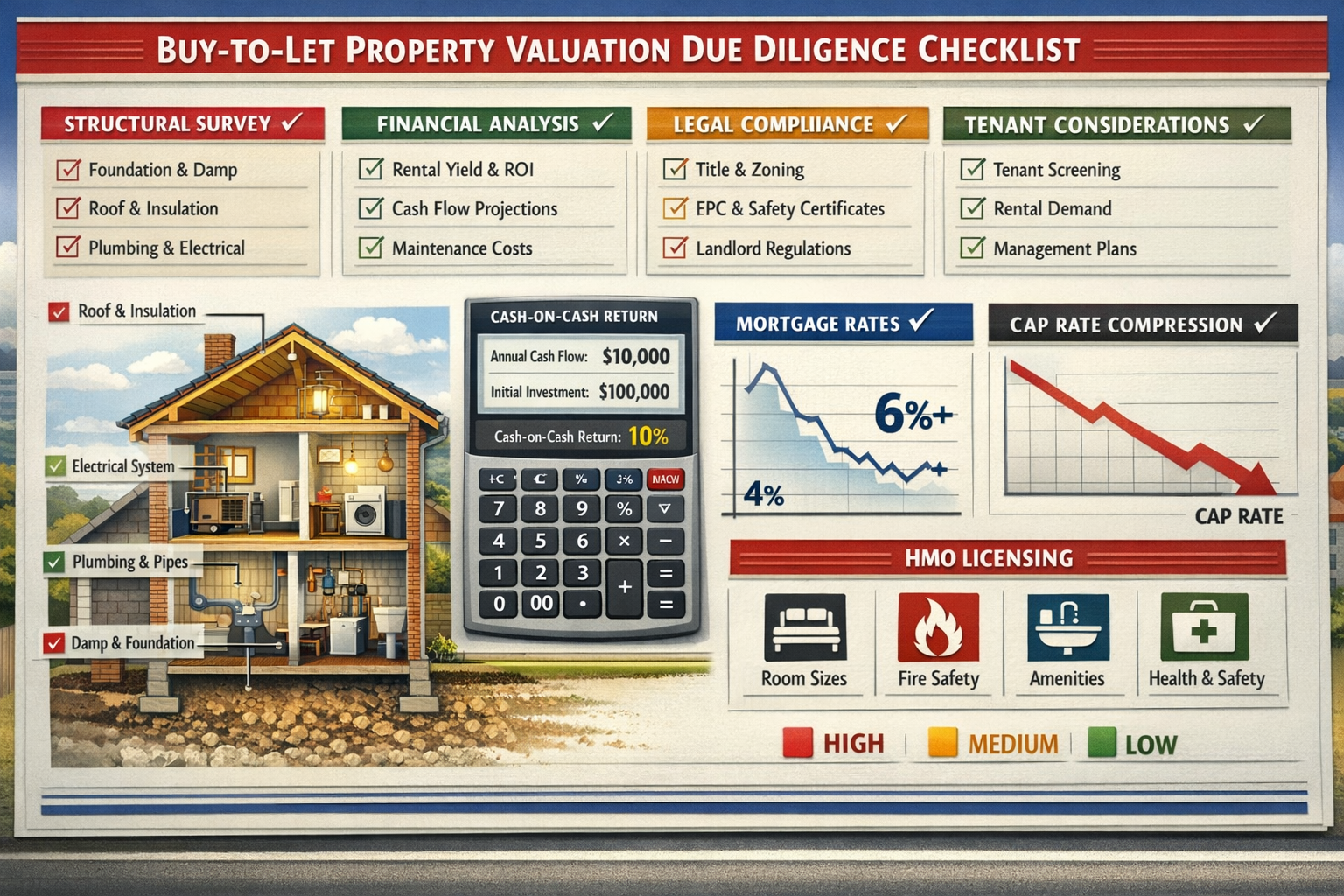
Mortgage Rate Environment: Rates are projected to remain above 6% throughout 2026, with only gradual moderation expected[1]. This higher cost of capital directly impacts achievable yields and property values.
Rent Growth Projections: The rental market shows diverging trends. Multifamily rents are projected to rise just 0.3% in 2026, while single-family rents are expected to climb 2.3%[1]. This spread significantly affects which property types offer better returns.
Affordability Improvements: Rent affordability continues improving, with median-income households spending 27.2% of income on typical rent as of October 2025—the lowest share since August 2021[1]. This creates a larger pool of qualified tenants but may limit aggressive rent increases.
Cap Rate Compression: Commercial real estate cap rates for most property types are expected to compress by 5 to 15 basis points in 2026[4], meaning investors are accepting lower yields for perceived quality assets.
Valuing Buy-to-Let Properties in 2026's Institutional Landlord Surge: Essential Valuation Metrics
Professional property valuation goes far beyond simple price-per-square-foot calculations. Institutional investors employ sophisticated financial modeling that individual landlords must understand to compete effectively.
Cash-on-Cash Return Analysis
The cash-on-cash return remains the most practical metric for evaluating rental property performance. This measures the annual pre-tax cash flow against the total cash invested.
Target Benchmarks for 2026:
- Strong performance: 10-12% cash-on-cash return
- Acceptable performance: 8-10% cash-on-cash return
- Marginal performance: 6-8% cash-on-cash return
- Underperforming: Below 6% cash-on-cash return
Many landlords targeting returns between 8-12% find hitting the higher end of that range difficult at current interest rates[3]. This makes identifying properties with value-add opportunities or below-market rents increasingly important.
Capital Requirements and Initial Investment
Typical rental property purchases require 20-25% down payment plus closing costs and reserves. A £300,000 property may require £70,000 or more to start safely[3]. This substantial capital requirement makes accurate valuation critical—overpaying by even 5% can eliminate years of potential returns.
Initial capital breakdown:
- Down payment: 20-25% of purchase price
- Closing costs: 2-5% of purchase price
- Initial repairs/improvements: Variable, often 5-15%
- Operating reserves: 3-6 months of expenses
- Vacancy reserves: 2-3 months of rent
Professional property valuations help investors understand the true all-in cost before committing capital.
Property Type Performance Comparison
Different property types deliver vastly different returns and risk profiles:
| Property Type | Typical Yield | Tenant Stability | Management Complexity | Financing Difficulty |
|---|---|---|---|---|
| HMO (3+ bedrooms) | Highest (12-15%) | Moderate | High | Difficult |
| Two-bedroom flats | Good (7-10%) | High | Low | Easy |
| One-bedroom flats | Moderate (6-8%) | Moderate | Low | Easy |
| Single-family homes | Good (8-11%) | High | Moderate | Moderate |
| Studio apartments | Lower (5-7%) | Lower | Low | Easy |
Houses in Multiple Occupation (HMOs) with three or more bedrooms offer the strongest monthly returns by generating consistent income from multiple separate tenancy agreements, though they involve more stringent regulations and complex financing[5].
Two-bedroom properties, particularly in city centres, are likely to see strong tenant appeal and attract young professional tenants in their 30s[5]. These offer an excellent balance of yield and stability.
One-bedroom properties could see surging demand as single-person households trend upward, offering a lower-budget entry option for higher-volume portfolios, though with potentially lower yields[5].
Valuing Buy-to-Let Properties in 2026's Institutional Landlord Surge: Comprehensive Due Diligence Checklists
Institutional-grade due diligence separates profitable investments from costly mistakes. The following checklists represent best practices adopted by professional investors.
Physical Property Assessment Checklist
A thorough physical inspection identifies yield-impacting defects before purchase. Engaging chartered surveyors ensures nothing is overlooked.
🏗️ Structural Elements:
- Foundation condition and evidence of settlement
- Load-bearing wall integrity
- Roof structure and remaining lifespan
- Floor joists and structural timber condition
- Evidence of subsidence or structural movement
- Damp-proof course effectiveness
- External wall condition and weatherproofing
Consider a structural survey for older properties or those showing visible defects.
💧 Building Services:
- Heating system age, efficiency, and safety certification
- Electrical installation condition and certification
- Plumbing system condition and water pressure
- Drainage system functionality
- Ventilation adequacy in bathrooms and kitchens
- Fire safety systems (alarms, extinguishers, escape routes)
- Energy Performance Certificate (EPC) rating
🔍 Defects and Maintenance:
- Damp and moisture issues (penetrating, rising, condensation)
- Timber defects (rot, woodworm, beetle infestation)
- Window and door condition and security
- Internal decoration state
- Kitchen and bathroom condition
- External areas, boundaries, and access
- Evidence of previous poor-quality repairs
For properties showing signs of ground movement, a specialized subsidence survey provides detailed analysis.
Financial Analysis Checklist
Numbers don't lie—but they must be calculated correctly. This checklist ensures comprehensive financial assessment.
📊 Income Analysis:
- Current market rent vs. in-place rent
- Rental growth trends in specific postcode
- Tenant quality and payment history
- Lease terms and remaining duration
- Void periods typical for property type/location
- Potential for rent optimization or value-add improvements
- Seasonal demand variations
💷 Expense Projections:
- Property management fees (8-12% of rent typical)
- Maintenance and repairs (budget 1-2% of property value annually)
- Insurance costs (buildings and landlord liability)
- Ground rent and service charges (leasehold properties)
- Council tax (if landlord responsible during voids)
- Utilities (if included in tenancy)
- Safety certifications (gas, electrical, EPC)
- Licensing fees (HMO, selective licensing areas)
🏦 Financing Structure:
- Mortgage rate and product type (fixed vs. variable)
- Loan-to-value ratio and deposit requirement
- Mortgage arrangement fees
- Early repayment charges
- Stress testing at higher interest rates (+2-3%)
- Lender's valuation requirements
- Mortgage term and amortization impact
Legal and Regulatory Compliance Checklist
Regulatory compliance protects your investment and prevents costly penalties.
📋 Title and Ownership:
- Clear title with no adverse restrictions
- Leasehold vs. freehold status
- Remaining lease term (minimum 80+ years preferred)
- Ground rent and service charge obligations
- Rights of way, easements, or covenants
- Planning permissions for any alterations
- Building regulation compliance for extensions/conversions
For leasehold properties, understanding lease extension valuations is critical, as short leases dramatically impact property values.
🏛️ Licensing and Permissions:
- HMO licensing (mandatory or additional)
- Selective licensing requirements
- Planning permission for rental use (if required)
- Building regulation certificates
- Fire safety compliance (particularly HMOs)
- Energy Performance Certificate (minimum E rating)
- Gas Safety Certificate (annual)
- Electrical Installation Condition Report (5-year)
⚖️ Tenancy Considerations:
- Existing tenancy agreements and terms
- Tenant deposit protection compliance
- Right to rent checks documentation
- Previous tenancy disputes or issues
- Notice periods and break clauses
- Rent review mechanisms
- Permitted use and occupancy limits
Geographic and Market Analysis Checklist
Location drives long-term performance. Institutional investors spend heavily on market research—you should too.
📍 Macro Location Factors:
- Employment growth and economic diversification
- Population growth and demographic trends
- Transport infrastructure and connectivity
- Planned developments and regeneration projects
- School quality and family appeal
- Crime rates and neighborhood safety
- Rental demand indicators (time to let, void rates)
🏘️ Micro Location Factors:
- Proximity to transport links (stations, bus routes)
- Local amenities (shops, restaurants, gyms)
- Parking availability and costs
- Noise levels and environmental factors
- Building quality and maintenance of surrounding properties
- Mix of owner-occupiers vs. renters
- Future development plans nearby
Geographic focus: Sun Belt and Midwest markets in the US still offer affordable prices relative to rent for better investment opportunities, while coastal cities face higher entry costs and lower yields[3]. In the UK, similar principles apply—secondary cities often deliver superior yields compared to prime London locations.
For investors focusing on specific regions, working with local specialists like chartered surveyors in Hampshire or surveyors in Central London provides invaluable local market knowledge.
RICS-Compliant Valuation Reports: The Institutional Standard
Institutional lenders require RICS-compliant valuation reports prepared by qualified professionals. Understanding these reports helps investors make informed decisions and secure favorable financing.
What Makes a Valuation RICS-Compliant?
The Royal Institution of Chartered Surveyors (RICS) sets rigorous standards for property valuations through the RICS Valuation – Global Standards (the "Red Book").
Key requirements include:
✅ Qualified valuer: Must be RICS-registered with appropriate competence and experience
✅ Defined basis of value: Market value, investment value, or other clearly stated basis
✅ Inspection: Physical inspection of the property (internal and external)
✅ Comparable evidence: Recent sales and rental data for similar properties
✅ Assumptions and limitations: Clearly stated assumptions and any limitations
✅ Independence: Valuer must be independent and free from conflicts of interest
✅ Professional indemnity insurance: Adequate coverage for potential errors
Red Book valuations provide the credibility institutional lenders require and protect investors from overpaying.
Types of RICS Valuations for Buy-to-Let Properties
Different purposes require different valuation approaches:
Market Valuation: Estimates the price a property would achieve in an open market transaction. This is the standard for purchase decisions and refinancing.
Investment Valuation: Focuses on income-generating potential, using capitalization rates and discounted cash flow analysis. Essential for comparing multiple investment opportunities.
Reinstatement Cost Valuation: Estimates the cost to rebuild the property if destroyed. Required for insurance purposes to ensure adequate coverage.
Capital Gains Tax Valuation: Establishes property value at a specific historical date for tax purposes.
Yield-Impacting Defects: What Valuers Look For
Professional valuers identify defects that directly impact rental income and property value:
Critical defects (immediate impact on lettability):
- Damp and mold affecting habitable rooms
- Non-functional heating systems
- Electrical safety hazards
- Structural issues affecting safety
- EPC rating below legal minimum (E rating)
- Missing safety certifications
Significant defects (reduce rental appeal and achievable rent):
- Outdated kitchens and bathrooms
- Poor decoration and presentation
- Inefficient heating systems
- Single glazing in cold climates
- Limited storage space
- Poor natural light
Minor defects (marginal impact on rent):
- Cosmetic decoration issues
- Minor wear and tear
- Outdated fixtures and fittings
- Small maintenance items
Understanding these categories helps investors budget for necessary improvements and negotiate purchase prices accordingly.
Property Type Strategies for 2026's Market Conditions
Different property types suit different investment strategies and risk tolerances. Institutional investors increasingly specialize by property type—individual investors should too.
HMO Properties: Maximum Yield, Maximum Complexity
Houses in Multiple Occupation deliver the highest returns but require sophisticated management.
Advantages:
- Highest monthly cash flow (often 12-15% yields)
- Diversified tenant risk (multiple income streams)
- Strong demand in university cities and urban centers
- Potential for significant value-add through conversion
Challenges:
- Complex licensing requirements (mandatory and additional HMO licenses)
- Stricter building regulations (fire safety, room sizes, facilities)
- Higher management intensity
- More difficult financing (fewer lenders, higher rates)
- Higher void costs when rooms remain empty
Due diligence priorities for HMOs:
- Verify planning permission for HMO use
- Confirm fire safety compliance (doors, alarms, escape routes)
- Check room sizes meet minimum standards
- Assess kitchen and bathroom provision ratios
- Understand local licensing requirements
- Calculate all-in costs including compliance work
Two-Bedroom Properties: The Sweet Spot
Two-bedroom properties, particularly in city centres, offer an excellent balance of yield and stability. They attract young professional tenants in their 30s who typically stay longer and maintain properties well[5].
Advantages:
- Strong tenant demand from couples and sharers
- Good rental yields (7-10% typical)
- Lower management complexity than HMOs
- Easier financing with standard buy-to-let mortgages
- Suitable for both city center and suburban locations
Optimal locations:
- City centers with strong employment
- Commuter towns with good transport links
- Areas near major employers or business parks
- Neighborhoods popular with young professionals
Single-Family Homes: Stability and Growth
Single-family rental homes are projected to see 2.3% rent growth in 2026, outpacing multifamily properties[1]. This makes them attractive for long-term appreciation strategies.
Advantages:
- Longer tenant retention (families stay longer)
- Lower turnover costs
- Appreciation potential in good school districts
- Easier eventual sale to owner-occupiers
- Lower regulatory burden than HMOs
Challenges:
- Higher capital requirements
- Total vacancy when empty (no partial income)
- Potentially lower yields than HMOs or multifamily
- Maintenance responsibility for entire property and gardens
Build-to-Rent: Competing with Institutional Portfolios
With over 64,000 build-to-rent homes under construction[6], institutional operators are creating purpose-built rental communities with professional management and amenities.
For individual investors, this trend means:
- Increased competition in certain markets
- Higher tenant expectations for property quality
- Opportunities to partner with institutional operators
- Need for professional management to compete
- Focus on niche markets institutions overlook
Regional Considerations and Market Selection
Geographic selection dramatically impacts investment performance. In 2026, regional market dynamics show significant variation.
High-Yield vs. High-Growth Markets
High-yield markets typically offer:
- Lower property prices relative to rents
- Strong rental demand from local employment
- Lower capital appreciation potential
- Better cash flow for income-focused investors
- Examples: Secondary cities, industrial towns, university cities
High-growth markets typically offer:
- Higher property prices relative to rents
- Strong economic and population growth
- Better long-term appreciation potential
- Lower initial yields
- Examples: Major metropolitan areas, tech hubs
For investors seeking expertise in specific high-value areas, specialists like chartered surveyors in Hampstead or surveyors in Chelsea provide detailed local market knowledge.
Emerging Opportunity Zones
Several factors identify emerging opportunity zones:
🔸 Infrastructure investment: New transport links, stations, or road improvements
🔸 Regeneration projects: Government-backed redevelopment programs
🔸 Employment growth: New employers or business park developments
🔸 Demographic shifts: Growing populations or changing household compositions
🔸 Affordability migration: Renters priced out of expensive areas moving to nearby locations
Existing home sales are projected to reach 4.26 million in 2026, a 4.3% increase from 2025, as affordability improves[1]. This increased transaction volume creates opportunities in markets previously constrained by limited inventory.
Financing Strategies for Institutional-Scale Portfolios
Access to capital separates successful portfolio builders from occasional investors. Understanding financing options helps maximize leverage while managing risk.
Traditional Buy-to-Let Mortgages
Standard buy-to-let mortgages remain the foundation for most investors:
Typical terms in 2026:
- Interest rates: 6%+ for most borrowers[1]
- Loan-to-value: 75% maximum (25% deposit required)
- Rental coverage: 125-145% of mortgage payment required
- Stress testing: Affordability tested at higher rates
- Minimum property value: Often £40,000-£50,000
- Maximum borrowing: Varies by lender and applicant
Key considerations:
- Fixed vs. variable rates (fixed provides certainty, variable offers flexibility)
- Product fees and arrangement costs
- Early repayment charges
- Portability options for portfolio expansion
- Lender's valuation requirements
Portfolio Landlord Considerations
Lenders classify investors with four or more mortgaged properties as "portfolio landlords," triggering additional scrutiny:
Additional requirements may include:
- Detailed portfolio analysis across all properties
- Stress testing across entire portfolio
- Business plan and strategy documentation
- Evidence of property management capability
- Higher deposit requirements
- Specialist portfolio landlord lenders
Alternative Financing Structures
Sophisticated investors explore alternative structures:
Limited company ownership: Offers tax advantages but impacts financing:
- Corporate tax rates vs. personal income tax
- Mortgage interest fully deductible
- Different lender criteria and rates
- Stamp duty implications
- Inheritance tax planning benefits
Joint ventures: Partnering with other investors or institutions:
- Shared capital requirements
- Access to larger opportunities
- Shared expertise and management
- Complex legal agreements required
Bridging finance: Short-term funding for value-add opportunities:
- Higher interest rates (0.5-1.5% monthly typical)
- Quick completion (days to weeks)
- Enables purchase and refurbishment
- Refinance to standard mortgage after works
Tax Efficiency and Structure Optimization
Tax treatment significantly impacts net returns. Professional investors structure ownership to minimize tax liability within legal frameworks.
Key Tax Considerations for 2026
Mortgage interest relief: Individual landlords can no longer deduct full mortgage interest from rental income. Instead, they receive a 20% tax credit, significantly impacting higher-rate taxpayers.
Capital gains tax: Applies when selling investment properties, with rates varying by income level and property type.
Stamp duty land tax: Higher rates apply to additional properties (typically 3-5% surcharge on top of standard rates).
Income tax: Rental profits taxed as income at marginal rates (20%, 40%, or 45% in UK).
Company vs. Personal Ownership
The optimal structure depends on individual circumstances:
Personal ownership advantages:
- Simpler administration
- Capital gains tax benefits (annual exemption, lower rates)
- Easier mortgage access historically
- No corporation tax filing
Company ownership advantages:
- Full mortgage interest deductibility
- Lower corporate tax rates on profits
- Easier portfolio expansion
- Inheritance tax planning opportunities
- Professional image with institutional partners
Consult tax advisors before making structural decisions, as individual circumstances vary significantly.
Technology and Data in Modern Property Valuation
Institutional investors leverage technology extensively. Individual investors can access many of the same tools.
Valuation Technology Tools
Automated Valuation Models (AVMs): Use algorithms and comparable sales data to estimate property values:
- Useful for initial screening
- Less accurate than professional valuations
- Cannot identify property-specific defects
- Best used alongside professional assessments
Rental yield calculators: Estimate potential returns based on purchase price and estimated rent:
- Quick comparison tool
- Requires accurate expense assumptions
- Cannot replace detailed financial modeling
- Useful for initial opportunity filtering
Market data platforms: Provide rental trends, void periods, and demand indicators:
- Land Registry data for sales prices
- Rental listing platforms for market rents
- Demographic and employment data
- Transport and infrastructure planning
The Role of Professional Valuations
Despite technological advances, professional RICS valuations remain essential:
✓ Physical inspection identifies defects algorithms miss
✓ Local expertise provides context data cannot capture
✓ Lender acceptance for financing approval
✓ Legal protection through professional indemnity insurance
✓ Nuanced judgment on market conditions and trends
Working with experienced chartered surveyors combines technology with human expertise for optimal results.
Risk Management and Portfolio Protection
Institutional investors survive market cycles through rigorous risk management. Individual investors should adopt similar practices.
Diversification Strategies
Geographic diversification: Spread properties across multiple markets to reduce local economic risk.
Property type diversification: Mix HMOs, two-bedroom flats, and single-family homes to balance yield and stability.
Tenant diversification: Avoid over-concentration in single tenant demographics (e.g., all students or all corporate lets).
Financing diversification: Use multiple lenders to avoid concentration risk and maintain flexibility.
Insurance and Protection
Essential coverage includes:
- Buildings insurance (mandatory for mortgaged properties)
- Landlord liability insurance
- Contents insurance (if furnished)
- Rent guarantee insurance (covers tenant default)
- Legal expenses insurance (for possession proceedings)
- Employer's liability (if employing staff)
Contingency Planning
Build reserves for:
- Major repairs (roof, boiler, structural issues)
- Void periods (typically budget 4-8 weeks annually)
- Tenant default or damage
- Interest rate increases
- Regulatory compliance costs
- Legal proceedings if necessary
Professional investors maintain reserves equal to 3-6 months of operating expenses per property.
Working with Professional Advisors

Successful institutional-scale investing requires a professional team.
Essential Advisors
Chartered surveyors: For valuations, surveys, and technical assessments. Services range from homebuyer reports to detailed building surveys.
Property solicitors: For conveyancing, lease reviews, and tenancy agreements.
Accountants: For tax planning, structure optimization, and compliance.
Mortgage brokers: For financing options and lender relationships.
Property managers: For day-to-day operations and tenant relationships.
Insurance brokers: For comprehensive coverage at competitive rates.
When to Engage Specialists
Certain situations demand specialist expertise:
- Complex leasehold issues: Understanding freehold purchase options
- Structural concerns: Detailed structural surveys
- HMO conversions: Planning, building regulations, and licensing
- Portfolio restructuring: Tax and legal implications
- Dispute resolution: Tenant issues or property defects
Conclusion
Valuing Buy-to-Let Properties in 2026's Institutional Landlord Surge: Due Diligence Checklists represents the new standard for rental property investment. As institutional capital reshapes the market with over 64,000 build-to-rent homes under construction and billions in professional investment[6], individual investors must adopt institutional-grade practices to compete effectively.
The fundamentals are clear: mortgage rates above 6%[1], compressed cap rates[4], and diverging rent growth between property types[1] create a challenging environment where thorough due diligence separates profitable investments from costly mistakes. Target cash-on-cash returns of 8-12% remain achievable but require meticulous property selection, accurate valuation, and professional management[3].
Actionable Next Steps
For prospective investors:
- Engage RICS-qualified surveyors for comprehensive property assessments before committing capital
- Build your professional team including surveyors, solicitors, accountants, and mortgage brokers
- Focus on property types that match your management capability—HMOs for maximum yield, two-bedroom properties for balance, or single-family homes for stability
- Conduct thorough financial modeling including stress testing at higher interest rates
- Research geographic markets carefully, focusing on areas with strong employment growth and rental demand
For existing landlords:
- Review your portfolio for underperforming assets and optimization opportunities
- Obtain updated RICS valuations to understand current market values and refinancing options
- Assess regulatory compliance across all properties, particularly EPC ratings and safety certifications
- Consider ownership structure optimization for tax efficiency
- Implement institutional-grade systems for property management and financial tracking
For all investors:
- Stay informed about market trends, regulatory changes, and financing conditions
- Build reserves equal to 3-6 months of operating expenses per property
- Maintain professional relationships with local specialists like chartered surveyors in your area
- Document everything using comprehensive checklists for acquisitions and ongoing management
- Think long-term while remaining flexible to adapt to changing market conditions
The institutional landlord surge of 2026 doesn't mean individual investors cannot succeed—it means they must operate with the same professionalism, rigor, and attention to detail that institutional investors bring to every transaction. By implementing comprehensive due diligence checklists, obtaining RICS-compliant valuations, and focusing on yield-impacting factors, investors of any scale can build profitable, resilient buy-to-let portfolios in today's competitive market.
The opportunity remains substantial for those willing to do the work properly. With 4.26 million existing home sales projected for 2026[1] and improving affordability creating a larger pool of potential tenants, the rental market continues offering attractive returns to disciplined, well-informed investors who prioritize professional due diligence over shortcuts.
References
[1] 2026 Housing Predictions 35800 – https://www.zillow.com/research/2026-housing-predictions-35800/
[3] Is Rental Property Good Investment – https://www.allpropertymanagement.com/blog/post/is-rental-property-good-investment/
[4] Us Real Estate Market Outlook 2026 – https://www.cbre.com/insights/books/us-real-estate-market-outlook-2026
[5] 2026size Property Investors – https://www.buyassociationgroup.com/en-us/news/2026size-property-investors/
[6] Why Build To Rent Is Shaping The Housing Market In 2026 – https://www.matthews.com/market_insights/why-build-to-rent-is-shaping-the-housing-market-in-2026