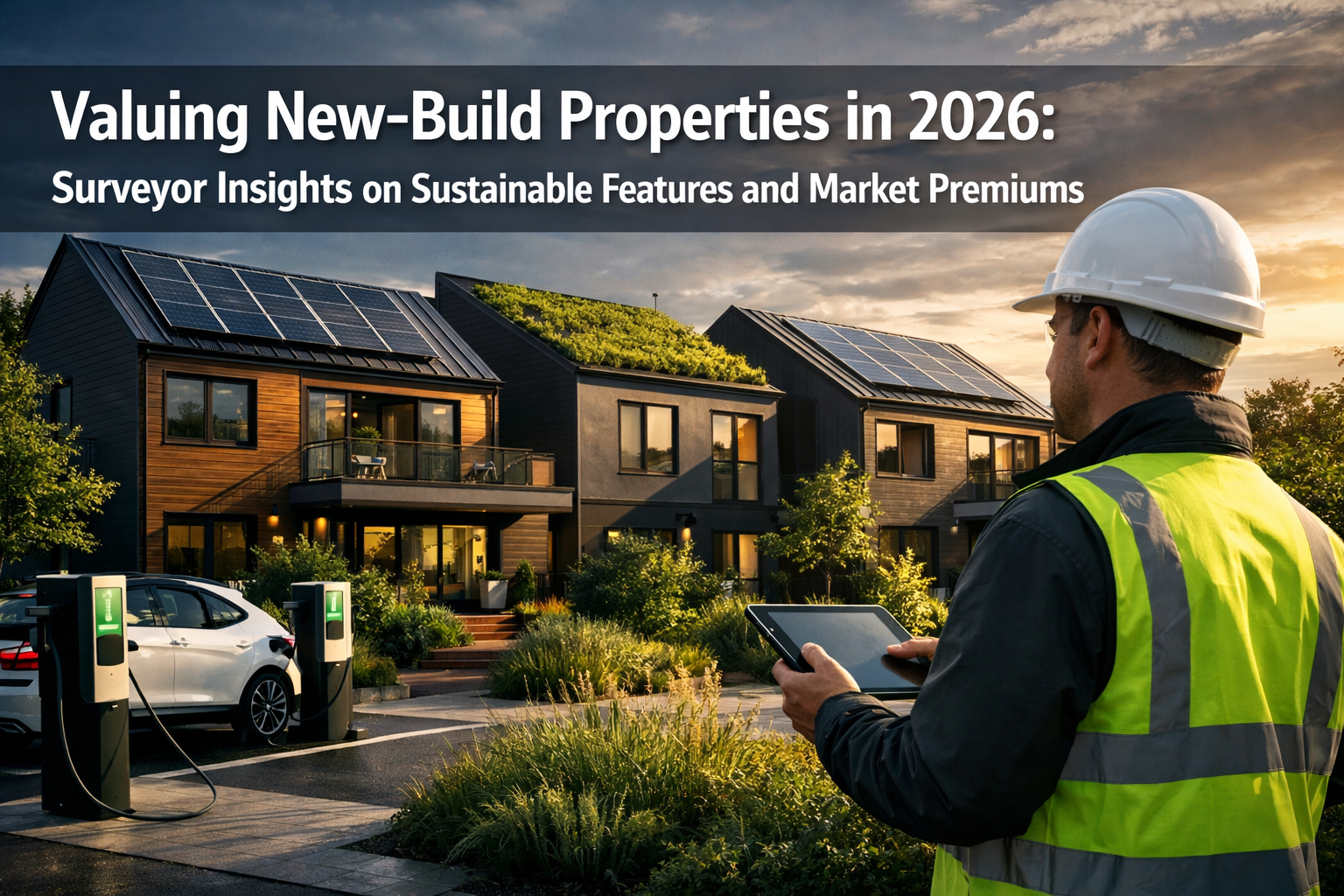

The property valuation landscape is experiencing a seismic shift as sustainable new-build developments challenge traditional assessment methodologies. With builders racing to meet net-zero carbon standards and buyers demanding energy-efficient homes that promise minimal running costs, chartered surveyors face unprecedented complexity when determining property values. The question isn't simply whether sustainable features add value—it's quantifying exactly how much premium these innovations command in today's market. As 2026 unfolds, Valuing New-Build Properties in 2026: Surveyor Insights on Sustainable Features and Market Premiums has become critical knowledge for anyone navigating the property market.
Key Takeaways
🏡 Sustainable features command measurable premiums: Solar panels, heat pumps, and whole-home batteries can add 5-15% to new-build valuations in high-demand markets.
📊 Supply discipline is stabilizing valuations: Despite declining construction activity, controlled supply and quality-focused development are supporting premium pricing for sustainable properties.
⚡ Energy efficiency is now mainstream: Zero-energy-ready homes with EV charging and smart systems are becoming standard expectations rather than luxury additions.
🔍 Surveyor expertise is essential: Professional valuation of sustainable features requires specialized knowledge of emerging technologies and their long-term value impact.
💰 Market premiums vary significantly by location: Geographic factors, local energy costs, and regional sustainability priorities create substantial valuation differences across markets.
Understanding the 2026 New-Build Market Landscape
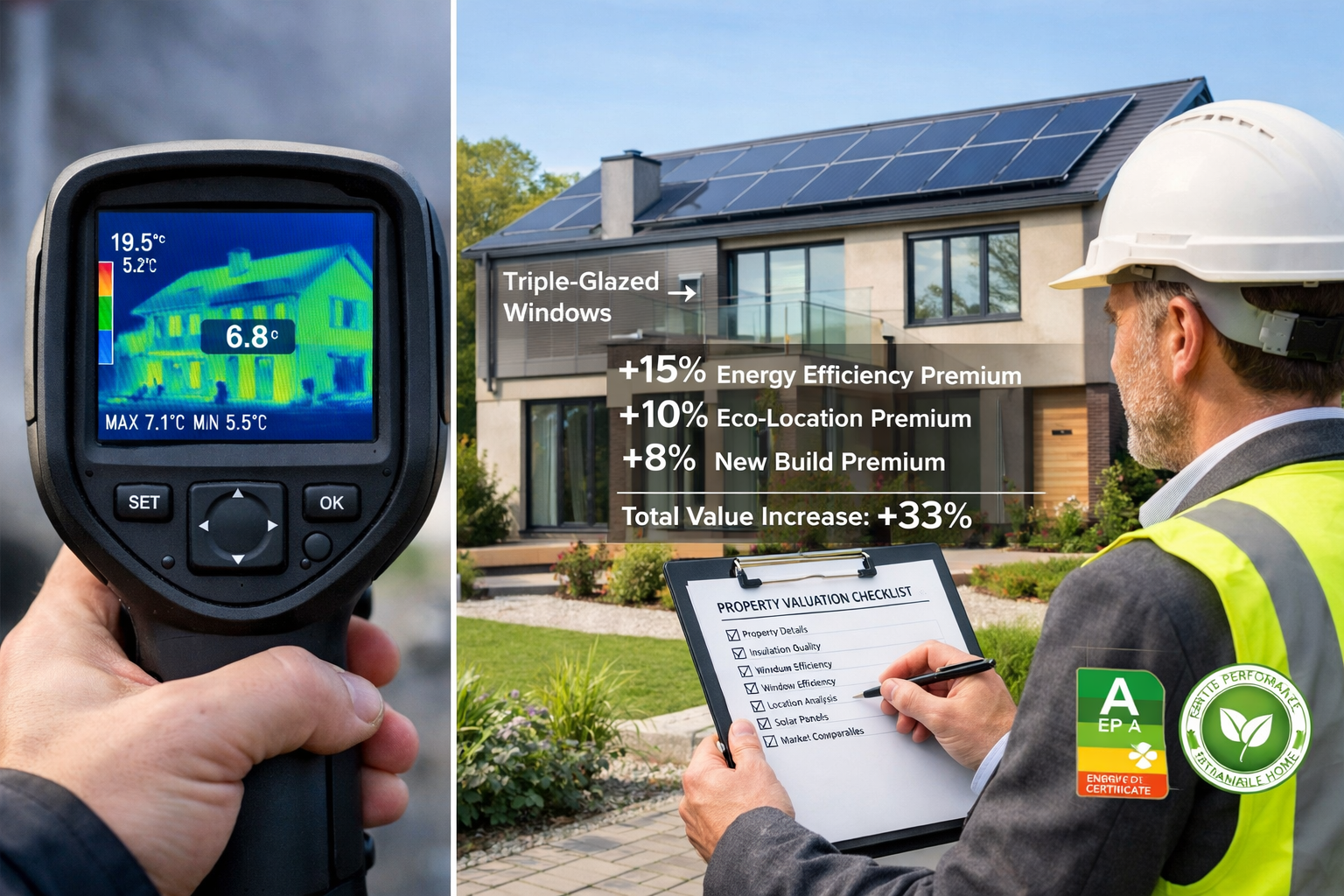
The new-build property market in 2026 presents a fascinating paradox. While construction activity faces headwinds—with single-family home starts projected to decline 5% below 2025 levels and potentially fall below 947,000 homes, the weakest performance since 2019[1]—the properties being built are increasingly sophisticated and sustainable.
This supply discipline is actually supporting valuations rather than undermining them. According to industry analysis, moderating construction pipelines are helping stabilize property values and restore market confidence, with capitalization rates remaining generally stable and increasingly tied to asset quality and market selection[2].
The Sustainable Building Revolution
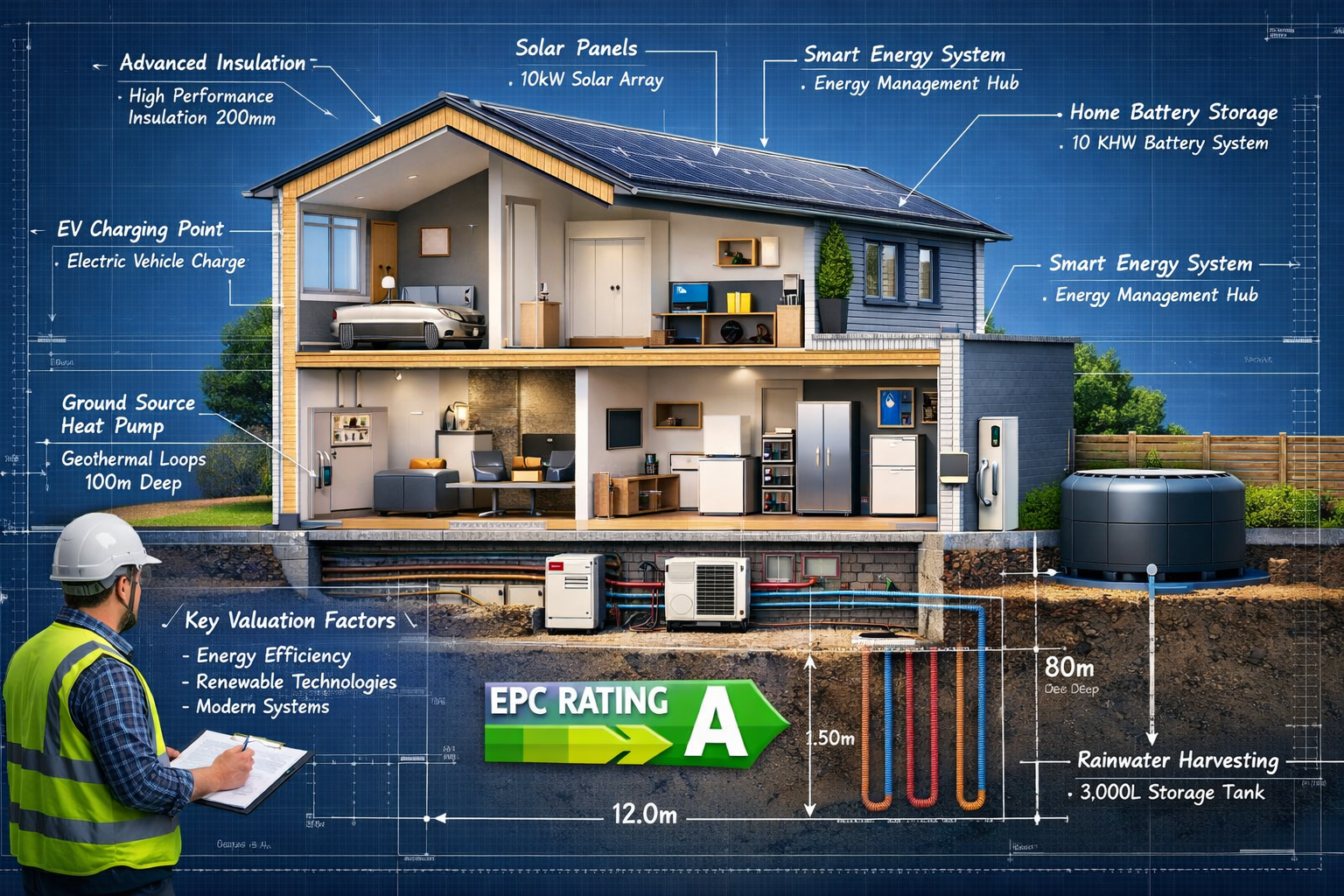
Energy-efficient features have transitioned from premium add-ons to essential components of new construction. Builders are incorporating:
- Zero-energy-ready homes with advanced insulation and air-sealing
- Whole-home battery systems for energy independence
- Integrated EV charging stations as standard amenities
- Smart home energy management systems
- Heat pump technology replacing traditional heating systems
Families are gravitating toward homes designed for both energy efficiency and practical living, with features like walk-in pantries, refrigerated drawers, and smart organization systems becoming increasingly common[1].
Surveyor Methodologies for Valuing New-Build Properties in 2026
Professional surveyors employ sophisticated approaches when assessing new-build properties with sustainable features. The traditional comparative method requires significant adaptation when dealing with emerging technologies that may not have extensive market history.
The Comparative Approach with Sustainable Adjustments
Chartered surveyors begin with comparable sales data but must make informed adjustments for sustainable features. This requires:
Baseline Comparison: Identifying similar new-build properties without sustainable features to establish a baseline value.
Feature-Specific Premiums: Applying documented premium percentages for each sustainable element based on market evidence and buyer demand.
Location Multipliers: Adjusting premiums based on regional energy costs, climate conditions, and local sustainability priorities.
Future-Proofing Value: Considering regulatory trends, such as upcoming energy performance requirements that may make sustainable features mandatory rather than optional.
When commissioning a homebuyer report or building survey, buyers should ensure their surveyor has specific expertise in assessing sustainable building technologies.
The Income Capitalization Approach
For investment properties, surveyors increasingly use income capitalization methods that factor in reduced operating costs from sustainable features. A new-build with solar panels and a heat pump may command higher rents while delivering lower utility bills—creating a compelling value proposition that traditional valuation methods might undervalue.
The net operating income calculation must account for:
- Reduced energy expenditure (typically 40-60% lower than conventional builds)
- Higher tenant retention due to lower running costs
- Premium rental rates in sustainability-conscious markets
- Potential income from feed-in tariffs or energy export
Quantifying Market Premiums for Sustainable Features
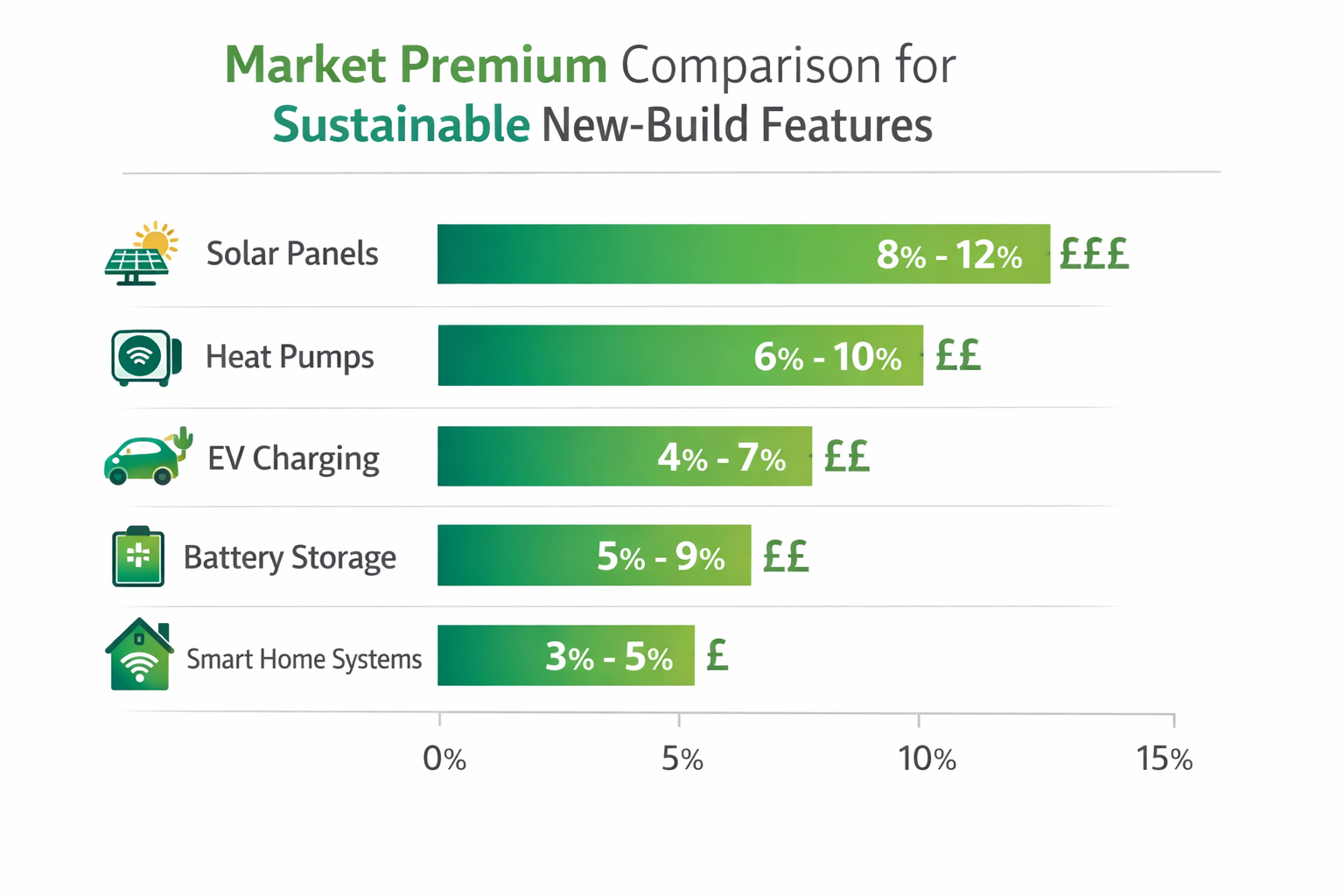
Understanding the specific value contribution of individual sustainable features is essential for accurate valuation. Based on market analysis and surveyor insights across various regions, the following premium ranges are emerging in 2026:
| Sustainable Feature | Typical Premium Range | Key Valuation Factors |
|---|---|---|
| Solar PV Systems | 8-12% | System capacity, warranty, installation quality |
| Ground/Air Source Heat Pumps | 6-10% | Efficiency rating, integration with existing systems |
| Whole-Home Battery Storage | 5-9% | Capacity, brand reputation, grid independence capability |
| EV Charging Infrastructure | 4-7% | Charging speed, future-proofing, installation quality |
| Advanced Insulation & Air-Sealing | 5-8% | Thermal performance, air-tightness test results |
| Smart Home Energy Systems | 3-5% | Integration level, user-friendliness, ongoing costs |
| Rainwater Harvesting | 2-4% | System capacity, water cost savings |
| Triple/Quadruple Glazing | 3-6% | Thermal performance, noise reduction benefits |
These premiums are cumulative but not simply additive. A property with multiple sustainable features may command a 15-25% overall premium compared to a conventional new-build, but the relationship isn't linear due to diminishing returns and market absorption capacity.
Geographic Variations in Sustainable Premiums
Location dramatically affects sustainable feature valuations. Chartered surveyors in central London report different premium structures compared to those working in Surrey or Hampshire.
Urban Premium Drivers:
- Higher energy costs amplify savings from efficiency features
- Greater environmental consciousness among buyers
- Limited space makes integrated sustainable solutions more valuable
- Stricter building regulations driving baseline standards higher
Suburban/Rural Premium Drivers:
- Off-grid capabilities more valuable in remote locations
- Larger properties benefit more from whole-home systems
- Lower baseline property values mean percentage premiums translate to smaller absolute amounts
- Agricultural land may offer additional sustainable opportunities (biomass, wind)
Professional Surveyor Assessment of Sustainable Technologies
When building surveyor services evaluate new-build properties with sustainable features, they examine far more than simple presence or absence of technologies.
Critical Assessment Criteria
Installation Quality: Even the most advanced sustainable technology adds minimal value if poorly installed. Surveyors examine:
- Professional certification of installers (MCS, NICEIC, etc.)
- Compliance with manufacturer specifications
- Integration with building fabric and existing systems
- Accessibility for maintenance and future upgrades
Performance Documentation: Verifiable performance data significantly impacts valuation. Properties with documented energy performance, including:
- SAP (Standard Assessment Procedure) ratings
- EPC (Energy Performance Certificate) ratings of A or B
- Actual energy consumption data from previous occupants
- Thermal imaging reports demonstrating insulation effectiveness
Warranty and Longevity: Sustainable features with comprehensive warranties command higher premiums. Surveyors assess:
- Manufacturer warranty periods (25+ years for solar panels)
- Insurance-backed guarantees for installation
- Expected lifespan versus building lifespan
- Replacement cost provisions
Technology Obsolescence Risk: Rapidly evolving technology creates valuation challenges. Features that may become outdated within 5-10 years receive lower premiums than those with longer relevance horizons.
"The most valuable sustainable features in 2026 are those that combine proven technology with future adaptability. A well-designed electrical infrastructure that can accommodate emerging technologies often adds more long-term value than cutting-edge systems that may become obsolete." — Senior Chartered Surveyor
Builder Incentives and Their Impact on Valuations
Builders in 2026 are heavily relying on rate buydowns and incentives to move inventory, particularly in markets where affordability remains constrained[1]. This creates complex valuation scenarios that surveyors must navigate carefully.
Distinguishing True Value from Temporary Incentives
When a builder offers a 2% mortgage rate buydown or £20,000 in closing cost assistance, the property's intrinsic value hasn't changed—but the transaction price may not reflect true market value. Surveyors must:
Separate incentive value from property value: A £500,000 new-build with £25,000 in incentives isn't necessarily worth £525,000 on the open market.
Assess sustainable features independently: If incentives are tied to sustainable upgrades (solar panels, heat pumps), determine whether these features would command premiums without the incentive program.
Consider market absorption: Heavy builder incentives may signal oversupply, which could suppress future appreciation potential despite quality sustainable features.
Evaluate comparable sales carefully: Ensure comparables reflect actual market transactions rather than incentive-inflated prices.
For buyers working with chartered surveyors in locations like Watford or Hertfordshire, understanding this distinction is crucial for mortgage lending decisions.
Future Adaptability as a Valuation Factor
The 2026 market increasingly values design flexibility and infrastructure readiness as key components of new-build properties. As workplace trends, technology adoption, and consumer behavior continue evolving, buildings that can adapt command significant premiums[3].
Infrastructure Readiness Assessment
Forward-thinking surveyors evaluate new-builds not just on current features but on their capacity to accommodate future technologies:
Electrical Infrastructure:
- Panel capacity for future EV charging or battery additions
- Conduit provisions for technology upgrades
- Smart meter compatibility and home network infrastructure
Structural Adaptability:
- Roof loading capacity for future solar installations
- Space provisions for battery storage or HVAC upgrades
- Layout flexibility for changing use patterns
Technology Integration:
- Pre-wiring for smart home systems
- Fiber optic connectivity infrastructure
- IoT (Internet of Things) readiness for energy management
Regulatory Future-Proofing:
- Compliance with anticipated future building standards
- Readiness for potential net-zero requirements
- Adaptation capacity for evolving EPC requirements
Properties designed with this adaptability can command 3-7% premiums beyond their current sustainable features, as they reduce future modification costs and regulatory compliance risks.
Regional Market Dynamics and Sustainable Valuations
The premium commanded by sustainable features varies substantially across different markets. Chartered surveyors in areas like Richmond, Fulham, and Battersea report different premium structures than those working in Buckinghamshire or Oxfordshire.
High-Demand Urban Markets
In premium urban locations, sustainable features command maximum premiums because:
- Energy cost savings are most significant where utility rates are highest
- Environmental consciousness tends to be stronger in urban professional demographics
- Space constraints make integrated sustainable solutions particularly valuable
- Competition for limited new-build inventory supports premium pricing
Properties in south-west London or Islington with comprehensive sustainable features can command 18-25% premiums over comparable conventional builds.
Suburban and Commuter Belt Markets
Markets in areas like Esher, Godalming, or Leatherhead show different valuation patterns:
- Larger properties benefit more from whole-home sustainable systems
- Lower baseline energy costs reduce the absolute value of efficiency savings
- Greater space allows for more extensive sustainable installations
- Mixed buyer priorities with some valuing traditional features over sustainability
Premiums in these markets typically range from 10-18% for comprehensively sustainable new-builds.
Practical Guidance for Buyers and Investors
For those purchasing new-build properties with sustainable features, professional surveyor guidance is invaluable. Here's what buyers should prioritize:
Essential Due Diligence Steps
1. Commission Specialized Survey Services
Standard surveys may not adequately assess sustainable technologies. Consider specialized building surveyor services with demonstrated expertise in:
- Renewable energy systems
- Heat pump technology
- Smart home infrastructure
- Energy performance analysis
2. Request Comprehensive Documentation
Demand complete records including:
- Installation certificates for all sustainable systems
- Manufacturer warranties and guarantees
- Performance testing results (air-tightness, thermal imaging)
- Energy modeling and predicted consumption data
- Maintenance schedules and requirements
3. Verify Independent Performance Claims
Builder marketing materials may overstate benefits. Independent verification through:
- Third-party energy assessments
- SAP calculations by qualified assessors
- Actual consumption data if property was previously occupied
- Comparable performance data from similar developments
4. Assess Total Cost of Ownership
Calculate long-term value by considering:
- Projected energy savings over 10-20 years
- Maintenance and replacement costs for sustainable systems
- Potential appreciation premium in sustainability-conscious markets
- Insurance implications (some sustainable features reduce premiums)
5. Understand Financing Implications
Some lenders offer green mortgages with preferential rates for highly sustainable properties. Ensure your surveyor's valuation supports:
- Required EPC ratings for green mortgage products
- Lender-specific sustainability criteria
- Appropriate premium justification for mortgage purposes
The Role of Professional Valuation in Market Transparency
As sustainable new-builds become increasingly common, professional valuation standards are evolving to provide greater market transparency. Chartered surveyors across London and surrounding regions are developing specialized expertise in this area.
Emerging Valuation Standards
Professional bodies are establishing clearer guidelines for sustainable feature valuation:
Standardized Assessment Protocols: Consistent methodologies for evaluating solar systems, heat pumps, and other technologies ensure comparable valuations across different surveyors.
Technology-Specific Benchmarks: Databases of comparable sales with detailed sustainable feature breakdowns enable more accurate premium calculations.
Lifecycle Cost Analysis: Integration of total cost of ownership calculations into traditional valuation approaches provides more comprehensive value assessments.
Risk-Adjusted Valuations: Explicit consideration of technology obsolescence, maintenance requirements, and performance variability in valuation reports.
Market Data Transparency
The 2026 market benefits from improved data availability:
- Actual energy consumption data from smart meters creating performance benchmarks
- Resale transaction analysis of early sustainable new-builds providing market evidence
- Rental premium data demonstrating investor returns on sustainable features
- Regional variation studies quantifying geographic differences in sustainable premiums
This transparency helps both buyers and sellers make informed decisions based on genuine market evidence rather than marketing claims or assumptions.
Challenges and Limitations in Current Valuation Approaches
Despite advances in sustainable property valuation, significant challenges remain for surveyors in 2026:
Technology Evolution Outpacing Market Data
Rapid advancement in sustainable technologies means limited comparable sales data for newest innovations. Whole-home batteries, for example, have only become common in the past 2-3 years, providing limited resale evidence for long-term value retention.
Performance Variability
Identical sustainable features can perform very differently based on:
- Installation quality and integration
- User behavior and system management
- Maintenance and upkeep
- Local climate and environmental conditions
This variability complicates standardized valuation approaches.
Regulatory Uncertainty
Future building regulations and energy performance requirements remain somewhat uncertain, making it difficult to assess how today's sustainable features will be valued in 5-10 years when standards may have shifted significantly.
Market Segmentation
Buyer preferences for sustainable features vary dramatically by demographic, creating market segmentation that affects valuations. A feature highly valued by environmentally conscious buyers may add minimal value in markets where buyers prioritize different attributes.
Conclusion
Valuing New-Build Properties in 2026: Surveyor Insights on Sustainable Features and Market Premiums represents both an opportunity and a challenge for property professionals. As construction activity moderates and builders focus on quality over quantity, sustainable features are transitioning from premium add-ons to essential components of competitive new-build properties.
The market evidence clearly demonstrates that well-designed, professionally installed sustainable features command measurable premiums—typically ranging from 10-25% depending on the comprehensiveness of sustainable systems, property location, and market conditions. However, accurate valuation requires specialized expertise that goes beyond traditional surveying approaches.
Key Action Steps
For buyers considering sustainable new-builds:
- Engage qualified chartered surveyors with demonstrated sustainable technology expertise
- Request comprehensive documentation of all sustainable systems and their performance
- Calculate total cost of ownership including long-term energy savings
- Verify builder claims through independent testing and assessment
- Consider future adaptability and infrastructure readiness, not just current features
For sellers of sustainable new-builds:
- Maintain meticulous records of all sustainable system installations and performance
- Commission professional energy assessments to document actual efficiency
- Highlight warranty coverage and maintenance provisions
- Provide comparable market evidence supporting premium pricing
- Emphasize future-proofing and regulatory compliance advantages
For investors evaluating sustainable new-build opportunities:
- Focus on locations where energy costs and environmental consciousness support maximum premiums
- Assess income capitalization benefits from reduced operating costs
- Consider tenant attraction and retention advantages of sustainable features
- Evaluate long-term regulatory trends that may enhance sustainable property values
The sustainable new-build market in 2026 offers compelling opportunities for those who understand how to properly value the complex interplay of emerging technologies, market dynamics, and buyer preferences. Professional surveyor expertise remains essential for navigating this evolving landscape and making informed property decisions.
Whether you're purchasing in Chiswick, Twickenham, or anywhere across the broader region, understanding sustainable feature valuations will be crucial to property decisions throughout 2026 and beyond.
References
[1] 2026 Housing Predictions 35800 – https://www.zillow.com/research/2026-housing-predictions-35800/
[2] 2026 Valuation Advisory North American Market Survey – https://www.nmrk.com/insights/market-report/2026-valuation-advisory-north-american-market-survey
[3] Us Real Estate Market Outlook 2026 – https://www.cbre.com/insights/books/us-real-estate-market-outlook-2026