

{"cover":"Professional landscape format (1536×1024) hero image featuring bold text overlay 'Surveyor Strategies for High-Value Property Tax Changes: Valuing Over £2M Homes Under 2026 Budget Reforms' in extra large 72pt white sans-serif font with dark gradient shadow, centered in upper third. Background shows elegant London townhouse facade with Georgian architecture, subtle overlay of property valuation documents and RICS certification badges, professional calculator and blueprints in foreground. Color scheme: deep navy blue, gold accents, crisp white text. High contrast, magazine cover quality, editorial style with sophisticated financial services aesthetic. Sharp focus on architectural details with soft bokeh effect on documents.","content":["Landscape format (1536×1024) detailed infographic showing the four HVCTS surcharge bands as ascending steps or tiers, each labeled with property value thresholds (£2-3M, £3-4M, £4-5M, £5M+) and corresponding annual charges (£2,500, £5,000, £6,000, £7,500). Include visual elements like miniature house icons increasing in size, pound sterling symbols, and a timeline arrow pointing from 2026 (valuation year) to 2028 (collection begins). Professional color gradient from light blue to deep burgundy across bands. Clean financial infographic style with clear typography, data visualization best practices, and subtle London skyline silhouette in background.","Landscape format (1536×1024) professional scene showing RICS chartered surveyor conducting property valuation in luxury London apartment interior. Surveyor holding digital tablet displaying property comparison data and valuation software interface, measuring tape visible, examining high-end fixtures and period features. Split-screen composition showing before/after valuation figures with £2 million threshold line prominently marked. Include architectural details like crown molding, sash windows, hardwood floors. Warm natural lighting, documentary photography style, professional business attire, serious concentration on surveyor's face. Subtle overlay of percentage figures showing 2.5% value dampening effect.","Landscape format (1536×1024) strategic planning scene with property market heat map of London and South East England displayed on large monitor or wall projection, showing concentration of £2M+ properties with color-coded density zones (85% in South East, 50% in London highlighted). Foreground shows desk with multiple property valuation reports, RICS guidelines, negotiation strategy documents, and laptop displaying price bunching graph around £1.99M-£2M threshold. Include sticky notes with tactical points, professional calculator, and coffee cup. Modern office environment with natural light, aerial view perspective of map, professional business setting, strategic planning aesthetic with data visualization focus."]

The property market landscape is shifting beneath the feet of homeowners, buyers, and surveyors across England. As the 2026 Budget reforms introduce the High Value Council Tax Surcharge (HVCTS)—commonly known as the "mansion tax"—properties valued at £2 million or more face new annual charges that will fundamentally alter valuation strategies and market dynamics. For chartered surveyors working in prime markets like London, where 50% of all affected properties are concentrated, mastering these changes isn't optional—it's essential for maintaining professional credibility and serving clients effectively [1].
This comprehensive guide explores Surveyor Strategies for High-Value Property Tax Changes: Valuing Over £2M Homes Under 2026 Budget Reforms, providing RICS-compliant valuation adjustments, negotiation tactics for managing client pushback, and practical approaches to navigating the most significant property tax reform in decades.
Key Takeaways
✅ Over 100,000 households will face annual surcharges ranging from £2,500 to £7,500 based on property values, with 2026 designated as the critical "Year of Valuation" [1][2]
✅ Market distortion is already evident: 83% of offers on properties near the £2 million threshold in February 2026 came in below the surcharge trigger point, compared to just 64% a year earlier [1]
✅ Regional concentration demands specialized expertise: 85% of affected properties are in the South East, requiring surveyors in these areas to develop sophisticated valuation strategies [1]
✅ Five-year revaluation cycles mean 2026 valuations will determine tax liability through 2031, making accuracy and defensibility paramount [2]
✅ Professional surveyors must balance RICS standards with client expectations while navigating unprecedented price bunching and value dampening effects estimated at 2.5% [2]
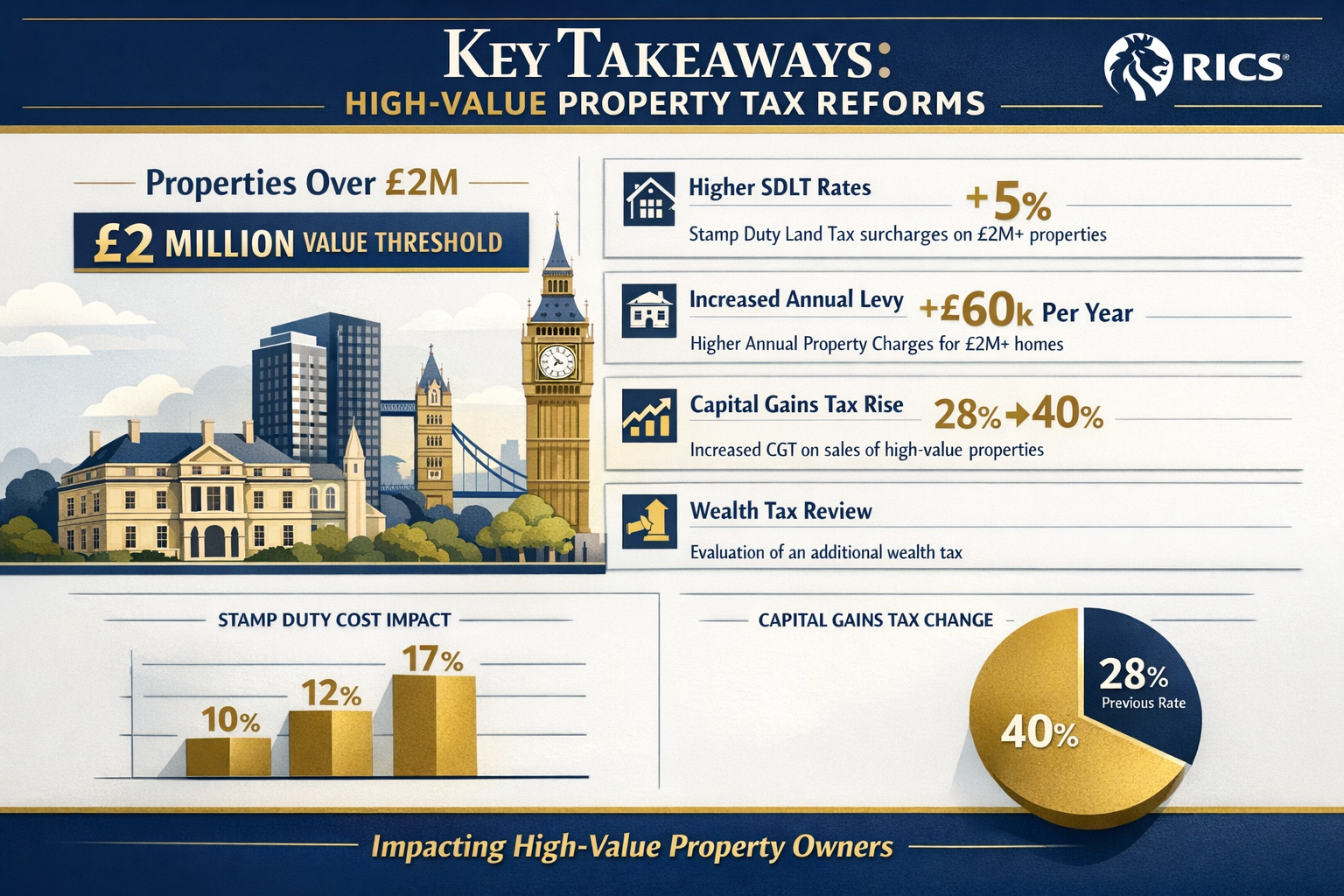
Understanding the 2026 High Value Council Tax Surcharge Framework
The Four-Tier Surcharge Structure
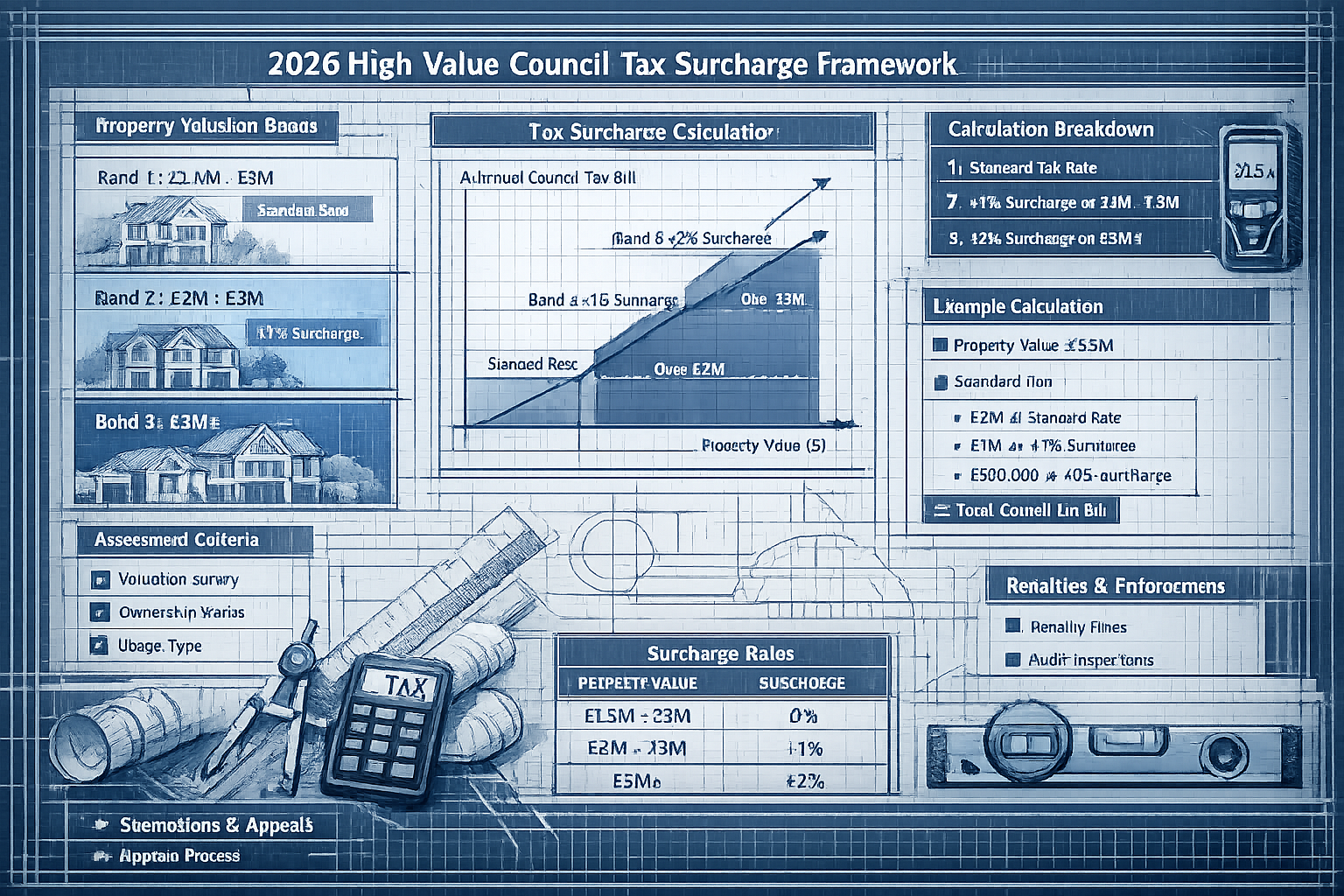
The HVCTS represents a fundamental departure from traditional Council Tax, which has remained tethered to 1991 valuations for over three decades. Instead, this new framework introduces dynamic, market-responsive valuations with four distinct surcharge bands [2]:
| Property Value Band | Annual Surcharge | Cumulative 5-Year Cost |
|---|---|---|
| £2M – £3M | £2,500 | £12,500 |
| £3M – £4M | £5,000 | £25,000 |
| £4M – £5M | £6,000 | £30,000 |
| £5M+ | £7,500 | £37,500 |
These charges apply in addition to existing Council Tax obligations, creating a substantial financial consideration for property owners and prospective buyers. For a property valued at £5.2 million, the owner will pay an extra £37,500 over five years—a cost that buyers inevitably factor into their purchase decisions.
The 2026 Valuation Timeline
The Valuation Office Agency (VOA) has designated 2026 as the "Year of Valuation" with a targeted valuation exercise using April 2026 as the benchmark date [2]. This timeline creates several critical pressure points for surveyors:
📅 April 2026: Valuation benchmark date established
📅 Throughout 2026: VOA conducts targeted valuations of properties potentially worth £2M+
📅 April 2028: First surcharge collections begin
📅 2031: First revaluation cycle, establishing new five-year bands
"The five-year revaluation cycle means that valuations conducted in 2026 will determine tax liability through 2031, making accuracy and defensibility paramount for both property owners and the surveyors they rely upon." [2]
Geographic Concentration and Market Impact
The HVCTS affects properties unevenly across England, with dramatic concentration in London and the South East [1]. This geographic clustering creates unique challenges for chartered surveyors in London and surrounding areas:
- London: 50% of all £2M+ properties
- South East: 85% of all affected properties (including London)
- Rest of England: 15% of affected properties
In practical terms, this means that in prime London locations like West London and North London, the HVCTS will affect regular family apartments and townhouses—not just sprawling country estates. A three-bedroom flat in certain postcodes can easily exceed the £2 million threshold, bringing middle-class families into the surcharge net.
Surveyor Strategies for High-Value Property Tax Changes: RICS-Compliant Valuation Adjustments
Incorporating Tax Liability into Market Value Assessments
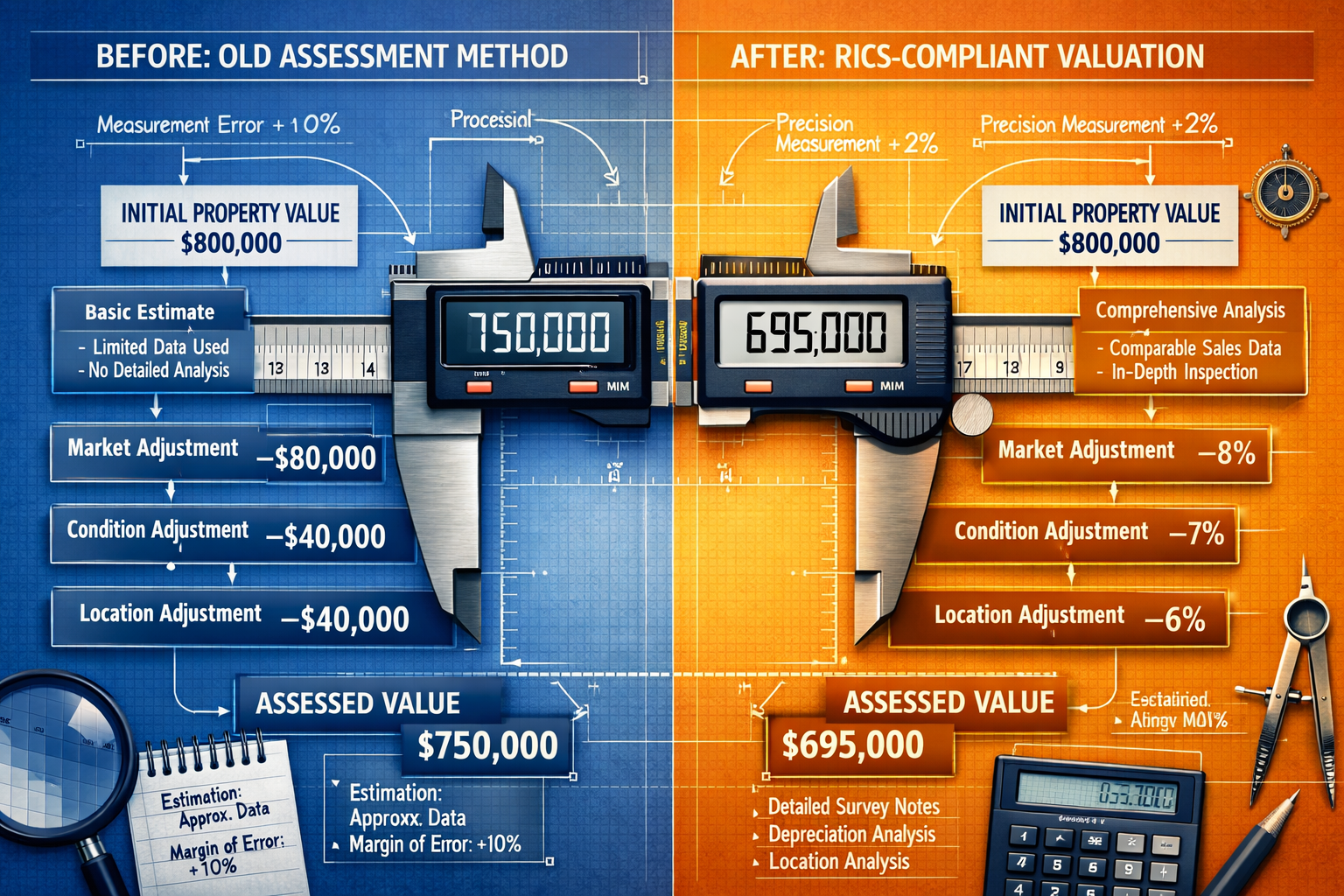
The introduction of the HVCTS creates a new valuation consideration that professional surveyors must integrate into their market value assessments. The Treasury estimates the surcharge could dampen high-end property values by an average of 2.5% as buyers "price in" the cumulative cost over their expected holding period [2].
Key valuation adjustments for surveyors:
1. Comparable Evidence Adjustment 🏘️
When selecting comparable properties, surveyors must now consider whether transactions occurred before or after widespread HVCTS awareness. Post-reform comparables near the £2 million threshold will likely show systematic price compression.
2. Buyer's Perspective Analysis 💰
A rational buyer purchasing a £2.1 million property will calculate the £12,500 five-year surcharge cost (£2,500 annually) and may reduce their offer accordingly. Surveyors should document this buyer behavior in valuation reports.
3. Holding Period Considerations ⏰
The impact varies based on expected ownership duration. A buyer planning a 10-year hold faces £25,000 in surcharges for a £2-3M property, while a short-term investor faces less cumulative impact.
4. Band Threshold Sensitivity 📊
Properties valued close to band thresholds (£2M, £3M, £4M, £5M) require heightened scrutiny. A £50,000 valuation difference at the £2 million threshold creates a £12,500 five-year cost differential.
The Price Bunching Phenomenon
Economic theory predicts—and market data confirms—significant "price bunching" around the £2 million threshold [2]. This behavioral response creates both opportunities and challenges for surveyors:
Evidence from February 2026: 83% of offers on properties priced within 10% of £2 million came in below the threshold, compared to just 64% a year earlier [1]. This represents a 30% increase in threshold-avoiding behavior in just 12 months.
Practical implications for valuations:
- Artificial price ceiling: Properties naturally worth £2.05-2.15M may struggle to achieve market value as sellers reduce asking prices to £1.99M
- Valuation credibility: Surveyors must distinguish between genuine market value and strategically-set asking prices
- Documentation requirements: Detailed commentary explaining threshold effects becomes essential in valuation reports
Methodology Adjustments for RICS Compliance
RICS registered valuers must maintain professional standards while acknowledging market realities. The following methodology adjustments ensure compliance:
Comparable Selection Criteria ✓
- Prioritize post-April 2026 transactions where HVCTS awareness is reflected
- Document any pre-reform comparables with explicit adjustment notes
- Consider withdrawn listings and price reductions as market signals
Valuation Report Disclosure ✓
- Include explicit HVCTS disclosure section explaining surcharge bands
- Calculate and present cumulative five-year and ten-year surcharge costs
- Provide sensitivity analysis showing value implications at band thresholds
Market Conditions Commentary ✓
- Analyze local market price bunching behavior with statistical evidence
- Reference VOA valuation timeline and revaluation cycle implications
- Discuss regional concentration effects (particularly relevant for chartered surveyors in Surrey and surrounding counties)
Surveyor Strategies for High-Value Property Tax Changes: Client Communication and Negotiation Tactics
Managing Client Expectations Around Threshold Valuations
The £2 million threshold creates inevitable tension between what clients want to hear and what professional standards require. Surveyors working with properties near this critical value point face challenging conversations.
Common client requests that compromise professional integrity:
❌ "Can you value it at £1.95 million to avoid the surcharge?"
❌ "Just use older comparables from before the reforms"
❌ "The VOA won't notice if we're slightly under"
Professional responses that maintain RICS standards:
✅ Educate on VOA sophistication: The Valuation Office Agency employs experienced valuers with access to comprehensive transaction data, planning records, and market intelligence. Artificial undervaluations are likely to be challenged.
✅ Explain reputational risk: A valuation that's successfully challenged by the VOA damages the surveyor's professional credibility and potentially the client's position in future transactions or disputes.
✅ Present strategic alternatives: Rather than compromising valuation integrity, discuss legitimate value-reduction strategies like deferring high-end improvements or considering the timing of the valuation request.
Negotiation Tactics for Buyer and Seller Representation
Surveyors increasingly find themselves advising clients on negotiation strategies related to HVCTS implications:
For Buyer Clients 🏠
Tactic 1: Quantify the Surcharge Impact
Present sellers with detailed calculations showing the cumulative surcharge cost over typical holding periods. For a £2.2M property, demonstrate that the buyer faces £12,500 over five years—justifying a corresponding price reduction.
Tactic 2: Leverage Market Evidence
Use comparable evidence of price bunching and threshold avoidance to support offers below asking price. The 83% statistic from February 2026 provides powerful negotiating leverage [1].
Tactic 3: Threshold Positioning
For properties valued between £2M-£2.1M, negotiate to bring the price below £2M. The £100,000 reduction saves the buyer £12,500 over five years—a 12.5% "return" on the price reduction.
For Seller Clients 🏡
Tactic 1: Pre-emptive Pricing Strategy
Advise sellers to price properties at £1.99M rather than £2.05M to attract the maximum buyer pool. The psychological and financial barrier at £2M is significant.
Tactic 2: Timing Considerations
Properties sold before VOA valuations are finalized may benefit from valuation uncertainty. However, this creates ethical considerations that must be carefully navigated.
Tactic 3: Value Enhancement Focus
For properties comfortably above threshold bands (e.g., £3.5M), emphasize improvements that justify the premium over the next band threshold rather than attempting to reduce perceived value.
Regional Considerations for Surveyor Strategies for High-Value Property Tax Changes
London and Prime Central Markets
The concentration of affected properties in London creates unique market dynamics that surveyors must understand. In areas served by chartered surveyors in Hammersmith, Battersea, and Camden, the HVCTS affects mainstream family housing rather than exceptional luxury properties.
London-specific considerations:
- Apartment valuations: Leasehold flats near the threshold require careful consideration of lease length, service charges, and ground rent—factors that may push valuations across thresholds
- Conservation areas: Properties in protected areas may have limited improvement potential, making threshold avoidance through strategic devaluation more difficult
- Foreign buyer impact: International buyers may be less sensitive to UK tax considerations, potentially maintaining price support in prime postcodes
Home Counties and Commuter Belt
Properties in Surrey, Hertfordshire, Buckinghamshire, and Sussex face different dynamics:
Characteristics of Home Counties markets:
- Land value component: Larger plots mean land value represents a higher proportion of total value, creating more flexibility in valuation approaches
- Improvement sensitivity: Extensions, renovations, and outbuildings can push properties across thresholds—creating strategic timing considerations for improvement projects
- Commuter premium: Proximity to transport links commands specific premiums that may be reassessed in light of surcharge costs
Emerging Hotspots and Secondary Markets
Areas like Guildford, Godalming, and Leatherhead represent secondary markets where £2M+ properties are less common but still significant.
Strategic considerations for secondary markets:
- Limited comparable evidence: Fewer transactions near thresholds make valuation more challenging and increase reliance on professional judgment
- Price discovery: These markets may experience more volatility as buyers and sellers negotiate the new tax landscape without established precedents
- Regional variation: Local economic factors, school catchments, and amenity access create micro-markets with distinct value drivers
Advanced Surveyor Strategies for Complex Valuation Scenarios
Mixed-Use and Commercial Elements
Properties combining residential and commercial uses present additional complexity under HVCTS. Commercial property surveyors must carefully allocate value between residential and non-residential components.
Key questions for mixed-use properties:
- Does the £2M threshold apply to total property value or only residential portions?
- How should ancillary structures (garages, studios, guest houses) be treated?
- What documentation supports the residential/commercial allocation?
Properties Undergoing Renovation
Timing becomes critical for properties in transition. A property worth £1.8M that will be worth £2.3M after renovation requires strategic valuation timing:
Renovation timing strategies:
- Pre-improvement valuation: Obtain formal valuation before commencing work that crosses threshold
- Phased approach: Consider staging improvements to manage threshold crossing timing
- Documentation: Maintain detailed records of pre and post-improvement values with photographic evidence
Matrimonial and Probate Valuations
Matrimonial valuations and probate valuations require special consideration under HVCTS:
Matrimonial context:
- HVCTS liability becomes a marital asset/liability to be divided
- Future surcharge costs affect net asset calculations
- Strategic timing of valuations relative to separation dates
Probate context:
- Estate tax calculations must account for HVCTS impact on market value
- Executors need guidance on managing properties near thresholds
- Beneficiaries' holding intentions affect value assessment
Professional Development and Continuing Education
Staying Current with VOA Guidance
The VOA continues to refine its approach to HVCTS valuations throughout 2026. Professional surveyors must:
- Monitor VOA publications: Regular review of updated guidance documents and technical notes
- Attend professional seminars: RICS and regional surveying associations offer specialized HVCTS training
- Participate in peer discussion: Professional networks provide valuable insights into VOA challenge patterns and successful defense strategies
Building Specialized Expertise
Surveyors who develop recognized expertise in HVCTS valuations will command premium fees and client loyalty. Specialization opportunities include:
- Threshold properties: Becoming the go-to expert for properties valued £1.8M-£2.2M
- Appeals and challenges: Developing expertise in VOA challenge procedures and successful appeal strategies
- Tax planning integration: Partnering with tax advisors to provide comprehensive property tax planning services
Documentation and Quality Assurance
Enhanced documentation standards protect both surveyor and client:
Essential documentation elements:
📋 Detailed comparable analysis with HVCTS-aware adjustments
📋 Explicit threshold sensitivity analysis
📋 Market conditions commentary with statistical support
📋 Methodology explanation justifying approach
📋 Assumptions and limitations clearly stated
📋 Professional indemnity insurance confirmation
Conclusion: Navigating the New Property Tax Landscape with Professional Excellence
The introduction of Surveyor Strategies for High-Value Property Tax Changes: Valuing Over £2M Homes Under 2026 Budget Reforms represents the most significant shift in UK property taxation in decades. With over 100,000 households affected and £2 million threshold creating dramatic market distortions—evidenced by 83% of offers near the threshold falling below it—surveyors must adapt quickly while maintaining professional standards [1].
Key success factors for surveyors:
✅ Master the technical framework: Understand the four surcharge bands, five-year revaluation cycles, and VOA procedures
✅ Develop RICS-compliant methodologies: Integrate HVCTS considerations into valuations without compromising professional standards
✅ Communicate effectively with clients: Navigate difficult conversations about threshold valuations with professionalism and integrity
✅ Build regional expertise: Understand the unique dynamics of your service area, whether central London or the Home Counties
✅ Invest in continuing education: Stay current with evolving VOA guidance and market developments
Actionable Next Steps
For Surveyors:
- Review current valuation templates to incorporate HVCTS disclosure sections and sensitivity analyses
- Analyze local market data to quantify price bunching effects in your service area
- Develop client education materials explaining the surcharge framework and valuation implications
- Establish VOA challenge procedures for defending valuations that may be questioned
- Consider professional indemnity insurance coverage for HVCTS-related claims
For Property Owners:
- Obtain professional valuations from qualified RICS valuers before VOA assessments
- Document property condition and any factors that may reduce value below thresholds
- Consult with tax advisors about the interaction between HVCTS and other property taxes
- Consider strategic timing for improvements that might push values across thresholds
The 2026 Budget reforms create both challenges and opportunities for property professionals. Surveyors who embrace these changes, develop specialized expertise, and maintain unwavering professional standards will not only navigate this transition successfully—they'll emerge as trusted advisors in an increasingly complex property tax landscape.
The five-year revaluation cycle means the valuations conducted in 2026 will echo through the market until 2031. Getting them right matters—for clients, for professional reputations, and for the integrity of the property market itself.
References
[1] New Property Tax – https://hoa.org.uk/news/new-property-tax/
[2] Hvcts Guide – https://www.crownluxuryhomes.com/hvcts-guide/