Building owners planning urban extensions face a stark reality: choosing between an agreed surveyor or dual surveyors can mean the difference between spending £1,200 or £2,400 on professional fees alone. With urban density increasing and property values soaring across London and surrounding areas, understanding how Agreed Surveyors Under Party Wall Act: 2026 Cost and Time Savings for Urban Extensions work has become essential for homeowners pursuing side returns, rear extensions, and loft conversions.
The Party Wall etc. Act 1996 governs construction work affecting shared walls between properties, requiring formal procedures to protect both building owners and their neighbours. In 2026, with urban extension projects at record highs, the choice of surveyor arrangement directly impacts both project budgets and timelines. This comprehensive guide examines the agreed surveyor model versus traditional dual-surveyor approaches, providing actionable insights for maximizing efficiency while maintaining legal compliance.
Key Takeaways
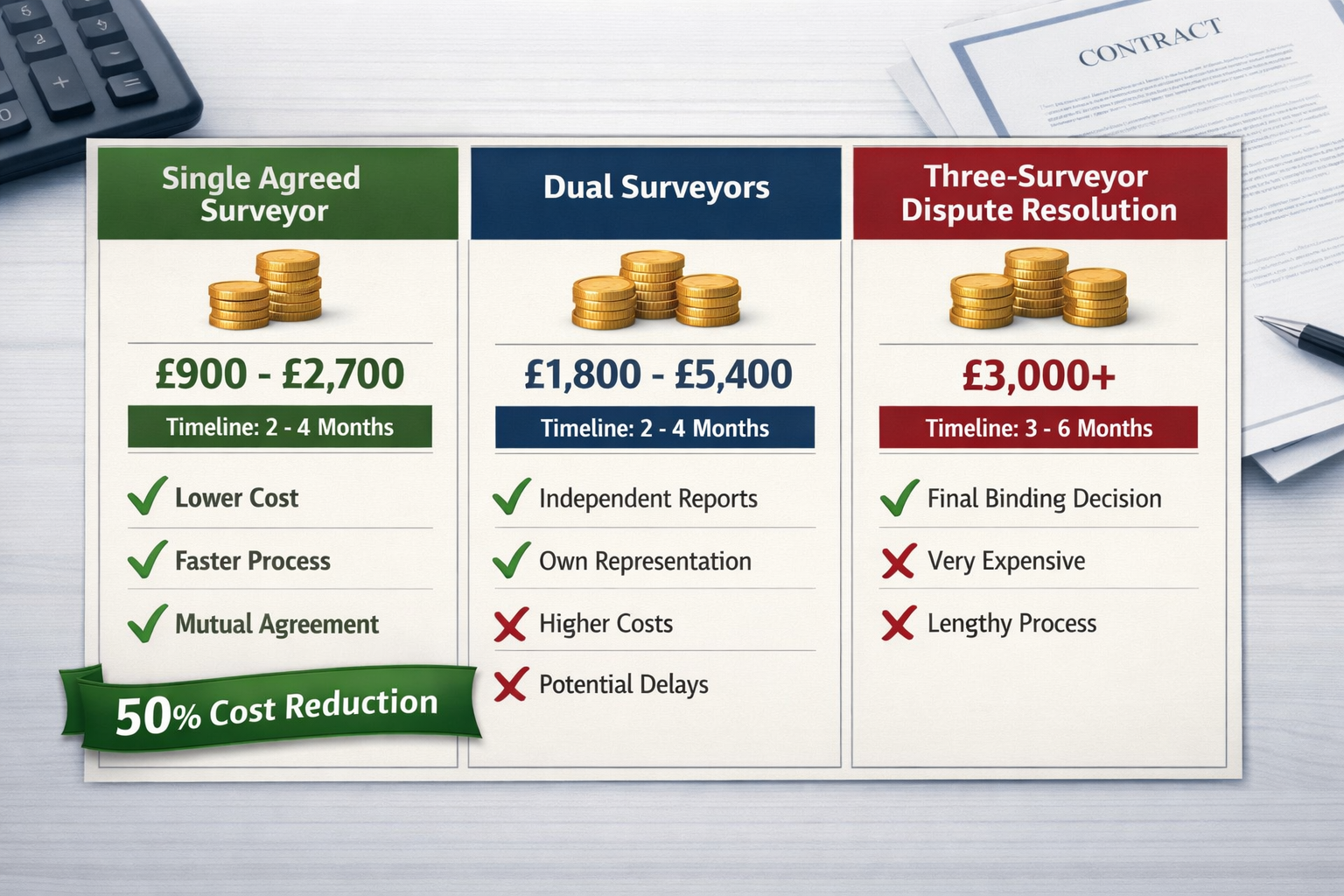
- Single agreed surveyors cost 50% less than dual-surveyor arrangements, with fees ranging from £900-£2,700 versus £1,800-£5,400 for typical urban extensions[1]
- Timeline efficiency improves significantly when both parties appoint one impartial surveyor, reducing the 2-4 month agreement process by eliminating coordination delays[2]
- Three-surveyor dispute scenarios add substantial costs and delays when dual surveyors cannot reach consensus, making agreed surveyor selection strategically important
- London-specific pricing reflects regional variations, with fees of £750-£1,800 per surveyor per affected neighbour in high-demand urban areas[2]
- Written neighbour consent without formal awards can eliminate surveyor costs entirely, though professional schedules of condition remain advisable[1]
Understanding the Agreed Surveyor Model for Urban Extensions
The agreed surveyor approach represents the most cost-effective path through Party Wall Act procedures. Under this model, both the building owner (the party undertaking construction) and the adjoining owner (the neighbour) jointly appoint a single impartial professional to act for both parties. This surveyor prepares the party wall agreement and ensures fair treatment of both parties' interests.
How Agreed Surveyors Function
An agreed surveyor must maintain strict impartiality throughout the process. Their responsibilities include:
- Inspecting the shared party wall and creating a detailed schedule of condition
- Assessing proposed construction plans for potential impact on neighbouring properties
- Preparing the Party Wall Award document outlining rights, responsibilities, and protections
- Determining fair working hours and access arrangements
- Establishing dispute resolution procedures should conflicts arise during construction
The surveyor's duty extends equally to both parties, regardless of who initially suggested their appointment. This balanced approach often facilitates smoother negotiations and faster agreement completion.
Cost Structure for Single Surveyor Appointments
According to 2026 industry data, agreed surveyor costs vary by project complexity[1]:
| Project Type | Agreed Surveyor Cost | Timeline |
|---|---|---|
| Loft Conversions | £900-£1,200 | 6-8 weeks |
| Single-Storey Extensions | £1,200-£1,500 | 8-10 weeks |
| Two-Storey Extensions | £1,500-£2,100 | 10-14 weeks |
| Basement Excavations | £1,800-£2,700 | 12-16 weeks |
These fees typically cover initial consultations, site inspections, schedule of condition preparation, award drafting, and standard follow-up visits. Building owners bear full responsibility for these costs when proposing works affecting shared structures[1].
Regional Variations in 2026
London and high-demand urban areas command premium rates due to property density and complexity. Current London pricing ranges from £750-£1,800 per surveyor per affected neighbour[2], with variations depending on:
- Property value and construction scope
- Number of affected party walls
- Complexity of structural calculations required
- Surveyor's experience and RICS accreditation level
Agreed Surveyors Under Party Wall Act: 2026 Cost and Time Savings Versus Dual Surveyor Arrangements
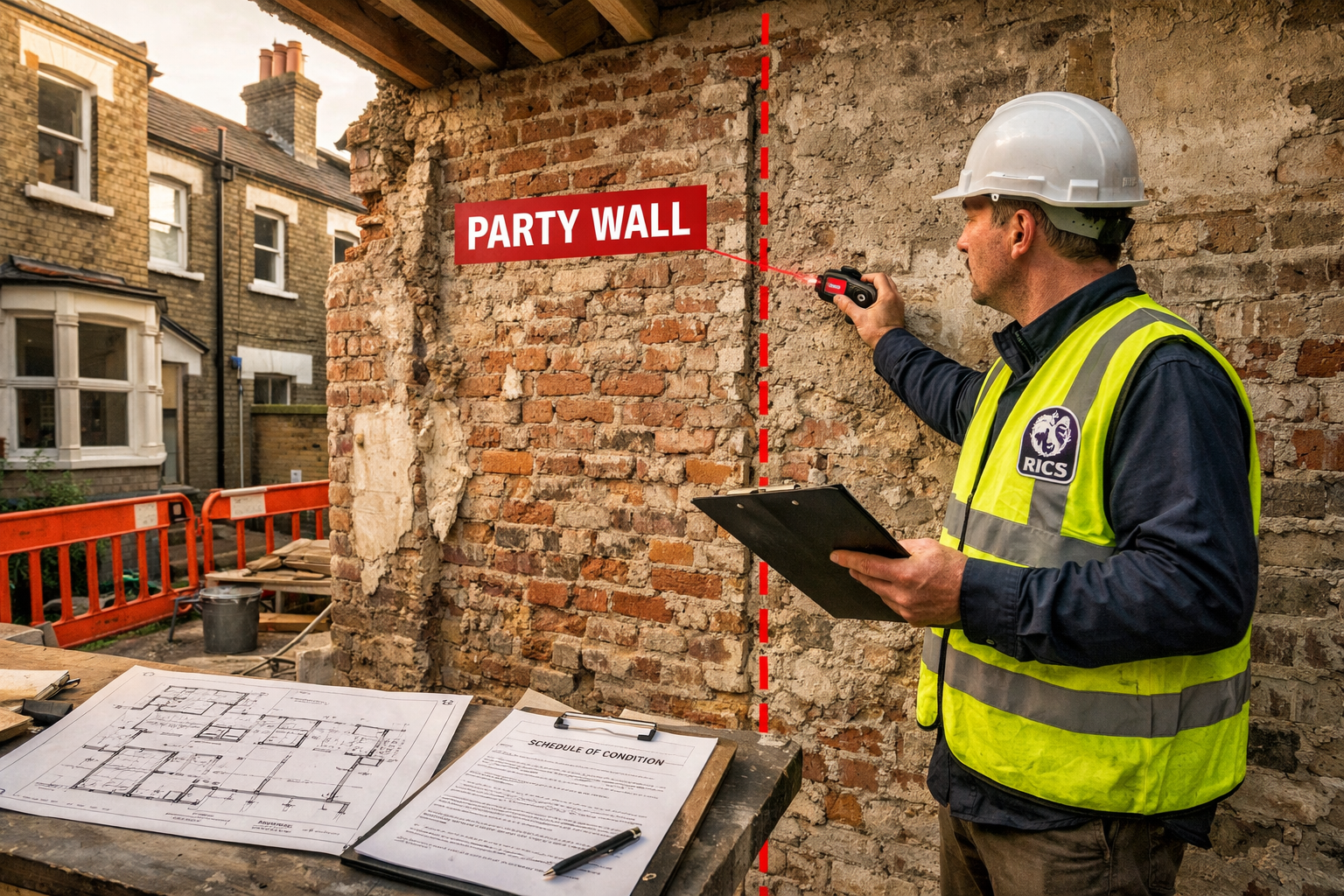
The dual-surveyor model occurs when building owners and adjoining owners each appoint separate professionals to represent their individual interests. While this provides dedicated advocacy, it substantially increases both costs and procedural complexity.
Comparative Cost Analysis
Dual surveyor arrangements effectively double professional fees, with total costs reaching £1,800-£5,400 for standard projects[1]. This occurs because:
✅ Each surveyor charges separately for their services
✅ Coordination between two professionals adds administrative overhead
✅ Extended negotiation periods increase billable hours
✅ Both surveyors conduct independent inspections and assessments
For a typical single-storey rear extension in London:
- Agreed Surveyor Route: £1,350 total cost
- Dual Surveyor Route: £2,700 total cost (£1,350 × 2 surveyors)
- Net Savings: £1,350 (50% reduction)
Timeline Efficiency Considerations
Party wall agreements in London typically require 2-4 months from initial notice to final award[2]. The agreed surveyor model streamlines this process by:
🕐 Eliminating coordination delays between separate professionals
🕐 Reducing scheduling conflicts for site inspections
🕐 Simplifying communication channels between parties
🕐 Accelerating award preparation with single-point responsibility
Dual surveyor arrangements often extend timelines by 2-4 weeks due to the need for both professionals to align schedules, compare findings, and negotiate terms. For time-sensitive projects, this delay can impact contractor availability and seasonal construction windows.
The Three-Surveyor Scenario: When Disputes Escalate
When two appointed surveyors cannot reach agreement on award terms, the Party Wall Act requires appointment of a third surveyor to resolve the dispute[1]. This scenario creates:
⚠️ Additional costs of £1,500-£3,000 for the third surveyor's fees
⚠️ Timeline extensions of 4-8 weeks for dispute resolution
⚠️ Increased complexity in decision-making processes
⚠️ Potential relationship strain between neighbours
The agreed surveyor model eliminates this risk entirely by establishing consensus from the outset. Understanding party wall surveyor costs helps building owners budget appropriately for different scenarios.
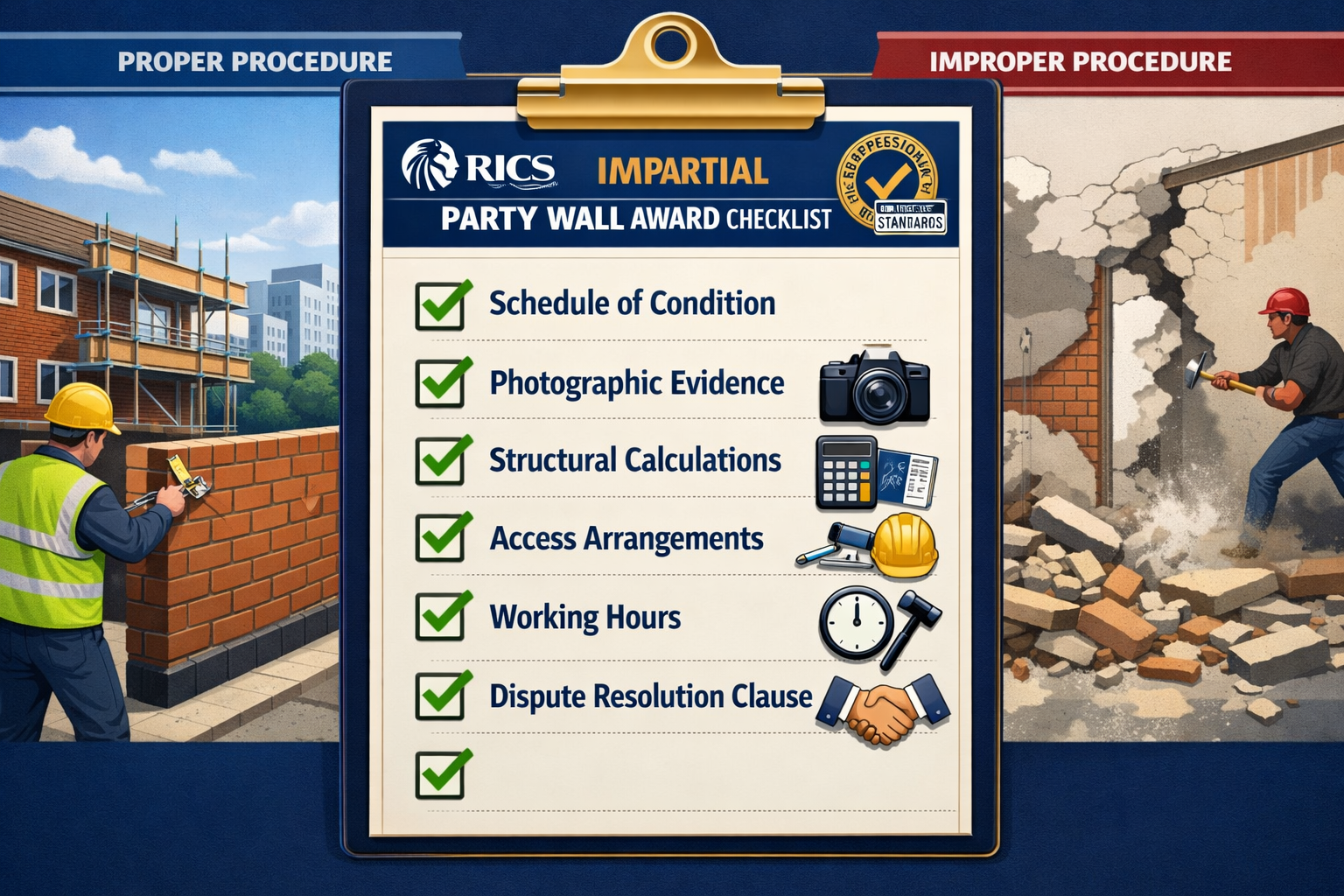
Checklist for Impartial Party Wall Awards in High-Demand Urban Areas
Securing an impartial and comprehensive Party Wall Award requires careful attention to procedural details. This checklist ensures compliance with RICS standards while protecting both parties' interests during urban extension projects.
Pre-Appointment Phase
Before appointing an agreed surveyor, building owners should:
✓ Verify RICS Accreditation
Ensure the proposed surveyor holds current Royal Institution of Chartered Surveyors membership with party wall specialization. RICS professionals adhere to strict ethical standards and continuing education requirements.
✓ Confirm Local Experience
Select surveyors with demonstrated experience in your specific urban area. London party wall work differs significantly from suburban projects due to construction density and property age.
✓ Obtain Written Neighbour Consent
Secure your neighbour's written agreement to the proposed surveyor appointment. This consent forms the legal basis for the agreed surveyor relationship.
✓ Clarify Fee Structure
Request detailed fee breakdowns covering all anticipated services, including potential additional inspections during construction. Transparent pricing prevents disputes later.
✓ Review Professional Indemnity Insurance
Confirm adequate insurance coverage (typically £1-5 million) protecting both parties against professional negligence claims.
Schedule of Condition Requirements
The schedule of condition documents the neighbouring property's existing state before construction begins. Comprehensive schedules include:
📸 Photographic Evidence
High-resolution images of all potentially affected areas, including:
- Internal walls adjacent to the party wall
- Ceilings and floors in rooms bordering the construction
- External facades and rooflines
- Existing cracks, settlement, or defects
📋 Written Descriptions
Detailed narrative descriptions complementing photographs, noting:
- Material types and construction methods
- Existing damage or deterioration
- Decorative finishes and condition
- Structural elements and their current state
📐 Measurements and Diagrams
Precise documentation of:
- Wall thicknesses and heights
- Room dimensions
- Crack widths and locations
- Settlement patterns
This documentation proves invaluable if damage to property during party wall work occurs, establishing baseline conditions for insurance and liability purposes.
Party Wall Award Essential Components
A comprehensive Party Wall Award must address:
1. Works Description
Detailed specification of proposed construction, including:
- Structural alterations to party walls
- Foundation depths and excavation extent (particularly relevant for party wall excavation notices)
- Temporary support requirements
- Materials and construction methods
2. Access Arrangements
Clear protocols for:
- Permitted access times and days
- Entry points and routes through adjoining property
- Notice periods for access requests
- Emergency access provisions
3. Working Hours
Specified construction times respecting:
- Local authority noise regulations
- Neighbour's work and family schedules
- Weekend and holiday restrictions
- Quiet period requirements
4. Protection Measures
Mandatory safeguards including:
- Dust and debris control systems
- Vibration monitoring for sensitive structures
- Temporary weatherproofing
- Security measures for open party walls
5. Dispute Resolution Procedures
Established mechanisms for addressing:
- Disagreements during construction
- Damage claims and assessment processes
- Timeline for surveyor responses
- Third-party mediation triggers
RICS Professional Standards for Agreed Surveyors
The Royal Institution of Chartered Surveyors provides comprehensive guidance for party wall surveyors. Key principles include:
🎯 Impartiality and Independence
Agreed surveyors must avoid conflicts of interest and treat both parties equally. Prior relationships with either party should be disclosed upfront.
🎯 Competence and Expertise
Surveyors should only accept appointments within their area of competence, with appropriate experience in similar projects and property types.
🎯 Clear Communication
Regular updates to both parties ensure transparency and build trust. Written communication creates documentation trails protecting all parties.
🎯 Reasonable Timescales
Awards should be prepared promptly, typically within 14 days of completing inspections, unless complexity requires additional time.
🎯 Proportionate Fees
Charges should reflect actual work required, not property values or construction costs. Fee transparency prevents disputes.
Avoiding Party Wall Disputes: RICS Tips for 2026 Urban Extensions
Prevention proves far more cost-effective than dispute resolution. These RICS-endorsed strategies minimize conflict risk during urban extension projects.
Early Neighbour Engagement
Informal discussions before formal notices significantly improve outcomes. Building owners should:
- Share preliminary plans with neighbours 4-6 weeks before serving official party wall notices
- Explain project benefits and address concerns proactively
- Demonstrate commitment to minimizing disruption
- Invite questions and feedback on proposed timelines
This goodwill often facilitates party wall consent without formal procedures, potentially eliminating surveyor costs entirely[1].
Comprehensive Notice Procedures
Proper notice service prevents procedural disputes. Essential elements include:
📧 Correct Notice Type
The Party Wall Act requires specific notices for different work types:
- Line of Junction Notice: For new walls on boundary lines
- Party Structure Notice: For works to existing party walls
- Adjacent Excavation Notice: For foundations within 3 metres (see the 3-metre rule)
📧 Adequate Notice Period
Minimum notice periods vary:
- 2 months for Line of Junction Notices
- 1 month for Party Structure Notices
- 1 month for Adjacent Excavation Notices
📧 Complete Documentation
Notices must include:
- Detailed work descriptions
- Architectural drawings showing party wall impact
- Proposed start dates
- Building owner contact information
Selecting the Right Agreed Surveyor
Strategic surveyor selection prevents future conflicts. Consider:
🔍 Specialization Match
Choose surveyors experienced with your specific project type. Loft conversion party wall work differs substantially from basement excavations.
🔍 Local Knowledge
Surveyors familiar with local building methods, soil conditions, and typical construction practices provide more accurate assessments.
🔍 Communication Style
Interview potential surveyors to assess their communication approach and conflict resolution skills. Clear communicators prevent misunderstandings.
🔍 Availability and Responsiveness
Confirm the surveyor can meet your project timeline and responds promptly to queries. Delayed responses extend overall project duration.
Managing Construction Phase Relationships
Once construction begins, maintaining positive neighbour relationships requires:
✅ Regular Updates
Weekly progress reports keep neighbours informed and demonstrate consideration for their concerns.
✅ Prompt Issue Resolution
Address complaints immediately, even if they seem minor. Small grievances escalate quickly when ignored.
✅ Exceeding Minimum Standards
Going beyond Party Wall Award requirements builds goodwill. Extra dust barriers or noise reduction measures show respect.
✅ Documented Compliance
Photograph compliance with award terms, creating evidence that protects against unfounded claims.
Understanding Common Dispute Triggers
Awareness of typical conflict sources enables proactive prevention:
⚡ Noise and Vibration
Construction noise represents the most frequent complaint. Mitigation strategies include:
- Using quieter equipment where possible
- Scheduling noisy work during mid-day hours
- Providing advance notice of particularly disruptive activities
- Offering temporary accommodation for extreme disruption days
⚡ Dust and Debris
Inadequate site management causes legitimate grievances. Implement:
- Professional-grade dust barriers and negative pressure systems
- Daily cleanup of shared access areas
- Protective coverings for neighbouring property
- Regular gutter and drainage clearing
⚡ Access Disputes
Confusion about access rights creates tension. Prevent issues by:
- Providing written access schedules in advance
- Respecting agreed-upon limitations strictly
- Documenting all access instances
- Compensating for any damage caused during access
⚡ Timeline Overruns
Extended construction periods strain relationships. Maintain goodwill through:
- Realistic initial timeline estimates
- Prompt notification of unavoidable delays
- Explaining reasons for schedule changes
- Offering gesture compensation for significant overruns
For complex situations, understanding what constitutes a party wall dispute helps building owners recognize when professional intervention becomes necessary.
Cost-Benefit Analysis: When Agreed Surveyors Maximize Value
Not all situations equally benefit from the agreed surveyor model. Strategic decision-making requires understanding when this approach delivers optimal results.
Ideal Scenarios for Agreed Surveyors
The single surveyor model works best when:
🏆 Cooperative Neighbour Relationships
Pre-existing positive relationships between neighbours facilitate agreement on surveyor selection and build trust in the professional's impartiality.
🏆 Straightforward Construction Projects
Standard extensions, loft conversions, and minor alterations with clear-cut impacts benefit from streamlined single-surveyor processes.
🏆 Budget-Conscious Building Owners
Projects with tight financial margins gain significant value from 50% fee reductions compared to dual-surveyor arrangements[1].
🏆 Time-Sensitive Timelines
When construction start dates depend on prompt Party Wall Award completion, agreed surveyors accelerate the process by 2-4 weeks.
🏆 First-Time Extension Projects
Building owners unfamiliar with party wall procedures benefit from having one trusted advisor guiding both parties through the process.
Situations Warranting Dual Surveyors
Separate surveyor appointments may prove appropriate when:
⚠️ Complex Structural Concerns
Major structural alterations, deep excavations, or works to historic buildings benefit from specialized advocacy for each party's interests.
⚠️ Pre-Existing Neighbour Conflicts
When relationships are already strained, separate representation prevents perceptions of bias and provides independent validation of concerns.
⚠️ High-Value Properties
Luxury properties with substantial values justify additional professional fees to ensure maximum protection of each party's interests.
⚠️ Commercial or Mixed-Use Buildings
Business premises involve additional liability considerations requiring specialized commercial property expertise.
⚠️ Previous Dispute History
Properties with prior party wall conflicts benefit from independent advocacy preventing repetition of past issues.
Financial Modeling for Different Approaches
Consider this comparison for a typical two-storey rear extension in London (2026):
Agreed Surveyor Model:
- Surveyor fees: £1,650
- Timeline: 10 weeks
- Total professional costs: £1,650
Dual Surveyor Model:
- Building owner's surveyor: £1,650
- Adjoining owner's surveyor: £1,650
- Timeline: 12-14 weeks
- Total professional costs: £3,300
Potential Three-Surveyor Scenario:
- Building owner's surveyor: £1,650
- Adjoining owner's surveyor: £1,650
- Third surveyor for dispute resolution: £2,200
- Timeline: 16-20 weeks
- Total professional costs: £5,500
The £3,850 potential savings from the agreed surveyor route represents approximately 2-3% of a typical £150,000 extension project—a meaningful reduction that could fund upgraded finishes or contingency reserves.
Practical Implementation: Step-by-Step Guide for 2026
Executing the agreed surveyor approach efficiently requires systematic planning and execution. This implementation guide provides actionable steps for building owners pursuing urban extensions.
Phase 1: Pre-Notice Preparation (Weeks 1-2)
Step 1: Develop Detailed Construction Plans
Engage architects and structural engineers to create comprehensive drawings showing party wall impacts. Plans should clearly indicate:
- Exact party wall locations and affected sections
- Foundation depths and excavation extent
- Structural alterations and support requirements
- Temporary works and access needs
Step 2: Research Qualified Surveyors
Identify 3-5 RICS-accredited party wall surveyors with relevant experience. Review:
- Professional qualifications and specializations
- Client testimonials and case studies
- Fee structures and service inclusions
- Availability for your project timeline
Step 3: Initiate Neighbour Dialogue
Schedule informal meetings with affected neighbours to:
- Share preliminary project information
- Gauge initial reactions and concerns
- Discuss potential agreed surveyor approach
- Build rapport before formal procedures begin
Phase 2: Formal Notice and Surveyor Appointment (Weeks 3-4)
Step 4: Serve Proper Party Wall Notices
Deliver legally compliant notices including all required documentation. Consider professional service to ensure technical compliance with Party Wall Act requirements.
Step 5: Propose Agreed Surveyor
Present your recommended surveyor to neighbours, providing:
- Professional credentials and experience summary
- Fee estimate and scope of services
- Confirmation of impartiality and RICS compliance
- Contact information for neighbour verification
Step 6: Obtain Written Consent
Secure formal written agreement from all affected neighbours for the proposed agreed surveyor appointment. This document should explicitly state both parties' consent to joint representation.
Phase 3: Survey and Award Preparation (Weeks 5-10)
Step 7: Facilitate Initial Site Inspection
Coordinate access for the agreed surveyor to inspect:
- Party walls from both properties
- Adjacent structures and foundations
- Existing conditions requiring documentation
- Potential impact zones
Step 8: Review Draft Schedule of Condition
Carefully examine the surveyor's preliminary findings, noting:
- Accuracy of existing condition descriptions
- Completeness of photographic documentation
- Any pre-existing damage or concerns
- Areas requiring additional detail
Step 9: Negotiate Award Terms
Work with the agreed surveyor to finalize:
- Working hours and access arrangements
- Protection measures and monitoring requirements
- Timeline for construction phases
- Dispute resolution procedures
Step 10: Finalize Party Wall Award
Review and approve the completed award document, ensuring all concerns are adequately addressed. Both parties should receive copies simultaneously.
Phase 4: Construction Phase Management (Duration of Works)
Step 11: Implement Award Requirements
Instruct contractors on all Party Wall Award obligations, including:
- Access protocols and advance notice requirements
- Protection measures and monitoring systems
- Working hour restrictions
- Reporting procedures for issues
Step 12: Maintain Communication Channels
Establish regular communication with:
- Neighbours (weekly progress updates)
- Agreed surveyor (monthly compliance reports)
- Contractors (daily coordination)
Step 13: Document Compliance
Create photographic and written records demonstrating:
- Implementation of protection measures
- Adherence to working hour restrictions
- Proper access procedures
- Prompt issue resolution
Phase 5: Post-Construction Completion (Weeks Following Completion)
Step 14: Final Inspection
Arrange agreed surveyor's final inspection comparing:
- Current condition to schedule of condition baseline
- Any damage requiring remediation
- Compliance with award specifications
- Outstanding issues needing resolution
Step 15: Address Any Damage Claims
If damage occurred during construction:
- Document extent and cause thoroughly
- Obtain repair quotations from qualified contractors
- Coordinate remediation work promptly
- Maintain records for insurance purposes
Step 16: Obtain Final Sign-Off
Secure written confirmation from the agreed surveyor that:
- All Party Wall Award obligations have been fulfilled
- No outstanding issues remain unresolved
- Construction complies with approved specifications
- Both parties' interests have been protected
Conclusion
Agreed Surveyors Under Party Wall Act: 2026 Cost and Time Savings for Urban Extensions represent a strategic approach delivering substantial benefits for building owners pursuing property improvements in dense urban environments. The evidence clearly demonstrates that single agreed surveyor appointments reduce professional fees by approximately 50%—from £1,800-£5,400 down to £900-£2,700 for typical projects[1]—while simultaneously accelerating timeline completion by 2-4 weeks.
The key to maximizing these savings lies in early neighbour engagement, careful surveyor selection, and strict adherence to RICS professional standards. Building owners who invest time in pre-notice relationship building and select appropriately qualified agreed surveyors position themselves for smooth, cost-effective party wall processes that protect all parties' interests while minimizing disruption and expense.
For 2026 urban extension projects, the agreed surveyor model offers compelling advantages: reduced costs, faster timelines, simplified communication, and decreased dispute risk. However, success requires understanding when this approach fits your specific circumstances and implementing systematic procedures throughout the process.
Actionable Next Steps
- Assess your specific situation using the criteria outlined in this guide to determine whether agreed or dual surveyor approaches better suit your project
- Research qualified RICS surveyors with proven experience in your project type and geographic area
- Initiate early neighbour dialogue 4-6 weeks before formal notice service to build goodwill and explore agreed surveyor options
- Develop comprehensive construction plans clearly showing party wall impacts to facilitate accurate surveyor assessments
- Budget appropriately for professional fees, recognizing the substantial savings available through strategic surveyor selection
- Document everything throughout the process, creating records that protect your interests and demonstrate compliance
For additional guidance on specific aspects of party wall procedures, explore resources on party wall awards, common party wall questions, and understanding what happens when neighbours undertake party wall work.
The Party Wall Act exists to protect both building owners and their neighbours during construction projects affecting shared structures. By embracing the agreed surveyor model where appropriate and following RICS best practices, property owners can achieve their extension goals while maintaining positive neighbour relationships and controlling professional costs in 2026's competitive urban property market.
References
[1] Party Wall Surveyor Cost – https://hoa.org.uk/advice/guides-for-homeowners/i-am-improving/party-wall-surveyor-cost/
[2] Party Wall Agreement London 2026 – https://www.mayfairstudio.co.uk/blog/party-wall-agreement-london-2026