
The abolition of Section 21 "no-fault" evictions has fundamentally transformed the landlord-tenant landscape in the UK, forcing property owners to rely exclusively on Section 8 grounds for possession. This seismic shift has elevated the importance of robust valuation evidence in eviction proceedings, particularly for periodic tenancies where rent arrears and property condition disputes dominate tribunal hearings. As landlords navigate this new terrain in 2026, Expert Witness Preparation for Section 8 Eviction Disputes: Valuation Evidence in Periodic Tenancies has become an essential competency for property professionals and legal teams alike.
The stakes are remarkably high. Without the safety net of Section 21, landlords must now prove their case with precision, presenting compelling evidence that satisfies specific statutory grounds. Recent regulatory changes, including new Section 8 ground requirements, have intensified scrutiny on how supporting evidence—particularly property valuations—must be structured and presented[2]. This article outlines RICS-backed strategies for valuing properties in Section 8 cases, focusing on grounds like rent arrears, property condition, and market rent disputes.
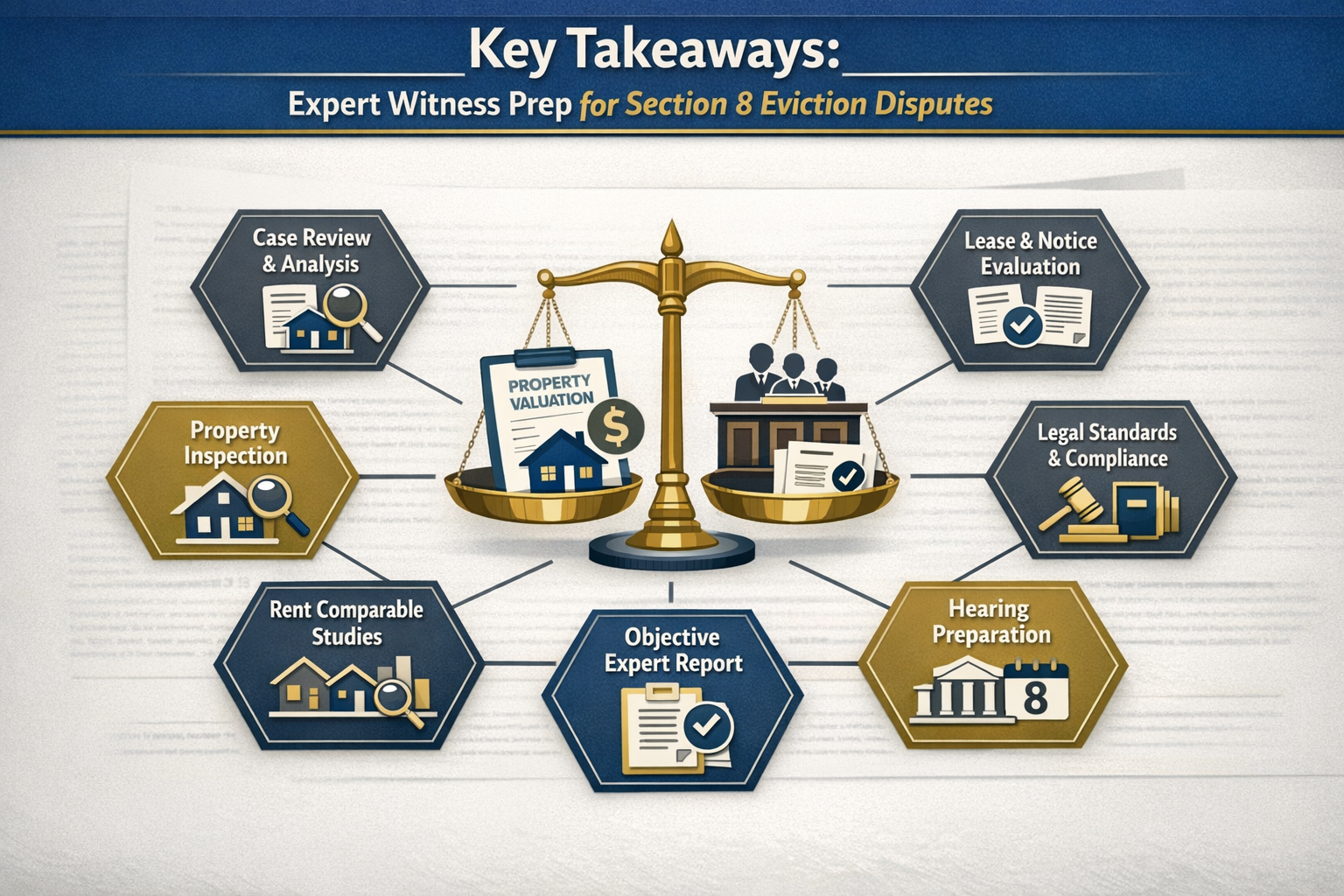
Key Takeaways
- 🏛️ Section 21 abolition requires landlords to rely solely on Section 8 grounds, making expert valuation evidence critical for successful possession claims
- 📊 RICS Red Book standards provide the authoritative framework for preparing defensible valuation reports in eviction disputes
- 💰 Rent arrears cases demand comprehensive market rent analysis, comparable evidence, and clear documentation of financial losses
- 🔍 Expert witness credibility depends on professional qualifications, methodological rigor, and adherence to tribunal disclosure requirements
- ⚖️ Periodic tenancies present unique valuation challenges requiring specialized knowledge of rental market dynamics and tenancy law
Understanding Section 8 Grounds and Valuation Requirements
The Post-Section 21 Landscape
The elimination of Section 21 evictions represents one of the most significant changes to UK tenancy law in decades. Landlords can no longer serve "no-fault" eviction notices, forcing them to demonstrate legitimate grounds for possession under Section 8 of the Housing Act 1988. This fundamental shift has placed unprecedented emphasis on evidence quality, particularly in disputes involving periodic tenancies where rental arrangements continue on a rolling basis without fixed end dates.
Section 8 grounds fall into two categories: mandatory and discretionary. Mandatory grounds, if proven, require the court to grant possession. Discretionary grounds give judges flexibility to consider reasonableness and proportionality. The most commonly invoked grounds in 2026 include:
| Ground | Type | Primary Evidence Required |
|---|---|---|
| Ground 8 | Mandatory | Rent arrears of at least 2 months (or 8 weeks for weekly tenancies) |
| Ground 10 | Mandatory | Some rent arrears both at notice service and hearing |
| Ground 11 | Mandatory | Persistent delay in paying rent |
| Ground 12 | Discretionary | Breach of tenancy obligation |
| Ground 13 | Discretionary | Property condition deterioration |
| Ground 14 | Discretionary | Nuisance or illegal use |
Why Valuation Evidence Matters
In Section 8 proceedings, valuation evidence serves multiple critical functions:
- Establishing market rent for arrears calculations and rent reasonableness assessments
- Quantifying financial losses suffered by landlords due to tenant breaches
- Demonstrating property condition changes that affect rental value
- Supporting proportionality arguments in discretionary ground cases
- Providing context for tribunal decision-making on possession orders
Recent changes to Section 8 ground requirements have affected how supporting evidence must be structured, with tribunals demanding greater rigor in documentation and methodology[2]. Expert witnesses must now provide comprehensive valuation reports that meet both legal admissibility standards and RICS professional requirements.
RICS Standards for Expert Witness Preparation in Section 8 Cases
The Red Book Foundation
The RICS Valuation – Global Standards (commonly known as the Red Book) provides the authoritative framework for property valuation in the UK. For expert witnesses involved in Section 8 eviction disputes, adherence to Red Book valuation standards is not merely best practice—it's essential for credibility and admissibility.
Key Red Book requirements for litigation support include:
✅ Professional competence – Valuers must possess appropriate knowledge, skills, and understanding
✅ Independence and objectivity – Expert witnesses owe their primary duty to the tribunal, not the instructing party
✅ Transparency – Full disclosure of methodology, assumptions, and limitations
✅ Appropriate basis of value – Clear identification whether using market value, market rent, or other bases
✅ Inspection and investigation – Adequate property inspection and market research
Establishing Expert Witness Credentials
Tribunals scrutinize expert witness qualifications rigorously. To establish credibility in Expert Witness Preparation for Section 8 Eviction Disputes: Valuation Evidence in Periodic Tenancies, professionals should demonstrate:
Professional Qualifications:
- RICS membership (MRICS or FRICS designation)
- Registered Valuer status
- Relevant CPD in residential lettings and tribunal work
- Professional indemnity insurance
Relevant Experience:
- Track record in residential property valuation
- Specific experience with periodic tenancies
- Previous tribunal testimony
- Knowledge of local rental markets
Working with RICS registered valuers ensures compliance with professional standards and enhances evidence weight. Expert witnesses specializing in landlord-tenant issues bring invaluable experience to consultation and testimony[1].
The Expert Witness Code of Conduct
Expert witnesses in Section 8 proceedings must adhere to strict ethical and procedural requirements:
🎯 Overriding duty to the tribunal – Experts serve the court first, not the party paying their fees
📋 Statement of truth – All reports must include a declaration of truthfulness
🔍 Disclosure obligations – Material facts cannot be omitted, even if unfavorable
⚖️ Impartiality – Opinions must be genuinely held and objectively formed
📊 Methodology transparency – Clear explanation of valuation approach and reasoning
Valuation Methodologies for Rent Arrears Cases
Market Rent Analysis for Ground 8 Claims
Ground 8 represents the most commonly invoked mandatory possession ground, requiring proof of substantial rent arrears. Effective Expert Witness Preparation for Section 8 Eviction Disputes: Valuation Evidence in Periodic Tenancies for rent arrears cases demands comprehensive market rent analysis.

Step 1: Establishing Market Rent
The foundation of any rent arrears case is demonstrating what constitutes reasonable market rent for the property. This requires:
Comparable Evidence Collection:
- Identify 5-10 truly comparable properties in the same locality
- Match property type, size, condition, and amenities
- Adjust for differences using recognized adjustment methodologies
- Consider timing of comparables (recent lettings carry more weight)
- Document sources (property portals, letting agents, Land Registry data)
Market Rent Determination:
- Calculate average market rent from adjusted comparables
- Consider rental value range and median figures
- Account for seasonal variations in rental markets
- Document any special factors affecting value (transport links, schools, etc.)
Professional valuation services in London typically employ sophisticated databases and market intelligence tools to ensure comprehensive comparable analysis.
Step 2: Arrears Calculation and Documentation
Once market rent is established, expert witnesses must clearly document:
| Calculation Element | Documentation Required |
|---|---|
| Contractual rent | Tenancy agreement, any variation notices |
| Payment history | Bank statements, rent ledgers, receipts |
| Arrears accrual | Month-by-month breakdown with dates |
| Interest calculations | If applicable under tenancy terms |
| Total arrears | Clear summary at notice date and hearing date |
Critical consideration: For Ground 8, arrears must exceed two months (or eight weeks) both when the notice is served AND at the hearing date. Expert witnesses must carefully document both thresholds.
Step 3: Quantifying Landlord Losses
Beyond basic arrears, comprehensive valuation evidence should address:
💸 Direct financial losses – Unpaid rent, utilities, council tax
🔧 Property damage costs – Repair estimates for tenant-caused damage
📉 Diminished rental value – If property condition affects marketability
⏱️ Void period projections – Expected time to re-let after possession
💼 Legal and professional costs – Reasonable expenses incurred
Periodic Tenancy Valuation Challenges
Periodic tenancies present unique valuation complexities compared to fixed-term agreements:
Rent Review Considerations:
- Statutory notice requirements for rent increases
- Market rent vs. historic contractual rent disparities
- Tenant's right to challenge excessive increases
- Impact of long-term tenancies on rental value
Security of Tenure Issues:
- How tenancy type affects property investment value
- Implications for vacant possession valuations
- Comparative analysis with assured shorthold tenancies
Documentation Requirements:
- Original tenancy agreement (if available)
- Records of rent variations over time
- Communication history regarding rent adjustments
- Evidence of comparable periodic tenancy rents
Understanding these nuances is essential for preparing robust evidence in Expert Witness Preparation for Section 8 Eviction Disputes: Valuation Evidence in Periodic Tenancies scenarios.
Property Condition Disputes and Valuation Evidence
Ground 13: Deterioration of Property Condition
Ground 13 allows landlords to seek possession when a tenant (or permitted occupier) has caused the property's condition to deteriorate through waste, neglect, or default. This discretionary ground requires compelling valuation evidence demonstrating:
- Baseline property condition at tenancy commencement
- Current deteriorated condition attributable to tenant actions or neglect
- Diminution in property value resulting from the deterioration
- Repair cost estimates to restore the property
Preparing Condition-Based Valuation Evidence
Expert witnesses should employ a systematic approach:
Initial Documentation Review:
- Inventory and condition reports from tenancy start
- Photographic evidence from check-in
- Previous inspection reports
- Maintenance records and correspondence
Current Condition Assessment:
- Comprehensive property inspection
- Detailed photographic documentation
- Identification of tenant-caused vs. fair wear and tear damage
- Assessment of health and safety implications
The 2026 expansion of Awaab's Law has introduced five new hazard categories, generating an estimated 40% increase in landlord-tenant disputes[4]. Expert witnesses must now consider whether property conditions trigger these expanded hazard assessments, which can significantly impact valuation evidence and possession proceedings.
Valuation Impact Analysis:
- Comparison of property value in current condition vs. proper condition
- Market rent differential between current and restored state
- Cost-to-cure estimates from qualified contractors
- Timeline projections for remediation work
For complex property condition disputes, engaging specialists in dilapidation surveys can provide additional technical support for expert witness testimony.
Distinguishing Tenant Damage from Fair Wear and Tear
A critical aspect of Ground 13 cases involves distinguishing actionable deterioration from normal wear and tear. Expert witnesses should apply these principles:
Fair Wear and Tear (Not Actionable):
- Minor scuff marks on walls
- Carpet wear in high-traffic areas
- Fading of paintwork over time
- Minor fixture loosening from normal use
Tenant-Caused Deterioration (Actionable):
- Holes in walls beyond picture hanging
- Burns, stains, or major carpet damage
- Broken fixtures from misuse or neglect
- Mold growth from inadequate ventilation practices
- Garden neglect causing structural issues
Expert witnesses must provide clear, defensible opinions on causation, supported by technical knowledge and photographic evidence.
Preparing Expert Witness Reports for Tribunal Submission
Essential Report Components
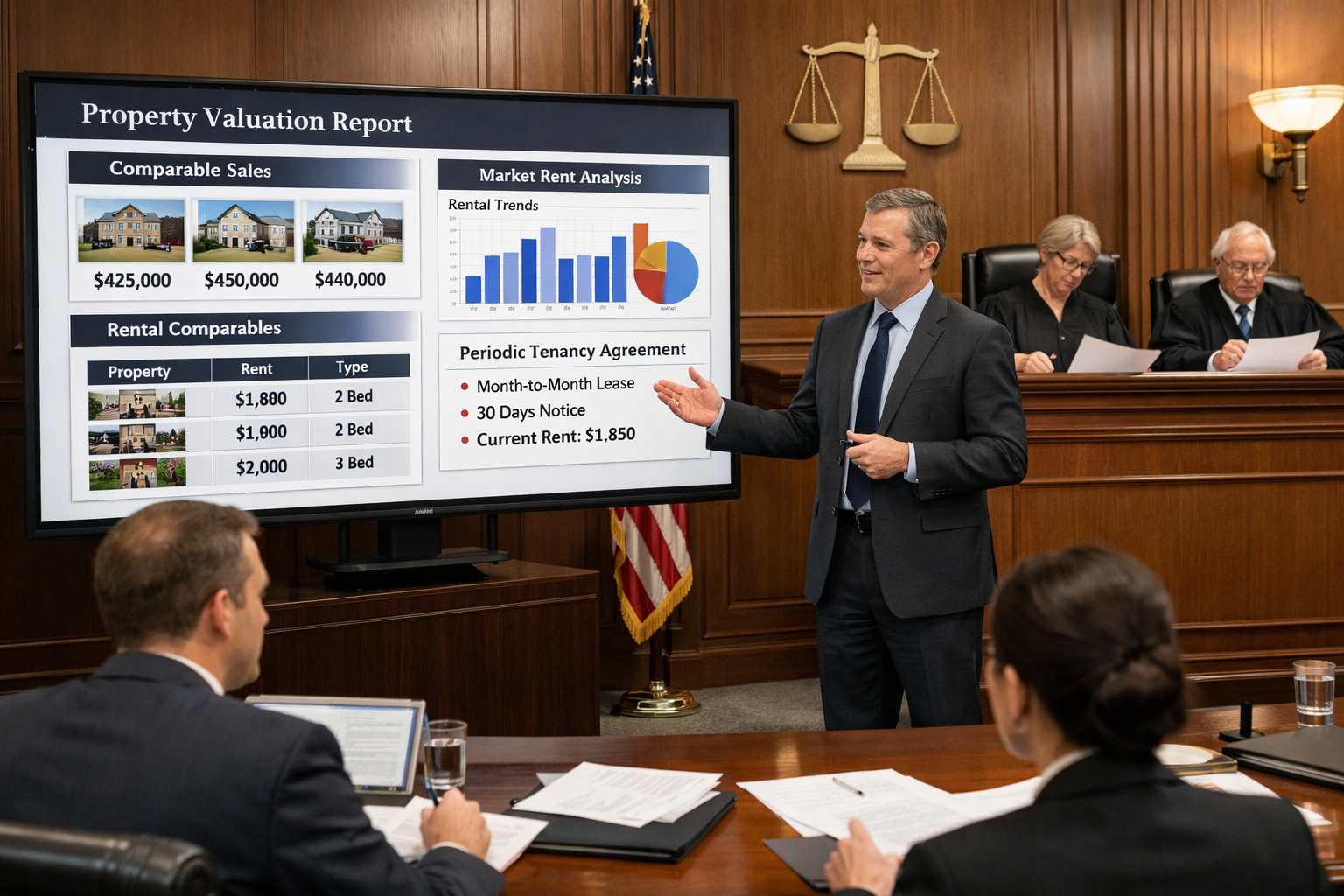
A comprehensive expert witness report for Expert Witness Preparation for Section 8 Eviction Disputes: Valuation Evidence in Periodic Tenancies should include:
1. Executive Summary
- Clear statement of instructions received
- Summary of key findings and opinions
- Bottom-line conclusions on valuation matters
2. Expert Qualifications and Experience
- Professional credentials and memberships
- Relevant experience in similar cases
- Confirmation of independence and impartiality
3. Property Description
- Detailed description of subject property
- Location and neighborhood characteristics
- Property type, size, layout, and features
- Condition assessment
4. Methodology Statement
- Valuation approach adopted (comparative, income, etc.)
- Inspection details and limitations
- Sources of information and data
- Assumptions and special assumptions
5. Market Analysis
- Rental market overview for the locality
- Comparable evidence with detailed analysis
- Market rent determination with reasoning
- Market trends and influencing factors
6. Valuation Conclusions
- Market rent opinion with supporting rationale
- Arrears calculations (if applicable)
- Diminution in value analysis (if applicable)
- Financial loss quantification
7. Supporting Documentation
- Comparable evidence schedules
- Photographs and inspection notes
- Relevant correspondence and records
- Calculations and workings
8. Declaration and Statement of Truth
- Confirmation of compliance with expert duties
- Statement that opinions are genuinely held
- Disclosure of any conflicts or limitations
Understanding RICS valuation costs helps parties budget appropriately for comprehensive expert witness services.
Common Pitfalls to Avoid
❌ Advocacy rather than objectivity – Expert witnesses must not become advocates for the instructing party
❌ Insufficient comparable evidence – Weak market analysis undermines credibility
❌ Inadequate property inspection – Desktop valuations rarely suffice for tribunal work
❌ Failure to disclose limitations – Transparency about constraints is essential
❌ Overly technical language – Reports must be accessible to non-specialist tribunal members
❌ Missing declarations – Procedural compliance failures can result in evidence exclusion
❌ Inadequate documentation – All opinions must be supported by verifiable evidence
Cross-Examination Preparation
Expert witnesses should prepare for rigorous cross-examination by:
🎓 Mastering the file – Complete familiarity with all case documents
📚 Reviewing methodology – Ability to explain and defend valuation approach
🔄 Anticipating challenges – Identifying potential weaknesses in advance
💬 Practicing clear communication – Explaining technical concepts in accessible language
⚖️ Maintaining composure – Professional demeanor under pressure
📊 Bringing supporting materials – Ready access to comparables and calculations
Integration with Related Dispute Resolution Processes
Coordination with Construction and Boundary Disputes
Section 8 eviction cases sometimes intersect with other property disputes requiring expert evidence. For example:
Party Wall Matters:
When landlord-initiated works trigger party wall issues during tenancy, expert witnesses may need to address both valuation impacts and party wall compliance. Recent guidance on party wall surveys for Renters Rights Act compliance emphasizes how landlord-initiated works face new Section 8 ground requirements[2].
Boundary Disputes:
Neighbour disputes involving boundary issues can affect property valuations and tenant quiet enjoyment, potentially supporting Section 8 grounds.
Construction Disputes:
Property damage from neighboring construction may require expert surveyor advice and could support tenant defenses or landlord claims depending on circumstances.
Emerging Regulatory Considerations
The regulatory landscape continues to evolve, affecting Expert Witness Preparation for Section 8 Eviction Disputes: Valuation Evidence in Periodic Tenancies:
Good Cause Eviction Laws:
While primarily a U.S. development, New York's Good Cause Eviction Law (enacted 2024) has generated disputes over reasonable repairs, owner-occupancy validity, and mandatory cost documentation—areas where expert witness testimony proves relevant[3]. UK practitioners should monitor similar policy discussions domestically.
Awaab's Law Expansion:
The 2026 expansion introduces new hazard categories with significant implications for property condition disputes and valuation evidence requirements[4]. Expert witnesses must stay current with these evolving standards.
Energy Performance Requirements:
Minimum Energy Efficiency Standards (MEES) continue to affect rental property valuations and may support or defend against certain Section 8 grounds.
Best Practices for Instructing Expert Witnesses
For Legal Representatives
Solicitors and barristers instructing expert witnesses in Section 8 cases should:
✅ Provide clear instructions – Specify exactly what opinions are required
✅ Share all relevant documents – Complete disclosure enables thorough analysis
✅ Allow adequate time – Quality valuations require proper inspection and research
✅ Clarify budget constraints – Discuss scope and fees transparently upfront
✅ Maintain independence – Avoid any appearance of coaching or influencing opinions
✅ Coordinate with other experts – Facilitate discussions if multiple expert disciplines involved
For Landlords and Property Managers
Property owners pursuing Section 8 possession should:
📋 Maintain meticulous records – Contemporary documentation is invaluable
📸 Document property condition – Regular photographic records support condition claims
💰 Track financial matters – Clear rent ledgers and payment records are essential
🔍 Engage experts early – Early assessment can inform case strategy
⚖️ Understand limitations – Expert evidence cannot overcome weak factual cases
🤝 Cooperate with inspections – Facilitate expert access to properties
For Tenants and Tenant Representatives
Tenants defending Section 8 proceedings should consider:
🛡️ Obtaining independent valuation – Counter-evidence can challenge landlord claims
📊 Challenging methodology – Scrutinize comparable evidence and assumptions
🏠 Documenting property condition – Photographic evidence of property state
💬 Providing context – Information about property issues and landlord failures
⚖️ Understanding proportionality – Even proven grounds may not justify possession in discretionary cases
Conclusion
The abolition of Section 21 has fundamentally reshaped the eviction landscape, placing unprecedented importance on robust, professionally prepared valuation evidence in Section 8 proceedings. Expert Witness Preparation for Section 8 Eviction Disputes: Valuation Evidence in Periodic Tenancies requires a sophisticated understanding of RICS standards, tribunal procedures, rental market dynamics, and tenancy law.
Successful expert witnesses combine technical valuation expertise with procedural knowledge, maintaining independence and objectivity while providing clear, defensible opinions. Whether addressing rent arrears under Ground 8, property condition deterioration under Ground 13, or other Section 8 grounds, the quality of valuation evidence often determines case outcomes.
As the regulatory environment continues to evolve in 2026—with Awaab's Law expansion, enhanced tenant protections, and increased scrutiny of eviction proceedings—the demand for qualified expert witnesses will only intensify. Property professionals, legal practitioners, and parties to disputes must prioritize evidence quality, professional standards, and methodological rigor.
Actionable Next Steps
For those involved in Section 8 eviction disputes:
- Engage qualified experts early – Don't wait until proceedings are imminent to seek professional valuation advice
- Maintain comprehensive documentation – Contemporary records of property condition, rent payments, and correspondence are invaluable
- Understand RICS standards – Familiarize yourself with Red Book requirements and expert witness duties
- Invest in quality evidence – Comprehensive professional valuation services provide better outcomes than rushed or inadequate reports
- Consider alternative resolution – Strong expert evidence can facilitate settlements without full tribunal hearings
- Stay informed on regulatory changes – Evolving standards affect evidence requirements and case strategies
The intersection of property valuation, tenancy law, and tribunal procedure creates complex challenges requiring specialized expertise. By following RICS-backed strategies and engaging appropriately qualified professionals, parties can navigate Section 8 eviction disputes with confidence, ensuring that evidence meets the rigorous standards demanded by tribunals in the post-Section 21 era.
References
[1] Landlord Tenant S 526 – https://www.jurispro.com/category/landlord-tenant-s-526
[2] Party Wall Surveys For Renters Rights Act Compliance Managing Notices When Landlord Initiated Works Face New Section 8 Ground Requirements – https://nottinghillsurveyors.com/blog/party-wall-surveys-for-renters-rights-act-compliance-managing-notices-when-landlord-initiated-works-face-new-section-8-ground-requirements
[3] Real Estate Litigation 2026 – https://practiceguides.chambers.com/practice-guides/real-estate-litigation-2026
[4] Expert Witness Preparation For Awaabs Law Expansion Disputes 2026 Hazard Assessments In Rental Valuations – https://nottinghillsurveyors.com/blog/expert-witness-preparation-for-awaabs-law-expansion-disputes-2026-hazard-assessments-in-rental-valuations