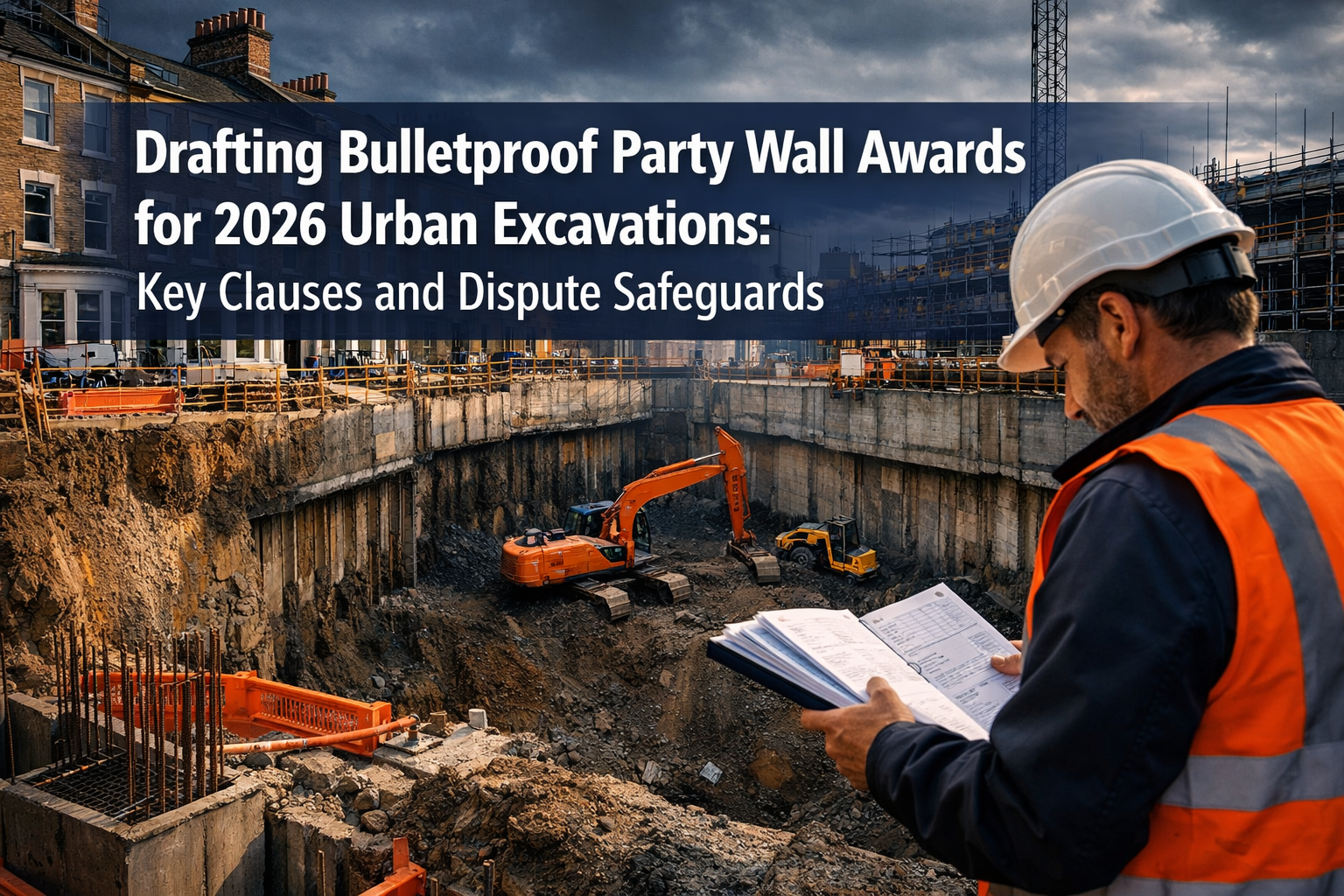
Construction activity across UK cities has surged by 18% since late 2025, with basement conversions and deep foundation projects driving unprecedented demand for party wall expertise. Yet surveyors report that over 40% of excavation-related disputes stem from poorly drafted awards that lack enforceable monitoring provisions or fail to adequately document pre-work conditions. As urban densification intensifies in 2026, mastering the art of drafting bulletproof party wall awards for 2026 urban excavations has become essential for protecting both building owners and adjoining property interests from costly litigation.
The stakes have never been higher. Without a properly structured party wall award, building owners lose statutory protection and face unlimited liability for damage claims. This comprehensive guide reveals the critical clauses, protective measures, and dispute safeguards that transform standard awards into legally robust documents capable of withstanding scrutiny in 2026's increasingly complex urban construction environment.
Key Takeaways
- Schedule of condition documentation must include timestamped photographs and detailed written descriptions to establish baseline evidence before excavation begins
- Section 6 notices require minimum one-month advance service with precise excavation depth specifications and protective measure proposals
- Monitoring protocols should mandate regular inspections, crack width measurements, and documented reporting procedures throughout construction phases
- Cost provisions must clearly allocate surveyor fees (£1,000+ average) and establish payment timelines to prevent financial disputes
- Dispute resolution mechanisms need explicit escalation pathways and third surveyor appointment procedures to avoid litigation delays
Understanding the Legal Framework for Drafting Bulletproof Party Wall Awards for 2026 Urban Excavations
The Party Wall etc. Act 1996 establishes the statutory foundation for excavation work near neighbouring properties, but the devil resides in implementation details. Section 6 specifically governs excavations within three or six metres of adjoining structures, depending on depth relationships[1].
The 3-Metre and 6-Metre Rules Explained
Building owners must serve formal Section 6 notices when excavating:
- Within 3 metres of a neighbour's structure if going deeper than its foundations
- Within 6 metres if excavating deeper than a line drawn at 45 degrees downward from the neighbour's foundation bottom[2]
These geometric thresholds determine whether party wall procedures apply. In 2026's dense urban environments, where Victorian terraces with shallow foundations sit adjacent to modern basement conversion projects, the 6-metre rule frequently triggers notice requirements.
Timing Requirements and Notice Provisions
The party wall excavation notice must be served at least one month before work commences[1]. This timeline allows adjoining owners to:
✅ Review excavation plans and structural implications
✅ Appoint their own surveyor or consent to the building owner's surveyor
✅ Request modifications to protective measures
✅ Arrange pre-work property inspections
Failure to observe this minimum notice period invalidates the entire process, exposing building owners to injunction risks that can halt projects indefinitely.
Statutory Protection vs. Common Law Liability
Here's the critical distinction many property owners miss: awards provide statutory protection that supersedes common law liability[2]. Without a properly executed award, building owners remain fully liable for any damage under common law negligence principles. With a compliant award, liability becomes limited to damage caused by failure to follow award specifications.
This protection mechanism makes drafting bulletproof party wall awards for 2026 urban excavations not merely advisable but essential risk management.
Essential Clauses for Drafting Bulletproof Party Wall Awards for 2026 Urban Excavations
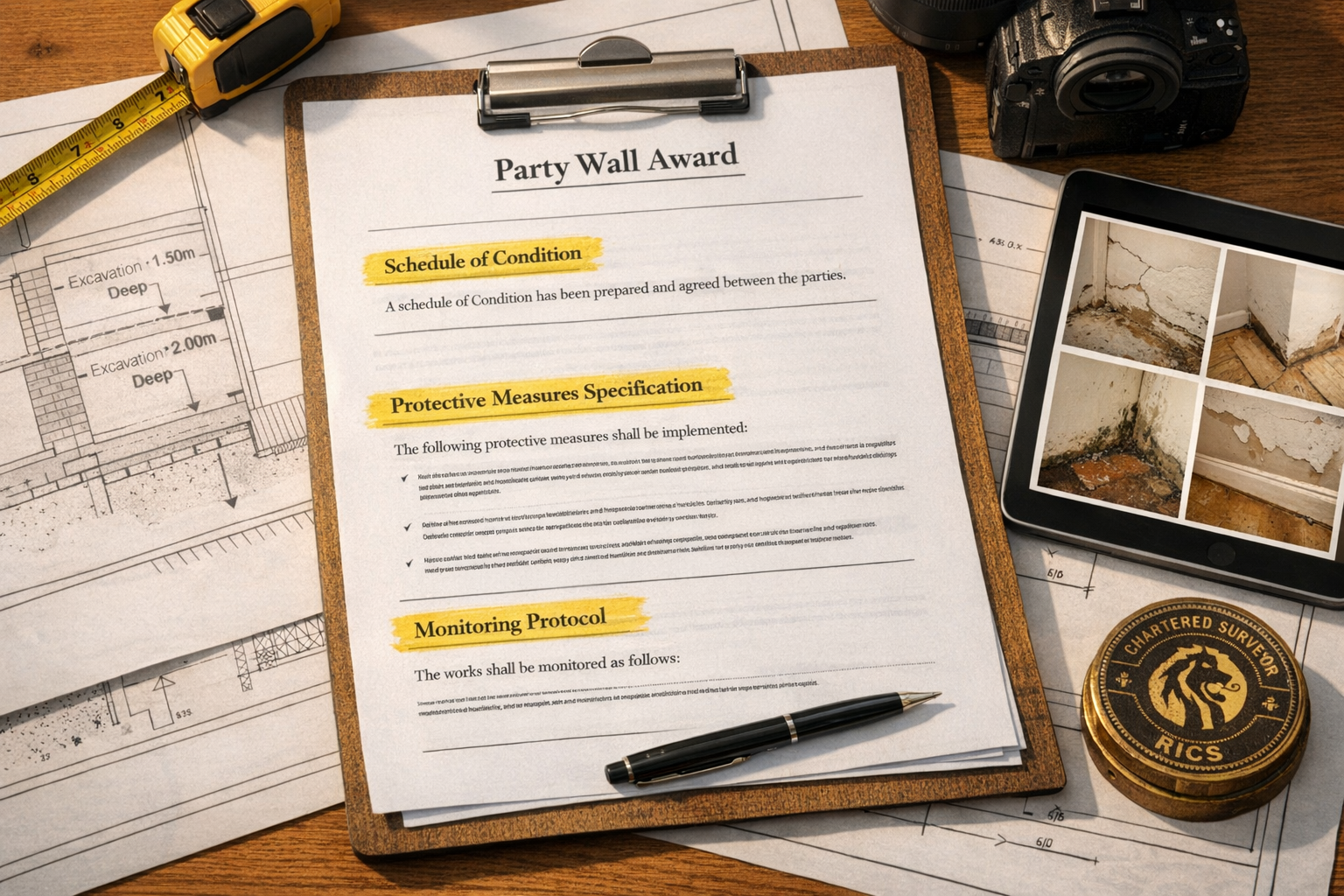
A robust party wall award functions as both construction roadmap and legal safeguard. The following clauses separate enforceable awards from documents that crumble under dispute pressure.
1. Comprehensive Schedule of Condition Requirements
The schedule of condition represents the award's most critical evidentiary component. This detailed record documents the adjoining property's pre-construction state, establishing baseline evidence for evaluating any subsequent damage claims[3].
Minimum documentation standards include:
| Component | Requirements |
|---|---|
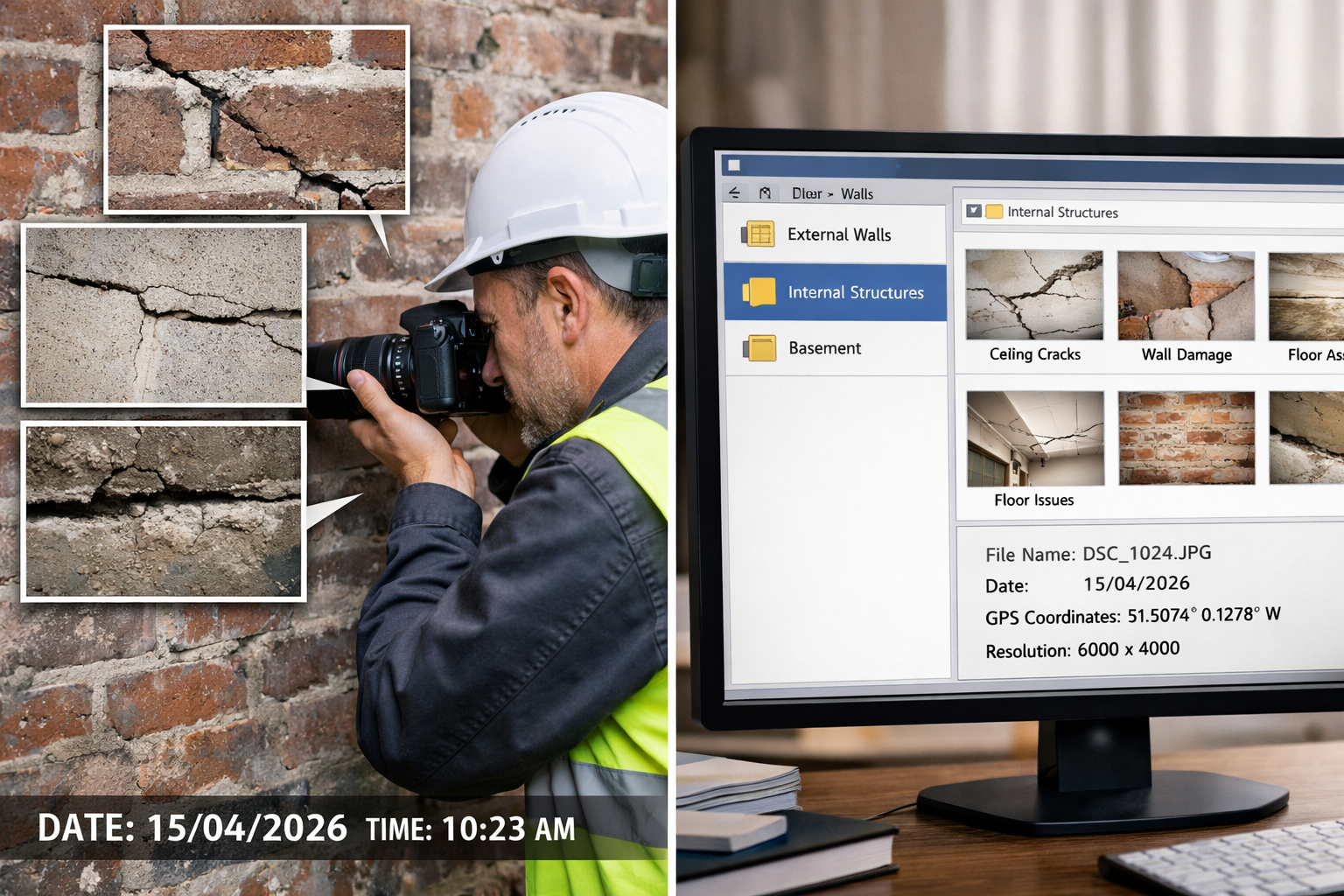
| Photography | High-resolution images (minimum 12MP) of all walls, ceilings, floors, and external elevations |
| Crack Mapping | Measured width recordings (in millimetres) with dated photographic evidence |
| Written Descriptions | Room-by-room narrative documenting existing defects, decorative condition, and structural observations |
| Timestamps | GPS-tagged metadata confirming inspection date and location |
| Witness Signatures | Both surveyors and property owner acknowledgment of accuracy |
The schedule must be attached as a formal appendix to the award document, not merely referenced. Courts consistently reject awards with inadequate condition documentation when adjudicating damage disputes[5].
2. Protective Measures Specification
Awards must detail specific protective measures required to prevent undermining the neighbour's foundations during excavation[2]. Generic statements like "appropriate precautions will be taken" provide no enforceable standard.
Effective protective measure clauses specify:
🔧 Excavation methodology – Sequential dig patterns, shoring requirements, dewatering protocols
🔧 Underpinning provisions – Trigger conditions requiring foundation strengthening
🔧 Temporary support systems – Propping specifications, load calculations, engineer certifications
🔧 Work sequencing – Phased excavation timelines preventing simultaneous destabilization
🔧 Vibration limits – Maximum allowable levels with continuous monitoring requirements
For deep basement excavations in 2026's typical urban terraced settings, underpinning provisions become particularly critical. The award should establish clear triggers—such as excavation within 1 metre horizontally of the neighbour's foundation—that automatically require underpinning work.
3. Monitoring and Inspection Protocols
Regular monitoring provisions transform awards from static documents into active construction management tools. Effective protocols include:
- Pre-commencement survey – Baseline measurements of crack widths, level surveys, and structural plumbness
- Weekly inspections – During active excavation phases, with photographic documentation
- Trigger-based inspections – Immediate surveyor attendance if cracks widen beyond 1mm or new defects appear
- Post-completion survey – Final condition assessment comparing against baseline schedule
The award should explicitly state who conducts inspections (typically the agreed surveyor), access arrangements for adjoining properties, and reporting timelines (usually within 48 hours of each inspection)[5].
4. Cost Allocation and Payment Terms
Financial disputes frequently derail otherwise successful party wall processes. Clear cost provisions prevent these conflicts. As of 2026, typical party wall surveyor costs average £1,000 for straightforward excavation awards, with hourly rates ranging £150-200[3].
Essential cost clauses address:
💷 Fee responsibility – Building owner bears all reasonable surveyor costs
💷 Payment schedule – Staged payments (e.g., 50% on appointment, 50% on award issuance)
💷 Additional inspection fees – Hourly rates for monitoring visits beyond standard provisions
💷 Dispute resolution costs – Third surveyor appointment fees if disagreement arises
💷 Damage rectification – Cost allocation methodology for repair work
Ambiguity in cost provisions generates more party wall disputes than any other award component. Specificity eliminates this risk.
5. Work Commencement and Completion Dates
Temporal boundaries prevent indefinite award validity and establish accountability timeframes. Effective awards specify:
- Earliest commencement date – Typically one month after notice service
- Latest commencement date – Usually 12 months, after which new notices become necessary
- Projected completion date – Establishes reasonable expectations for construction duration
- Notice of actual commencement – Building owner's obligation to inform adjoining owner 7 days before starting
These provisions prevent situations where awards remain dormant for years, during which property conditions change substantially, rendering the original schedule of condition obsolete.
Advanced Dispute Prevention Mechanisms in Modern Party Wall Awards
Beyond basic statutory requirements, sophisticated 2026 awards incorporate proactive dispute prevention mechanisms that address common conflict triggers before they escalate.
Digital Documentation and Evidence Management
Modern awards increasingly mandate digital evidence protocols that create tamper-proof documentation chains:
- Cloud-based photo repositories with automatic timestamps and GPS tagging
- Blockchain-verified condition reports preventing post-facto document alteration
- Video walkthroughs capturing pre-work conditions more comprehensively than still photography
- Shared access portals allowing both parties real-time monitoring data visibility
These technological enhancements address the evidentiary challenges that plague traditional paper-based systems, where photograph authenticity and timeline disputes frequently arise[5].
Graduated Response Protocols
Rather than binary "compliant/non-compliant" assessments, effective awards establish graduated response frameworks that match intervention intensity to observed impact severity:
Level 1 (Minor Observations):
- Hairline cracks <0.5mm width
- Response: Photographic documentation, continued monitoring, no work stoppage
Level 2 (Moderate Concerns):
- Crack widening 0.5-2mm or new crack formation
- Response: Immediate surveyor inspection, building owner notification, potential methodology review
Level 3 (Significant Issues):
- Cracks >2mm, structural movement, or visible distortion
- Response: Work suspension pending engineer assessment, emergency stabilization measures, formal dispute resolution initiation
This calibrated approach prevents overreaction to minor cosmetic issues while ensuring serious problems receive immediate attention.
Third Surveyor Selection Mechanisms
When building and adjoining owner surveyors cannot reach agreement, the Party Wall Act requires appointing a third surveyor whose determination becomes binding. However, disputes frequently arise over third surveyor selection itself.
Bulletproof awards pre-emptively address this by:
✓ Nominating a selection body – Specifying that the Royal Institution of Chartered Surveyors (RICS) will appoint if parties cannot agree
✓ Qualification criteria – Requiring minimum 10 years party wall experience and specialist accreditation
✓ Conflict of interest provisions – Excluding surveyors with prior relationships to either party
✓ Fee agreement protocols – Establishing cost-sharing arrangements before appointment
These provisions eliminate the procedural delays that often extend disputes by months.
Insurance and Indemnity Clauses
While not statutorily required, sophisticated awards incorporate insurance verification requirements:
- Building owner must provide evidence of adequate contractor liability insurance (minimum £5 million in 2026 urban contexts)
- Policies must specifically cover party wall work and adjoining property damage
- Adjoining owners receive named notification status on policies
- Annual renewal evidence must be provided for multi-year projects
These provisions ensure financial resources exist to address damage claims, preventing situations where building owners lack funds to rectify problems they've caused.
Addressing Specific Urban Excavation Challenges in 2026
Urban excavation projects present unique complications that generic award templates fail to address. Tailored provisions for common 2026 scenarios include:
Victorian Terrace Basement Conversions
These ubiquitous London and regional city projects involve excavating beneath existing ground floors while maintaining structural integrity of 150+ year-old buildings with shallow strip foundations.
Specialized award provisions should cover:
- Incremental excavation protocols – Maximum 500mm depth per phase with 48-hour consolidation periods
- Lime mortar considerations – Recognition that traditional pointing may crack during settlement without indicating structural failure
- Shared party wall foundation exposure – Procedures when excavation reveals the party wall extends below anticipated depths
- Temporary propping requirements – Specifications for supporting party walls during foundation underpinning
High Water Table Environments
Excavations in areas with high groundwater levels (common in Thames-adjacent London boroughs and coastal cities) require dewatering provisions that address:
- Groundwater level monitoring in adjoining properties
- Maximum permissible drawdown limits (typically 500mm)
- Recharge system requirements if excessive drawdown occurs
- Subsidence monitoring protocols for clay soil areas where water extraction causes ground movement
The damage to property provisions must explicitly include water-related damage, not just direct excavation impacts.
Contaminated Land Considerations
Urban excavations increasingly encounter historical contamination requiring remediation. Awards should address:
- Discovery protocols – Immediate work suspension and environmental assessment requirements
- Contamination migration prevention – Measures preventing spread to adjoining properties
- Cost allocation – Clarifying that contamination remediation costs fall outside normal party wall cost-sharing arrangements
- Extended timeline provisions – Automatic award extension if contamination delays necessitate prolonged work suspension
Enforcement and Remediation Provisions
Even perfectly drafted awards require enforcement mechanisms when building owners fail to comply. Effective awards establish clear consequences and remediation pathways.
Non-Compliance Consequences
Awards should specify graduated enforcement measures:
- Written notice – 48-hour correction period for minor violations
- Work suspension orders – Surveyor authority to halt work for serious non-compliance
- Emergency intervention – Adjoining owner's right to commission emergency protective work at building owner's expense
- Injunction support – Award provisions explicitly supporting court injunction applications for persistent violations
Damage Rectification Procedures
When damage occurs despite protective measures, awards must establish clear rectification protocols:
Step 1: Damage Assessment
- Joint surveyor inspection within 72 hours of damage report
- Photographic documentation comparing against schedule of condition
- Structural engineer involvement for significant damage
- Written damage assessment report within 7 days
Step 2: Causation Determination
- Analysis of whether damage resulted from award-compliant work or negligent deviation
- Review of monitoring records and inspection reports
- Expert testimony if causation remains disputed
Step 3: Repair Specification
- Detailed scope of remedial work required
- Timeline for completion (typically 60-90 days)
- Quality standards matching original construction
- Betterment limitations (repairs restore to pre-work condition, not improved state)
Step 4: Cost Settlement
- Building owner liability for damage caused by award-compliant work
- Full liability for damage from non-compliant work
- Payment within 30 days of repair completion
- Dispute resolution if cost disagreement arises
These structured procedures prevent the ambiguity that transforms minor damage into protracted legal battles.
The Role of Technology in Modern Award Drafting and Monitoring
2026's construction environment increasingly leverages technology to enhance award effectiveness and dispute prevention.
Digital Monitoring Systems
Automated crack monitoring devices now provide continuous surveillance:
- Wireless crack gauges transmitting real-time width measurements
- Tilt sensors detecting structural movement
- Vibration monitors ensuring excavation equipment stays within specified limits
- Cloud dashboards providing both parties transparent access to monitoring data
Awards should specify monitoring equipment installation requirements, calibration standards, and alert thresholds triggering surveyor intervention.
Building Information Modeling (BIM) Integration
Sophisticated projects incorporate BIM models into party wall awards:
- 3D visualization of excavation proximity to adjoining foundations
- Stress analysis modeling predicting settlement patterns
- Sequence simulation demonstrating protective measure effectiveness
- As-built documentation comparing actual work to approved specifications
BIM integration transforms awards from text-heavy legal documents into visually comprehensible construction guides that reduce misunderstanding.
Drone Survey Documentation
Aerial photography via drones enhances schedule of condition documentation:
- Roof and chimney condition assessment without scaffolding access
- Elevation photography capturing details invisible from ground level
- Thermal imaging detecting moisture issues or structural anomalies
- Volumetric measurements of excavation progress
Awards should authorize drone access for documentation purposes while addressing privacy and safety protocols.
Common Drafting Mistakes That Undermine Award Enforceability
Even experienced surveyors occasionally produce awards with fatal flaws. Avoid these prevalent errors:
❌ Vague Protective Measure Descriptions
Problem: "Appropriate shoring will be installed as necessary"
Solution: "Engineer-designed steel shoring system with 150mm x 150mm walers at 1.2m vertical spacing, anchored to stable ground minimum 2m beyond excavation edge"
❌ Inadequate Schedule of Condition Detail
Problem: "Property in generally good condition with some minor cracking"
Solution: "Northeast bedroom ceiling: 2mm width crack extending 1.8m from window corner, oriented 45° diagonal. See photographs SCH-IMG-047 through SCH-IMG-052"
❌ Missing Monitoring Frequency Specifications
Problem: "Regular inspections will be conducted"
Solution: "Weekly inspections during excavation phase (weeks 1-8), fortnightly during construction phase (weeks 9-20), final inspection at practical completion"
❌ Ambiguous Cost Allocation
Problem: "Parties will share reasonable costs"
Solution: "Building owner bears 100% of surveyor fees for award preparation, monitoring inspections, and damage assessment. Repair costs allocated per Section 11(11) of the Act based on benefit derived"
❌ Undefined Technical Terms
Problem: "Underpinning will be provided if necessary"
Solution: "Underpinning required when excavation within 1m horizontal distance of party wall foundation, using mass concrete method per BS 8004:2015, minimum 150mm undercut depth"
Precision eliminates the interpretive disputes that consume time and money.
Conclusion: Building Dispute-Proof Awards for 2026's Urban Construction Environment
Drafting bulletproof party wall awards for 2026 urban excavations demands far more than template completion. As construction activity intensifies and urban sites become increasingly constrained, the quality of award drafting directly determines whether projects proceed smoothly or descend into costly disputes and injunctions.
The essential elements—comprehensive schedules of condition with photographic evidence, specific protective measure specifications, clear monitoring protocols, unambiguous cost provisions, and structured dispute resolution mechanisms—transform awards from administrative formalities into powerful risk management tools[3][5].
Actionable Next Steps
For Building Owners Planning Excavation Projects:
- Engage specialist surveyors early – At design stage, not after planning permission
- Budget adequately – Allocate £1,000-1,500 for professional award preparation[3]
- Commission pre-notice condition surveys – Document adjoining property state before serving formal notices
- Review draft awards critically – Ensure specificity in protective measures and monitoring provisions
- Maintain open communication – Proactive neighbour engagement prevents adversarial relationships
For Adjoining Owners Receiving Excavation Notices:
- Appoint your own surveyor – Don't rely solely on building owner's surveyor
- Attend condition survey inspections – Verify accuracy of documentation
- Request clarification – Challenge vague protective measure descriptions
- Understand monitoring rights – Ensure award grants reasonable access for inspections
- Document everything – Maintain independent photographic records throughout construction
For Surveyors Drafting Awards:
- Customize for specific site conditions – Avoid generic template language
- Incorporate 2026 best practices – Digital documentation, graduated response protocols, BIM integration where appropriate
- Anticipate common dispute triggers – Address cost allocation, damage causation, and timeline issues explicitly
- Establish clear enforcement mechanisms – Specify consequences for non-compliance
- Create living documents – Include amendment procedures for unforeseen circumstances
The construction boom of 2026 presents unprecedented opportunities for urban development, but only for those who approach party wall procedures with the professionalism and precision they demand. A properly drafted award protects all parties, prevents disputes, and ensures that excavation projects enhance rather than damage the urban fabric.
For comprehensive guidance on party wall procedures, explore our resources on party wall agreements and party wall legislation. Professional surveyor assistance remains the single most effective investment in dispute prevention and project success.
References
[1] Section 6 – https://www.partywall.expert/section-6/
[2] Excavation And The Party Wall Act Navigating The 3 And 6 Metre Rules For Foundations – https://www.partywallslimited.com/blog/excavation-and-the-party-wall-act-navigating-the-3–and-6-metre-rules-for-foundations
[3] Party Wall Agreement – https://hoa.org.uk/advice/guides-for-homeowners/i-am-improving/party-wall-agreement/
[4] Navigating The World Of Party Walls A Comprehensive Guide – https://warrenpropertymatters.online/2024/04/17/navigating-the-world-of-party-walls-a-comprehensive-guide/
[5] Schedules Of Condition In Party Wall Works Best Practices To Prevent Post Construction Claims In 2026 – https://nottinghillsurveyors.com/blog/schedules-of-condition-in-party-wall-works-best-practices-to-prevent-post-construction-claims-in-2026