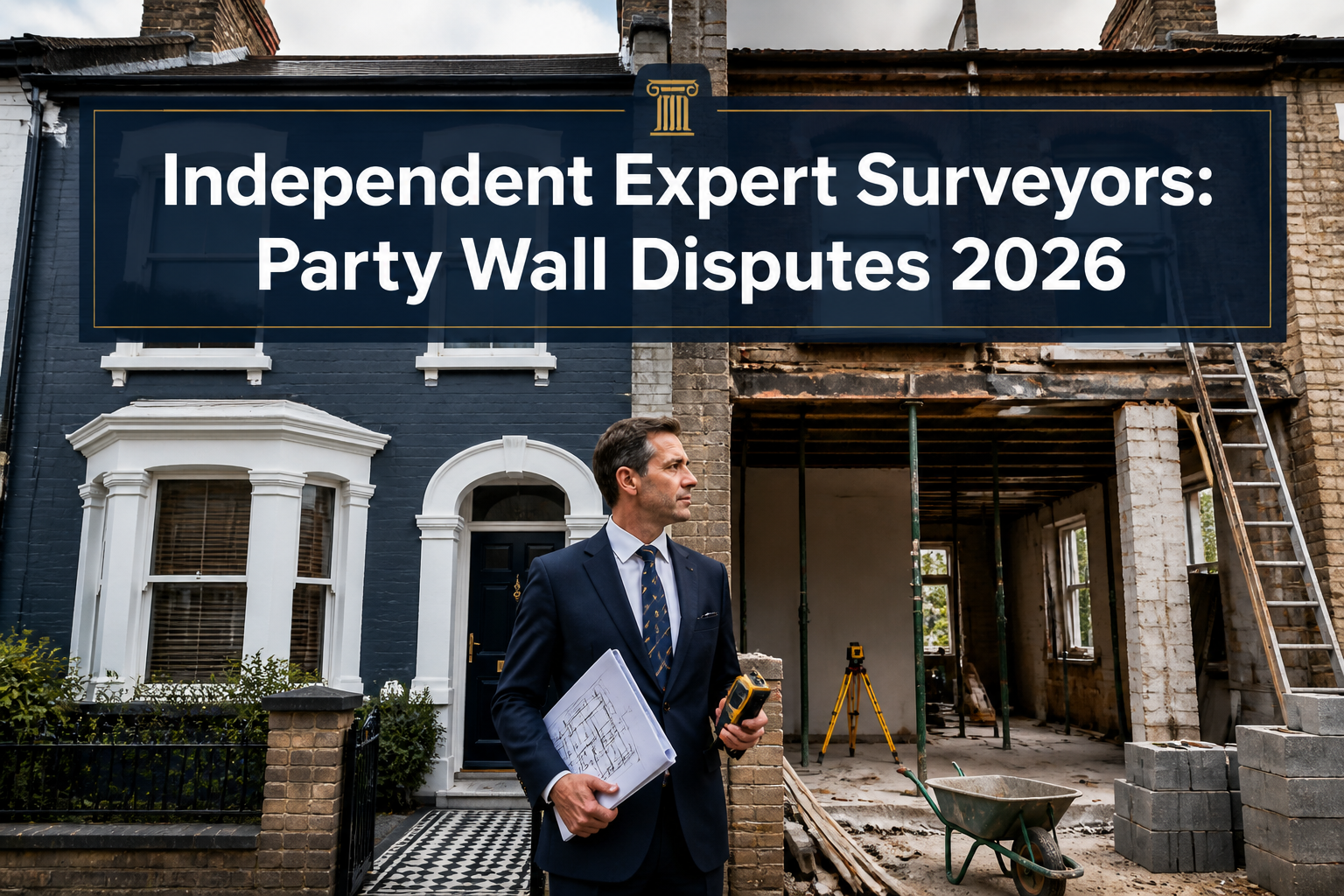

Over 40% of party wall disputes that reach formal resolution involve a breakdown in the joint surveyor appointment process — a figure that underscores a critical flaw in how many property owners approach neighbour disputes. For anyone planning construction work in 2026, understanding the role of independent expert surveyors for party wall and building disputes is not just useful — it could be the difference between a smooth project and a costly legal battle.
The question of whether to rely on a jointly appointed surveyor or appoint an independent expert is one of the most consequential decisions a building owner or adjoining owner can make. RICS protocols and the Party Wall etc. Act 1996 both provide structured frameworks for this — but the nuances are frequently misunderstood. [2]
Key Takeaways 📌
- Independent expert surveyors offer impartiality that joint appointments structurally cannot guarantee, especially in contentious 2026 renovation projects.
- The third surveyor mechanism under Section 10 of the Party Wall Act provides a statutory safety net when appointed surveyors reach deadlock. [1]
- Fee allocation in disputes follows fault-based principles — unreasonable conduct can shift costs to the responsible party. [1]
- RICS-aligned independent experts are held to professional conduct standards that protect both building owners and adjoining owners. [2]
- Early engagement of an independent expert can prevent costly county court appeals, which can add thousands to project budgets. [1]
What Is an Independent Expert Surveyor in Party Wall Matters?
Before comparing appointment types, it helps to define the role clearly. Under the Party Wall etc. Act 1996, when a building owner serves notice and the adjoining owner dissents (or is deemed to have dissented), each party appoints their own surveyor. Those two surveyors then jointly select a third surveyor — an independent expert who acts as an arbitrator if the appointed surveyors cannot agree.
This third surveyor role is not a fallback option added later. Section 10 of the Act mandates that the third surveyor be jointly selected at the time of the original appointments — not when a dispute arises. [1] This pre-emptive structure is deliberately designed to ensure a neutral expert is already in place before tensions escalate.
💡 "The third surveyor's role is to make binding determinations on disputed matters — and has discretion in fee allocation based on each party's conduct." [1]
It is worth noting that while the Act does not require specific formal qualifications for third surveyors, industry best practice strongly recommends professionals with extensive experience in party wall disputes. [1] The RICS Boundaries and Party Walls Working Group produces professional guidance — currently in its sixth edition — that sets the standard for surveyor instruction and conduct. [2]
For property owners in London and the South East, working with chartered surveyors experienced in party wall matters is especially important given the density of adjoining properties and the complexity of urban renovation projects.
Independent Expert Surveyors for Party Wall and Building Disputes: Why Impartiality Matters in 2026 Projects
The Structural Problem with Joint Appointments
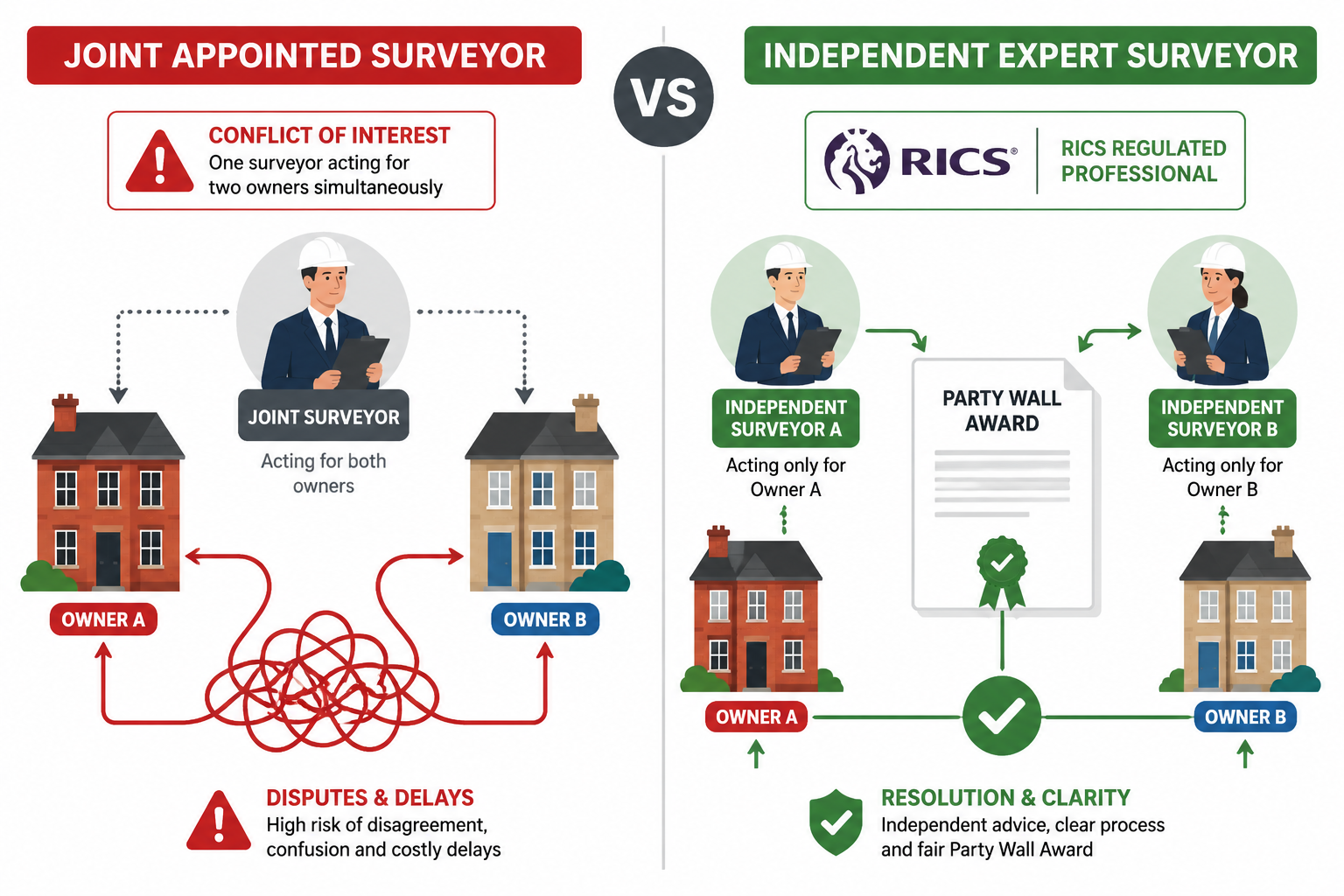
A jointly appointed surveyor — sometimes called an agreed surveyor — is appointed by both the building owner and the adjoining owner to act on behalf of both parties simultaneously. On paper, this sounds efficient. In practice, it creates an inherent tension.
When one surveyor serves two parties with potentially competing interests, true impartiality becomes difficult to maintain. This is particularly relevant in 2026, when a surge in home renovation activity — including loft conversions, basement excavations, and rear extensions — is generating a higher volume of party wall disputes than in previous years. [4]
Consider the following comparison:
| Feature | Joint Appointed Surveyor | Independent Expert Surveyor |
|---|---|---|
| Represents | Both parties simultaneously | One party (or acts as neutral third) |
| Impartiality | Structurally compromised | Structurally protected |
| Dispute resolution | Limited authority | Binding determination powers |
| RICS accountability | Yes | Yes |
| Fee allocation | Fixed | Fault-based, flexible [1] |
| Ideal for | Amicable, simple cases | Complex or contentious disputes |
RICS Protocols and the 2026 Construction Landscape
RICS guidance emphasises that surveyors must act impartially and in accordance with the Act, regardless of who appointed them. [2] However, the reality is that an adjoining owner who suspects their interests are not being fully protected by a jointly appointed surveyor has limited recourse — short of withdrawing consent and appointing their own surveyor.
In 2026's construction environment, with projects ranging from party wall loft conversions to complex basement works, the stakes are higher. Complex projects involving basement excavations or multiple adjoining owners can generate surveyor costs of £1,500–£4,000+, with specialist engineer reports for deep excavations adding a further £500–£2,000. [1] In this context, the cost of getting the appointment structure wrong far exceeds the modest additional expense of engaging an independent expert from the outset.
The UK Register of Expert Witnesses maintains listings of every expert witness with declared expertise in party walls, providing an accessible verification route for those seeking qualified independent professionals. [3]
The Third Surveyor Mechanism: How Independent Experts Resolve Deadlock
When Appointed Surveyors Cannot Agree
Even when both parties have appointed their own surveyors in good faith, those surveyors may reach deadlock on key issues — the scope of a party wall award, the adequacy of a schedule of condition, or the appropriate protective measures during construction. This is precisely when the pre-selected independent expert surveyor becomes essential.
The third surveyor's determination is binding on both parties, and their discretion in fee allocation means that a party acting unreasonably during the dispute process may find themselves bearing a greater share of costs. [1] This creates a powerful incentive for good-faith conduct throughout the process.
Fee Structures and Cost Allocation in 2026
Independent expert surveyor fees for dispute resolution typically range from £500–£1,500, depending on the complexity of the matter. [1] This is a relatively modest investment when weighed against the alternative: county court appeals, which can add thousands in legal expenses and cause significant project delays.
Industry guidance recommends budgeting a 20–30% contingency above quoted surveyor fees to cover potential escalation costs. [1] For building owners planning 2026 projects, this contingency planning is not pessimism — it is prudent financial management.
Under the Act, the building owner undertaking works bears primary responsibility for all reasonable party wall costs, including their own surveyor's fees, the adjoining owner's surveyor fees, and third surveyor fees. [1] However, fault-based allocation means that an adjoining owner who acts unreasonably or obstructs proceedings may not be immune from cost consequences.
🔑 Key principle: The independent expert surveyor's fee allocation discretion is one of the most powerful tools for encouraging reasonable conduct in party wall disputes.
The Deemed Dissent Timeline
When a neighbour fails to respond within the 14-day notice period, the deemed dissent route adds approximately two to three additional weeks before a surveyor can be formally appointed on their behalf. [1] This delay — which can stall an entire construction programme — is another reason why early engagement with an independent expert, and clear party wall consent processes, are essential for 2026 project planning.
For those unsure about the specific rules that apply to their project, the Party Wall Act 3-metre rule and related excavation provisions are frequently misunderstood and benefit from early expert clarification.
Practical Benefits of Independent Expert Surveyors for Party Wall and Building Disputes in 2026 Projects
1. 🛡️ Genuine Impartiality in Valuations and Awards
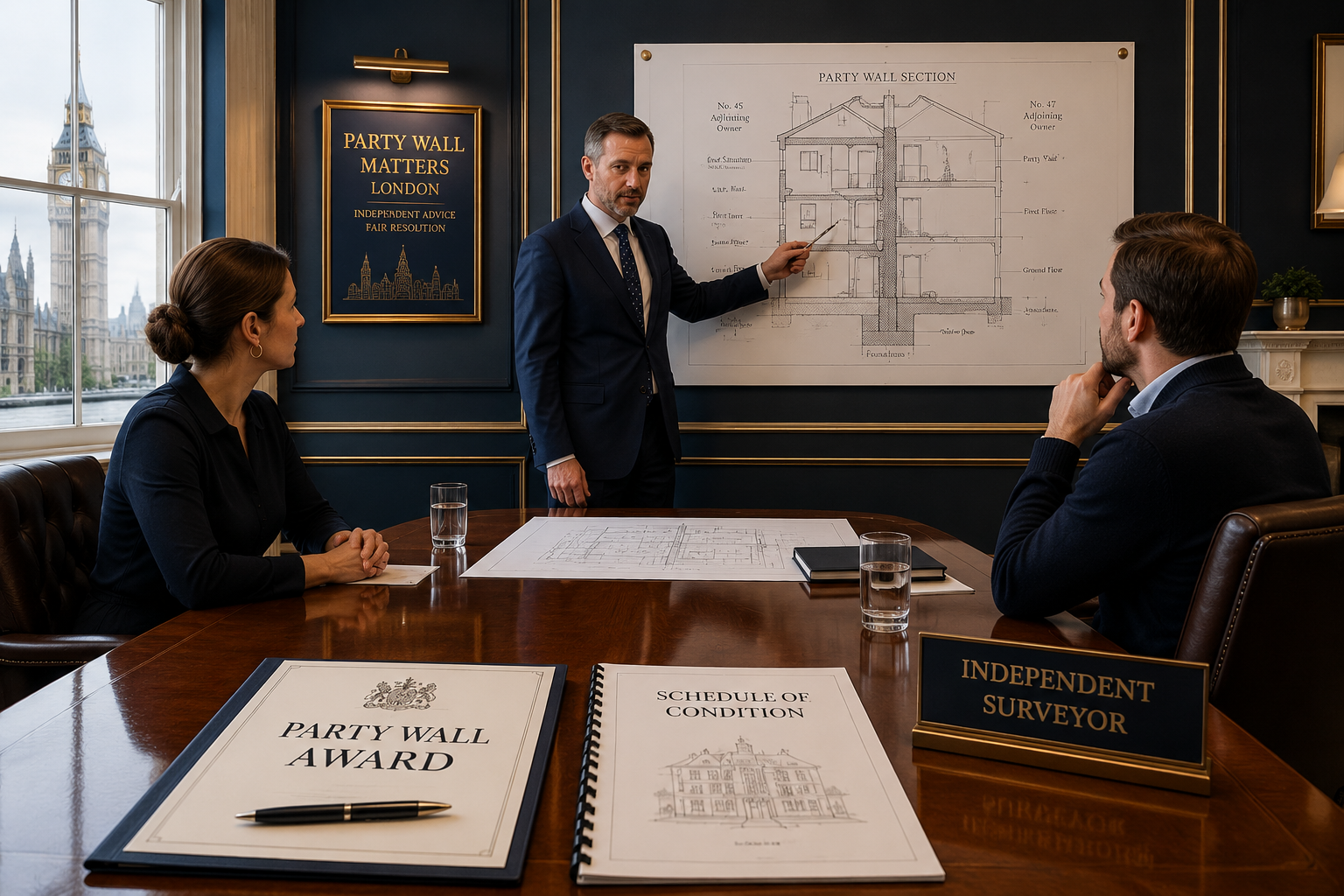
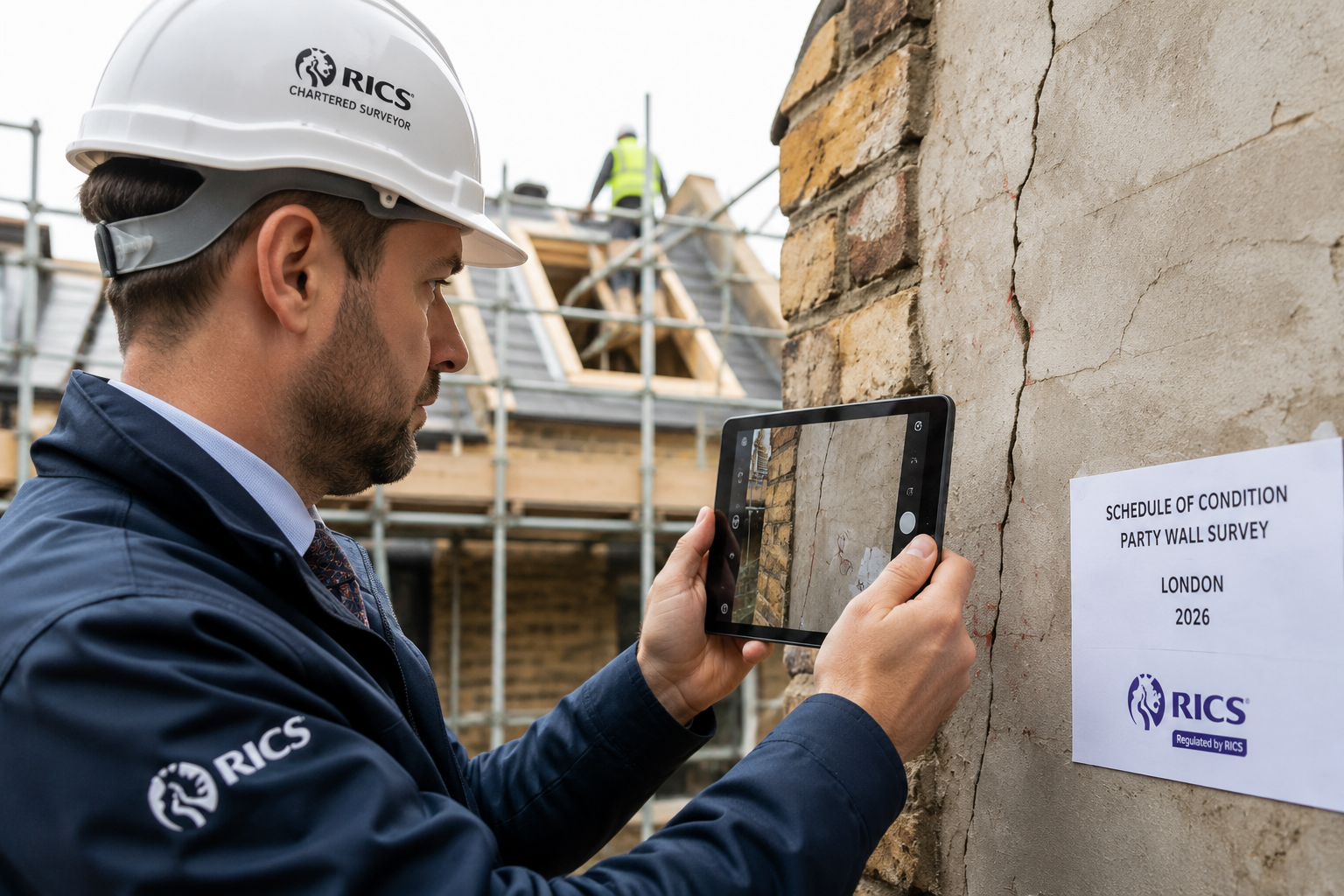
An independent expert surveyor has no financial or relational incentive to favour either party. This is especially important when the dispute involves a schedule of condition report — a document that records the pre-construction state of an adjoining property and is critical for resolving any subsequent damage claims.
A jointly appointed surveyor preparing a schedule of condition faces an inherent conflict: being thorough enough to protect the adjoining owner while not being so detailed as to create friction with the building owner who may be paying their fee. An independent expert has no such conflict.
2. ⚡ Faster Resolution of Contentious Disputes
Because the third surveyor's determination is binding, it bypasses the need for prolonged negotiation between party-appointed surveyors. In a 2026 construction market where programme delays translate directly into increased costs, this speed advantage is significant.
3. 📋 Professional Accountability Under RICS Framework
Independent expert surveyors operating under RICS guidance are subject to professional conduct requirements that provide both parties with meaningful accountability. [2] The sixth edition RICS guidance note accounts for current legislation, case law, and HM Government guides — ensuring that independent experts are working to the most current professional standards.
4. 💰 Cost Certainty Through Fault-Based Allocation
The fault-based fee allocation discretion available to independent expert surveyors creates a more transparent cost environment than joint appointments, where fee responsibility can be ambiguous. Parties who engage in good faith and follow the statutory process are less likely to face unexpected cost exposure.
5. 🏗️ Suitability for Complex 2026 Projects
For projects involving party wall shared chimneys, deep excavations, or multiple adjoining owners, the complexity demands an expert with specialist knowledge. Joint appointments are generally more appropriate for straightforward, amicable cases — not for the technically demanding renovation projects that characterise much of 2026's construction activity.
When Should Property Owners Appoint an Independent Expert?
Not every party wall matter requires an independent expert from day one. Here is a practical guide:
✅ Consider an independent expert when:
- The adjoining owner has expressed concerns or objections
- The project involves deep excavations, basement works, or structural alterations
- There is a history of neighbour disputes at the property
- The project affects multiple adjoining owners
- A previous joint appointment has broken down
- The building owner suspects the jointly appointed surveyor is not acting impartially
⚠️ A joint appointment may be sufficient when:
- Both parties have a cooperative relationship
- The works are minor and low-risk
- Both parties fully understand the Act and their rights
- There is no history of dispute
For those navigating neighbour disputes or uncertain about their obligations when a neighbour is carrying out boundary work, early professional advice is always recommended.
Choosing the Right Independent Expert Surveyor
When selecting an independent expert surveyor for a 2026 project, consider the following criteria:
- RICS membership or equivalent professional accreditation [2]
- Demonstrable experience in party wall disputes — not just general surveying [1]
- Listing on the UK Register of Expert Witnesses where relevant [3]
- Local knowledge — surveyors familiar with the specific area (whether West London, South West London, or Surrey) will have relevant experience with local property types
- Clear fee transparency and willingness to explain the fault-based allocation framework
- Track record in producing robust party wall awards that withstand scrutiny
Conclusion: Actionable Next Steps for 2026 Project Owners
The case for independent expert surveyors for party wall and building disputes in 2026 projects is compelling and grounded in both statutory law and professional best practice. Joint appointments have their place — but for any project with complexity, contention, or significant financial stakes, the structural impartiality of an independent expert is not a luxury. It is a necessity.
Here are the recommended next steps:
- Serve party wall notices early — ideally 2–4 months before planned works begin, to allow for the deemed dissent timeline and surveyor appointment process. [1]
- Understand your appointment options before dissent is triggered — review the party wall agreement process and the agreed surveyor alternative.
- Select the third surveyor jointly at the time of initial appointments, as required by Section 10 of the Act — do not wait for a dispute to arise. [1]
- Budget appropriately — include a 20–30% contingency above quoted surveyor fees for potential escalation. [1]
- Verify credentials — use the RICS directory [2] and the UK Register of Expert Witnesses [3] to confirm your independent expert's qualifications.
- Seek specialist advice early for complex projects involving excavations, loft conversions, or shared structural elements.
The 2026 construction landscape rewards those who plan ahead. Engaging the right independent expert surveyor from the outset is one of the most cost-effective investments a property owner can make.
References
[1] Party Wall Dispute – https://onlinearchitecturalservices.com/party-wall-dispute/
[2] Party Walls – https://www.ricsfirms.com/helplines/party-walls/
[3] Party Walls – https://www.jspubs.com/expert-witness/si/p/party-walls/
[4] Party Wall Surveys And Neighbour Disputes During 2026s Construction Uptick Rics Compliance Framework – https://nottinghillsurveyors.com/blog/party-wall-surveys-and-neighbour-disputes-during-2026s-construction-uptick-rics-compliance-framework