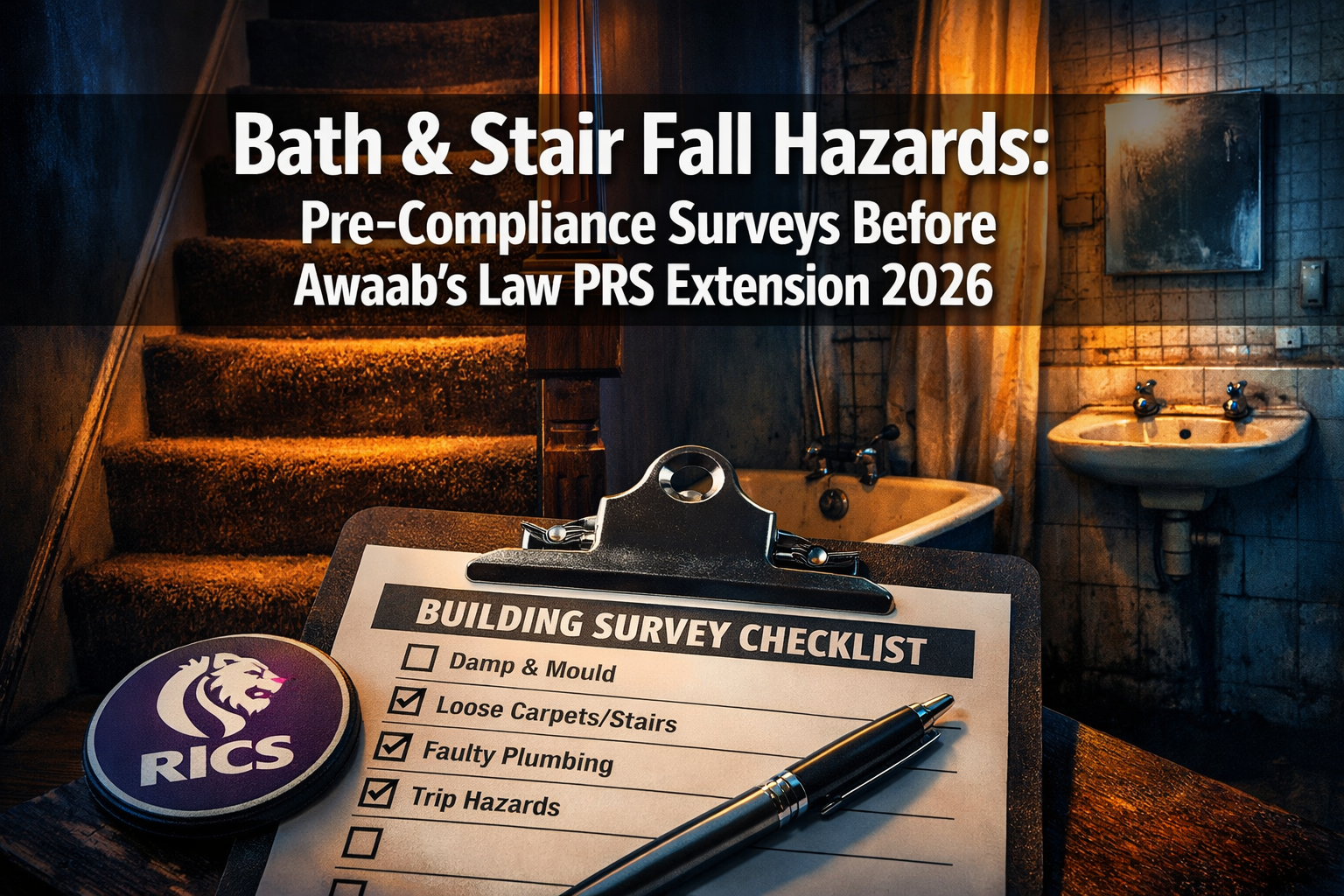

Falls on stairs kill more than 700 people every year in the UK and send over 300,000 to accident and emergency departments — yet the majority of private rental properties have never been formally assessed for the specific hazards that cause them. With Building Surveys for Bath and Stair Fall Hazards: Pre-Compliance Protocols Before Awaab's Law PRS Extension in May 2026 now a pressing priority, private landlords face a shrinking window to act before the legislation reshapes their legal obligations.
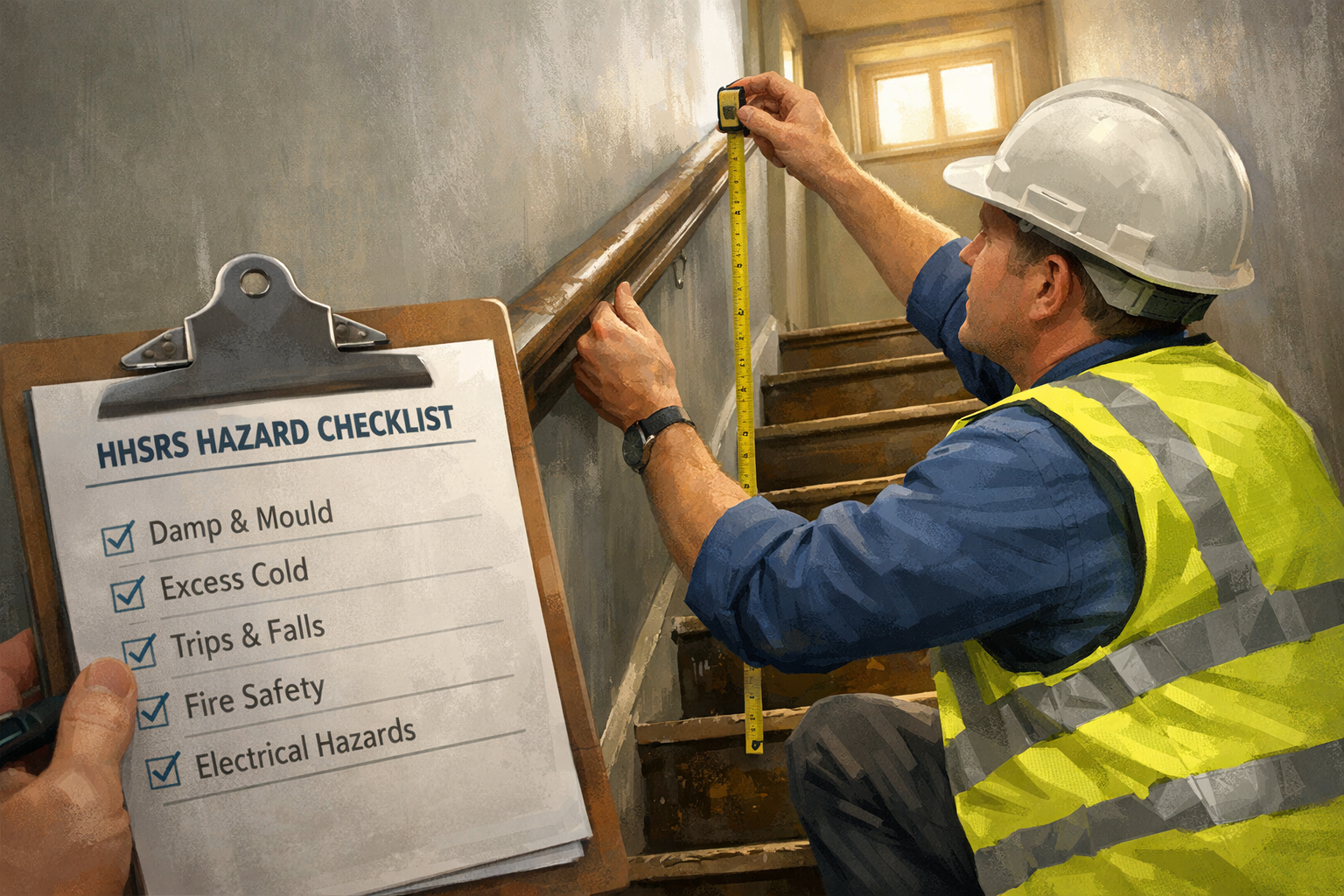
Awaab's Law — named after two-year-old Awaab Ishak, who died in 2020 following prolonged exposure to mould in a social rented home — is no longer confined to the social housing sector. Phase 2 of its rollout is expected to extend hazard-response obligations to the Private Rented Sector (PRS) in 2026, with falls associated with baths, level surfaces, stairs, and between-level transitions explicitly included in the regulated hazard categories [4]. For landlords managing older rental stock, the time to commission a thorough building survey is now — not after a notice of breach lands on the doormat.
Key Takeaways 📋
- Awaab's Law Phase 2 is anticipated to extend to the PRS in 2026, covering fall hazards on stairs, baths, and between levels [4].
- Level 3 Building Surveys are the most appropriate tool for identifying fall risks in older rental properties before compliance deadlines arrive.
- The HHSRS (Housing Health and Safety Rating System) framework underpins hazard assessment and must be understood by any landlord commissioning a survey.
- Proactive documentation — including a schedule of condition — can protect landlords from enforcement action and tenant claims.
- Most existing guidance targets social landlords; private landlords must adapt these protocols independently before sector-specific rules are confirmed.
What Awaab's Law Phase 2 Means for Private Landlords
The Shift from Social to Private Rented Sector
Awaab's Law was introduced through the Social Housing (Regulation) Act 2023 and initially applied only to social landlords. Phase 1 came into force in October 2025, requiring registered providers to investigate hazard reports within 14 days and begin emergency repairs within 24 hours [1]. Phase 2 is expected to broaden the scope significantly — and the PRS extension, anticipated in 2026, is where private landlords must focus their attention [2].
💬 "Phase 2 will introduce additional hazard categories — including falls on stairs and in bathrooms — that landlords must investigate and remediate within defined timeframes." [2]
The regulated fall hazards under Phase 2 specifically include:
| Hazard Type | Location |
|---|---|
| Falls on stairs | Internal staircases, communal stairwells |
| Falls associated with baths | Bathrooms, wet rooms, en-suites |
| Falls on level surfaces | Hallways, kitchens, living areas |
| Falls between levels | Landings, mezzanines, split-level layouts |
Source: Gov.uk Awaab's Law Guidance [4]
Why the PRS Is Particularly Exposed
Private rental properties — especially Victorian and Edwardian terraces common across London and the South East — were built long before modern safety standards existed. Steep staircases with narrow treads, shallow risers, absent or inadequate handrails, and bathrooms with cast-iron baths and no slip-resistant surfaces are standard features in millions of rental homes [3].
Unlike social landlords, who have compliance teams and asset management software, most private landlords manage their portfolios independently. Many are unaware that HHSRS Category 1 hazards — the most serious classification — can include poorly maintained stairs and bathrooms. Under the incoming PRS extension, ignorance will not be a defence [5].
The Role of Building Surveys for Bath and Stair Fall Hazards: Pre-Compliance Protocols Before Awaab's Law PRS Extension in May 2026
Why a Level 3 Survey Is the Right Tool
Not all property surveys are equal. A basic Level 1 Condition Report or even a Level 2 HomeBuyer Report will not provide the depth of assessment needed to identify fall hazards under HHSRS criteria. For compliance purposes, a Level 3 Building Survey — the most comprehensive residential survey available — is the appropriate starting point.
A Level 3 Building Survey will:
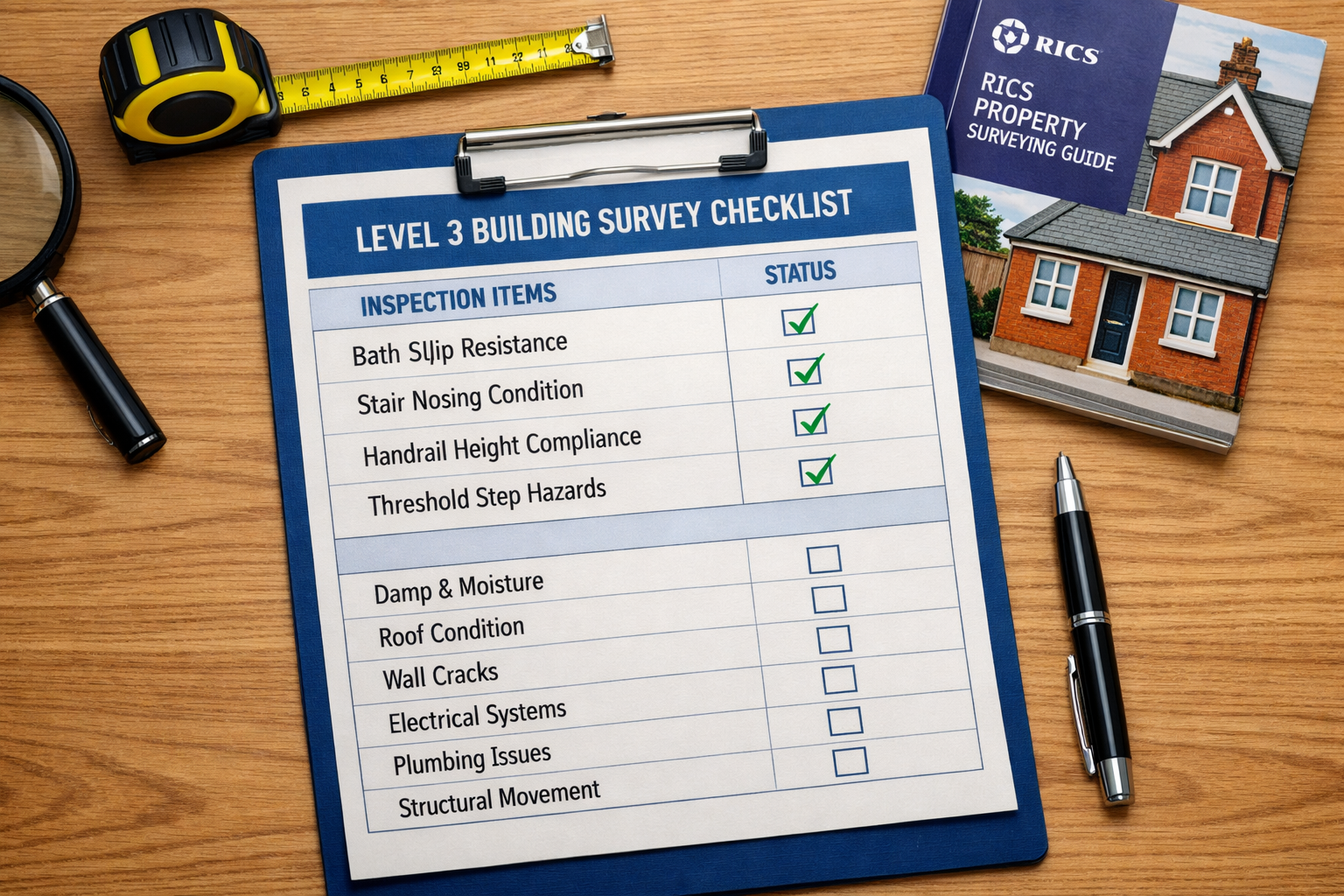
- ✅ Assess the structural condition of staircases, including fixings, treads, risers, and balustrades
- ✅ Evaluate bathroom fixtures for slip resistance, stability, and accessibility
- ✅ Identify threshold hazards between rooms and floor level changes
- ✅ Document handrail height and continuity against current standards
- ✅ Flag lighting deficiencies that increase fall risk on stairs and landings
- ✅ Provide photographic evidence and condition ratings for each element
For landlords with multiple properties or complex layouts, a specific defect report targeting bathrooms and staircases specifically can be a cost-effective alternative to a full building survey.
HHSRS and Fall Hazard Scoring: What Surveyors Look For
The Housing Health and Safety Rating System provides the technical framework for assessing hazards. Surveyors calculate a hazard score based on the likelihood of an occurrence and the potential harm outcome. For fall hazards, the key HHSRS categories are:
- Hazard 3: Falls associated with baths
- Hazard 4: Falls on level surfaces
- Hazard 5: Falls on stairs, steps, and ramps
- Hazard 6: Falls between levels
A Category 1 hazard (score of 1,000 or above) triggers a duty on local authorities to take enforcement action. Under Awaab's Law PRS extension, landlords may face mandatory repair timeframes similar to those already imposed on social landlords [1][4].
Pre-Compliance Protocols: The Proactive Landlord Checklist
Step 1 — Commission a Building Survey Before the Deadline
The single most important action any private landlord can take in 2026 is to commission a Level 3 Building Survey from a qualified chartered surveyor before the PRS extension takes effect. This creates a baseline record of condition and demonstrates good faith to regulators.
Key timing considerations:
- Surveys should be booked at least 8–12 weeks before any anticipated compliance deadline
- Allow additional time for remediation works to be completed and re-inspected
- Ensure the surveyor is RICS-accredited and familiar with HHSRS methodology
Step 2 — Conduct a Targeted Bathroom Assessment
Bathrooms are among the highest-risk rooms in any rental property. A targeted pre-compliance bathroom assessment should cover:
🛁 Bath and Shower Area Checks:
- Slip resistance rating of floor tiles and bath surfaces (minimum R9 classification recommended)
- Stability and fixing condition of the bath or shower tray
- Presence and condition of grab rails or handholds
- Height and accessibility of taps and controls
- Condition of bath panel and surrounding floor for water damage or instability
🚿 Wet Room and Threshold Checks:
- Level threshold access (no raised lips exceeding 15mm)
- Drainage gradient and slip-resistant coating condition
- Door width and swing direction (inward-opening doors increase fall risk)
Step 3 — Conduct a Targeted Staircase Assessment
Staircases in older rental properties are a primary source of HHSRS fall hazards. The pre-compliance staircase checklist should include:
🪜 Structural and Dimensional Checks:
- Tread depth (minimum 220mm recommended under Building Regulations Part K)
- Riser height consistency (maximum 220mm; inconsistent risers are a major hazard)
- Condition of treads — check for worn carpet, loose boards, or damaged nosings
- Balustrade and spindle integrity — no gaps exceeding 100mm
🖐️ Handrail Checks:
- Height between 900mm and 1,000mm from pitch line
- Continuous run from top to bottom without interruption
- Secure fixing to wall or newel posts — no movement under lateral load
- Graspable profile (circular or oval section preferred)
💡 Lighting and Visibility Checks:
- Adequate lux levels at tread level (minimum 50 lux recommended)
- Light switches accessible at both top and bottom of stairs
- No shadows or blind spots created by stair geometry
Step 4 — Prepare a Schedule of Condition
A schedule of condition prepared alongside the building survey creates a legally defensible record of the property's state at a specific point in time. This is particularly valuable for landlords who:
- Have recently completed remediation works and want to document improvements
- Are managing older properties where some hazards may be inherent to the building's age
- Face potential disputes with tenants or local authority enforcement officers
The schedule should include dated photographs, condition ratings, and specific measurements for all staircase and bathroom elements assessed.
Step 5 — Prioritise Remediation by Hazard Score
Not every defect identified in a building survey requires immediate action. Landlords should work with their surveyor to triage findings by HHSRS hazard score:
| Priority Level | HHSRS Score | Action Required |
|---|---|---|
| 🔴 Immediate | Category 1 (1,000+) | Remediate before tenancy or within days |
| 🟠 Urgent | Category 2 (500–999) | Plan and complete within 4–8 weeks |
| 🟡 Planned | Category 2 (below 500) | Include in next planned maintenance cycle |
| 🟢 Monitor | Below threshold | Document and review at next survey |
Building Surveys for Bath and Stair Fall Hazards: Pre-Compliance Protocols Before Awaab's Law PRS Extension in May 2026 — Documentation and Reporting Standards
What Survey Reports Must Include in 2026
As Awaab's Law extends to the PRS, the expectations placed on survey reports are increasing. A compliant building survey report for fall hazard assessment should now include [6]:
- HHSRS hazard identification with explicit reference to fall hazard categories
- Photographic evidence of each defect, with location references
- Condition ratings (typically using a 1–3 scale: satisfactory, requires attention, urgent)
- Recommended remediation actions with indicative timeframes
- Compliance commentary referencing relevant Building Regulations and HHSRS thresholds
- Surveyor's professional opinion on whether hazards meet Category 1 or Category 2 thresholds
Surveyors preparing reports for landlords in the PRS should be aware that these documents may be scrutinised by local authority enforcement officers or used in legal proceedings [5][6]. Engaging a surveyor with experience in expert witness reporting can add significant weight to the documentation.
The Importance of Dilapidations Records
For landlords managing properties under long-term tenancies, maintaining dilapidation survey records creates a continuous audit trail of condition. This is particularly relevant where tenants have modified bathrooms or staircases — for example, removing handrails, fitting non-compliant flooring, or blocking natural light to stairwells.
A dilapidations record also supports landlords in recovering costs for tenant-caused deterioration that creates fall hazards, separating this from the landlord's own maintenance obligations under Awaab's Law.
Common Fall Hazards Found in Older PRS Properties
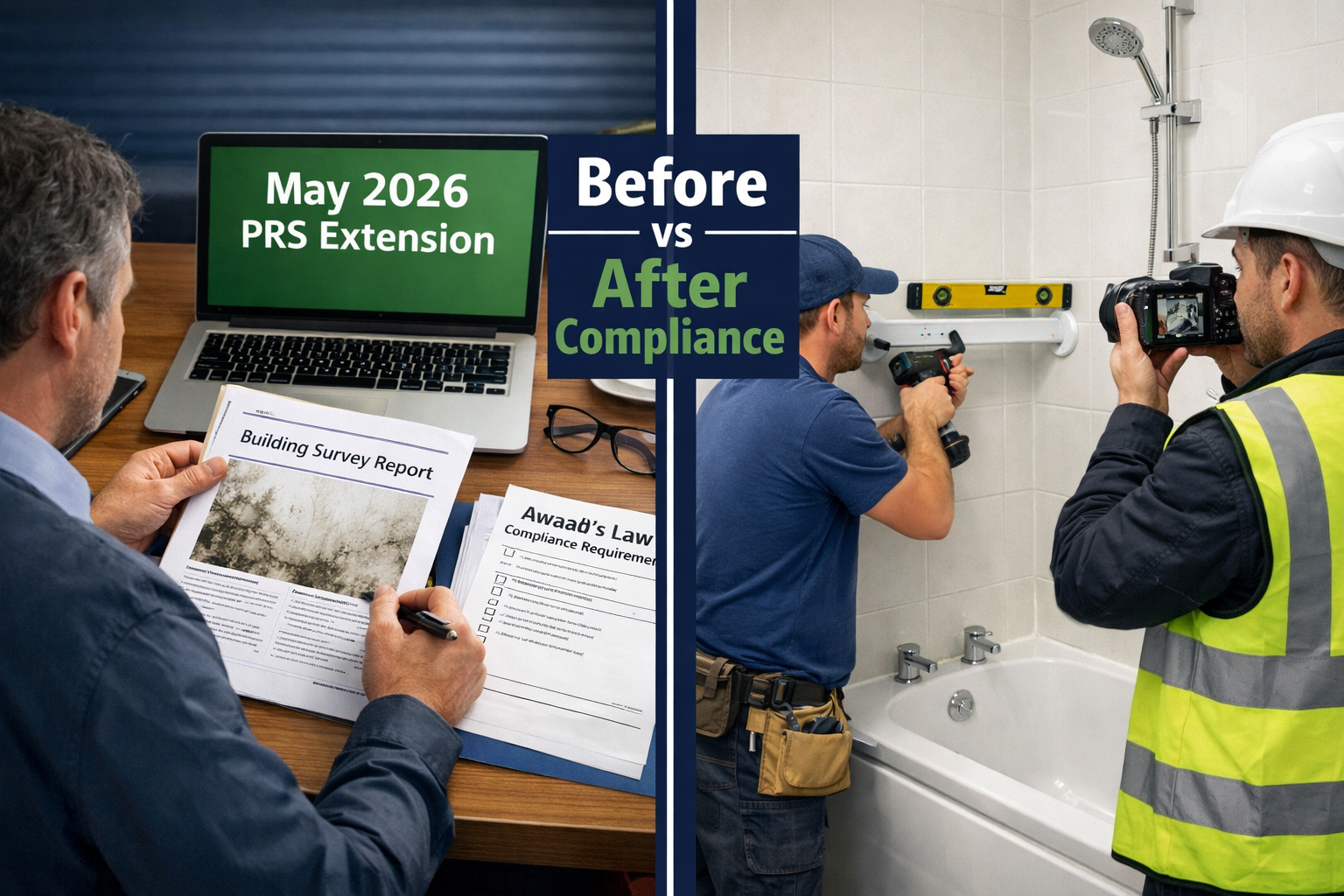
The following defects appear most frequently in Level 3 Building Surveys of Victorian and Edwardian rental properties across London and the South East [3][5]:
🏠 Bathrooms:
- Smooth ceramic floor tiles with no slip-resistant coating (extremely common in pre-1980 properties)
- Cast-iron baths with no grab rails and high sides requiring significant step-over height
- Loose or cracked bath panels concealing structural instability
- Damaged or absent threshold strips between bathroom and hallway
🪜 Staircases:
- Worn or loose stair carpet creating trip hazards on nosings
- Inconsistent riser heights in staircases that have been altered over time
- Absence of handrails on one or both sides of narrow staircases
- Inadequate lighting, particularly in basement or attic stair configurations
- Balustrade spindles with gaps exceeding 100mm (a risk for young children)
🚪 Between-Level Transitions:
- Raised thresholds at bedroom doorways on split-level floors
- Uneven surfaces at the top and bottom of staircases
- Step-down access to rear gardens or extensions without adequate guarding
Engaging the Right Professional Support
Choosing a Chartered Surveyor for Fall Hazard Compliance
Not all surveyors have equal experience with HHSRS assessments. When selecting a professional for pre-compliance building surveys, landlords should look for:
- RICS membership (Royal Institution of Chartered Surveyors)
- Demonstrated experience with HHSRS hazard assessments
- Familiarity with Awaab's Law and its implications for the PRS
- Ability to produce reports suitable for regulatory and legal purposes
A structural survey from a London-based chartered surveyor with specific experience in older residential stock is particularly valuable for properties built before 1950, where staircase and bathroom configurations are most likely to present compliance challenges.
Regional Considerations
Fall hazard surveys are particularly urgent for landlords managing properties in areas with high concentrations of older rental stock. London boroughs — including those covered by chartered surveyors in North London and East London — have some of the highest proportions of pre-war rental housing in England, making proactive survey commissioning especially time-sensitive.
Conclusion: Act Before the Law Acts for You
The extension of Awaab's Law to the Private Rented Sector in 2026 is not a distant regulatory possibility — it is an imminent legal reality that landlords must prepare for now. Building Surveys for Bath and Stair Fall Hazards: Pre-Compliance Protocols Before Awaab's Law PRS Extension in May 2026 represent the most effective tool available to landlords who want to get ahead of enforcement rather than react to it.
Actionable Next Steps for Private Landlords in 2026:
- Book a Level 3 Building Survey with a RICS-accredited chartered surveyor who understands HHSRS methodology — do this immediately, before compliance deadlines are confirmed.
- Request a targeted bathroom and staircase assessment as part of the survey scope, with explicit HHSRS hazard scoring.
- Commission a Schedule of Condition to create a dated, evidenced baseline of your property's state.
- Triage remediation works by hazard priority — address Category 1 hazards without delay.
- Maintain a dilapidations record to distinguish landlord obligations from tenant-caused deterioration.
- Engage a surveyor experienced in regulatory reporting if your properties are older, complex, or already subject to local authority scrutiny.
The cost of a building survey is a fraction of the cost of an enforcement notice, a civil claim, or the reputational damage that follows a tenant injury. In 2026, proactive compliance is not just good practice — it is the only rational strategy.
References
[1] Awaabs Law Comes Into Force What Does It Mean For Construction – https://www.trowers.com/insights/2025/november/awaabs-law-comes-into-force-what-does-it-mean-for-construction
[2] Awaabs Law Phase 2 Is Coming What Social Landlords Need To Know About Additional Hazard Compliance In 2026 – https://www.mobysoft.com/resources/blogs/awaabs-law-phase-2-is-coming-what-social-landlords-need-to-know-about-additional-hazard-compliance-in-2026/
[3] Building Surveys For Excess Cold And Fire Hazards In Prs Post Awaabs Law 2026 Protocols For Private Landlord Compliance – https://nottinghillsurveyors.com/blog/building-surveys-for-excess-cold-and-fire-hazards-in-prs-post-awaabs-law-2026-protocols-for-private-landlord-compliance
[4] Awaabs Law Guidance For Social Landlords Timeframes For Repairs In The Social Rented Sector – https://www.gov.uk/government/publications/awaabs-law-guidance-for-social-landlords/awaabs-law-guidance-for-social-landlords-timeframes-for-repairs-in-the-social-rented-sector
[5] Awaabs Law Extensions To Prs In 2026 Party Wall And Building Survey Protocols For New Hazard Categories – https://nottinghillsurveyors.com/blog/awaabs-law-extensions-to-prs-in-2026-party-wall-and-building-survey-protocols-for-new-hazard-categories
[6] Awaabs Law And Surveyors What Your Reports Must Include In 2026 – https://goreport.com/awaabs-law-and-surveyors-what-your-reports-must-include-in-2026/