
{"cover":"Professional landscape format (1536×1024) hero image featuring bold text overlay 'Explosion and Structural Collapse Hazards Under Awaab's Law 2026: Level 3 Survey Essentials for Rental Properties' in extra large 70pt white sans-serif font with dark gradient shadow, positioned in upper third. Background shows detailed cutaway architectural view of a multi-story rental property building with visible structural elements including steel beams, load-bearing walls, foundation, and gas piping systems. Overlaid transparent warning symbols for explosion and collapse hazards. Color scheme: deep navy blue, safety orange, white accents. High contrast, editorial quality, technical architectural aesthetic with professional surveying equipment visible in foreground.","content":["Landscape format (1536×1024) detailed technical illustration showing a Level 3 building survey in progress inside a rental property, featuring a chartered surveyor in high-visibility vest using laser measurement equipment and thermal imaging camera to inspect structural wall cracks, ceiling joints, and foundation settlement. Split-screen composition showing normal view on left and thermal imaging revealing hidden structural defects on right. Clipboard with RICS survey checklist visible, structural diagrams on tablet screen, measuring tape extended across wall crack. Professional lighting, technical documentation aesthetic, safety equipment prominent.","Landscape format (1536×1024) infographic-style visualization displaying emergency response timeline flowchart for structural collapse and explosion hazards under Awaab's Law 2026. Central vertical timeline showing 10-day investigation period marked with calendar icons, branching into two pathways: 5-day remediation timeline for significant hazards (left branch in amber) and 24-hour emergency response for imminent collapse (right branch in red). Each pathway shows icons representing investigation commencement, structural assessment, remediation work, and alternative accommodation provision. Clean corporate design with clock symbols, construction worker icons, and warning triangles. Professional color coding: navy blue background, amber and red accent paths, white text annotations.","Landscape format (1536×1024) detailed cross-section technical diagram of a typical UK rental property showing common explosion and structural collapse hazard points marked with numbered warning symbols. Visible elements include: aging gas boiler with corroded pipes (explosion risk), cracked load-bearing wall with settlement indicators, deteriorating timber floor joists, compromised foundation with subsidence cracks, outdated electrical panel near gas meter, and roof structure with inadequate lateral restraint. Each hazard point connected to annotation boxes explaining HHSRS Category 1 classification criteria. Architectural blueprint aesthetic with measurement scales, professional surveying notation, safety color coding (red for critical, amber for significant hazards). Technical drawing style with realistic rendering."]"}
Social housing landlords face a seismic shift in 2026: structural collapse and explosion hazards will become legally regulated significant hazards under Phase 2 of Awaab's Law, requiring investigation within 10 working days and remediation within 5 working days—or landlords must provide alternative accommodation at their own expense. For chartered surveyors conducting Level 3 surveys on rental properties, this expansion demands immediate protocol updates that integrate RICS standards with emergency remediation timelines. Understanding Explosion and Structural Collapse Hazards Under Awaab's Law 2026: Level 3 Survey Essentials for Rental Properties is no longer optional—it's a compliance imperative.
The legislation, originally focused on damp and mould following the tragic death of two-year-old Awaab Ishak, now encompasses six distinct hazard categories. Structural collapse and explosions join excess cold/heat, falls, fire, and electrical hazards as formally defined significant hazards requiring landlord action [8]. This article provides surveyors with the essential framework to identify, document, and report these critical hazards within the tight timeframes mandated by 2026 regulations.
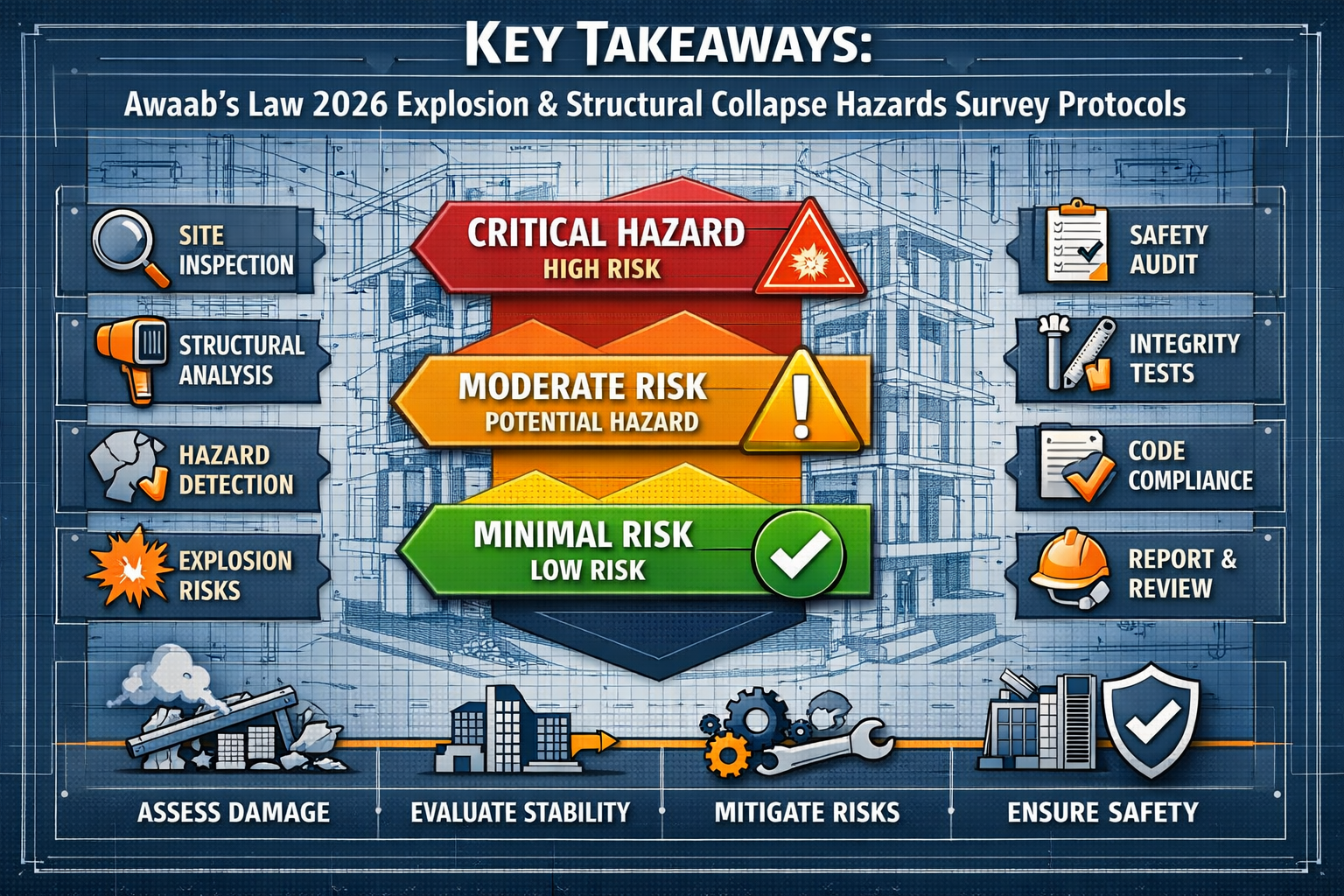
Key Takeaways
- Phase 2 Implementation: Structural collapse and explosion hazards become regulated significant hazards in 2026, with investigation required within 10 working days of landlord awareness [2]
- Critical Remediation Timeline: All safety works must be completed within 5 working days following investigation, or landlords must provide alternative accommodation [2]
- Person-Centred Assessment: Traditional HHSRS Category 2 defects can qualify as significant hazards if tenants are elderly, immunocompromised, or otherwise vulnerable [1]
- Emergency vs. Significant Distinction: Imminent collapse risks require 24-hour remediation, while significant hazards allow 5 working days [2]
- Level 3 Survey Integration: Surveyors must adopt enhanced protocols combining structural engineering assessments with vulnerability considerations
Understanding Awaab's Law 2026 Phase 2 Expansion
The Legislative Framework
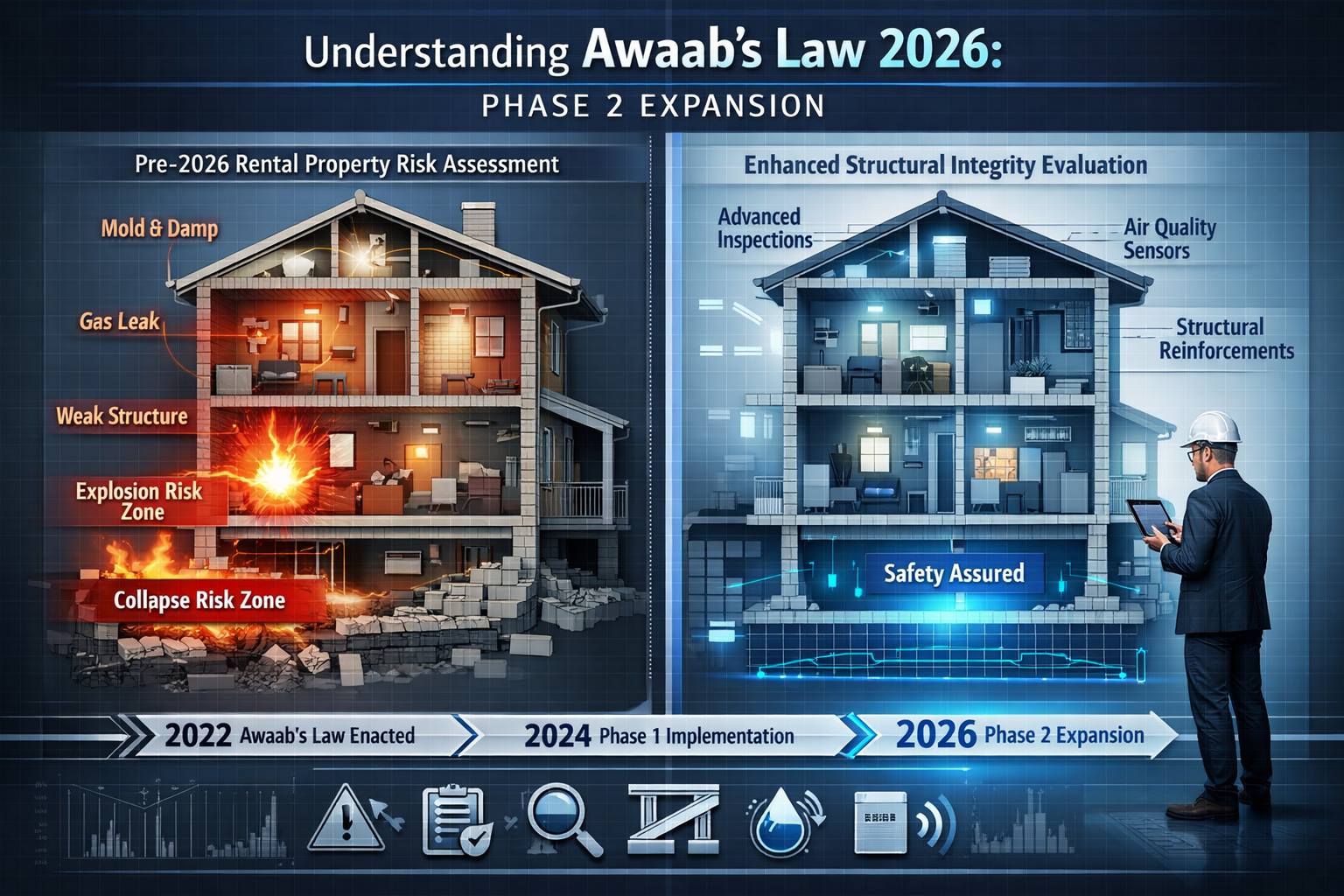
Awaab's Law represents the most significant reform to social housing safety standards in decades. While Phase 1 launched in October 2025 focusing exclusively on damp and mould, Phase 2 is scheduled to expand "later in 2026" to include structural collapse and explosion hazards, though the exact implementation date remains to be confirmed [8]. This phased approach allows landlords and surveyors time to develop compliant systems, but the window for preparation is rapidly closing.
The legislation applies specifically to the social rented sector, covering local authority housing and registered providers of social housing. However, the standards being established are likely to influence best practices across the entire private rented sector (PRS), making compliance protocols essential knowledge for all residential structural engineers in London and beyond.
Defining Structural Collapse and Explosion Hazards
Under Awaab's Law, structural collapse hazards encompass defects that compromise the structural integrity of a building, including:
- Progressive collapse risks from inadequate lateral restraint
- Foundation settlement causing load-bearing wall failure
- Deteriorated structural elements (beams, columns, joists)
- Inadequate structural alterations by previous owners
- Roof structure defects presenting collapse potential
Explosion hazards specifically relate to:
- Gas installation defects including corroded pipes and faulty connections
- Inadequate ventilation around gas appliances
- Proximity issues between electrical and gas services
- Aging boiler systems without proper maintenance
- Improper fuel storage in residential settings
Both hazard categories must result from defects, disrepair, or lack of maintenance to fall within the legislation's scope [1]. This distinction is crucial for surveyors conducting assessments.
The Critical Timeframes
The legislation establishes three distinct timelines that surveyors must understand:
| Hazard Classification | Investigation Start | Remediation Completion | Alternative Accommodation |
|---|---|---|---|
| Emergency Hazard | Immediate | 24 hours | Immediate provision required |
| Significant Hazard | 10 working days | 5 working days | Required if not completed |
| Long-term Prevention | 10 working days | Initiate within 5 days; complete within 12 weeks | Not typically required |
Day zero is the date the landlord becomes aware of the hazard, with day one beginning the following working day [2]. This awareness trigger makes accurate initial reporting by surveyors absolutely critical.
Level 3 Survey Protocols for Explosion and Structural Collapse Hazards
Enhanced Investigation Requirements
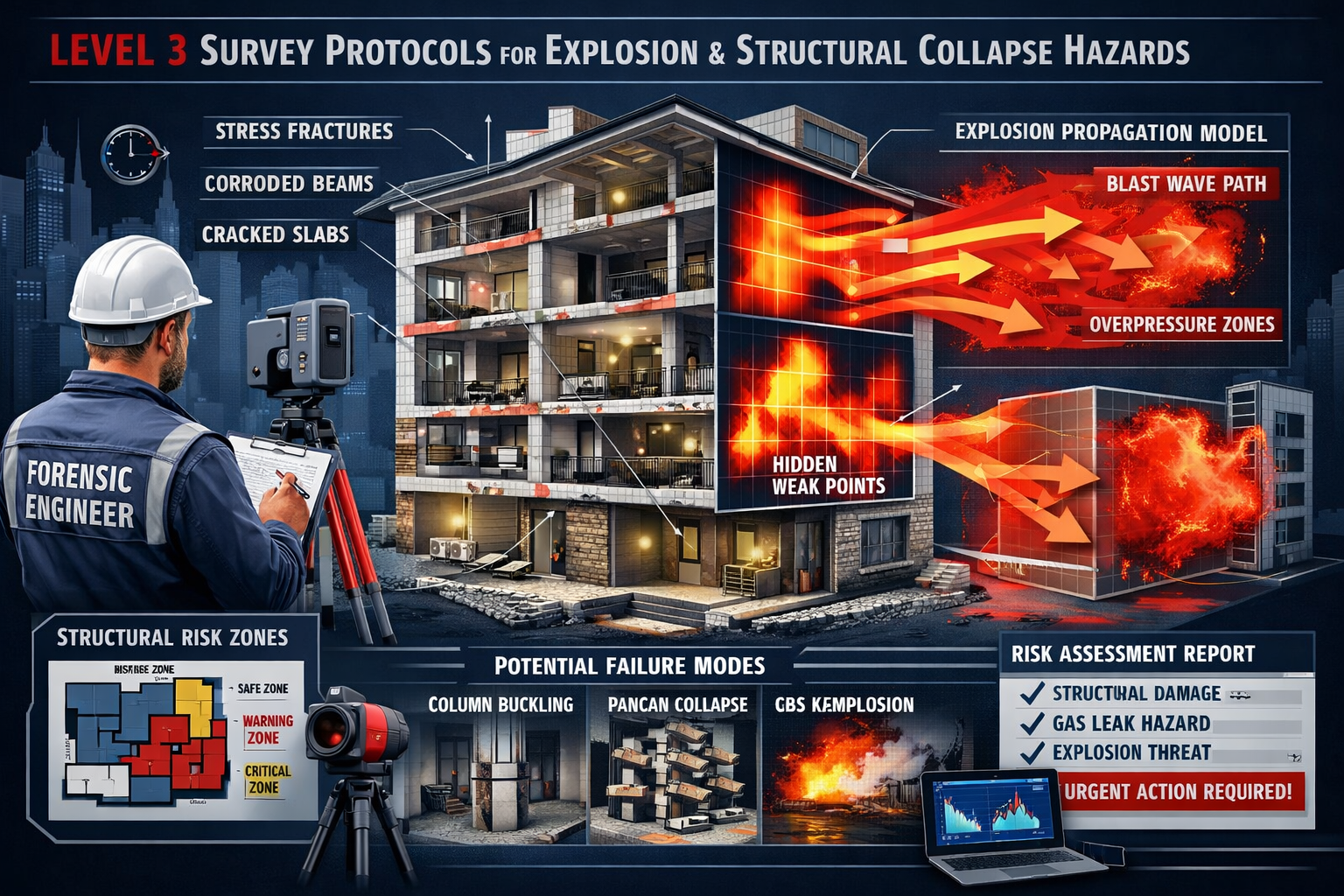
Traditional Level 3 building surveys (formerly called full structural surveys) must now integrate specific investigation protocols for Explosion and Structural Collapse Hazards Under Awaab's Law 2026: Level 3 Survey Essentials for Rental Properties. These enhanced protocols include:
Structural Collapse Assessment Components:
-
Foundation and Subsidence Analysis 📐
- Visual inspection of external ground levels
- Internal floor level measurements
- Crack mapping and monitoring recommendations
- Drainage system assessment
- Soil condition evaluation where accessible
-
Load-Bearing Element Evaluation
- Identification of all structural walls and columns
- Assessment of alterations and their structural adequacy
- Timber condition surveys for floor and roof joists
- Steel and concrete element inspection
- Lateral restraint verification
-
Progressive Collapse Risk Indicators
- Wall-to-floor connections
- Roof structure tie-down adequacy
- Masonry bond condition
- Historical alteration documentation
- Structural movement evidence
Explosion Hazard Assessment Components:
-
Gas Installation Inspection 🔥
- Visual assessment of all accessible pipework
- Age and condition of gas appliances
- Ventilation adequacy around appliances
- Proximity to electrical services
- Evidence of corrosion or damage
-
Electrical-Gas Interface Evaluation
- Consumer unit location relative to gas meter
- Bonding and earthing adequacy
- Separation distances compliance
- Potential ignition source identification
-
Ventilation and Combustion Air Assessment
- Natural ventilation provision
- Mechanical ventilation functionality
- Flue condition and termination
- Air brick condition and clearance
Surveyors working across chartered surveyors Surrey and chartered surveyors Buckinghamshire have noted significant regional variations in building age and construction methods, requiring tailored assessment approaches.
Person-Centred Vulnerability Assessment
A revolutionary aspect of Awaab's Law is the requirement for person-centred assessments that consider tenant-specific vulnerabilities [1]. This means surveyors must now consider:
- Age-related factors: Elderly tenants are more vulnerable to structural collapse injuries
- Health conditions: Immunocompromised individuals face greater risks from explosion-related injuries
- Mobility limitations: Tenants with disabilities may be unable to evacuate quickly
- Household composition: Families with young children require heightened protection
This approach means a structural defect that would traditionally score as HHSRS Category 2 (non-urgent) can be elevated to a significant hazard requiring immediate action if vulnerable tenants are present. Surveyors must document tenant demographics and health considerations in their reports, though this information is typically provided by the landlord rather than obtained directly by the surveyor.
Documentation and Reporting Standards
Reports addressing Explosion and Structural Collapse Hazards Under Awaab's Law 2026: Level 3 Survey Essentials for Rental Properties must include:
Mandatory Report Sections:
-
Executive Summary with Hazard Classification
- Clear categorization: Emergency, Significant, or Long-term Prevention
- Immediate action recommendations
- Timeline compliance requirements
-
Detailed Hazard Descriptions
- Location and extent of defects
- Photographic evidence with annotations
- Measurement data and calculations
- HHSRS scoring with vulnerability adjustments
-
Remediation Specifications
- Detailed scope of required works
- Compliance with Building Regulations
- Alternative accommodation triggers
- Estimated completion timeframes
-
Compliance Pathway Recommendations
- Investigation timeline compliance
- Remediation timeline compliance
- Monitoring and follow-up requirements
- Documentation retention protocols
Surveyors should reference established specific defect report formats while incorporating the additional Awaab's Law requirements.
Integrating RICS Standards with Emergency Remediation Timelines
RICS Professional Standards Alignment
The Royal Institution of Chartered Surveyors (RICS) maintains professional standards that must be reconciled with Awaab's Law timelines. Key considerations include:
RICS Guidance Note: Surveys of Residential Property (4th Edition)
This guidance must now be interpreted through the lens of emergency timelines. Surveyors should:
- Prioritize immediate hazard identification during initial site visits
- Implement rapid reporting protocols for emergency and significant hazards
- Maintain professional indemnity insurance covering accelerated timeline work
- Document decision-making processes thoroughly to demonstrate compliance
Conflict Resolution Between Standards
When RICS standards suggest extended investigation periods (e.g., crack monitoring over 12 months), but Awaab's Law requires 10-day investigation completion, surveyors must:
- Complete immediate assessment within statutory timeframe
- Provide preliminary findings and recommendations
- Recommend ongoing monitoring as separate follow-up work
- Clearly distinguish between immediate hazard remediation and long-term prevention
Complex Structural Works Protocol
For structural issues requiring extensive remediation (such as underpinning or major structural alterations), Awaab's Law provides a specific protocol [2]:
12-Week Extended Timeline Conditions:
- Landlord must initiate work within 5 working days of investigation conclusion
- Substantive work must commence no later than 12 weeks after investigation
- Tenant must be kept informed throughout the process
- Alternative accommodation may still be required if the property is uninhabitable
This extended timeline recognizes that complex structural works cannot always be completed within 5 days, but it maintains pressure on landlords to act swiftly. Surveyors must clearly identify when this protocol applies and document the justification in their reports.
Emergency vs. Significant Hazard Differentiation
The distinction between emergency and significant hazards is critical for Explosion and Structural Collapse Hazards Under Awaab's Law 2026: Level 3 Survey Essentials for Rental Properties:
Emergency Hazard Indicators:
- ✅ Visible signs of imminent structural collapse (active cracking, bulging walls)
- ✅ Gas leaks or strong gas odors
- ✅ Severely compromised load-bearing elements
- ✅ Immediate risk to life or serious injury
- ✅ Structural movement occurring during inspection
Significant Hazard Indicators:
- ⚠️ Progressive structural deterioration without imminent collapse
- ⚠️ Gas installation defects requiring repair but not leaking
- ⚠️ Inadequate structural support requiring reinforcement
- ⚠️ Foundation settlement requiring monitoring and intervention
- ⚠️ Corrosion or deterioration presenting medium-term risk
Surveyors must exercise professional judgment in making this distinction, as it directly impacts the remediation timeline. When in doubt, classifying a hazard as emergency provides greater tenant protection and legal compliance.
Practical Implementation for Rental Property Surveys
Pre-Survey Preparation Checklist
Before conducting Level 3 surveys on rental properties in 2026, surveyors should:
Client Briefing Requirements:
- Confirm landlord awareness of Awaab's Law obligations
- Establish emergency contact protocols for immediate hazard reporting
- Agree on accelerated reporting timelines for significant hazards
- Clarify tenant vulnerability information provision
- Confirm scope includes explosion and structural collapse assessment
Equipment and Resources:
- Gas detection equipment (for preliminary assessment only—full gas safety checks require Gas Safe registration)
- Structural measurement tools (laser levels, crack width gauges)
- Thermal imaging cameras for hidden defect detection
- Comprehensive photographic equipment
- Digital reporting systems for rapid report generation
Surveyors operating across chartered surveyors Hammersmith and chartered surveyors London should maintain updated local authority contact information for emergency hazard reporting.
On-Site Assessment Methodology
Systematic Inspection Sequence:
-
External Envelope Assessment (30-45 minutes)
- Foundation and ground level inspection
- External wall condition and cracking
- Roof structure external indicators
- Drainage and ground conditions
- External gas meter and pipework
-
Internal Structural Assessment (60-90 minutes)
- Floor level surveys in all rooms
- Wall crack mapping and measurement
- Ceiling condition and structural connections
- Staircase stability and fixings
- Evidence of previous alterations
-
Services and Explosion Hazard Assessment (30-45 minutes)
- Gas appliance location and condition
- Pipework routing and condition
- Ventilation provision assessment
- Electrical-gas separation verification
- Boiler and heating system age/condition
-
Roof Space and Upper Structure (30-45 minutes)
- Roof structure condition and adequacy
- Lateral restraint verification
- Timber condition assessment
- Water ingress evidence
- Structural alteration evidence
Real-Time Hazard Identification:
When emergency or significant hazards are identified during inspection, surveyors should:
- Immediately inform the client via phone call (documented in writing within 24 hours)
- Photograph and document the hazard comprehensively
- Advise on immediate safety measures (e.g., evacuating affected areas)
- Recommend specialist involvement where appropriate (structural engineers, Gas Safe engineers)
- Issue preliminary findings within 24-48 hours for emergency hazards
Post-Survey Reporting and Follow-Up
Accelerated Reporting Protocols:
For properties with identified explosion or structural collapse hazards:
- Emergency hazards: Verbal notification same day, written report within 24 hours
- Significant hazards: Written report within 3-5 working days maximum
- No significant hazards: Standard reporting timeline (7-10 working days)
Report Distribution and Compliance Tracking:
Surveyors should implement systems to:
- Track report delivery dates to establish landlord awareness
- Provide clear compliance timeline calculations in reports
- Offer follow-up inspection services to verify remediation
- Maintain detailed records for potential legal proceedings
The integration of expert witness report standards ensures reports are litigation-ready if disputes arise regarding hazard classification or remediation adequacy.
Regional Considerations and Case Studies
Geographic Variations in Hazard Prevalence
Different regions exhibit distinct patterns of structural and explosion hazards:
Urban London Areas (chartered surveyors North West London, chartered surveyors Camden)
- Higher prevalence of Victorian/Edwardian terraced housing with aging gas infrastructure
- Subsidence risks from clay soil and historic mining
- Multiple conversions creating structural alterations of unknown adequacy
- Aging cast iron gas mains requiring internal pipework assessment
Suburban and County Areas (chartered surveyors Guildford, chartered surveyors Hampshire)
- Greater prevalence of post-war construction with concrete defects
- Rural properties with LPG installations requiring specialized assessment
- Timber frame construction with specific structural considerations
- Tree-related subsidence risks in properties with mature landscaping
Practical Case Examples
Case Study 1: Progressive Structural Movement
A Level 3 survey of a 1930s semi-detached property in chartered surveyors Kingston identified progressive cracking in a load-bearing wall following removal of an internal wall by previous owners. The surveyor:
- Classified the hazard as significant (not emergency) due to progressive nature
- Documented the 10-day investigation requirement
- Recommended structural engineer involvement within the investigation period
- Specified the 5-day remediation timeline for temporary support installation
- Identified the 12-week extended timeline for permanent structural works
Case Study 2: Gas Installation Deterioration
A rental property survey in chartered surveyors Watford revealed severely corroded gas pipework in an accessible basement with inadequate ventilation around a 20-year-old boiler. The surveyor:
- Classified as emergency hazard due to corrosion severity and ventilation inadequacy
- Provided immediate verbal notification to landlord
- Recommended Gas Safe engineer inspection within 24 hours
- Advised temporary gas supply isolation
- Issued written report within 24 hours documenting compliance requirements
Professional Development and Training Requirements
Competency Framework for Awaab's Law Compliance
Surveyors conducting Explosion and Structural Collapse Hazards Under Awaab's Law 2026: Level 3 Survey Essentials for Rental Properties should demonstrate competency in:
Core Technical Knowledge:
- HHSRS assessment methodology and scoring
- Structural engineering principles and defect recognition
- Gas safety awareness (not requiring Gas Safe registration but understanding hazard indicators)
- Building pathology specific to rental housing stock
- Awaab's Law statutory requirements and timelines
Enhanced Assessment Skills:
- Rapid hazard identification and classification
- Person-centred vulnerability assessment integration
- Emergency vs. significant hazard differentiation
- Remediation specification and timeline estimation
- Multi-disciplinary coordination (structural engineers, Gas Safe engineers)
Professional Practice Competencies:
- Accelerated reporting protocol implementation
- Client communication under emergency conditions
- Legal compliance documentation
- Expert witness testimony preparation
- Professional indemnity insurance understanding
Continuing Professional Development (CPD)
RICS members should pursue CPD activities including:
- Awaab's Law specific training courses (minimum 4 hours annually)
- Structural defect identification workshops
- Gas safety awareness training
- Legal compliance and liability management seminars
- Case study analysis and peer review sessions
Many professional bodies now offer specialized certification in social housing compliance, which enhances surveyor credibility when conducting rental property assessments.
Technology Integration and Innovation
Digital Tools for Enhanced Hazard Detection
Modern surveying technology significantly enhances the ability to identify Explosion and Structural Collapse Hazards Under Awaab's Law 2026: Level 3 Survey Essentials for Rental Properties:
Thermal Imaging Applications:
- Detecting hidden structural movement through thermal bridging patterns
- Identifying inadequate insulation around gas appliances
- Revealing concealed water ingress causing structural deterioration
- Mapping heat loss patterns indicating structural gaps
Laser Scanning and Measurement:
- Precise floor level surveys for subsidence detection
- 3D modeling of structural deformation
- Accurate crack width measurement and monitoring
- Comparative analysis against building standards
Moisture Meters and Structural Sensors:
- Identifying timber decay in structural elements
- Detecting hidden water damage compromising structural integrity
- Monitoring active structural movement
- Assessing foundation moisture conditions
Digital Reporting Platforms:
- Template-based reports with Awaab's Law compliance sections
- Automated timeline calculations from awareness dates
- Photographic annotation and hazard mapping
- Client portal access for rapid report delivery
Emerging Technologies for 2026 and Beyond
As Awaab's Law implementation progresses, innovative technologies are being developed:
- AI-powered hazard recognition analyzing survey photographs
- Real-time sensor networks for continuous structural monitoring
- Blockchain documentation ensuring compliance audit trails
- Predictive analytics identifying properties at high risk of hazard development
Surveyors who adopt these technologies early will be better positioned to meet the demanding timelines and comprehensive assessment requirements of the legislation.
Legal Liability and Risk Management
Professional Indemnity Considerations
The tight timelines and significant consequences of Awaab's Law create heightened professional liability risks for surveyors. Key considerations include:
Coverage Verification:
- Confirm professional indemnity insurance explicitly covers Awaab's Law compliance work
- Verify coverage limits are adequate for potential claims (minimum £1 million recommended)
- Ensure accelerated reporting timelines don't void coverage
- Confirm coverage for emergency hazard misclassification claims
Risk Mitigation Strategies:
- Maintain detailed contemporaneous notes during all inspections
- Use standardized checklists to ensure comprehensive assessment
- Obtain specialist input when competency limits are reached
- Document all client communications regarding hazard identification
- Implement peer review processes for significant hazard classifications
Dispute Resolution and Expert Witness Roles
Surveyors may be called upon to provide expert testimony in disputes regarding:
- Hazard classification appropriateness (emergency vs. significant)
- Timeline compliance by landlords
- Adequacy of remediation works
- Tenant vulnerability assessment accuracy
- Alternative accommodation necessity
Maintaining rigorous documentation standards and following RICS expert witness protocols is essential. Experience with boundary surveys London and similar technical assessments demonstrates the importance of precise, defensible reporting.
Coordination with Other Compliance Frameworks
Integration with Existing Housing Standards
Explosion and Structural Collapse Hazards Under Awaab's Law 2026: Level 3 Survey Essentials for Rental Properties must be coordinated with:
Housing Health and Safety Rating System (HHSRS):
- Awaab's Law builds upon HHSRS but creates statutory timelines
- Category 1 hazards under HHSRS typically align with Awaab's Law significant hazards
- Person-centred assessment can elevate Category 2 hazards to significant status
- HHSRS scoring methodology remains relevant for hazard quantification
Building Safety Act 2022:
- Higher-risk buildings (18m+ or 7+ storeys) face additional requirements
- Structural and fire safety assessments overlap with Awaab's Law requirements
- Building safety case documentation should reference Awaab's Law compliance
- Accountable persons have parallel obligations to social landlords
Energy Performance Certificate (EPC) Requirements:
- Minimum EPC ratings for rental properties (currently E or above)
- Insulation improvements must not compromise structural integrity
- Gas appliance efficiency relates to explosion hazard assessment
- Coordinated assessment reduces tenant disruption
Party Wall and Structural Alteration Considerations
When rental properties are subject to adjacent development or require structural alterations, surveyors must consider:
- Party wall matters and their potential to create structural hazards
- Party wall disputes resolution timelines conflicting with Awaab's Law deadlines
- Structural alterations requiring Building Control approval
- Temporary structural support during remediation works
The intersection of these frameworks requires careful coordination and clear communication with all stakeholders.
Conclusion: Preparing for 2026 Implementation
The expansion of Awaab's Law to include explosion and structural collapse hazards represents a fundamental shift in rental property safety standards. For chartered surveyors, the implications are profound: traditional Level 3 survey methodologies must evolve to incorporate rapid hazard identification, person-centred vulnerability assessment, and compliance with statutory investigation and remediation timelines.
Key Action Steps for Surveyors:
-
Update Survey Protocols ✅
- Integrate Awaab's Law specific assessment criteria
- Implement accelerated reporting systems
- Develop emergency hazard notification procedures
- Create person-centred assessment frameworks
-
Enhance Technical Competency 📚
- Complete Awaab's Law specific CPD training
- Develop structural defect identification expertise
- Gain gas safety awareness knowledge
- Practice emergency vs. significant hazard differentiation
-
Implement Technology Solutions 💻
- Adopt thermal imaging and laser measurement tools
- Deploy digital reporting platforms with compliance templates
- Utilize photographic annotation systems
- Consider AI-assisted hazard recognition tools
-
Strengthen Professional Practices 🛡️
- Review and update professional indemnity insurance
- Establish peer review processes for hazard classification
- Develop comprehensive documentation protocols
- Create client education materials on Awaab's Law requirements
-
Build Collaborative Networks 🤝
- Establish relationships with structural engineers for rapid consultation
- Develop Gas Safe engineer referral networks
- Connect with social housing compliance specialists
- Participate in industry working groups on implementation
The later 2026 implementation date provides a narrow window for preparation. Surveyors who proactively adapt their practices will not only ensure compliance but also position themselves as essential partners in protecting tenant safety and supporting landlords through this significant regulatory change.
For rental property owners and social landlords, engaging chartered surveyors with demonstrated Awaab's Law expertise is no longer optional—it's a compliance necessity. The combination of tight statutory timelines, significant financial penalties, and the paramount importance of tenant safety demands nothing less than excellence in survey practice.
As 2026 approaches, the surveying profession has an opportunity to demonstrate its value in protecting vulnerable tenants while supporting landlords in meeting their statutory obligations. By embracing enhanced protocols, adopting innovative technologies, and maintaining the highest professional standards, surveyors can ensure that Explosion and Structural Collapse Hazards Under Awaab's Law 2026: Level 3 Survey Essentials for Rental Properties become a cornerstone of rental housing safety rather than a compliance burden.
References
[1] Housing%20provider%e2%80%99s%20guide%20to%20awaab%e2%80%99s%20law%20 %20pennington%20choices%202025 – https://4364330.fs1.hubspotusercontent-na1.net/hubfs/4364330/Literature-Downloads-Resources/EBooks/Housing%20Provider%E2%80%99s%20Guide%20to%20Awaab%E2%80%99s%20Law%20-%20Pennington%20Choices%202025.pdf
[2] Awaabs Law Is Here The Surveyors Guide For Compliance – https://www.surventrix.com/blog/awaabs-law-is-here-the-surveyors-guide-for-compliance
[8] Awaabs Law Guidance For Social Landlords Timeframes For Repairs In The Social Rented Sector – https://www.gov.uk/government/publications/awaabs-law-guidance-for-social-landlords/awaabs-law-guidance-for-social-landlords-timeframes-for-repairs-in-the-social-rented-sector