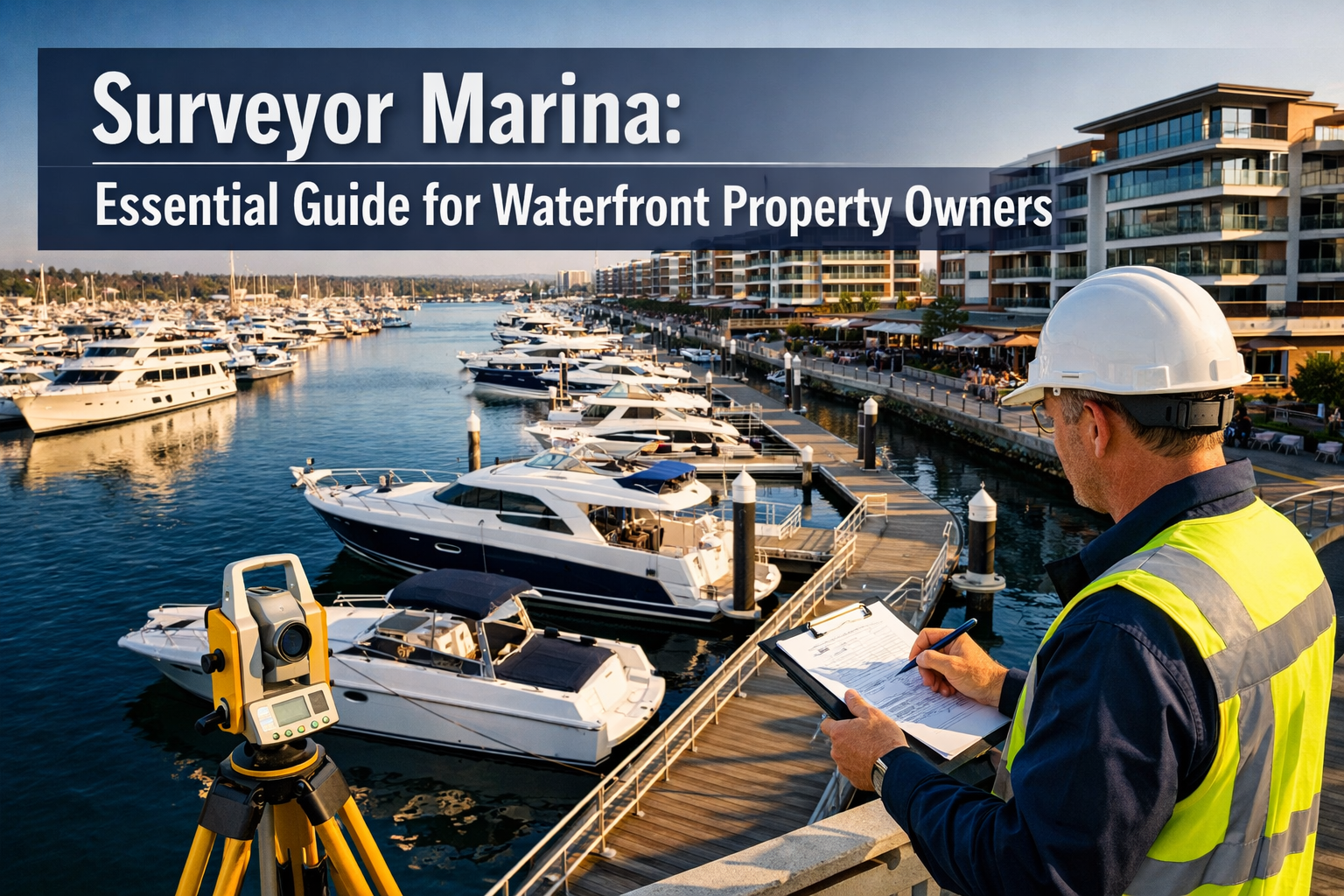

Surveyor Marina: The Complete Guide to Professional Marine Surveying Services
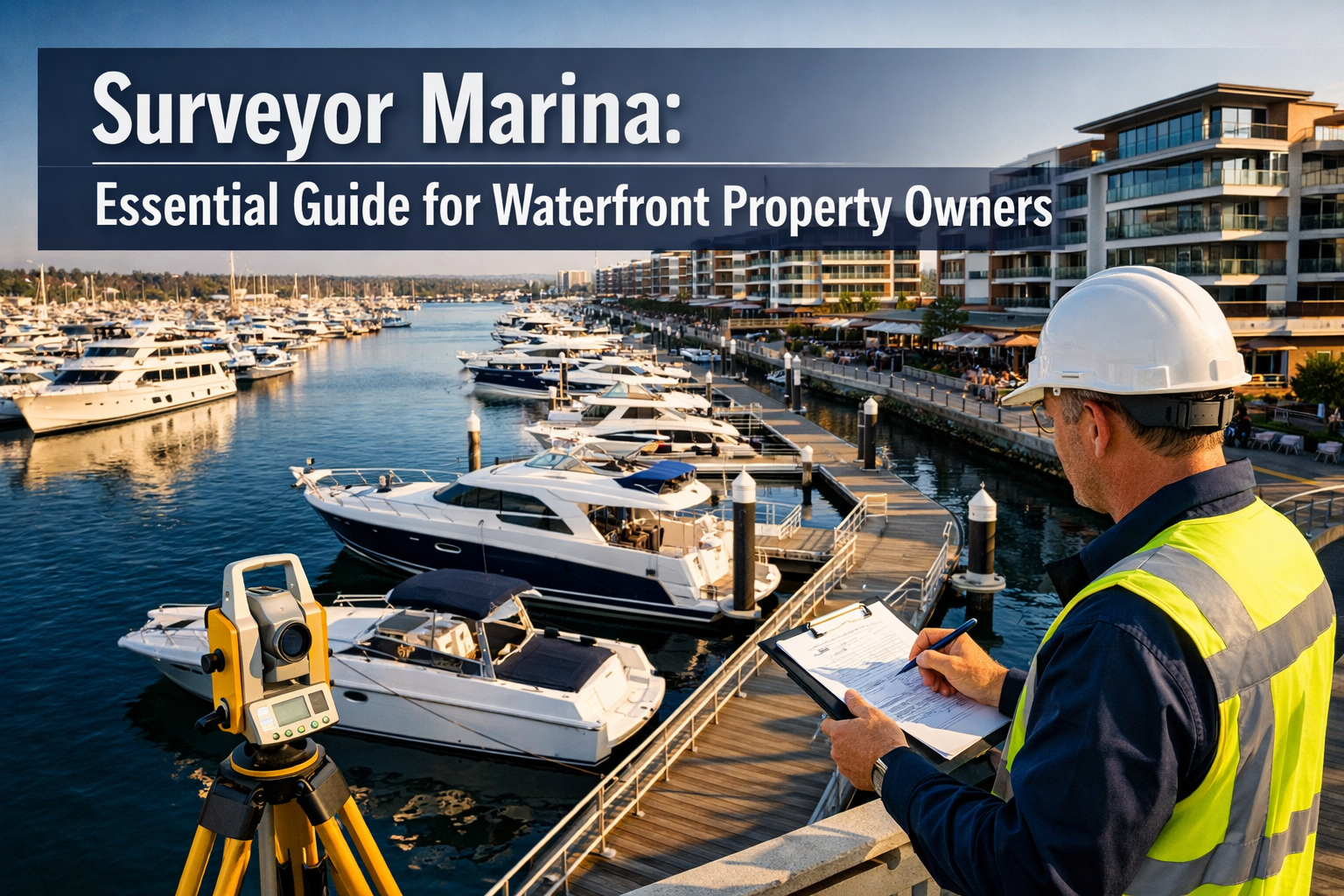
When a waterfront property owner discovers structural damage to their marina dock or a boat buyer needs assurance before a six-figure purchase, they turn to a specialized professional who combines nautical expertise with property assessment skills. The surveyor marina specialist represents a crucial intersection of maritime knowledge and property evaluation, protecting investments worth millions of pounds while ensuring safety and compliance in aquatic environments.
Marina surveying has evolved dramatically in 2026, with advanced technology and stricter environmental regulations transforming how professionals assess waterfront facilities. Whether you’re purchasing a marina berth, developing waterfront commercial property, or managing an existing boat harbor, understanding the role of marina surveyors can save significant money and prevent catastrophic failures.
Key Takeaways
- Surveyor marina professionals provide specialized assessments of waterfront properties, dock structures, and marina facilities that standard property surveyors cannot adequately evaluate
- Marina surveys typically cost between £800-£5,000 depending on facility size, with comprehensive structural assessments averaging £2,500-£3,500 in 2026
- Pre-purchase marina surveys can identify hidden defects worth tens of thousands of pounds in repairs, making them essential for informed buying decisions
- Regulatory compliance has tightened significantly, with marina operators facing substantial penalties for non-compliant facilities discovered during mandatory surveys
- Professional marina surveyors combine qualifications in both property surveying and marine engineering, offering expertise unavailable from general chartered surveyors
What Is a Surveyor Marina Specialist?
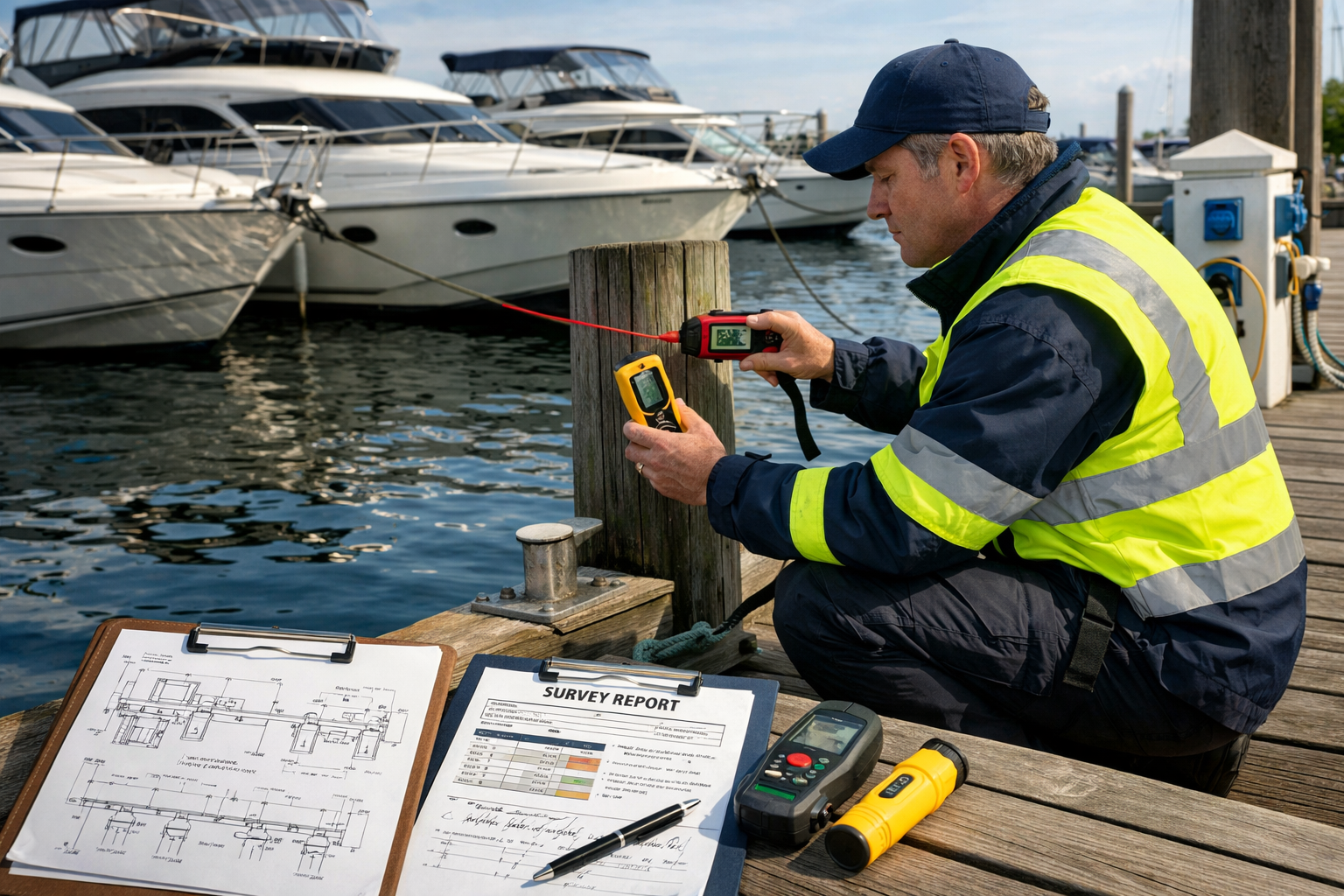
A surveyor marina professional is a qualified expert who conducts detailed assessments of waterfront properties, marina facilities, dock structures, and associated infrastructure. Unlike traditional property surveyors who focus on land-based buildings, marina surveyors possess specialized knowledge of marine construction, tidal effects, saltwater corrosion, and nautical regulations.
Core Responsibilities 🚤
Marina surveyors perform several critical functions:
Structural Assessment: Evaluating the condition of pontoons, pilings, breakwaters, and dock systems to identify deterioration, damage, or safety hazards.
Regulatory Compliance: Ensuring marina facilities meet current safety standards, environmental regulations, and local authority requirements.
Valuation Services: Providing accurate property valuations for marina berths, waterfront commercial properties, and boat harbor facilities—similar to how professionals conduct commercial property valuations.
Pre-Purchase Surveys: Conducting thorough inspections before property transactions to protect buyers from costly hidden defects.
Insurance Assessments: Documenting facility conditions for insurance purposes and claims processing.
Qualifications and Expertise
Professional marina surveyors typically hold:
- RICS Chartered Surveyor status with additional marine specialization
- Marine engineering qualifications or extensive maritime experience
- Understanding of tidal patterns, coastal erosion, and aquatic environmental factors
- Knowledge of specialized materials like marine-grade timber, composite decking, and corrosion-resistant metals
- Familiarity with Port Marine Safety Code and British Standards for marina construction
Types of Surveyor Marina Services
The marina surveying field encompasses several distinct service categories, each addressing specific needs within waterfront property management and ownership.
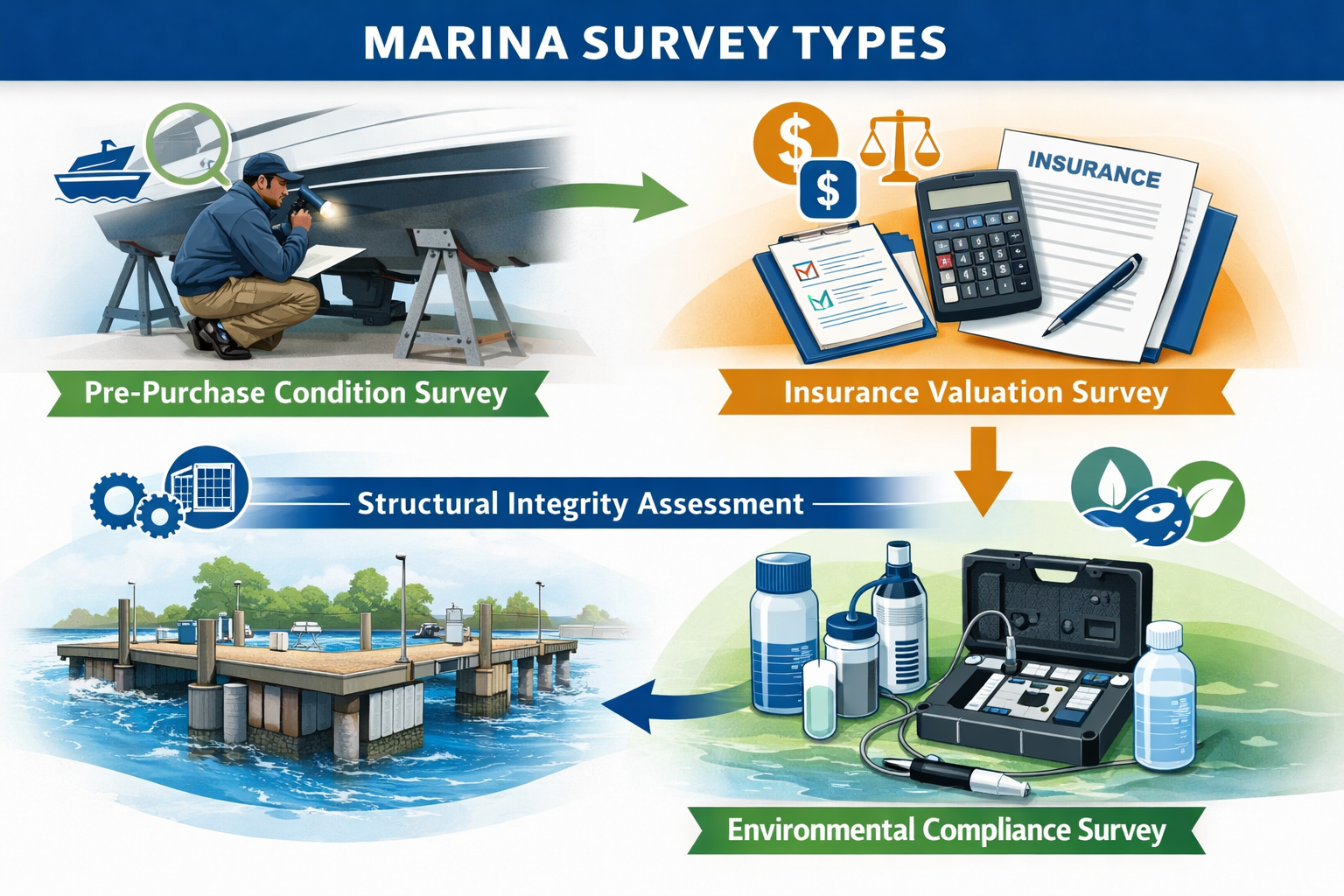
Pre-Purchase Marina Surveys
Before acquiring a marina berth, waterfront property, or entire boat harbor facility, comprehensive surveys protect buyers from expensive surprises. These assessments examine:
| Survey Component | What’s Examined | Typical Issues Found |
|---|---|---|
| Pontoon Systems | Flotation integrity, connection points, surface condition | Cracked floats, corroded hardware, unstable connections |
| Piling Structures | Wood rot, marine borer damage, structural stability | Deteriorated timber, undermined foundations, lean angles |
| Electrical Systems | Pedestal condition, wiring safety, GFCI protection | Outdated installations, water intrusion, fire hazards |
| Water Systems | Plumbing integrity, freeze protection, backflow prevention | Leaking pipes, contamination risks, pressure issues |
| Access Ways | Gangway condition, handrails, slip resistance | Unsafe surfaces, missing safety features, ADA non-compliance |
Similar to commercial building surveys, pre-purchase marina assessments provide detailed reports with cost estimates for identified repairs, enabling informed negotiation and purchase decisions.
Condition Surveys for Existing Facilities
Marina operators and property owners require periodic condition assessments to:
✅ Plan maintenance budgets based on documented deterioration rates
✅ Prioritize repairs according to safety risks and structural urgency
✅ Maintain insurance coverage with current facility documentation
✅ Demonstrate due diligence for liability protection
✅ Track asset depreciation for financial reporting
These surveys typically occur every 3-5 years for well-maintained facilities, or annually for older marinas in harsh marine environments.
Valuation Surveys
Surveyor marina valuation specialists determine fair market value for:
- Individual marina berths and boat slips
- Entire marina facilities for sale or refinancing
- Waterfront commercial properties with dock access
- Lease negotiations and rent reviews
- Estate planning and divorce settlements
Professional valuations consider factors including location desirability, berth size and configuration, facility amenities, maintenance condition, and local market demand—expertise paralleling that required for commercial property surveyors.
Dilapidation Surveys
When marina leases terminate or property disputes arise, dilapidation surveys document:
- Pre-existing conditions at lease commencement
- Damage occurring during tenancy periods
- Required repairs to restore original condition
- Cost estimates for remediation work
These detailed assessments protect both landlords and tenants by establishing clear responsibilities, much like commercial dilapidation surveys conducted for land-based properties.
Environmental and Compliance Surveys
Increasingly important in 2026, environmental assessments examine:
🌊 Water quality impacts from marina operations
🌊 Fuel and oil containment systems
🌊 Waste disposal compliance with environmental regulations
🌊 Protected species habitat considerations
🌊 Coastal erosion mitigation measures
🌊 Climate change resilience including flood risk assessment
Regulatory bodies now require documented environmental compliance, making these surveys essential for operating licenses and planning permissions.
The Marina Survey Process: What to Expect
Understanding the surveyor marina inspection process helps property owners and buyers prepare appropriately and maximize the value received from professional assessments.
Initial Consultation and Scope Definition
Professional marina surveyors begin with detailed discussions to:
- Clarify the survey purpose (purchase, insurance, maintenance planning, etc.)
- Determine facility size and complexity
- Identify specific concerns or areas requiring focused attention
- Establish timeline and access requirements
- Provide cost estimates based on scope
Site Inspection Methodology
Comprehensive marina surveys involve both above-water and below-water assessments:
Above-Water Inspection:
- Visual examination of all accessible structures
- Measurement and documentation of dimensions
- Photography and videography of conditions
- Testing of electrical and plumbing systems
- Assessment of safety equipment and signage
Below-Water Inspection:
- Diving surveys of submerged structures (when required)
- Sonar or underwater camera examination
- Assessment of piling conditions below waterline
- Evaluation of marine growth and corrosion
- Documentation of scouring and sediment issues
Specialized Equipment Used:
- Moisture meters for detecting water intrusion
- Thermal imaging cameras for electrical issues
- Ultrasonic thickness gauges for metal corrosion
- Drone photography for aerial perspectives
- GPS mapping for precise location documentation
Report Delivery and Recommendations
Within 7-14 days of inspection, surveyors deliver comprehensive reports containing:
📋 Executive Summary: Key findings and critical issues requiring immediate attention
📋 Detailed Findings: Section-by-section assessment with photographs and descriptions
📋 Condition Ratings: Standardized grading system (typically 1-5 scale) for each component
📋 Cost Estimates: Repair and replacement budgets for identified deficiencies
📋 Priority Rankings: Urgent, important, and routine maintenance categorization
📋 Recommendations: Professional guidance for addressing issues and future planning
Quality marina survey reports rival the thoroughness of comprehensive property valuation guides, providing actionable intelligence for decision-making.
Common Issues Discovered During Marina Surveys
Experienced surveyor marina professionals routinely encounter specific problems that, if undetected, can lead to catastrophic failures or expensive emergency repairs.
Structural Deterioration
Wood Rot and Marine Borers: Timber pilings and dock structures face constant attack from moisture, fungi, and wood-boring organisms like shipworms and gribbles. Advanced deterioration can compromise structural integrity within months once protective treatments fail.
Metal Corrosion: Saltwater environments accelerate corrosion of steel pilings, aluminum gangways, and hardware. Galvanic corrosion occurs when dissimilar metals contact each other in saltwater, creating rapid deterioration.
Concrete Spalling: Concrete structures in marine environments suffer from chloride intrusion, causing rebar corrosion and concrete surface failure. This progressive damage often remains hidden until advanced stages.
Flotation Failures: Pontoon floats develop leaks from impact damage, UV degradation, or manufacturing defects, causing docks to sink or list dangerously.
Electrical Hazards ⚡
Marina electrical systems present unique dangers:
- Shock drowning risks from current leakage into water
- Fire hazards from water-damaged wiring and connections
- Inadequate ground fault protection failing to prevent electrocution
- Outdated installations not meeting current safety codes
- Overloaded circuits from increased power demands
Professional surveyors use specialized testing equipment to identify electrical hazards invisible to visual inspection alone.
Safety and Compliance Deficiencies
Regulatory requirements have strengthened significantly, with surveys frequently identifying:
- Missing or inadequate handrails and guardrails
- Slip-resistant surface failures
- Insufficient lighting for nighttime safety
- Absent or expired fire suppression equipment
- Non-compliant accessibility features
- Inadequate emergency signage and equipment
Environmental Concerns
Modern marina surveys assess environmental impacts and compliance:
- Fuel and oil containment system failures
- Sewage pump-out facility deficiencies
- Stormwater management inadequacies
- Protected wildlife habitat disturbances
- Invasive species introduction pathways
Cost Considerations for Marina Surveys
Understanding surveyor marina pricing helps property owners budget appropriately and recognize value when selecting professionals.
Typical Fee Structures
| Survey Type | Typical Cost Range (2026) | Factors Affecting Price |
|---|---|---|
| Basic Berth Survey | £800 – £1,500 | Single berth, visual inspection only |
| Comprehensive Marina Survey | £2,500 – £5,000 | Full facility, 50-100 berths |
| Large Marina Assessment | £5,000 – £15,000+ | 100+ berths, multiple structures |
| Underwater Inspection | £1,200 – £3,000 | Diving or ROV survey addition |
| Valuation Report | £1,000 – £3,500 | Complexity and comparable research |
| Environmental Assessment | £1,500 – £4,000 | Testing and regulatory documentation |
Value Proposition
While marina surveys represent significant upfront costs, they routinely identify issues worth 10-50 times the survey fee:
Example: A £2,800 comprehensive survey discovers deteriorated pilings requiring £45,000 in emergency repairs. The buyer negotiates a £40,000 price reduction, netting £37,200 in value from the survey investment.
Comparing Quotes
When selecting surveyor marina professionals, evaluate:
✓ Qualifications: RICS chartered status plus marine specialization
✓ Experience: Years conducting marina-specific surveys
✓ Insurance: Professional indemnity coverage amounts
✓ Report Quality: Sample reports demonstrating thoroughness
✓ References: Testimonials from similar projects
✓ Technology: Modern inspection equipment and methods
Lowest-price providers often deliver superficial assessments missing critical defects, making mid-range professionals typically the best value.
Regional Considerations for Marina Surveying
Marina survey requirements and challenges vary significantly by location, with coastal regions, inland waterways, and tidal versus non-tidal environments presenting distinct considerations.
Tidal Marina Challenges
Facilities experiencing tidal fluctuations face unique stresses:
- Extreme vertical movement stressing connection points and pilings
- Tidal scour undermining foundations and eroding sediment
- Saltwater exposure accelerating all corrosion processes
- Marine growth fouling submerged structures
- Storm surge vulnerability requiring enhanced structural design
Surveyors in tidal areas like Thames-side locations must understand these specific challenges.
Inland Waterway Marinas
Freshwater facilities on rivers, canals, and lakes encounter different issues:
- Seasonal water level variations affecting access and structures
- Ice damage in winter months crushing docks and pilings
- Siltation requiring regular dredging and depth maintenance
- Freshwater-specific organisms like zebra mussels fouling systems
- Flooding risks during heavy rainfall or snowmelt periods
Regional Regulatory Variations
Planning permissions, environmental regulations, and safety requirements differ across jurisdictions. Professional chartered surveyors understand local authority requirements specific to their operating regions.
Selecting the Right Surveyor Marina Professional
Choosing qualified marina surveyors significantly impacts the quality and usefulness of assessments received.
Essential Questions to Ask
Before engaging a surveyor marina specialist, inquire about:
Qualifications and Experience:
- “What marine-specific qualifications do you hold beyond general surveying credentials?”
- “How many marina surveys have you personally conducted?”
- “Do you have experience with facilities similar to mine in size and type?”
Methodology and Scope:
- “Will you conduct underwater inspections or only above-water assessments?”
- “What specialized equipment do you use during inspections?”
- “How long will the inspection take, and what access do you require?”
Deliverables and Timeline:
- “What will the final report include, and can I see a sample?”
- “How soon after inspection will I receive the report?”
- “Do you provide follow-up consultation to discuss findings?”
Insurance and Professional Standards:
- “What professional indemnity insurance coverage do you maintain?”
- “Are you members of RICS or other professional bodies?”
- “Can you provide references from recent similar projects?”
Red Flags to Avoid 🚩
Beware of surveyors who:
- Offer quotes significantly below market rates without justification
- Cannot provide evidence of marine-specific qualifications
- Refuse to conduct underwater inspections when clearly necessary
- Deliver boilerplate reports lacking property-specific details
- Avoid providing professional references or sample reports
- Lack adequate professional indemnity insurance
- Demonstrate unfamiliarity with current regulations
Professional Associations and Credentials
Reputable marina surveyors typically hold memberships in:
- Royal Institution of Chartered Surveyors (RICS) with Building Surveying or Valuation specialization
- International Institute of Marine Surveying (IIMS) for marine-specific expertise
- British Marine Federation demonstrating industry engagement
- Local marina associations showing regional knowledge
The Future of Marina Surveying in 2026 and Beyond
The surveyor marina profession continues evolving with technological advances and changing environmental conditions.
Technological Innovations
Drone Technology: Aerial photography and thermal imaging provide comprehensive facility overviews impossible from ground level, identifying roof damage, structural alignment issues, and heat loss patterns.
Underwater ROVs: Remotely operated vehicles equipped with high-definition cameras and sonar conduct detailed underwater inspections at lower cost than traditional diving surveys.
3D Scanning and Modeling: Laser scanning creates precise digital twins of marina facilities, enabling accurate measurements, progress tracking, and virtual inspections.
AI-Assisted Analysis: Machine learning algorithms analyze inspection data to predict failure timelines, optimize maintenance scheduling, and identify patterns across multiple facilities.
IoT Monitoring Systems: Continuous structural monitoring with sensors detects movement, moisture intrusion, and electrical anomalies in real-time, complementing periodic surveys.
Climate Change Considerations
Marina surveyors increasingly address climate-related challenges:
- Sea level rise requiring elevation assessments and adaptation planning
- Increased storm intensity demanding enhanced structural resilience
- Temperature extremes affecting material performance and longevity
- Changing precipitation patterns impacting stormwater management
- Coastal erosion acceleration threatening facility foundations
Professional assessments now include climate vulnerability analysis and long-term adaptation recommendations.
Regulatory Trends
Expect continued regulatory evolution including:
- Stricter environmental protection requirements
- Enhanced safety standards for electrical systems
- Mandatory periodic inspections for commercial marinas
- Increased accessibility compliance enforcement
- Carbon footprint reporting for marina operations
Marina Survey Case Studies: Real-World Examples
Understanding how surveyor marina professionals add value through actual scenarios illustrates their importance.
Case Study 1: Hidden Structural Failure Averted
Situation: Prospective buyer considering £1.2 million purchase of 40-berth marina facility appearing well-maintained.
Survey Findings: Comprehensive inspection including diving survey revealed 60% of timber pilings showed advanced marine borer damage and rot below waterline, invisible from surface. Structural engineer consultation confirmed imminent collapse risk.
Outcome: Buyer withdrew from purchase, avoiding catastrophic investment. Facility required £180,000 in emergency piling replacement within six months when partial dock collapse occurred.
Value: £3,200 survey prevented £1.2 million loss plus potential liability for injuries.
Case Study 2: Insurance Claim Documentation
Situation: Storm damage to marina pontoons with insurance company disputing claim amount.
Survey Role: Independent surveyor marina assessment documented pre-existing conditions versus storm damage, quantified repair costs with detailed specifications, and provided expert testimony.
Outcome: Insurance settlement increased from initial £35,000 offer to £87,000 based on survey evidence, fully covering necessary repairs.
Value: £2,800 survey secured additional £52,000 in insurance proceeds.
Case Study 3: Maintenance Planning Success
Situation: Marina operator facing budget constraints needed prioritized maintenance plan for aging 80-berth facility.
Survey Approach: Comprehensive condition assessment with component-by-component ratings, lifecycle analysis, and phased repair recommendations spanning five years.
Outcome: Operator implemented priority repairs preventing emergency failures, budgeted systematically for deferred maintenance, and extended facility lifespan by 15+ years through strategic interventions.
Value: £4,500 survey enabled £250,000 in planned maintenance versus £600,000+ in emergency repairs and lost revenue.
Integrating Marina Surveys with Broader Property Strategies
Waterfront property owners benefit from coordinating marina surveys with comprehensive property management approaches.
Leasehold Considerations
Marina berth leaseholders face unique challenges similar to those addressed in lease extension valuations:
- Understanding maintenance responsibilities between leaseholder and freeholder
- Documenting condition at lease commencement and termination
- Negotiating fair service charges based on actual facility conditions
- Assessing value implications of lease length on berth valuations
Professional surveyors provide essential documentation for lease extension negotiations and dispute resolution.
Commercial Marina Operations
Business owners operating marinas require surveys integrated with:
- Business valuation for sale, refinancing, or partnership changes
- Risk management identifying liability exposures and mitigation strategies
- Capital planning scheduling major repairs and improvements
- Regulatory compliance maintaining operating licenses and permits
These comprehensive assessments parallel commercial property surveying approaches adapted for marine environments.
Dispute Resolution
Marina-related disputes benefit from independent surveyor expertise:
- Boundary disputes regarding water rights and berth dimensions
- Party wall equivalents for shared dock structures between adjacent properties
- Damage claims from construction, storms, or third-party actions
- Divorce settlements requiring accurate marina property valuations
Professional documentation provides objective evidence for negotiations and legal proceedings, similar to party wall dispute resolution.
Conclusion: Protecting Your Waterfront Investment
The specialized expertise of surveyor marina professionals provides essential protection for waterfront property investments, whether purchasing a single berth, managing a commercial facility, or developing marina infrastructure. In 2026’s increasingly regulated and climate-challenged environment, professional assessments have evolved from optional due diligence to essential risk management.
Marina surveys deliver measurable value by:
✅ Identifying hidden defects worth tens of thousands in repairs before purchase commitments
✅ Documenting conditions for insurance, legal, and regulatory purposes
✅ Planning maintenance strategically rather than reactively responding to emergencies
✅ Ensuring compliance with evolving safety and environmental regulations
✅ Protecting investments through informed decision-making based on expert analysis
Actionable Next Steps
For waterfront property owners and prospective buyers:
- Schedule surveys proactively before problems become emergencies—periodic assessments every 3-5 years for well-maintained facilities, annually for older marinas
- Engage qualified professionals with demonstrated marine expertise, not general property surveyors lacking specialized knowledge
- Budget appropriately recognizing that comprehensive surveys represent valuable insurance against catastrophic failures
- Act on recommendations promptly, particularly for safety-critical issues identified in survey reports
- Maintain documentation systematically, creating historical records that demonstrate due diligence and track deterioration patterns
- Integrate surveys with broader property strategies including lease management, business planning, and regulatory compliance
The investment in professional surveyor marina services consistently proves worthwhile, protecting both financial assets and personal safety in the unique and challenging waterfront environment. Whether you’re located along the Thames in Richmond, managing facilities in Surrey’s waterways, or operating marinas elsewhere, qualified surveying professionals provide indispensable expertise.
Don’t wait for visible problems to emerge—by the time structural issues become obvious, repair costs typically multiply exponentially. Engage experienced chartered surveyors with marine specialization today to protect your waterfront investment for decades to come.