
The global data centre market is experiencing unprecedented growth in 2026, with investment capital flooding into these critical infrastructure assets at rates that now surpass traditional office properties. As institutional investors, private equity firms, and technology giants compete for prime data centre facilities, valuation disputes have become increasingly common—and increasingly complex. When these disputes escalate to litigation or arbitration, Expert Witness Testimonies in Data Centre Valuation Disputes: RICS Guidelines for Surveyors in the 2026 Investment Boom become the cornerstone of resolving multi-million-pound disagreements over asset values, rental assessments, and investment returns.
For chartered surveyors, the role of expert witness in data centre valuation disputes demands not only technical expertise in specialized property valuation but also strict adherence to professional standards that have evolved significantly in recent years. With RICS launching updated expert witness standards in 2025 and new AI protocols taking effect in March 2026, surveyors face a transformed landscape of professional obligations and best practices.[4][7]
Key Takeaways
✅ Updated RICS Standards: The 5th edition of "Surveyors acting as expert witnesses" reinforces the primary duty to the tribunal over client interests, with new provisions for AI use and digital evidence.[4]
✅ ESG Integration Mandatory: Since January 2025, RICS Red Book requires valuers to record and consider ESG factors that may impact data centre valuations, adding complexity to expert testimony.[3]
✅ Data Centre Specialization Critical: Expert witnesses must demonstrate genuine expertise in data centre valuation methodologies, including power infrastructure, cooling systems, and connectivity assets that differ substantially from traditional commercial property.[1]
✅ Independence Non-Negotiable: The updated standards provide clearer guidance on fee arrangements, conflict disclosure, and maintaining professional independence throughout expert witness engagements.[4]
✅ AI Standards Compliance: New RICS AI requirements effective March 9, 2026, mandate specific protocols for using artificial intelligence tools in valuation and expert witness work.[7]
Understanding the 2026 Data Centre Investment Landscape
The Infrastructure Investment Surge
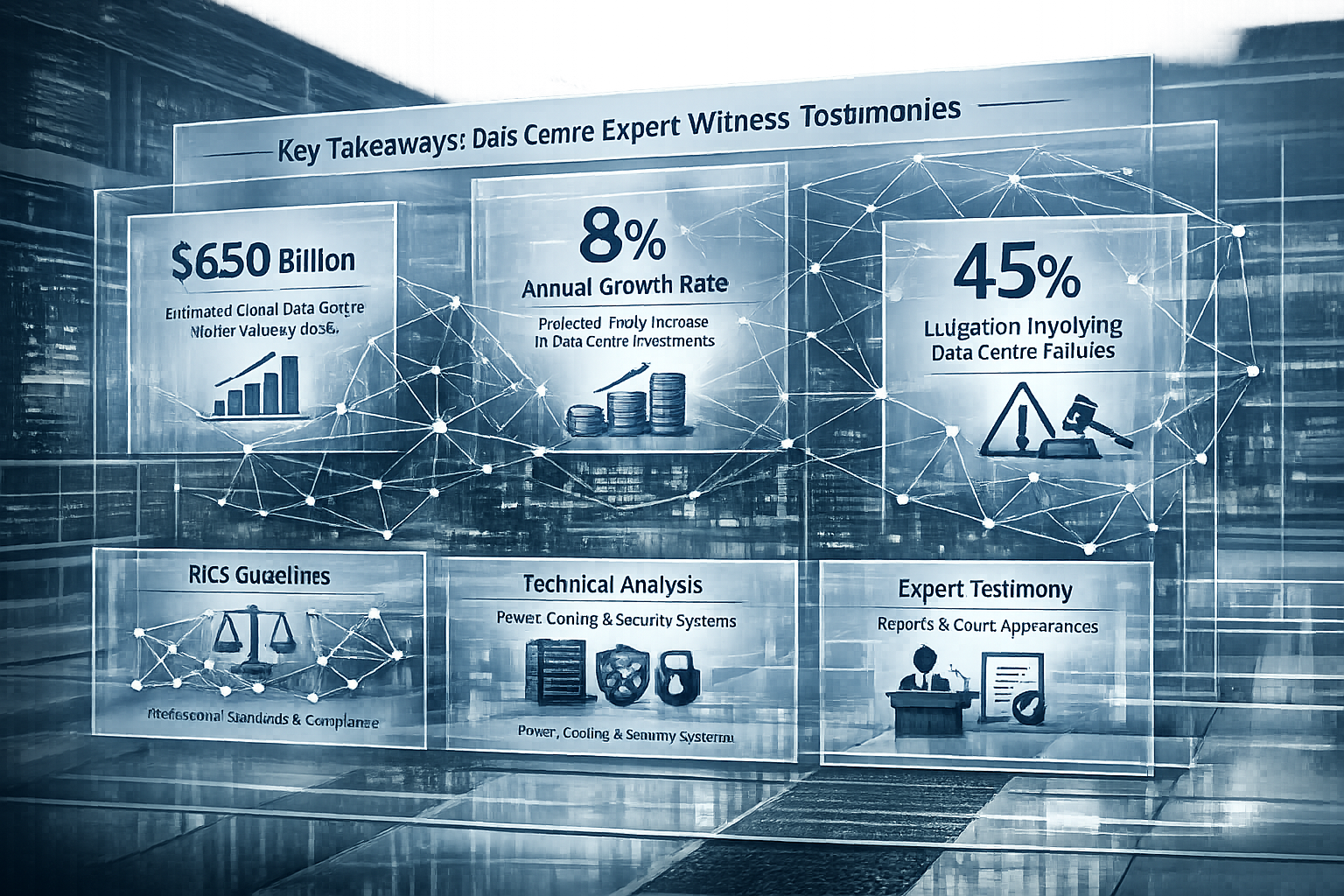
Data centres have emerged as the infrastructure darlings of 2026, driven by explosive demand for cloud computing, artificial intelligence processing, and digital transformation across every economic sector. Investment volumes in data centre assets have grown by over 40% year-on-year, with institutional investors treating these facilities as essential infrastructure comparable to energy networks or telecommunications systems.
This investment boom creates fertile ground for valuation disputes. When buyers and sellers disagree on asset values by tens of millions of pounds, or when partnership disputes arise over fair market valuations, the expertise of RICS registered valuers becomes essential to resolving conflicts.
Unique Valuation Challenges in Data Centres
Unlike traditional commercial properties, data centres present distinctive valuation challenges:
- Power Infrastructure 🔌: The electrical capacity and redundancy systems often represent the most valuable component, requiring specialized technical knowledge
- Cooling Systems: Advanced cooling technologies directly impact operational efficiency and therefore investment value
- Connectivity Assets: Fiber optic connections and network peering arrangements create intangible value difficult to quantify
- Obsolescence Risk: Rapid technological change means data centres can become functionally obsolete faster than traditional buildings
- ESG Considerations: Energy efficiency, renewable power sourcing, and carbon footprint increasingly affect valuations in 2026[3]
These complexities mean that expert witnesses in data centre valuation disputes must possess highly specialized knowledge beyond general commercial property expertise.
RICS Expert Witness Standards: The 2025-2026 Evolution
The Fifth Edition Expert Witness Standard
RICS launched a comprehensive consultation in August 2025 for the updated "Surveyors acting as expert witnesses" standard—the first major revision since 2014.[4] The final edition, expected in late 2025 or early 2026, introduces several critical changes that directly impact how surveyors approach Expert Witness Testimonies in Data Centre Valuation Disputes: RICS Guidelines for Surveyors in the 2026 Investment Boom.
Primary Duty to the Tribunal
The cornerstone principle remains unchanged but reinforced: expert witnesses owe their primary duty to the tribunal, not to the instructing party.[4] This fundamental obligation requires:
- Complete independence in forming opinions
- Unbiased presentation of evidence
- Willingness to concede points that undermine the instructing party's case
- Transparency about limitations in expertise or available evidence
For data centre valuations, this means a chartered surveyor must provide honest assessments even when market comparables don't support the client's desired valuation outcome.
Scope of Expertise Requirements
The updated standard emphasizes that expert witnesses must only provide evidence within their true area of expertise.[4] This has particular significance for data centre valuations, where surveyors may be tempted to opine on technical matters beyond their competence:
Within Surveyor Expertise:
- Market rental values based on comparable evidence
- Investment yields and capitalization rates
- Depreciation and obsolescence assessments
- Market conditions and demand trends
Potentially Outside Surveyor Expertise:
- Detailed electrical engineering specifications
- Advanced cooling system efficiency calculations
- Cybersecurity infrastructure assessments
- Specific IT equipment valuations
Expert witnesses must clearly delineate where their expertise ends and recommend additional technical experts when necessary.
AI and Digital Evidence Provisions
Recognizing the technological transformation of surveying practice, the 5th edition includes specific provisions for AI use and digital evidence.[4] With RICS AI standards taking effect March 9, 2026, expert witnesses must:[7]
- Disclose any AI tools used in valuation analysis
- Demonstrate quality control processes for AI-generated data
- Maintain human oversight and professional judgment
- Ensure AI applications don't compromise independence or introduce bias
For data centre valuations, AI tools might assist with:
- Analyzing large datasets of comparable transactions
- Modeling energy efficiency impacts on value
- Predicting market trends based on historical patterns
- Identifying relevant ESG risk factors
However, the expert witness remains personally responsible for all opinions expressed, regardless of AI assistance.
Fee Guidance and Independence Protection
The updated standard provides clear guidance on fee arrangements to protect professional independence:[4]
❌ Prohibited Fee Structures:
- Success fees contingent on tribunal outcomes
- Fees based on achieving specific valuation figures
- Conditional fees that compromise objectivity
✅ Acceptable Fee Arrangements:
- Fixed fees for expert witness services
- Hourly rates with estimated caps
- Staged payments based on work completion
- Deferred payment schedules (with proper safeguards)
For commercial building surveys and valuation disputes, maintaining fee independence ensures that expert testimony remains credible and defensible.
Conflict of Interest Disclosure
The 5th edition requires clearer identification and disclosure of conflicts of interest.[4] In data centre valuation disputes, potential conflicts might include:
- Previous valuation work for either party
- Financial interests in competing data centre facilities
- Professional relationships with key stakeholders
- Prior expert witness work on related matters
Surveyors must disclose these conflicts promptly and obtain appropriate waivers or withdraw from the engagement if conflicts cannot be managed.
The RICS Red Book and Data Centre Valuation Standards
Mandatory ESG Considerations Since January 2025
The RICS Global Red Book, effective January 31, 2025, introduced mandatory requirements for recording and considering ESG factors in valuations.[3] This represents a fundamental shift in how expert witnesses must approach data centre valuation disputes in 2026.
ESG Factors Affecting Data Centre Values
Environmental Considerations:
- Energy consumption efficiency (PUE – Power Usage Effectiveness)
- Renewable energy sourcing and carbon footprint
- Water usage for cooling systems
- Waste heat recovery and reuse capabilities
Social Factors:
- Community impact and local employment
- Data privacy and security standards
- Supply chain ethics and labor practices
Governance Elements:
- Corporate sustainability commitments
- Regulatory compliance frameworks
- Transparency in environmental reporting
Expert witnesses must now record relevant ESG data and consider how these factors might impact valuation.[3] In disputes, failure to address ESG considerations can undermine the credibility of expert testimony.
RICS Data Centre Valuation Guidance
RICS offers specific guidance through "Valuation of Data Centres, 1st edition," designed for valuers instructed to provide market value or market rent assessments.[1] While currently under review, this guidance note establishes foundational principles for data centre valuation that expert witnesses should follow.
Key Valuation Approaches
1. Income Capitalization Method
This approach values data centres based on rental income potential:
Market Value = Net Operating Income ÷ Capitalization Rate
Factors affecting capitalization rates include:
- Location and connectivity quality
- Power reliability and capacity
- Technological specifications
- Lease terms and tenant quality
- Market competition and demand
2. Comparable Sales Analysis
Direct comparison with recent data centre transactions, adjusted for:
- Size and scale differences
- Geographic location variations
- Specification and technology levels
- Transaction timing and market conditions
3. Depreciated Replacement Cost
Particularly relevant for specialized or unique facilities:
Value = Land Value + (Current Replacement Cost - Depreciation)
This method requires careful assessment of:
- Physical deterioration
- Functional obsolescence (outdated technology)
- Economic obsolescence (market conditions)
4. Discounted Cash Flow Analysis
Forward-looking approach projecting future income streams:
- Forecast rental income over hold period
- Estimate operating expenses and capital expenditure
- Apply appropriate discount rate reflecting risk
- Calculate terminal value at exit
Applying Red Book Standards in Expert Testimony
When providing Expert Witness Testimonies in Data Centre Valuation Disputes: RICS Guidelines for Surveyors in the 2026 Investment Boom, adherence to Red Book standards ensures credibility and defensibility. Expert witnesses should:
- Clearly state the valuation basis (Market Value, Market Rent, Investment Value, etc.)
- Define assumptions and special assumptions explicitly
- Document the inspection process and any access limitations
- Provide transparent methodology showing how conclusions were reached
- Include appropriate caveats regarding uncertainty and limitations
Preparing Expert Witness Testimony for Data Centre Disputes
Case Assessment and Instruction Acceptance
Before accepting an expert witness instruction, surveyors must conduct thorough due diligence:
Competence Evaluation
Ask critical questions:
- Do I have genuine expertise in data centre valuation?
- Have I valued similar facilities recently?
- Do I understand the technical infrastructure sufficiently?
- Can I access necessary market data and comparables?
If the honest answer to any question is "no," the surveyor should decline the instruction or recommend a more qualified expert.
Conflict Check
Systematically review:
- Previous client relationships with disputing parties
- Prior valuation work on the subject property
- Financial interests in competing facilities
- Personal or professional relationships affecting independence
Document the conflict check process and obtain written confirmation that no material conflicts exist.
Scope Definition
Clearly establish with instructing solicitors:
- Specific valuation questions to be addressed
- Valuation date(s) required
- Access to property and documentation
- Timeline for report delivery
- Budget and fee arrangements
- Court or tribunal procedures
Evidence Gathering and Analysis
Comprehensive evidence collection forms the foundation of credible expert testimony.
Property Inspection
For data centre valuations, inspection should document:
Physical Infrastructure:
- Building construction quality and condition
- Raised floor systems and ceiling heights
- Loading dock and logistics access
- Security systems and access controls
Power Systems:
- Total electrical capacity (MW)
- Redundancy levels (N, N+1, 2N)
- UPS (Uninterruptible Power Supply) specifications
- Generator backup capabilities
- Power distribution architecture
Cooling Infrastructure:
- Cooling capacity and efficiency
- Technology type (air-cooled, water-cooled, etc.)
- Redundancy and reliability
- Energy efficiency metrics
Connectivity:
- Fiber optic connections and carriers
- Network peering arrangements
- Internet exchange access
- Latency and bandwidth capabilities
Market Research
Gather comprehensive market evidence:
| Evidence Type | Sources | Application |
|---|---|---|
| Comparable Sales | Property databases, broker reports, public records | Direct valuation support |
| Rental Evidence | Lease agreements, market surveys, industry reports | Income approach validation |
| Investment Yields | Transaction reports, investor surveys | Capitalization rate determination |
| Market Trends | Industry publications, analyst reports | Context and market conditions |
| ESG Data | Sustainability reports, energy certificates | ESG impact assessment |
Technical Documentation Review
Analyze provided documentation:
- Original construction specifications
- As-built drawings and plans
- Energy consumption records
- Maintenance histories
- Tenant lease agreements
- Operating expense statements
- Capital expenditure forecasts
Report Preparation Standards
Expert witness reports must meet exacting standards of clarity, transparency, and compliance.
Essential Report Components
1. Executive Summary
- Concise statement of instructions
- Summary of key conclusions
- Clear valuation figure(s)
2. Expert Declaration
- Statement of duty to tribunal
- Confirmation of independence
- Qualifications and expertise summary
- Disclosure of any limitations or conflicts
3. Property Description
- Location and site characteristics
- Building specifications and condition
- Technical infrastructure details
- Current occupation and use
4. Market Context
- Data centre market overview
- Supply and demand dynamics
- Investment trends and yields
- Relevant ESG considerations[3]
5. Valuation Methodology
- Detailed explanation of approach(es) used
- Justification for method selection
- Assumptions and special assumptions
- Data sources and reliability assessment
6. Valuation Analysis
- Step-by-step calculations
- Comparable evidence analysis
- Adjustments and their justification
- Sensitivity analysis for key variables
7. Conclusions
- Clear statement of value opinion
- Range of values if appropriate
- Qualifications and limitations
- Alternative scenarios if relevant
8. Appendices
- Supporting documentation
- Comparable evidence details
- Technical specifications
- Relevant photographs and plans
Common Pitfalls to Avoid
🚫 Advocacy Rather Than Independence: Presenting only evidence favorable to the instructing party
🚫 Exceeding Expertise Boundaries: Opining on technical matters beyond surveying competence
🚫 Inadequate Comparable Analysis: Using insufficient or poorly adjusted market evidence
🚫 Ignoring ESG Factors: Failing to address mandatory sustainability considerations[3]
🚫 Unclear Assumptions: Not explicitly stating assumptions that affect conclusions
🚫 Insufficient Documentation: Lacking transparency about methodology and data sources
Cross-Examination and Tribunal Testimony

Preparation for Oral Evidence
Expert witnesses in data centre valuation disputes must prepare thoroughly for cross-examination:
Anticipate Challenges
Consider potential attacks on:
- Comparable selection and adjustment methodology
- Assumptions about market conditions
- Treatment of technological obsolescence
- ESG factor weighting and impact
- Income and expense projections
- Capitalization rate selection
Master the Technical Details
Be prepared to explain:
- How power capacity affects value per square foot
- Why specific cooling technologies command premium values
- How connectivity quality impacts rental rates
- The relationship between PUE and operating costs
- ESG certification impacts on investment yields
Practice Clear Communication
Complex technical concepts must be explained simply:
"The data centre's N+1 redundancy means it has one extra backup component for every critical system. Think of it like having a spare tire in your car—if one fails, operations continue without interruption. This redundancy significantly increases the facility's value because tenants pay premium rents for guaranteed uptime."
Maintaining Independence Under Pressure
Cross-examination often attempts to undermine expert independence. Strategies for maintaining credibility:
✅ Acknowledge Limitations: Freely admit when evidence is uncertain or incomplete
✅ Concede Valid Points: Accept opposing counsel's valid criticisms gracefully
✅ Resist Advocacy: Refuse to become an advocate for the instructing party's position
✅ Stick to Expertise: Decline to answer questions outside genuine competence
✅ Reference Standards: Cite RICS guidance and professional standards supporting your approach[1][4][5]
Working with Opposing Experts
Professional collaboration with opposing experts often benefits the tribunal:
Joint Statements
Many tribunals require joint expert statements identifying:
- Areas of agreement on facts and methodology
- Specific points of disagreement
- Reasons for disagreements
- Additional information that might resolve disputes
Expert Meetings
Without prejudice discussions can:
- Narrow issues for tribunal determination
- Identify common ground on technical matters
- Clarify misunderstandings about each other's positions
- Potentially reach agreed valuations or value ranges
These collaborative processes demonstrate professionalism and assist tribunals in focusing on genuine areas of dispute.
Emerging Issues in 2026 Data Centre Valuation Disputes
AI-Powered Data Centres and Valuation Premiums
The explosive growth of artificial intelligence in 2026 has created demand for specialized AI data centres with:
- Higher power densities (100+ kW per rack vs. 5-10 kW traditional)
- Advanced cooling requirements for GPU-intensive computing
- Proximity to AI development hubs creating location premiums
- Specialized infrastructure for machine learning workloads
Expert witnesses must understand how these AI-specific features affect valuations and be prepared to justify premium values or explain why claimed premiums are unsupported.
Edge Computing Facilities
The proliferation of edge computing creates valuation challenges:
- Smaller facilities with different economics
- Location-specific value drivers (latency requirements)
- Different tenant profiles and lease structures
- Rapid technological change affecting obsolescence
Surveyors must distinguish between traditional hyperscale facilities and edge computing sites when selecting comparables and applying valuation methodologies.
Sustainability Certifications and Value Impact
With ESG considerations now mandatory,[3] disputes increasingly center on sustainability value impacts:
Certification Schemes:
- LEED (Leadership in Energy and Environmental Design)
- BREEAM (Building Research Establishment Environmental Assessment Method)
- EU Taxonomy alignment
- Carbon neutrality certifications
Expert witnesses must quantify how these certifications affect:
- Rental premiums tenants will pay
- Investment yields and capitalization rates
- Future-proofing against regulatory change
- Marketability and tenant demand
Regulatory Risk and Valuation Uncertainty
Evolving regulations create valuation uncertainty:
- Energy efficiency mandates potentially requiring costly upgrades
- Carbon pricing mechanisms affecting operating costs
- Data sovereignty requirements limiting tenant pools
- Planning restrictions on new data centre development
Expert witnesses must address how regulatory risks affect value, often requiring scenario analysis showing value ranges under different regulatory outcomes.
Best Practices for Surveyors in 2026
Continuous Professional Development
The rapid evolution of data centre technology and valuation standards requires ongoing learning:
📚 Technical Knowledge Updates
- Attend data centre industry conferences
- Study emerging technologies (liquid cooling, renewable energy integration)
- Understand AI and edge computing infrastructure requirements
📚 RICS Standards Compliance
- Review updated expert witness standards[4]
- Understand AI protocol requirements effective March 2026[7]
- Stay current with Red Book updates and ESG requirements[3]
📚 Market Intelligence
- Monitor investment transaction volumes and yields
- Track rental rate trends across different data centre types
- Analyze ESG certification impacts on values
Building Specialist Expertise
To provide credible Expert Witness Testimonies in Data Centre Valuation Disputes: RICS Guidelines for Surveyors in the 2026 Investment Boom, surveyors should:
- Specialize Rather Than Generalize: Focus on data centre valuation as a distinct practice area
- Develop Technical Partnerships: Build relationships with electrical engineers and IT infrastructure specialists
- Create Comparable Databases: Maintain proprietary databases of data centre transactions and rental evidence
- Publish Thought Leadership: Demonstrate expertise through articles, presentations, and market reports
- Obtain Relevant Certifications: Consider data centre industry certifications alongside RICS qualifications
Quality Assurance Processes
Implement rigorous quality controls:
Peer Review: Have complex valuations reviewed by another qualified surveyor before finalization
Methodology Checklists: Use standardized checklists ensuring all RICS requirements are met[1][5]
Documentation Standards: Maintain comprehensive working papers supporting all conclusions
Independence Audits: Regularly review fee arrangements and client relationships for potential conflicts
Technology Validation: When using AI tools, implement verification processes ensuring accuracy[7]
Case Study: Typical Data Centre Valuation Dispute Scenario
The Dispute Context
A private equity investor acquired a 10MW data centre facility in 2023 for £85 million. In 2026, the investor seeks to exit through a sale to a REIT (Real Estate Investment Trust). The parties agree on a sale price of £120 million, but the transaction includes an earn-out provision tied to the final valuation.
A dispute arises because:
- The seller's valuation: £128 million
- The buyer's valuation: £112 million
- Difference: £16 million (affecting earn-out payments)
Both parties instruct expert witnesses to provide valuation opinions for arbitration.
Expert Witness Approaches
Seller's Expert Analysis:
The seller's expert emphasizes:
- Strong rental growth since acquisition (15% increase)
- Recent comparable sale at £12,000 per kW
- Excellent ESG credentials (LEED Platinum, 100% renewable energy)
- AI-ready infrastructure commanding premium values
- Low capitalization rate (4.5%) reflecting strong covenant tenants
Buyer's Expert Analysis:
The buyer's expert highlights:
- Approaching lease expiries creating uncertainty
- Comparable requires adjustment for superior location
- ESG premium not yet proven in market evidence
- AI-ready claims overstated based on actual specifications
- Higher capitalization rate (5.25%) appropriate given market conditions
Resolution Through Expert Collaboration
Following a joint expert meeting, the experts agree:
✅ Agreed Facts:
- Current rental income: £6.4 million per annum
- Operating expenses: £1.8 million per annum
- Power capacity: 10MW with N+1 redundancy
- Remaining lease terms: 5-8 years to expiry
✅ Agreed Methodology:
- Income capitalization as primary approach
- Comparable sales as supporting evidence
- Both experts will use same comparable transactions
- ESG premium quantified through tenant survey evidence
❌ Remaining Disagreements:
- Appropriate capitalization rate (4.5% vs. 5.25%)
- Adjustments to comparable sale evidence
- Weight given to AI-ready infrastructure claims
The arbitrator ultimately determines a valuation of £118 million, finding the buyer's expert more persuasive on capitalization rate selection but accepting some ESG premium supported by the seller's expert.
Lessons for Expert Witnesses
This scenario illustrates key principles:
- Transparency Builds Credibility: Both experts clearly explained their methodology and assumptions
- Collaboration Narrows Issues: The joint meeting focused the arbitrator on genuine disagreements
- Evidence Quality Matters: The expert with stronger comparable evidence and market data prevailed
- Independence Preserved: Neither expert simply advocated for their client's desired outcome
- Professional Standards Followed: Both experts adhered to RICS guidelines throughout[4][5]
Practical Resources for Surveyors
RICS Standards and Guidance
Essential reading for expert witnesses in 2026:
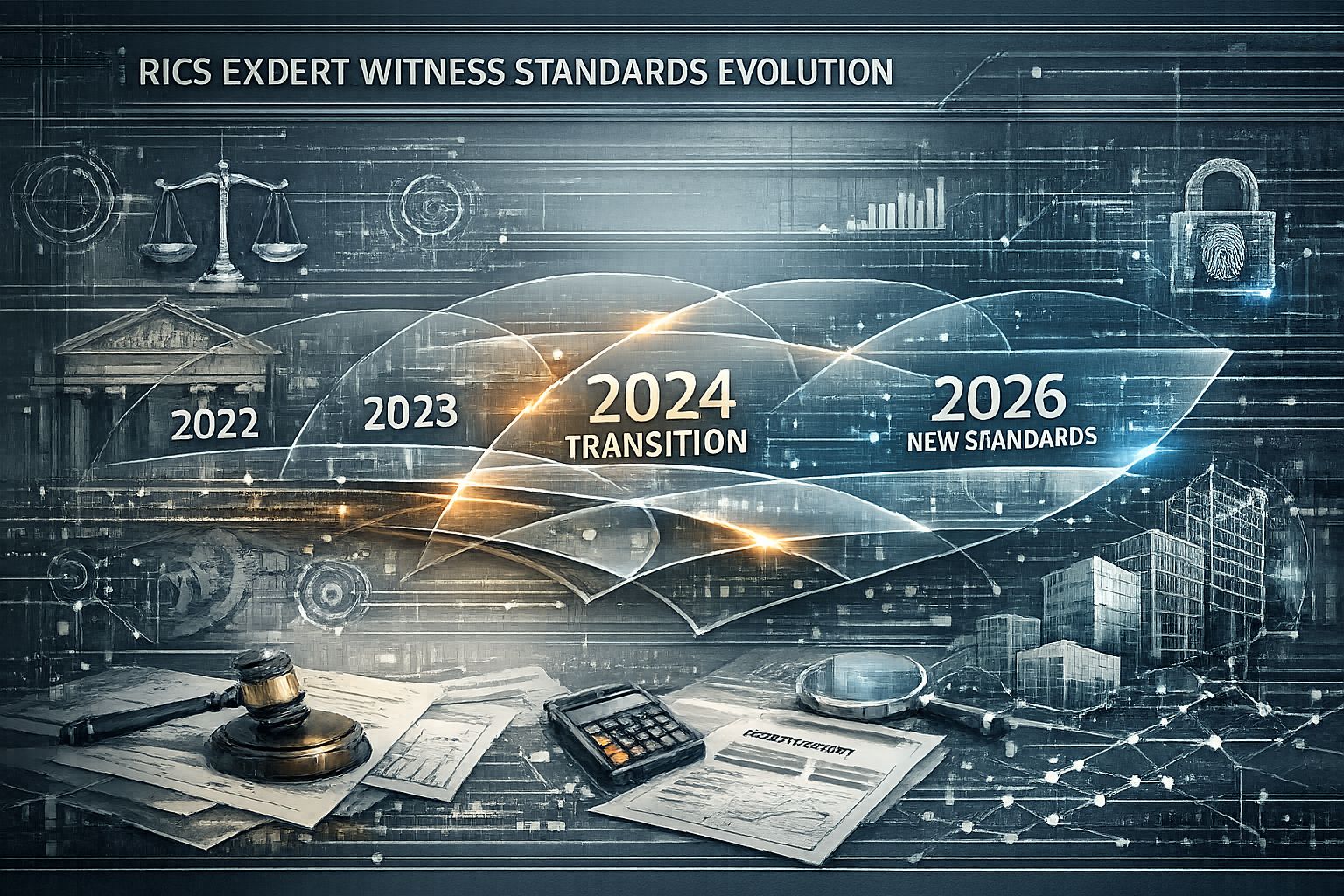
📘 "Surveyors acting as expert witnesses" (5th Edition): The updated standard effective 2025/2026 providing comprehensive guidance on expert witness duties[4]
📘 RICS Valuation – Global Standards (Red Book): Mandatory valuation standards including ESG requirements effective January 2025[3][5]
📘 "Valuation of Data Centres" (1st Edition): Specialized guidance for data centre valuations, currently under review[1]
📘 RICS AI Standards: New requirements for AI use effective March 9, 2026[7]
Professional Development Opportunities
Enhance expertise through:
- RICS Training Courses: Specialized programs on expert witness skills and data centre valuation
- Data Centre Industry Events: Conferences like DataCentres Ireland, DCD>London, and European Data Centre Summit
- Technical Webinars: Regular updates on cooling technologies, power infrastructure, and sustainability
- Legal Training: Understanding court procedures, cross-examination, and evidence rules
Network Building
Develop professional relationships with:
- Other specialist data centre valuers for peer support
- Technical experts (electrical engineers, IT infrastructure specialists)
- Legal professionals specializing in property disputes
- Data centre operators and investors for market intelligence
For surveyors seeking to develop expertise in dispute resolution, understanding boundary disputes resolution and related construction disputes resolution can provide valuable transferable skills.
Conclusion: Excellence in Expert Witness Practice
As data centres continue dominating infrastructure investment in 2026, the demand for expert witness services in valuation disputes will only intensify. Surveyors who position themselves as credible, independent experts with genuine specialized knowledge will find significant opportunities in this growing field.
Success requires unwavering commitment to the fundamental principles reinforced in the updated RICS expert witness standards:[4]
🎯 Primary duty to the tribunal, not the client
🎯 Independence and objectivity in all opinions
🎯 Transparency about methodology, assumptions, and limitations
🎯 Genuine expertise within defined competence boundaries
🎯 Professional integrity in fee arrangements and conflict management
The integration of mandatory ESG considerations,[3] new AI protocols,[7] and evolving data centre technologies creates both challenges and opportunities for expert witnesses. Those who invest in continuous learning, maintain rigorous quality standards, and uphold professional ethics will establish themselves as trusted authorities in this specialized field.
Actionable Next Steps for Surveyors
Immediate Actions:
- Review Updated Standards: Study the 5th edition expert witness standard and new AI protocols[4][7]
- Assess Current Competence: Honestly evaluate whether you possess genuine data centre valuation expertise
- Update Policies: Revise fee agreements and conflict check procedures to align with new guidance
- ESG Training: Develop capability to assess and quantify sustainability factors in valuations[3]
Medium-Term Development:
- Specialize: Focus practice development on data centre valuation as a distinct expertise area
- Build Databases: Create comprehensive comparable evidence databases for data centre transactions
- Develop Partnerships: Establish relationships with technical experts who can support complex valuations
- Publish Expertise: Demonstrate thought leadership through market reports and professional articles
Long-Term Strategy:
- Reputation Building: Establish credibility through consistent high-quality expert witness work
- Continuous Learning: Commit to ongoing professional development as technology and markets evolve
- Quality Systems: Implement robust quality assurance processes ensuring defensible opinions
- Professional Network: Actively participate in RICS committees and data centre industry organizations
The intersection of surging data centre investment, complex valuation methodologies, and evolving professional standards creates a demanding but rewarding practice area. Surveyors who embrace these challenges with professionalism, integrity, and genuine expertise will play crucial roles in resolving the valuation disputes that inevitably arise in this dynamic market.
For those seeking to develop broader expertise in property valuation and dispute resolution, exploring related services such as divorce valuation on property and retrospective valuation can provide valuable experience in contested valuation scenarios.
The 2026 investment boom in data centres presents unprecedented opportunities for chartered surveyors committed to excellence in expert witness practice. By adhering to RICS guidelines, maintaining independence, and developing genuine specialized expertise, surveyors can provide the credible, authoritative testimony that tribunals require to resolve complex valuation disputes fairly and efficiently.
References
[1] Valuation Of Data Centres – https://www.rics.org/profession-standards/rics-standards-and-guidance/sector-standards/valuation-standards/valuation-of-data-centres
[2] Rics Publishes Updated Global Standard Esg Sustainability Commercial Property Valuation – https://www.rics.org/news-insights/rics-publishes-updated-global-standard-esg-sustainability-commercial-property-valuation
[3] New Rics Global Red Book Updates Mandatory Standards Data Management Technology Esg Valuation – https://www.rics.org/news-insights/new-rics-global-red-book-updates-mandatory-standards-data-management-technology-esg-valuation
[4] Rics Launches Global Consultation On Updated Expert Witness Standard – https://www.rics.org/news-insights/rics-launches-global-consultation-on-updated-expert-witness-standard
[5] Valuation Standards – https://www.rics.org/profession-standards/rics-standards-and-guidance/sector-standards/valuation-standards
[6] New Expert Witness Guidance For Rics Members – https://www.nmrk.com/en-gb/perspectives/new-expert-witness-guidance-for-rics-members
[7] Rics Ai Standards For Surveyors – https://goreport.com/rics-ai-standards-for-surveyors/