
"
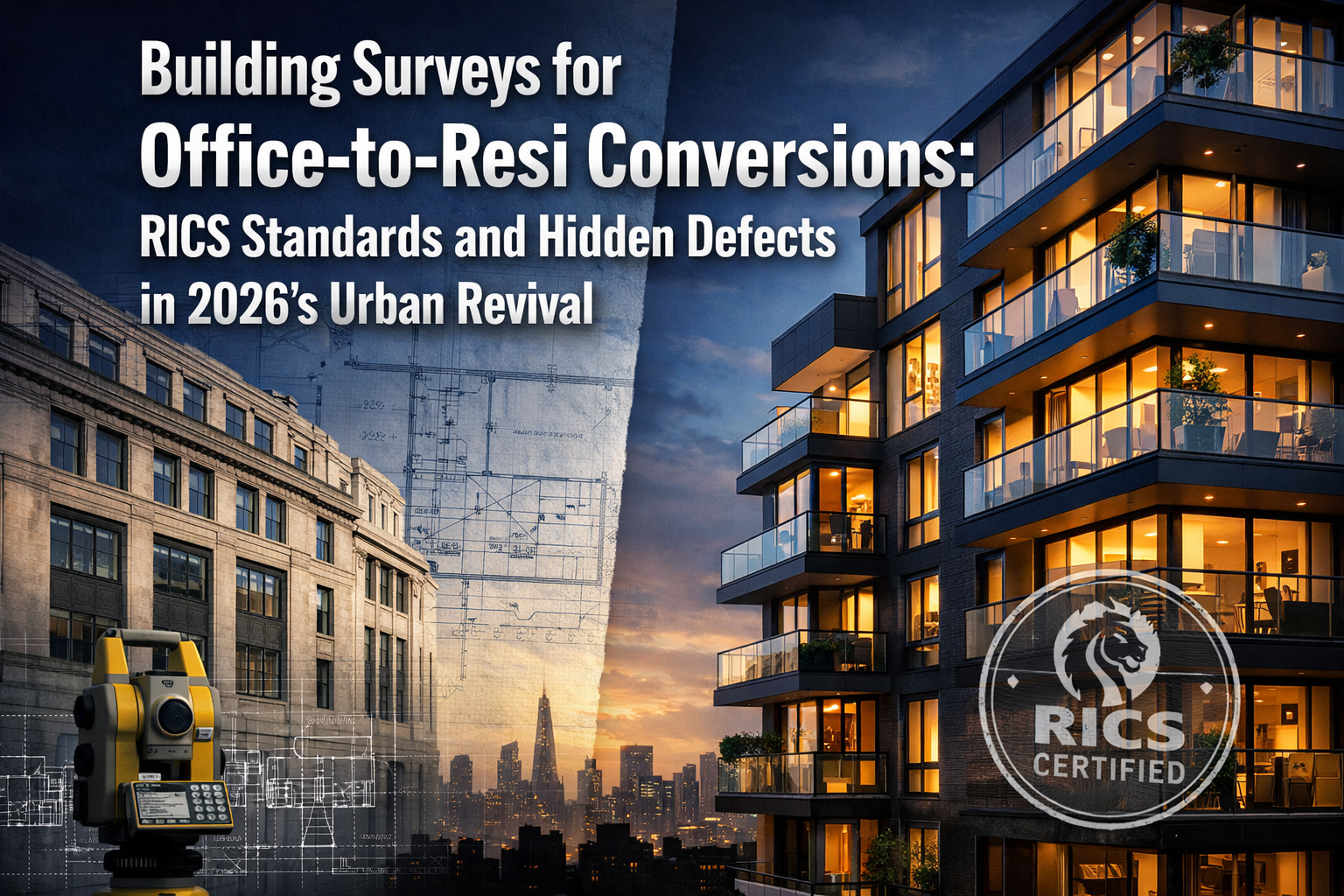
The transformation of empty office towers into vibrant residential communities has become one of 2026's most compelling urban renewal stories. As London's commercial property market rebounds and developers eye underpriced office assets, the critical question isn't whether to convert—it's how to identify the hidden structural and regulatory pitfalls that can derail these ambitious projects. Building Surveys for Office-to-Resi Conversions: RICS Standards and Hidden Defects in 2026's Urban Revival represents the intersection of opportunity and risk, where professional surveyors play a pivotal role in transforming commercial white elephants into successful residential developments.
With tightening retrofit regulations and evolving building standards, the stakes have never been higher for getting these conversions right. 🏢➡️🏠
Key Takeaways
- RICS building surveys are essential for identifying hidden defects in office-to-residential conversions, including structural inadequacies, asbestos, and building services incompatibility
- Building Regulation 5 classifies commercial-to-residential conversions as material changes of use, requiring comprehensive building control approval and additional inspections[2]
- Older office buildings with smaller floor plates (typically pre-1980s) are more suitable for residential conversion due to natural light penetration and compliance with space standards[3]
- Prior approval processes in the UK require assessment within 56 days, making early defect identification critical to project timelines[2]
- Retrofit compliance under 2026 regulations demands thorough evaluation of thermal performance, fire safety, and acoustic insulation before conversion begins
Understanding Office-to-Residential Conversions in 2026's Market Context
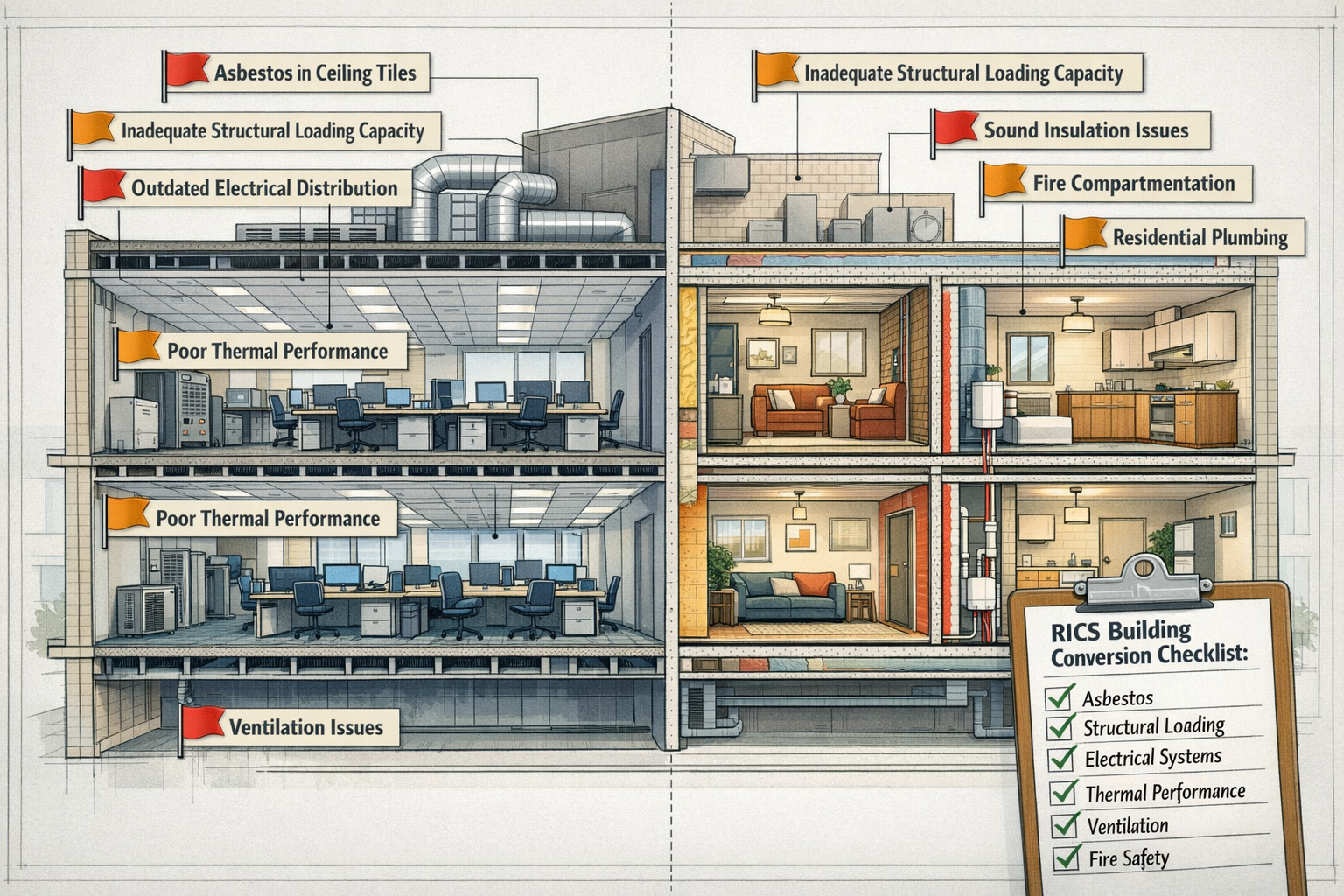
The office-to-residential conversion boom of 2026 stems from a perfect storm of market conditions. Post-pandemic work patterns have left many city centers with significant commercial vacancy rates, while housing shortages continue to intensify across major urban areas. This convergence has created unprecedented opportunities for developers and investors willing to navigate the complex technical requirements.
The Scale of Urban Revival
Cities worldwide are witnessing dramatic transformations of their commercial cores. The conversion trend addresses two critical urban challenges simultaneously: excess office inventory and residential housing shortages[1]. In London specifically, permitted development rights have streamlined certain conversion pathways, though this has also raised concerns about quality standards and proper surveying protocols[5].
The economic case for conversion strengthens when office buildings become underpriced assets relative to residential values. However, this financial opportunity only materializes when developers accurately assess conversion costs—a process that begins with comprehensive building surveys conducted by chartered surveyors in London who understand both commercial and residential building standards.
Why Building Surveys Matter More Than Ever
Unlike new construction, conversions involve working with existing building fabric that may conceal decades of deferred maintenance, outdated systems, and materials that no longer meet current standards. The RICS Quality in Retrofit Summit has emphasized that retrofit regulations in 2026 demand higher performance standards than ever before, particularly around energy efficiency and fire safety.
A proper building survey serves as the foundation for:
- Accurate cost estimation for conversion works
- Risk identification before financial commitment
- Regulatory compliance planning under Building Regulation 5[2]
- Defect remediation strategies that prevent project delays
- Investment decision-making based on realistic conversion feasibility
RICS Standards for Building Surveys in Office-to-Resi Conversions
The Royal Institution of Chartered Surveyors (RICS) provides the professional framework that ensures building surveys meet rigorous standards. When applied to office-to-residential conversions, these standards take on additional complexity due to the change of use classification.
Core RICS Survey Requirements
RICS building surveys for conversion projects must address several critical areas that go beyond standard residential surveys. The surveyor must evaluate the property against both its current commercial specification and future residential requirements[2].
Key survey components include:
Structural Assessment
- Load-bearing capacity for residential floor loading (typically 1.5 kN/m² for offices vs 2.0 kN/m² for residential)[4]
- Foundation adequacy for additional partition walls
- Structural frame condition and any signs of deterioration
- Floor-to-floor heights and their suitability for residential ceiling heights
Building Services Evaluation
- Electrical distribution capacity for individual metering
- Plumbing infrastructure for kitchens and bathrooms
- HVAC systems compatibility with residential requirements
- Drainage capacity for increased sanitary fixtures
Building Envelope Performance
- Thermal insulation levels against current Building Regulations
- Window and glazing suitability for residential use
- Weatherproofing and water ingress risks
- Acoustic performance of external walls
Fire Safety and Compartmentation
- Fire resistance of structural elements
- Means of escape compliance for residential use
- Fire stopping and compartmentation requirements
- Sprinkler system necessity under current regulations
Building Regulation 5 Compliance
Commercial-to-residential conversions fall under Building Regulation 5, which classifies them as material changes of use requiring approval from an approved inspector[2]. This regulatory framework demands that surveyors identify any aspects of the existing building that fail to meet residential standards.
The structural survey process must specifically address:
- Structural stability adequate for residential use
- Fire safety provisions appropriate for dwelling occupancy
- Resistance to moisture preventing dampness and condensation
- Toxic substances including asbestos identification
- Sound insulation between residential units
- Ventilation meeting residential air quality standards
- Sanitation and drainage capacity for residential demand
- Energy efficiency compliant with current Part L requirements
Early engagement with building control authorities helps surveyors understand specific local requirements that may affect the survey scope and defect identification priorities[4].
RICS Quality in Retrofit Considerations
The 2026 emphasis on retrofit quality has introduced additional surveying considerations. Surveyors must now evaluate not just whether a building can be converted, but whether it can meet enhanced sustainability and performance standards expected in modern residential developments.
This includes assessing:
- Embodied carbon implications of conversion versus demolition and rebuild
- Operational energy performance achievable through retrofit measures
- Whole-life cost analysis of building systems and fabric
- Future-proofing against anticipated regulatory changes
Hidden Defects: What Building Surveys Reveal in Office-to-Resi Conversions
The most valuable aspect of professional building surveys lies in uncovering hidden defects that aren't apparent during casual inspections. Office buildings present unique challenges because their commercial design conceals issues that become critical when converting to residential use.
Structural and Load-Bearing Issues
Many office buildings were designed for open-plan layouts with minimal internal partitions. Converting to residential use requires numerous additional walls for individual units, which can exceed the floor's original load-bearing design[4].
Common structural defects include:
- 🏗️ Inadequate floor loading capacity for residential partition walls and fixtures
- Concrete carbonation in older reinforced concrete frames
- Steel corrosion in structural members, particularly in buildings with flat roofs prone to water ingress
- Foundation settlement that may have been acceptable for commercial use but problematic for residential
- Structural alterations made during previous refurbishments without proper certification
The residential structural engineers who review survey findings often discover that strengthening works represent a significant unexpected cost in conversion projects.
Building Services Incompatibility
Office buildings typically feature centralized building services designed for daytime commercial occupancy. Residential use demands 24/7 operation with individual unit control—a fundamental mismatch that surveys must identify.
Critical services defects include:
- Electrical distribution designed for commercial loads without capacity for individual residential metering
- Plumbing risers insufficient for the number of kitchens and bathrooms required
- HVAC systems optimized for office hours rather than continuous residential use
- Hot water provision inadequate for residential demand patterns
- Drainage capacity undersized for increased sanitary fixture numbers
These deficiencies often remain hidden within ceiling voids, service risers, and plant rooms until detailed surveys expose them[10].
Hazardous Materials and Environmental Concerns
Older office buildings frequently contain materials that were standard in commercial construction but are now recognized as hazardous, particularly in residential contexts.
Common hazardous materials found:
- ⚠️ Asbestos in ceiling tiles, floor tiles, pipe insulation, and sprayed coatings (particularly in buildings constructed before 2000)
- Lead paint on structural steelwork and older window frames
- PCBs in electrical equipment and sealants
- Radon accumulation risks in basement and lower-ground conversions
Professional surveys must include asbestos surveys and environmental assessments as standard practice, with clear remediation cost estimates provided[2].
Thermal Performance and Energy Efficiency Gaps
Office buildings, especially those constructed before modern energy standards, typically feature poor thermal performance by residential standards. Large expanses of single-glazed curtain walling, minimal insulation, and thermal bridging create significant retrofit challenges.
Energy efficiency defects include:
- Single or early double-glazing with poor U-values
- Uninsulated external walls in pre-1980s construction
- Thermal bridging at structural connections
- Air leakage through commercial-grade building envelopes
- Inefficient heating systems designed for commercial occupancy patterns
These defects directly impact the building's ability to meet current Part L Building Regulations for residential energy performance[10].
Acoustic Performance Deficiencies
Sound insulation requirements for residential use far exceed commercial standards. Office buildings with lightweight partition systems and open-plan designs rarely meet residential acoustic requirements without significant upgrading.
Acoustic defects commonly identified:
- Inadequate sound insulation between proposed residential units
- Impact sound transmission through commercial-grade floors
- External noise intrusion in city center locations
- Building services noise from HVAC, lifts, and plumbing
- Flanking transmission through structural elements
Achieving compliance with Approved Document E (Resistance to the passage of sound) often requires substantial additional construction that surveys must anticipate[2].
Fire Safety and Compartmentation Failures
The tragic lessons of recent years have intensified scrutiny of fire safety in residential buildings. Converting office buildings to residential use triggers stringent fire safety requirements that commercial buildings rarely satisfy without modification.
Fire safety defects include:
- 🔥 Inadequate fire resistance of floors and walls for residential compartmentation
- Insufficient means of escape from proposed residential layouts
- Combustible cladding on external walls
- Missing or inadequate fire stopping in service penetrations
- Non-compliant fire doors and protected routes
Surveyors must work closely with fire safety specialists to ensure conversion designs meet current regulations, particularly given the enhanced scrutiny following regulatory updates[2].
Practical Checklists for Building Surveys in Office-to-Resi Conversions
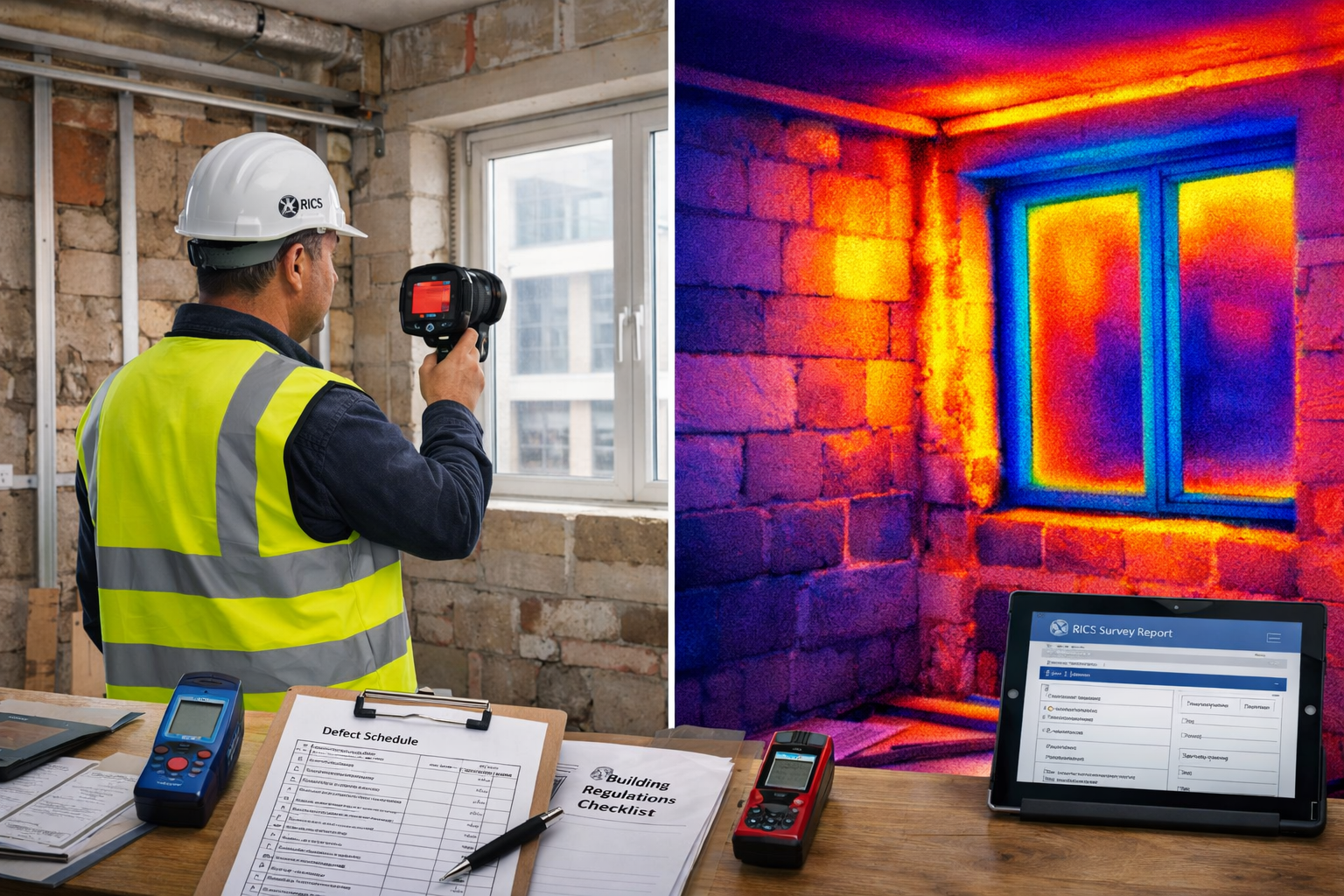
Drawing on insights from the RICS Quality in Retrofit Summit and practical conversion experience, professional surveyors should employ comprehensive checklists that ensure no critical defect escapes identification.
Pre-Acquisition Survey Checklist
Before developers commit to purchasing an office building for conversion, the survey should address:
| Survey Area | Key Evaluation Points | Red Flags |
|---|---|---|
| Building Characteristics | Floor plate depth, floor-to-ceiling heights, window-to-floor ratios | Floor plates >15m deep, ceiling heights <2.7m, window ratios <20% |
| Structural Suitability | Frame type, loading capacity, column spacing | Inadequate loading, inflexible column grids |
| Services Infrastructure | Riser locations, plant room capacity, distribution routes | Insufficient risers, inaccessible plant rooms |
| Regulatory Constraints | Listed building status, conservation area, planning history | Restrictive designations, previous refusal history |
| Site Context | Neighboring uses, noise sources, access for construction | High noise environments, limited construction access |
Detailed Building Survey Checklist
Once a project proceeds, detailed surveys should systematically evaluate:
Foundation and Substructure
- Foundation type and condition assessment
- Basement waterproofing integrity
- Subsidence indicators and ground movement
- Drainage condition and capacity
- Contaminated land assessment
Superstructure and Envelope
- Structural frame condition and loading capacity
- External wall construction and thermal performance
- Roof condition and waterproofing
- Window and glazing performance
- Cladding type and fire safety compliance
Building Services
- Electrical distribution and capacity
- Plumbing and drainage infrastructure
- Heating and ventilation systems
- Lift installation and condition
- Fire alarm and detection systems
Compliance and Safety
- Asbestos survey and register
- Fire safety assessment
- Acoustic performance evaluation
- Energy performance assessment
- Accessibility compliance review
Conversion Feasibility Assessment
Beyond defect identification, surveys should provide clear feasibility assessments addressing:
- Layout Efficiency: Can the floor plate accommodate viable residential units meeting space standards?[3]
- Natural Light: Do proposed units achieve adequate daylight and outlook?
- Cost Viability: Do remediation costs leave adequate development margin?
- Regulatory Pathway: What approval route applies and what are the key risks?
- Program Implications: How do identified defects affect construction timeline?
Professional surveyors should provide clear recommendations on whether to proceed, renegotiate, or abandon conversion plans based on survey findings.
Navigating Prior Approval and Building Control Processes
Understanding the regulatory framework helps surveyors focus their investigations on aspects most critical to approval processes.
Prior Approval Requirements
In the UK, office-to-residential conversions under permitted development rights require prior approval from local planning authorities, assessed within 56 days[2]. While this streamlines the planning process, it doesn't exempt projects from building control requirements.
Surveys must specifically address prior approval considerations:
- Contamination risks on the site
- Flood risk assessment
- Transport and highways impacts
- Noise impacts on future residents
- Adequate natural light in proposed units
Local authorities can refuse prior approval on these grounds, making survey identification of potential objections critical[6].
Building Control Approval Under Regulation 5
The Building Regulation 5 classification as material change of use requires comprehensive building control approval[2]. Surveyors should identify all aspects requiring upgrading to meet residential standards:
Key compliance areas:
- Structure adequate for residential loading
- Fire safety suitable for residential occupancy
- Resistance to moisture and weather
- Sound insulation between units
- Ventilation for residential air quality
- Sanitation and drainage capacity
- Energy efficiency meeting Part L
- Access and facilities for disabled persons
Early consultation with building control bodies helps clarify specific requirements and acceptable solutions, particularly for complex conversions where standard details may not apply[4].
Working with Building Control Inspectors
Professional surveyors should maintain collaborative relationships with building control inspectors, who provide valuable insights into local interpretation of regulations and common conversion challenges.
Best practices include:
- Pre-application meetings to discuss survey findings and proposed solutions
- Phased inspection planning aligned with construction sequences
- Documentation protocols ensuring survey findings inform inspection records
- Variation procedures when surveys reveal unexpected conditions requiring design changes
This collaborative approach reduces the risk of stop notices and ensures conversion works proceed smoothly through regulatory checkpoints.
Cost Implications of Hidden Defects in Office-to-Resi Conversions
The financial impact of hidden defects discovered during building surveys can transform viable conversion projects into financial disasters. Professional surveys provide the cost intelligence necessary for informed investment decisions.
Typical Remediation Cost Ranges
Based on 2026 market conditions, common defect remediation costs include:
Structural Strengthening: £150-400 per m² for floor strengthening and additional load-bearing capacity
Building Services Upgrades: £8,000-15,000 per residential unit for new electrical, plumbing, and heating installations
Asbestos Removal: £50-150 per m² depending on material type and location accessibility
Fire Safety Upgrades: £100-250 per m² for compartmentation, fire doors, and detection systems
Acoustic Improvements: £75-200 per m² for sound insulation between units
Thermal Upgrades: £200-500 per m² for external wall insulation and window replacement
Facade Remediation: £500-1,500 per m² for cladding replacement and fire safety compliance
These costs can quickly exceed initial conversion budgets, particularly when multiple defect categories require simultaneous remediation[4].
Value Engineering Based on Survey Findings
Professional building surveys enable value engineering by:
- Prioritizing essential works versus desirable improvements
- Identifying cost-effective solutions to regulatory compliance
- Optimizing unit layouts around existing structural constraints
- Phasing remediation works to manage cash flow
- Negotiating purchase price adjustments based on defect findings
The RICS valuation process incorporates survey findings to establish realistic development appraisals that account for remediation costs.
Contingency Planning for Unknown Defects
Even comprehensive surveys cannot identify every hidden defect. Professional practice recommends:
- Contingency allowances of 10-20% of estimated remediation costs
- Intrusive investigation provisions in construction contracts
- Variation procedures for addressing newly discovered defects
- Insurance coverage for latent defect risks
These risk management strategies protect developers from project failures when surveys inevitably miss concealed defects.
Future-Proofing Conversions: 2026 Retrofit Regulations and Beyond
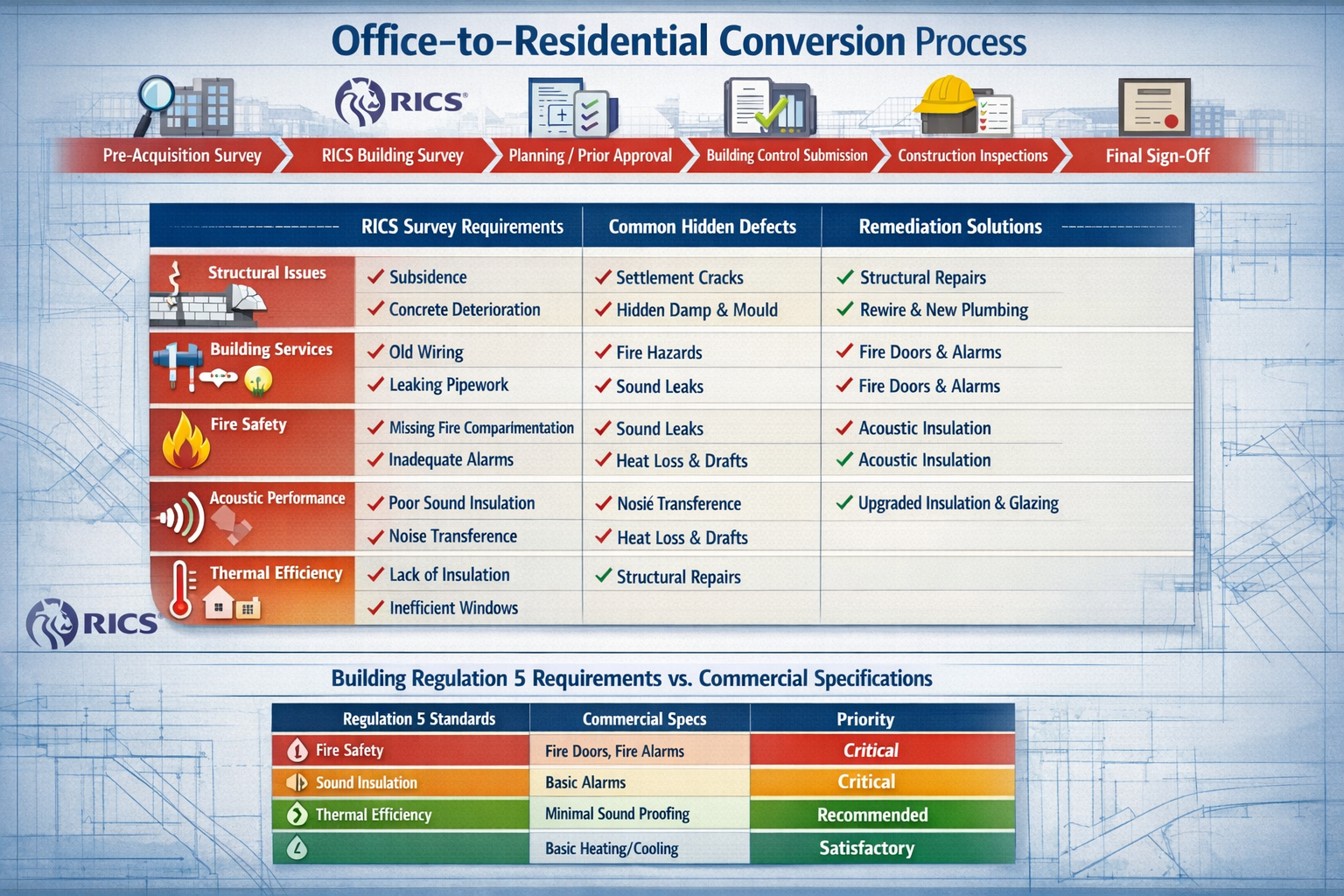
The regulatory landscape for building conversions continues to evolve, with 2026 bringing enhanced requirements around energy performance, fire safety, and building quality. Professional surveys must anticipate these trends to ensure conversions remain compliant and valuable.
Enhanced Energy Performance Standards
Current Building Regulations Part L requirements represent minimum standards, but market expectations increasingly demand higher performance. Surveys should evaluate:
- EPC rating potential achievable through practical retrofit measures
- Renewable energy integration opportunities (solar PV, heat pumps)
- Smart building systems compatibility for energy management
- Future regulatory compliance against anticipated standard increases
Buildings that merely meet minimum standards risk rapid obsolescence as regulations tighten[10].
Building Safety Act Implications
The Building Safety Act has transformed accountability for residential building safety. Surveys for conversion projects must consider:
- Building height classifications triggering enhanced requirements
- Golden thread documentation requirements for building information
- Competence requirements for designers and contractors
- Resident engagement obligations for building safety
These requirements affect survey scope, documentation standards, and ongoing building management responsibilities[2].
Sustainability and Circular Economy Considerations
The 2026 emphasis on embodied carbon and circular economy principles affects conversion project evaluation. Surveys should assess:
- Embodied carbon savings from reusing existing structure versus demolition
- Material reuse opportunities from existing building fabric
- Whole-life carbon performance of conversion versus new build alternatives
- Adaptation potential for future use changes
This sustainability lens increasingly influences planning decisions and investor preferences, making it essential survey content[7].
Selecting the Right Surveyor for Office-to-Resi Conversion Projects
Not all surveyors possess the specialized knowledge required for successful office-to-residential conversion surveys. Developers should select professionals with specific expertise in this complex field.
Essential Surveyor Qualifications
Look for surveyors with:
- RICS membership (MRICS or FRICS) demonstrating professional competence
- Building survey experience in both commercial and residential contexts
- Conversion project history with verifiable references
- Building pathology knowledge for defect identification and remediation
- Regulatory expertise in Building Regulations and planning processes
The chartered surveyors conducting conversion surveys should demonstrate multidisciplinary capabilities spanning structural, services, and regulatory domains.
Questions to Ask Prospective Surveyors
Before appointing a surveyor, developers should ask:
- How many office-to-residential conversion surveys have you completed?
- What is your approach to identifying hidden defects in commercial buildings?
- Do you work with specialist consultants for structural, services, and fire safety assessments?
- How do you incorporate RICS standards and retrofit quality considerations?
- What deliverables and reporting formats do you provide?
- How do you support the building control approval process?
- What professional indemnity insurance coverage do you maintain?
These questions reveal whether surveyors possess the depth of expertise conversion projects demand.
Integrated Survey Teams
Complex conversions often require integrated survey teams including:
- Building surveyors for overall condition assessment
- Structural engineers for loading and stability evaluation
- Building services engineers for M&E systems assessment
- Fire safety consultants for regulatory compliance
- Acoustic consultants for sound insulation design
- Environmental specialists for contamination and hazardous materials
Coordinated multidisciplinary surveys provide comprehensive defect identification and integrated remediation strategies[10].
Conclusion: Building Surveys as the Foundation of Successful Conversions
As 2026's urban revival transforms empty office buildings into vibrant residential communities, Building Surveys for Office-to-Resi Conversions: RICS Standards and Hidden Defects in 2026's Urban Revival represents the critical first step in successful development. The opportunities are substantial—underpriced commercial assets, streamlined planning processes, and strong residential demand create favorable conditions for conversion projects.
However, these opportunities come with significant risks. Hidden structural defects, building services incompatibility, hazardous materials, and regulatory compliance challenges can quickly transform promising conversions into financial disasters. Professional building surveys conducted to RICS standards provide the essential intelligence that separates successful projects from failures.
The key insights for 2026 include:
✅ Comprehensive surveys identifying structural, services, and compliance defects before financial commitment
✅ RICS professional standards ensuring thorough evaluation against both commercial and residential requirements
✅ Building Regulation 5 compliance requiring systematic assessment of material change of use implications
✅ Retrofit quality considerations addressing energy performance and sustainability expectations
✅ Cost intelligence enabling realistic development appraisals and informed investment decisions
Next Steps for Developers and Investors
For those considering office-to-residential conversion projects:
- Engage RICS-qualified surveyors with proven conversion experience early in the acquisition process
- Commission comprehensive building surveys addressing structure, services, hazardous materials, and regulatory compliance
- Consult building control authorities before finalizing designs to clarify specific requirements
- Budget realistic contingencies for defect remediation based on survey findings
- Assemble multidisciplinary teams bringing structural, services, and fire safety expertise
- Document thoroughly creating the golden thread of building information required under current regulations
The transformation of office buildings into residential communities represents one of 2026's most significant urban renewal opportunities. Professional building surveys provide the foundation for realizing this potential while managing the substantial risks inherent in conversion projects.
For expert guidance on building surveys for office-to-residential conversions, consult with experienced chartered surveyors who understand both RICS standards and the practical realities of conversion projects. The investment in professional surveys pays dividends through avoided defects, realistic cost planning, and successful project delivery.
References
[1] Top Cities Office To Residential Conversions – https://www.constructionplacements.com/top-cities-office-to-residential-conversions/
[2] Effective Commercial To Residential Conversions – https://ww3.rics.org/uk/en/journals/property-journal/effective-commercial-to-residential-conversions.html
[3] Office Residential Conversion – https://ww3.rics.org/uk/en/modus/built-environment/commercial-real-estate/office-residential-conversion.html
[4] From Cubicles To Condos Considerations – https://www.jdsupra.com/legalnews/from-cubicles-to-condos-considerations-3847300/
[5] Assessing The Impacts Of Extending Permitted Development Rights To Office To Residential Change Of Use In England – https://www.rics.org/news-insights/research-and-insights/assessing-the-impacts-of-extending-permitted-development-rights-to-office-to-residential-change-of-use-in-england
[6] Converting Commercial To Residential Property – https://searchland.co.uk/blog/converting-commercial-to-residential-property
[7] Can Unused Office Space Solve The Housing Crisis – https://www.rics.org/news-insights/wbef/can-unused-office-space-solve-the-housing-crisis
[10] Converting Office Space To Residential The Benefits And What To Consider – https://www.tetratecheurope.com/views/converting-office-space-to-residential-the-benefits-and-what-to-consider/