
The landscape of expert witness testimony in property disputes is undergoing a seismic shift in 2026. As tribunals embrace unprecedented transparency measures and the housing market shows signs of recovery, expert witnesses face new challenges that demand strategic preparation and updated protocols. Understanding these changes isn't just beneficial—it's essential for maintaining credibility and effectiveness in an increasingly scrutinized environment.
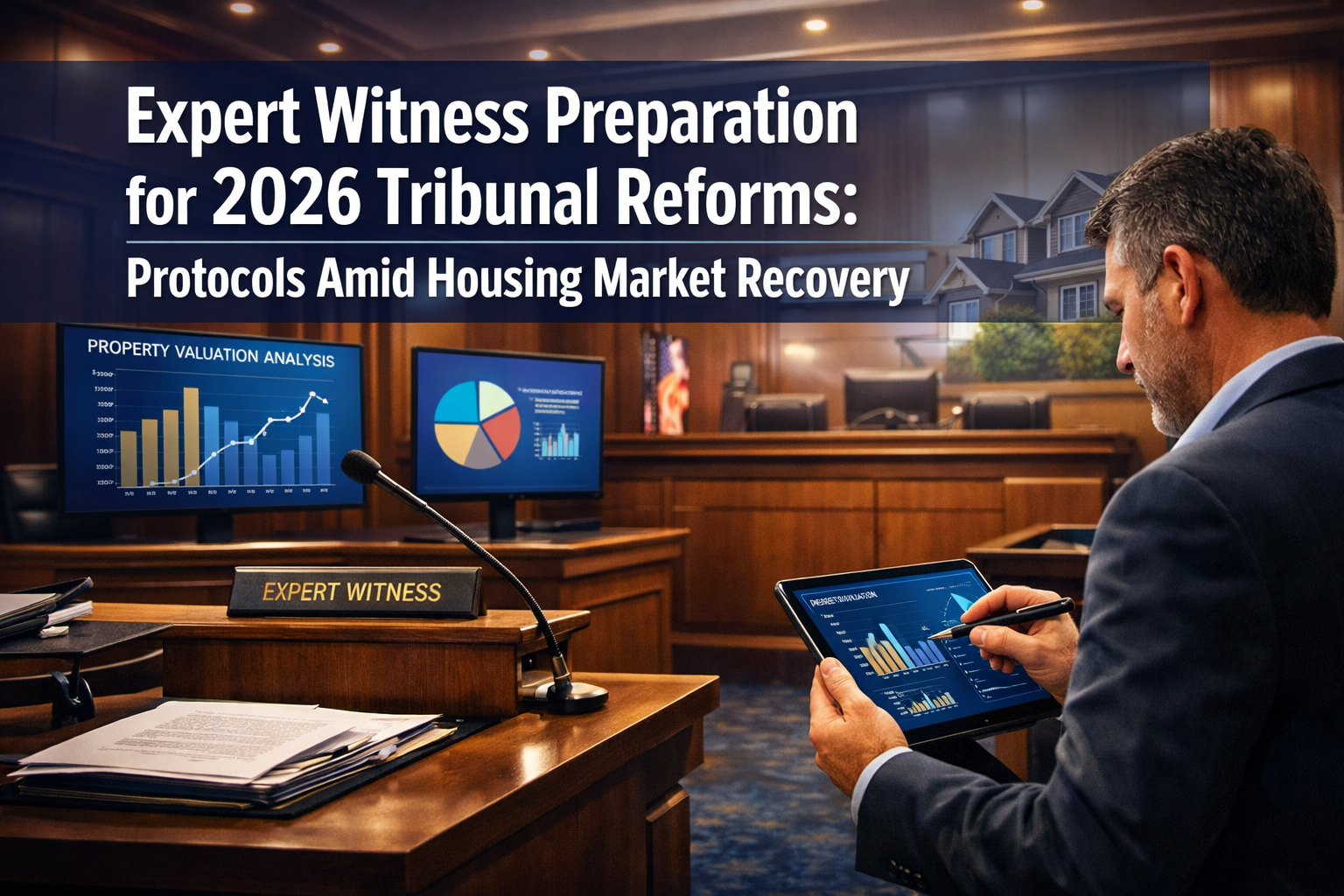
Expert Witness Preparation for 2026 Tribunal Reforms: Protocols Amid Housing Market Recovery represents a critical intersection of legal innovation and market dynamics. With new public filing requirements taking effect this January and property valuations becoming more contentious amid market fluctuations, expert witnesses must adapt their practices to meet evolving standards while maintaining the integrity that defines their profession.
Key Takeaways
- 📋 Public transparency requirements now mandate that expert reports be filed publicly within 14 days of court use, fundamentally changing how witnesses prepare sensitive property valuations
- ⚖️ The overriding duty to the court supersedes obligations to instructing parties, requiring expert witnesses to prioritize objectivity over advocacy in housing market disputes
- 🏘️ Housing market recovery dynamics create new valuation challenges as expert witnesses navigate price disputes during periods of market volatility and reform
- 🔍 Filing Modification Orders (FMOs) provide mechanisms to protect commercially sensitive information while balancing transparency requirements
- 📅 The two-year pilot program running through December 2027 will shape future expert witness protocols, with a six-month review scheduled for mid-2026
Understanding the 2026 Tribunal Transparency Revolution
The January 2026 Public Filing Mandate
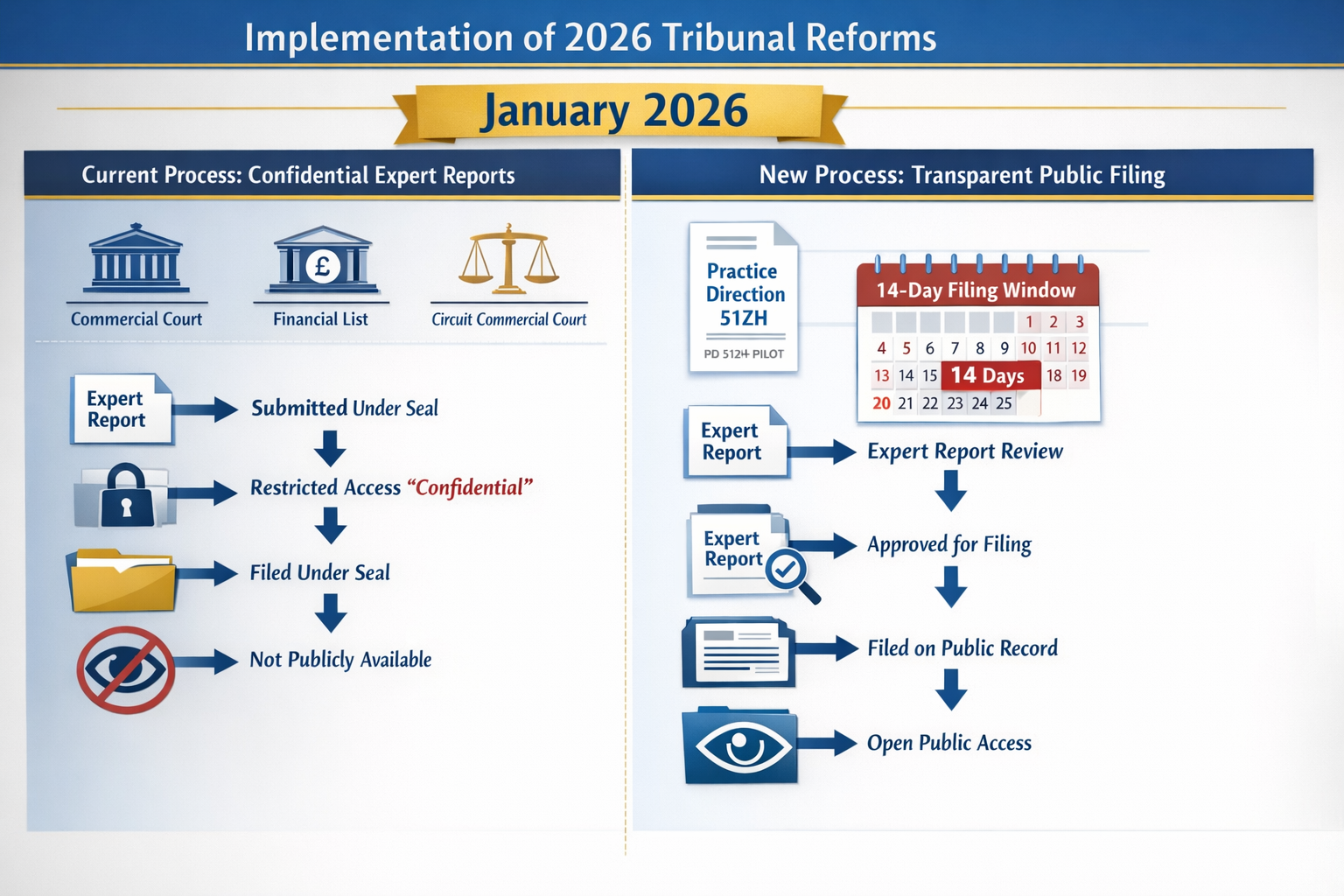
A groundbreaking change arrived on 1 January 2026 with Practice Direction 51ZH, which fundamentally altered how expert evidence is managed in commercial litigation. This directive requires parties in the Commercial Court, London Circuit Commercial Court, and Financial List to publicly file "Public Domain Documents"—a category that explicitly includes expert reports[1].
For expert witnesses involved in property disputes, this means their carefully prepared valuations, technical assessments, and professional opinions will become accessible to the public and media within 14 days of being used or referenced in court[1]. This unprecedented transparency creates both opportunities and challenges for professionals who previously operated under assumptions of confidentiality.
"Expert reports are among the documents explicitly required to be filed publicly within 14 days of being used or referenced in court, making expert witness evidence immediately accessible to the public and media."
The implications extend beyond new cases. The filing requirements apply to existing proceedings where a public hearing occurs after 1 January 2026, meaning expert witnesses engaged in ongoing property disputes must immediately adapt to increased public scrutiny[3].
Duration and Review Timeline
Unlike previous pilots that tested reforms over shorter periods, the 2026 transparency initiative is scheduled to run from 1 January 2026 to 31 December 2027—a substantial two-year commitment that signals serious intent to transform litigation practices[2]. However, recognizing the significant impact on established procedures, authorities have built in a formal six-month review to assess implementation challenges and effectiveness.
This extended timeline provides expert witnesses with both certainty and flexibility. The initial six months serve as a critical adjustment period where professionals can refine their preparation protocols, while the full two years allow for comprehensive evaluation of how transparency affects property dispute resolution quality and efficiency.
Expert Witness Preparation for 2026 Tribunal Reforms: Core Protocols
Adapting Report Preparation for Public Scrutiny
The knowledge that expert reports will become public documents requires a fundamental shift in preparation methodology. Expert witnesses must now craft reports that withstand not only cross-examination by opposing counsel but also potential media scrutiny and public commentary.
Key preparation adjustments include:
- ✅ Enhanced methodology documentation – Every assumption, calculation, and conclusion must be thoroughly explained and justified
- ✅ Plain language prioritization – Technical jargon should be minimized or clearly defined for non-specialist readers
- ✅ Comprehensive source citations – All data sources, comparable properties, and market research must be meticulously referenced
- ✅ Sensitivity review protocols – Identifying commercially sensitive information that may qualify for Filing Modification Orders
- ✅ Peer review integration – Internal quality checks become essential before reports enter the public domain
For property surveyors preparing schedule of condition reports or dilapidation surveys, these enhanced standards mean allocating additional time for documentation and review processes.
Understanding Filing Modification Orders (FMOs)
While transparency is the default position under the 2026 reforms, Practice Direction 51ZH recognizes that certain information requires protection. Filing Modification Orders provide a mechanism for parties to request that sensitive information be redacted, filing periods extended, or access entirely restricted before documents become public[2].
Expert witnesses should understand when FMOs might be appropriate:
| Scenario | FMO Application | Likelihood of Approval |
|---|---|---|
| Proprietary valuation methodology | Redaction of specific formulas | High |
| Confidential comparable sales data | Partial redaction with anonymization | Moderate |
| Personal financial information | Complete redaction | High |
| Standard market analysis | No modification needed | N/A |
| Third-party commercial secrets | Redaction or restricted access | High |
The burden falls on the requesting party to justify why modification is necessary, but expert witnesses play a crucial role in identifying sensitive content during report preparation and advising instructing solicitors on potential FMO applications.
The Critical Documents Provision
Perhaps the most unpredictable element of the 2026 reforms is Paragraph 8(g) of Practice Direction 51ZH, which empowers judges to order filing of documents not expressly listed where they are "critical to understanding hearing arguments"[2].
For expert witnesses, this creates uncertainty about which additional materials beyond the formal report might be required for public filing:
- 📊 Working papers and calculation spreadsheets
- 📸 Site visit photographs and inspection notes
- 📧 Correspondence with instructing parties
- 📚 Research materials and market data compilations
- 🗣️ Notes from expert discussions or joint statements
This provision underscores the importance of maintaining professional standards throughout the entire engagement, not just in the final report. Expert witnesses should assume that any document related to their opinion could potentially be ordered for public filing.
Housing Market Recovery Context for Expert Witness Preparation
Navigating Valuation Disputes During Market Volatility
The 2026 housing market recovery presents unique challenges for expert witnesses preparing property valuations. After years of uncertainty, markets are showing signs of stabilization, but regional variations and sector-specific dynamics create fertile ground for disputes over property values.
Common dispute scenarios in 2026 include:
🏠 Purchase price disagreements – Buyers and sellers contest valuations amid changing market conditions
🏗️ Development viability assessments – Experts evaluate whether projects remain economically feasible as construction costs and property values shift
⚖️ Lease extension valuations – Disputes over premium calculations as underlying property values fluctuate
🔧 Dilapidation claims – Disagreements over repair costs and property condition impact on value
For professionals providing RICS registered valuation services, the recovery phase demands careful attention to market timing, comparable selection, and transparent methodology that can withstand public scrutiny.
RICS Reform Consultations and Buying Process Changes
The Royal Institution of Chartered Surveyors continues to consult on potential reforms to the property buying process in 2026, with implications for how expert witnesses approach valuation disputes. Proposed changes include earlier survey requirements, standardized information packs, and enhanced transparency in property transactions.
These reforms create a dual preparation challenge for expert witnesses:
- Adapting to current tribunal transparency requirements while simultaneously
- Anticipating how buying process reforms will affect the nature and volume of disputes
Expert witnesses should monitor RICS guidance updates and participate in professional development opportunities that address both tribunal reforms and evolving transaction protocols. The intersection of these changes will shape dispute resolution practices for years to come.
Building Safety Act Compliance Disputes
As enforcement of building safety regulations intensifies in 2026, expert witnesses face unprecedented scrutiny in Building Safety Act compliance cases. The Royal Institution of Chartered Surveyors has provided updated protocols for expert witness engagement in high-rise litigation, recognizing the technical complexity and public interest in these disputes[4].
For surveyors involved in party wall matters or structural assessments, Building Safety Act cases require:
- Enhanced qualifications documentation
- Detailed compliance methodology
- Clear explanation of regulatory standards
- Comprehensive risk assessment protocols
- Transparent limitation acknowledgment
These cases often involve significant public interest, making the 2026 transparency reforms particularly impactful when expert evidence addresses building safety concerns.
Expert Witness Preparation for 2026 Tribunal Reforms: Practical Implementation

The Overriding Duty to the Court
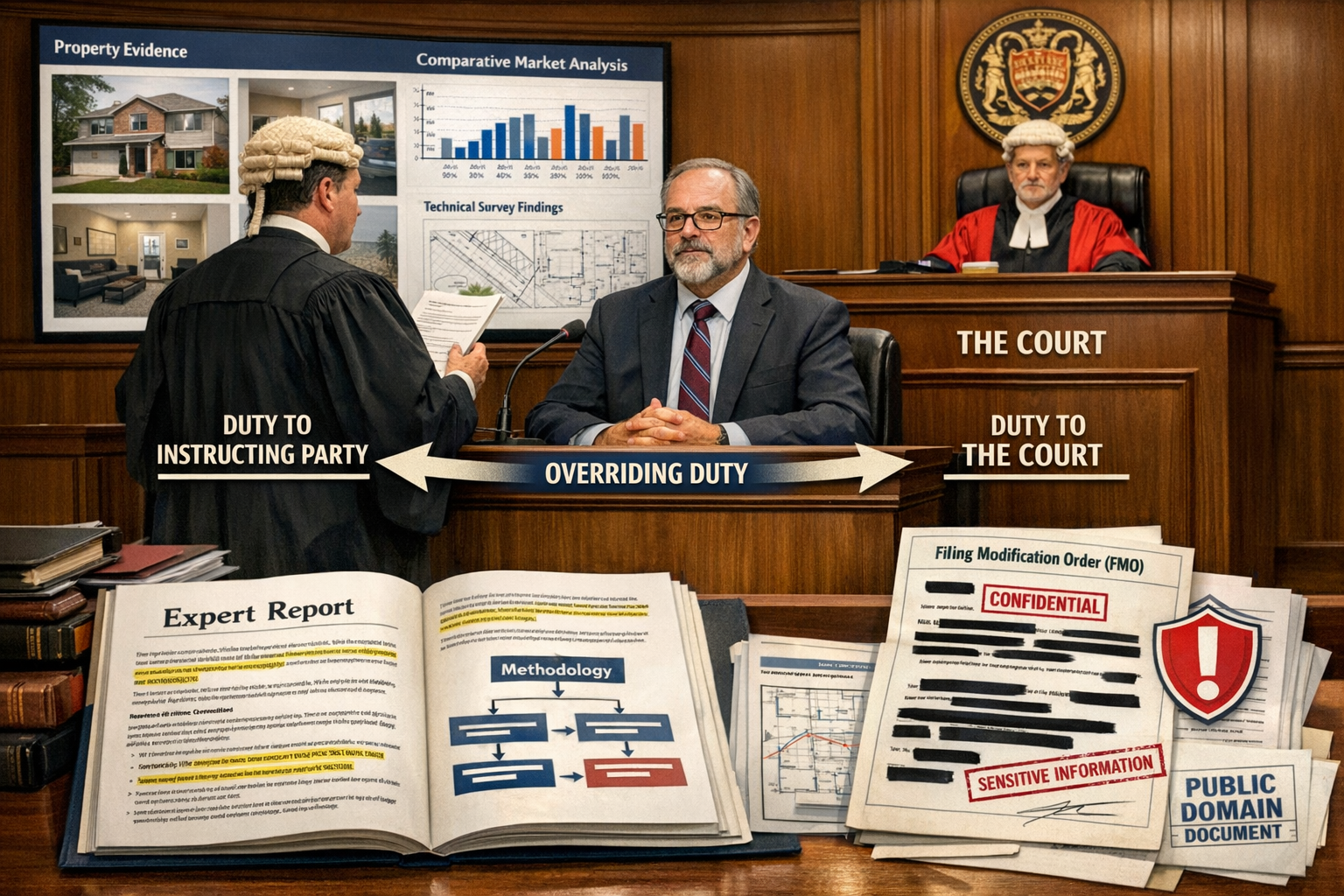
Central to expert witness preparation is understanding that the primary duty is to assist the court on matters within their expertise—a duty that supersedes any obligations to the litigant who instructed them[1]. This principle becomes even more critical under the 2026 transparency reforms, where public access to expert reports creates additional accountability.
Practical applications of this overriding duty include:
- 🎯 Objective analysis – Presenting balanced opinions even when they don't favor the instructing party
- 📝 Complete disclosure – Acknowledging limitations, uncertainties, and alternative interpretations
- 🤝 Collaborative engagement – Participating constructively in expert discussions and joint statements
- ⚖️ Independence maintenance – Resisting pressure to modify opinions for strategic advantage
- 🔍 Transparent methodology – Clearly explaining how conclusions were reached
For professionals conducting subsidence surveys or roof inspections, this duty means presenting findings objectively regardless of which party commissioned the work.
Preparing for Cross-Examination Under Public Scrutiny
Where each litigant engages their own expert, witnesses may be subject to cross-examination at trial, requiring thorough preparation for challenging questioning about methodology and conclusions[1]. The 2026 reforms add an additional layer of complexity: cross-examination occurs with the knowledge that both the expert report and testimony will be publicly accessible.
Enhanced cross-examination preparation strategies:
| Preparation Element | Traditional Approach | 2026 Enhanced Protocol |
|---|---|---|
| Methodology review | Internal verification | Peer review plus public defensibility check |
| Assumption documentation | Standard notation | Comprehensive justification with sources |
| Alternative scenarios | Brief consideration | Detailed analysis with reasoning for rejection |
| Comparable selection | Professional judgment | Transparent criteria with documented search process |
| Limitation acknowledgment | General statement | Specific impact assessment on conclusions |
Expert witnesses should work closely with instructing solicitors to conduct mock cross-examinations that anticipate not only opposing counsel's questions but also potential public criticism of methodology or conclusions.
Single Joint Expert Considerations
Courts may order the use of a single joint expert in appropriate circumstances rather than allowing each party to appoint separate experts[1]. This approach affects how expert evidence is structured and requires different preparation protocols.
When appointed as a single joint expert in property disputes, professionals must:
- ✓ Maintain strict impartiality between parties
- ✓ Respond equally to questions from both sides
- ✓ Document all communications transparently
- ✓ Provide balanced analysis of competing positions
- ✓ Acknowledge areas of genuine uncertainty
The 2026 transparency reforms make single joint expert appointments particularly attractive to courts seeking to streamline proceedings while maintaining public confidence in expert evidence quality.
Strategic Protocols for Different Property Dispute Types
Party Wall and Boundary Disputes
Party wall disputes represent a significant category of property conflicts where expert witness testimony proves crucial. Under the 2026 reforms, experts preparing evidence for party wall tribunal hearings must consider how public filing affects sensitive neighbor relationships.
Specific protocols for party wall experts include:
- 🏘️ Anonymization strategies – Working with solicitors to protect residential addresses while maintaining evidence integrity
- 📋 Condition documentation – Enhanced photographic and written records that withstand public scrutiny
- 💰 Cost justification – Transparent explanation of party wall surveyor costs and fee calculations
- 🔧 Technical standards – Clear reference to applicable building regulations and industry standards
- 🤝 Dispute resolution focus – Emphasizing constructive solutions over adversarial positioning
For work involving party wall loft conversions or shared chimneys, experts should prepare reports that demonstrate both technical competence and sensitivity to ongoing neighbor relationships.
Commercial Property Dilapidations
Commercial dilapidation disputes often involve substantial financial claims and complex technical assessments. The 2026 transparency reforms create particular challenges when expert reports contain commercially sensitive information about property conditions or business operations.
Key preparation considerations:
- 📊 Cost breakdown transparency – Detailed justification for repair cost estimates with supporting quotations
- 🏢 Lease interpretation – Clear explanation of how repairing obligations were interpreted
- 📸 Evidence quality – Professional photography and documentation that supports conclusions
- 💼 Commercial sensitivity – Identifying information that may qualify for FMO protection
- ⏰ Timing considerations – Accounting for the 14-day filing window in report delivery schedules
Expert witnesses should collaborate with instructing solicitors early in the engagement to identify potentially sensitive commercial information and develop strategies for protection while maintaining report credibility.
Residential Valuation Disputes
Residential property valuation disputes during the 2026 market recovery require expert witnesses to navigate volatile market conditions while preparing evidence for public scrutiny. Whether addressing probate valuations, capital gains tax assessments, or purchase price disagreements, transparency is paramount.
Essential protocols include:
- 📈 Market context explanation – Detailed analysis of local market conditions and recovery trends
- 🏘️ Comparable selection transparency – Clear criteria for choosing comparable properties with full disclosure
- 📅 Valuation date significance – Explanation of how market timing affects value conclusions
- 🔍 Methodology justification – Transparent explanation of valuation approach selection
- 📊 Range presentation – Acknowledging valuation uncertainty through appropriate range presentation
For experts providing Red Book valuations or RICS valuation services, adherence to professional standards becomes even more critical when reports enter the public domain.
Technology and Documentation Best Practices
Digital Evidence Management
The 2026 tribunal reforms demand sophisticated approaches to evidence management, particularly given the 14-day filing window and potential for public access. Expert witnesses should implement robust digital documentation systems that facilitate efficient report preparation and filing compliance.
Recommended technology protocols:
- 💾 Cloud-based systems – Secure storage with version control and access logging
- 📸 Professional photography – High-quality images with metadata preservation
- 📊 Data visualization tools – Clear presentation of complex valuation data and market analysis
- 🔐 Encryption standards – Protection of sensitive information before FMO determinations
- 📱 Mobile documentation – Field-ready tools for site inspections and evidence gathering
Expert witnesses should ensure their technology infrastructure supports both efficient workflow and compliance with transparency requirements while protecting sensitive information appropriately.
Report Templates and Standardization
Developing standardized report templates that incorporate 2026 reform requirements helps expert witnesses maintain consistency and quality across engagements. Templates should include:
- ✅ Clear statement of overriding duty to the court
- ✅ Comprehensive methodology section
- ✅ Transparent assumption documentation
- ✅ Limitation acknowledgment
- ✅ Source citation standards
- ✅ Sensitivity flagging mechanisms
- ✅ Plain language explanations
While templates provide structure, expert witnesses must ensure each report is tailored to the specific dispute and property characteristics rather than relying on generic language that fails to address unique circumstances.
Regional Considerations and Market Variations
London and South East England
Property disputes in London and the South East present unique challenges during the 2026 market recovery, with significant price variations between locations and property types. Expert witnesses working across West London, North London, or South East London must account for micro-market dynamics in their valuations.
Regional protocol considerations:
- 🏙️ Micro-market analysis – Detailed examination of neighborhood-specific recovery patterns
- 🚇 Infrastructure impact – Assessment of how transport improvements affect property values
- 🏛️ Conservation area factors – Special considerations for protected properties and planning constraints
- 💰 Price tier differences – Recognition of how recovery affects different market segments differently
For professionals serving areas like Chelsea, Hampstead, or Richmond, understanding local market nuances is essential for credible expert testimony.
Home Counties and Regional Markets
Markets in Surrey, Buckinghamshire, Essex, and Sussex show different recovery patterns than central London, requiring expert witnesses to adjust their analysis accordingly.
Home Counties considerations:
- 🏡 Commuter dynamics – Impact of hybrid working on property demand and values
- 🌳 Rural-urban differences – Varying recovery speeds between town centers and countryside
- 📊 Market data availability – Challenges in finding comparable sales in less active markets
- 🏘️ Development impact – Effect of new housing schemes on existing property values
Expert witnesses must demonstrate familiarity with regional market characteristics while maintaining objectivity in valuation methodology.
Conclusion
The convergence of tribunal transparency reforms and housing market recovery in 2026 creates both challenges and opportunities for expert witnesses in property disputes. Success requires embracing new protocols that prioritize public accountability while maintaining the professional integrity that defines quality expert testimony.
Key action steps for expert witnesses:
- Update report templates to incorporate transparency requirements and enhanced methodology documentation
- Implement robust evidence management systems that support efficient compliance with 14-day filing windows
- Develop FMO identification protocols to protect legitimately sensitive information while embracing transparency
- Enhance cross-examination preparation to account for public scrutiny beyond courtroom questioning
- Monitor RICS guidance on both tribunal reforms and buying process changes
- Invest in continuing professional development focused on 2026 reform implications
- Collaborate with instructing solicitors early in engagements to address transparency challenges
- Maintain focus on overriding duty to the court as the foundation of all expert witness work
The two-year pilot program provides an extended opportunity to refine these protocols based on practical experience. Expert witnesses who proactively adapt their practices will not only comply with new requirements but will enhance their credibility and effectiveness in an increasingly transparent legal environment.
As the housing market continues its recovery trajectory through 2026 and beyond, expert witnesses who master these protocols will be well-positioned to provide valuable, credible testimony that serves both the court and the public interest. The transparency revolution represents not a threat to expert witness practice but an opportunity to demonstrate the professionalism, objectivity, and technical excellence that define the discipline.
References
[1] England Wales – https://practiceguides.chambers.com/practice-guides/litigation-2026/england-wales
[2] Dqr Opening The Doors How The January 2026 Pilot Will Transform Access To Court Documents – https://www.taylorwessing.com/en/insights-and-events/insights/2025/10/dqr-opening-the-doors-how-the-january-2026-pilot-will-transform-access-to-court-documents
[3] Litigation Trending Predictions For 2026 – https://www.ashurst.com/en/insights/litigation-trending-predictions-for-2026/
[4] Expert Witness Protocols Under Building Safety Act Disputes Rics Guidance For 2026 High Rise Litigation – https://nottinghillsurveyors.com/blog/expert-witness-protocols-under-building-safety-act-disputes-rics-guidance-for-2026-high-rise-litigation