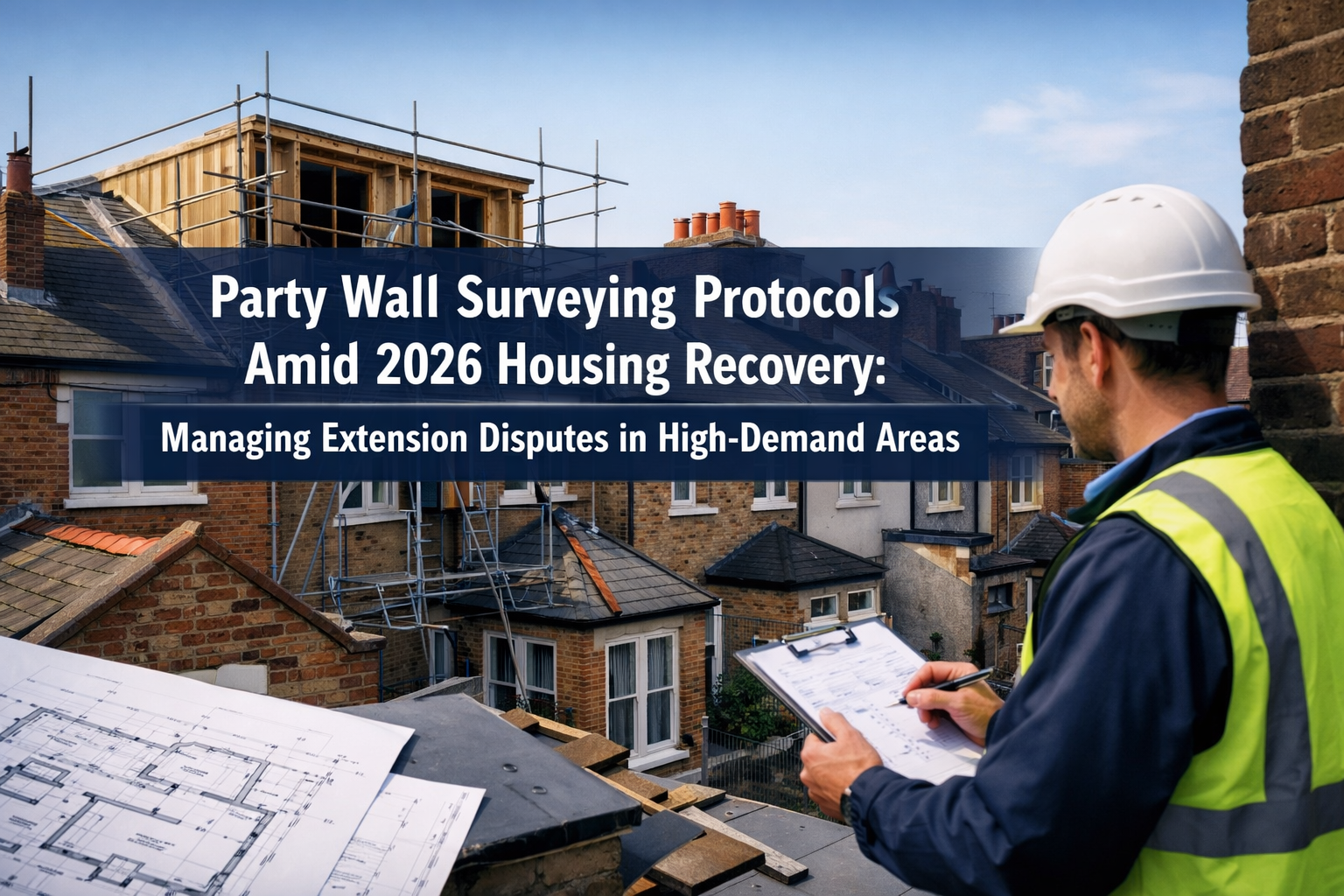

As the UK housing market experiences a robust recovery in 2026, homeowners across high-demand areas are racing to maximize their property value through extensions, loft conversions, and structural improvements. This surge in renovation activity has brought Party Wall Surveying Protocols Amid 2026 Housing Recovery: Managing Extension Disputes in High-Demand Areas to the forefront of property development concerns. With transaction volumes climbing and urban density increasing, understanding the proper protocols for managing party wall matters has never been more critical for protecting both your investment and your relationship with neighbors.
The renewed confidence in the property market means more building work, more shared boundaries under stress, and more potential for disputes. Whether you're planning a rear extension in a tightly-packed London terrace or converting your loft in a semi-detached property, navigating party wall legislation correctly can mean the difference between a smooth project and a costly legal nightmare.
Key Takeaways
✅ Proper notice timing is mandatory: Building owners must serve written notice at least 2 months before wall or boundary works and 3 months before excavations to comply with party wall legislation.
✅ Professional surveyor costs vary significantly: Minor works typically cost £600–£1,000 + VAT, while complex disputes can escalate to £2,000–£4,000+ per surveyor depending on project complexity.
✅ The 14-day response window matters: Adjoining owners have just 14 days to respond to party wall notices, making quick decision-making essential for keeping projects on schedule.
✅ RICS-compliant awards protect all parties: Properly executed party wall awards provide legal protection, establish clear procedures, and document pre-existing conditions to prevent future disputes.
✅ Not all works require agreements: Minor alterations like plastering or electrical work don't trigger party wall requirements, saving time and money on straightforward projects.
Understanding Party Wall Surveying Protocols in 2026's Housing Boom
The 2026 housing recovery has created unprecedented demand for property improvements, particularly in urban centers where space is at a premium. Party Wall Surveying Protocols Amid 2026 Housing Recovery: Managing Extension Disputes in High-Demand Areas encompasses the systematic approach to managing shared wall and boundary matters when neighbors undertake construction work.
What Triggers Party Wall Requirements?
Party wall legislation applies to specific types of building work that affect shared structures or boundaries. Understanding when you need to follow formal protocols helps avoid costly mistakes and legal complications.
Works requiring party wall agreements include:
- 🏗️ Building new walls directly on boundary lines
- 🔨 Cutting into or altering existing party walls
- 📏 Excavating within 3 meters of a neighbor's structure (if going deeper than their foundations)
- 🏠 Excavating within 6 meters of a neighbor's structure (if cutting within 45-degree angle of their foundations)
- 🧱 Removing chimney breasts from party walls
- 🛠️ Installing damp-proof courses in shared walls
Importantly, minor works such as plastering, electrical installations, or attaching kitchen units do not require a party wall agreement[3]. This distinction saves homeowners significant time and expense on routine maintenance projects.
For comprehensive guidance on when party wall procedures apply, review our detailed Party Wall Act questions and answers.
The RICS Framework for Party Wall Awards
The Royal Institution of Chartered Surveyors (RICS) provides the professional framework that governs how party wall surveyors operate in 2026. RICS-compliant party wall awards ensure that all parties receive fair treatment and that construction proceeds with proper safeguards.
A compliant party wall award typically includes:
| Award Component | Purpose | Protection Provided |
|---|---|---|
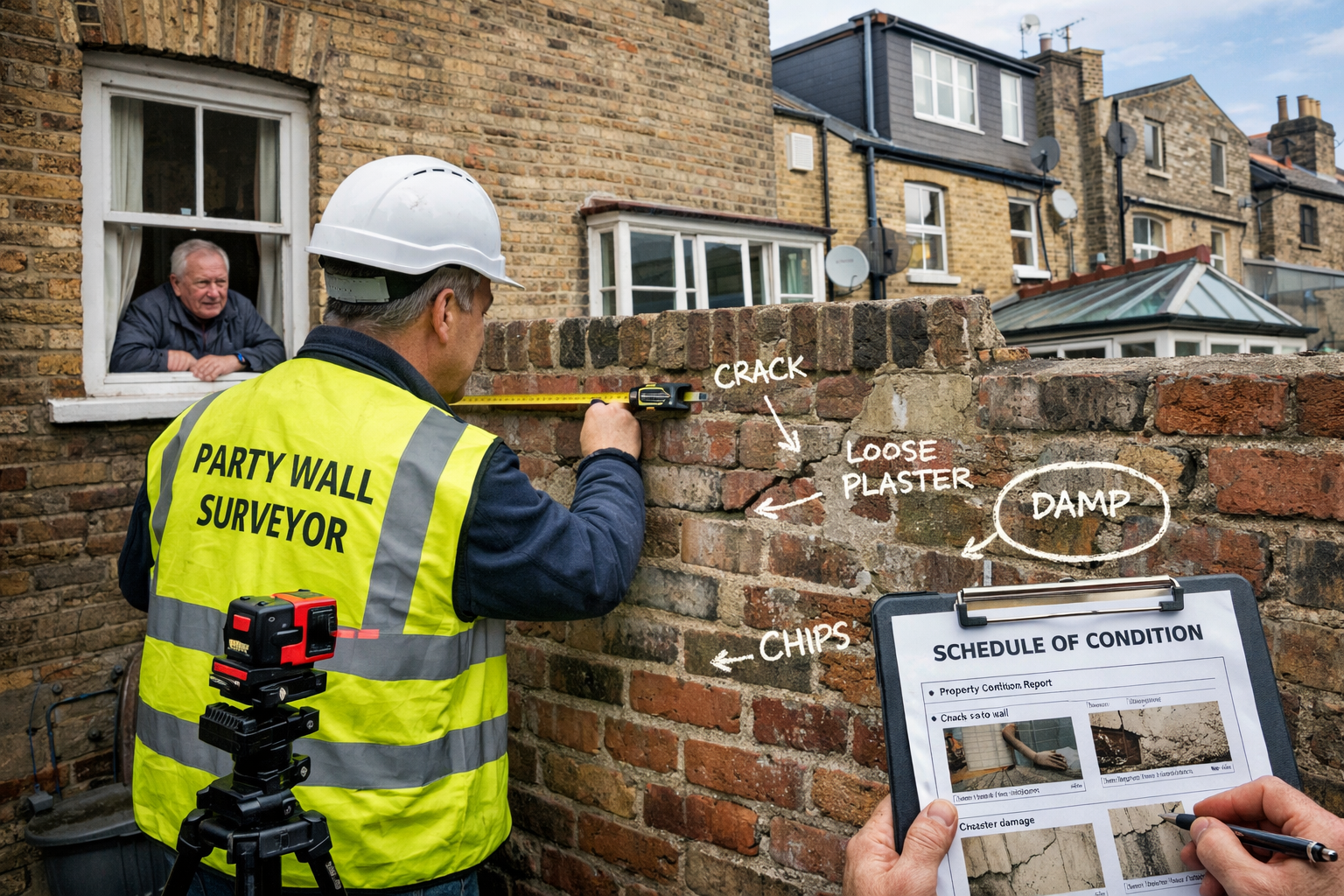
| Schedule of Condition | Documents pre-work property state | Establishes baseline for damage claims |
| Method of Works | Specifies construction procedures | Ensures safe, appropriate building methods |
| Access Rights | Defines entry permissions | Clarifies when and how access occurs |
| Working Hours | Sets time restrictions | Minimizes neighbor disruption |
| Insurance Requirements | Mandates coverage levels | Protects against construction damage |
| Dispute Resolution | Establishes appeal process | Provides clear escalation pathway |
The surveyor's role is to act impartially, even when appointed by one party. This professional independence ensures that Party Wall Surveying Protocols Amid 2026 Housing Recovery: Managing Extension Disputes in High-Demand Areas maintain fairness and legal validity.
Critical Timelines and Notice Requirements for Extension Projects
Time management is essential when planning extension work in 2026's fast-paced housing market. Missing statutory deadlines can delay your entire project and potentially invalidate your party wall procedures.
Statutory Notice Periods Explained
The Party Wall Act establishes specific notice periods that building owners must observe:
Two-month notice is required for:
- Building new walls on or at boundary lines
- Work directly to existing party walls
- Cutting into party structures
- Inserting damp-proof courses
Three-month notice is required for:
- Excavation work within 3 meters of a neighbor's structure (when going deeper than their foundations)
- Excavation within 6 meters (when cutting within a 45-degree angle from their foundations)
These notice periods begin when the adjoining owner receives the written notice, not when you send it[1]. Proof of delivery is therefore critical for establishing your timeline.
After serving notice, building owners have up to 12 months to commence the work[1]. If construction doesn't begin within this window, new notices must be served, restarting the entire process.
The 14-Day Response Window
Once a party wall notice is served, adjoining owners have exactly 14 days to respond[2]. This tight timeframe requires prompt attention and decision-making.
The adjoining owner has three options:
- Consent to the works – The simplest outcome, allowing work to proceed without formal surveyor involvement
- Dissent to the works – Triggers the surveyor appointment process (this doesn't stop the work, just formalizes the process)
- Fail to respond – Treated as dissent, automatically triggering surveyor appointments
Understanding what constitutes a party wall dispute helps homeowners recognize when professional surveyor involvement becomes necessary.
Realistic Project Timelines in High-Demand Areas
In 2026's competitive housing market, understanding realistic timelines helps with project planning and managing expectations.
Typical timeline with cooperative neighbors:
- Notice period: 2-3 months (depending on work type)
- Response and surveyor appointment: 2-3 weeks
- Schedule of condition and award preparation: 3-4 weeks
- Total minimum timeline: 4-6 weeks with all parties cooperating and documentation ready[1]
Extended timeline with disputes or complications:
- Initial notice and dissent: 2-3 months
- Multiple surveyor appointments: 3-4 weeks
- Disputed award negotiations: 4-8 weeks
- Third surveyor involvement (if needed): Additional 4-6 weeks
- Total potential timeline: 4-6 months in complex dispute scenarios
For loft conversion projects, which are particularly popular in 2026's housing recovery, planning for the longer timeline prevents costly construction delays.
Managing Extension Disputes: Cost Considerations and Surveyor Selection
Financial planning for party wall matters extends beyond the construction budget itself. Party Wall Surveying Protocols Amid 2026 Housing Recovery: Managing Extension Disputes in High-Demand Areas require understanding the full cost implications of surveyor involvement.

Party Wall Surveyor Fees in 2026
Surveyor costs vary significantly based on project complexity, property location, and whether disputes arise. In high-demand areas where property values are elevated, fees tend toward the higher end of typical ranges.
Standard fee structures:
Minor works without disagreements:
- Party wall award administration: £600–£1,000 + VAT[2]
- Schedule of condition: Typically included
- Basic correspondence and notice review: Included
Standard extensions with cooperative parties:
- Full party wall award: Approximately £1,000[3]
- Hourly rate for additional work: £150–£200 per hour[3]
- Site inspections: Usually 2-3 visits included
Complex projects with objections:
- Building owner's surveyor: £2,000–£4,000+[2]
- Adjoining owner's surveyor: £2,000–£4,000+[2]
- Third surveyor (if disputes escalate): Additional £2,000–£3,000
The building owner is responsible for all reasonable surveyor fees, including those of the adjoining owner's surveyor[2]. This financial responsibility underscores the importance of maintaining good neighbor relations and seeking to resolve issues cooperatively.
For detailed cost breakdowns, consult our comprehensive guide on party wall surveyor costs.
Choosing Between Agreed Surveyor and Separate Surveyors
Homeowners facing party wall procedures must decide on the surveyor appointment structure. This choice significantly impacts both costs and project dynamics.
Agreed Surveyor Approach:
A single surveyor acts for both parties, reducing costs and streamlining communication. This works best when:
- Neighbors have good existing relationships
- The proposed work is relatively straightforward
- Both parties trust the surveyor's impartiality
- Cost efficiency is a priority
Benefits: Lower overall fees (one surveyor instead of two or three), faster resolution, simplified communication.
Drawbacks: Less individual representation, potential perception of bias, may not suit complex disputes.
Learn more about party wall agreed surveyors and what you need to know.
Separate Surveyors Approach:
Each party appoints their own surveyor, who then work together to produce the award. This approach suits:
- Complex or contentious projects
- Situations where trust is limited
- High-value properties where detailed protection is warranted
- Cases involving multiple adjoining owners
Benefits: Individual representation, detailed scrutiny of proposals, stronger legal protection for all parties.
Drawbacks: Higher costs (multiple surveyor fees), potentially longer timelines, more formal process.
Protecting Against Property Damage
One of the primary functions of party wall awards is establishing clear procedures for documenting and addressing construction damage. In 2026's high-value property market, this protection is invaluable.
Pre-construction documentation should include:
📸 Comprehensive photographic records of all affected areas
📋 Detailed written descriptions of existing conditions
🔍 Crack monitoring for pre-existing structural issues
📐 Measurements and specifications of current state
🏠 Video walkthroughs of interior and exterior conditions
This documentation forms the baseline for any future damage claims. If construction causes harm to the adjoining property, the schedule of condition provides objective evidence of what existed before work began.
Understanding damage to property in party wall situations helps homeowners recognize their rights and responsibilities when construction impacts neighboring properties.
Dispute Resolution Strategies for High-Demand Urban Areas
Urban areas experiencing the 2026 housing recovery face unique challenges when managing party wall matters. Density, property values, and competitive renovation timelines create pressure points that require careful navigation.
Common Dispute Triggers in Extension Projects
Certain aspects of extension work consistently generate neighbor concerns and potential disputes:
Access and disruption concerns:
- Scaffolding placement on neighboring property
- Construction noise during unsociable hours
- Dust and debris affecting adjacent properties
- Parking and site logistics in tight urban spaces
Structural and design objections:
- Concerns about foundation stability
- Loss of light or privacy from extensions
- Aesthetic impacts on neighborhood character
- Potential property value effects
Procedural and communication issues:
- Inadequate or late notice provision
- Poor explanation of proposed works
- Lack of response to neighbor questions
- Perceived disregard for adjoining owner concerns
Proactive communication addresses many of these issues before they escalate into formal disputes. A simple conversation explaining your plans, timeline, and mitigation measures can prevent weeks of delay and thousands in additional surveyor fees.
The Party Wall Award as Dispute Prevention
A properly executed party wall award functions as both legal document and dispute prevention tool. By establishing clear expectations and procedures upfront, awards minimize misunderstandings and provide resolution frameworks.
Key protective elements in awards:
Working hours restrictions – Typically limiting noisy work to weekdays between 8 AM and 6 PM, protecting neighbors from excessive disruption while allowing reasonable construction progress.
Access protocols – Specifying exactly when, how, and under what conditions the building owner can access adjoining property, preventing trespass concerns while facilitating necessary work.
Protection measures – Requiring specific safeguards like protective boarding, dust screens, or structural supports to minimize impact on neighboring properties.
Monitoring procedures – Establishing regular inspection schedules and reporting requirements to catch potential issues early.
For comprehensive understanding of the award process, review our guide on party wall awards in London and Surrey.
When to Escalate to Third Surveyor
Despite best efforts, some party wall disputes cannot be resolved by the two appointed surveyors. In these cases, the Party Wall Act provides for a third surveyor to make binding decisions.
Third surveyor involvement becomes necessary when:
🔴 The two appointed surveyors cannot agree on award terms
🔴 Fundamental disagreements exist about work methodology
🔴 Disputes arise over damage assessment or repair costs
🔴 One party believes their surveyor is not acting impartially
The third surveyor is selected by the two appointed surveyors (or by the appointing officer if they cannot agree). Their decision is final and binding on all parties, providing definitive resolution but at additional cost and time.
Leveraging Professional Mediation
In 2026's recovering housing market, maintaining good neighbor relationships has long-term value beyond any single project. Professional mediation offers an alternative to adversarial dispute resolution.
Benefits of mediation in party wall matters:
💡 Preserves relationships – Non-adversarial process maintains neighborly goodwill
💡 Faster resolution – Typically concludes in days or weeks versus months
💡 Lower costs – Mediation fees usually less than extended surveyor disputes
💡 Flexible solutions – Can address concerns beyond strict legal requirements
💡 Confidential process – Discussions remain private, avoiding public records
Mediation works particularly well for disputes rooted in communication breakdowns rather than fundamental disagreements about the work itself.
For complex boundary and party wall issues, our guide to boundary dispute and party wall surveyors provides additional resolution strategies.
Best Practices for Building Owners in 2026
Successfully navigating Party Wall Surveying Protocols Amid 2026 Housing Recovery: Managing Extension Disputes in High-Demand Areas requires proactive planning and professional execution.
Pre-Notice Neighbor Engagement
Before serving formal party wall notices, smart building owners engage neighbors informally:
Effective pre-notice communication includes:
- Personal conversation – Discuss your plans face-to-face, explaining the project scope, timeline, and benefits
- Visual materials – Share architectural drawings or renderings to help neighbors understand the proposal
- Address concerns proactively – Ask about their worries and explain how you'll mitigate impacts
- Provide contact information – Ensure they know how to reach you or your project manager with questions
- Set realistic expectations – Be honest about noise, disruption, and timeline
This informal engagement often prevents dissent responses and facilitates the agreed surveyor approach, saving significant time and money.
Selecting Qualified RICS Surveyors
The quality of your party wall surveyor directly impacts project success. In 2026's busy market, experienced surveyors with strong reputations are in high demand.
Essential qualifications to verify:
✓ RICS membership – Ensures professional standards and continuing education
✓ Party wall specialism – General surveyors may lack specific expertise
✓ Local area experience – Familiarity with regional building practices and property types
✓ Professional indemnity insurance – Protects against surveyor errors or omissions
✓ Clear fee structure – Transparent pricing prevents surprise costs
✓ Communication skills – Ability to explain technical matters clearly to homeowners
Request references from previous clients and verify the surveyor's track record with both straightforward and disputed awards.
Documentation and Record-Keeping
Meticulous documentation protects all parties and facilitates smooth project execution:
Essential records to maintain:
📁 All party wall notices (with proof of service)
📁 Neighbor responses and correspondence
📁 Surveyor appointment letters
📁 Complete schedule of condition with photos
📁 Party wall award and all amendments
📁 Construction progress photos
📁 Any damage reports or remediation work
📁 Final completion documentation
Digital copies stored in cloud services provide backup and easy access for all project stakeholders.
Understanding the 3-Meter and 6-Meter Rules
Excavation work near neighboring properties triggers specific party wall requirements based on depth and proximity. The Party Wall Act 3-meter rule establishes clear thresholds:
3-meter rule: If excavating within 3 meters of a neighbor's structure and going deeper than their foundations, party wall procedures apply.
6-meter rule: If excavating within 6 meters of a neighbor's structure and cutting within a 45-degree angle from the bottom of their foundations, party wall procedures apply.
These rules particularly affect basement conversions and deep foundation work, both popular in 2026's high-demand urban areas where maximizing space is critical.
Coordinating with Other Building Processes
Party wall procedures don't exist in isolation. Successful projects coordinate party wall matters with:
Planning permission – Ensure party wall notices align with planning approval timelines
Building regulations – Coordinate surveyor access with building control inspections
Construction scheduling – Factor party wall timelines into contractor mobilization
Mortgage and insurance – Inform lenders and insurers of party wall work
Leasehold requirements – Obtain necessary licenses to alter for leasehold properties
This coordination prevents delays and ensures all legal and contractual obligations are met simultaneously.
Special Considerations for Loft Conversions and Rear Extensions
Two project types dominate 2026's housing recovery in high-demand areas: loft conversions and rear extensions. Each presents unique party wall challenges.
Loft Conversion Party Wall Issues
Loft conversions frequently affect party walls in semi-detached and terraced properties. Common party wall triggers include:
🏠 Party wall chimney removal – Many lofts require removing chimney breasts that pass through shared walls
🏠 Roof structure alterations – Steel beams may need to be inserted into party walls
🏠 Shared roof spaces – Work in shared roof voids requires neighbor notification
🏠 Load redistribution – New floor structures may affect shared walls
Understanding party wall requirements for shared chimneys prevents costly mid-project discoveries.
Rear Extension Boundary Considerations
Rear extensions in tightly-packed urban areas almost inevitably involve party wall matters:
Common issues include:
- Building right up to boundary lines (party wall notice required)
- Excavating for deeper foundations near neighbor's structure
- Removing or altering existing boundary walls
- Installing new damp-proof courses in shared walls
- Affecting neighbor's light, privacy, or access
Early surveyor involvement helps design extensions that minimize neighbor impact while maximizing your usable space.
The Role of Structural Surveys in Party Wall Matters
Comprehensive property surveys provide essential context for party wall procedures. Before undertaking significant extension work, building owners benefit from professional structural assessment.
A structural survey in London identifies:
- Existing structural issues that may affect proposed work
- Party wall condition and any pre-existing defects
- Foundation depth and type (critical for excavation rules)
- Load-bearing wall locations and capacities
- Potential complications requiring specialist engineering
This information allows surveyors to prepare more accurate party wall awards and helps prevent disputes arising from unexpected structural discoveries during construction.
Conclusion: Navigating 2026's Housing Recovery Successfully
Party Wall Surveying Protocols Amid 2026 Housing Recovery: Managing Extension Disputes in High-Demand Areas represents both challenge and opportunity for homeowners seeking to maximize their property value. As the housing market strengthens and renovation activity surges, understanding and properly executing party wall procedures becomes essential for project success.
The key to successful party wall management lies in proactive planning, professional expertise, and respectful neighbor relations. By serving proper notices within statutory timeframes, engaging qualified RICS surveyors, and maintaining open communication with adjoining owners, building owners can navigate even complex extension projects smoothly.
Actionable Next Steps
For homeowners planning extension work in 2026:
-
Assess your project scope – Determine whether your planned work triggers party wall requirements using the criteria outlined above
-
Engage neighbors early – Have informal conversations before serving formal notices to build goodwill and address concerns proactively
-
Budget appropriately – Factor in surveyor fees of £600–£4,000+ depending on project complexity and potential for disputes
-
Select qualified professionals – Choose experienced RICS party wall surveyors with strong local knowledge and clear communication skills
-
Document everything – Maintain comprehensive records of all notices, responses, awards, and construction progress
-
Plan realistic timelines – Allow 4-6 weeks minimum for cooperative scenarios, and 4-6 months for complex disputes
-
Coordinate with other requirements – Align party wall procedures with planning permission, building regulations, and construction scheduling
The 2026 housing recovery presents unprecedented opportunities to enhance your property through thoughtful extensions and conversions. By mastering party wall protocols and approaching neighbor relations with professionalism and respect, you protect your investment while maintaining the community relationships that make high-demand areas desirable places to live.
Whether you're planning a loft conversion in a Victorian terrace or a rear extension in a modern semi-detached property, proper party wall procedures provide the legal framework and neighbor protection that allows ambitious projects to succeed. Invest the time and resources in getting party wall matters right from the start, and you'll avoid the costly delays and damaged relationships that plague poorly managed projects.
For expert guidance on your specific party wall situation, consult with qualified RICS surveyors who understand both the technical requirements and the human dynamics of Party Wall Surveying Protocols Amid 2026 Housing Recovery: Managing Extension Disputes in High-Demand Areas.
References
[1] Party Wall Guide – https://www.squarepointsurveyors.co.uk/party-wall-guide/
[2] The Essential Guide To Party Wall Agreements In The Uk – https://www.innovus.co.uk/insights/the-essential-guide-to-party-wall-agreements-in-the-uk
[3] Party Wall Agreement – https://hoa.org.uk/advice/guides-for-homeowners/i-am-improving/party-wall-agreement/