
The British property market stands on the brink of its most significant transformation in decades. As 2026 unfolds, Upfront Property Condition Assessments: Preparing for Potential 2026 RICS Reforms and Mandatory Survey Requirements has become the critical conversation among surveyors, estate agents, and property professionals nationwide. The Royal Institution of Chartered Surveyors (RICS) recently concluded a pivotal consultation exploring whether property condition assessments should become a standard upfront requirement—fundamentally changing when and how building surveys occur in the transaction process.
This potential reform addresses a staggering £1.5 billion annual cost of failed property transactions while promising to revolutionize the surveying sector[1]. For chartered surveyors, the implications are profound: earlier engagement in transactions, expanded scope requirements, and transformed workflow models that could significantly increase survey demand at the front end of property purchases.
Key Takeaways
✅ Financial Impact: The proposed reforms aim to eliminate the £1.5 billion annual cost of failed property transactions by requiring upfront assessments before properties go to market[1].
✅ Consultation Timeline: RICS completed its public consultation on the Residential Stock Condition Survey Code of Practice from December 8, 2025, through February 9, 2026, with implementation decisions expected throughout 2026[3].
✅ Sector Transformation: If implemented, mandatory upfront assessments will fundamentally shift surveyor engagement from late-stage transaction reviews to early-stage property evaluations, significantly increasing demand for surveys[2].
✅ Workforce Preparation: The surveying sector must retrain existing professionals and attract new talent through clearer qualification pathways and enhanced CPD platforms to meet anticipated increased demand[2].
✅ Market Optimism: Despite reform uncertainties, 2026 forecasts predict positive survey volumes with strong activity levels, particularly in the buy-to-let sector where professional landlords value comprehensive property assessments[2].
Understanding the Proposed RICS Reforms for Property Condition Assessments
The Current State of Property Surveys in 2026
The traditional property transaction process in the UK has long placed building surveys late in the buying journey—typically after offers are accepted and significant emotional and financial commitments have been made. This timing creates a fundamental vulnerability: buyers discover major defects only after investing in legal fees, mortgage arrangements, and often after falling in love with a property.
This outdated model contributes to approximately one-third of property transactions falling through, costing buyers, sellers, and the economy billions annually[1]. For surveyors practicing as chartered surveyors in London and across the UK, this inefficiency represents both a market failure and a missed opportunity to provide greater value earlier in the process.
What the 2026 Consultation Proposes
The Residential Stock Condition Survey Code of Practice consultation that concluded in February 2026 explores making property condition assessments a mandatory upfront requirement[3]. Under this proposed framework:
- Sellers would commission surveys before listing properties, providing transparent condition information to all potential buyers
- Standardized reporting formats would ensure consistency and comparability across properties
- Earlier defect identification would allow realistic pricing and prevent transaction failures
- Reduced duplication would eliminate multiple buyers commissioning separate surveys on the same property
The RICS expert group is currently reviewing consultation responses, with further guidance expected as the year progresses[3]. This comprehensive approach extends beyond RICS members to encompass housing associations, local authorities, and other organizations involved in property condition assessments[3].
The £1.5 Billion Problem
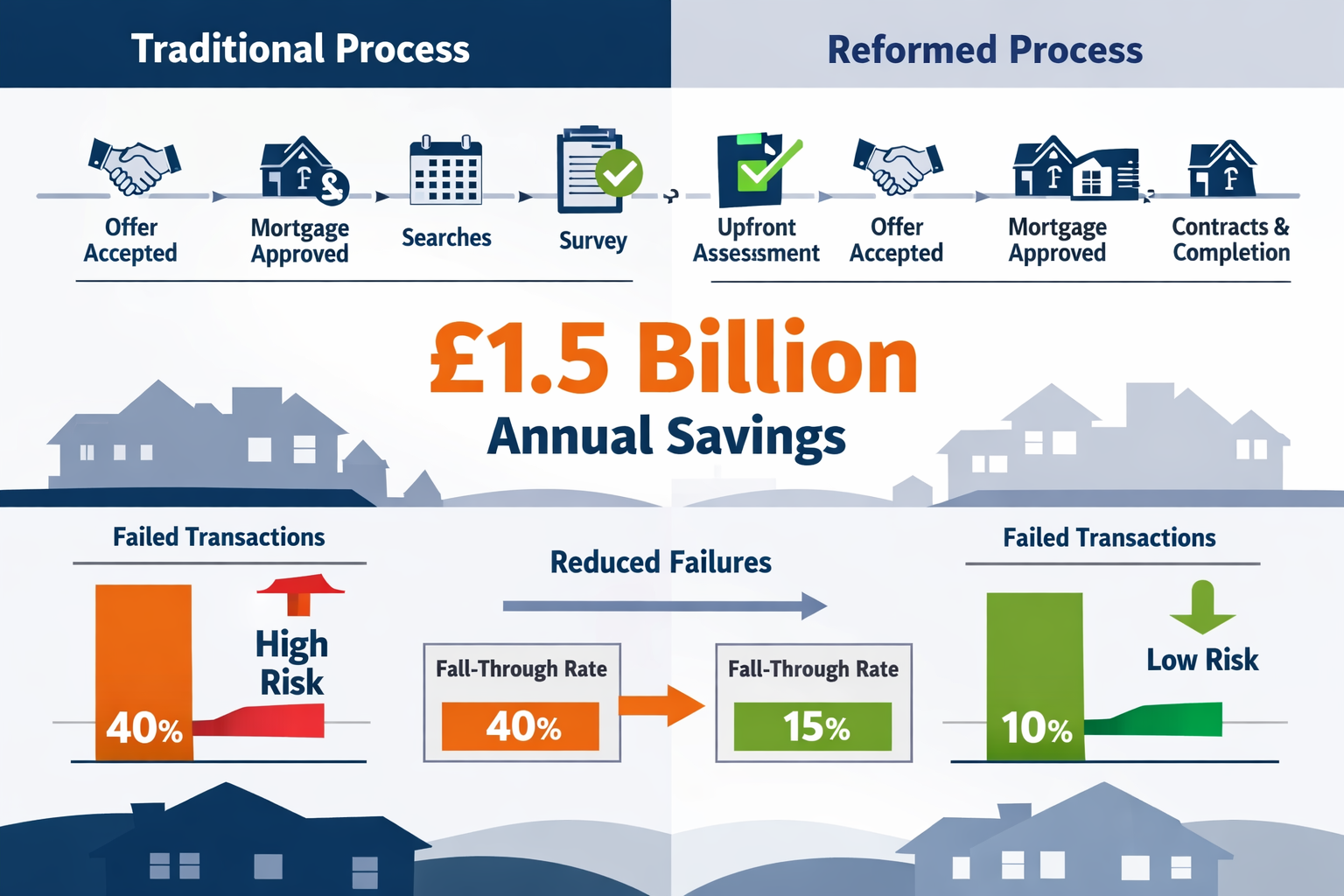
The financial motivation behind these reforms cannot be overstated. Failed property transactions cost the UK economy approximately £1.5 billion annually[1]—a figure that represents wasted survey fees, aborted legal work, repeated mortgage application costs, and lost time for all parties involved.
Beyond direct costs, transaction failures create:
- Emotional distress for buyers who lose dream homes
- Market inefficiency as properties cycle through multiple failed sales
- Reduced housing mobility as people avoid moving due to process uncertainty
- Economic drag as housing transactions drive significant ancillary spending
For property professionals offering services like structural surveys in London, understanding these systemic costs helps contextualize why reforms are being pursued with such urgency in 2026.
How Upfront Property Condition Assessments Will Transform Surveying Practice
Fundamental Workflow Changes for Surveyors
The shift to mandatory upfront assessments represents what industry experts describe as a "transformative" change for the surveying sector[2]. Traditional reactive surveying—where professionals respond to buyer instructions after offer acceptance—will evolve into proactive engagement with sellers and estate agents before properties reach the market.
Key workflow transformations include:
📋 Earlier Engagement: Surveyors will work directly with sellers and their agents, requiring new relationship-building and communication strategies
🏠 Expanded Scope: Assessments may need to be more comprehensive to serve multiple potential buyers rather than addressing one buyer's specific concerns
📊 Standardization Requirements: Reports will likely follow stricter formatting and content guidelines to ensure comparability
⏰ Timeline Pressures: Sellers wanting to list quickly will create demand for rapid turnaround times
🔄 Repeat Business Models: Rather than surveying the same property multiple times for different buyers, surveyors will complete one comprehensive assessment
For professionals conducting specific defect reports or subsidence surveys, this shift means adapting methodologies to provide broader, more universally applicable findings rather than buyer-specific targeted investigations.
Increased Survey Demand Projections
Market analysts predict that mandatory upfront assessments will significantly increase overall survey volumes[2]. While individual properties may be surveyed once rather than multiple times, the total number of surveys will grow because:
-
Universal Coverage: Currently, many buyers (particularly cash buyers or those purchasing lower-value properties) skip surveys entirely. Mandatory assessments ensure every listed property receives professional evaluation.
-
Seller Market Entry: Sellers who previously listed properties "as seen" without professional assessment will now require surveys before marketing.
-
Regular Updates: Properties remaining on the market for extended periods may require updated assessments, creating ongoing work.
-
Commercial Crossover: Success in residential reforms may drive similar requirements in commercial property, expanding opportunities for commercial property surveyors.
The 2026 market outlook remains positive, with many lenders forecasting strong activity levels at the year's start[2]. This optimism extends particularly to the buy-to-let sector, where institutional and professional landlords continue investing and actively value comprehensive property assessments[2].
New Service Opportunities
Upfront Property Condition Assessments: Preparing for Potential 2026 RICS Reforms and Mandatory Survey Requirements creates several emerging service opportunities for forward-thinking surveying practices:
| Service Type | Description | Market Opportunity |
|---|---|---|
| Pre-Listing Consultations | Advising sellers on remedial work before surveys to maximize property value | High—sellers want to optimize sale prices |
| Condition Monitoring | Periodic reassessments for properties with extended marketing periods | Medium—addresses market uncertainty |
| Portfolio Assessments | Bulk surveying for estate agents or developers preparing multiple properties | High—efficiency gains for volume clients |
| Dispute Resolution | Expert opinions when buyers question upfront survey findings | Medium—natural consequence of new system |
| Remediation Verification | Follow-up inspections confirming defect repairs identified in initial surveys | High—buyers and lenders require confirmation |
Practices already offering comprehensive services like schedule of condition reports are well-positioned to adapt these methodologies to upfront assessment requirements.
Preparing Your Surveying Practice for 2026 Reforms

Workforce Development and Training Requirements
The surveying sector faces a critical challenge: ensuring sufficient qualified professionals to meet increased demand if reforms are implemented. RICS and industry leaders recognize that success requires both retraining existing surveyors and attracting the next generation of talent[2].
Current workforce initiatives include:
🎓 Clearer Qualification Pathways: RICS is implementing more transparent routes for graduates entering the profession, making career progression more predictable and attractive[2].
💻 Enhanced CPD Platforms: Improved digital tools and a new RICS member app provide existing professionals with accessible continuing professional development resources[2].
👥 Mentorship Programs: Structured support connecting experienced surveyors with new entrants to build practical skills alongside theoretical knowledge.
🔧 Technical Upskilling: Training on emerging technologies including thermal imaging, drone surveys, and digital reporting platforms that enhance assessment capabilities.
For established practices operating across regions like Hertfordshire or Watford, investing in workforce development now positions firms advantageously when reform implementation accelerates.
Technology and Digital Infrastructure
Modern property condition assessments increasingly rely on advanced technology to improve accuracy, efficiency, and client communication. Preparing for mandatory upfront requirements means investing in:
Essential Technology Investments:
- Digital Reporting Platforms: Cloud-based systems enabling standardized report generation, photo integration, and secure client access
- Thermal Imaging Equipment: Identifying hidden defects like moisture ingress, insulation failures, and heating system issues
- Drone Technology: Safe, efficient roof and chimney inspections without scaffolding requirements
- Moisture Detection Tools: Electronic meters providing objective readings for damp-related concerns
- 3D Scanning: Creating detailed property records and measurements for comprehensive documentation
- Mobile Data Collection: Tablet-based systems allowing on-site report drafting and real-time updates
Practices already utilizing advanced techniques for services like drone roof surveys possess competitive advantages as upfront assessments become standard.
Business Model Adaptation Strategies
Transitioning from buyer-commissioned to seller-commissioned surveys requires fundamental business model adjustments:
Revenue Model Considerations:
💷 Pricing Structures: Upfront assessments serving multiple potential buyers may justify premium pricing compared to single-buyer surveys, but market competition will influence rates.
📈 Volume vs. Depth: Balancing comprehensive assessments against turnaround time requirements and competitive pricing pressures.
🤝 Client Relationship Shifts: Building partnerships with estate agents, developers, and sellers rather than primarily serving buyers.
⚖️ Liability Management: Understanding how professional indemnity insurance adapts when reports serve unknown future buyers rather than specific clients.
🔄 Recurring Revenue: Developing update and monitoring services for properties remaining on market extended periods.
Firms offering diverse services including RICS valuations and valuation reports can leverage existing client relationships to cross-sell upfront assessment services as reforms roll out.
Marketing and Client Education
Successfully transitioning to upfront assessment models requires proactive marketing and client education:
Key Marketing Strategies:
- Seller Education Campaigns: Explaining how upfront surveys accelerate sales and reduce fall-through rates
- Estate Agent Partnerships: Collaborating with agents who recognize value in transparent property information
- Digital Presence: Updating websites and social media to emphasize upfront assessment capabilities
- Case Studies: Demonstrating successful transactions facilitated by early condition disclosure
- Thought Leadership: Publishing insights on reform implications to establish expertise
Practices serving diverse locations from Central London to Richmond should tailor messaging to regional market characteristics while maintaining consistent quality standards.
Industry Perspectives and Market Outlook for 2026

Current Market Conditions and Forecasts
Despite uncertainty surrounding reform implementation timelines, the 2026 surveying market outlook remains remarkably positive. Industry forecasts predict increased survey volumes with many lenders anticipating strong activity levels, particularly at the year's beginning[2].
Market drivers supporting optimism include:
📊 Stabilizing Interest Rates: After years of volatility, mortgage rates are finding equilibrium, encouraging transaction activity
🏘️ Housing Supply Constraints: Persistent undersupply maintains property values and transaction volumes in many regions
💼 Buy-to-Let Resilience: Institutional and professional landlords continue investing, with these sophisticated operators actively engaging property professionals and valuing thorough surveys[2]
🔄 Pent-Up Demand: Buyers who delayed purchases during uncertainty periods are re-entering the market
🌍 Regional Variation: While London and the Southeast remain active, regional markets across areas like Hertfordshire and Hampshire show strong fundamentals
The Buy-to-Let Opportunity
The buy-to-let sector represents a particularly promising opportunity as Upfront Property Condition Assessments: Preparing for Potential 2026 RICS Reforms and Mandatory Survey Requirements take shape. Professional and institutional landlords demonstrate sophisticated property investment approaches that naturally align with comprehensive upfront assessments[2].
Why buy-to-let investors value upfront surveys:
- Due Diligence Standards: Professional investors maintain rigorous property evaluation processes regardless of regulatory requirements
- Portfolio Management: Landlords building or maintaining property portfolios benefit from standardized condition information
- Risk Mitigation: Understanding maintenance requirements and potential issues before purchase protects investment returns
- Financing Requirements: Lenders to buy-to-let investors often require detailed property assessments
- Long-Term Planning: Investment properties require condition information for maintenance budgeting and lifecycle planning
Surveyors offering specialized services like commercial dilapidation surveys can leverage similar methodologies for buy-to-let property assessments.
Professional Standards and Quality Assurance
As mandatory upfront assessments potentially become standard, maintaining professional standards and quality assurance grows increasingly critical. The RICS consultation process demonstrates the institution's commitment to developing comprehensive guidance that serves not only members but the broader property industry[3].
Quality assurance considerations include:
✔️ Standardized Methodologies: Ensuring consistent assessment approaches across different surveyors and regions
✔️ Competency Requirements: Defining minimum qualifications and experience levels for conducting upfront assessments
✔️ Report Formatting: Establishing clear, comparable reporting structures that serve diverse stakeholders
✔️ Liability Frameworks: Clarifying professional responsibilities when reports serve multiple unknown future users
✔️ Dispute Resolution: Creating mechanisms for addressing disagreements over survey findings or methodologies
✔️ Continuing Education: Maintaining surveyor knowledge as building technologies, materials, and defect patterns evolve
Practices committed to excellence across services from structural surveys to Red Book valuations are naturally positioned to meet elevated quality standards under reformed systems.
Challenges and Considerations
While the outlook remains positive, several challenges require careful navigation:
Implementation Uncertainties: The RICS expert group continues reviewing consultation responses, meaning specific requirements, timelines, and enforcement mechanisms remain unclear[3].
Market Resistance: Some sellers may resist upfront survey costs, particularly in lower-value property segments where margins are tighter.
Quality Variation: Ensuring consistent standards across thousands of surveyors operating independently presents logistical challenges.
Technology Adoption: Not all practices have invested equally in digital infrastructure and modern assessment tools, potentially creating service quality disparities.
Capacity Constraints: Rapid demand increases could strain surveyor availability, particularly in high-activity regions, potentially creating bottlenecks.
Professional Indemnity Insurance: Insurance providers must adapt policies to reflect changed liability profiles when surveys serve unknown future buyers.
Addressing these challenges requires proactive engagement from professional bodies, individual practitioners, and supporting industries throughout 2026 and beyond.
Conclusion
Upfront Property Condition Assessments: Preparing for Potential 2026 RICS Reforms and Mandatory Survey Requirements represents more than regulatory change—it signals a fundamental transformation in how the British property market operates. The £1.5 billion annual cost of failed transactions demands innovative solutions, and mandatory upfront assessments offer a promising path forward[1].
For chartered surveyors, 2026 presents both challenges and extraordinary opportunities. The potential shift from reactive, buyer-commissioned surveys to proactive, seller-commissioned assessments will fundamentally reshape workflow models, client relationships, and service delivery approaches[2]. Yet with these changes comes significant opportunity: increased survey volumes, earlier transaction engagement, expanded service offerings, and enhanced professional recognition as essential facilitators of transparent property transactions.
Actionable Next Steps for Surveying Practices
Immediate Actions (Q2 2026):
- Monitor RICS Updates: Stay informed as the expert group releases findings from the consultation period[3]
- Assess Technology Gaps: Evaluate current digital infrastructure against likely upfront assessment requirements
- Review Insurance Coverage: Consult professional indemnity providers about coverage for seller-commissioned surveys
- Develop Seller Marketing: Create materials explaining upfront assessment benefits to property sellers and estate agents
Medium-Term Preparations (Q3-Q4 2026):
- Invest in Training: Enroll team members in relevant CPD programs addressing standardized assessment methodologies[2]
- Build Estate Agent Relationships: Establish partnerships with agents who will influence seller survey decisions
- Pilot Upfront Services: Offer voluntary upfront assessments to early-adopter sellers, refining processes before mandatory implementation
- Update Business Systems: Implement or upgrade digital reporting platforms supporting standardized output formats
Long-Term Strategic Planning (2027+):
- Workforce Expansion: Recruit and train additional surveyors to meet anticipated demand increases[2]
- Service Diversification: Develop complementary offerings like pre-listing consultations and remediation verification
- Quality Assurance Programs: Establish internal review processes ensuring consistent, high-quality deliverables
- Thought Leadership: Position your practice as a reform expert through content creation and industry engagement
The surveying profession stands at a pivotal moment. Those who prepare thoughtfully for Upfront Property Condition Assessments: Preparing for Potential 2026 RICS Reforms and Mandatory Survey Requirements will not merely survive regulatory change—they will thrive in a transformed market that finally places professional property assessment at the foundation of transparent, efficient transactions.
The reforms aim to create a property market where buyers make informed decisions based on comprehensive condition information, where sellers price properties realistically from the outset, and where transaction failures become the exception rather than the norm. For surveyors committed to professional excellence, this vision represents the future worth building toward throughout 2026 and beyond.
References
[1] Homebuying Reform Impacts On Building Surveys Preparing For Mandatory Upfront Condition Assessments In 2026 – https://nottinghillsurveyors.com/blog/homebuying-reform-impacts-on-building-surveys-preparing-for-mandatory-upfront-condition-assessments-in-2026
[2] Surveying In 2026 Reform Recovery And Renewed Demand – https://www.lrg.co.uk/news-and-insights/surveying-in-2026-reform-recovery-and-renewed-demand/
[3] Residential Stock Condition Surveys – https://www.rics.org/profession-standards/rics-standards-and-guidance/sector-standards/real-estate-standards/residential-stock-condition-surveys