
A landlord in Manchester asked a tribunal to approve a modest £50 rise. Instead, the panel slashed the rent by £200 a month below what the tenant was already paying. That outcome, confirmed in a Propertymark review of four First-tier Tribunal decisions published on 14 October 2026, is now the clearest warning yet for anyone planning a rent increase tribunal landlords 2026 case without solid evidence.
For landlords in Kingston upon Thames, Surbiton and New Malden, the lesson is not abstract. Under the Renters' Rights Act 2025, rent increases in England are generally limited to once a year, challenges go straight to the First-tier Tribunal, and the tribunal cannot award more than the landlord asked for. It can, however, award less. Sometimes much less.
Key Takeaways
- Four tribunal rulings from August to September 2026 show panels will cut rents below the existing level when evidence is weak or property descriptions are inaccurate.
- Close, like-for-like comparables beat distant ones every time; a room in the same building outweighs a flat across town.
- Condition problems, such as unresolved drainage faults or poor-quality fittings, can justify deductions of £75 to several hundred pounds a month.
- Agents' valuations without an inspection, or advertised rents treated as agreed rents, were rejected or heavily discounted.
- An independent RICS rental valuation with measured floor areas and a schedule of condition is the strongest defence before serving a rent increase.
What the Rent Increase Tribunal Landlords 2026 Cases Actually Decided
These four cases, analysed by Propertymark from First-tier Tribunal (Property Chamber) decisions issued in August and September 2026, set out exactly how panels weigh evidence when a tenant challenges a proposed rent rise.
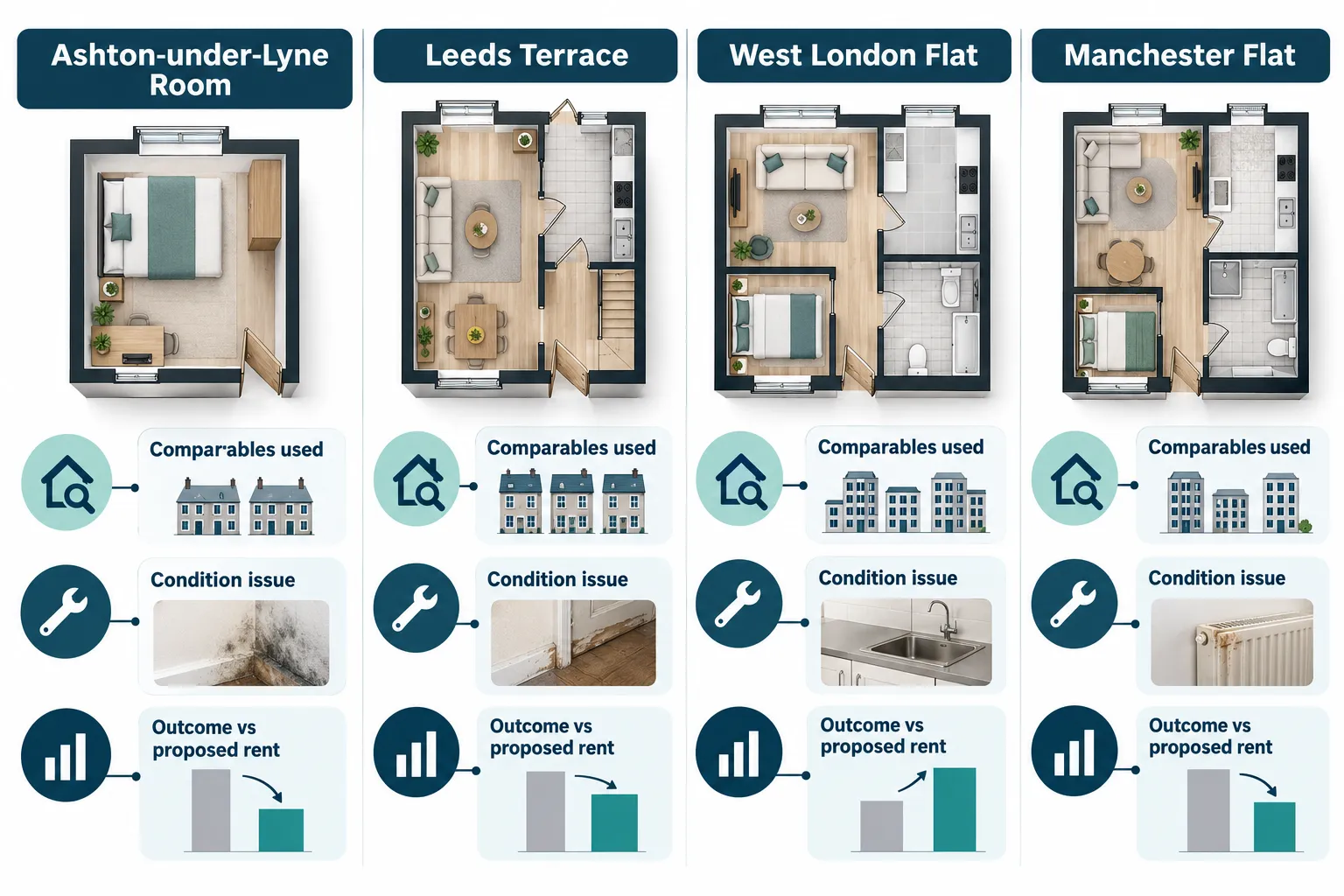
| Property | Existing rent | Landlord proposed | Tribunal set | Key reason |
|---|---|---|---|---|
| Ashton-under-Lyne furnished en-suite room | £675 | £725 | £700 | Rooms in same building were best comparables; distant comparisons rejected |
| Leeds (Calverley) two-bed terrace | £895 | £950 | £925 | Unresolved drainage issue justified £75 deduction from £1,000 good-order rent |
| West London first-floor flat | £1,200 | £1,750 | £1,402.50 | Floor area suggested a one-bed, not a two-bed; agent's £2,201 figure had no inspection evidence; 15% deduction applied |
| Manchester furnished two-bed flat | £1,650 | £1,700 | £1,450 | Set £200 below existing rent using comparables in the same building and similar-age developments |
Note the pattern. In three of the four cases, the tribunal landed well below what the landlord proposed. In the Manchester case, it landed below the rent the tenant was already paying. None of these were rogue decisions; each followed a structured comparison of condition, layout and evidence quality.
Why Rent Increase Tribunal Landlords 2026 Rulings Matter Under the Renters' Rights Act 2025
The Renters' Rights Act 2025 changed the mechanics of rent increases across England. Landlords now generally rely on the statutory notice route once a year, and tenants who disagree can refer the notice to the First-tier Tribunal free of charge. The tribunal reviews the whole rent, not simply the size of the increase, and it is legally barred from setting a figure higher than the landlord proposed.
As Rightmove's Matt Smith observed on 15 October 2026, "with rent reviews now generally limited to once a year, landlords need to plan carefully alongside refinancing." That single annual opportunity raises the stakes considerably. Average advertised rent across London stood at £2,825 that month, up 3.2% annually, with Outer London averaging £2,442, up 2.5%. A landlord who miscalculates and ends up at tribunal does not simply lose a few months' increase; they may lock in a reduced rent for the year ahead.
Letting Agent Today's 16 October 2026 coverage put the message bluntly: tribunals need hard evidence, accurate property descriptions and a realistic assessment of condition before agreeing to rent rises. That applies equally to a one-bed conversion in New Malden as it does to a converted terrace in Leeds.
Four Lessons Kingston, Surbiton and New Malden Landlords Should Take From These Rulings
Propertymark's analysis distilled several practical points that apply directly to any rent increase tribunal landlords 2026 referral, wherever the property sits.
- Use close comparables, not convenient ones. In the Ashton-under-Lyne case, other rooms in the same building carried far more weight than comparisons pulled from elsewhere in town. For a Kingston flat, that means looking at similar units in the same block or a comparable road, not a headline figure from a different postcode.
- Document condition with dates. The Leeds tribunal found the landlord had not taken appropriate steps to fix a known drainage problem, and his account of when he became aware of it contradicted his own messages. Dated photographs and repair records, kept consistently, remove that risk.
- Describe the property accurately. The West London flat was advertised as a two-bedroom unit, but its 39.6 square metre floor area and lack of a conventional lounge suggested a small one-bed. The agent's £2,201 valuation carried no evidence of an inspection and was rejected. Bedroom counts must match the actual accommodation, not the marketing listing.
- Expect condition deductions to bite. A 15% reduction was applied to the West London flat's good-order rent of £1,650 because of poor access, basic fittings, rough workmanship, a small bathroom and old glazing. Tired kitchens, single glazing or awkward layouts are not cosmetic footnotes; tribunals treat them as rent-determining facts.
Taken together, these rulings show tribunals rewarding precision and penalising assumption. A landlord who simply raises the rent to "market rate" without checking the comparables, the condition, or the actual layout is gambling with the one annual increase the law now allows.
How an Independent RICS Rental Valuation Protects Landlords Before a Rent Increase
Every one of these four cases turned on the same question: whose evidence was more credible, the landlord's or the tenant's? In the West London case, the tribunal explicitly rejected a valuation because there was no proof the valuer had ever inspected the property.
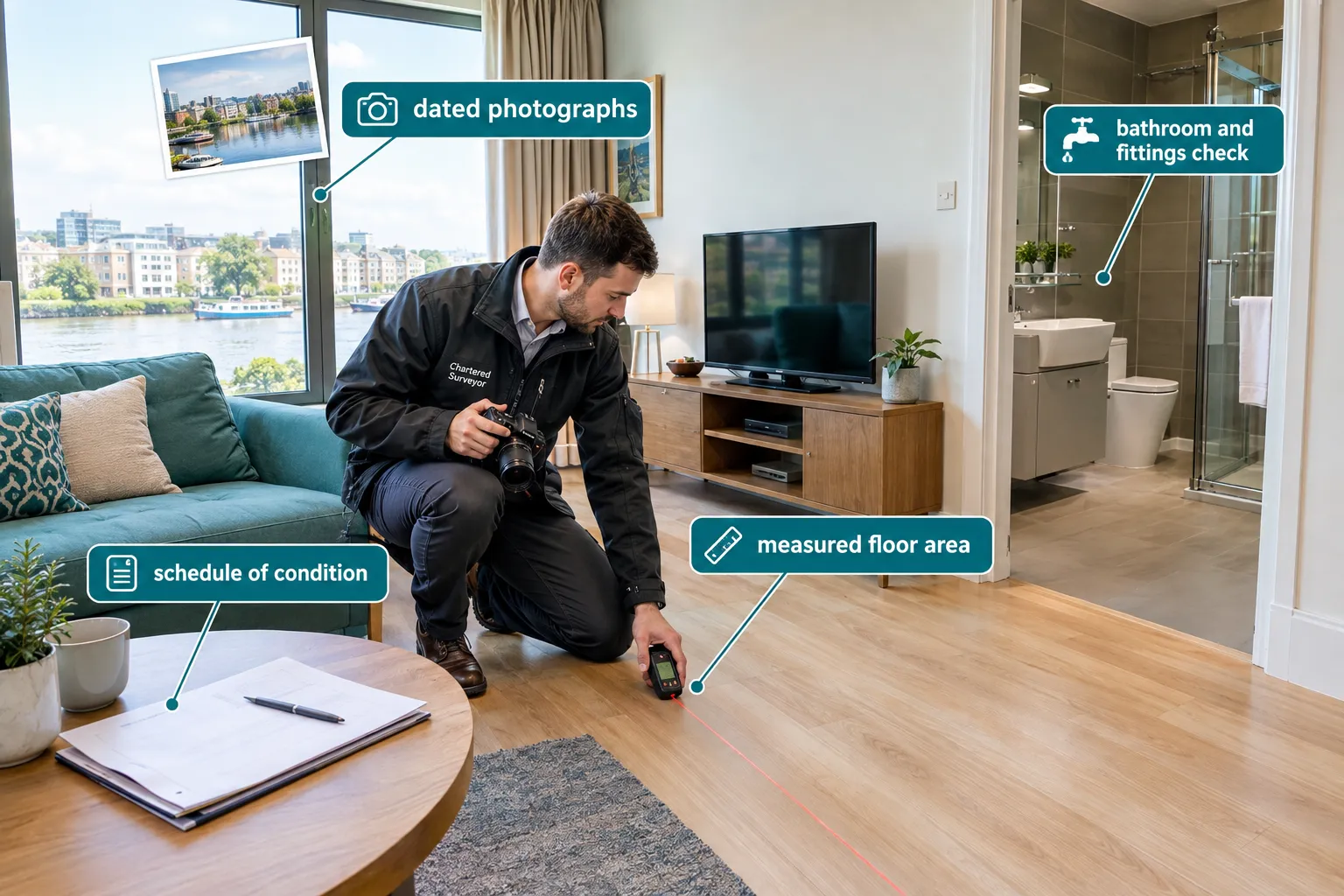
An independent RICS rental valuation addresses that weakness directly. A chartered surveyor visiting a property in Kingston, Surbiton or New Malden will:
- Measure the actual floor area and record the true number of usable bedrooms and whether a genuine lounge exists.
- Photograph condition throughout, including kitchens, bathrooms, glazing, access and communal areas, with dated records.
- Select close, like-for-like comparables rather than relying on asking prices advertised elsewhere.
- Distinguish between advertised rents and rents actually agreed and paid, since tribunals treat the two very differently.
- Produce a written report explaining the basis of the valuation: inspection, comparables and condition, in that order.
"Tribunals need hard evidence, accurate property descriptions and a realistic assessment of condition before agreeing rent rises.", Letting Agent Today, 16 October 2026
This matters most for landlords planning to use their one statutory increase of the year. Getting it wrong does not just delay a rise; under the current rules it can produce a lower rent than the one already in place, as the Manchester case demonstrated with its £200 monthly cut.
If a tenant requests a postponement on hardship grounds, Propertymark's guidance is equally clear: such requests need supporting financial evidence, not a general statement of difficulty. Landlords should keep their own chronology of repairs and communications consistent, since contradictions between messages and testimony damaged the landlord's credibility in the Leeds case.
Frequently Asked Questions
Can a tribunal set a rent higher than the landlord proposed?
No. Under the current rules, the First-tier Tribunal cannot award a rent above the figure the landlord requested in the statutory notice. It can, however, set a lower figure, including one below the existing rent, as seen in the Manchester case.
How often can a landlord increase rent under the Renters' Rights Act 2025?
Rent increases in England are generally limited to once a year through the statutory notice route, which makes getting the figure right on the first attempt far more important than under previous rules.
What evidence carried the most weight in these four cases?
Close, comparable properties in the same building or similar-age development, combined with measured floor areas, photographed condition and a consistent timeline of repairs and communication.
Does an advertised rent count as proof of market value?
Not on its own. Propertymark's analysis stresses that advertised rents and actually agreed rents must be distinguished, since an asking price with no completed letting carries far less evidential weight.
Why might a Kingston landlord want a RICS valuation before increasing rent?
Because the West London and Manchester cases both show tribunals rejecting or sharply discounting valuations that lacked an inspection, close comparables or accurate property details. An independent, inspected RICS valuation addresses each of those weaknesses directly.
What condition issues most commonly reduced rent in these rulings?
Unresolved drainage faults, poor access, basic fittings, rough workmanship, small bathrooms and old glazing all led to documented deductions, ranging from £75 a month to a 15% reduction on the good-order rent.
Conclusion
The four decisions reviewed by Propertymark on 14 October 2026 send a consistent message to anyone considering a rent increase tribunal landlords 2026 referral: panels reward precise, inspected, well-documented evidence and penalise guesswork. With annual rent increases now the norm under the Renters' Rights Act 2025, and London rents still climbing according to Rightmove's October 2026 figures, the temptation to push for a larger rise is understandable. But as the Manchester case proves, a poorly supported increase can backfire into a rent cut rather than a rent rise.
Landlords across Kingston, Surbiton and New Malden preparing a rent increase should commission an independent RICS rental valuation before serving notice. A surveyor who measures the floor area, photographs condition, checks bedroom counts against the actual layout and selects genuinely comparable properties gives a landlord the kind of evidence these tribunals have consistently favoured. Acting early, with a documented, inspected valuation in hand, is now the single best protection against an unwelcome tribunal outcome.
rent increase tribunal landlords 2026, First-tier Tribunal rent review, Renters Rights Act 2025, Kingston upon Thames landlords, RICS rental valuation, rent increase notice, buy to let rent review, letting agent rent valuation, tenant rent challenge, property condition schedule, rental comparables, Surbiton landlord advice