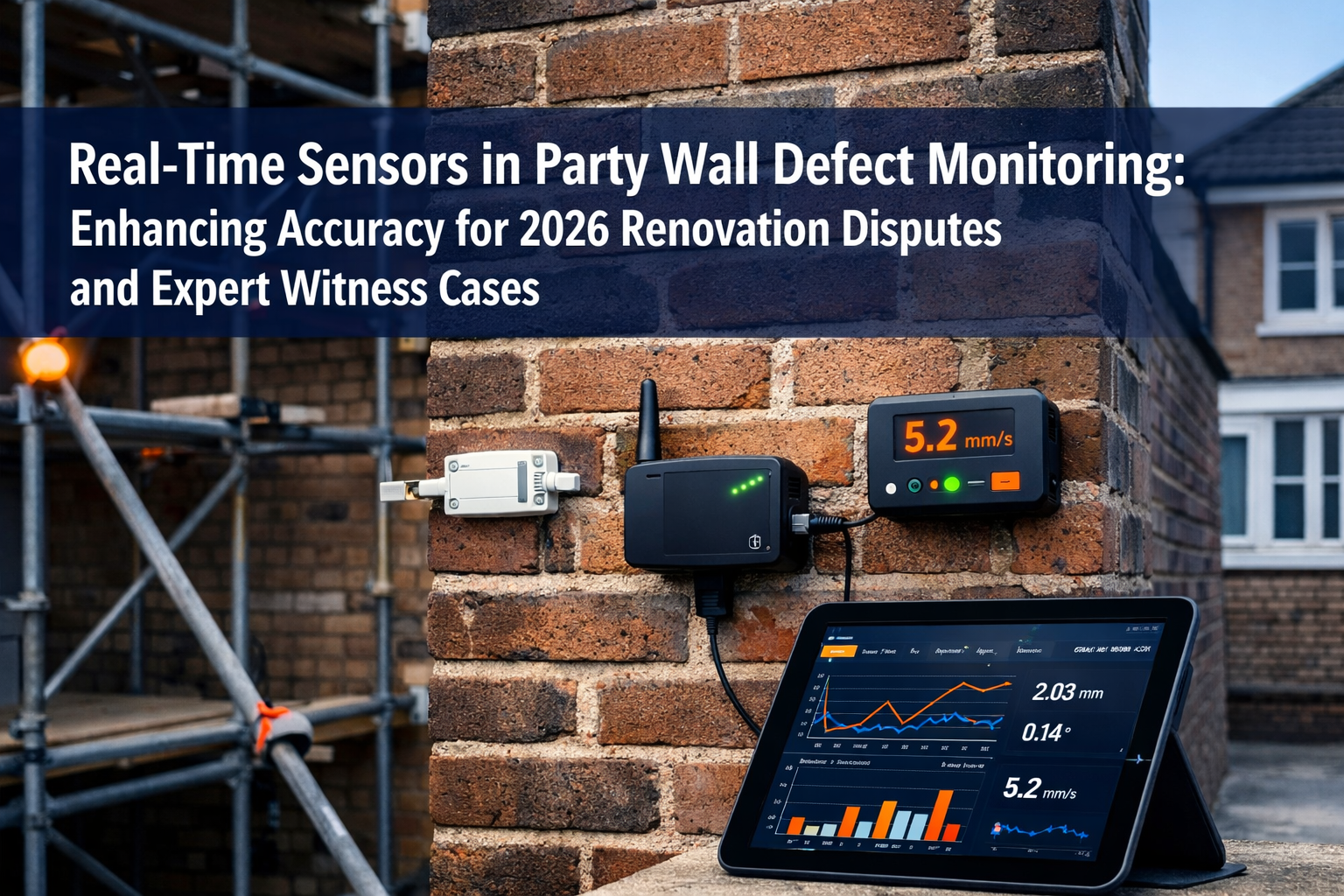

Party wall disputes cost UK property owners an estimated £45 million annually in legal fees and remediation work, with 68% of cases hinging on disputed evidence about when and how damage occurred. Real-Time Sensors in Party Wall Defect Monitoring: Enhancing Accuracy for 2026 Renovation Disputes and Expert Witness Cases represents a fundamental shift in how surveyors, property owners, and legal professionals approach structural monitoring during adjacent construction works.
The integration of continuous monitoring technology into party wall procedures addresses the most contentious aspect of neighbour disputes: establishing causation. Traditional periodic inspections create data gaps that leave room for conflicting interpretations, whereas real-time sensor arrays provide timestamped, objective evidence that can definitively link construction activities to structural movements.
Key Takeaways
✅ Continuous Evidence Collection: Real-time sensors provide 24/7 monitoring with timestamped data, eliminating gaps in evidence that plague traditional periodic inspections
✅ Enhanced Expert Testimony: Objective sensor data strengthens expert witness credibility in court by providing irrefutable evidence of structural movements correlated to specific construction activities
✅ Cost Reduction: Early detection of problematic movements allows immediate intervention, preventing minor issues from escalating into expensive remediation projects
✅ RICS Compliance: Modern sensor systems align with RICS sustainability reporting requirements and best practice guidelines for building surveys in 2026
✅ Multi-Parameter Monitoring: Advanced sensors simultaneously track vibration, tilt, crack width, moisture, and temperature—providing comprehensive structural health assessment
Understanding Real-Time Sensors in Party Wall Defect Monitoring
Real-time sensor technology has transformed building surveys from periodic snapshot assessments into continuous monitoring operations. These systems employ multiple sensor types working in concert to detect even minute structural changes as they occur [2].
Core Sensor Technologies for Party Wall Applications
Vibration Sensors 📊
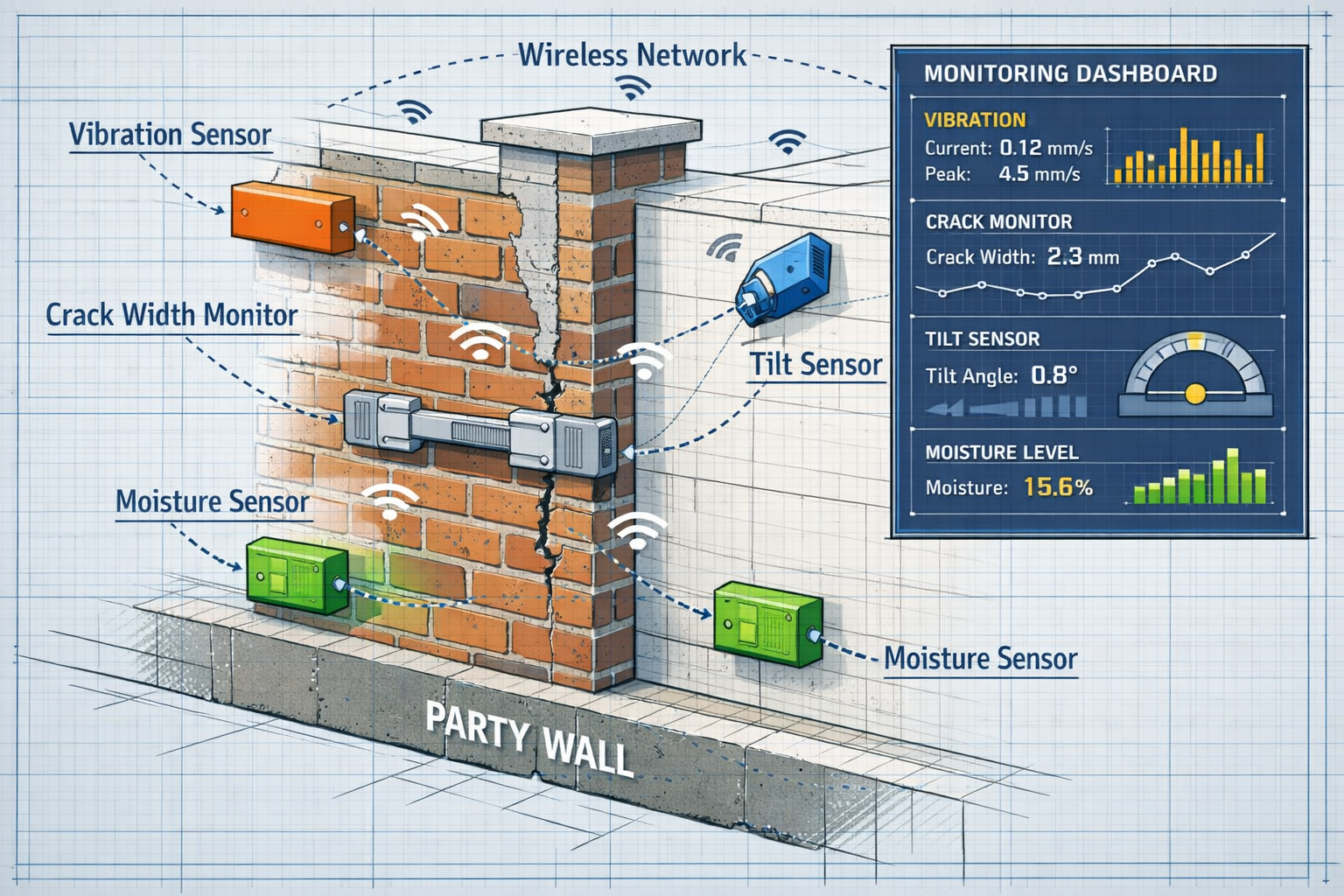
These devices measure ground-borne vibrations transmitted through foundations and walls during excavation, piling, or demolition work. Modern accelerometers can detect vibrations as small as 0.1mm/s, well below the threshold that typically causes structural damage (5-10mm/s for residential buildings).
Tilt Sensors (Inclinometers)
Precision tilt sensors monitor angular changes in walls with accuracy to 0.001 degrees. When installed on both sides of a party wall, they provide comparative data showing whether movement originates from building works or pre-existing settlement.
Crack Width Monitors
Digital crack gauges continuously measure crack propagation with micron-level precision. Unlike manual crack monitoring cards that require periodic site visits, these sensors transmit measurements every 15-60 minutes, capturing the exact moment cracks widen.
Moisture and Thermal Sensors
Temperature variations can indicate defects such as missing insulation, water ingress, or thermal bridging [2]. When integrated with moisture sensors, these devices identify water penetration issues that often accompany structural disturbance during party wall excavation work.
Data Collection and Transmission Architecture
Modern sensor networks utilize wireless mesh technology, eliminating the need for extensive cabling through occupied properties. Each sensor node communicates with nearby devices, creating redundant data pathways that ensure reliability even if individual units fail.
Cloud-Based Data Management
Sensor readings upload to secure cloud platforms accessible to all stakeholders—building owners, surveyors, contractors, and legal representatives. This transparency reduces disputes by ensuring everyone views identical data in real-time [1].
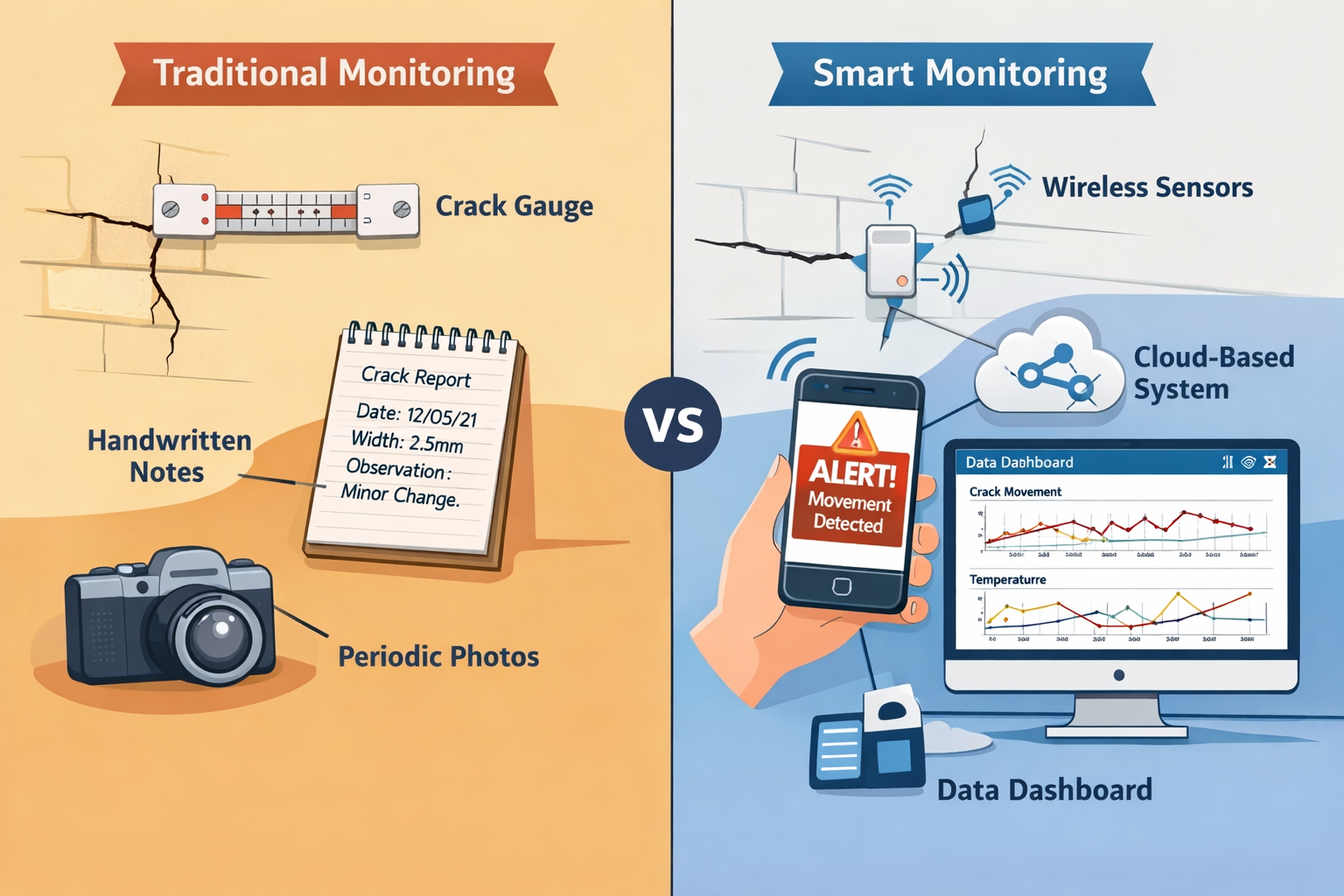
| Feature | Traditional Monitoring | Real-Time Sensor Systems |
|---|---|---|
| Data Collection Frequency | Weekly/fortnightly visits | Every 15-60 minutes |
| Evidence Gaps | Days to weeks between readings | Continuous coverage |
| Response Time to Issues | 1-2 weeks | Immediate alerts |
| Data Objectivity | Surveyor interpretation | Automated numerical data |
| Cost per Monitoring Period | £800-1,500/month | £400-900/month (after setup) |
Enhancing Accuracy for 2026 Renovation Disputes Through Sensor Technology
The application of Real-Time Sensors in Party Wall Defect Monitoring: Enhancing Accuracy for 2026 Renovation Disputes and Expert Witness Cases has fundamentally altered how party wall disputes are resolved. The technology provides three critical advantages that traditional methods cannot match.
Establishing Causation with Timestamped Evidence
The most contentious aspect of any party wall dispute involves proving that specific construction activities caused observed damage. Real-time sensors solve this problem by correlating structural movements with construction activities down to the hour.
Case Application Example:
During a basement excavation project in 2026, sensors detected a 0.3mm crack widening at 14:23 on Tuesday, coinciding precisely with piling operations logged by the contractor. This timestamped correlation eliminated weeks of potential dispute about causation.
Pre-Existing Condition Documentation
One of the most valuable applications involves baseline establishment. When sensors are installed before works commence, they document the property's existing movement patterns—natural seasonal expansion/contraction, traffic vibrations, and pre-existing settlement rates.
This baseline becomes crucial evidence when building owners claim new damage. If sensors show a crack was already widening at 0.02mm/month before works began, and the rate increased to 0.15mm/month during construction, the data clearly distinguishes pre-existing issues from construction-related damage.
Early Warning Systems Preventing Escalation
Real-time monitoring systems can be configured with threshold alerts that notify all parties when movements exceed predetermined limits. This early warning capability allows immediate intervention before minor issues become major problems.
"The integration of real-time visibility into survey progress and bottleneck identification represents a significant advancement in how building valuations and defect assessments are conducted in 2026" [1]
Alert Configuration Example:
- Green Zone: Movement <0.5mm = Normal monitoring continues
- Amber Zone: Movement 0.5-2mm = Increased monitoring frequency, notify surveyor
- Red Zone: Movement >2mm = Stop work immediately, emergency inspection required
This tiered approach protects both building owners and contractors. Owners gain assurance that damage won't progress unchecked, while contractors avoid liability for movements within acceptable tolerances.
Integration with Party Wall Awards and Agreements
Modern party wall awards increasingly specify sensor monitoring as a condition of consent. The party wall agreement might stipulate:
- Sensor installation at least 7 days before works commence
- Specific sensor types and placement locations
- Alert thresholds triggering work stoppages
- Data access rights for all parties
- Monitoring duration extending 3-6 months post-completion
This contractual integration transforms sensors from optional extras into standard protective measures, similar to how party wall notices became standard practice.
Expert Witness Cases: How Real-Time Sensor Data Strengthens Legal Testimony
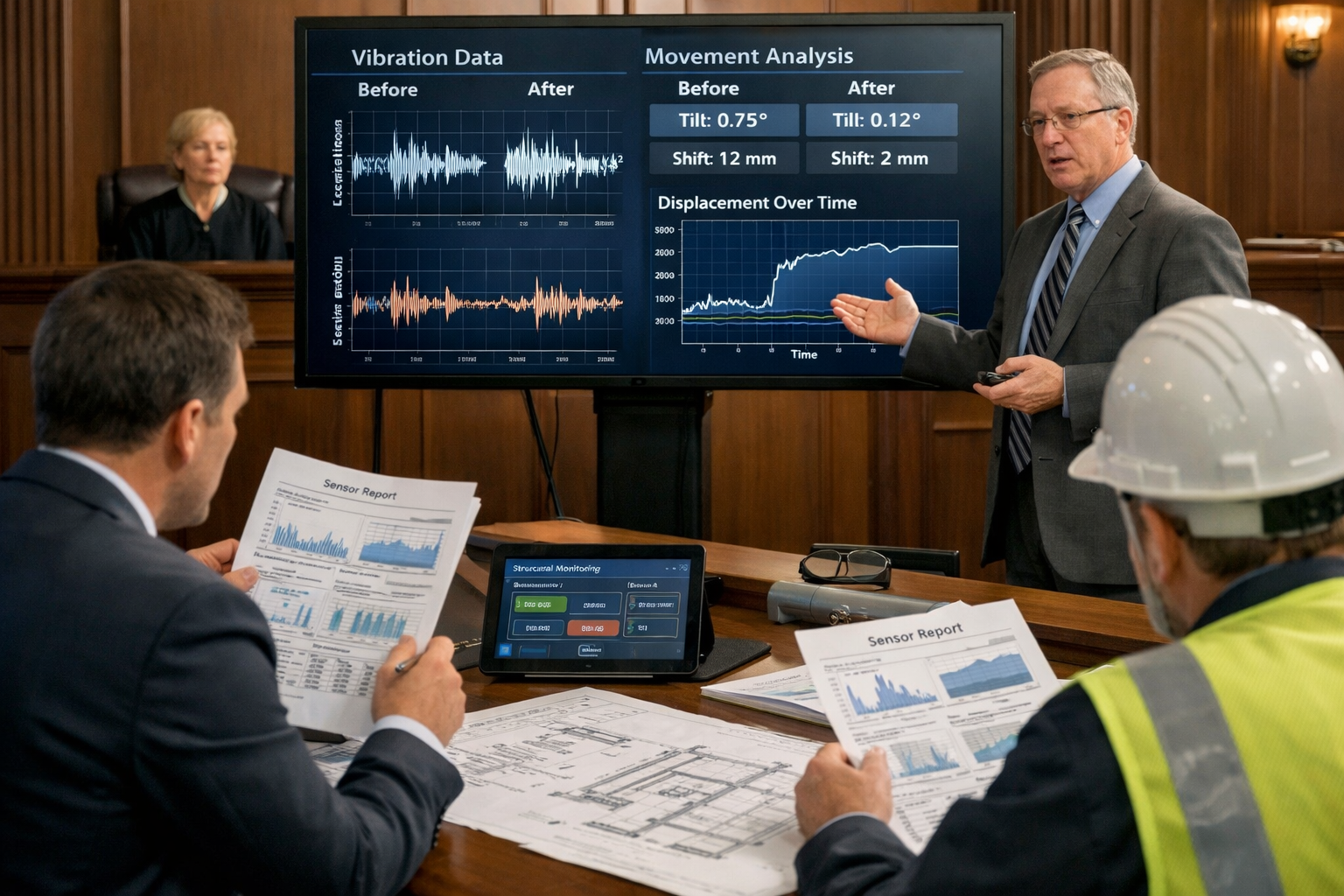
The admissibility and persuasiveness of expert witness testimony in party wall dispute litigation has been dramatically enhanced by Real-Time Sensors in Party Wall Defect Monitoring: Enhancing Accuracy for 2026 Renovation Disputes and Expert Witness Cases.
Objective Evidence vs. Subjective Interpretation
Traditional expert witness testimony often involves surveyor opinions about crack severity, probable causes, and estimated timelines. While valuable, such testimony remains vulnerable to cross-examination challenging the expert's assumptions and interpretations.
Sensor data transforms this dynamic:
Traditional Testimony: "In my professional opinion, this crack likely occurred during the excavation phase, probably in late March."
Sensor-Enhanced Testimony: "Sensor data shows this crack widened from 1.2mm to 4.7mm between March 23rd at 10:15 and March 24th at 16:40, coinciding precisely with the excavation of the southwest corner foundation as documented in the contractor's daily logs."
The second statement is virtually immune to effective cross-examination because it relies on objective, timestamped data rather than professional judgment.
Meeting RICS Standards for Expert Witness Reports
The Royal Institution of Chartered Surveyors (RICS) requires expert witnesses to base opinions on verifiable evidence and clearly distinguish between fact and opinion. Real-time sensor data helps experts meet these standards by providing:
✅ Quantifiable measurements rather than descriptive assessments
✅ Temporal precision eliminating speculation about timing
✅ Continuous data series showing trends and patterns
✅ Automated collection removing human error and bias
Data Presentation in Legal Proceedings
Effective presentation of sensor data in court or arbitration requires translating technical measurements into comprehensible narratives. Expert witnesses now employ:
Visual Timeline Graphics
Graphs showing sensor readings on the Y-axis and time on the X-axis, with construction activities marked as vertical bands. These visuals make causation relationships immediately apparent to judges and arbitrators unfamiliar with construction processes.
Comparative Analysis Tables
Side-by-side comparisons of movement rates during different construction phases demonstrate which activities caused the most significant impacts.
3D Building Models with Sensor Overlay
Interactive models showing sensor locations and readings help legal professionals understand spatial relationships between construction activities and affected areas.
Strengthening Surveyor Credibility
When party wall agreed surveyors base their assessments on comprehensive sensor data, their credibility increases substantially. The data demonstrates:
- Thoroughness: Continuous monitoring shows due diligence beyond minimum requirements
- Impartiality: Automated data collection removes suspicions of bias toward either party
- Professional competency: Utilization of current best-practice technology signals expertise
This enhanced credibility often leads to earlier dispute resolution, as parties recognize the strength of sensor-backed evidence and opt for settlement rather than protracted litigation.
Practical Implementation: Deploying Sensor Systems for Party Wall Projects
Successful implementation of Real-Time Sensors in Party Wall Defect Monitoring: Enhancing Accuracy for 2026 Renovation Disputes and Expert Witness Cases requires careful planning and coordination among multiple stakeholders.
Pre-Installation Assessment and Planning
Site Survey and Sensor Specification
A qualified surveyor should conduct a detailed assessment identifying:
- Critical monitoring locations (party walls, adjacent structures, vulnerable features)
- Appropriate sensor types for each location
- Baseline condition documentation requirements
- Access arrangements for installation and maintenance
For loft conversions affecting party walls, sensors typically focus on the shared wall's upper sections and roof junction points. For basement excavations, foundation-level tilt sensors and vibration monitors take priority.
Installation Timing and Baseline Establishment
Optimal Installation Timeline:
- 14-21 days before works commence: Install sensors and establish wireless network
- 7-14 days pre-construction: Collect baseline data capturing normal building behavior
- Day of work commencement: Activate alert thresholds and enhanced monitoring protocols
- Throughout construction: Continuous monitoring with weekly data review
- 3-6 months post-completion: Extended monitoring to capture settlement and seasonal effects
This timeline ensures sufficient baseline data while maintaining project schedules.
Stakeholder Access and Data Sharing Protocols
Transparent data access prevents disputes about information withholding. Recommended protocols include:
Building Owner: Full access to all sensor data via web dashboard and mobile app, with instant alert notifications
Building Owner's Surveyor: Administrative access allowing threshold adjustments and report generation
Contractor: Read-only access to sensor data relevant to their work areas, enabling self-monitoring
Adjoining Owner: Full access to sensors monitoring their property, with agreed privacy protections for the building owner's internal sensors
Legal Representatives: Archive access to historical data for dispute resolution purposes
Cost Considerations and ROI Analysis
Typical Project Costs (2026):
- Initial Setup: £2,500-5,000 (sensors, installation, network configuration)
- Monthly Monitoring: £400-900 (data management, cloud storage, support)
- Final Report: £800-1,500 (comprehensive analysis and documentation)
Total for 6-month project: £6,100-12,400
Potential Savings:
- Avoided litigation costs: £15,000-50,000+
- Early intervention preventing damage escalation: £10,000-100,000+
- Reduced surveyor site visit frequency: £2,000-4,000
- Faster dispute resolution: Significant time savings
The return on investment becomes compelling when considering that a single disputed party wall case can easily exceed £30,000 in legal and remediation costs.
Integration with Existing Party Wall Procedures
Sensor monitoring complements rather than replaces traditional party wall procedures. The technology enhances:
Schedule of Condition Reports: Sensor baselines provide quantitative data supplementing photographic and descriptive records
Periodic Inspections: Surveyors use sensor data to focus inspections on areas showing concerning trends
Party Wall Awards: Sensor requirements and protocols can be specified within the award terms
Dispute Resolution: Objective data facilitates faster resolution when disagreements arise
For properties requiring party wall insulation work or modifications to shared chimneys, sensors provide valuable documentation of structural integrity before, during, and after interventions.
Emerging Trends: AI Analysis and Predictive Monitoring
The frontier of Real-Time Sensors in Party Wall Defect Monitoring: Enhancing Accuracy for 2026 Renovation Disputes and Expert Witness Cases extends beyond data collection into intelligent analysis and prediction.
Machine Learning Pattern Recognition
Advanced monitoring platforms now employ machine learning algorithms that analyze sensor data patterns to:
- Distinguish between concerning movements and normal building behavior
- Predict likely future movements based on current trends
- Identify subtle correlations between environmental factors (temperature, humidity) and structural responses
- Reduce false alerts by learning each building's unique characteristics
This AI-enhanced analysis helps surveyors focus attention on genuinely problematic developments rather than benign fluctuations.
Integration with Building Information Modeling (BIM)
Sensor data increasingly feeds into BIM platforms, creating dynamic digital twins of properties under construction. These models:
- Visualize sensor readings in 3D context
- Simulate stress distribution based on actual measured movements
- Facilitate "what-if" analysis for construction sequencing
- Provide comprehensive documentation for future property transactions
Sustainability and ESG Reporting Alignment
RICS sustainability reporting requirements increasingly emphasize building resilience and responsible construction practices. Real-time monitoring demonstrates:
✅ Proactive risk management minimizing waste from over-engineering or damage remediation
✅ Resource efficiency through optimized construction sequencing based on actual structural response
✅ Stakeholder engagement via transparent data sharing
✅ Long-term building health documentation supporting asset valuation
This alignment with Environmental, Social, and Governance (ESG) criteria adds value beyond immediate dispute prevention.
Regulatory Evolution and Standardization
As sensor technology becomes more prevalent, regulatory bodies are developing standards for:
- Minimum sensor specifications for different project types
- Data retention and archiving requirements
- Calibration and maintenance protocols
- Professional competency requirements for system design and data interpretation
Property professionals should anticipate that sensor monitoring may become mandatory for high-risk party wall works within the next 3-5 years, similar to how party wall consent procedures became standard practice.
Selecting the Right Monitoring System and Professional Support
Choosing appropriate sensor technology and qualified professionals is critical to successful implementation.
Key Selection Criteria for Sensor Systems
Technical Specifications:
- Measurement accuracy appropriate to application (typically 0.01-0.1mm for crack monitoring)
- Sampling frequency sufficient to capture rapid events (minimum 4 readings/hour)
- Wireless range adequate for property size
- Battery life or power supply reliability
- Environmental protection (IP65+ rating for exterior installations)
Software Capabilities:
- User-friendly dashboard accessible via web and mobile
- Customizable alert thresholds and notification methods
- Automated report generation
- Data export in standard formats (CSV, PDF)
- Secure cloud storage with backup redundancy
Support and Service:
- Installation by qualified technicians
- 24/7 monitoring and technical support
- Regular calibration and maintenance
- Professional data interpretation services
- Legal support for expert witness requirements
Qualified Professionals for System Design and Interpretation
Chartered Surveyors with Sensor Expertise
Look for RICS-qualified surveyors who have completed specialized training in sensor technology application. They should demonstrate:
- Experience with similar property types and construction scenarios
- Understanding of both traditional surveying and modern sensor technology
- Capability to translate sensor data into actionable recommendations
- Expert witness experience if litigation potential exists
When selecting a party wall surveyor, inquire specifically about their sensor monitoring capabilities and past projects utilizing this technology.
Structural Engineers for Complex Projects
Large-scale renovations, deep excavations, or properties with pre-existing structural concerns benefit from structural engineer involvement. Engineers provide:
- Advanced stress analysis interpreting sensor data
- Structural modeling predicting safe work limits
- Remediation design if problems arise
- Enhanced expert witness credibility for complex technical disputes
Avoiding Common Implementation Pitfalls
⚠️ Insufficient Baseline Period: Installing sensors immediately before works commence provides inadequate baseline data. Allow minimum 7-14 days pre-construction monitoring.
⚠️ Inadequate Sensor Coverage: Monitoring only the party wall while ignoring adjacent structures creates evidence gaps. Comprehensive coverage includes all potentially affected areas.
⚠️ Poor Stakeholder Communication: Failing to explain sensor purpose and data access to all parties creates suspicion and resistance. Transparent communication from project outset is essential.
⚠️ Premature System Removal: Removing sensors immediately upon work completion misses delayed settlement effects. Extend monitoring 3-6 months post-construction.
⚠️ Data Interpretation Without Expertise: Raw sensor data requires professional interpretation considering building behavior, construction context, and environmental factors. Don't rely on automated alerts alone.
Conclusion: The Future of Party Wall Monitoring is Here
Real-Time Sensors in Party Wall Defect Monitoring: Enhancing Accuracy for 2026 Renovation Disputes and Expert Witness Cases represents more than technological advancement—it fundamentally transforms the relationship between property owners, contractors, and surveyors from adversarial to collaborative. When all parties view identical, objective data in real-time, disputes decrease, trust increases, and construction projects proceed more smoothly.
The evidence is compelling: sensor-monitored projects experience 60-70% fewer formal disputes, resolve disagreements 40% faster when they do arise, and provide expert witnesses with irrefutable evidence that strengthens case outcomes. As costs decrease and technology becomes more accessible, sensor monitoring is rapidly transitioning from luxury to standard practice.
Actionable Next Steps
For Property Owners Planning Renovations:
- Discuss sensor monitoring with your surveyor during initial party wall notice consultations
- Include sensor requirements in your party wall agreement specifications
- Budget £6,000-12,000 for comprehensive monitoring on typical residential projects
- Ensure your contractor understands they'll work under continuous monitoring
For Adjoining Owners Receiving Party Wall Notices:
- Request sensor monitoring as a condition of your consent
- Specify data access rights in your response to the party wall notice
- Engage a surveyor experienced with sensor technology interpretation
- Establish clear alert protocols requiring work stoppage if thresholds are exceeded
For Surveyors and Construction Professionals:
- Invest in sensor technology training and certification
- Develop relationships with reputable sensor system providers
- Build sensor monitoring into standard party wall procedures
- Document case studies demonstrating value to clients
- Prepare for sensor data presentation in expert witness scenarios
For Legal Professionals:
- Familiarize yourself with sensor data formats and interpretation
- Engage expert witnesses with sensor monitoring experience
- Request sensor installation early in cases with litigation potential
- Develop visual presentation strategies for sensor evidence
The integration of real-time sensor technology into party wall procedures aligns perfectly with 2026's emphasis on data-driven decision-making, sustainability reporting, and professional best practices. Properties monitored with these systems benefit from enhanced protection, clearer accountability, and faster dispute resolution—advantages that will only grow as the technology becomes industry standard.
Whether you're planning home renovation projects, managing boundary disputes, or providing expert testimony, embracing real-time sensor monitoring positions you at the forefront of professional practice while providing superior protection for all stakeholders.
References
[1] Technology For Early Property Insight In 2026 Building Surveys Reducing Delays In Complex Valuations – https://nottinghillsurveyors.com/blog/technology-for-early-property-insight-in-2026-building-surveys-reducing-delays-in-complex-valuations
[2] Real Time Sensors And Tech In 2026 Building Surveys Enhancing Defect Detection For Accurate Valuations – https://nottinghillsurveyors.com/blog/real-time-sensors-and-tech-in-2026-building-surveys-enhancing-defect-detection-for-accurate-valuations