A 42% surge in hazard-related complaints during the first quarter of 2026 has sent shockwaves through the private rented sector (PRS). This dramatic increase, reported by the Housing Ombudsman, signals a fundamental shift in how landlords must approach property safety—particularly for converted buildings where fire and structural risks lurk beneath the surface. Level 3 Surveys for Fire and Structural Hazards: Awaab's Law 2026 Compliance in High-Risk PRS Conversions has become the critical standard for landlords navigating this new regulatory landscape, where failure to identify and remediate hazards can result in severe penalties and tenant harm.
The expansion of Awaab's Law in 2026 represents more than incremental regulatory change. Phase 2 now explicitly covers fire hazards, electrical risks, structural collapse, excess cold and heat, and explosion dangers—all designated as significant hazards requiring urgent investigation and remediation[5]. For landlords managing converted properties, where original structures have been modified into multiple rental units, the implications are profound. These buildings often present complex fire safety challenges and hidden structural deficiencies that standard inspections fail to detect.
Key Takeaways
- Phase 2 of Awaab's Law (2026) expands coverage to include fire hazards, electrical risks, structural collapse, and explosion dangers, with emergency hazards requiring 24-hour response times[5]
- Level 3 Building Surveys provide comprehensive assessment of fire and structural risks in high-risk PRS conversions, using advanced detection methods beyond standard inspections
- Strict investigation timelines apply: 10 working days for significant hazards, with written tenant notification required within 3 working days of investigation completion[2]
- Complex structural works receive extended timelines of up to 12 weeks to commence, but initial safety measures must begin within 5 working days[2]
- Surveyor reports carry increased legal weight and may be used in enforcement actions, requiring exceptional accuracy and comprehensive documentation[4]
Understanding Awaab's Law 2026 Phase 2 Expansion
The tragic death of two-year-old Awaab Ishak from prolonged exposure to mould in 2020 catalyzed legislative change that now extends far beyond damp and mould hazards. Phase 2, implemented in 2026, fundamentally reshapes landlord obligations by incorporating fire and structural hazards into the regulatory framework.
What Hazards Are Now Covered?
The 2026 expansion designates several critical hazard categories as requiring immediate attention:
Fire and Flame Hazards 🔥
- Inadequate fire detection systems
- Compromised fire escape routes
- Combustible materials in common areas
- Defective fire doors and compartmentation
Structural Collapse Risks 🏗️
- Significant structural defects or disrepair
- Load-bearing wall deterioration
- Foundation subsidence
- Roof structural integrity issues
Electrical Hazards ⚡
- Faulty wiring in converted properties
- Inadequate electrical installations
- Overloaded circuits
- Non-compliant consumer units
Additional Designated Hazards
- Excess cold and excess heat
- Explosion risks (gas leaks, improper installations)
- Carbon monoxide exposure
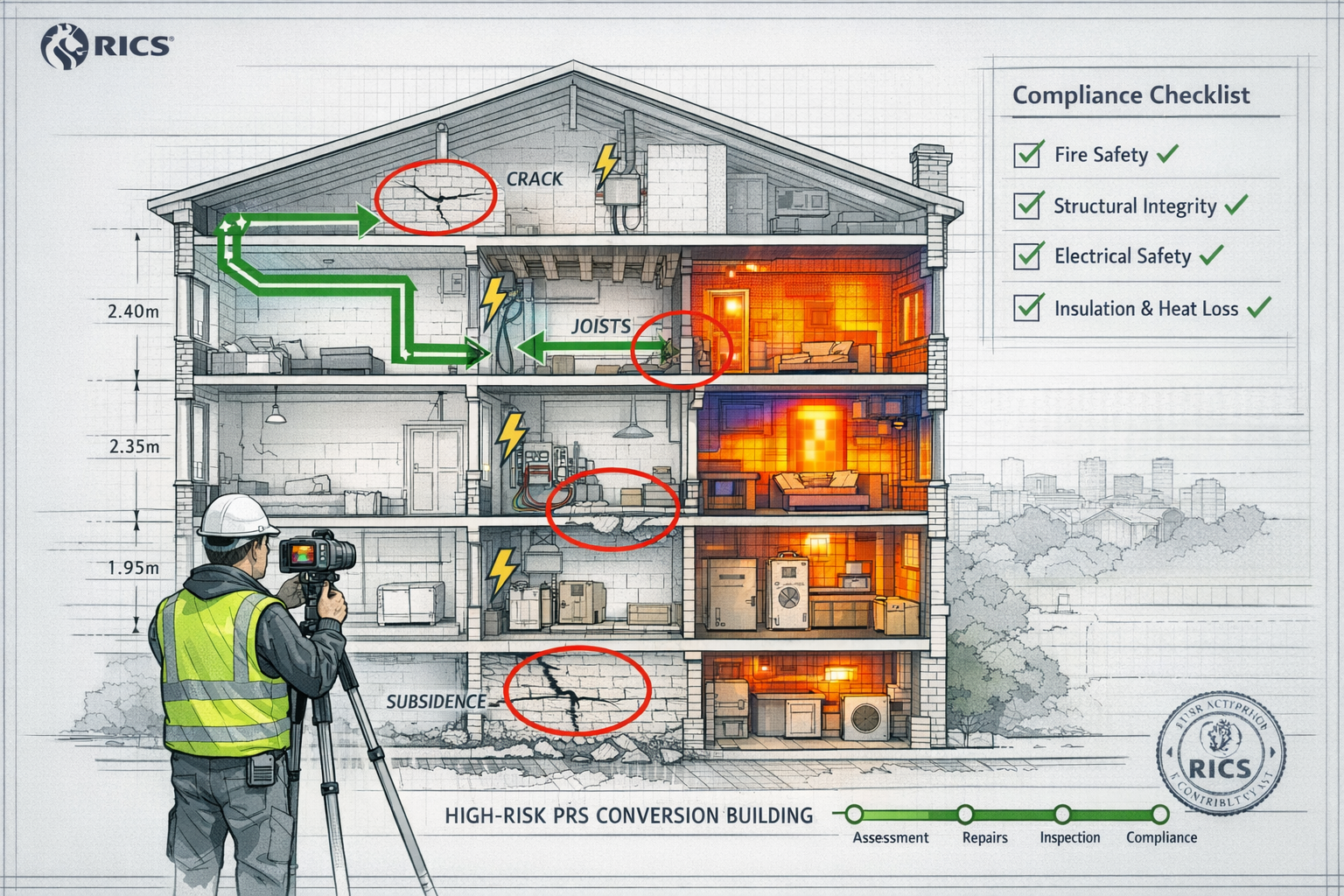
These hazards present particular challenges in PRS conversions, where original building structures have been modified—often decades ago—to create multiple rental units. Structural surveys become essential tools for identifying these hidden dangers before they escalate into emergencies.
Mandatory Response Timelines
Awaab's Law 2026 establishes strict timelines that landlords must follow once they become aware of potential hazards:
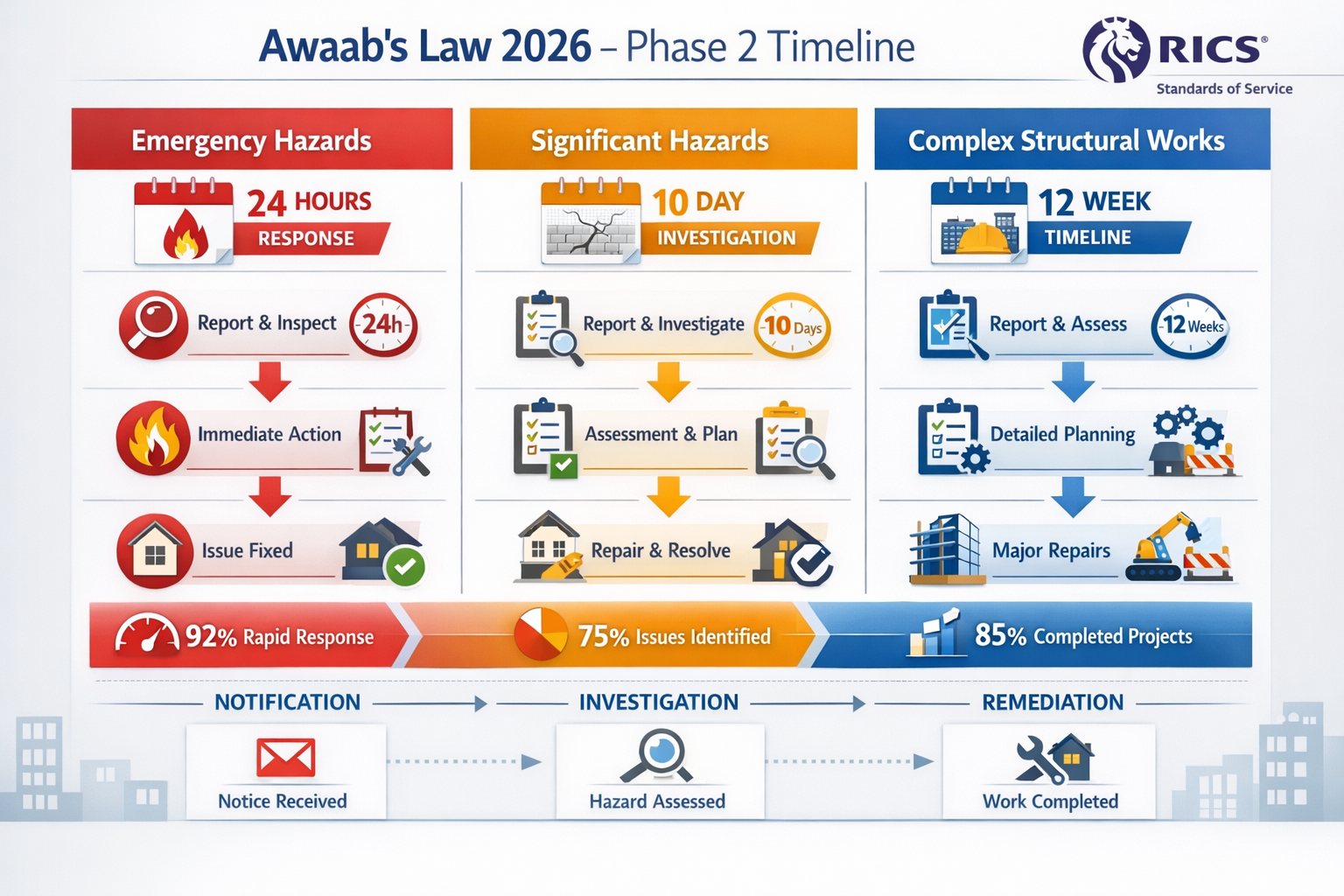
| Hazard Severity | Investigation Deadline | Tenant Notification | Remediation Commencement |
|---|---|---|---|
| Emergency (immediate risk) | 24 hours | Within investigation period | 24 hours[5] |
| Significant (serious risk) | 10 working days | 3 working days after investigation | 5 working days after investigation[2] |
| Complex Structural | 10 working days | 3 working days after investigation | Within 12 weeks (steps within 5 days)[2] |
The 24-hour emergency response requirement represents the most stringent standard. When fire or structural hazards present immediate risk to tenant health and safety, landlords must investigate and implement remedial action within a single day[5]. This leaves virtually no margin for error and demands pre-established relationships with qualified surveyors who can respond rapidly.
For significant hazards that don't meet the emergency threshold, the 10-day investigation window requires landlords to engage chartered surveyors who can conduct thorough assessments within compressed timeframes. The subsequent 3-day notification requirement means tenants must receive written communication detailing whether hazards were confirmed and what remediation steps will follow[2].
Why Level 3 Surveys Are Essential for High-Risk PRS Conversions
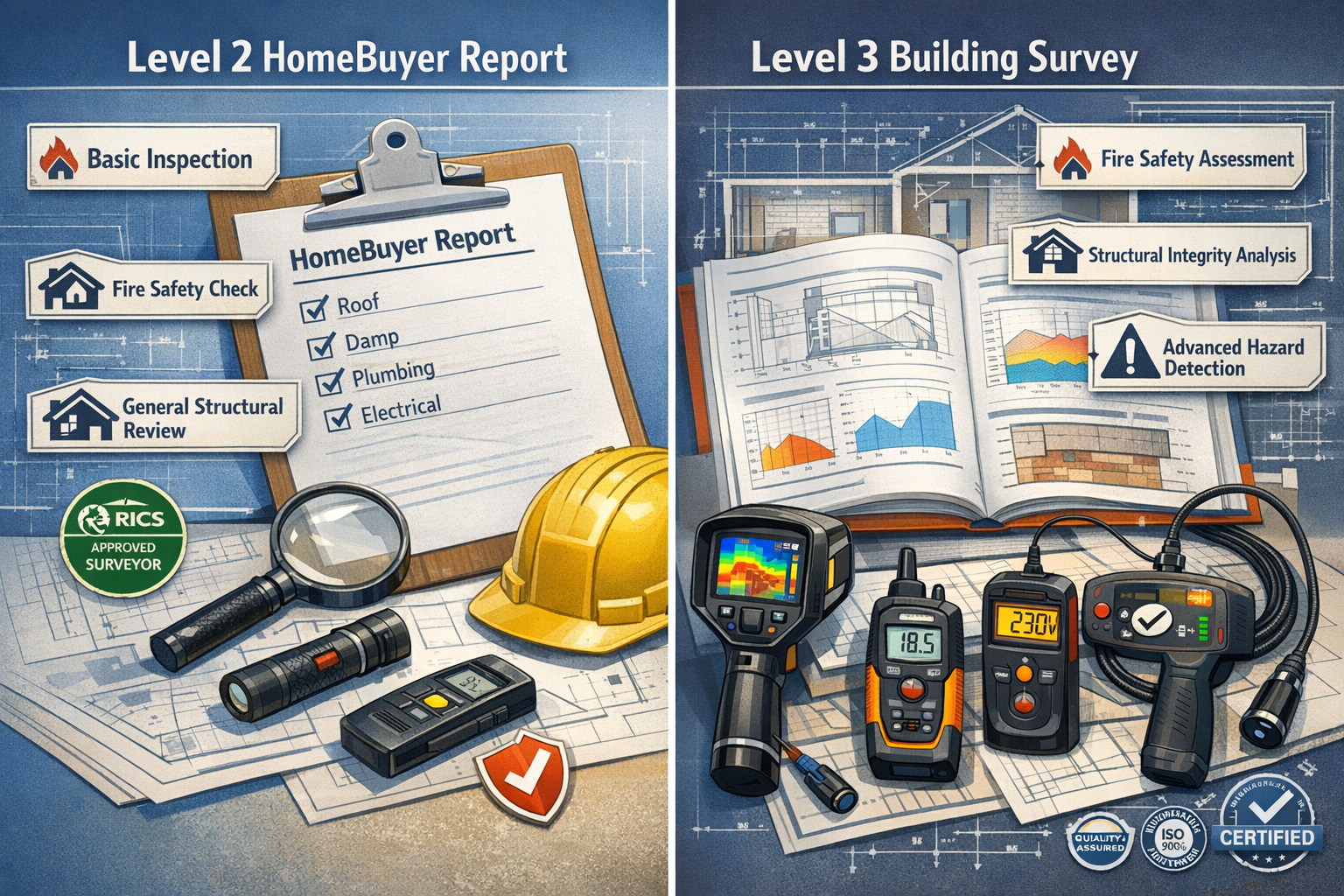
Not all property surveys provide the depth of investigation required for Awaab's Law compliance in converted buildings. The distinction between survey levels becomes critical when fire and structural hazards are in scope.
Survey Level Comparison
Level 1 (Condition Report)
- Basic visual inspection
- Identifies urgent defects only
- No detailed investigation
- ❌ Insufficient for Awaab's Law compliance
Level 2 (HomeBuyer Report)
- More detailed visual inspection
- Identifies significant defects
- Limited invasive investigation
- ⚠️ May miss hidden fire/structural hazards
Level 3 (Building Survey)
- Comprehensive detailed inspection
- Extensive investigation of structure and fabric
- Advanced detection methods
- ✅ Appropriate for high-risk PRS conversions
For landlords managing converted properties, understanding what survey you need becomes a compliance imperative. The difference between a HomeBuyer Report and Building Survey can mean the difference between identifying critical hazards and facing enforcement action.
Advanced Detection Methods in Level 3 Surveys
Professional surveyors conducting Level 3 assessments for Awaab's Law compliance employ sophisticated detection technologies:
Thermal Imaging Cameras
- Identify heat loss and insulation deficiencies
- Detect hidden electrical faults
- Reveal moisture penetration behind surfaces
- Map thermal bridging in converted structures
Moisture Meters and Hygrometers
- Measure moisture content in structural elements
- Identify hidden water ingress
- Assess condensation risk areas
- Detect early signs of timber decay
Electrical Testing Equipment
- Verify circuit integrity
- Identify overloaded systems
- Test earth bonding and RCD protection
- Assess compliance with current regulations
Structural Assessment Tools
- Crack monitoring devices
- Load calculation analysis
- Foundation inspection equipment
- Roof structure evaluation tools
These advanced methods enable surveyors to identify hazards that visual inspection alone would miss—particularly critical in converted buildings where modifications may have compromised original fire compartmentation or structural integrity[4].
Enhanced Protocols for Fire and Electrical Risks
The 2026 expansion requires surveyors to adopt "enhanced Level 3" protocols specifically addressing fire and electrical hazards in rental properties[1]. These protocols extend beyond traditional building survey scope to include:
Fire Safety Assessment Components
- Evaluation of fire detection and alarm systems
- Assessment of fire escape routes and emergency lighting
- Inspection of fire doors, frames, and self-closing mechanisms
- Review of fire compartmentation integrity
- Analysis of combustible materials in common areas
Electrical Safety Evaluation
- Verification of electrical installation condition reports (EICRs)
- Assessment of consumer unit compliance
- Evaluation of socket outlet provision and loading
- Inspection of emergency lighting circuits
- Review of earthing and bonding arrangements
For properties requiring residential structural engineers, the integration of fire safety and structural assessment becomes particularly important. Load-bearing walls that have been modified during conversion may simultaneously present structural collapse risk and compromise fire compartmentation—requiring coordinated evaluation.
Implementing Level 3 Surveys for Fire and Structural Hazards: Awaab's Law 2026 Compliance in High-Risk PRS Conversions
Successfully implementing compliant survey protocols requires systematic planning and execution. Landlords managing high-risk PRS conversions must establish clear processes that enable rapid response when hazards are reported.
Pre-Emptive Survey Strategy
Rather than waiting for tenant reports, forward-thinking landlords are implementing proactive survey schedules:
Annual Comprehensive Inspections
- Full Level 3 Building Survey every 12-24 months
- Focused on fire and structural hazard identification
- Documentation of all findings with photographic evidence
- Creation of remediation priority matrix
Targeted Interim Assessments
- Six-monthly checks of high-risk areas
- Roof surveys for properties with aging roof structures
- Electrical system reviews between full EICRs
- Fire safety equipment testing and verification
Post-Modification Surveys
- Mandatory surveys after any structural alterations
- Assessment of fire compartmentation impact
- Verification of building control compliance
- Documentation for future reference
This proactive approach reduces the likelihood of emergency situations requiring 24-hour response and demonstrates due diligence should disputes arise.
Selecting Qualified Surveyors
Not all surveyors possess the specialized expertise required for Awaab's Law compliance in converted properties. Landlords should verify:
✅ RICS Membership and Accreditation
- Chartered status (MRICS or FRICS)
- Relevant specialist qualifications
- Professional indemnity insurance
- Continuing professional development records
✅ Fire Safety Competence
- Training in fire risk assessment
- Knowledge of Regulatory Reform (Fire Safety) Order 2005
- Experience with converted properties
- Understanding of compartmentation principles
✅ Structural Engineering Knowledge
- Ability to assess load-bearing capacity
- Experience with subsidence and settlement issues
- Knowledge of foundation types and failure modes
- Competence in subsidence surveys
✅ Availability and Response Capability
- Capacity to respond within required timelines
- Emergency inspection availability
- Geographic coverage appropriate to portfolio
- Established relationships with specialist consultants
The increased legal weight of surveyor reports under Awaab's Law means that documentation quality and accuracy are paramount[4]. Reports may be scrutinized during enforcement proceedings or used as evidence in legal disputes, making surveyor selection a critical decision.
Documentation and Reporting Requirements
Level 3 surveys for Awaab's Law compliance must produce comprehensive documentation that satisfies both regulatory requirements and practical remediation needs.
Essential Report Components:
-
Executive Summary
- Clear hazard identification and classification
- Emergency vs. significant vs. long-term hazards
- Immediate action requirements
- Estimated remediation timelines
-
Detailed Findings
- Location-specific hazard descriptions
- Photographic evidence with annotations
- Technical measurements and readings
- Assessment against HHSRS criteria
-
Risk Assessment
- Likelihood of harm occurring
- Severity of potential harm
- Vulnerable occupant considerations
- Urgency classification justification
-
Remediation Recommendations
- Specific work specifications
- Phased approach for complex works
- Estimated costs and timelines
- Temporary mitigation measures
-
Compliance Verification
- Current building regulation status
- Fire safety compliance assessment
- Electrical installation compliance
- Planning and building control history
This documentation must be provided to tenants within 3 working days of investigation completion, clearly stating whether significant or emergency hazards were identified and what actions will be taken[2].
Remediation Planning and Execution
Once hazards are confirmed, landlords must navigate complex remediation timelines while maintaining tenant safety.
Immediate Safety Measures (Within 5 Working Days)
- Installation of temporary fire detection systems
- Provision of additional fire extinguishers
- Temporary structural support installation
- Emergency electrical isolation where necessary
- Clear signage for hazard awareness
Long-Term Structural Prevention Work (Commence Within 12 Weeks)
- Foundation repair and underpinning
- Structural reinforcement of load-bearing elements
- Roof structure replacement or repair
- Installation of permanent fire compartmentation
- Complete electrical system rewiring
For complex structural works, landlords must demonstrate they have taken "steps" toward remediation within 5 working days, even if actual construction work cannot commence immediately[2]. This might include:
- Engaging structural engineers for detailed design
- Obtaining necessary building control approvals
- Securing specialist contractor quotes
- Arranging project financing
- Scheduling tenant decant if required
The distinction between taking "steps" and commencing actual work provides necessary flexibility for genuinely complex projects while maintaining regulatory pressure for timely action.
Legal and Enforcement Implications
The consequences of non-compliance with Awaab's Law 2026 extend beyond financial penalties to include reputational damage and potential criminal liability.
Enforcement Powers
Local housing authorities possess significant enforcement tools:
Improvement Notices
- Formal requirement to address identified hazards
- Specified timescales for compliance
- Criminal offense if not complied with
- Potential unlimited fines upon conviction
Prohibition Orders
- Restriction or prohibition of property use
- Immediate effect in emergency situations
- Compensation liability to displaced tenants
- Property value implications
Emergency Remedial Action
- Authority can conduct works in default
- Full cost recovery from landlord
- Additional administrative charges
- Potential for civil recovery proceedings
Rent Repayment Orders
- Tenants can claim up to 12 months' rent back
- Available where offense committed
- No requirement to prove financial loss
- Significant financial exposure for landlords
Evidential Standards
Surveyor reports prepared for Awaab's Law compliance must meet heightened evidential standards. Courts and tribunals will scrutinize:
- Methodology transparency: Clear explanation of inspection approach and limitations
- Technical accuracy: Correct application of HHSRS assessment principles
- Professional standards: Adherence to RICS guidance and codes of conduct
- Objectivity: Absence of bias or conflicts of interest
- Contemporaneous documentation: Records made at time of inspection
Surveyors may be called to provide expert witness testimony regarding their findings, making comprehensive note-taking and photographic documentation essential[6]. The ability to defend inspection methodology and conclusions under cross-examination requires both technical competence and clear communication skills.
Practical Challenges in High-Risk PRS Conversions
Converted properties present unique complications that complicate Awaab's Law compliance.
Common Conversion-Related Hazards
Fire Compartmentation Failures
- Original fire barriers removed during conversion
- Inadequate fire stopping around service penetrations
- Non-compliant fire doors or missing self-closers
- Compromised escape routes through structural changes
Structural Modifications
- Load-bearing walls partially removed
- Inadequate support beams installed
- Floor joists cut or notched excessively
- Foundation loading exceeded by additional floors
Electrical System Overloading
- Original wiring inadequate for multiple units
- Consumer units undersized for current demand
- Inadequate earthing and bonding provisions
- Non-compliant distribution arrangements
Hidden Building Defects
- Concealed timber decay behind plasterboard
- Roof structure deterioration in inaccessible voids
- Foundation movement masked by cosmetic repairs
- Damp penetration behind modern finishes
These issues frequently escape detection during basic inspections, making Level 3 surveys with invasive investigation capabilities essential for risk identification.
Access and Tenant Cooperation
Conducting thorough surveys in occupied PRS conversions requires careful tenant management:
Access Challenges
- Multiple tenancies requiring separate access arrangements
- Tenant resistance to invasive inspection methods
- Scheduling conflicts across multiple units
- Privacy and security concerns
Mitigation Strategies
- Clear advance communication about inspection purpose and legal requirements
- Flexible scheduling to accommodate tenant availability
- Professional conduct and minimal disruption approach
- Transparent reporting of findings to all affected tenants
- Respect for tenant belongings and living spaces
Landlords must balance thorough investigation requirements against tenant rights and practical access limitations. Specific defect reports may be necessary for targeted follow-up inspections where initial access was limited.
Cost Considerations
Comprehensive Level 3 surveys and subsequent remediation represent significant investment:
Survey Costs
- Level 3 Building Survey: £800-£2,500+ depending on property size and complexity
- Specialist fire risk assessment: £400-£1,200 per building
- Electrical installation condition report: £200-£500 per unit
- Structural engineer consultation: £500-£2,000+ for detailed assessment
Remediation Costs
- Fire door replacement: £300-£800 per door
- Fire alarm system installation: £1,500-£5,000+ per building
- Structural repairs: £5,000-£50,000+ depending on extent
- Electrical rewiring: £3,000-£8,000 per unit
- Emergency temporary measures: £500-£2,000
While these costs are substantial, they pale in comparison to enforcement action consequences, rent repayment orders, and potential liability for tenant harm. Forward-thinking landlords view compliance investment as essential risk management rather than discretionary expenditure.
Future Regulatory Trajectory
Awaab's Law continues to expand beyond the 2026 Phase 2 implementation.
Phase 3 (2027) and Beyond
From 2027, regulations will extend to all remaining HHSRS hazards excluding overcrowding[3]. This includes:
- Asbestos exposure risks
- Carbon monoxide hazards
- Lead paint contamination
- Radon gas accumulation
- Biocide exposure
- Radiation hazards
For landlords managing older converted properties, this expansion necessitates even more comprehensive survey approaches. Properties converted from commercial or industrial use may present asbestos risks that require specialist assessment beyond standard surveyor competence.
Sector-Wide Impact
The Housing Ombudsman's data showing a 42% increase in hazard-related complaints during early 2026 suggests tenants are becoming more aware of their rights and more willing to report concerns[6]. This trend is likely to accelerate as:
- Media coverage increases public awareness
- Tenant advocacy organizations provide support
- Online resources facilitate complaint submission
- Successful enforcement cases establish precedents
Landlords who adopt proactive compliance strategies position themselves advantageously in an increasingly regulated market. Those who wait for tenant complaints before addressing hazards face growing enforcement risk and reputational damage.
Best Practice Recommendations
Based on current regulatory requirements and emerging compliance trends, landlords managing high-risk PRS conversions should implement the following best practices:
1. Establish Baseline Compliance
Action Steps:
- Commission comprehensive Level 3 Building Surveys for all converted properties
- Engage fire risk assessors for multi-unit buildings
- Obtain current electrical installation condition reports
- Document all findings in centralized compliance database
2. Create Hazard Response Protocols
Action Steps:
- Develop written procedures for tenant hazard reports
- Establish relationships with emergency response contractors
- Pre-qualify surveyors capable of 24-hour emergency response
- Train property management staff on Awaab's Law requirements
- Create template communications for tenant notifications
3. Implement Preventive Maintenance Programs
Action Steps:
- Schedule regular inspections of fire safety equipment
- Conduct annual roof surveys for aging structures
- Maintain electrical testing schedules
- Monitor structural movement in properties with known settlement issues
- Document all maintenance activities with photographic evidence
4. Invest in Building Fabric Improvements
Action Steps:
- Upgrade fire detection and alarm systems proactively
- Replace non-compliant fire doors before enforcement action
- Address structural defects identified in surveys
- Improve electrical installations to current standards
- Enhance thermal performance to reduce excess cold/heat risks
5. Maintain Comprehensive Documentation
Action Steps:
- Retain all survey reports and specialist assessments
- Document tenant communications regarding hazards
- Record all remediation work with before/after photographs
- Maintain building control approval records
- Create digital archives accessible during enforcement proceedings
Conclusion
Level 3 Surveys for Fire and Structural Hazards: Awaab's Law 2026 Compliance in High-Risk PRS Conversions represents a fundamental shift in landlord obligations and risk management strategies. The expansion of Awaab's Law to encompass fire hazards, structural collapse risks, and electrical dangers creates unprecedented compliance requirements—particularly for converted properties where original building fabric has been modified.
The strict timelines imposed by the 2026 regulations leave no room for reactive approaches. Emergency hazards require 24-hour investigation and remediation, while significant hazards must be investigated within 10 working days and addressed within 5 working days of investigation completion[2][5]. For complex structural works, the 12-week commencement deadline demands prompt engagement of specialist consultants and efficient project management.
Level 3 Building Surveys conducted by qualified chartered surveyors provide the comprehensive assessment necessary to identify hidden hazards in converted properties. Advanced detection methods including thermal imaging, moisture measurement, and electrical testing reveal risks that visual inspection alone would miss. Enhanced protocols specifically addressing fire and electrical hazards ensure compliance with the expanded regulatory scope[1][4].
The legal and financial consequences of non-compliance are severe. Enforcement action, rent repayment orders, and potential criminal liability create substantial risk exposure for landlords who fail to meet their obligations. Conversely, proactive compliance strategies reduce enforcement risk, protect tenant safety, and position landlords advantageously in an increasingly regulated market.
Actionable Next Steps
For Landlords Managing High-Risk PRS Conversions:
-
Immediate (Within 30 Days)
- Commission Level 3 Building Surveys for all converted properties
- Review existing fire risk assessments for currency and completeness
- Verify electrical installation condition reports are current
- Establish emergency surveyor response protocols
-
Short-Term (Within 90 Days)
- Address any emergency or significant hazards identified in surveys
- Implement preventive maintenance schedules
- Train property management staff on Awaab's Law requirements
- Create tenant communication protocols
-
Medium-Term (Within 12 Months)
- Complete all complex structural remediation works
- Upgrade building systems to current standards
- Establish annual survey and inspection cycles
- Build comprehensive compliance documentation systems
-
Ongoing
- Monitor regulatory developments and Phase 3 implementation
- Maintain relationships with qualified surveyors and specialists
- Document all tenant hazard reports and responses
- Review and update compliance procedures regularly
The 2026 expansion of Awaab's Law represents a permanent elevation of safety standards in the private rented sector. Landlords who embrace comprehensive survey protocols and proactive hazard management will not only achieve compliance but also protect their most important stakeholders—the tenants who call these properties home.
For expert assistance with structural surveys in London and Awaab's Law compliance assessments, professional surveyors can provide the specialized knowledge and rapid response capabilities essential for meeting 2026 regulatory requirements.
References
[1] Awaabs Law 2026 Hazard Expansions Surveyor Protocols For Electrical Fire And Excess Heat Risks In Rentals – https://nottinghillsurveyors.com/blog/awaabs-law-2026-hazard-expansions-surveyor-protocols-for-electrical-fire-and-excess-heat-risks-in-rentals
[2] Awaabs Law Is Here The Surveyors Guide For Compliance – https://www.surventrix.com/blog/awaabs-law-is-here-the-surveyors-guide-for-compliance
[3] Awaabs Law Policy Web Version 10 – https://www.southernhousing.org.uk/media/cxvlllnp/awaabs-law-policy-web-version-10.pdf
[4] Awaabs Law Surveyors – https://goreport.com/awaabs-law-surveyors/
[5] Awaabs Law Guidance For Social Landlords Timeframes For Repairs In The Social Rented Sector – https://www.gov.uk/government/publications/awaabs-law-guidance-for-social-landlords/awaabs-law-guidance-for-social-landlords-timeframes-for-repairs-in-the-social-rented-sector
[6] Expert Witness Preparation For Awaabs Law 2026 Expansions Testifying On New Rental Hazards Like Fire And Electrical Risks – https://nottinghillsurveyors.com/blog/expert-witness-preparation-for-awaabs-law-2026-expansions-testifying-on-new-rental-hazards-like-fire-and-electrical-risks