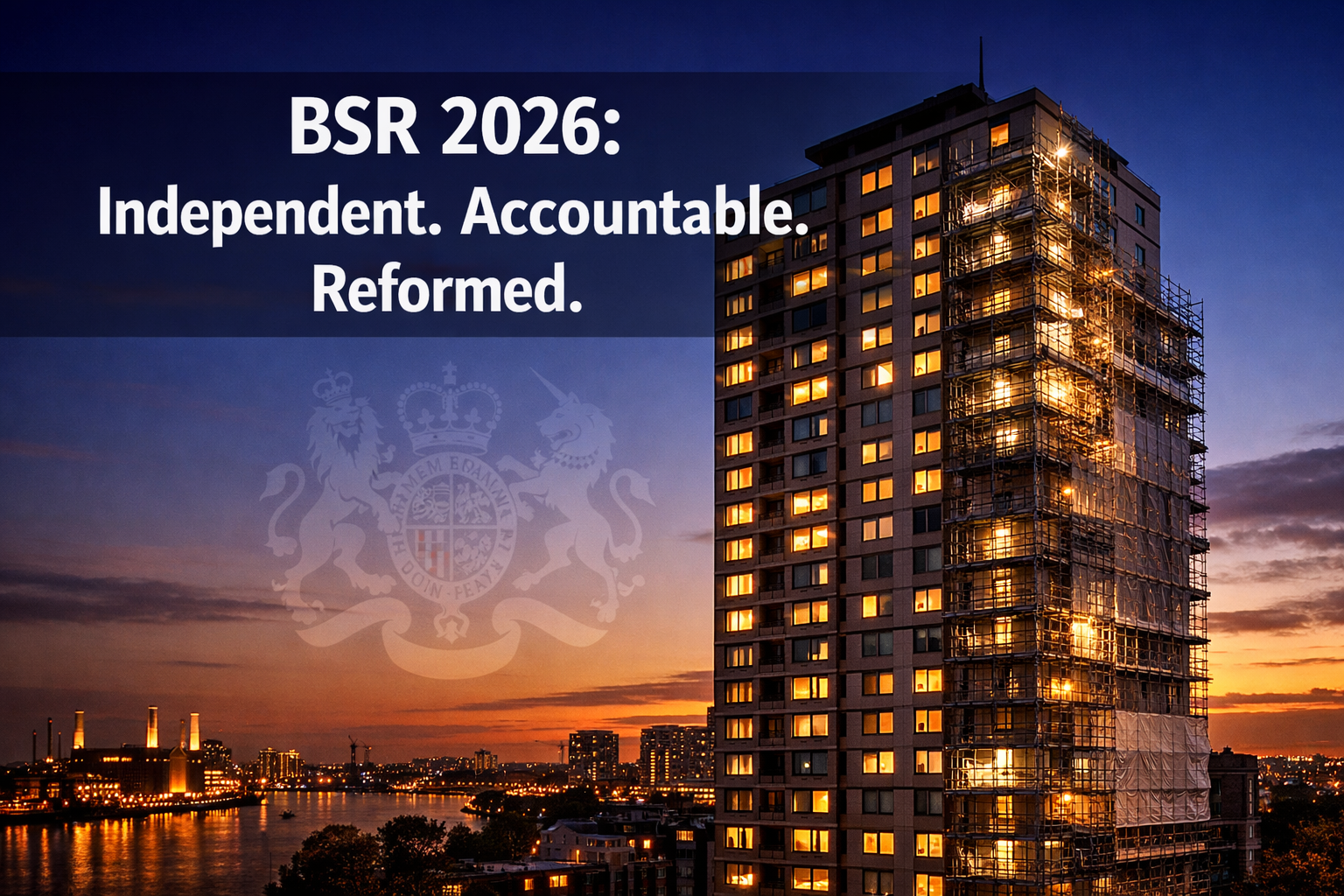

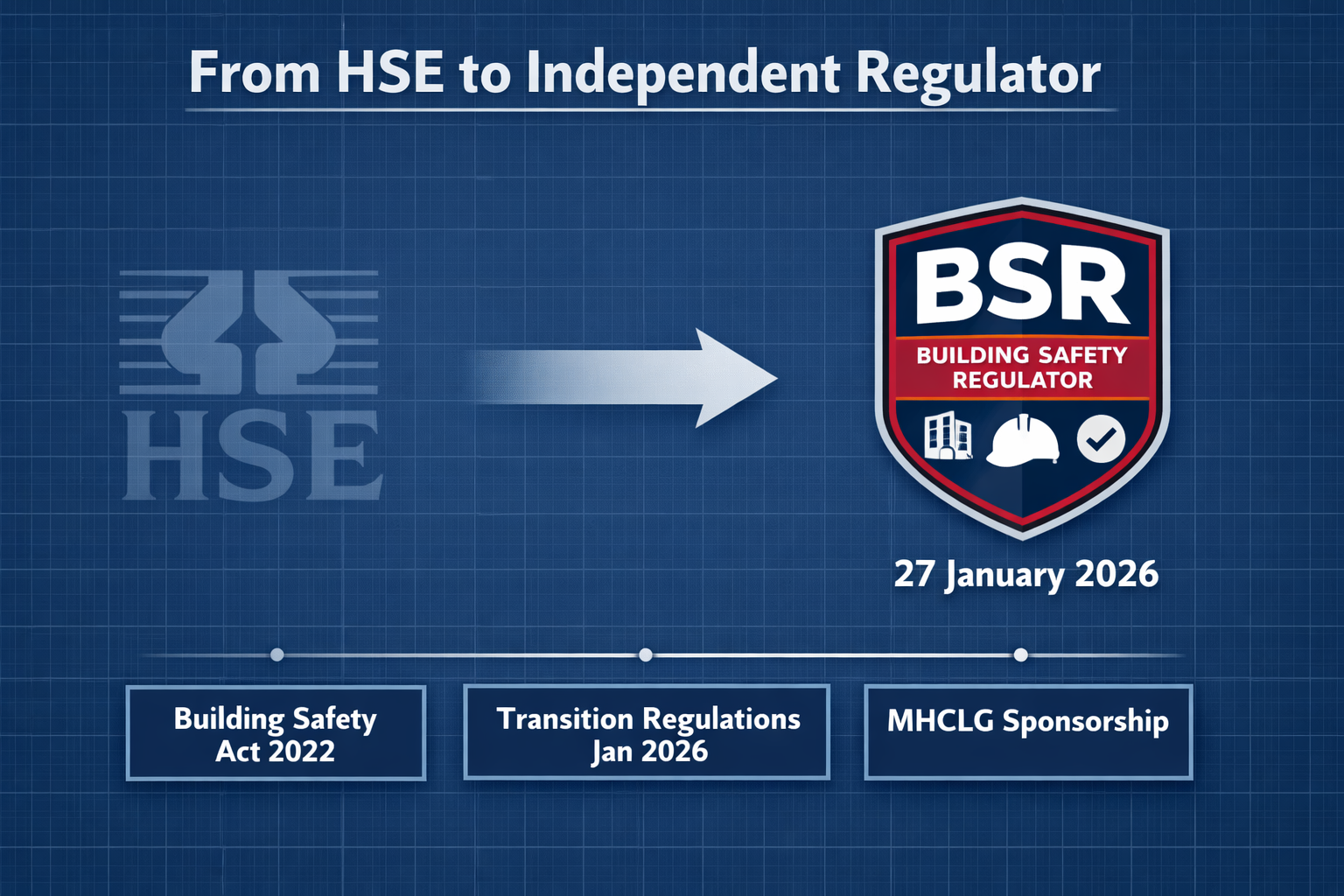
On 27 January 2026, a structural shift in how England’s buildings are regulated quietly took effect — one that every property owner, developer, and building manager in Kingston-upon-Thames and South West London needs to understand. The Building Safety Regulator independent statutory body 2026 reform formally separated the BSR from the Health and Safety Executive, creating a standalone regulator with its own powers, governance, and direct accountability to government. If you own, develop, or manage a higher-risk building, the rules of the game have changed.
Key Takeaways 🏗️
- 27 January 2026 marks the date the BSR became a fully independent executive non-departmental public body (NDPB), separate from HSE.
- The BSR is now sponsored directly by the Ministry of Housing, Communities and Local Government (MHCLG).
- All building safety functions under the Building Safety Act 2022 have transferred to the new independent body.
- Higher-risk building (HRB) Gateway approvals remain a critical compliance requirement — and the stakes are higher than ever.
- The Building Safety Levy is on the horizon, with significant financial implications for developers.
- Local RICS-qualified surveyors are your first line of defence in navigating the reformed regime.
What the Building Safety Regulator Independent Statutory Body 2026 Reform Actually Means
From HSE Agency to Independent Regulator
For several years, the Building Safety Regulator operated as a body within the Health and Safety Executive. That arrangement served as a practical starting point following the Building Safety Act 2022, but it was always intended as a temporary home. The Building Safety Regulator (Establishment of New Body and Transfer of Functions etc.) Regulations 2026, made on 7 January 2026, formally ended that arrangement.
From 27 January 2026, the BSR operates as a standalone executive non-departmental public body, sponsored by MHCLG rather than HSE. This is not a cosmetic rebrand. The new body has:
- Its own chair and between 3 and 8 board members, appointed by the Secretary of State
- A dedicated chief executive leading day-to-day operations
- Statutory powers to enforce building safety law, bring legal proceedings, employ staff, enter contracts, charge for services, and borrow funds
- A published strategic plan for April 2026 to March 2027, with a three-year plan for 2027–2030 to follow
💬 “Making the BSR a standalone body is a strategic first step toward creating a future single construction regulator — designed to bring greater coherence across the entire construction lifecycle.”
This reform directly implements recommendations from the Grenfell Tower Inquiry, which called for clearer accountability and stronger oversight of building safety across England and Wales.
Why Independence Matters for Accountability
Operating within HSE created an inherent tension: the HSE’s broader remit covers workplace safety across all industries, whereas building safety demands specialist, dedicated focus. By separating the BSR, the government has created a regulator that:
- Reports directly to MHCLG, aligning building safety oversight with housing policy
- Can develop its own culture, competence frameworks, and enforcement strategy
- Is positioned as the foundation for a future single construction regulator that could consolidate fragmented oversight across design, construction, and occupation
All functions previously held by HSE under the Building Safety Act 2022 have transferred in full. Operationally, the BSR continues the work it was already doing — but now with greater statutory authority and clearer lines of accountability.
Practical Implications for Kingston & South West London Property Owners
Higher-Risk Building Gateways: The Compliance Checkpoint You Cannot Ignore
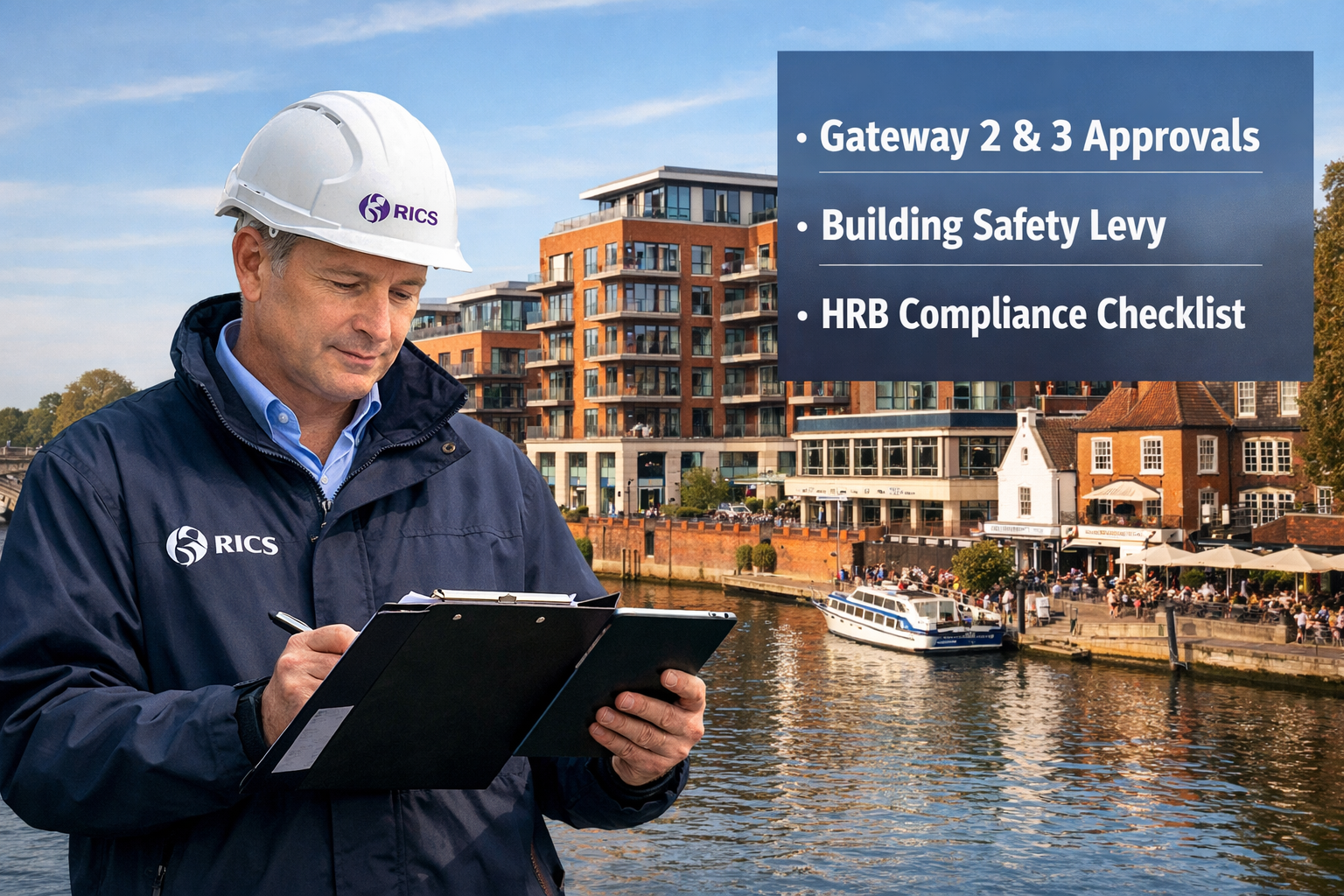
The BSR acts as the building control authority for all higher-risk buildings (HRBs) in England. An HRB is broadly defined as a residential building of at least 18 metres or seven storeys with two or more dwellings — a definition that captures a significant number of blocks across Kingston, Surbiton, New Malden, and the wider South West London area.
The Gateway regime requires developers and building owners to obtain BSR approval at three critical stages:
| Gateway | Stage | What It Covers |
|---|---|---|
| Gateway 1 | Planning | Fire safety considerations in planning applications |
| Gateway 2 | Before construction begins | Full building regulations approval from BSR |
| Gateway 3 | Before occupation | BSR sign-off that the building was built as approved |
Under the reformed independent BSR, these checkpoints carry even greater weight. The regulator now has enhanced powers to enforce compliance, and failure to obtain proper Gateway approvals can halt a project entirely. For developers working on new residential towers or major refurbishments in South West London, engaging early with the Gateway process is not optional — it is essential.
Our commercial building surveys in London team regularly supports clients preparing technical documentation for Gateway submissions, ensuring that structural and fire safety evidence is robust from the outset.
The Building Safety Levy: What Developers Need to Budget For
The Building Safety Levy is one of the most significant financial changes on the horizon for developers. Introduced under the Building Safety Act 2022 and expected to come into force in 2026, the levy will be charged on new residential developments in England. Its purpose is to fund the remediation of legacy unsafe cladding on buildings where developers cannot be held directly responsible.
Key points developers in Kingston and South West London should note:
- The levy applies at Gateway 2, meaning it becomes payable before construction begins
- Rates will vary by location and dwelling type, with higher rates expected in London
- Failure to pay will block the granting of building control approval
This is a material cost that must be factored into development appraisals now. If you are planning a new residential scheme, speak to a RICS-registered valuer in London to ensure your financial modelling accounts for the levy before you commit to a site.
Approved Document B: Changes on the Way
The BSR has been tasked with reviewing the Approved Documents — the technical guidance that supports compliance with the Building Regulations. A consultation on further changes to Approved Document B (fire safety) is expected during 2026. For building managers and developers, this means:
- 🔥 Fire safety design standards may tighten further
- 📋 Existing safety cases for occupied HRBs may need to be reviewed
- 🏗️ New construction projects should be designed with flexibility to accommodate updated guidance
Staying ahead of these changes is far easier with a qualified building surveyor reviewing your project documentation. Our building surveyor services cover everything from initial design review through to occupation sign-off.
Competence, Culture, and the Safety Case Regime
Beyond Gateway approvals, the BSR oversees industry competence schemes and promotes a culture change in how buildings are designed, built, and managed. For occupied HRBs, the Safety Case regime requires the Principal Accountable Person (PAP) to:
- Maintain a live Safety Case Report demonstrating that building safety risks are being managed
- Register the building with the BSR (registration was required from April 2023)
- Notify the BSR of any significant changes to the building or its safety case
If you manage a qualifying residential block in Kingston, Putney, Hammersmith, or elsewhere in South West London, these obligations are ongoing — not a one-time exercise. Our chartered surveyors in South West London can help you assess whether your current safety case documentation meets the BSR’s expectations.
How Kingston Surveyors Supports Your Compliance Journey
Navigating the Building Safety Regulator independent statutory body 2026 reform requires specialist knowledge that sits at the intersection of building regulations, fire safety, and property law. As RICS-qualified surveyors based in Kingston-upon-Thames, we support clients across the full compliance lifecycle:
✅ Pre-application support — reviewing designs and technical packages before Gateway 2 submission
✅ Building condition assessments — identifying defects or safety risks that could trigger BSR enforcement
✅ Safety case support — helping PAPs structure and maintain compliant Safety Case Reports
✅ Dilapidations and defect reporting — for commercial and residential clients managing existing stock
For commercial property managers, our schedule of dilapidations service and specific defect reports provide the documented evidence base that regulators and landlords increasingly expect.
If you are buying into a building that may qualify as an HRB, understanding its regulatory status before exchange is critical. Our guide to choosing the right survey explains which level of inspection gives you the information you need.
Conclusion: Act Now, Not After the Regulator Knocks
The Building Safety Regulator independent statutory body 2026 reform is not background noise — it is a fundamental reshaping of how building safety is governed in England and Wales. For property owners, developers, and building managers in Kingston-upon-Thames and South West London, the practical implications are immediate:
- Developers must budget for the Building Safety Levy and engage with the Gateway regime from day one of project planning.
- Building managers of HRBs must ensure Safety Case Reports are current, accurate, and reflective of any changes to the building.
- Property owners considering purchase of a high-rise residential block should commission a thorough building survey before proceeding.
- Everyone should monitor the forthcoming Approved Document B consultation and assess whether existing designs or safety cases need updating.
The BSR now has the independence, the powers, and the mandate to enforce. The question is whether your building — and your business — is ready.
Ready to get ahead of the reformed building safety regime? Contact the team at Kingston Surveyors for expert RICS-qualified advice tailored to your property in Kingston, Surrey, and across South West London.