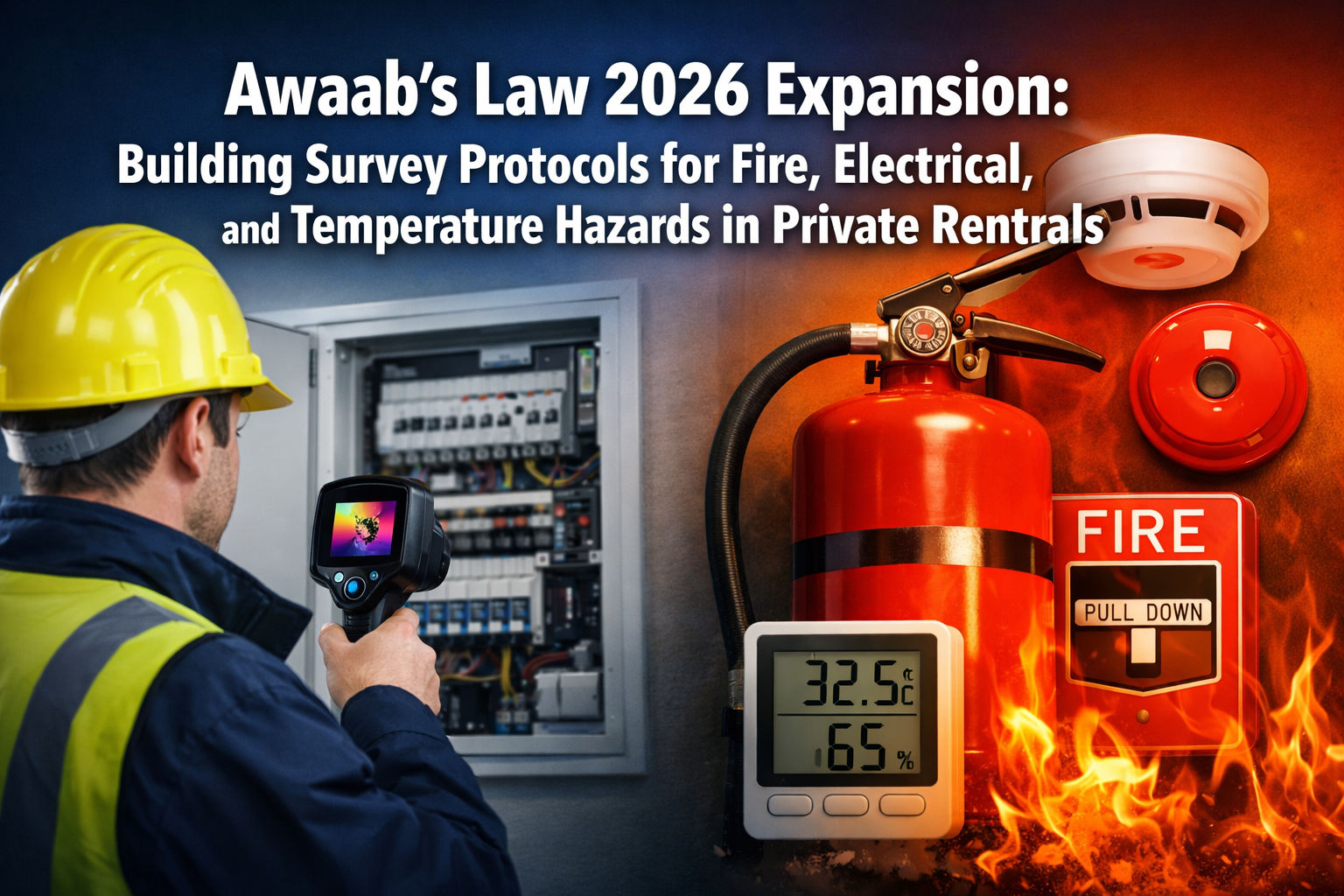

More than 200,000 private rental properties across England contain at least one Category 1 hazard—yet until now, landlords faced no mandatory timelines to address these life-threatening risks. That changes in 2026 when Awaab's Law extends beyond social housing to encompass eight additional hazard categories in the private rented sector, fundamentally transforming how building surveyors assess and document fire, electrical, and temperature-related dangers.
The Awaab's Law 2026 Expansion: Building Survey Protocols for Fire, Electrical, and Temperature Hazards in Private Rentals represents the most significant shift in rental property safety legislation since the Housing Health and Safety Rating System (HHSRS) was introduced in 2006. Named after two-year-old Awaab Ishak, who died from prolonged exposure to mould in his social housing flat, this legislation now mandates specific investigation and remediation timelines for hazards that surveyors must understand and document with precision.
Key Takeaways
- Eight new hazard categories join damp and mould under mandatory response timelines in 2026, including fire, electrical hazards, excess cold/heat, falls, structural collapse, and hygiene risks
- Emergency hazards require 24-hour investigation and immediate safety work or alternative accommodation provision under the expanded legislation[2]
- Significant hazards demand 10 working days for investigation, with person-centered assessments considering tenant vulnerability rather than standard HHSRS ratings[2]
- Building surveyors must adopt updated protocols for documenting fire safety systems, electrical installations, and temperature control adequacy in private rentals
- Private rental sector implementation begins in 2026, requiring landlords and surveyors to prepare comprehensive assessment frameworks now
Understanding the Awaab's Law 2026 Expansion Framework
From Social Housing to Private Rentals
Awaab's Law came into force for social landlords on 27 October 2025, establishing mandatory response timelines for damp, mould, and all emergency hazards.[2] The legislation's expansion to private rentals in 2026 extends these protections to approximately 4.4 million households in England's private rented sector.
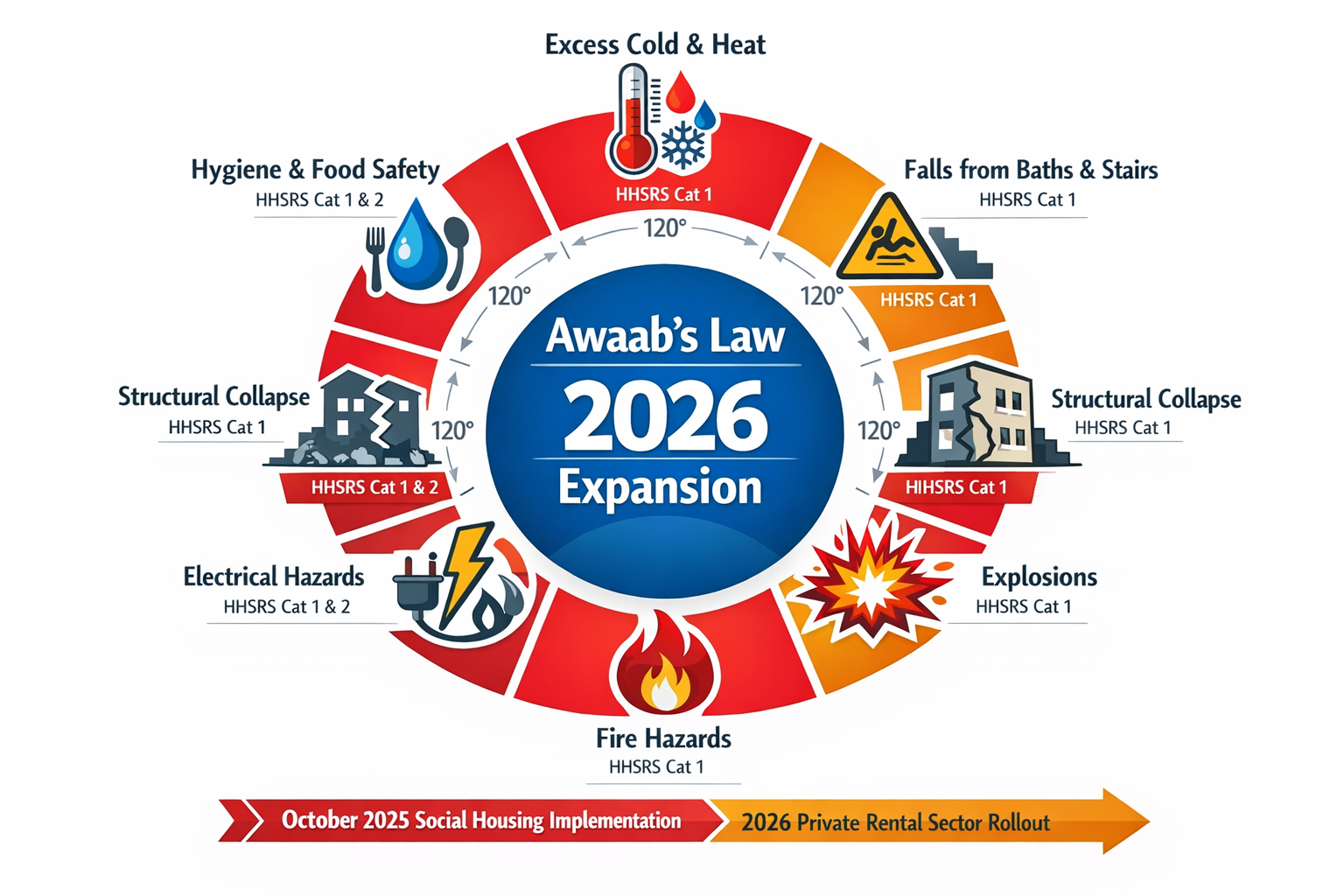
The expansion introduces five additional hazard categories where they present significant risk of harm:[2]
🔥 Fire and electrical hazards
🌡️ Excess cold and excess heat
⚠️ Falls associated with baths, stairs, and between levels
🏚️ Structural collapse and explosions
🧼 Domestic and personal hygiene/food safety
These categories join the original focus on damp and mould, creating a comprehensive safety framework that requires surveyors to assess properties through multiple hazard lenses simultaneously.
The Person-Centered Assessment Approach
Unlike traditional HHSRS assessments that rely on standardized category levels, Awaab's Law employs a person-centered approach that considers individual tenant vulnerabilities.[2] This means surveyors must evaluate how specific hazards affect actual occupants based on:
- Age factors (infants, elderly residents)
- Health conditions (respiratory issues, mobility limitations)
- Disability accommodations
- Household composition (families with young children)
This individualized assessment methodology fundamentally changes how building surveyor services document and prioritize hazards in rental properties.
Building Survey Protocols for Fire, Electrical, and Temperature Hazards in Private Rentals
Fire Hazard Assessment Protocols
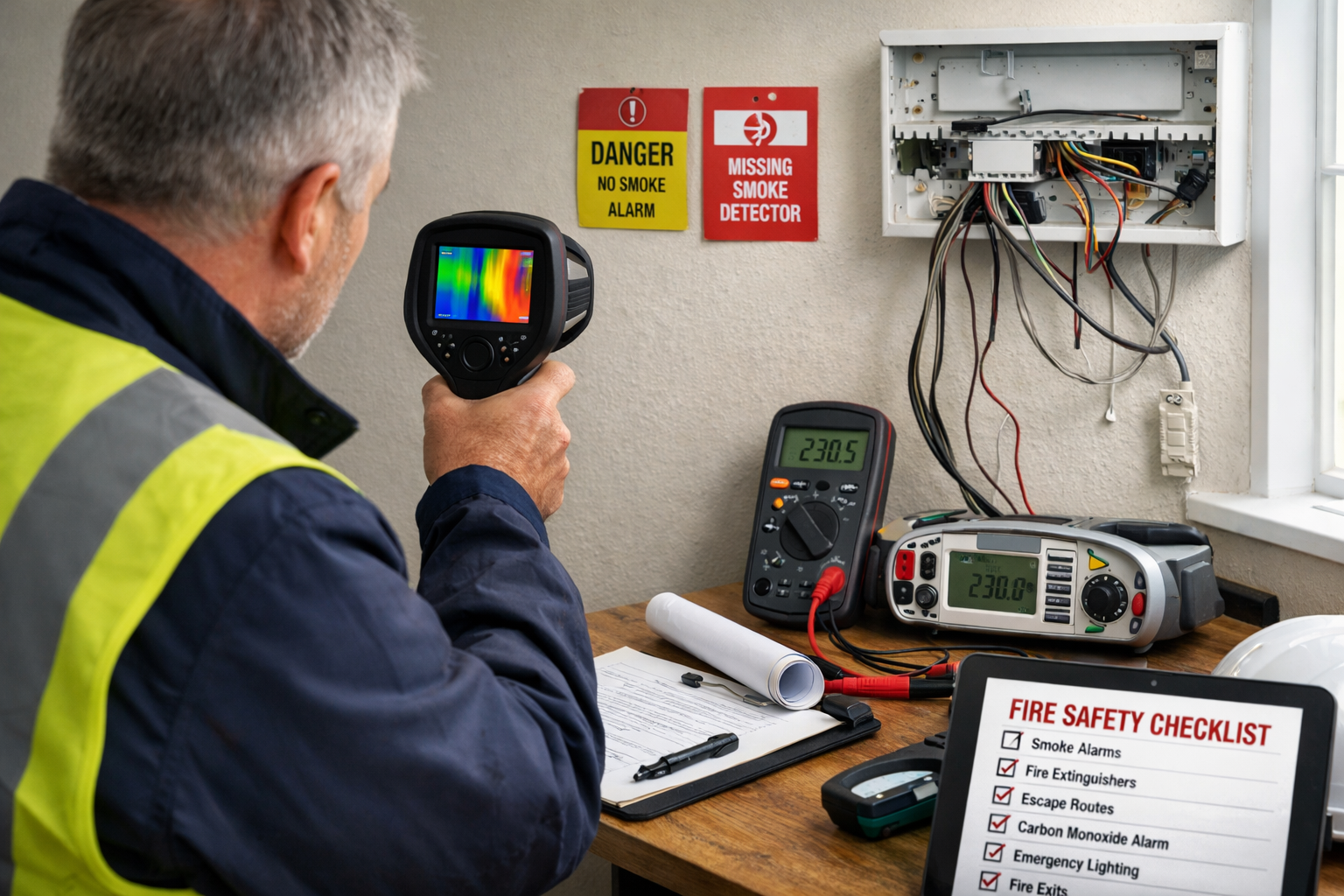
Fire safety represents one of the most critical elements in the Awaab's Law 2026 Expansion: Building Survey Protocols for Fire, Electrical, and Temperature Hazards in Private Rentals. Surveyors must now document:
Smoke and Carbon Monoxide Detection
- Presence and functionality of smoke alarms on each floor
- Carbon monoxide detectors near combustion appliances
- Battery condition and testing dates
- Interconnected alarm systems in larger properties
Fire Escape Routes
- Clear, unobstructed escape paths from all rooms
- Window accessibility and opening mechanisms
- Fire door integrity and self-closing mechanisms
- Emergency lighting in communal areas
Fire Load and Ignition Sources
- Combustible materials storage
- Electrical equipment positioning
- Kitchen safety arrangements
- Portable heater usage and restrictions
A comprehensive structural survey should incorporate these fire safety elements as standard practice when assessing private rental properties under the new protocols.
Electrical Hazard Documentation Standards
Electrical hazards consistently rank among the most dangerous issues in rental properties. The 2026 expansion requires surveyors to assess and document:
Consumer Unit and Distribution Systems
- Residual Current Device (RCD) protection presence
- Circuit breaker capacity and condition
- Proper labeling of circuits
- Evidence of DIY or non-compliant work
Fixed Electrical Installations
- Socket outlet condition and positioning
- Light fitting safety and appropriate wattage
- Exposed or damaged wiring
- Damp locations requiring IP-rated equipment
Electrical Safety Certification
- Valid Electrical Installation Condition Report (EICR)
- Certificate age (must be under 5 years for rental properties)
- Outstanding remedial work from previous inspections
- Competent person scheme compliance
Portable Appliance Considerations
- Landlord-provided appliances requiring PAT testing
- Overloaded extension leads or adapters
- Appliances in inappropriate locations (bathrooms, damp areas)
When conducting a homebuyer report versus building survey, the electrical hazard assessment depth increases significantly under Awaab's Law requirements for rental properties.
Temperature Hazard Assessment: Excess Cold and Heat
Temperature-related hazards represent a growing concern, particularly as climate change increases extreme weather events. The Awaab's Law 2026 Expansion: Building Survey Protocols for Fire, Electrical, and Temperature Hazards in Private Rentals requires detailed assessment of both excess cold and excess heat conditions.[1]
Excess Cold Evaluation
- Heating system adequacy: Capacity to maintain 21°C in living areas and 18°C in bedrooms
- Heating controls: Programmable thermostats and zone controls
- Insulation standards: Loft, wall, and floor insulation presence and condition
- Thermal bridging: Cold spots and condensation risk areas
- Window efficiency: Double glazing, draft proofing, and thermal performance
- Fuel poverty indicators: Energy efficiency rating and running costs
Excess Heat Assessment
- Ventilation provision: Opening windows, trickle vents, mechanical ventilation
- Solar gain management: Shading devices, window orientation, glazing specifications
- Roof space temperatures: Loft insulation preventing heat retention
- Cooling capacity: Natural ventilation effectiveness
- Vulnerable occupant considerations: Top-floor flats, south-facing properties
Expert witness protocols for temperature hazards increasingly require thermal imaging surveys and detailed HVAC assessments to provide evidence-standard documentation.[1][3]
Mandatory Response Timelines and Survey Documentation Requirements
Emergency Hazard Protocols (24-Hour Response)
When surveyors identify emergency hazards during property assessments, the Awaab's Law 2026 expansion mandates strict timelines:
Investigation Requirement: Within 24 hours of notification[2]
Action Requirement: Safety work completed within 24 hours OR alternative accommodation provided[2]
Emergency hazards typically include:
- Imminent fire risks (exposed live wiring, gas leaks)
- Complete heating system failure in winter months
- Structural collapse danger
- Severe electrical faults posing immediate shock risk
Surveyor Documentation Obligations:
✅ Timestamp of hazard identification
✅ Photographic evidence with date/time metadata
✅ Immediate notification to landlord and tenant
✅ Risk assessment scoring using person-centered criteria
✅ Recommended immediate actions
✅ Follow-up inspection scheduling
Landlords must conduct relevant safety work (such as providing temporary heating or securing electrical hazards) while diagnostic investigations are ongoing.[2]
Significant Hazard Protocols (10 Working Days)
Significant hazards require investigation within 10 working days of notification.[2] These include hazards that pose serious risk but don't present immediate danger:
- Inadequate heating systems causing persistent cold
- Electrical installations requiring remedial work
- Fire safety deficiencies (missing alarms, blocked escapes)
- Structural issues requiring monitoring
- Ventilation inadequacies contributing to excess heat
Survey Report Requirements:
📋 Detailed hazard description with HHSRS category reference
📋 Person-centered impact assessment considering actual occupants
📋 Photographic and thermal imaging evidence where applicable
📋 Recommended remediation timeline with prioritization
📋 Cost estimation for required works
📋 Re-inspection scheduling to verify completion
Professional chartered surveyors across London and surrounding regions must adapt their reporting templates to incorporate these mandatory timeline references and person-centered assessments.
Implementing Awaab's Law Protocols: Practical Guidance for Surveyors
Pre-Inspection Preparation
Information Gathering:
- Tenant vulnerability information (with consent)
- Previous inspection reports and EICR certificates
- Energy Performance Certificate (EPC) data
- Landlord maintenance records
- Tenant-reported issues and complaint history
Equipment Checklist:
- Thermal imaging camera for temperature assessments
- Electrical testing equipment (socket testers, voltage detectors)
- Moisture meters for damp-related hazards
- Smoke alarm functionality testers
- Carbon monoxide detectors for verification
- Comprehensive photographic equipment with metadata capability
On-Site Assessment Methodology
Systematic Room-by-Room Evaluation:
- Visual inspection for obvious hazards
- Thermal imaging survey identifying cold spots and heat retention
- Electrical safety checks at accessible points
- Fire safety assessment including escape routes
- Ventilation adequacy testing
- Occupant interview regarding comfort, safety concerns, and health impacts
Priority Hazard Identification:
Surveyors must categorize findings as:
- 🔴 Emergency (24-hour response required)
- 🟠 Significant (10-day investigation required)
- 🟡 Notable (requires monitoring or future attention)
This categorization directly determines landlord obligations under the expanded legislation.
Report Formatting and Compliance Documentation
Survey reports for private rental properties must now include:
Executive Summary Section:
- Clear identification of emergency and significant hazards
- Mandatory timeline references
- Person-centered risk assessments
- Immediate action requirements
Detailed Findings:
- Hazard-by-hazard analysis with HHSRS categories
- Photographic evidence with annotations
- Thermal imaging results for temperature hazards
- Electrical testing outcomes
- Fire safety compliance status
Recommendations and Timelines:
- Prioritized remediation schedule
- Cost estimates for required works
- Re-inspection intervals
- Compliance verification procedures
Surveyors operating in areas like North London, Surrey, and West London should standardize these reporting elements across all rental property assessments.
Technical Compliance: HVAC, Ventilation, and Building Systems
Ventilation Assessment Under Awaab's Law
While the original Awaab's Law focused on damp and mould, the 2026 expansion recognizes that proper ventilation prevents multiple hazards—from excess heat to fire risk amplification.[3]
Mechanical Ventilation Systems:
- Extract fan functionality in kitchens and bathrooms
- Air flow rate measurements (litres per second)
- Filter condition and maintenance schedules
- Noise levels and occupant satisfaction
Natural Ventilation:
- Window opening area calculations
- Trickle vent presence and functionality
- Cross-ventilation potential
- Stack effect in multi-story properties
Positive Input Ventilation (PIV) Systems:
- Installation quality and positioning
- Filter condition
- Airflow settings appropriate for property size
- Energy efficiency considerations
Technical compliance assessments increasingly require specialist knowledge of HVAC systems to properly evaluate temperature hazard risks under the expanded protocols.[3]
Heating System Adequacy Standards
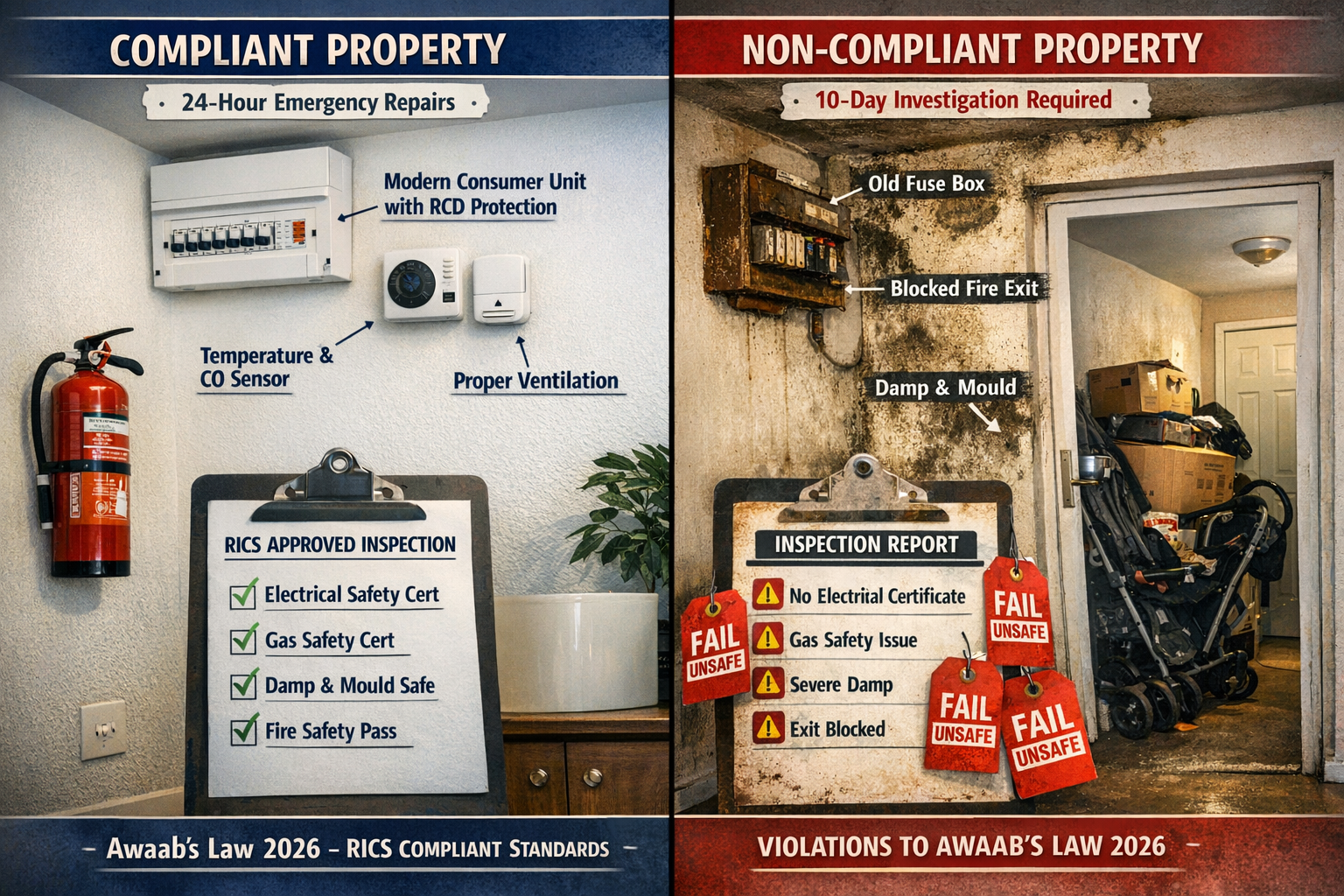
The Awaab's Law 2026 Expansion: Building Survey Protocols for Fire, Electrical, and Temperature Hazards in Private Rentals requires surveyors to assess whether heating systems can adequately maintain safe temperatures:
Minimum Temperature Standards:
- Living areas: 21°C
- Bedrooms: 18°C
- Bathrooms: 22°C
System Capacity Assessment:
- Boiler output rating versus property heat loss
- Radiator sizing and positioning
- Thermostat accuracy and positioning
- Heating response time (time to reach target temperature)
Fuel Type Considerations:
- Gas central heating: annual service certificates
- Electric heating: running cost implications
- Oil heating: tank condition and fuel supply
- Solid fuel: ventilation and carbon monoxide risks
Properties with inadequate heating capacity represent significant hazards requiring 10-day investigation timelines, while complete heating failure in winter constitutes an emergency hazard demanding 24-hour response.[2]
Landlord Obligations and Surveyor Advisory Roles
Proactive Compliance Strategies
Surveyors play a crucial advisory role in helping landlords prepare for the 2026 private rental sector implementation:
Pre-Tenancy Assessments:
- Comprehensive hazard surveys before new tenancies
- Remediation of identified issues before occupation
- Documentation of baseline property condition
- Energy efficiency improvements
Scheduled Maintenance Programs:
- Annual electrical safety checks
- Heating system servicing
- Fire safety equipment testing
- Temperature monitoring in extreme weather
Tenant Communication Protocols:
- Clear reporting mechanisms for hazards
- Response timeline expectations
- Interim safety measures during investigations
Legal and Insurance Implications
The mandatory timelines under Awaab's Law create potential legal exposure for landlords who fail to respond appropriately. Surveyors should advise clients on:
Documentation Importance:
- Timestamped evidence of notification receipt
- Investigation commencement records
- Remediation work completion certificates
- Follow-up inspection reports
Insurance Considerations:
- Landlord insurance policy compliance requirements
- Professional indemnity coverage for surveyors
- Liability for tenant health impacts from delayed responses
Enforcement Consequences:
- Local authority enforcement powers
- Rent repayment orders for non-compliance
- Potential criminal prosecution for serious breaches
Professional surveyors providing expert surveyor advice must stay current with evolving enforcement approaches as the 2026 implementation date approaches.
Regional Implementation Considerations
Urban Versus Rural Challenges
The Awaab's Law 2026 Expansion: Building Survey Protocols for Fire, Electrical, and Temperature Hazards in Private Rentals presents different challenges across property types and locations:
Urban Properties (London, Major Cities):
- Converted flats with shared services
- Older Victorian/Edwardian properties with outdated systems
- Houses in multiple occupation (HMOs) with complex fire safety requirements
- Higher tenant vulnerability in dense populations
Rural Properties:
- Off-grid heating systems
- Limited access to emergency repair services
- Older properties with challenging retrofit requirements
- Longer response times for specialist contractors
Surveyors operating across diverse regions—from Central London to Hampshire—must adapt assessment protocols to local property characteristics and service availability.
Property Age and Construction Type
Period Properties:
- Solid wall construction with limited insulation options
- Original electrical installations requiring complete rewiring
- Single-glazed sash windows
- Coal fires converted to gas with ventilation implications
Modern Properties:
- Better thermal performance but potential overheating risks
- Complex electrical systems with smart controls
- Mechanical ventilation with heat recovery (MVHR)
- Open-plan layouts affecting fire compartmentation
Purpose-Built Flats:
- Communal fire safety systems
- Shared heating infrastructure
- Leasehold complications for major works
- Building safety responsibilities post-Grenfell
Preparing for 2026: Action Steps for Stakeholders
For Building Surveyors
✅ Update assessment protocols to incorporate all eight hazard categories
✅ Invest in thermal imaging equipment and electrical testing tools
✅ Develop person-centered assessment frameworks with vulnerability checklists
✅ Standardize reporting templates with mandatory timeline references
✅ Establish relationships with specialist contractors for rapid response
✅ Undertake CPD training on Awaab's Law requirements and HHSRS updates
✅ Review professional indemnity insurance coverage for new obligations
For Private Landlords
✅ Commission comprehensive property surveys before 2026 implementation
✅ Address identified hazards proactively rather than reactively
✅ Update electrical installations and obtain current EICR certificates
✅ Service heating systems and verify temperature adequacy
✅ Install or upgrade fire safety equipment to current standards
✅ Establish tenant communication systems for hazard reporting
✅ Budget for compliance costs and potential emergency works
For Property Managers
✅ Develop hazard notification procedures with timestamp recording
✅ Create contractor networks capable of 24-hour emergency response
✅ Implement tenant vulnerability assessments at tenancy commencement
✅ Schedule regular property inspections focusing on hazard categories
✅ Train staff on Awaab's Law requirements and response timelines
✅ Update tenancy agreements with hazard reporting clauses
Conclusion
The Awaab's Law 2026 Expansion: Building Survey Protocols for Fire, Electrical, and Temperature Hazards in Private Rentals represents a watershed moment in rental property safety regulation. By extending mandatory response timelines beyond damp and mould to encompass eight critical hazard categories, the legislation fundamentally transforms how surveyors assess, document, and prioritize safety risks in private rental properties.
The shift to person-centered assessments—considering actual tenant vulnerabilities rather than standardized risk categories—demands more nuanced professional judgment and comprehensive documentation. Surveyors must now evaluate fire safety systems, electrical installations, and temperature control adequacy with the same rigor previously reserved for structural issues, all while maintaining awareness of the 24-hour emergency and 10-day significant hazard timelines that govern landlord obligations.[2]
As the 2026 implementation date approaches, proactive preparation becomes essential. Landlords who commission thorough property assessments now can address hazards systematically rather than facing emergency remediation demands. Surveyors who update their protocols, invest in appropriate equipment, and develop standardized reporting frameworks will position themselves as essential advisors in this new regulatory landscape.
The legacy of Awaab Ishak demands nothing less than a comprehensive transformation in how the private rental sector approaches tenant safety. For building surveyors, this expansion creates both professional responsibility and opportunity—to elevate assessment standards, protect vulnerable tenants, and ensure that every private rental property meets the safety standards that should always have been mandatory.
Take action today: If you're a landlord with private rental properties, schedule a comprehensive hazard assessment with qualified building surveyor services to identify and address potential issues before the 2026 requirements take effect. For surveyors, begin integrating these expanded protocols into your assessment methodology now to ensure seamless compliance when the legislation comes into force.
References
[1] Expert Witness Protocols For Excess Temperature Hazards Under Awaabs Law 2026 Rics Evidence Standards In Prs Disputes – https://nottinghillsurveyors.com/blog/expert-witness-protocols-for-excess-temperature-hazards-under-awaabs-law-2026-rics-evidence-standards-in-prs-disputes
[2] Awaabs Law Guidance For Social Landlords Timeframes For Repairs In The Social Rented Sector – https://www.gov.uk/government/publications/awaabs-law-guidance-for-social-landlords/awaabs-law-guidance-for-social-landlords-timeframes-for-repairs-in-the-social-rented-sector
[3] Awaabs Law Technical Compliance Hvac Ventilation – https://www.arm-environments.com/resources/awaabs-law-technical-compliance-hvac-ventilation
[4] Awaabs Law A Guide For Social And Private Landlords – https://cydinnovation.com/knowledge_hub/awaabs-law-a-guide-for-social-and-private-landlords/