
Boundary disagreements between neighbours have surged by more than 30% since 2020, driven largely by home extensions and garden development projects — and disputes over rights of way sit at the sharp end of that trend [1]. When access to a driveway, footpath, or shared lane is contested, the financial stakes can be severe. A property owner who loses practical access to a garage or rear garden may face a measurable drop in market value that runs into tens of thousands of pounds. That is precisely why building surveyor expert witnesses in right of way disputes — providing site evidence and valuation impacts for 2026 claims — have become indispensable figures in both pre-litigation negotiations and formal court proceedings.
This article explains what building surveyors do in this role, how they gather and present site evidence, what valuation methodologies they apply, and how parties to a dispute can use the RICS expert directory and professional standards to strengthen their claims.
Key Takeaways
- Rights of way disputes can reduce property values significantly; specialist surveyor evidence is needed to quantify that loss accurately.
- Expert witnesses must comply with Civil Procedure Rules (CPR) Part 35, which requires independent, impartial testimony — not advocacy for the instructing party.
- Land Registry title plans show only "general boundaries" and cannot resolve exact access rights without additional site evidence and historical documentation.
- Drone surveys, measured drawings, and photographic schedules now form a standard part of the expert witness toolkit in 2026.
- RICS accreditation (EWAS-UK, updated March 2026) sets the professional benchmark for surveyors acting in expert witness roles.
What Is a Building Surveyor Expert Witness in a Right of Way Dispute?
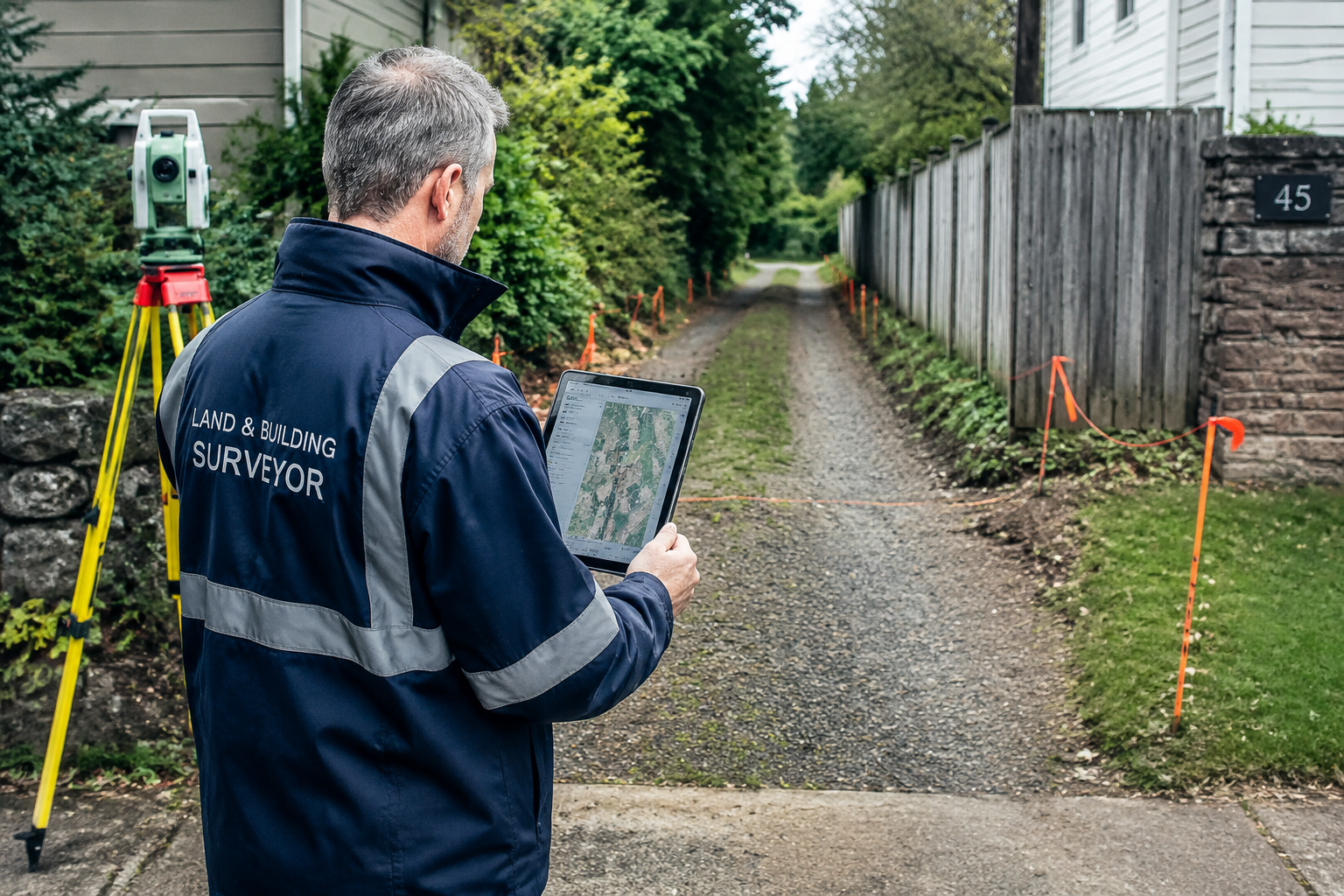
A building surveyor expert witness is a chartered professional — typically a Member or Fellow of the Royal Institution of Chartered Surveyors (RICS) — who is appointed to provide independent technical evidence in a legal or quasi-legal dispute. In right of way cases, their role spans three distinct functions:
- Site investigation — physically inspecting the land, measuring access routes, recording physical features, and gathering historical evidence.
- Technical analysis — interpreting title deeds, conveyancing documents, Ordnance Survey data, and planning records to establish the extent and nature of any claimed right.
- Valuation impact assessment — quantifying the effect that the disputed access right (or its loss) has on the market value of the affected property.
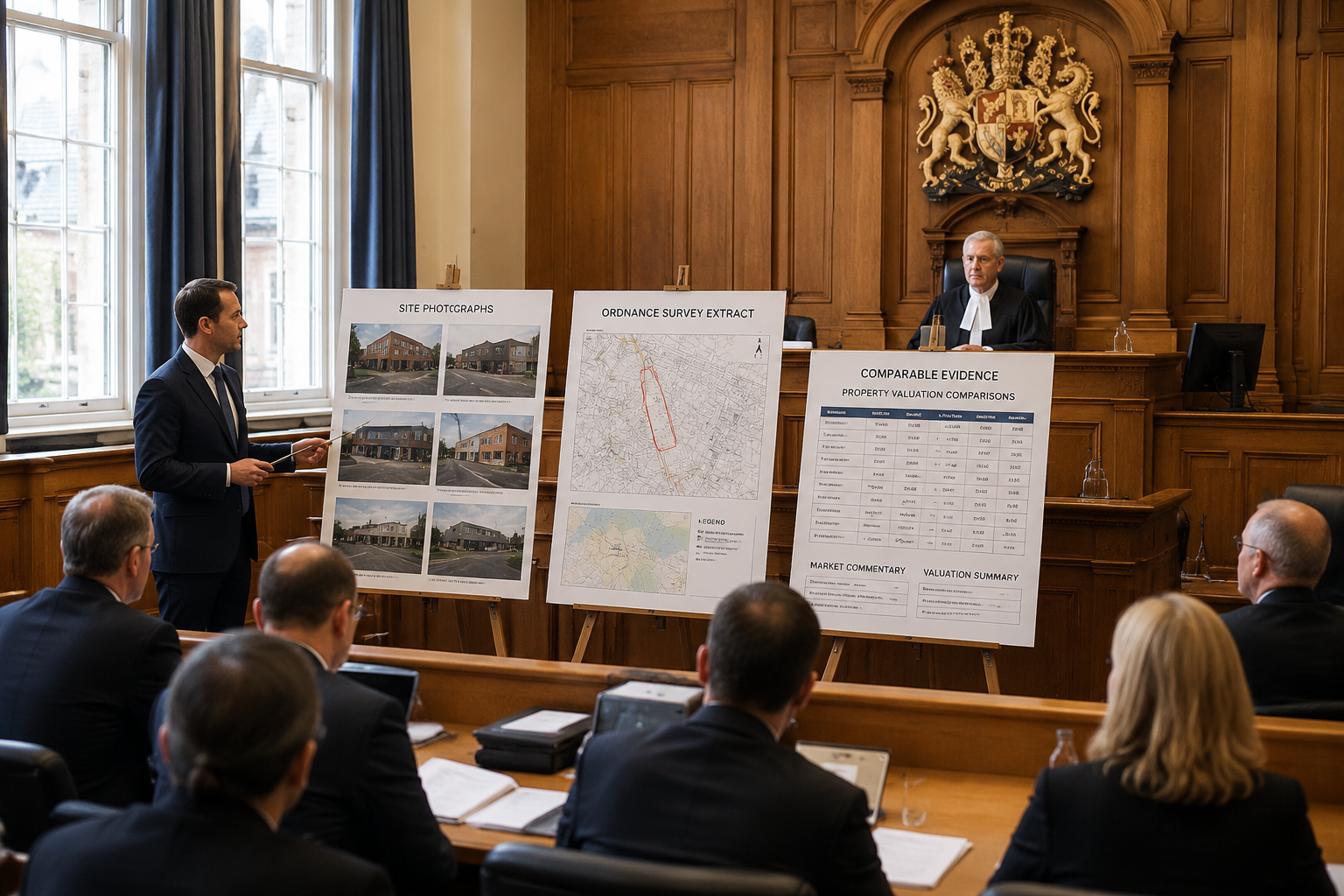
Unlike a solicitor or barrister, the expert witness does not argue a case. Under CPR Part 35, their overriding duty is to the court, not to the party that instructs them [1]. This distinction matters enormously: a report that reads as partisan advocacy will be given little weight by a judge or tribunal, and can actively damage the instructing party's position.
In 2026, surveyors are increasingly specialising in expert witness roles across boundary, construction defect, and party wall matters, requiring deep knowledge of RICS standards and legal procedure [7]. Right of way disputes represent one of the most technically demanding sub-specialisms because they combine land law, physical measurement, and property valuation into a single instruction.
For context on how related neighbour disputes are handled, the guide to boundary dispute and party wall surveyors in London provides a useful overview of the professional landscape.
The Limitations of Title Plans and Why Site Evidence Matters
One of the most common misconceptions in right of way disputes is that a Land Registry title plan will resolve the question. It will not. Land Registry title plans depict only "general boundaries" and carry no legal authority to determine the exact position of a boundary or the precise extent of an access right [1]. The red edging on a title plan is drawn to a scale that may represent a tolerance of several metres on the ground.
This limitation makes independent site evidence essential. A building surveyor expert witness will typically gather:
- Measured surveys using total station equipment or GPS, producing scaled drawings accurate to millimetre tolerances.
- Historical mapping — Ordnance Survey maps from different decades, tithe maps, and estate plans that show how access routes have been used over time.
- Photographic and video records documenting the current physical state of the access, including gates, dropped kerbs, wear patterns, and obstructions.
- Witness evidence corroboration — comparing physical evidence with statements from long-standing residents or neighbours.
- Planning and building regulation records — confirming whether any development has altered the access route.
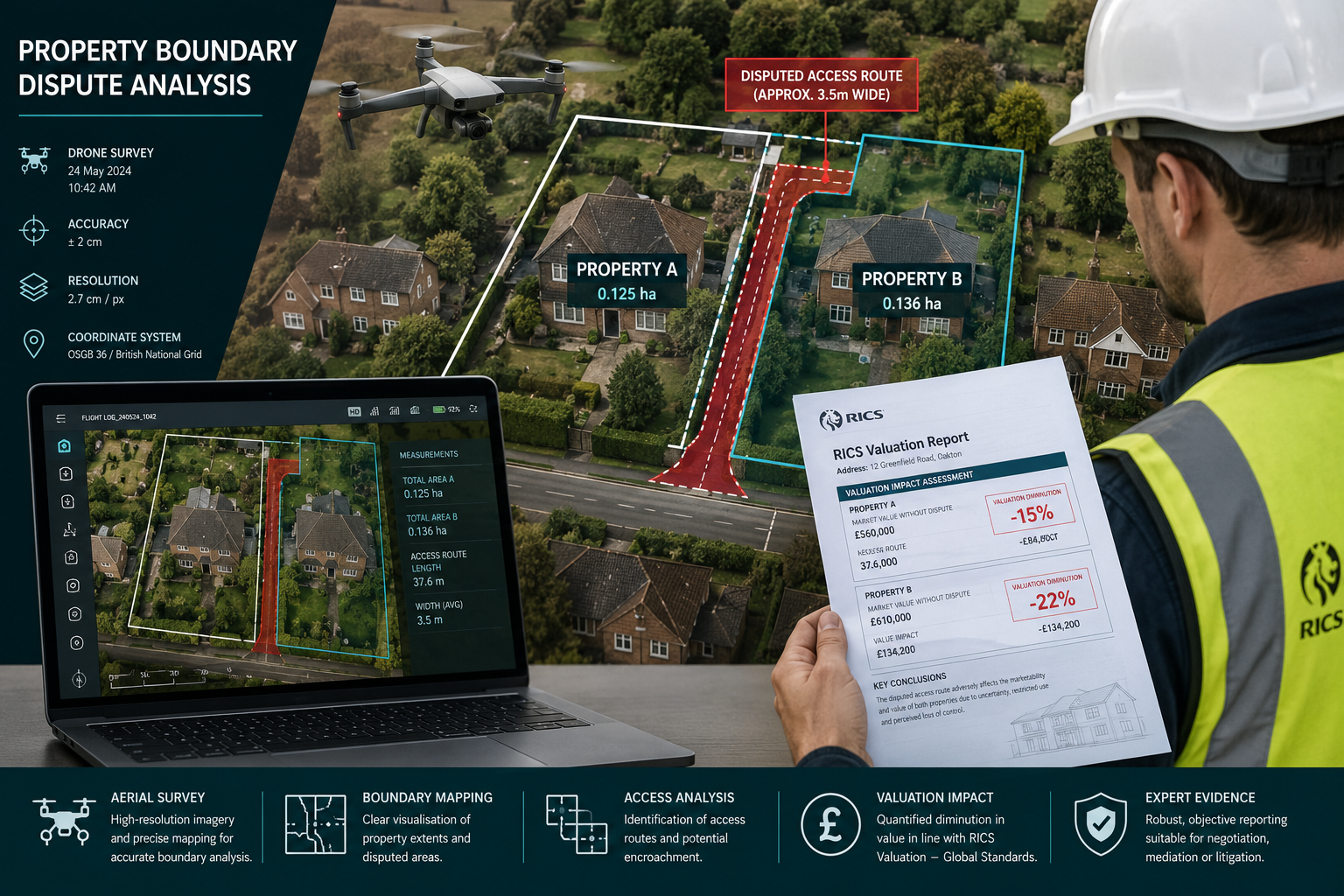
The integration of drone technology has become standard practice in 2026. High-resolution aerial imagery captured by drones provides a plan-view record of the site that is difficult to dispute, showing the spatial relationship between properties, access routes, and any encroachments with exceptional clarity [2]. This aerial evidence is particularly powerful in cases involving rural rights of way, shared driveways, or access across large plots.
For properties where structural features — such as a garage wall or outbuilding — form part of the access dispute, a structural survey in London may be commissioned alongside the expert witness inspection to document the physical condition of those structures.
RICS Standards and the Expert Witness Accreditation Scheme in 2026
Professional standards govern every aspect of the expert witness role. In March 2026, RICS updated its Expert Witness Accreditation Scheme (EWAS-UK), reinforcing mandatory training requirements and ethical obligations for surveyors who wish to be listed in the RICS expert directory [1]. This update is directly relevant to parties seeking to strengthen their right of way claims.
Why RICS accreditation matters for your claim:
| Factor | Impact on Claim |
|---|---|
| RICS-accredited expert | Report carries greater evidential weight in court |
| Non-accredited surveyor | Report may be challenged on procedural grounds |
| CPR Part 35 compliance | Mandatory for civil litigation; non-compliance risks report exclusion |
| EWAS-UK listing | Demonstrates specialist training and peer-reviewed competence |
RICS has also established professional standards for surveyors acting as arbitrators in construction and property disputes, emphasising impartiality, proper evidence handling, and strict adherence to legal procedures [4]. These principles carry directly into the expert witness context: a surveyor who has also acted as a party-appointed adviser in the same matter, or who has a financial interest in the outcome, will face serious challenges to their independence.
The Upper Tribunal (Lands Chamber) — which hears many significant right of way and access disputes — expects expert evidence to be independent, impartial, and objective [5]. Surveyors who appear before the Tribunal without meeting these standards risk having their evidence disregarded entirely.
For parties in London and the surrounding regions, RICS registered valuers in London provide the professional foundation needed for credible expert witness appointments.
How Valuation Diminution Is Calculated in Right of Way Disputes
The valuation component of building surveyor expert witnesses in right of way disputes — covering site evidence and valuation impacts for 2026 claims — is often the most contested element of the proceedings. Courts and tribunals need to understand not just whether a right of way exists, but what its presence, absence, or obstruction is worth in financial terms.
The Comparables Method
The most widely used approach involves identifying comparable sales of similar properties — some with unencumbered access and some with restricted or disputed access — and analysing the price differential. A surveyor will adjust for location, size, condition, and market conditions to isolate the access-related impact.
Typical valuation diminutions seen in 2026 cases:
- Loss of vehicular access to a garage: 8% to 18% of property value
- Obstruction of a shared driveway: 5% to 12%
- Loss of pedestrian access to a rear garden: 3% to 8%
- Complete loss of access to a landlocked plot: potentially 40% to 60% or more
These figures are illustrative. Each case turns on its specific facts, and a surveyor must justify every adjustment with market evidence.
The Hypothetical Negotiation Method
In some cases — particularly where the right of way has been granted or is being negotiated — surveyors apply a hypothetical negotiation framework. This asks: what would a willing buyer and willing seller have agreed to pay for the right, knowing the full facts? This method draws on RICS-approved valuation methodologies that have evolved significantly in 2026, emphasising early information exchange and structured analysis [8].
Retrospective Valuation
Where a dispute relates to historical interference with an access right — for example, a neighbour who blocked a path five years ago — the expert may need to provide a retrospective valuation of the property at the date the interference began. This establishes the quantum of loss over time and supports claims for damages. Detailed guidance on this approach is available through retrospective property valuation in London.
A case study from the literature illustrates the stakes clearly: a property owner who lost practical access to his garage due to unresolved access rights suffered a measurable and lasting reduction in market value — a loss that could have been quantified and potentially recovered had a specialist valuation been obtained promptly [3].
Conducting Impartial Site Inspections: Protocols for 2026 Claims
The site inspection is the foundation of any credible expert witness report. Expert witnesses in building and right of way disputes are required to conduct impartial inspections that follow systematic, documented protocols [6]. Cutting corners at this stage undermines the entire report.
A robust site inspection protocol includes:
- Pre-inspection review — studying all available title documents, conveyancing history, and planning records before attending the site.
- Systematic measurement — recording the width, surface, gradient, and physical condition of the access route.
- Obstruction recording — photographing and measuring any gates, barriers, fences, or structures that affect the right of way.
- Usage evidence — noting wear patterns, tyre tracks, footpath erosion, and other physical indicators of historic use.
- Third-party features — recording neighbouring structures, utility apparatus, or vegetation that encroaches on the access route.
- Drone overflight — capturing aerial imagery to provide spatial context that ground-level photography cannot achieve [2].
All observations must be recorded contemporaneously. Retrospective note-taking is a common weakness that opposing experts will exploit. The inspection report should be capable of standing alone as a document — a reader who was not present should be able to understand exactly what was observed, measured, and photographed.
Where the disputed access passes through or adjacent to a party wall or shared structure, the expert may also need to consider the provisions of the Party Wall etc. Act 1996. For background on how party wall matters intersect with neighbour disputes, see the guide to party wall disputes.
Using the RICS Expert Directory to Strengthen Your 2026 Claim
Selecting the right expert is as important as the evidence itself. The RICS expert directory — maintained and updated under the EWAS-UK scheme — allows solicitors and parties to identify surveyors with verified specialist experience in right of way, boundary, and access disputes [1] [7].
Criteria to apply when selecting a building surveyor expert witness:
- Confirmed RICS membership (MRICS or FRICS) and current EWAS-UK accreditation.
- Demonstrable experience in right of way or access disputes specifically — not just general building surveying.
- Familiarity with the relevant tribunal or court (County Court, First-tier Tribunal, Upper Tribunal Lands Chamber).
- No conflict of interest with any party, property, or adviser involved in the dispute.
- Ability to produce reports that comply with CPR Part 35 and the accompanying Practice Direction.
The costs associated with expert witness services have risen in 2026. Initial reports now typically range from £2,500 to £6,000, with additional fees for drone surveys, supplementary reports, and court attendance [2]. These costs should be weighed against the value of the property interest at stake — in most residential right of way disputes, the expert fee represents a small fraction of the potential valuation impact.
For parties in London and the South East, chartered surveyors in London and chartered surveyors in Surrey offer access to RICS-accredited professionals with direct experience of the local property market — an important factor in comparables-based valuation evidence.
Common Pitfalls in Right of Way Expert Evidence
Even well-intentioned expert reports fail when they make avoidable errors. The following weaknesses are frequently identified by opposing experts and judges:
1. Over-reliance on title plans
As noted above, title plans do not determine exact access rights. A report that treats the Land Registry plan as definitive will be challenged immediately.
2. Insufficient comparables
Valuation opinions unsupported by at least three to five comparable transactions will carry limited weight. The surveyor must show their working clearly.
3. Advocacy tone
Any language that suggests the expert is arguing for the instructing party — rather than assisting the court — will reduce the report's credibility and may attract judicial criticism.
4. Failure to address the opposing expert's points
In cases where both parties appoint experts, the experts are typically required to meet, produce a joint statement, and identify areas of agreement and disagreement. Ignoring the opposing expert's analysis is a serious procedural error.
5. Inadequate site inspection records
A report based on a single brief visit, without contemporaneous notes or photographs, will not withstand cross-examination.
For parties involved in related neighbour disputes — including those that overlap with boundary or construction issues — the boundary disputes resolution resources and construction disputes resolution guidance provide additional context on how expert evidence functions across different dispute types.
Conclusion
Building surveyor expert witnesses in right of way disputes — providing site evidence and valuation impacts for 2026 claims — occupy a critical position at the intersection of property law, technical measurement, and financial analysis. Their work determines whether a court understands the true nature of an access right and the real financial consequences of its loss or obstruction.
Actionable next steps for parties facing a right of way dispute in 2026:
- Act early. Commission a specialist surveyor before litigation begins. Early expert input can support negotiated settlement and avoid court costs entirely.
- Verify RICS accreditation. Use the EWAS-UK directory to confirm that any appointed expert holds current accreditation and has specific experience in access and right of way disputes.
- Preserve evidence. Photograph the access route, retain all correspondence about the dispute, and keep copies of all title and conveyancing documents.
- Commission a valuation impact report. Do not assume a court will infer financial loss — it must be quantified with market evidence by a qualified valuer.
- Instruct a CPR-compliant expert. Ensure the appointed surveyor understands their duty to the court and can produce a report that meets the formal requirements of CPR Part 35.
The combination of rigorous site evidence, RICS-compliant methodology, and accurate valuation analysis gives parties the strongest possible foundation for resolving right of way disputes — whether at the negotiating table or before a tribunal.
References
[1] Expert Witness Surveyors In Neighbour Boundary Disputes Rics Standards Vs Land Registry Evidence – https://www.canterburysurveyors.com/blog/expert-witness-surveyors-in-neighbour-boundary-disputes-rics-standards-vs-land-registry-evidence/?utm_source=openai
[2] Expert Witness Valuations In Neighbour Boundary Disputes Rics Standards And Drone Survey Integration For 2026 Cases – https://wimbledonsurveyors.com/expert-witness-valuations-in-neighbour-boundary-disputes-rics-standards-and-drone-survey-integration-for-2026-cases/?utm_source=openai
[3] When Access Fails How Rights Of Way Disputes Impact Property Value And Why Specialist Valuation Matters – https://brambleandwagg.co.uk/when-access-fails-how-rights-of-way-disputes-impact-property-value-and-why-specialist-valuation-matters/?utm_source=openai
[4] Surveyors Acting As Arbitrators In Construction Disputes – https://www.rics.org/content/dam/ricsglobal/documents/standards/Surveyors-acting-as-arbitrators-in-construction-disputes.pdf?utm_source=openai
[5] Surveyors Expert Witness Telecoms Disputes – https://ww3.rics.org/uk/en/journals/land-journal/surveyors-expert-witness-telecoms-disputes.html?utm_source=openai
[6] Impartial Site Inspections For Expert Witness Roles Protocols For Building And Party Wall Disputes – https://www.canterburysurveyors.com/blog/impartial-site-inspections-for-expert-witness-roles-protocols-for-building-and-party-wall-disputes/?utm_source=openai
[7] Expert Witness Surveyor Specializations In 2026 Building Your Practice Across Land Property And Construction Disputes – https://wimbledonsurveyors.com/expert-witness-surveyor-specializations-in-2026-building-your-practice-across-land-property-and-construction-disputes/?utm_source=openai
[8] Valuation Expert Witness In Right Of Light Disputes Rics Methodologies For Quantifying Development Impacts In 2026 Cities – https://nottinghillsurveyors.com/blog/valuation-expert-witness-in-right-of-light-disputes-rics-methodologies-for-quantifying-development-impacts-in-2026-cities?utm_source=openai