Fifty-four out of 63 economists polled by Reuters now expect the Bank of England to raise Bank Rate on Thursday. That is not a close call. It is a City consensus bracing for the first rate rise in years, and it lands at a moment when Kingston upon Thames buyers are already juggling higher fixed-rate quotes and a cooling housing market.
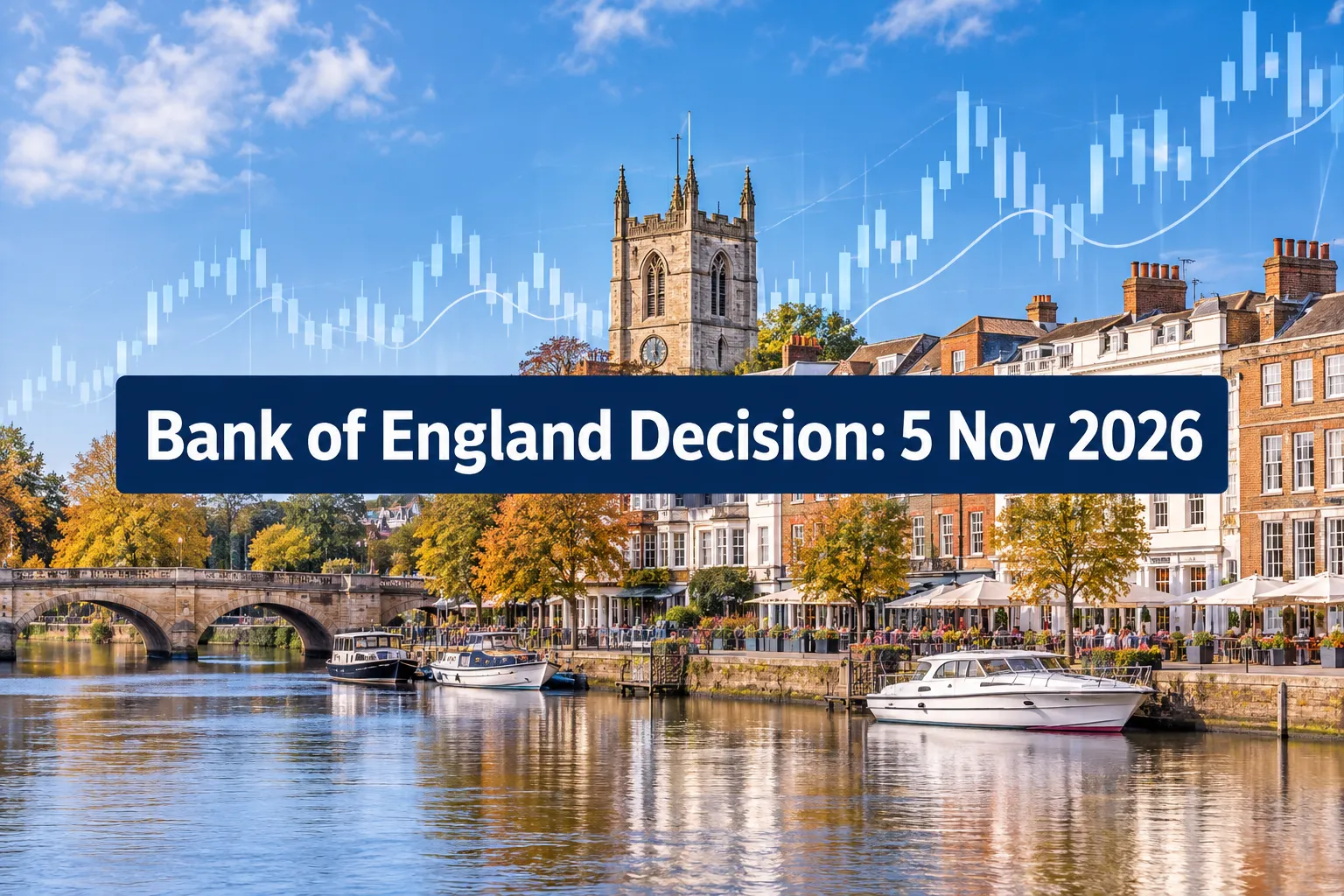
The Bank of England interest rate decision 5 November 2026 is the most closely watched MPC meeting in months. Bank Rate currently sits at 3.75 percent, held on 17 September 2026 by a narrow 6-3 vote. With inflation climbing and swap rates jumping in October, this November 2026 decision could reset the cost of borrowing for everyone remortgaging or buying in southwest London.
This article explains what a rise to 4 percent would mean practically for Kingston upon Thames buyers, sellers and homeowners, and why a RICS survey matters more than ever when budgets are tight.
Key Takeaways
- A Reuters poll (12-14 October 2026) found 54 of 63 economists expect Bank Rate to rise from 3.75 percent to 4 percent on 5 November 2026.
- CPI inflation hit 3.5 percent in September 2026, up from 3.1 percent in August and 2.9 percent in July, pushed mainly by motor fuel and transport costs.
- Capital Economics, Oxford Economics, Fidelity International and Bank of America all expect a further rise in February 2027, taking Bank Rate to 4.25 percent.
- Nationwide reports house prices fell 0.3 percent in October 2026, with annual growth slowing to just 0.5 percent.
- Zoopla data shows London prices down 1 percent year-on-year, with homes taking an average of 56 days to sell.
Bank of England Interest Rate Decision 5 November 2026: What the Data Says
Inflation has moved firmly away from the Bank's 2 percent target. CPI rose from 2.9 percent in July to 3.1 percent in August, then jumped to 3.5 percent in September 2026, according to official figures cited in recent market commentary. The main driver was motor fuel and transport costs, not a broad-based wage-price spiral, but the trend is uncomfortable for a committee that has been cutting rates since the 5.25 percent peak.
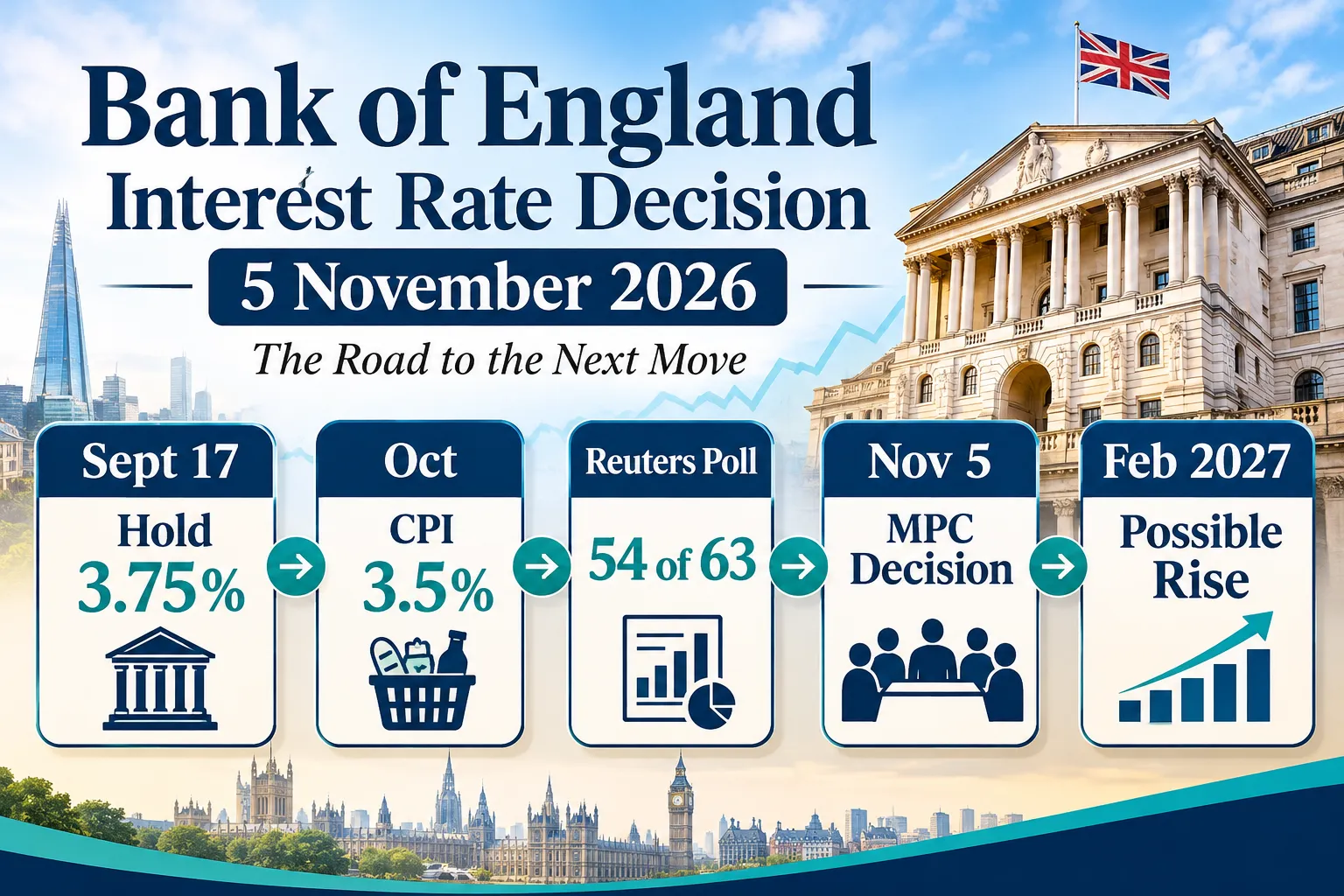
The last cut came in December 2025, the sixth reduction in that easing cycle. September's hold was close: a 6-3 vote shows the Monetary Policy Committee is split, not united, on the right path forward.
Markets are now pricing roughly four quarter-point rises by summer 2027. Of 61 economists surveyed, 30 expect a further increase in the first quarter of 2027. Bank of England chief economist Huw Pill has cautioned that a rise this week would not necessarily mark the start of a long run of increases, a signal that the MPC may move cautiously rather than aggressively.
Why November 2026 Is a Turning Point
Swap rates, which underpin fixed mortgage pricing, rose sharply in early October 2026. Many lenders responded by raising fixed-rate products almost immediately. Rates have since broadly stabilised, but the direction of travel is clear: borrowing is becoming more expensive, and the Bank of England interest rate decision 5 November 2026 could confirm that trend rather than reverse it.
What a Rise to 4% Would Mean for Kingston upon Thames Buyers and Homeowners
A quarter-point rise sounds small, but its effects compound across a market that is already softening. Nationwide reported house prices fell 0.3 percent in October 2026, with annual growth down to 0.5 percent. Zoopla found London prices down 1 percent year-on-year and homes taking 56 days on average to sell. A rate rise adds pressure to an already sluggish picture in southwest London.
Affordability and Remortgaging
Homeowners coming off fixed deals face a jump in monthly payments. Many lenders now allow borrowers to lock a new rate up to six months before their current deal ends, a useful tool given how quickly pricing has moved since October. Kingston households should check this window now rather than waiting until their deal expires.
Lender Valuations Under Strain
When affordability tightens, lenders scrutinise valuations more closely. A property that looked fairly priced in the summer may face a tougher mortgage valuation in November if local comparable sales have softened. This is where independent evidence becomes valuable for negotiating or challenging a lender's figure.
Who Feels It Most
| Group | Likely Impact |
|---|---|
| First-time buyers | Smaller mortgages available; affordability tests tighten |
| Existing fixed-rate holders | Payment shock at renewal; consider early rate-lock |
| Landlords | Higher buy-to-let costs; rental yield pressure |
| Sellers | Longer time to sell; need realistic pricing |
| Developers | Higher finance costs on stalled or new schemes |
Why Buyers Should Not Skip a RICS Survey When Budgets Are Tight
It is tempting to cut costs when every pound counts, but skipping a professional survey is a false economy in a market like this.
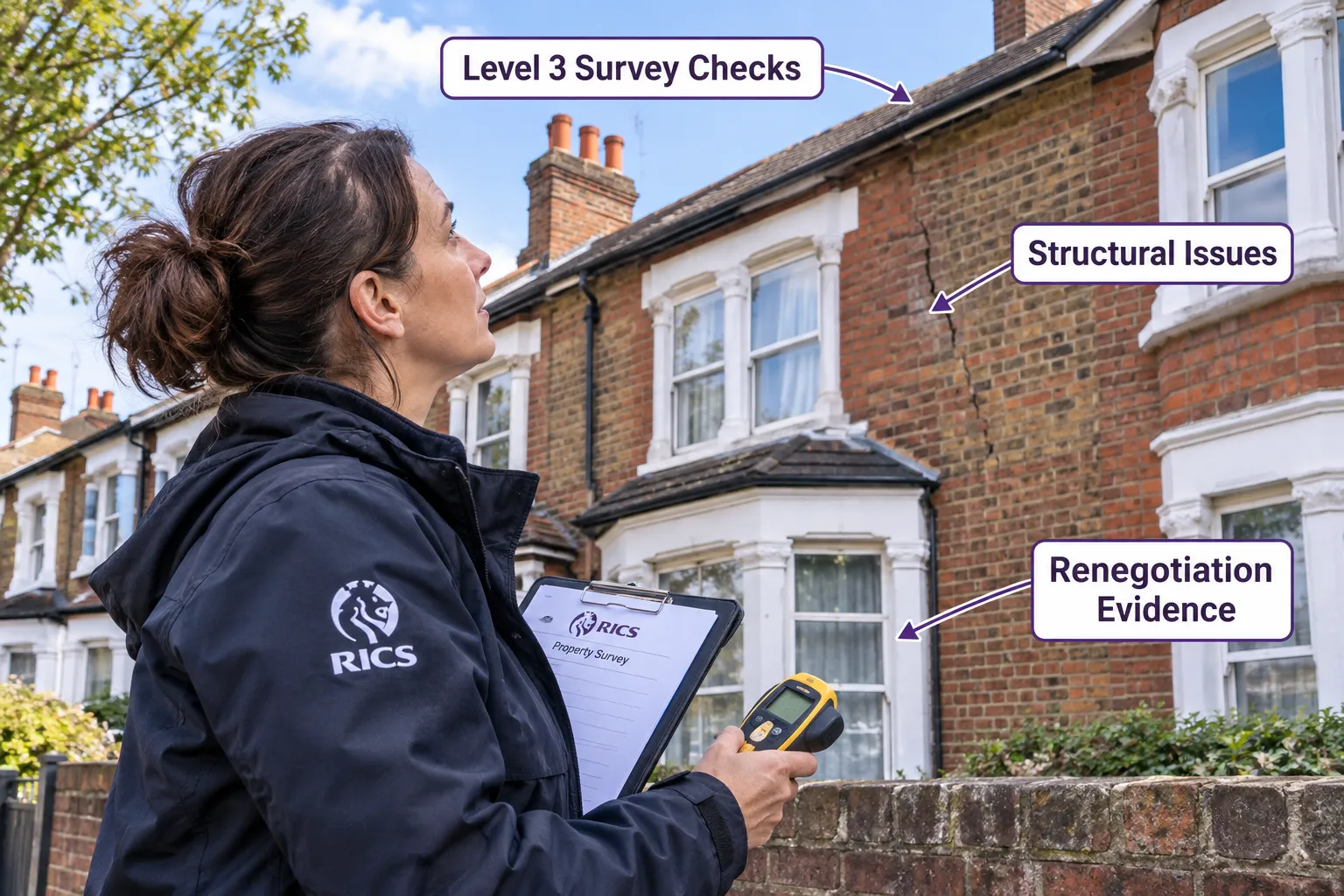
A Level 2 Homebuyer Report or a Level 3 Building Survey gives buyers independent evidence of a property's true condition, damp, roof defects, structural movement, or outdated electrics. In a market where Zoopla reports 56 days average to sell in London, sellers are often more willing to negotiate when faced with documented evidence.
How Survey Findings Support Renegotiation
- A surveyor's findings can justify a reduced offer or a price chip before exchange.
- Documented defects give buyers leverage with lenders querying valuations.
- Survey reports help buyers budget realistically for repairs, reducing the risk of overstretching on a higher-rate mortgage.
- For landlords and developers, a Level 3 survey flags costly structural issues before they commit capital at a higher cost of borrowing.
With mortgage costs rising, every pound saved through survey-backed renegotiation matters more than it did a year ago.
Practical Steps for Kingston Clients Ahead of and After 5 November
- Buyers: commission a Level 2 or Level 3 survey before exchange, especially on older Kingston stock near the river.
- Homeowners remortgaging: ask your lender about locking a rate up to six months ahead of your current deal ending.
- Sellers: price realistically given the 56-day average selling time reported by Zoopla and softening annual growth.
- Landlords and developers: factor a potential rise to 4.25 percent by February 2027 into cash flow and financing decisions.
- Everyone: seek independent financial and legal advice before making borrowing decisions tied to Thursday's outcome.
Frequently Asked Questions
Will the Bank of England definitely raise rates on 5 November 2026?
Not definitely, but most economists expect it. A Reuters poll found 54 of 63 economists forecasting a rise to 4 percent, though the September vote was a close 6-3 split, showing the committee remains divided.
Could rates rise further after November?
Possibly. Thirty of 61 economists surveyed expect another rise in the first quarter of 2027. Several institutions, including Capital Economics and Oxford Economics, forecast Bank Rate reaching 4.25 percent by February 2027.
How does this affect my mortgage valuation in Kingston?
Lenders may apply tighter affordability checks and more conservative valuations as rates rise and local price growth slows. An independent RICS valuation or survey gives buyers evidence to challenge or support a lender's figure.
Should I skip a survey to save money given higher mortgage costs?
No. A survey often pays for itself by uncovering issues that justify a lower offer or highlight future repair costs, which matters more when every pound of borrowing is more expensive.
What if I'm due to remortgage soon?
Check whether your lender allows locking a new rate up to six months before your current deal ends, a facility many lenders now offer given recent rate volatility.
Conclusion
The Bank of England interest rate decision 5 November 2026 arrives at a pivotal moment for the Kingston upon Thames property market. With inflation at 3.5 percent and economists heavily favouring a rise to 4 percent, buyers, sellers, landlords and developers all face a tighter borrowing environment. Nationwide and Zoopla data already show a cooling market, which means negotiating leverage matters more than ever.
Whatever the MPC decides on Thursday, independent RICS-regulated advice remains essential. Kingston Surveyors recommends buyers commission a proper survey before exchange, homeowners check remortgage timing now, and all clients take professional financial advice before acting on this week's decision.