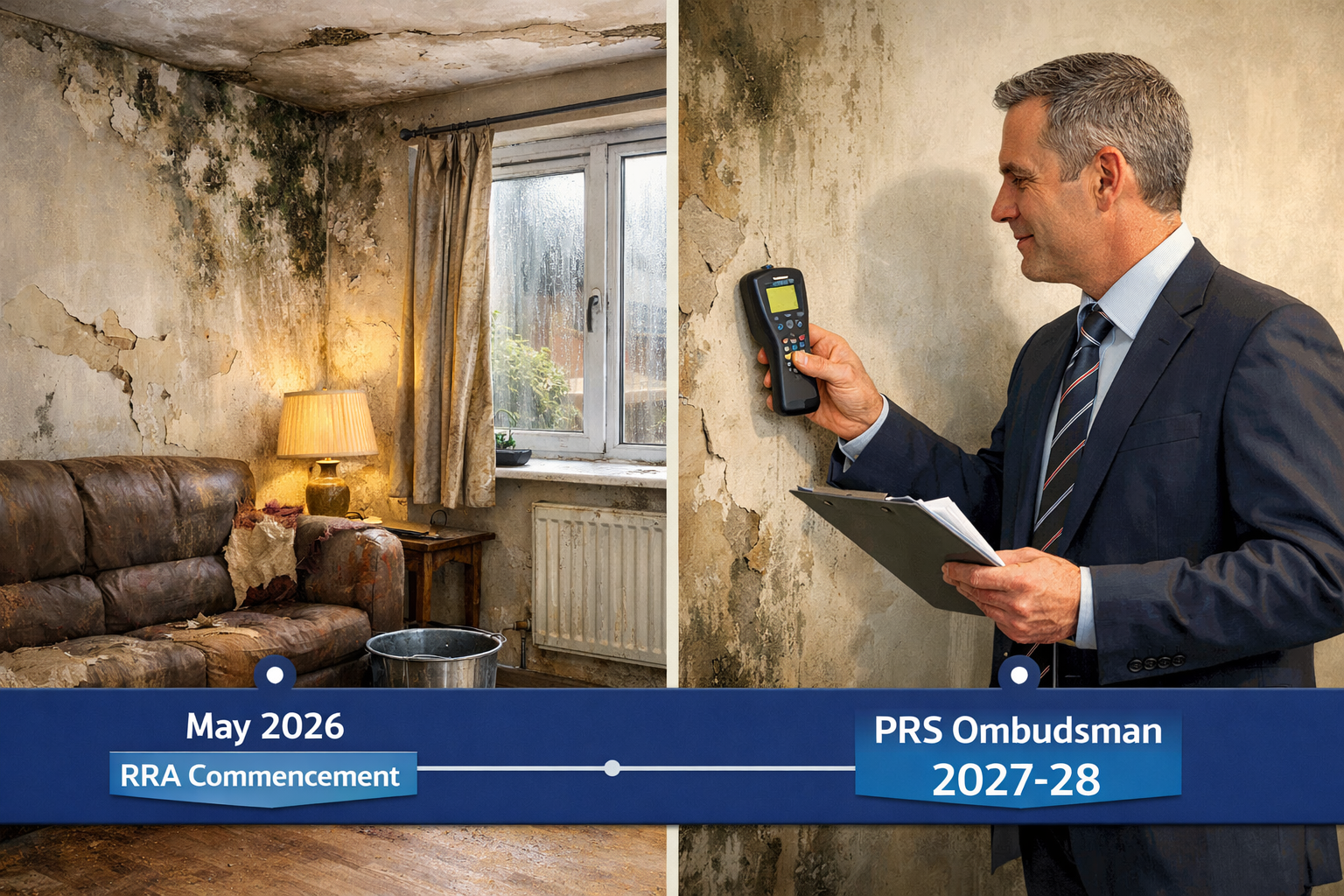
The Renters' Rights Act received Royal Assent on 27 October 2025 — described by legal experts as "the most significant reform of residential landlord and tenant law for almost 40 years" — and its formal commencement on 1 May 2026 has already begun reshaping how disputes in the private rented sector (PRS) are handled [8]. With a mandatory Landlord Ombudsman Scheme scheduled for 2027–28, the window between now and full implementation is precisely the moment when landlords, tenants, letting agents, and surveyors must understand what expert witness roles in Private Rented Sector Ombudsman disputes will look like under this new legal landscape [2].
This guide covers the evidence standards, valuation defences, and CPR Part 35 preparation that surveyors and property professionals need to navigate Renters' Rights Act 2026 cases with confidence.
Key Takeaways 📋
- The Renters' Rights Act 2026 (formally the RRA 2025) commences 1 May 2026, abolishing Section 21 evictions and converting all tenancies to rolling periodic arrangements — generating a surge in ombudsman disputes requiring expert evidence.
- The mandatory PRS Ombudsman Scheme launches in 2027–28, but Phase 2 infrastructure (including the property database) begins taking shape in late 2026 — preparation must start now.
- Expert witnesses in PRS disputes provide critical testimony on property condition, rental valuations, dilapidations, and compliance failures, all governed by CPR Part 35 duties.
- Rent increases are capped at once per year via the statutory Section 13 process, creating significant demand for RICS-accredited rental valuation evidence at the First-Tier Tribunal.
- Penalties for serious offences now reach £40,000, and personal liability extends to company directors and agents — making expert assessment of organisational compliance a high-stakes discipline.
Understanding the New PRS Landscape: Why Expert Witnesses Are Now Essential
The scale of change introduced by the Renters' Rights Act 2026 cannot be overstated. Every private tenancy in England is now a periodic (rolling) tenancy — fixed-term contracts have been abolished [2]. Landlords can no longer issue Section 21 "no-fault" eviction notices; possession must be sought on specified statutory grounds [4]. Rental bidding wars are banned, and rent increases are restricted to once per year through a formal statutory process [4].
Each of these changes creates a new category of dispute — and disputes require evidence.
"The ombudsman scheme will operate as a free complaints service to help tenants resolve disputes against landlords without going to court." [2]
This is transformative. Previously, many PRS disputes ended up in county court, where formal litigation rules applied. The ombudsman route is more accessible, but it still demands credible, structured expert evidence to resolve contested facts about property condition, market rent, and landlord compliance.
What the PRS Ombudsman Will Adjudicate
The Landlord Ombudsman Scheme, expected to become mandatory in 2027–28, will handle complaints covering:
| Dispute Category | Expert Evidence Typically Required |
|---|---|
| Property disrepair and habitability | Condition surveys, dilapidations schedules |
| Unlawful eviction or harassment | Tenancy documentation, compliance review |
| Rent increase challenges | Comparable market rent analysis |
| Deposit deductions | Schedule of condition, photographic evidence |
| Fitness for human habitation | Structural and damp assessments |
| Agent/landlord compliance failures | Regulatory audit, organisational review |
Phase 2 implementation in late 2026 will establish the property database and ombudsman infrastructure, requiring further secondary legislation and consultation [2]. Professionals who build their expert witness capabilities now will be positioned ahead of the curve.
Expert Witness Roles in Private Rented Sector Ombudsman Disputes: The Core Functions
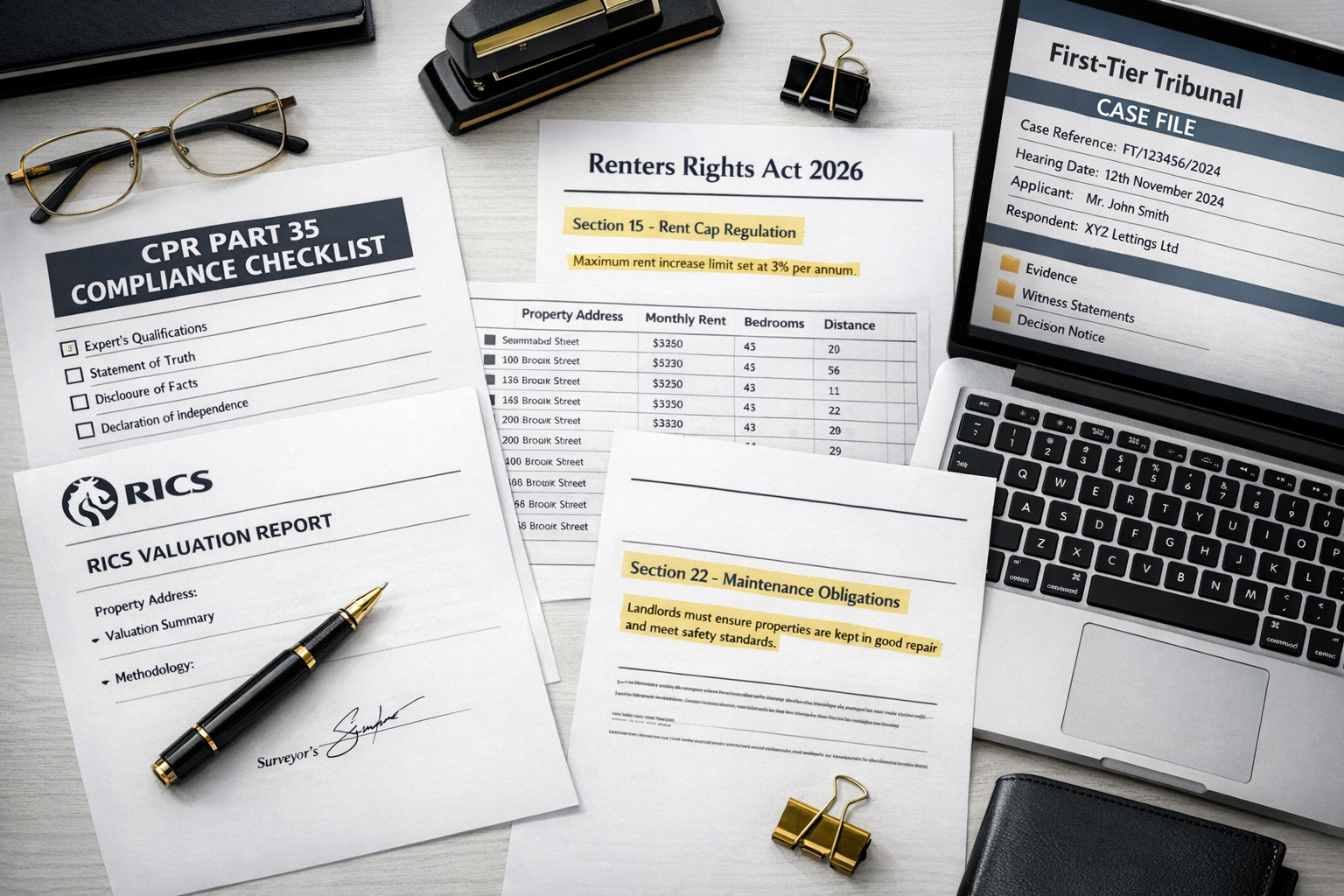
Expert witnesses in landlord-tenant disputes gather evidence through document review, property inspections, interviews, and data analysis [1]. In the context of Renters' Rights Act 2026 cases, these functions expand considerably. Here is a breakdown of the primary roles:
🏠 Property Condition and Dilapidations Expert
One of the most contested areas in PRS disputes involves the physical state of a property — whether at tenancy commencement, during occupation, or at the end of a tenancy. A chartered surveyor acting as expert witness will:
- Prepare a schedule of dilapidations documenting defects, their cause, and remediation costs
- Distinguish between fair wear and tear and tenant-caused damage
- Assess whether a property meets the Decent Homes Standard or fitness for human habitation requirements
- Provide photographic and technical evidence admissible before the ombudsman or First-Tier Tribunal
For landlords and tenants in London and the South East, understanding the schedule of dilapidations process is a foundational step before any dispute escalates.
Similarly, a thorough dilapidation survey conducted at the right time can prevent costly disputes by establishing a clear baseline of property condition.
💷 Rental Valuation Expert
With rent increases now restricted to once per year via the Section 13 statutory process, tenants have a formal right to challenge proposed increases at the First-Tier Tribunal [4]. This creates direct demand for expert rental valuation evidence. An RICS-registered valuer acting as expert witness must:
- Analyse comparable market rents for similar properties in the same locality
- Demonstrate how tenant demand impacts specific properties and rental valuations [3]
- Produce a written valuation report that complies with RICS Red Book standards
- Withstand cross-examination on methodology and comparable selection
The ban on rental bidding wars adds another layer: expert testimony on what constitutes a "fair" market rent — without the distortion of competitive bidding — becomes a live issue in many cases [4].
For properties across London and surrounding areas, RICS-registered valuers provide the credentialled, independent analysis that ombudsman panels and tribunals require.
⚖️ Compliance and Regulatory Expert
The Renters' Rights Act 2026 introduces a tiered penalty structure with serious offences attracting fines of up to £40,000 for unlawful eviction, harassment, and continued breaches [2]. Personal liability now extends to company directors and letting agents — not just the landlord entity itself [2].
Expert witnesses in this space assess:
- Whether a landlord or agent followed the correct statutory possession process
- Whether rent increase notices complied with Section 13 procedural requirements
- Whether organisational systems and governance were adequate to prevent compliance failures
- The extent of personal liability for directors or agents in multi-party cases
This is specialist territory requiring deep knowledge of both the RRA 2026 and pre-existing housing legislation.
Preparing for Renters' Rights Act 2026 Cases: CPR Part 35 and Evidence Standards
Expert witnesses appearing before the First-Tier Tribunal or providing reports to the PRS Ombudsman must understand that their overriding duty is to the tribunal or adjudicator — not to the party that instructed them. This principle, embedded in CPR Part 35, is non-negotiable.
CPR Part 35: The Expert's Overriding Duty
Key obligations under CPR Part 35 include:
- Objectivity: The expert must provide independent, unbiased opinion
- Completeness: All material facts — including those that undermine the instructing party's case — must be disclosed
- Clarity: Reports must be written so that a non-specialist can understand the conclusions
- Proportionality: The scope of the report must be proportionate to the issues in dispute
A report that reads as advocacy rather than independent analysis will be given little weight — and may actively damage the instructing party's case.
Structuring an Expert Witness Report for PRS Disputes
A well-structured expert report for a Renters' Rights Act 2026 case should include:
- Statement of instructions — what the expert was asked to assess
- Summary of qualifications — RICS membership, relevant experience
- Documents reviewed — tenancy agreements, correspondence, inspection records
- Methodology — how inspections were conducted, how comparables were selected
- Findings of fact — what the expert observed or measured
- Expert opinion — the professional conclusion drawn from the findings
- Statement of truth — confirming compliance with CPR Part 35
For surveyors covering central London and wider areas including north London and south-west London, familiarity with local rental market dynamics is essential context for any valuation-based expert report.
Common Pitfalls to Avoid ⚠️
| Pitfall | Why It Matters |
|---|---|
| Accepting instructions from both parties | Destroys independence; prohibited under CPR Part 35 |
| Failing to inspect the property | Undermines factual basis of opinion |
| Using outdated comparable evidence | Rental markets move quickly; stale data weakens the report |
| Overstating certainty | Expert opinion must acknowledge limitations |
| Ignoring adverse facts | Omission of unfavourable evidence is a serious professional failing |
Expert Witness Roles in Private Rented Sector Ombudsman Disputes: Sector-Specific Challenges in 2026
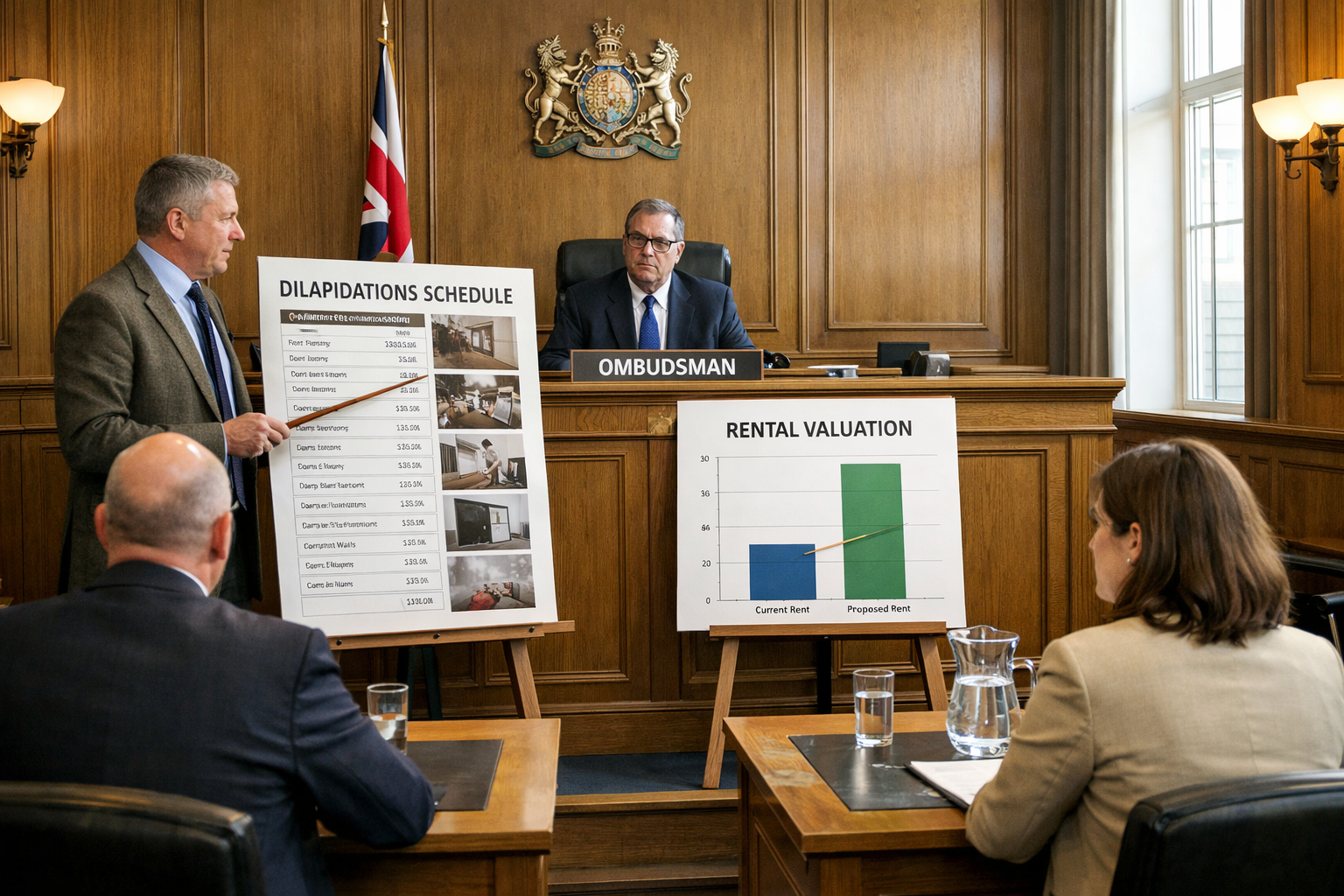
The 2026 lettings market presents distinct challenges that shape the expert witness's task in PRS ombudsman disputes. Several structural pressures are at play:
The Periodic Tenancy Transition
All tenancies have now converted to rolling periodic arrangements [2]. This creates disputes about:
- Notice periods: Did the landlord or tenant give correct notice?
- Rent arrears: How are arrears calculated across rolling periods?
- Possession grounds: Is the ground for possession genuine and lawful?
Expert witnesses may be asked to review tenancy documentation, correspondence, and rental payment histories to establish a factual timeline — a task that requires meticulous document analysis.
Section 21 Abolition and Possession Disputes
With Section 21 gone, every possession claim must be grounded in a specified statutory reason [4]. Expert witnesses — particularly those with knowledge of property condition and landlord obligations — may be called to assess:
- Whether a property was genuinely required for the landlord's own occupation
- Whether a property was being sold with vacant possession legitimately
- Whether disrepair was used as a pretext for possession
These are nuanced factual questions where independent professional opinion carries significant weight.
Rent Challenge Cases at the First-Tier Tribunal
The Section 13 process allows tenants to challenge rent increases at the First-Tier Tribunal (Property Chamber). The tribunal will determine the open market rent for the property — making the expert valuation report the central piece of evidence.
Key considerations for the rental valuation expert:
- Locality: Comparable properties must be genuinely similar in location, size, and condition
- Timing: The valuation date must align with the statutory notice date
- Condition adjustment: If the property has defects, the market rent may need to be adjusted downward
For landlords and tenants in areas such as west London or Surrey, local market knowledge is not a luxury — it is a professional requirement for any credible expert rental valuation.
High-Penalty Cases: Unlawful Eviction and Harassment
Serious offences under the Renters' Rights Act 2026 — including unlawful eviction and harassment — carry penalties of up to £40,000 [2]. In these cases, expert witnesses may be asked to:
- Reconstruct a timeline of events from documentary evidence
- Assess whether a landlord's actions constituted unlawful interference with quiet enjoyment
- Evaluate whether an agent's conduct exposed the principal landlord to liability
- Review organisational governance to assess whether compliance systems were adequate
Personal liability for company directors and agents means that expert assessment of management structures and decision-making processes may be required in corporate landlord cases [2].
Building Expert Witness Credentials for RRA 2026 Cases
Surveyors and property professionals seeking to act as expert witnesses in Renters' Rights Act 2026 cases should focus on the following areas of professional development:
✅ Essential Qualifications and Experience
- RICS membership (MRICS or FRICS) with a current practising certificate
- Experience in residential valuations and condition surveys within the relevant local market
- Familiarity with RICS Red Book valuation standards and professional guidance notes
- Understanding of the Renters' Rights Act 2026 and associated secondary legislation
- Experience preparing reports for the First-Tier Tribunal (Property Chamber)
✅ Practical Preparation Steps
- Review the RICS guidance on expert witness duties and CPR Part 35 compliance
- Build a database of local rental comparables updated quarterly
- Develop a standard schedule of condition template for use at tenancy commencement
- Establish clear terms of engagement that confirm independence from the outset
- Consider specialist training in ombudsman dispute procedures as the scheme develops
The valuation reports produced by chartered surveyors form the backbone of expert evidence in rent challenge cases — investing in the quality and rigour of these reports now will pay dividends as the ombudsman scheme scales up.
Conclusion: Actionable Next Steps for Surveyors and Property Professionals
The Renters' Rights Act 2026 has fundamentally altered the private rented sector — and the mandatory PRS Ombudsman Scheme arriving in 2027–28 will create a structured, high-volume dispute resolution environment where expert witness evidence is the currency of credibility [2].
The time to prepare is now. Here are the key actions to take in 2026:
For surveyors and valuers:
- 🗂️ Update your comparable rental databases and establish quarterly review cycles
- 📋 Develop CPR Part 35-compliant report templates tailored to PRS dispute types
- 🎓 Complete specialist training on the Renters' Rights Act 2026 statutory framework
- 🔍 Build experience with First-Tier Tribunal cases before the ombudsman scheme goes live
For landlords and letting agents:
- 📄 Commission a professional schedule of condition at every tenancy commencement
- 💷 Seek independent rental valuations before issuing Section 13 rent increase notices
- ⚖️ Review compliance systems now — personal liability for directors and agents is real
- 🏠 Ensure all tenancy documentation reflects the new periodic tenancy framework
For tenants:
- 📞 Understand your right to challenge rent increases at the First-Tier Tribunal
- 📸 Document property condition with dated photographs throughout your tenancy
- 🔑 Know that the PRS Ombudsman offers a free route to dispute resolution — use it
The intersection of property expertise and legal process has never been more important in the private rented sector. Surveyors who invest in their expert witness capabilities today will be indispensable to landlords, tenants, and ombudsman panels navigating Renters' Rights Act 2026 cases for years to come.
References
[1] Landlord Tenant S 526 – https://www.jurispro.com/category/landlord-tenant-s-526
[2] Renters Rights Act 2025 An Overview Of Key Considerations For The Private Rented Sector – https://www.clearygottlieb.com/news-and-insights/publication-listing/renters-rights-act-2025-an-overview-of-key-considerations-for-the-private-rented-sector
[3] Expert Witness Roles In 2026 Lettings Market Disputes Navigating Tenant Demand Surge And Landlord Constraints – https://nottinghillsurveyors.com/blog/expert-witness-roles-in-2026-lettings-market-disputes-navigating-tenant-demand-surge-and-landlord-constraints
[4] The Renters Rights Bill – https://www.rpclegal.com/thinking/construction/the-renters-rights-bill/
[8] Watch – https://www.youtube.com/watch?v=z5s7dAiMhvs