Over 40% of Section 8 possession claims that reach formal dispute resolution in England are challenged on valuation grounds — yet fewer than one in five landlords arrives at a hearing with a properly prepared expert witness report. As the mandatory Private Rented Sector (PRS) Ombudsman becomes fully operational in 2026, the stakes for robust valuation evidence have never been higher. Understanding PRS Ombudsman Disputes: Expert Witness Strategies for Valuation Evidence in Section 8 Evictions 2026 is now an essential competency for landlords, letting agents, and their legal advisers operating under the reformed rental landscape.
Key Takeaways 📌
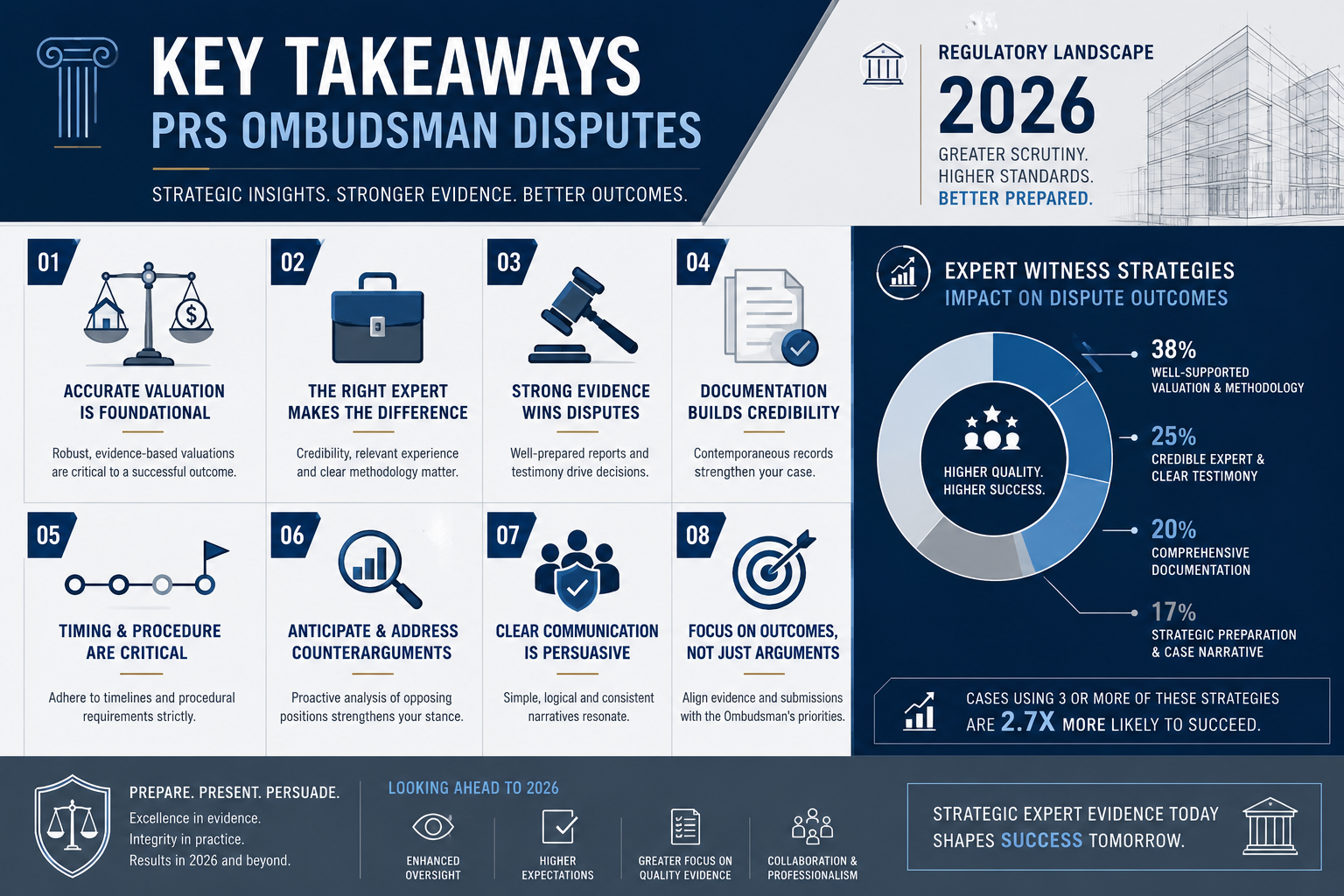
- The new PRS Ombudsman has binding powers to adjudicate disputes involving rental valuations in Section 8 proceedings, replacing fragmented redress schemes.
- Expert witness valuation reports must comply with RICS Red Book standards to carry evidential weight in 2026 hearings.
- Comparable rental evidence, presented systematically, is the single most persuasive tool in a valuation defence under periodic tenancies.
- Instructing a RICS-registered valuer in London early in the dispute process dramatically improves outcomes.
- Procedural errors in expert witness reports — not weak valuations — are the most common reason landlords lose valuation-based disputes.
Understanding the PRS Ombudsman's Role in Section 8 Valuation Disputes
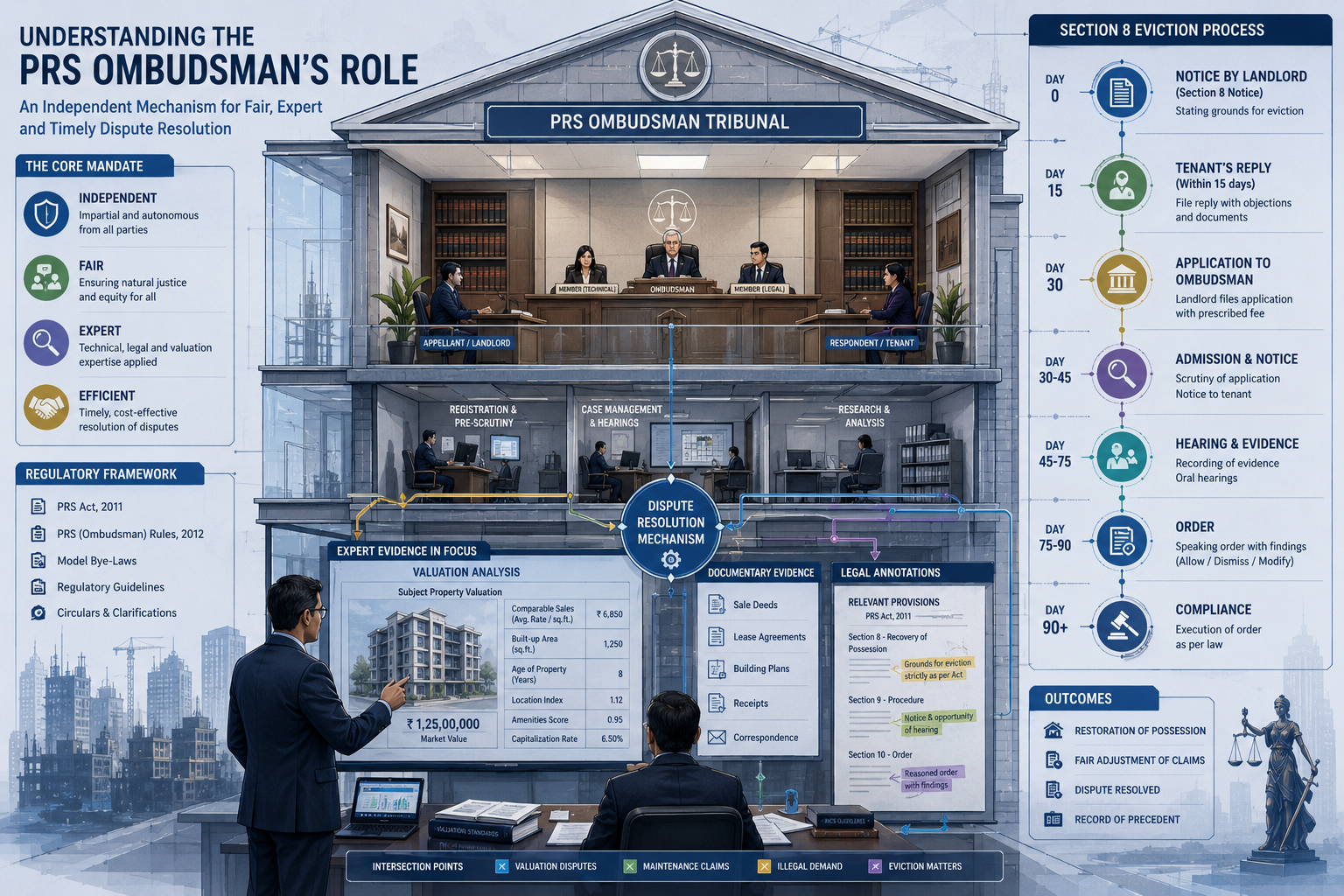
The Renters (Reform) Act framework, now embedded in practice as of 2026, created a mandatory, single-tier PRS Ombudsman covering all private landlords in England. This replaces the patchwork of voluntary redress schemes that previously left many tenants — and indeed landlords — without a clear route to independent adjudication.
For Section 8 evictions, the Ombudsman's jurisdiction is particularly significant. While possession proceedings themselves remain in the First-tier Tribunal and County Court, the PRS Ombudsman handles:
- Pre-litigation complaints about rent levels and alleged excessive rent increases used to justify a Section 8 notice
- Disputes about property condition linked to rent arrears defences
- Complaints about letting agent conduct in managing the valuation and notice process
💡 Pull Quote: "The PRS Ombudsman does not replace the courts — but its findings on valuation conduct can directly influence a judge's assessment of a landlord's good faith in a Section 8 hearing."
Why Valuation Evidence Is Central to Section 8 Cases
Section 8 of the Housing Act 1988 allows landlords to seek possession on specified grounds. The most commonly litigated grounds in 2026 involve:
| Ground | Valuation Relevance |
|---|---|
| Ground 8 (mandatory rent arrears) | Disputed rent level affects whether arrears threshold is genuinely met |
| Ground 10 (some rent arrears) | Market rent evidence used to challenge inflated rent demands |
| Ground 11 (persistent late payment) | Rent benchmarking affects whether payment history is reasonable |
| Ground 13 (deterioration of property) | Reinstatement cost valuations underpin dilapidation claims |
Under periodic tenancies — which remain common following the abolition of fixed-term assured shorthold tenancies — the rent agreed at the outset may diverge significantly from current market rates. This divergence is precisely where expert witness valuation evidence becomes decisive.
Expert Witness Strategies for Valuation Evidence: Building a Defensible Report
Effective PRS Ombudsman Disputes: Expert Witness Strategies for Valuation Evidence in Section 8 Evictions 2026 depend on understanding what adjudicators and courts actually want to see. A valuation report that impresses a mortgage lender will not automatically satisfy a tribunal. Expert witness reports operate under a distinct legal framework.
The RICS Red Book Standard: Non-Negotiable in 2026
Any valuation submitted as expert evidence in a PRS Ombudsman dispute or linked Section 8 proceedings must comply with the RICS Valuation — Global Standards (Red Book). Non-compliant reports are routinely disregarded. Key requirements include:
- Independence declaration: The valuer must confirm they have no material interest in the outcome
- Basis of value: Rental valuations should reference "Market Rent" as defined by RICS
- Inspection evidence: A physical inspection of the subject property is expected, not a desktop estimate
- Comparable analysis: A minimum of three to five genuinely comparable rental transactions, adjusted for material differences
For landlords unfamiliar with the cost implications, understanding RICS valuation costs upfront helps budget appropriately and avoids the mistake of instructing unqualified valuers to save money — a false economy in dispute contexts.
Selecting and Instructing the Right Expert Witness
Not every chartered surveyor is equipped to act as an expert witness. The distinction matters enormously. An expert witness:
✅ Owes their primary duty to the tribunal or Ombudsman, not the instructing party
✅ Must be able to withstand cross-examination on methodology
✅ Should have demonstrable experience in residential rental valuation disputes
✅ Must produce a report that complies with CPR Part 35 (Civil Procedure Rules) where court proceedings are anticipated
When instructing a valuer for a Section 8 dispute involving a London property, working with RICS-registered valuers in London who have specific tribunal experience provides the strongest foundation. For a broader understanding of what drives property values in your area, reviewing key valuation factors helps frame the expert's analysis in context.
Comparable Rental Evidence: The Core of the Valuation Defence
The heart of any rental valuation in a Section 8 dispute is comparable evidence. Adjudicators are not impressed by opinion — they respond to data. A strong comparables schedule should include:
- Address and property type of each comparable
- Letting date (within 12 months is strongly preferred)
- Achieved rent (not asking rent — actual transacted figures)
- Adjustments for size, condition, location, and specification differences
- Source of data (Rightmove, Zoopla, Land Registry rental data, agent records)
⚠️ Critical Warning: Using asking-price data from property portals without adjustment for achieved rents is one of the most common and damaging errors in amateur valuation reports submitted to the PRS Ombudsman.
For periodic tenancies specifically, the expert should also address rent review history and whether any increases were consistent with market movement over the tenancy period. A retrospective property valuation can establish what the market rent was at key dates in the tenancy, providing a chronological narrative that supports the landlord's position — or identifies where a tenant's challenge has merit.
Procedural Mastery: Submitting Valuation Evidence to the PRS Ombudsman
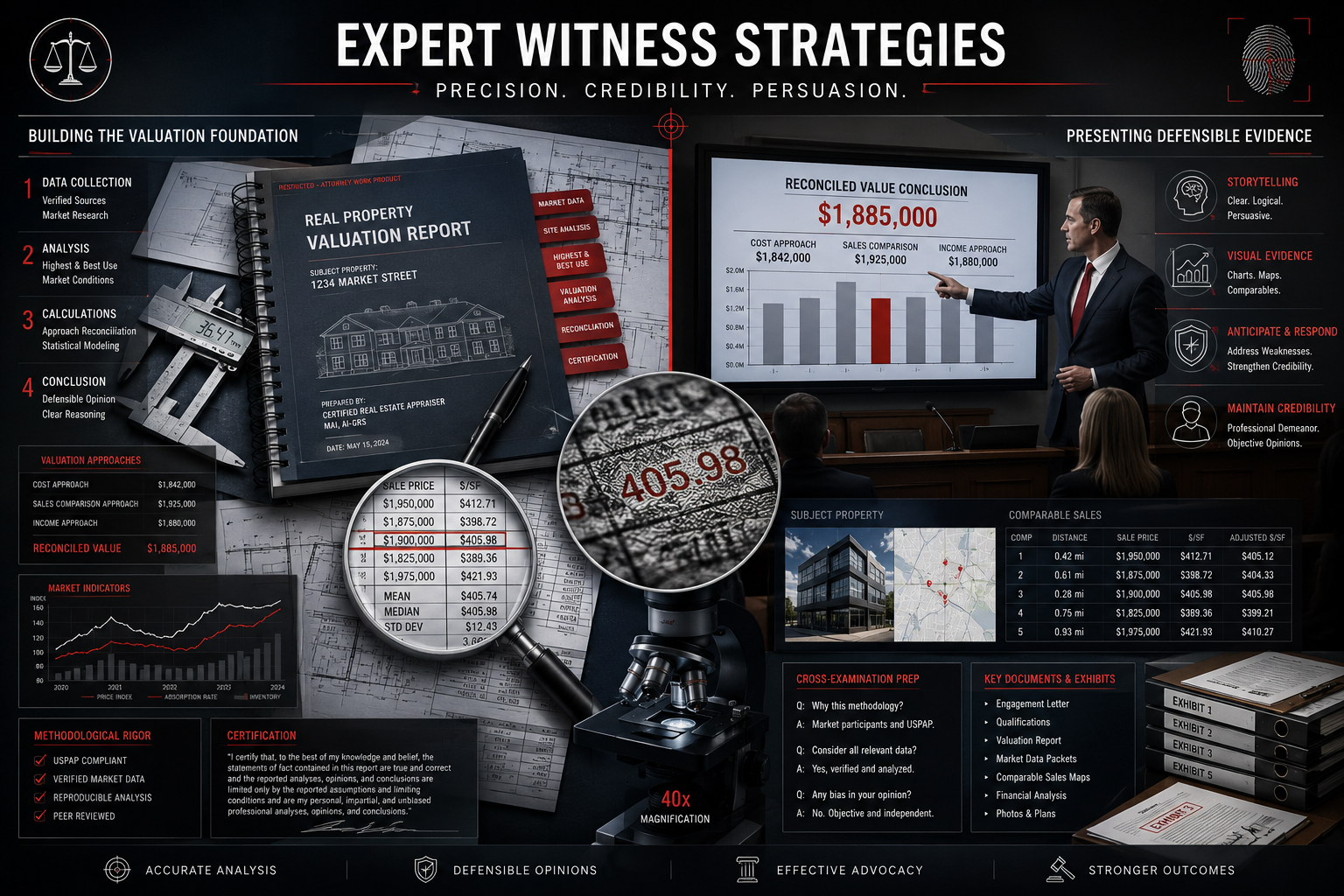
Even the most technically excellent valuation report can fail if submitted incorrectly or too late. PRS Ombudsman Disputes: Expert Witness Strategies for Valuation Evidence in Section 8 Evictions 2026 require procedural discipline alongside substantive quality.
The PRS Ombudsman Submission Process in 2026
The PRS Ombudsman operates a structured complaints and evidence process:
Stage 1 — Internal Resolution (8 weeks)
The landlord or agent must attempt resolution directly. At this stage, a preliminary rental valuation summary (not necessarily a full Red Book report) can be shared to demonstrate good faith.
Stage 2 — Ombudsman Investigation
Once escalated, the Ombudsman appoints a case handler. Both parties submit evidence. This is the stage at which a full expert witness valuation report should be submitted.
Stage 3 — Adjudication
The Ombudsman issues a binding determination. Valuation evidence submitted at Stage 2 forms the primary record — late submissions are rarely accepted.
Common Procedural Errors That Undermine Strong Valuations
| Error | Consequence |
|---|---|
| Submitting a desktop valuation without inspection | Report given little or no weight |
| Using a valuer with a disclosed conflict of interest | Report potentially excluded entirely |
| Failing to address the tenant's specific valuation arguments | Adjudicator may accept tenant's evidence by default |
| Providing comparables outside the relevant date range | Comparables disregarded as unrepresentative |
| Non-compliance with CPR Part 35 format | Report treated as a party submission, not expert evidence |
Dilapidations and Condition Evidence in Section 8 Disputes
Where Section 8 Ground 13 (deterioration of property) is in play, valuation evidence extends beyond rental market analysis into dilapidation assessment. A schedule of condition prepared at the start of the tenancy — and a corresponding end-of-tenancy inspection — provides the evidential baseline.
The dilapidation surveys London process is directly relevant here. A properly prepared schedule of condition, combined with a reinstatement cost assessment, gives the expert witness the quantified evidence needed to support a Ground 13 claim before the Ombudsman.
Similarly, understanding commercial dilapidation survey principles — even in a residential context — helps advisers appreciate the level of documentation that adjudicators expect.
Special Considerations for Periodic Tenancies in 2026
The abolition of fixed-term assured shorthold tenancies means that virtually all new tenancies created after the Renters (Reform) Act commencement date are periodic from the outset. This has specific implications for valuation evidence in Section 8 disputes.
Rent Increases Under Periodic Tenancies
Under the reformed regime, landlords can only increase rent once per year using a prescribed notice procedure (Section 13 notice). Any disputed rent increase — where the tenant challenges it via the First-tier Tribunal — will involve:
- A market rent assessment by the tribunal
- Potentially, competing expert valuations from both parties
- The PRS Ombudsman potentially reviewing whether the landlord's conduct in the increase process was compliant
A comprehensive London property valuation guide is a useful starting resource for landlords trying to understand how market rent is assessed before commissioning a formal report.
The Intersection of Section 8 Notices and Rent Disputes
A critical tactical point: if a tenant refers a rent increase to the First-tier Tribunal, and the landlord simultaneously serves a Section 8 notice citing rent arrears based on the disputed (higher) rent, the PRS Ombudsman may treat this as a conduct complaint. The landlord's valuation evidence must therefore:
🔑 Demonstrate that the rent level was set at or below market rent
🔑 Show that any increase was supported by comparable evidence at the time of the Section 13 notice
🔑 Confirm the expert's independence from the rent-setting process
For lease-related valuation disputes — particularly where a property has a leasehold element — lease extension valuation in London expertise may also be relevant, as ground rent and service charge disputes can complicate the rental valuation picture.
Practical Checklist: Preparing Expert Witness Valuation Evidence for 2026 Disputes
Use this checklist before submitting valuation evidence to the PRS Ombudsman or a linked tribunal:
Valuation Report Quality
- Prepared by a RICS-registered valuer with tribunal experience
- Compliant with RICS Red Book Global Standards
- Based on physical inspection of the property
- Includes a minimum of three to five adjusted comparables
- States the basis of value as "Market Rent"
- Contains an independence declaration
Procedural Compliance
- Submitted within the Ombudsman's Stage 2 evidence window
- Formatted in accordance with CPR Part 35 (if court proceedings are anticipated)
- Addresses the tenant's specific valuation arguments
- Includes supporting documentation (comparable letting particulars, photos, inspection notes)
Periodic Tenancy Specifics
- Covers rent review history over the tenancy period
- Addresses any Section 13 notices served and market evidence at the time
- Includes a retrospective valuation if the dispute relates to a historic rent level
Conclusion: Actionable Next Steps for Landlords and Advisers in 2026
The arrival of the mandatory PRS Ombudsman has fundamentally changed the evidentiary standards expected in Section 8 disputes involving valuation questions. PRS Ombudsman Disputes: Expert Witness Strategies for Valuation Evidence in Section 8 Evictions 2026 demand a proactive, structured approach — not a reactive scramble for evidence once a complaint has been filed.
Actionable next steps:
-
Instruct a RICS-registered expert witness valuer early — ideally before serving a Section 8 notice where rent level is likely to be contested. Early instruction allows the valuer to gather contemporaneous comparable evidence.
-
Commission a Red Book-compliant rental valuation for any property where rent has been increased in the past 24 months and a dispute is foreseeable.
-
Prepare or review your schedule of condition for all periodic tenancies. If one does not exist, commission a schedule of condition report immediately to establish a baseline for future dilapidation claims.
-
Audit your Section 13 notice history — ensure that every rent increase was supported by market evidence at the time and that the notice procedure was correctly followed.
-
Engage a chartered surveyor with dispute resolution experience to review any existing valuation reports before submission to the Ombudsman. A report that fails procedurally will not be rescued by strong underlying data.
The PRS Ombudsman represents a significant shift toward evidence-based dispute resolution in the private rented sector. Landlords and agents who invest in proper expert witness valuation strategies will find themselves far better positioned — both before the Ombudsman and in any linked court proceedings — than those who rely on informal estimates or unqualified opinions.