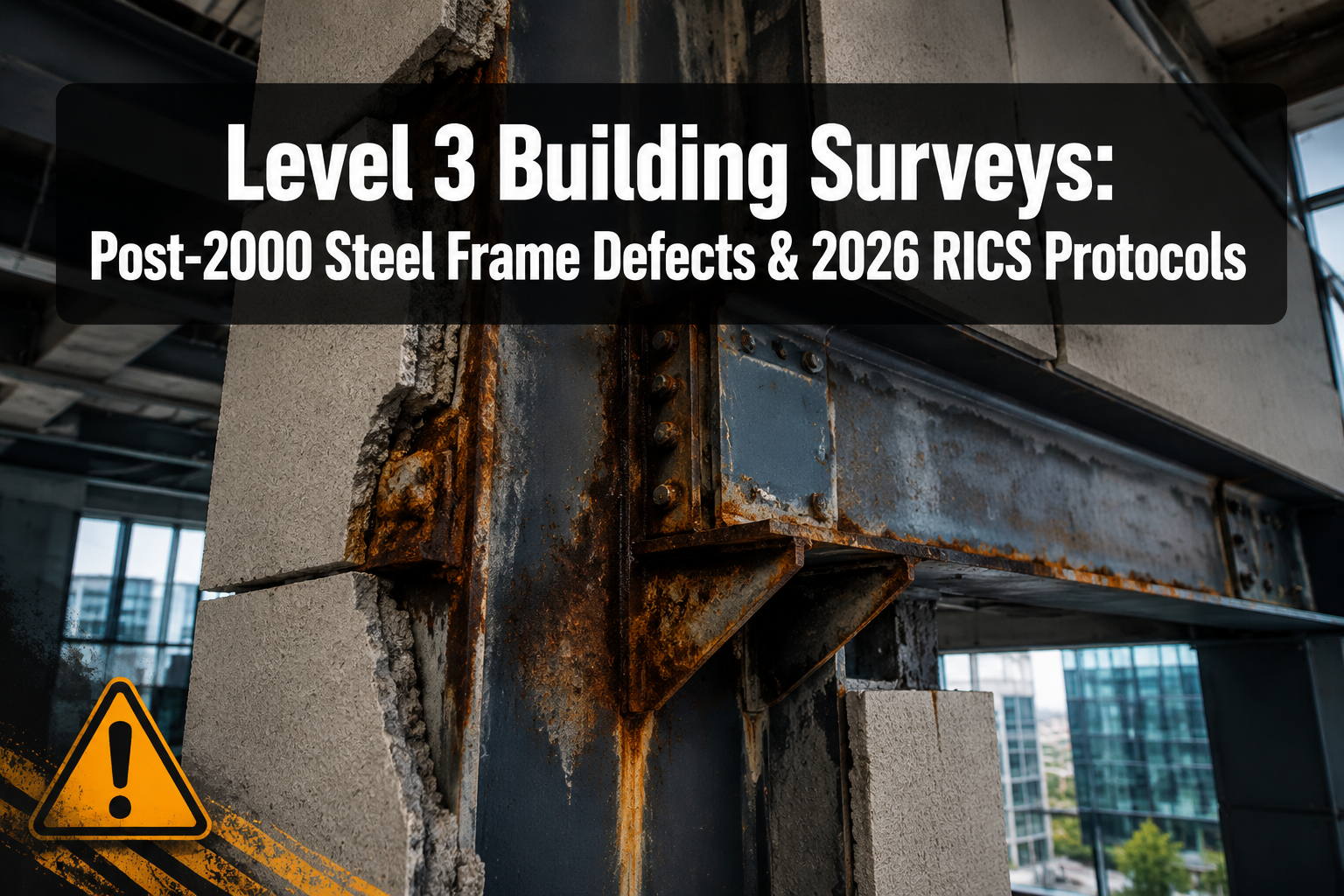

Fewer than one in five buyers purchasing a post-2000 steel-framed property commission the depth of inspection needed to uncover hidden corrosion and fire safety failures — yet these are precisely the defects that can cost tens of thousands of pounds to remediate and, in the worst cases, threaten occupant safety. The growing stock of steel-framed homes and mixed-use buildings constructed since 2000 has created a distinct survey challenge that standard mortgage valuations and even basic homebuyer reports cannot adequately address. Level 3 Building Surveys for Post-2000 Steel Frame Defects: 2026 RICS Protocols for Corrosion and Fire Risks represent the most rigorous response the profession has developed, and understanding what they cover is essential for any buyer, owner, or lender dealing with this building type in 2026.
Key Takeaways
- Level 3 Building Surveys are the only RICS survey type comprehensive enough to assess the structural and fire safety risks specific to post-2000 steel-framed construction.
- Hidden corrosion in steel beams, columns, and fire escapes is a primary defect category that requires specialist inspection techniques, including thermal imaging and moisture mapping.
- Updated 2026 RICS protocols place explicit obligations on surveyors to assess firestopping quality, cavity barriers, and compliance with current fire safety legislation.
- Detailed reporting requirements mean surveyors must document defects with photographic evidence, propose remedial options, and prioritise risks for the client.
- Commissioning a Level 3 survey before purchase or lease renewal can prevent costly disputes and provide a legally defensible record of condition.
What Makes Post-2000 Steel-Framed Buildings a Distinct Survey Challenge
Steel-framed construction became significantly more common in the United Kingdom after 2000, driven by faster build programmes, design flexibility, and cost efficiency. Light-gauge steel frame (LGSF) systems, in particular, became popular for residential developments, student accommodation, and mixed-use schemes. However, this construction method introduced a specific set of vulnerabilities that differ substantially from traditional masonry or timber-frame buildings.
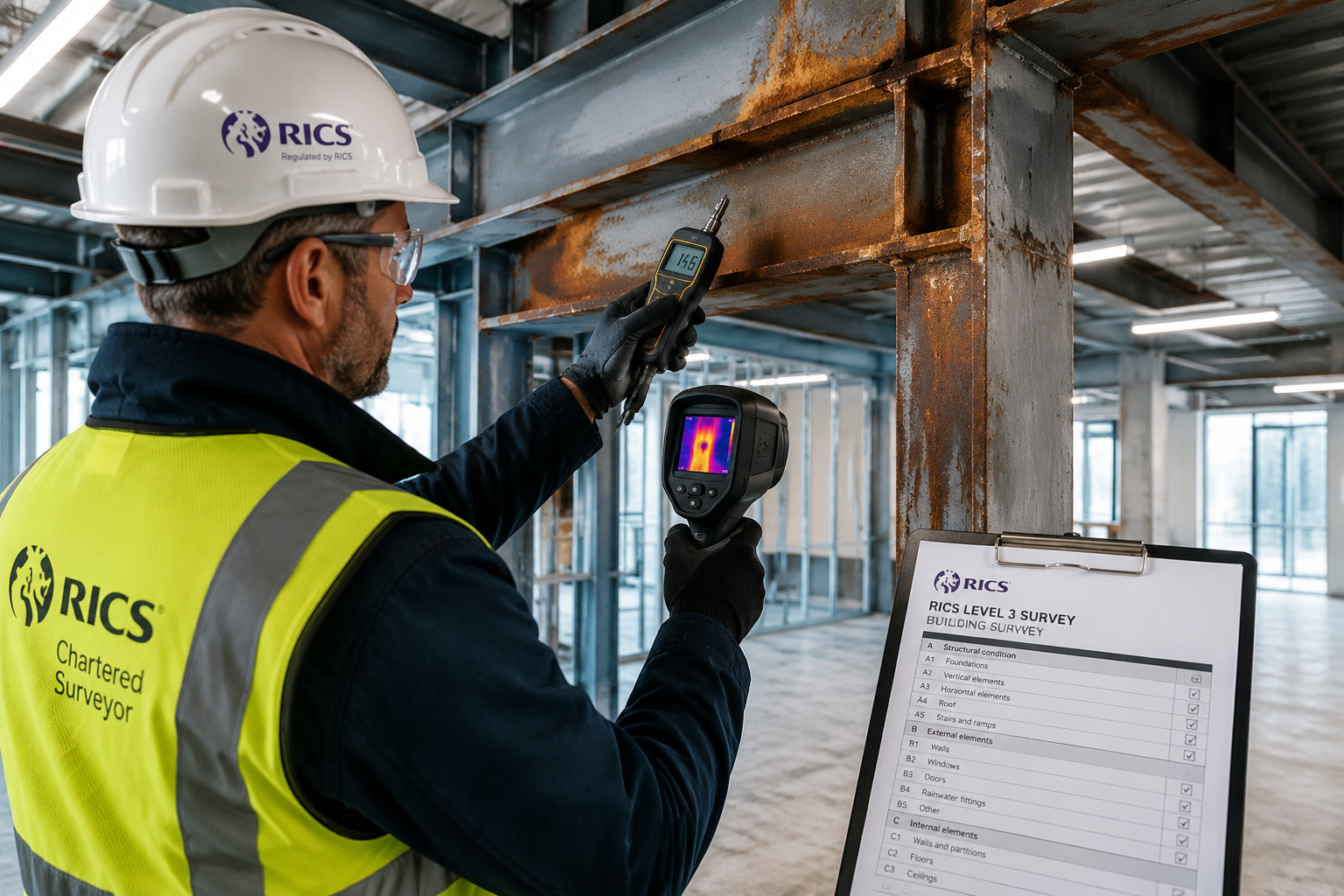
The core problem is concealment. In a steel-framed building, the structural skeleton is typically encased within composite wall panels, plasterboard linings, and insulation. This means that corrosion, connection failures, and firestopping defects are invisible during a routine visual inspection. By the time external symptoms appear — such as cracking render, staining, or deformation — the underlying damage may already be advanced.
Post-2000 buildings also fall into a regulatory grey zone. Many were designed and built before the significant tightening of fire safety requirements that followed the Grenfell Tower fire in 2017 and the subsequent Building Safety Act 2022. As a result, they may have been constructed in full compliance with the regulations of their time, yet fall short of current standards — a distinction that has significant implications for mortgage lenders, insurers, and future saleability.
For buyers and owners navigating this landscape, a structural survey in London or elsewhere in the UK must go beyond the visual to be genuinely useful.
Key Defect Categories in Post-2000 Steel-Framed Structures
| Defect Category | Typical Location | Risk Level |
|---|---|---|
| Corrosion of primary steel members | Beams, columns, connections | High |
| Corrosion of secondary elements | Fire escapes, lintels, fixings | Medium-High |
| Firestopping failures | Service penetrations, cavity barriers | Critical |
| Moisture ingress at cladding junctions | External wall interfaces | Medium |
| Connection degradation | Bolted and welded joints | High |
| Missing or degraded intumescent coatings | Structural steel surfaces | Critical |
How 2026 RICS Protocols Address Corrosion and Fire Risks in Level 3 Surveys
The updated RICS Home Survey Standard and associated professional guidance have materially expanded the obligations placed on surveyors conducting Level 3 inspections of steel-framed properties. These changes reflect both the maturing stock of post-2000 buildings and the heightened regulatory environment around building safety.
Enhanced Inspection Scope Under Current RICS Guidance
The 2026 protocols require a comprehensive assessment of all accessible parts of the building, including roofs, walls, floors, windows, doors, and structural elements [1]. For steel-framed buildings, this means surveyors must make every reasonable effort to inspect elements that would otherwise be overlooked in a standard survey. Where direct access is not possible — for example, within a sealed wall cavity — the surveyor must clearly identify this limitation and recommend further specialist investigation [5].
Surveyors are specifically required to be vigilant about structural issues including corroded beams and columns, leaning walls, and compromised floors [2]. In practice, this translates to a systematic inspection methodology that includes:
- Visual inspection of all exposed steelwork for surface rust, section loss, and deformation
- Moisture meter readings at vulnerable junctions, including base plates and wall-floor interfaces
- Thermal imaging surveys to detect moisture ingress behind cladding panels
- Inspection of roof-level steel elements, parapets, and any external staircases or balconies
For roof-level elements that cannot be safely accessed from ground level, a drone roof survey provides a practical and increasingly standard supplementary tool that allows surveyors to document condition without compromising safety.
"The updated protocols are not simply a checklist exercise. They require surveyors to exercise professional judgement about the significance of each defect in the context of the specific building type, age, and use."
Fire Safety Competency Requirements
Fire safety has become a central pillar of the Level 3 survey framework. RICS now requires surveyors to possess a comprehensive understanding of fire safety principles, including the ability to assess firestopping measures and identify common defects [3]. This is a significant shift from earlier guidance, which treated fire safety as a peripheral concern.
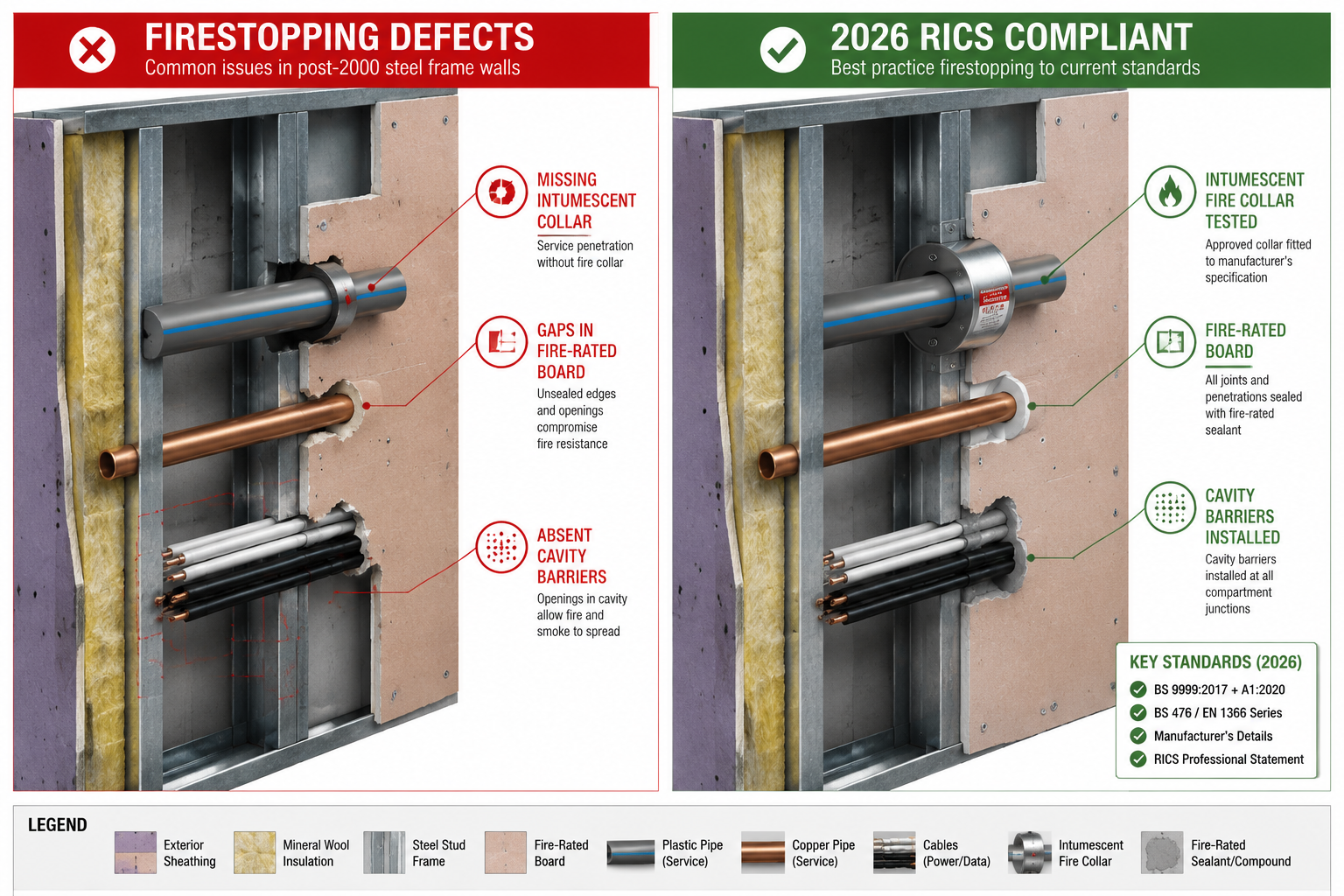
In practical terms, surveyors conducting Level 3 Building Surveys for Post-2000 Steel Frame Defects: 2026 RICS Protocols for Corrosion and Fire Risks must now inspect all accessible areas where service penetrations are visible, such as riser cupboards and plant rooms [4]. The inspection checklist for firestopping should include:
- Presence and continuity of firestopping at all service penetrations through fire-rated compartment walls and floors
- Quality of intumescent collars around plastic pipes passing through fire-rated elements
- Adequacy of fixings securing firestopping products to the substrate
- Cavity barriers within external wall systems, particularly at floor levels and around openings
- Fire door integrity, including seals, closers, and frame condition
Deficiencies in any of these areas can allow fire and smoke to travel through a building far faster than its design intended, with potentially fatal consequences. Given that many post-2000 steel-framed buildings used open-cavity construction methods that are now known to accelerate fire spread, this element of the survey carries particular weight.
The Defect Checklist: What a Level 3 Survey Must Document for Steel-Framed Properties
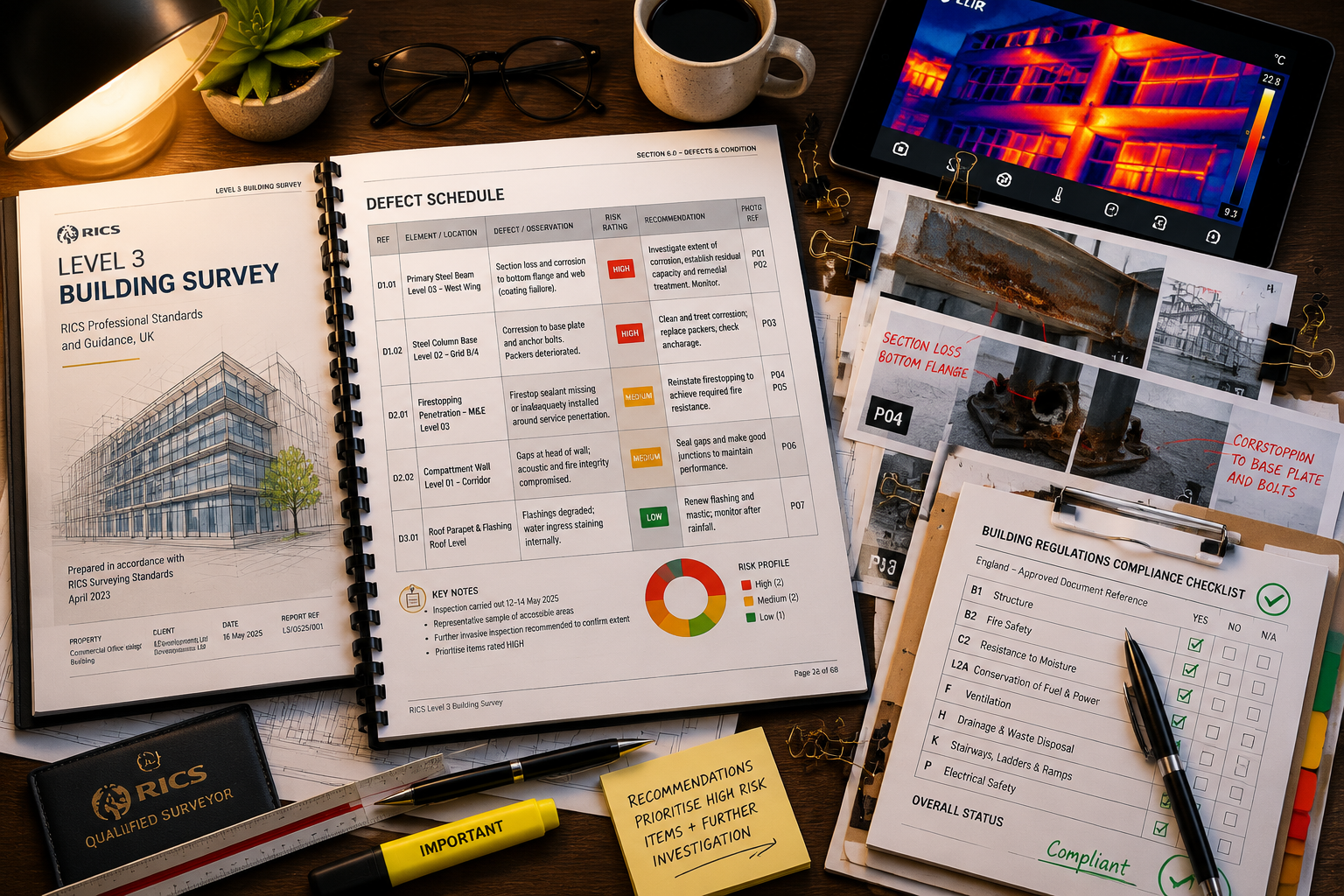
A Level 3 survey of a post-2000 steel-framed building is only as valuable as the reporting that follows it. The RICS Home Survey Standard sets out detailed reporting requirements that go well beyond a simple condition rating [5]. Surveyors must describe the form of construction and materials used, outline obvious defects, propose remedial options, and discuss future maintenance considerations.
For steel-framed properties specifically, the following checklist represents the minimum expected coverage under 2026 protocols.
Corrosion Assessment Checklist
- Inspect all visible steel members for surface oxidation, pitting, and section loss
- Check base plates and column feet for standing water or moisture accumulation
- Assess external steel elements (balconies, fire escapes, lintels) for paint film failure and active corrosion
- Review any available maintenance records for evidence of previous treatment
- Identify areas where cladding or render may be trapping moisture against steel
- Recommend specialist structural engineer involvement where section loss is suspected
Where corrosion is identified, the report must not simply note its presence. It must prioritise the defect, explain the likely cause, and set out a clear remedial pathway. For clients unfamiliar with the implications, a specific defect report may be commissioned as a follow-up to address a particular element in greater depth.
Fire Safety Documentation Checklist
- Record the external wall system type and confirm whether it has been assessed under the EWS1 framework where applicable
- Document all observed firestopping installations and note any gaps or failures
- Identify the presence or absence of cavity barriers at required locations
- Confirm fire door ratings and note any deficiencies in hardware or seals
- Flag any areas where original building regulations compliance cannot be confirmed
- Recommend a specialist fire safety engineer where systemic concerns are identified
Regulatory Compliance Flags
Surveyors are also required to flag areas that may require further legal investigation, including planning permissions, building regulations compliance, and potential rights of way or boundary concerns [5]. For post-2000 steel-framed buildings, this frequently includes:
- Confirming that any subsequent alterations have been carried out with appropriate consents
- Checking whether the building falls within the scope of the Building Safety Act 2022 and whether a building safety case has been prepared
- Identifying any outstanding enforcement notices or local authority correspondence
For commercial properties, a commercial building survey in London will incorporate additional due diligence around lease obligations and planned maintenance liabilities.
Reporting Standards, Photographic Evidence, and Client Communication
The value of a Level 3 survey is substantially determined by the quality of its report. RICS requires that updated survey reports include photographic evidence of key issues and features, providing clients with visual documentation of the property's condition [7]. For steel-framed buildings, this means photographs of:
- All areas of visible corrosion, with scale references where possible
- Firestopping installations, both compliant and deficient
- Thermal imaging outputs showing moisture distribution
- Connection details and any areas of concern at structural junctions
Reports must also include a clear condition rating system that allows clients to understand the relative severity of each defect without requiring specialist knowledge. Under RICS guidance, condition ratings typically run from 1 (no repair currently needed) to 3 (defects that are serious and/or need to be repaired, replaced, or investigated urgently) [5].
Future Maintenance Guidance
Beyond the immediate defect schedule, surveyors are instructed to discuss future maintenance of the property, identifying elements that may result in more frequent or costly repairs than normally expected [5]. For post-2000 steel-framed buildings, this typically includes:
- Periodic recoating of exposed steelwork, typically every 10-15 years depending on exposure
- Cladding system maintenance to prevent moisture ingress at joints and fixings
- Firestopping inspection following any building works that involve penetrating fire-rated elements
- Balcony and fire escape maintenance schedules, given the higher corrosion risk of external elements
This forward-looking guidance is particularly valuable for buyers who may be unfamiliar with the maintenance demands of steel-framed construction compared to traditional brick-and-block buildings.
Health, Safety, and Practical Considerations for Surveyors
Conducting a Level 3 survey of a post-2000 steel-framed building carries its own occupational health and safety obligations. RICS guidance requires surveyors to familiarise themselves with the property's layout, be aware of exit points, and keep personal belongings secure during inspections [6]. In the context of steel-framed buildings, additional considerations include:
- Structural instability risk in buildings where corrosion is advanced
- Asbestos awareness in buildings where remedial works have introduced legacy materials
- Confined space awareness when inspecting riser cupboards or plant rooms
- Working at height protocols when assessing roof-level steelwork
Where a surveyor identifies conditions that make safe inspection impossible, RICS guidance is clear: the limitation must be recorded in the report, and the client must be advised to commission a specialist inspection before proceeding [2].
For clients who have already purchased a property and are now managing defects, a schedule of condition report can provide a baseline record that protects their position in any future dispute with a contractor or landlord.
Choosing the Right Survey: Level 3 Versus Other Options
Not every property requires a Level 3 survey, but for post-2000 steel-framed buildings, the case is compelling. The comparison below illustrates why.
| Survey Type | Structural Assessment | Fire Safety Review | Defect Prioritisation | Suitable for Steel Frame |
|---|---|---|---|---|
| RICS Level 1 (Condition Report) | Minimal | None | Basic | No |
| RICS Level 2 (Homebuyer Report) | Limited | Limited | Moderate | Marginal |
| RICS Level 3 (Building Survey) | Comprehensive | Full | Detailed | Yes |
| Specialist Structural Report | Focused | Limited | Detailed | Partial |
The distinction between a Level 2 and Level 3 survey is explored in detail in the comparison of homebuyer report versus building survey, which sets out the practical differences in scope and reporting depth. For steel-framed properties, the Level 3 option is not a premium upgrade — it is the baseline minimum for informed decision-making.
Where a property has already been purchased and defects are emerging, a residential structural engineer report may be needed alongside or following the building survey to quantify the structural implications and specify remedial works.
Conclusion
Level 3 Building Surveys for Post-2000 Steel Frame Defects: 2026 RICS Protocols for Corrosion and Fire Risks represent the most thorough and legally defensible approach available to buyers, owners, and lenders dealing with this growing segment of the UK building stock. The combination of enhanced inspection scope, mandatory fire safety competency, detailed defect reporting, and future maintenance guidance creates a framework that is genuinely fit for purpose in 2026.
Actionable Next Steps
- Commission a Level 3 survey before exchange on any post-2000 steel-framed property, without exception. Do not rely on a mortgage valuation or Level 2 report to identify structural or fire safety defects.
- Request thermal imaging and drone inspection as part of the survey scope, particularly for buildings with sealed cladding systems or inaccessible roof-level steelwork.
- Review the surveyor's fire safety competency before instruction. Ask specifically whether they have experience with post-2000 steel-framed construction and firestopping assessment.
- Act on Condition 3 ratings immediately. Where a report identifies urgent defects, obtain specialist contractor quotes before finalising any purchase price negotiation.
- Establish a maintenance programme based on the surveyor's future maintenance guidance, particularly for external steelwork and cladding systems.
- Seek a specific defect report if the Level 3 survey identifies a particular element — such as a corroded fire escape or failed firestopping — that requires deeper investigation before a remedial decision can be made.
The cost of a thorough Level 3 survey is modest relative to the financial and safety risks it mitigates. In a market where post-2000 steel-framed buildings are increasingly subject to scrutiny from lenders, insurers, and regulators, commissioning the right survey at the right time is not simply good practice — it is essential due diligence.
References
[1] Scope Of Inspection Home Survey Level Three – https://www.rics.org/profession-standards/rics-standards-and-guidance/sector-standards/building-surveying-standards/home-surveys/scope-of-inspection-home-survey-level-three
[2] Surveying Safely 2nd Edition RICS Professional Standard – https://www.rics.org/content/dam/ricsglobal/documents/standards/Surveying-safely-2nd-edition-RICS-professional-standard.pdf
[3] APC Fire Safety Competency – https://ww3.rics.org/uk/en/journals/built-environment-journal/apc-fire-safety-competency.html
[4] Common Firestopping Defects – https://ww3.rics.org/uk/en/journals/built-environment-journal/common-firestopping-defects.html
[5] Home Survey Standard Nov 2020 – https://www.rics.org/content/dam/ricsglobal/documents/standards/home_survey_standard_nov_2020.pdf
[6] Health And Safety Checklist – https://www.rics.org/profession-standards/rics-standards-and-guidance/sector-standards/building-surveying-standards/home-surveys/health-and-safety-checklist
[7] Summary Of What's Included In A Level 3 RICS Building Survey – https://www.hughes-surveyors.com/summary-of-whats-included-in-a-level-3-rics-building-survey/